Circular Fashion and Textile Recycling Innovations
As 2026 rules tighten, fashion shifts circularity from esg promise to … (Dfupublications)
Summary: The 2026 enforcement of EU Ecodesign for Sustainable Products Regulation (ESPR) and Extended Producer Responsibility (EPR) schemes is shifting textile recycling from a voluntary ESG goal to a commercial and regulatory necessity. Financial penalties for unsold inventory and mandatory Digital Product Passports are forcing supply chain redesigns, particularly in Asian manufacturing hubs. While chemical depolymerization technologies like microwave-assisted glycolysis have commercialized, enabling high-purity recycling of blends, the primary bottleneck remains the fragmented first-mile collection and segregation infrastructure.
Why it matters: For manufacturers and brands, this changes the cost calculus for waste, imposes new traceability and reporting overhead, and creates a scramble for offtake agreements to secure recycled feedstock.
Context: The textile recycling market is projected to grow from $1.7B in 2026 to $8.5B by 2035, but currently less than 1% of clothing waste is recycled into new garments.
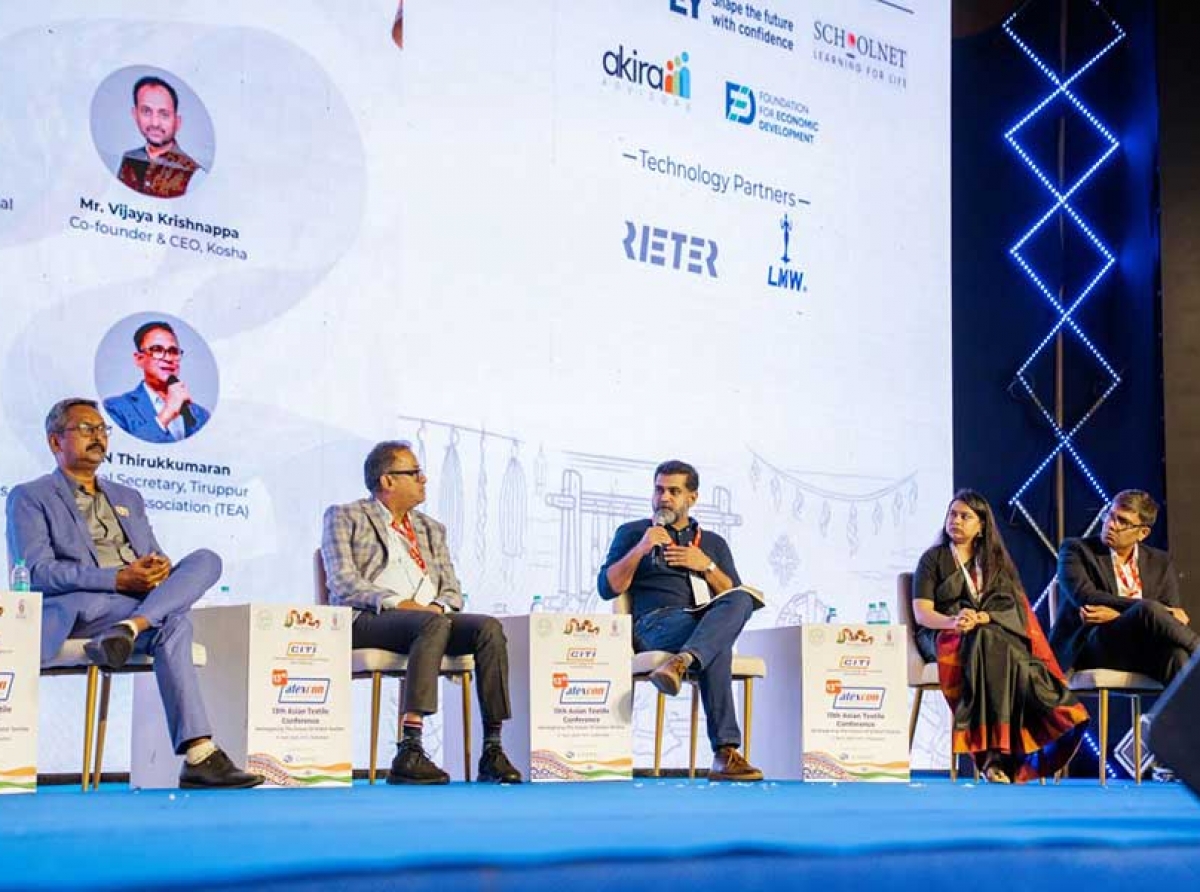
"The global apparel sector is moving gear from a linear take-make-waste model to a high-stakes circular economy, as industry leaders at the recent TEXCON 2026 conference in Hyderabad declared that textile-to-textile recycling." — DFUPUBLICATIONS
Commentary: The operational consequence is that compliance now requires capital investment in traceability tooling and renegotiated logistics contracts to integrate recycling collection. Brands that locked in offtake agreements early will have a cost and supply advantage over competitors now facing spot-market premiums for certified recycled materials.
Date: April 24, 2026 12:00 AM ET
URL: https://www.dfupublications.com/index.php/news/apparel/as-2026-rules-tighten-fashion-shifts-circularity-from-esg-promise-to-business-strategy
AI Sentiment Score: Negative (66%)
AI Credibility Score: 10.0/10 — High
Scores and text generated by AI analysis of the source article indicated.
Recycled Lyocell Fiber Scales through Global Textile Waste Pulp … (News.Sustainability-Directory)
Summary: A partnership between Circulose and China Textile Academy Green Fibre is scaling the production of lyocell fiber from 100% textile waste pulp, moving from limited 2026 batches to industrial availability in 2027. This process targets high-performance knits and lightweight wovens, using a closed-loop solvent system. It represents a shift from pilot projects to commercial supply, requiring brands to secure offtake agreements.

Why it matters: This creates a scalable, traceable recycled input for premium categories, directly impacting material sourcing strategies, compliance with recycled content mandates, and waste procurement logistics.
Context: The fashion industry has struggled to produce high-quality recycled fibers at scale, particularly for performance applications where fiber integrity is non-negotiable.
"Data indicates that following limited availability in 2026, production capacity will undergo an industrial expansion in 2027 to satisfy growing commercial mandates for verified recycled content." — NEWS.SUSTAINABILITY-DIRECTORY
Commentary: The 2027 scaling target forces procurement and sustainability teams to lock in multi-year contracts now, reshaping waste feedstock competition and pulp pricing. Success hinges on the fiber’s non-fibrillating grade meeting durability specs for fine jersey, which would finally allow recycled content in longevity-focused designs without performance trade-offs.
Date: April 23, 2026 12:00 AM ET
URL: https://news.sustainability-directory.com/fashion/recycled-lyocell-fiber-scales-through-global-textile-waste-pulp-partnerships/
AI Sentiment Score: Negative (57%)
AI Credibility Score: 10.0/10 — High
Scores and text generated by AI analysis of the source article indicated.
The state of textile recycling: Mapping of 50 … – Circular Fashion News (Circularfashionnews.Substack)
Summary: # The state of textile recycling: Mapping of 50+ textile-to-textile recycling factories ### Currently, under 1% of global fiber production comes from recycled textile waste, but the industry is working to change that. … Barriers range from how to collect and sort textile waste, how to recycle different textile blends, how to introduce the new recycling technologies into existing supply chains, and how to get enough funding for the industry.
Why it matters: This matters for Fashion because it gives a concrete current signal to track: # The state of textile recycling: Mapping of 50+ textile-to-textile recycling factories ### Currently, under 1% of global fiber production comes from recycled textile waste, but the industry is working to change that.
Context: # The state of textile recycling: Mapping of 50+ textile-to-textile recycling factories ### Currently, under 1% of global fiber production comes from recycled textile waste, but the industry is working to change that. … Barriers range from how to collect and sort textile waste, how to recycle different textile blends, how to introduce the new recycling technologies into existing supply chains, and how to get enough funding for the industry.
"# The state of textile recycling: Mapping of 50+ textile-to-textile recycling factories ### Currently, under 1% of global fiber production comes from recycled textile waste, but the industry is working to change." — CIRCULARFASHIONNEWS.SUBSTACK
Commentary: The immediate implication is operational rather than speculative: watch how this changes budgets, workflows, or risk assumptions over the next cycle.
Date: April 21, 2026 12:00 AM ET
URL: https://circularfashionnews.substack.com/p/the-state-of-textile-recycling-mapping
AI Sentiment Score: Negative (80%)
AI Credibility Score: 9.9/10 — High
Scores and text generated by AI analysis of the source article indicated.
A new textile-to-textile recycling process validated on an industrial scale (Prnewswire)
Summary: AXENS, IFPEN and JEPLAN have completed a recycling loop for polyester textiles. PARIS, April 21, 2026 /PRNewswire/ — Several tens of tons of post-consumer, polyester-rich, European textile wastes, sorted and prepared in France, have been processed in the Axens, IFPEN and JEPLAN semi-industrial demonstration unit, located in Japan, to successfully produce the base monomer of a 100% recycled polyester. This step paves the way for circular polyester loops for the textile industry, in particular sportswear, home furnishings and the luxury sector.
Why it matters: This matters for Made In USA manufacturing and logistics because it gives a concrete current signal to track: AXENS, IFPEN and JEPLAN have completed a recycling loop for polyester textiles.
Context: AXENS, IFPEN and JEPLAN have completed a recycling loop for polyester textiles. PARIS, April 21, 2026 /PRNewswire/ — Several tens of tons of post-consumer, polyester-rich, European textile wastes, sorted and prepared in France, have been processed in the Axens, IFPEN and JEPLAN semi-industrial demonstration unit, located in Japan, to successfully produce the base monomer of a 100% recycled polyester. This step paves the way for circular polyester loops for the textile industry, in particular sportswear, home furnishings and the luxury sector.
"AXENS, IFPEN and JEPLAN have completed a recycling loop for polyester textiles. PARIS, April 21, 2026 /PRNewswire/ — Several tens of tons of post-consumer, polyester-rich, European textile wastes, sorted and prepared in." — PRNEWSWIRE
Commentary: The immediate implication is operational rather than speculative: watch how this changes budgets, workflows, or risk assumptions over the next cycle.
Date: April 21, 2026 12:00 AM ET
URL: https://www.prnewswire.com/news-releases/a-new-textile-to-textile-recycling-process-validated-on-an-industrial-scale-302748535.html
AI Sentiment Score: Negative (50%)
AI Credibility Score: 10.0/10 — High
Scores and text generated by AI analysis of the source article indicated.
AXENS; IFPEN; JEPLAN: A new textile-to-textile recycling process … (Finanznachrichten.De)
Summary: AXENS, IFPEN and JEPLAN have completed a recycling loop for polyester textiles. PARIS, April 21, 2026 /PRNewswire/ — Several tens of tons of post-consumer, polyester-rich, European textile wastes, sorted and prepared in France, have been processed in the Axens, IFPEN and JEPLAN semi-industrial demonstration unit, located in Japan, to successfully produce the base monomer of a 100% recycled polyester. This step paves the way for circular polyester loops for the textile industry, in particular sportswear, home furnishings and the luxury sector. – AXENS, IFPEN and JEPLAN announce the success of a major industrial test for recycling post-consumer textile waste rich in polyester (PET) using their Rewind PET technology. This test was carried out in their semi-industrial unit (capacity 1,000 ton/year) operated by JEPLAN in Japan.

Why it matters: This matters for Made In USA manufacturing and logistics because it gives a concrete current signal to track: **AXENS, IFPEN and JEPLAN have completed a recycling loop for polyester textiles.
Context: AXENS, IFPEN and JEPLAN have completed a recycling loop for polyester textiles. PARIS, April 21, 2026 /PRNewswire/ — Several tens of tons of post-consumer, polyester-rich, European textile wastes, sorted and prepared in France, have been processed in the Axens, IFPEN and JEPLAN semi-industrial demonstration unit, located in Japan, to successfully produce the base monomer of a 100% recycled polyester. This step paves the way for circular polyester loops for the textile industry, in particular sportswear, home furnishings and the luxury sector. – AXENS, IFPEN and JEPLAN announce the success of a major industrial test for recycling post-consumer textile waste rich in polyester (PET) using their Rewind PET technology. This test was carried out in their semi-industrial unit (capacity 1,000 ton/year) operated by JEPLAN in Japan.
"AXENS, IFPEN and JEPLAN have completed a recycling loop for polyester textiles. PARIS, April 21, 2026 /PRNewswire/ — **Several tens of tons of post-consumer, polyester-rich, European textile wastes, sorted and prepared." — FINANZNACHRICHTEN.DE
Commentary: The immediate implication is operational rather than speculative: watch how this changes budgets, workflows, or risk assumptions over the next cycle.
Date: April 21, 2026 12:00 AM ET
URL: https://www.finanznachrichten.de/nachrichten-2026-04/68255186-axens-ifpen-jeplan-a-new-textile-to-textile-recycling-process-validated-on-an-industrial-scale-008.htm
AI Sentiment Score: Negative (71%)
AI Credibility Score: 10.0/10 — High
Scores and text generated by AI analysis of the source article indicated.
IFPEN | A new textile-to-textile recycling process validated on … (Ifpenergiesnouvelles)
Summary: ## AXENS, IFPEN and JEPLAN have completed a recycling loop for polyester textiles. … #### Several tens of tons of post-consumer, polyester-rich, European textile waste, sorted and prepared in France, have been processed in the Axens, IFPEN and JEPLAN semi-industrial demonstration unit, located in Japan, to successfully produce the base monomer of a 100% recycled polyester.
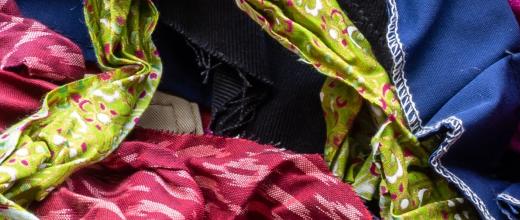
Why it matters: This matters for FashionTech because it gives a concrete current signal to track: ## AXENS, IFPEN and JEPLAN have completed a recycling loop for polyester textiles.
Context: ## AXENS, IFPEN and JEPLAN have completed a recycling loop for polyester textiles. … #### Several tens of tons of post-consumer, polyester-rich, European textile waste, sorted and prepared in France, have been processed in the Axens, IFPEN and JEPLAN semi-industrial demonstration unit, located in Japan, to successfully produce the base monomer of a 100% recycled polyester.
"## AXENS, IFPEN and JEPLAN have completed a recycling loop for polyester textiles. … #### Several tens of tons of post-consumer, polyester-rich, European textile waste, sorted and prepared in France, have been." — IFPENERGIESNOUVELLES
Commentary: The immediate implication is operational rather than speculative: watch how this changes budgets, workflows, or risk assumptions over the next cycle.
Date: April 21, 2026 12:00 AM ET
URL: https://www.ifpenergiesnouvelles.com/article/new-textile-textile-recycling-process-validated-industrial-scale
AI Sentiment Score: Negative (66%)
AI Credibility Score: 9.8/10 — High
Scores and text generated by AI analysis of the source article indicated.
Polyester-rich textile wastes are recycled to monomer at … (Chemengonline)
Summary: Several tens of tons of post-consumer, polyester-rich, European textile wastes, sorted and prepared in France, have been processed in the Axens, IFPEN and JEPLAN semi-industrial demonstration unit, located in Japan, to successfully produce the base monomer of a 100% recycled polyester. This step paves the way for circular polyester loops for the textile industry, in particular sportswear, home furnishings and the luxury sector. This validation at a significant scale consisted in processing several tens of tons of textiles from the French public collection, sorted and prepared by two French partners, Nouvelles Fibres Textile and Mapea.
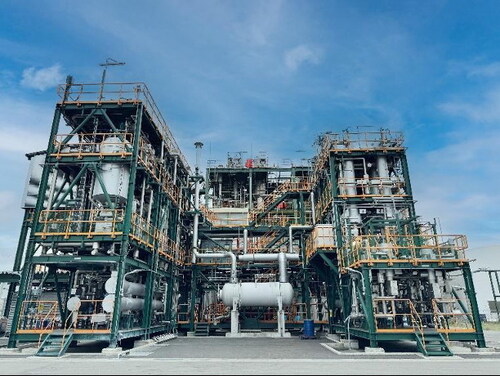
Why it matters: This matters for FashionTech because it gives a concrete current signal to track: Several tens of tons of post-consumer, polyester-rich, European textile wastes, sorted and prepared in France, have been processed in the Axens, IFPEN and JEPLAN semi-industrial demonstration unit, located in Japan, to successfully produce the base monomer of a 100% recycled polyester.
Context: Several tens of tons of post-consumer, polyester-rich, European textile wastes, sorted and prepared in France, have been processed in the Axens, IFPEN and JEPLAN semi-industrial demonstration unit, located in Japan, to successfully produce the base monomer of a 100% recycled polyester. This step paves the way for circular polyester loops for the textile industry, in particular sportswear, home furnishings and the luxury sector. This validation at a significant scale consisted in processing several tens of tons of textiles from the French public collection, sorted and prepared by two French partners, Nouvelles Fibres Textile and Mapea.
"Several tens of tons of post-consumer, polyester-rich, European textile wastes, sorted and prepared in France, have been processed in the Axens, IFPEN and JEPLAN semi-industrial demonstration unit, located in Japan, to successfully." — CHEMENGONLINE
Commentary: The immediate implication is operational rather than speculative: watch how this changes budgets, workflows, or risk assumptions over the next cycle.
Date: April 23, 2026 12:00 AM ET
URL: https://www.chemengonline.com/polyester-rich-textile-wastes-are-recycled-to-monomer-at-demonstration-plant/
AI Sentiment Score: Negative (50%)
AI Credibility Score: 9.4/10 — High
Scores and text generated by AI analysis of the source article indicated.
Harnest launches scalable circular trims platform with … (Textilefocus)
Summary: Dhaka / London. 21 April 2026. Trims account for more than 40% of a garment’s bill of materials and remain one of the least-addressed barriers to textile recycling. Today, fewer than 1% of global textile materials come from recycled fibre.

Why it matters: This matters for Made In USA manufacturing and logistics because it gives a concrete current signal to track: **Dhaka / London.
Context: Dhaka / London. 21 April 2026. Trims account for more than 40% of a garment’s bill of materials and remain one of the least-addressed barriers to textile recycling. Today, fewer than 1% of global textile materials come from recycled fibre.
"Dhaka / London. 21 April 2026. Trims account for more than 40% of a garment’s bill of materials and remain one of the least-addressed barriers to textile recycling. Today, fewer than 1%." — TEXTILEFOCUS
Commentary: The immediate implication is operational rather than speculative: watch how this changes budgets, workflows, or risk assumptions over the next cycle.
Date: April 23, 2026 12:00 AM ET
URL: https://textilefocus.com/harnest-launches-scalable-circular-trims-platform-with-oceansafe-ambercycle-blocktexx-indorama-ventures-and-jairun/
AI Sentiment Score: Neutral (50%)
AI Credibility Score: 7.0/10 — Medium
Scores and text generated by AI analysis of the source article indicated.
Textile ETP (Textile-Platform.Eu)
Summary: Discover Europe’s largest and most dynamic network of professionals driving research and innovation in the textile and clothing industries. As the European Technology Platform for the Future of Textiles and Clothing, we unite researchers, industry leaders, and innovators shaping the future of the sector. …

Why it matters: This matters for Made In USA manufacturing and logistics because it gives a concrete current signal to track: Discover Europe’s largest and most dynamic network of professionals driving research and innovation in the textile and clothing industries.
Context: Discover Europe’s largest and most dynamic network of professionals driving research and innovation in the textile and clothing industries. As the European Technology Platform for the Future of Textiles and Clothing, we unite researchers, industry leaders, and innovators shaping the future of the sector. …
"Discover Europe’s largest and most dynamic network of professionals driving research and innovation in the textile and clothing industries. As the European Technology Platform for the Future of Textiles and Clothing, we." — TEXTILE-PLATFORM.EU
Commentary: The immediate implication is operational rather than speculative: watch how this changes budgets, workflows, or risk assumptions over the next cycle.
Date: April 24, 2026 12:00 AM ET
URL: https://www.textile-platform.eu
AI Sentiment Score: Positive (40%)
AI Credibility Score: 7.0/10 — Medium
Scores and text generated by AI analysis of the source article indicated.
Integrating eco-design into e-clothing development – Frontiers (Frontiersin)
Summary: There are many terms in literature that are often used interchangeably to refer to textile, wearable and clothing with integrated technologies and high-performative functionalities: for instance “smart clothing” refers to a “smart system” that senses and responds to environmental and wearer conditions, mostly through textile performative augmentation (Cho, 2009); “e-textiles” are related to portion of textiles that are integrated with electronic components but not necessarily extended to entire garments (Stegmaier, 2012). Differently, this research adopts the term “e-clothing” to highlight textile-wearable technologies at the level of entire garment system that integrates electronic components such as sensors, actuators, batteries and circuits (Wang and Casciani, 2024). …

Why it matters: This matters for Made In USA manufacturing and logistics because it gives a concrete current signal to track: There are many terms in literature that are often used interchangeably to refer to textile, wearable and clothing with integrated technologies and high-performative functionalities: for instance “smart clothing” refers to a “smart system” that senses and responds to environmental and wearer conditions, mostly through textile performative augmentation (Cho, 2009); “e-textiles” are related to portion of textiles that are integrated with electronic components but not necessarily extended to entire garments (Stegmaier, 2012).
Context: There are many terms in literature that are often used interchangeably to refer to textile, wearable and clothing with integrated technologies and high-performative functionalities: for instance “smart clothing” refers to a “smart system” that senses and responds to environmental and wearer conditions, mostly through textile performative augmentation (Cho, 2009); “e-textiles” are related to portion of textiles that are integrated with electronic components but not necessarily extended to entire garments (Stegmaier, 2012). Differently, this research adopts the term “e-clothing” to highlight textile-wearable technologies at the level of entire garment system that integrates electronic components such as sensors, actuators, batteries and circuits (Wang and Casciani, 2024). …
"There are many terms in literature that are often used interchangeably to refer to textile, wearable and clothing with integrated technologies and high-performative functionalities: for instance “smart clothing” refers to a “smart." — FRONTIERSIN
Commentary: The immediate implication is operational rather than speculative: watch how this changes budgets, workflows, or risk assumptions over the next cycle.
Date: April 20, 2026 12:00 AM ET
URL: https://www.frontiersin.org/journals/sustainability/articles/10.3389/frsus.2026.1772804/full
AI Sentiment Score: Positive (50%)
AI Credibility Score: 10.0/10 — High
Scores and text generated by AI analysis of the source article indicated.
Post ID: c74a9b28