Iran-US Conflict and Global Tensions
Iran calls US ship seizure ‘piracy’: Is it? (Aljazeera)
Summary: The US seizure of an Iranian-flagged container ship near the Strait of Hormuz has escalated maritime tensions, with Iran retaliating by capturing two foreign commercial vessels and labeling US actions as ‘piracy’. The US military states the seizure enforces a naval blockade on Iranian ports, while legal experts note the term ‘piracy’ does not strictly apply to state enforcement actions. Iran’s Revolutionary Guard Corps asserts that passage through the strait now requires its permission, signaling a move to formalize control and potentially levy transit fees.

Why it matters: The incident crystallizes a shift toward contested maritime enforcement and the weaponization of global shipping lanes, directly threatening the operational assumptions of commercial logistics and energy transit through a critical chokepoint.
Context: This follows a pattern of US interdictions of sanctioned vessels and Iran’s asymmetric responses, unfolding within a fragile ceasefire and against a backdrop of prior naval engagements, including the sinking of an Iranian warship.
"Iran calls US ship seizure ‘piracy’: Is it? Since the early days of the war on Iran, the US has been targeting Iranian ships in international waters. Iran responded to the US." — ALJAZEERA
Commentary: The legal distinction between state enforcement and piracy is clear, but the operational reality is a normalization of high-seas seizures that erodes neutral passage. Iran’s stated intent to require IRGC coordination for Strait of Hormuz transit represents a tangible escalation from sporadic harassment to a potential regulatory regime, directly challenging freedom of navigation. For commercial shipping, the risk calculus must now incorporate not just regional conflict but also the precedent of flag-based interdiction by major naval powers. This moves the conflict from the battlefield to the ledger, where control of trade routes becomes a primary instrument of state pressure.
Date: Wed, 22 Apr 2026 12:33:36 +0000
URL: https://www.aljazeera.com/news/2026/4/22/iran-calls-us-ship-seizure-piracy-is-it?traffic_source=rss
AI Sentiment Score: Negative (50%)
AI Credibility Score: 10.0/10 — High
Scores and text generated by AI analysis of the source article indicated.
Iran war: What’s happening on day 54 as Trump extends ceasefire? (Aljazeera)
Summary: The US has extended a ceasefire with Iran, conditioning its continuation on Tehran submitting a formal proposal and concluding negotiations, while maintaining a naval blockade of Iranian ports. Iran rejects negotiating under the blockade, calling it an act of war, creating a diplomatic impasse. Regional violence persists in the West Bank and along the Israel-Lebanon border despite local truces, and the US is widening sanctions. The strategic blockade of the Strait of Hormuz continues to constrain global oil flows, and the US is considering a currency swap with the UAE to bolster its Gulf ally’s economy.

Why it matters: The extension of a ceasefire under a maintained blockade represents a high-stakes coercive diplomacy that risks miscalculation and prolongs regional instability, directly impacting global energy security and alliance structures.
Context: This follows a pattern of US policy leveraging simultaneous military pressure and diplomatic openings, while Iran and its regional proxies test ceasefire boundaries, keeping the conflict in a volatile, non-kinetic stalemate.
"Iran war: What’s happening on day 54 as Trump extends ceasefire? President Trump said the US would extend the ceasefire until Iran presents a proposal and talks are concluded, but a naval." — ALJAZEERA
Commentary: The strategy conflates ceasefire and negotiation preconditions, effectively using the blockade as a permanent leveraging tool rather than a goodwill gesture, which Tehran correctly identifies as a violation. This calcifies positions, making substantive talks less likely and incentivizing Iran to explore asymmetric responses, such as the IRGC’s threat to regional oil production. The parallel currency swap consideration with the UAE signals Washington’s preparation for prolonged economic disruption, treating the Gulf’s financial stability as a direct component of war contingency planning.
Date: Wed, 22 Apr 2026 05:25:57 +0000
URL: https://www.aljazeera.com/news/2026/4/22/iran-war-whats-happening-on-day-54-as-trump-extends-ceasefire?traffic_source=rss
AI Sentiment Score: Negative (77%)
AI Credibility Score: 10.0/10 — High
Scores and text generated by AI analysis of the source article indicated.
Iran war: Trump cancels envoys’ trip to Islamabad (Dw)
Summary: President Trump canceled a planned diplomatic mission to Islamabad, ordering envoys Jared Kushner and Steve Witkoff not to travel for talks with Iranian officials. Iranian Foreign Minister Abbas Araghchi departed Pakistan without meeting the US delegation, casting doubt on Washington’s seriousness. Concurrently, Iran resumed commercial flights from Tehran and its military warned of a response to the ongoing US naval blockade, while Germany announced naval pre-deployments for a potential Strait of Hormuz mission.
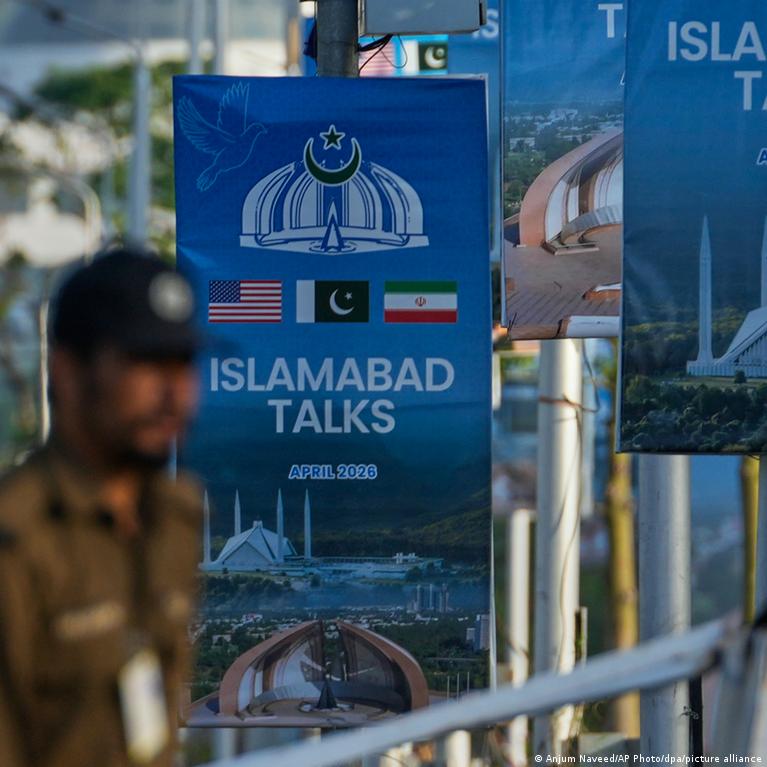
Why it matters: The cancellation fractures a key mediation channel through Pakistan, elevating the risk of conflict resumption and forcing regional actors to recalculate their security and economic commitments.
Context: This follows a fragile, Pakistan-mediated ceasefire and occurs amid a US naval blockade of Iranian ports and Iranian mining of the Strait of Hormuz, a critical global oil chokepoint.
""I’ve told my people a little while ago they were getting ready to leave, and I said, ‘Nope, you’re not making an 18 hour flight to go there,’" Fox News reported the president as saying in a phone call." — DW
Commentary: Trump’s unilateral cancellation, framed as a rejection of procedural theater, effectively torpedoes Pakistan’s painstakingly built shuttle diplomacy. It signals a reversion to maximum-pressure tactics, betting that Iran’s internal fractures and infrastructure strain could force capitulation. The immediate operational consequences are Germany’s naval mobilization and Turkey’s conditional offer to demine the Strait, indicating US allies are preparing for protracted maritime disruption, not a swift diplomatic solution.
URL: https://www.dw.com/en/iran-war-trump-cancels-envoys-trip-to-islamabad/live-76929720?maca=en-rss-en-all-1573-rdf
AI Sentiment Score: Negative (80%)
AI Credibility Score: 10.0/10 — High
Scores and text generated by AI analysis of the source article indicated.
US and Iran in blockade standoff as Pakistan pushes for talks (Bbc)
Summary: The US-Iran ceasefire persists, but a tense blockade standoff over the Strait of Hormuz has replaced open conflict. Pakistan’s attempt to host peace talks in Islamabad has stalled, with delegations failing to arrive, diminishing a key diplomatic opportunity for Islamabad. President Trump’s erratic public statements and suggestion of a ‘seriously fractured’ Iranian regime have complicated diplomacy, raising questions about internal Iranian authority.
Why it matters: A blockade war in the Strait of Hormuz directly threatens global energy flows and maritime security, while diplomatic paralysis increases the risk of miscalculation and regional escalation.
Context: This follows a period of direct conflict and reflects a shift to economic and maritime coercion, with Pakistan seeking to elevate its regional mediator role amid great-power friction.
"US and Iran in blockade standoff as Pakistan pushes for talks Courtesy of last night’s Truth Social post from US President Donald Trump, the ceasefire between Iran, the US and Israel which." — BBC
Commentary: The shift to a ‘war of blockades’ formalizes economic warfare as the primary instrument of statecraft here, creating immediate operational risks for shippers and insurers. Pakistan’s stalled mediation highlights the diminishing returns of traditional diplomatic channels when one party—here, the US—employs a strategy of deliberate strategic ambiguity. Trump’s framing of a ‘seriously fractured’ regime is less an analysis than a tactic, weaponizing uncertainty to pressure Tehran but also exposing Washington’s own intelligence and policy coordination gaps. The immediate risk is less a breakout of major war than a gradual tightening of the blockade, raising shipping costs and testing the resilience of alternative supply routes.
Date: Wed, 22 Apr 2026 16:19:36 GMT
URL: https://www.bbc.com/news/articles/c0q9xq7knq2o
AI Sentiment Score: Negative (90%)
AI Credibility Score: 10.0/10 — High
Scores and text generated by AI analysis of the source article indicated.
Iran War Live Updates: Tehran and Trump Send Mixed Signals Ahead of Potential Talks (Nytimes)
Summary: Vice President JD Vance is set to lead a U.S. delegation to Pakistan as Mr. Trump pushes for a peace deal.

Why it matters: US diplomatic pivot to Pakistan signals renewed regional engagement, potentially bypassing direct Iran negotiations.
Context: Tehran’s conditional readiness to engage suggests talks remain contingent on US diplomatic architecture.
"Vice President JD Vance is set to lead a U.S. delegation to Pakistan as Mr. Trump pushes for a peace deal. Iranian officials said privately they would send a team if Mr." — NYTIMES
Commentary: The signal is still worth tracking, but the current extraction path did not yield enough body text for a fuller analytical read. The immediate implication is operational rather than speculative: watch how this changes budgets, workflows, or risk assumptions over the next cycle.
Date: Tue, 21 Apr 2026 01:53:11 +0000
URL: https://www.nytimes.com/live/2026/04/20/world/iran-us-war-trump-hormuz
AI Sentiment Score: Neutral (50%)
AI Credibility Score: 10.0/10 — High
Scores and text generated by AI analysis of the source article indicated.
Iran War Live Updates: Cease-Fire Nears End, and It’s Unclear if Peace Talks Will Resume (Nytimes)
Summary: Vice President JD Vance, who had been set to travel to Pakistan for peace talks, delayed his departure, a U.S. official said. Iran has not publicly confirmed that its negotiators will attend.

Why it matters: Vance’s delayed travel signals immediate diplomatic uncertainty regarding regional de-escalation pathways.
Context: Lack of confirmation from Tehran complicates any perceived trajectory toward sustained regional stability.
"Vice President JD Vance, who had been set to travel to Pakistan for peace talks, delayed his departure, a U.S. official said. Iran has not publicly confirmed that its negotiators will attend." — NYTIMES
Commentary: The signal is still worth tracking, but the current extraction path did not yield enough body text for a fuller analytical read. The immediate implication is operational rather than speculative: watch how this changes budgets, workflows, or risk assumptions over the next cycle.
Date: Tue, 21 Apr 2026 16:12:21 +0000
URL: https://www.nytimes.com/live/2026/04/21/world/iran-us-war-trump-news
AI Sentiment Score: Negative (66%)
AI Credibility Score: 10.0/10 — High
Scores and text generated by AI analysis of the source article indicated.
In Tehran, money is short and a return to war looms over daily life (Bbc)
Summary: A street-level report from Tehran captures the economic and psychological toll of prolonged crisis, where residents navigate severe inflation, job losses, and a government-imposed internet shutdown. Amidst a fragile ceasefire with Israel and stalled negotiations with the U.S., public sentiment reveals a desperate, contradictory spectrum: some hope for renewed war as a catalyst for change, while others simply seek relief from a collapsing economy. The state projects defiance through nightly rallies and heightened security, even as societal fractures over dress codes, digital access, and political trust remain stark.

Why it matters: The granular human experience in Tehran reveals how state-level conflict and economic policy degrade civic life and market function, with implications for regional stability and the operational environment for any entity engaging Iran.
Context: Iran’s economy has been under severe strain from sanctions and mismanagement for years; the recent war with Israel and the government’s domestic crackdowns have accelerated the crisis, creating a volatile public mood.
"In Tehran, money is short and a return to war looms over daily life On a bright Tehran spring day, Sanaei Ghaznavi street, with its mix of shops selling groceries and household." — BBC
Commentary: The shopkeeper’s perverse hope for renewed war is a profound indicator of systemic failure, where the status quo is seen as more intolerable than conflict. This sentiment, alongside the architect’s plea for ‘freedom’ and the state’s simultaneous crackdown and performative unity rallies, sketches a polity nearing a breaking point. For external actors, it signals that traditional leverage through sanctions or diplomacy may now produce unpredictable, even inverted, public reactions. The resilience of cafe culture and informal trade in fakes are the only functional markets left, suggesting where real adaptation is occurring.
Date: Thu, 23 Apr 2026 11:26:01 GMT
URL: https://www.bbc.com/news/articles/cdrm8k7lzmko
AI Sentiment Score: Negative (84%)
AI Credibility Score: 10.0/10 — High
Scores and text generated by AI analysis of the source article indicated.
To Iran, Trump Blinked First by Extending the Cease-Fire (Nytimes)
Summary: Iran’s leaders believe that they can withstand an enduring standoff longer than President Trump. The strategy could be economically devastating for average Iranians.

Why it matters: Iran’s perceived endurance suggests a strategic calculation regarding external pressure points.
Context: The focus shifts from immediate confrontation to protracted economic attrition.
"Iran’s leaders believe that they can withstand an enduring standoff longer than President Trump. The strategy could be economically devastating for average Iranians." — NYTIMES
Commentary: The signal is still worth tracking, but the current extraction path did not yield enough body text for a fuller analytical read. The immediate implication is operational rather than speculative: watch how this changes budgets, workflows, or risk assumptions over the next cycle.
Date: Wed, 22 Apr 2026 19:00:11 +0000
URL: https://www.nytimes.com/2026/04/22/world/middleeast/iran-trump-ceasefire.html
AI Sentiment Score: Negative (50%)
AI Credibility Score: 10.0/10 — High
Scores and text generated by AI analysis of the source article indicated.
Journalist Detained in Kuwait After Posting About Iran War Is Acquitted (Nytimes)
Summary: Ahmed Shihab-Eldin, a Kuwaiti-American journalist, is expected to be released soon, after 52 days in detention, a lawyer for two of his family members said. Kuwait’s handling of press freedom, even post-acquittal, signals persistent, localized editorial risk.

Why it matters: Kuwait’s handling of press freedom, even post-acquittal, signals persistent, localized editorial risk.
Context: The detention and subsequent release underscore the ongoing tension between regional media autonomy and geopolitical sensitivities.
"Ahmed Shihab-Eldin, a Kuwaiti-American journalist, is expected to be released soon, after 52 days in detention, a lawyer for two of his family members said." — NYTIMES
Commentary: The signal is still worth tracking, but the current extraction path did not yield enough body text for a fuller analytical read. The immediate implication is operational rather than speculative: watch how this changes budgets, workflows, or risk assumptions over the next cycle.
Date: Thu, 23 Apr 2026 16:53:55 +0000
URL: https://www.nytimes.com/2026/04/23/world/middleeast/kuwait-journalist-acquitted.html
AI Sentiment Score: Negative (66%)
AI Credibility Score: 10.0/10 — High
Scores and text generated by AI analysis of the source article indicated.
Trump buys time for Iran deal after frantic day of diplomacy (Bbc)
Summary: President Trump extended the U.S.-Iran ceasefire without a new deadline, postponing planned diplomatic talks and avoiding an immediate military escalation. The decision, announced via Truth Social, followed internal White House debate and was framed as a response to a Pakistani request for more time. This marks a second pause in as many weeks, reflecting a tactical delay rather than a strategic breakthrough.
Why it matters: The open-ended extension perpetuates market and geopolitical uncertainty, leaving core U.S. demands unmet and the risk of renewed conflict intact, which directly impacts global energy security and regional stability.
Context: This follows a pattern of Trump leveraging public deadlines and social media announcements to manage war diplomacy, while underlying U.S. pressure tactics, like the Strait of Hormuz blockade, remain unchanged.
"Trump bought himself more time. But a quick resolution to the war, for now, seems as elusive as ever." — BBC
Commentary: The move is a classic Trumpian gambit: creating theatrical urgency only to defer it, which manages domestic political pressure but erodes diplomatic credibility. The unresolved blockade and Iranian red lines mean this is less a path to peace and more a calculated pause that externalizes the costs of uncertainty onto global markets and allied governments.
Date: Wed, 22 Apr 2026 00:32:10 GMT
URL: https://www.bbc.com/news/articles/cvg4yr90jr2o
AI Sentiment Score: Negative (87%)
AI Credibility Score: 10.0/10 — High
Scores and text generated by AI analysis of the source article indicated.
US boards ship carrying Iran oil as Trump threatens mine-laying vessels (Bbc)
Summary: US forces boarded the sanctioned tanker M/T Majestic X in the Indian Ocean, part of an ongoing naval blockade against Iranian oil shipments. Concurrently, President Trump issued a direct order for the US Navy to ‘shoot and kill’ any vessel laying mines in the Strait of Hormuz, escalating maritime tensions. Iran claims to have begun collecting tolls from ships using the strait and has seized at least two commercial vessels, while disputing US narratives of control. The actions occur against a backdrop of a fragile, extended ceasefire and heightened rhetoric from both sides, with Israel signaling readiness to re-engage militarily.
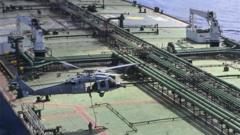
Why it matters: The direct interdiction of sanctioned oil shipments and the explicit threat of lethal force against mine-layers signal a sharp escalation in maritime enforcement, raising immediate risks for global shipping, energy markets, and regional stability.
Context: This follows the US imposition of a naval blockade on Iranian ports in April and represents a tactical shift from interdiction to pre-emptive threat against specific asymmetric threats (mine-laying), testing the boundaries of naval engagement rules.
"US boards ship carrying Iran oil as Trump threatens mine-laying vessels The US says its forces have boarded a sanctioned ship carrying Iranian oil in the Indian Ocean in the country’s latest." — BBC
Commentary: The ‘shoot and kill’ order, communicated via social media, operationalizes a previously implied policy, creating a clear red line that could trigger immediate conflict if challenged. Combined with the boarding of the Majestic X, it demonstrates a US strategy of simultaneous enforcement and deterrence, betting that overt pressure will fracture Iranian resolve without a full-scale war. The credibility of this gamble hinges on the unverified Iranian toll collection and vessel seizures, which suggest Tehran is adapting to the blockade rather than capitulating.
Date: Thu, 23 Apr 2026 20:45:51 GMT
URL: https://www.bbc.com/news/articles/cgldw5ekrjpo
AI Sentiment Score: Negative (85%)
AI Credibility Score: 10.0/10 — High
Scores and text generated by AI analysis of the source article indicated.
Iran War Live Updates: Trump Threatens Iranian Boats He Says Are Mining the Strait of Hormuz (Nytimes)
Summary: President Trump’s latest threats came after the Pentagon said the U.S. military had boarded a second tanker carrying oil from Iran. Both sides are trying to exert authority over shipping amid uncertainty over the status of peace talks.

Why it matters: Escalating rhetoric over Strait of Hormuz signals immediate maritime risk, complicating energy transit.
Context: US military action against Iranian-linked tankers suggests diplomatic channels remain tenuous despite peace overtures.
"President Trump’s latest threats came after the Pentagon said the U.S. military had boarded a second tanker carrying oil from Iran. Both sides are trying to exert authority over shipping amid uncertainty." — NYTIMES
Commentary: The signal is still worth tracking, but the current extraction path did not yield enough body text for a fuller analytical read. The immediate implication is operational rather than speculative: watch how this changes budgets, workflows, or risk assumptions over the next cycle.
Date: Thu, 23 Apr 2026 15:53:32 +0000
URL: https://www.nytimes.com/live/2026/04/23/world/iran-war-trump-news
AI Sentiment Score: Negative (50%)
AI Credibility Score: 10.0/10 — High
Scores and text generated by AI analysis of the source article indicated.
The Generals Who Are Now Running Iran (Nytimes)
Summary: The killing of Ayatollah Ali Khamenei ushered in a new form of collective leadership in the country, with more power for the Revolutionary Guards. Power vacuum suggests a consolidation of authority within the IRGC structure, signaling internal regime shifts.

Why it matters: Power vacuum suggests a consolidation of authority within the IRGC structure, signaling internal regime shifts.
Context: The nature of post-Khamenei governance suggests a hardening of internal power dynamics, impacting regional stability.
"The killing of Ayatollah Ali Khamenei ushered in a new form of collective leadership in the country, with more power for the Revolutionary Guards." — NYTIMES
Commentary: The signal is still worth tracking, but the current extraction path did not yield enough body text for a fuller analytical read. The immediate implication is operational rather than speculative: watch how this changes budgets, workflows, or risk assumptions over the next cycle.
Date: Thu, 23 Apr 2026 13:55:36 +0000
URL: https://www.nytimes.com/2026/04/23/world/middleeast/iran-new-leadership-generals.html
AI Sentiment Score: Neutral (50%)
AI Credibility Score: 10.0/10 — High
Scores and text generated by AI analysis of the source article indicated.
How the Cole Disaster Drove the U.S. to Develop New Warship Defenses (Nytimes)
Summary: The Navy destroyers enforcing a blockade of Iranian ports carry weapons fielded after an American warship was attacked and nearly sunk more than 25 years ago. Legacy military hardware remains deeply intertwined with contemporary geopolitical flashpoints.

Why it matters: Legacy military hardware remains deeply intertwined with contemporary geopolitical flashpoints.
Context: The enduring technological lineage of naval defense systems suggests persistent, non-linear security risks.
"The Navy destroyers enforcing a blockade of Iranian ports carry weapons fielded after an American warship was attacked and nearly sunk more than 25 years ago." — NYTIMES
Commentary: The signal is still worth tracking, but the current extraction path did not yield enough body text for a fuller analytical read. The immediate implication is operational rather than speculative: watch how this changes budgets, workflows, or risk assumptions over the next cycle.
Date: Tue, 21 Apr 2026 09:01:30 +0000
URL: https://www.nytimes.com/2026/04/21/world/middleeast/us-navy-ship-defense-iran-hormuz.html
AI Sentiment Score: Neutral (50%)
AI Credibility Score: 10.0/10 — High
Scores and text generated by AI analysis of the source article indicated.
Zelensky says failure of US envoys to visit Kyiv is ‘disrespectful’ (Bbc)
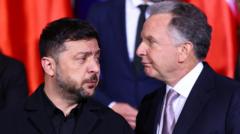
Summary: Ukrainian President Volodymyr Zelensky has publicly characterized the repeated visits of senior US envoys Steve Witkoff and Jared Kushner to Moscow, without a corresponding official visit to Kyiv, as ‘disrespectful.’ This diplomatic slight occurs as US-mediated ceasefire talks, which accelerated in late 2025, have reached a deadlock over the status of the Donbas region. While military hostilities continue intensely, the US diplomatic focus has shifted to the Middle East, and European financial support for Ukraine remains contingent on resolving a pipeline dispute with Hungary.
Why it matters: The perceived diplomatic snub underscores the fragility of Ukraine’s strategic position and the risks of its interests being deprioritized in a multipolar crisis, directly affecting the war’s trajectory and the stability of European energy and security architecture.
Context: This complaint emerges after a period of intensified but stalled US-Russia ceasefire negotiations, where Ukraine has fought to maintain a seat at the table, and as the US is concurrently engaged in a conflict with Iran.
"Zelensky says failure of US envoys to visit Kyiv is ‘disrespectful’ President Volodymyr Zelensky has said he considered visits by US envoys Steve Witkoff and Jared Kushner to Moscow but not Kyiv." — BBC
Commentary: Zelensky’s public framing transforms a logistical omission into a symbolic grievance, a calculated move to pressure Washington and signal domestic audiences that Kyiv will not be taken for granted. The statement reveals the underlying tension in a negotiation process where Ukraine fears being presented with a fait accompli brokered between larger powers. Its timing, as the US diverts attention and EU aid hangs on a pipeline repair, highlights how Ukraine’s military and diplomatic fronts are increasingly interdependent.
Date: Tue, 21 Apr 2026 11:37:11 GMT
URL: https://www.bbc.com/news/articles/cd9v420y190o
AI Sentiment Score: Negative (88%)
AI Credibility Score: 10.0/10 — High
Scores and text generated by AI analysis of the source article indicated.
$106 Billion Loan Reflects E.U.’s View That Peace in Ukraine Is Far Away (Nytimes)
Summary: Unlike previous European assistance packages, this one is heavily weighted toward military spending, meant to put Ukraine on solid footing for a long fight. Shift to sustained military aid signals protracted conflict calculus, impacting regional stability and resource allocation.

Why it matters: Shift to sustained military aid signals protracted conflict calculus, impacting regional stability and resource allocation.
Context: The scale and military focus of the latest EU tranche suggest a long-term commitment to Ukrainian defense posture.
"Unlike previous European assistance packages, this one is heavily weighted toward military spending, meant to put Ukraine on solid footing for a long fight." — NYTIMES
Commentary: The signal is still worth tracking, but the current extraction path did not yield enough body text for a fuller analytical read. The immediate implication is operational rather than speculative: watch how this changes budgets, workflows, or risk assumptions over the next cycle.
Date: Thu, 23 Apr 2026 15:13:40 +0000
URL: https://www.nytimes.com/2026/04/23/world/europe/eu-loan-ukraine.html
AI Sentiment Score: Negative (50%)
AI Credibility Score: 10.0/10 — High
Scores and text generated by AI analysis of the source article indicated.
EU Considers $106 Billion Loan to Ukraine, Delayed for Months by Orban (Nytimes)
Summary: After months of impasse because of objections from Hungary’s prime minister, Viktor Orban, E.U. ambassadors took a critical step on the way to disbursing the much-needed money.

Why it matters: Orban’s veto stalling EU aid signals persistent geopolitical friction within the bloc’s cohesion.
Context: The disbursement of substantial EU financing to Ukraine remains contingent on overcoming internal institutional resistance.
"After months of impasse because of objections from Hungary’s prime minister, Viktor Orban, E.U. ambassadors took a critical step on the way to disbursing the much-needed money." — NYTIMES
Commentary: The signal is still worth tracking, but the current extraction path did not yield enough body text for a fuller analytical read. The immediate implication is operational rather than speculative: watch how this changes budgets, workflows, or risk assumptions over the next cycle.
Date: Wed, 22 Apr 2026 12:19:00 +0000
URL: https://www.nytimes.com/2026/04/22/world/europe/eu-loan-ukraine-pipeline-hungary.html
AI Sentiment Score: Neutral (33%)
AI Credibility Score: 10.0/10 — High
Scores and text generated by AI analysis of the source article indicated.
Defence Current Affairs 21 April 2026 – SSBCrackExams (Ssbcrackexams)
Summary: India has established a sovereign-backed maritime insurance pool with a ₹12,980 crore suggest to shield its shipping from high-risk zone disruptions. Concurrently, it is leveraging its Andaman and Nicobar Command to monitor critical sea lanes amid ongoing tensions in chokepoints like the Strait of Hormuz. The move coincides with stable domestic food prices and plans to export surplus wheat, projecting resilience.
Why it matters: Sovereign insurance pools alter risk pricing and vessel flagging decisions globally, while forward military basing in maritime chokepoints directly affects shipping costs, schedules, and regional security calculations.
Context: This follows a pattern of nations using financial instruments and remote military assets to secure trade routes, reducing reliance on volatile commercial insurance markets and multilateral security suggests.
"A key highlight was the approval of the Bharat Maritime Insurance Pool, backed by a sovereign guarantee of ₹12,980 crore. This initiative aims to ensure uninterrupted and affordable insurance coverage for Indian." — SSBCRACKEXAMS
Commentary: The pool effectively nationalizes a key commercial risk, decoupling Indian shipping from global underwriter sentiment during crises. Combined with the ANC’s surveillance reach, this creates a state-managed corridor for Indian trade, incentivizing vessel registration under the Indian flag but potentially fragmenting the global insurance landscape. The wheat export recommendation signals an intent to use agricultural surplus as strategic leverage, tying food security to maritime resilience.
Date: April 21, 2026 12:00 AM ET
URL: https://ssbcrackexams.com/defence-current-affairs-21-april-2026/
AI Sentiment Score: Negative (75%)
AI Credibility Score: 7.0/10 — Medium
Scores and text generated by AI analysis of the source article indicated.
Trump officials consider sending 1,100 Afghans who aided US forces to Congo (Theguardian)
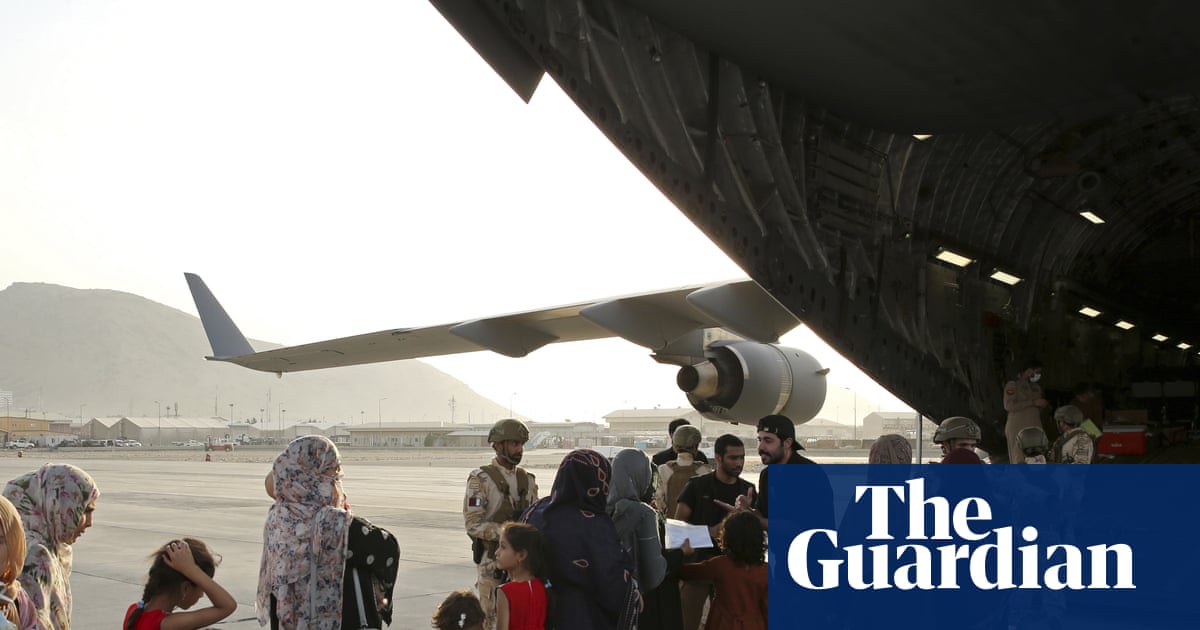
Summary: The Trump administration is reportedly in discussions to resettle up to 1,100 Afghans who assisted US forces in the Democratic Republic of Congo. This follows the termination of a program allowing these individuals to apply for US resettlement. The proposal represents a significant departure from prior US policy and obligations toward wartime allies.
Why it matters: This signals a potential redefinition of US responsibility for wartime partners, with direct implications for global refugee policy, alliance credibility, and the operational calculus for future local cooperation with US forces.
Context: The US has historically offered resettlement pathways for local allies, notably through the Special Immigrant Visa program. The DRC, while a sovereign state, faces profound internal instability and humanitarian crises, making it an unconventional destination for third-country refugee resettlement.
"The Trump administration is in discussions to potentially send up to 1,100 Afghans who helped US forces during the war in Afghanistan to the Democratic Republic of Congo (DRC), a non-profit confirmed on Tuesday." — THEGUARDIAN
Commentary: If executed, this move would functionally outsource a core alliance management function to a fragile state, degrading the value of US security assurances. It establishes a precedent that could deter local cooperation in future conflicts, while testing the limits of international refugee law frameworks. The logistical and ethical contours of such a transfer would invite intense scrutiny from allied governments and human rights monitors.
Date: Tue, 21 Apr 2026 23:26:37 GMT
URL: https://www.theguardian.com/us-news/2026/apr/21/afghan-refugees-us-congo
AI Sentiment Score: Negative (50%)
AI Credibility Score: 10.0/10 — High
Scores and text generated by AI analysis of the source article indicated.
Afghans Who Helped U.S. Forces Say They’re Being Pushed Back to the Taliban (Nytimes)
Summary: Once promised a move to the United States, Afghan refugees who helped U.S. forces say they face ‘bad or worse’ options: resettlement to Congo or returning home to live under the Taliban.

Why it matters: Failed resettlement promises deepen humanitarian crisis; alternative destinations lack established security or rights frameworks.
Context: The lack of viable third-country options for former US allies signals a protracted instability in the region.
"Once promised a move to the United States, Afghan refugees who helped U.S. forces say they face ‘bad or worse’ options: resettlement to Congo or returning home to live under the Taliban." — NYTIMES
Commentary: The signal is still worth tracking, but the current extraction path did not yield enough body text for a fuller analytical read. The immediate implication is operational rather than speculative: watch how this changes budgets, workflows, or risk assumptions over the next cycle.
Date: Thu, 23 Apr 2026 19:57:30 +0000
URL: https://www.nytimes.com/2026/04/23/world/asia/afghans-qatar-refugees-congo.html
AI Sentiment Score: Negative (80%)
AI Credibility Score: 10.0/10 — High
Scores and text generated by AI analysis of the source article indicated.
Taiwan president cancels trip after African countries revoke flight permits (Bbc)
Summary: Taiwanese President Lai Ching-te canceled a state visit to Eswatini after Seychelles, Mauritius, and Madagascar revoked overflight permits for his aircraft. Taiwanese officials attributed the last-minute permit denials to intense economic and political pressure from China, which Beijing denies while praising the nations for upholding the ‘one-China’ principle. The incident marks the first public cancellation of a Taiwanese leader’s trip due to revoked airspace access and underscores the operational constraints on Taiwan’s diplomatic mobility.

Why it matters: This demonstrates how geopolitical contestation is increasingly enforced through logistical and infrastructural control, directly impacting the practical execution of statecraft and international engagement.
Context: China systematically pressures nations to isolate Taiwan diplomatically, but coercive tactics targeting the physical transit of a head of state represent an escalation in operational interference.
"This is the first publicly known instance where Taiwan’s leader has had to cancel a trip due to revoked flight permits." — BBC
Commentary: Beijing’s move shifts pressure from symbolic diplomatic recognition to the tangible mechanics of access, weaponizing aviation corridors. For Taiwan, it reveals a vulnerability in sovereign mobility that extends beyond its remaining formal allies to any nation susceptible to Chinese leverage. The incident functionally expands the ‘one-China’ principle into global air traffic management, setting a precedent where geopolitical allegiance can be enforced through real-time logistical denial.
Date: Wed, 22 Apr 2026 06:25:15 GMT
URL: https://www.bbc.com/news/articles/crl16p72x7xo
AI Sentiment Score: Negative (66%)
AI Credibility Score: 10.0/10 — High
Scores and text generated by AI analysis of the source article indicated.
Phone tracking shows how Colombian mercenaries backed Sudan’s RSF – report (Bbc)
Summary: A new report from the Conflict Insights Group uses commercial phone-tracking data to map a pipeline of Colombian mercenaries from recruitment in Colombia, through a UAE military facility in Ghayathi, to operational hubs in Sudan. These fighters, part of the ‘Desert Wolves’ brigade, provided critical drone and artillery support to the Rapid Support Forces (RSF), directly enabling the capture of el-Fasher—a siege marked by mass atrocities. The investigation provides the first public technical evidence directly linking the UAE, which has consistently denied involvement, to the RSF’s operational capabilities. US sanctions have targeted the network’s recruiters but have stopped short of explicitly naming the UAE government.

Why it matters: It demonstrates how commercially available surveillance technology can now forensically trace covert state-backed military interventions, altering the calculus of plausible deniability in modern conflict.
Context: The UAE has pursued a foreign policy of supporting non-state militias and mercenary forces across multiple theaters, from Libya to Yemen, often using corporate structures as intermediaries.
"We are making public what governments have long known – that there is a direct link between Abu Dhabi and the RSF." — BBC
Commentary: The methodology—using ad-tech to track individual phones—represents a significant escalation in open-source intelligence, turning the tools of digital marketing into instruments of geopolitical accountability. For the UAE, this moves allegations from the diplomatic backchannel to the public record, complicating its relationships with Western partners who formally advocate for a ceasefire. The operational sloppiness, like naming Wi-Fi networks after unit callsigns, underscores how mercenary networks often lack the operational security of state intelligence services. This creates a new vulnerability for states that rely on such proxies: their covert actions are now traceable not just by rival agencies, but by NGOs and journalists.
Date: Wed, 22 Apr 2026 04:01:50 GMT
URL: https://www.bbc.com/news/articles/cn4vk13wgwwo
AI Sentiment Score: Negative (57%)
AI Credibility Score: 10.0/10 — High
Scores and text generated by AI analysis of the source article indicated.
Philippines’ ex-president Rodrigo Duterte to face trial for crimes against humanity (Theguardian)
Summary: The International Criminal Court has unanimously confirmed charges of crimes against humanity against former Philippine President Rodrigo Duterte, paving the way for a trial. Judges found substantial grounds to believe he was responsible for murder and attempted murder related to his administration’s anti-drugs crackdown, which resulted in thousands of deaths. This marks a significant escalation in international legal accountability for a former head of state from Southeast Asia.
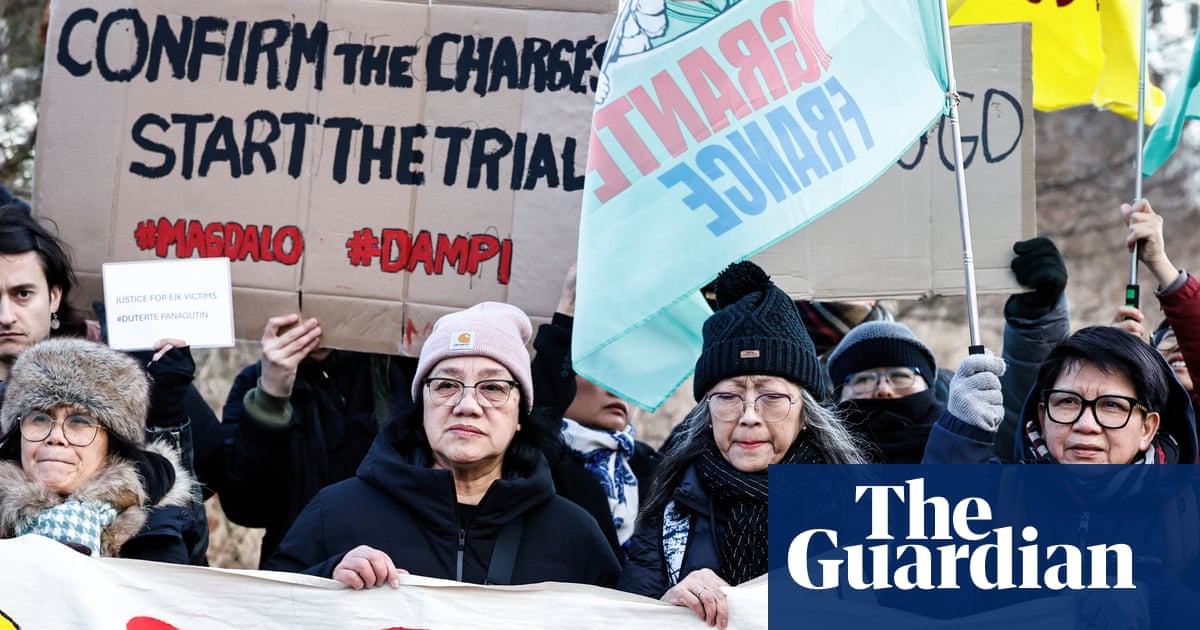
Why it matters: It tests the ICC’s reach against a populist leader who enjoyed domestic support for his policies, setting a precedent for how international justice navigates national sovereignty and violent domestic campaigns.
Context: Duterte’s ‘war on drugs,’ launched in 2016, was marked by extrajudicial killings and widespread condemnation from human rights groups. The Philippines withdrew from the ICC’s founding treaty in 2019, but the court asserts jurisdiction over crimes committed before the withdrawal took effect.
"Pre-trial judges concluded on Thursday that there were substantial grounds to believe Duterte was responsible for the crimes against humanity of murder and attempted murder in relation to anti-drugs crackdowns that led to the killing of thousands of people." — THEGUARDIAN
Commentary: The trial will strain Philippines-ICC relations and could influence regional alliances, as other governments with contentious domestic policies watch the proceedings. It also creates a complex diplomatic environment for the current Marcos administration, which must balance domestic political stability with international legal obligations. For global governance, it represents a rare attempt to legally codify the consequences of state-sanctioned violence framed as public order policy.
Date: Thu, 23 Apr 2026 12:07:35 GMT
URL: https://www.theguardian.com/world/2026/apr/23/philippines-ex-president-rodrigo-duterte-trial-charges-crimes-against-humanity
AI Sentiment Score: Negative (60%)
AI Credibility Score: 10.0/10 — High
Scores and text generated by AI analysis of the source article indicated.
Pilot Was Taking Pictures Before South Korean Fighter Jets Collided (Nytimes)
Summary: A member of the other plane’s crew was making a video to commemorate the mission, the government said in a report on the 2021 crash. No one was hurt.

Why it matters: The incident highlights the persistent tension between military operational tempo and public documentation.
Context: Focus shifts from accident mechanics to the role of media capture in high-stakes airspace encounters.
"A member of the other plane’s crew was making a video to commemorate the mission, the government said in a report on the 2021 crash. No one was hurt." — NYTIMES
Commentary: The signal is still worth tracking, but the current extraction path did not yield enough body text for a fuller analytical read. The immediate implication is operational rather than speculative: watch how this changes budgets, workflows, or risk assumptions over the next cycle.
Date: Wed, 22 Apr 2026 16:02:07 +0000
URL: https://www.nytimes.com/2026/04/22/world/asia/south-korean-fighter-jets-photos-phones.html
AI Sentiment Score: Neutral (33%)
AI Credibility Score: 10.0/10 — High
Scores and text generated by AI analysis of the source article indicated.
Post ID: 9af14541