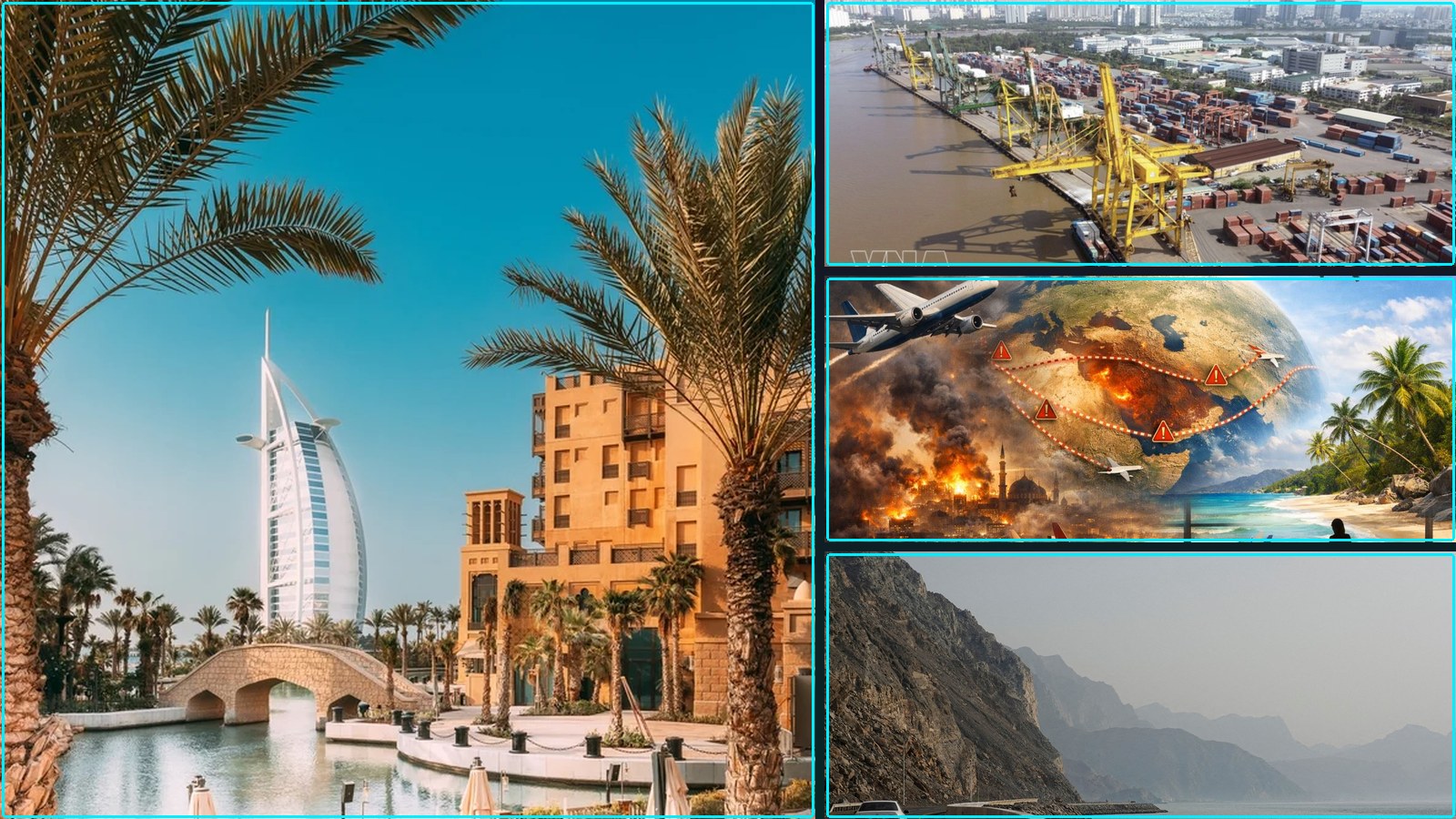
Middle East Conflict & Global Travel Disruptions
Austrian Airlines keeps Middle East routes grounded … (Visahq)
Summary: Austrian Airlines, a Lufthansa Group subsidiary, has extended its suspension of flights to nine Middle Eastern cities, including Dubai and Tel Aviv, until at least late October 2026. The decision, driven by heightened regional instability, removes key routes during the peak summer season and forces passengers onto alternative Star Alliance flights where capacity is already constrained. The prolonged grounding complicates corporate mobility planning and introduces new compliance headaches for non-EU travelers concerning Schengen visa allowances.

Why it matters: The extended suspension reshapes corporate travel logistics for a key European hub, introduces non-obvious compliance risks for international mobility, and signals a durable retreat from a volatile region by a major network carrier.
Context: This is part of a broader, risk-averse recalibration by European legacy carriers, shifting capacity from geopolitically sensitive markets to more stable trans-Atlantic and intra-European routes where operational predictability is higher.
"AUA says affected passengers are being re-protected on Star Alliance partners where operationally possible, but warns that inventory into high-demand Gulf markets is already tight." — VISAHQ
Commentary: The operational note about tight inventory reveals the secondary market squeeze: alternative capacity was already scarce, meaning re-routing will be costly and inefficient. This forces corporate travel managers into a reactive posture, refreshing visa dashboards and building in connection buffers as a new normal. The explicit timeline into late 2026, with analysts forecasting a minimal footprint into 2027, indicates Lufthansa Group is pricing in long-term instability, not a temporary pause. The compliance spillover—where circuitous routings through Vienna can accidentally breach Schengen visa rules—is a classic example of how operational aviation decisions create downstream administrative friction for global mobility.
Date: April 26, 2026 12:00 AM ET
URL: https://www.visahq.com/news/2026-04-25/at/austrian-airlines-keeps-middle-east-routes-grounded-through-october-2026-as-lufthansa-group-widens-suspension/
AI Sentiment Score: Negative (75%)
AI Credibility Score: 10.0/10 — High
Scores and text generated by AI analysis of the source article indicated.
Firms, industries grapple with shipping disruptions amid Middle East … (En.Qdnd.Vn)
Summary: Major shipping lines, including KMTC, Wan Hai, MSC, Maersk, and ONE, have suspended bookings and transits through key Middle Eastern routes and the Suez Canal following the outbreak of US-Israel-Iran hostilities. This has triggered immediate rerouting via the Cape of Good Hope, adding 15-20 days to voyages, and forecasts of 30%+ freight rate increases. The disruption directly impacts the Strait of Hormuz and the Red Sea-Suez corridor, with operational halts at major hubs like Jebel Ali. For exporters, particularly in Vietnam targeting Middle Eastern markets, this introduces severe delays and cost pressures on time-sensitive goods like fashion and perishable seafood.
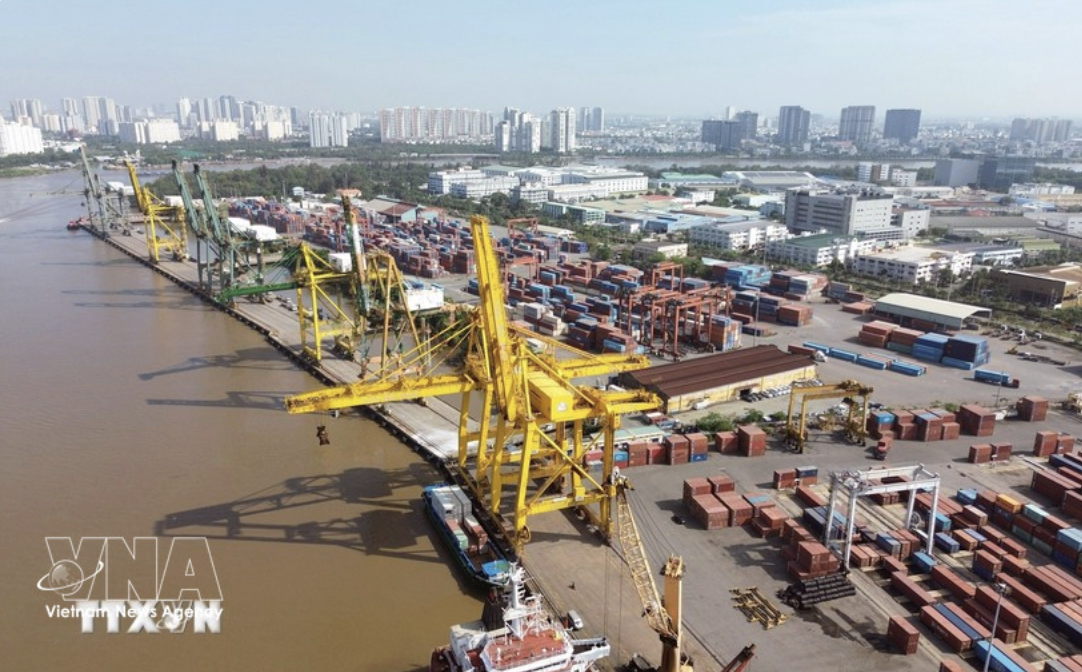
Why it matters: The rapid, multi-carrier operational halt and rerouting signal a systemic supply chain shock, moving beyond the Red Sea crisis to directly threaten the Persian Gulf, with cascading effects on global trade lanes, inflation, and the viability of export diversification strategies.
Context: This represents an escalation from the Houthi-targeted Red Sea disruptions to a broader conflict involving state actors, directly imperiling the Strait of Hormuz—a chokepoint for nearly a third of the world’s seaborne oil. The industry’s coordinated pause indicates a higher perceived risk threshold.
"Just days after hostilities broke out between the US – Israel alliance and Iran, a series of international shipping lines issued urgent notices to customers, suspending bookings for cargo to and from." — EN.QDND.VN
Commentary: The shift from targeted advisories to blanket booking suspensions by multiple carriers is a decisive market signal, effectively freezing a critical trade node. For economies like Vietnam, which have pivoted to the Middle East for export growth, this undermines the logistical premise of that strategy, forcing a recalculation of inventory, financing, and product mix. The acute vulnerability of cold chains and seasonal fashion highlights how generalized trade friction selectively cripples specific industries, rewarding those with diversified routing and contractual foresight.
Date: April 24, 2026 12:00 AM ET
URL: https://en.qdnd.vn/economy/news/firms-industries-grapple-with-shipping-disruptions-amid-middle-east-conflict-588435
AI Sentiment Score: Negative (55%)
AI Credibility Score: 9.0/10 — High
Scores and text generated by AI analysis of the source article indicated.
The network is being redrawn — are Gulf ports still on it? – Logistics (Enterpriseam)
Summary: The strategic calculus for Gulf ports is shifting from a question of physical access to one of commercial viability, as the conflict in the Strait of Hormuz introduces a new, monetized model for controlling chokepoints. Shipping executives warn that Iran’s imposition of tolls or ‘ransom’ for passage risks establishing a precedent that could be replicated elsewhere, fundamentally altering the economics of global shipping lanes. Concurrently, rising fuel costs are beginning to pressure operational costs across transport, logistics, and delivery sectors in the region, with some companies already implementing surcharges.

Why it matters: The normalization of monetized passage at strategic chokepoints could permanently rewire global supply chain costs and routing logic, while regional fuel price shocks test the resilience of last-mile delivery and logistics networks.
Context: This follows an earlier phase of the conflict focused solely on whether vessels could reach Gulf ports; the narrative has now evolved to whether it remains economically rational to use them.
"Good morning, friends. The situation in Hormuz remains murky — some vessels are being targeted, while others pass through unscathed. Tehran attacked three ships, escorting two of them into Iranian waters,." — ENTERPRISEAM
Commentary: The ‘tollbooth’ model represents a systemic innovation in geopolitical risk, moving from disruption to rent-seeking. If sustained, it will compel a permanent repricing of war risk insurance and accelerate the search for redundant routing, potentially diminishing the centrality of Gulf hubs irrespective of ceasefire outcomes. The concurrent fuel cost pressures on delivery services like Deliveroo and Talabat are a leading indicator of how these macro shifts translate into immediate consumer and business inflation.
Date: April 23, 2026 12:00 AM ET
URL: https://enterpriseam.com/logistics/issues/the-network-is-being-redrawn-are-gulf-ports-still-on-it/
AI Sentiment Score: Negative (75%)
AI Credibility Score: 10.0/10 — High
Scores and text generated by AI analysis of the source article indicated.
Chokepoints as Weapons – The Nation (Nation.Pk)
Summary: The article argues that the recent Israel-US-Iran confrontation reveals a strategic shift toward using maritime chokepoints as instruments of economic coercion, operating below the threshold of declared war. The Strait of Hormuz is the central case, where calibrated disruption—through threats and intermittent interference—creates global systemic shocks. This ‘economic denial warfare’ leverages deep global interdependence, affecting energy markets, supply chains for critical materials like helium, aviation, tourism, and logistics.

Why it matters: This evolution in statecraft directly threatens the operational stability of global mobility, trade, and supply chains, making regional conflicts a source of immediate, worldwide economic volatility.
Context: The strategic use of chokepoints has historical precedent, but today’s deeply integrated global systems of finance, logistics, and production amplify the consequences far beyond historical parallels.
"The contemporary international system is undergoing a subtle but consequential transformation in the conduct of warfare. The recent confrontation involving Israel, the United States and Iran has exposed a strategic shift that." — NATION.PK
Commentary: The doctrine renders traditional notions of economic decoupling structurally naive; resilience now requires redundancy in logistics and sourcing, not just political declarations. For travel and global operations, the risk calculus must now permanently factor in state-sponsored disruption of transit corridors as a core variable, not a black-swan event.
Date: April 24, 2026 12:00 AM ET
URL: https://www.nation.com.pk/24-Apr-2026/chokepoints-weapons
AI Sentiment Score: Negative (50%)
AI Credibility Score: 9.0/10 — High
Scores and text generated by AI analysis of the source article indicated.
Australia’s ‘do-not-transit’ warning rattles Dubai and Abu Dhabi hub … (Visahq)
Summary: The Australian government has escalated its travel advisory for the UAE from a ‘do-not-visit’ to a ‘do-not-transit’ warning, explicitly advising against layovers in Dubai or Abu Dhabi. This shift invalidates travel insurance for transiting passengers and forces corporate travel managers to reroute Australia-Europe and Australia-Africa itineraries. Airlines may continue operations, but the advisory creates significant liability and operational risk for businesses, with procurement teams already calculating the cost of alternative routings.
Why it matters: This advisory transforms a major global aviation hub into a de facto high-risk zone, forcing a rapid and costly recalibration of corporate travel, procurement, and risk management protocols worldwide.
Context: This move mirrors the gradual ‘weaponization’ of transit advisories as a non-kinetic tool of statecraft, elevating operational risk management from a back-office function to a core strategic concern for multinationals.
"The change means that passengers simply passing through Dubai International (DXB) or Zayed International (AUH) could invalidate their insurance or face route cancellations at short notice." — VISAHQ
Commentary: The advisory’s real bite is in its contractual and financial mechanics, not its geopolitical signaling. By explicitly voiding insurance, it transfers sovereign risk directly onto corporate balance sheets and travel managers’ decisions. The scramble for Muscat and Jeddah as hedges reveals how quickly alternative hubs emerge when a primary node is politically compromised, reshaping Gulf aviation competition. Furthermore, the secondary compliance nightmare—where an employee’s R&R routing could breach local residency laws—illustrates how travel policy is now inextricably linked to global workforce management and tax strategy.
Date: April 28, 2026 12:00 AM ET
URL: https://www.visahq.com/news/2026-04-28/ae/australias-do-not-transit-warning-rattles-dubai-and-abu-dhabi-hub-itineraries/
AI Sentiment Score: Negative (75%)
AI Credibility Score: 10.0/10 — High
Scores and text generated by AI analysis of the source article indicated.
ITA Airways Extends Suspension of Tel Aviv, Riyadh and … (Visahq)
Summary: ITA Airways, Italy’s state-owned flag carrier, has extended its suspension of flights to Tel Aviv, Riyadh, and Dubai until at least 31 May, aligning with broader European carrier suspensions. The decision, driven by airspace closures and insurance hurdles, removes key nonstop links from Rome and Milan, forcing reroutes through congested European hubs. This has driven up ticket prices by 20–35% on alternative routes and complicates corporate travel and expatriate rotations.
Why it matters: The extension signals a hardening of commercial aviation’s risk calculus in the Middle East, directly increasing costs and logistical friction for business, diplomacy, and personal mobility reliant on these corridors.
Context: This follows a pattern of European network carriers (Lufthansa Group, Air France-KLM) grounding Middle Eastern routes due to war-risk insurance premiums and airspace insecurity, turning regional conflicts into systemic transport disruptions.
"industry analysts warn that Iran-related premiums on war-risk insurance could keep Middle-East routes commercially non-viable well into the summer." — VISAHQ
Commentary: The operational pause is evolving into a structural market shift; sustained insurance pressures could permanently alter network economics, favoring carriers with deeper risk pools or state backing. The rerouting via EU hubs also stress-tests the bloc’s new biometric border system under crisis loads, revealing a secondary layer of friction. For firms, this moves from a travel logistics issue to a strategic question about the reliability of physical presence in key emerging markets.
Date: April 25, 2026 12:00 AM ET
URL: https://www.visahq.com/news/2026-04-24/it/ita-airways-extends-suspension-of-tel-aviv-riyadh-and-dubai-routes-to-31-may/
AI Sentiment Score: Negative (80%)
AI Credibility Score: 10.0/10 — High
Scores and text generated by AI analysis of the source article indicated.
Middle East conflict: What it means for your travel plans (Allcleartravel.Co.Uk)
Summary: Ongoing military activity and rising security concerns in the Middle East are triggering airspace closures and flight reroutes, with disruption radiating through global travel networks. Major hubs like Dubai, Doha, and Abu Dhabi are affected, impacting not only regional travel but also critical long-haul corridors between Europe, Asia, and Australia. Airlines are responding with cancellations, schedule adjustments, and price increases linked to fuel supply anxieties.

Why it matters: The operational integrity of global aviation, a system reliant on predictable transit through a few key nodes, is being stress-tested, with immediate consequences for passenger mobility and logistics.
Context: The Middle East functions as a central chokepoint for global aviation, with its mega-hubs having captured a dominant share of east-west long-haul traffic over the past two decades.
"Ongoing tensions in parts of the Middle East are affecting international travel, leading to delays, reroutes, and cancellations. If you’re planning a trip soon – especially if your journey includes a stopover." — ALLCLEARTRAVEL.CO.UK
Commentary: The incident exposes the systemic fragility of hub-and-spoke aviation; a regional shock instantly becomes a global scheduling crisis. The secondary mention of fuel supply disruption points to a potential compounding effect on operational costs and fare structures beyond immediate rerouting expenses. For airlines and airports, this is a live exercise in network resilience and contingency planning under real geopolitical pressure.
Date: April 20, 2026 12:00 AM ET
URL: https://www.allcleartravel.co.uk/blog/middle-east-conflict-travel-advice/
AI Sentiment Score: Negative (80%)
AI Credibility Score: 10.0/10 — High
Scores and text generated by AI analysis of the source article indicated.
The conflict in the Middle East is changing air traffic – Karlobag.eu (Karlobag.Eu)
Summary: The conflict in the Middle East is forcing a rapid reconfiguration of global air traffic, with key transit corridors becoming unstable or closed. This has triggered longer, more expensive flight paths and is costing the regional tourism sector an estimated $600 million daily in lost international visitor spending. The disruption is exposing the structural vulnerability of a travel system built on the uninterrupted operation of major Gulf hubs like Dubai and Doha, which are critical nodes for intercontinental travel between Europe, Asia, Africa, and Australia.
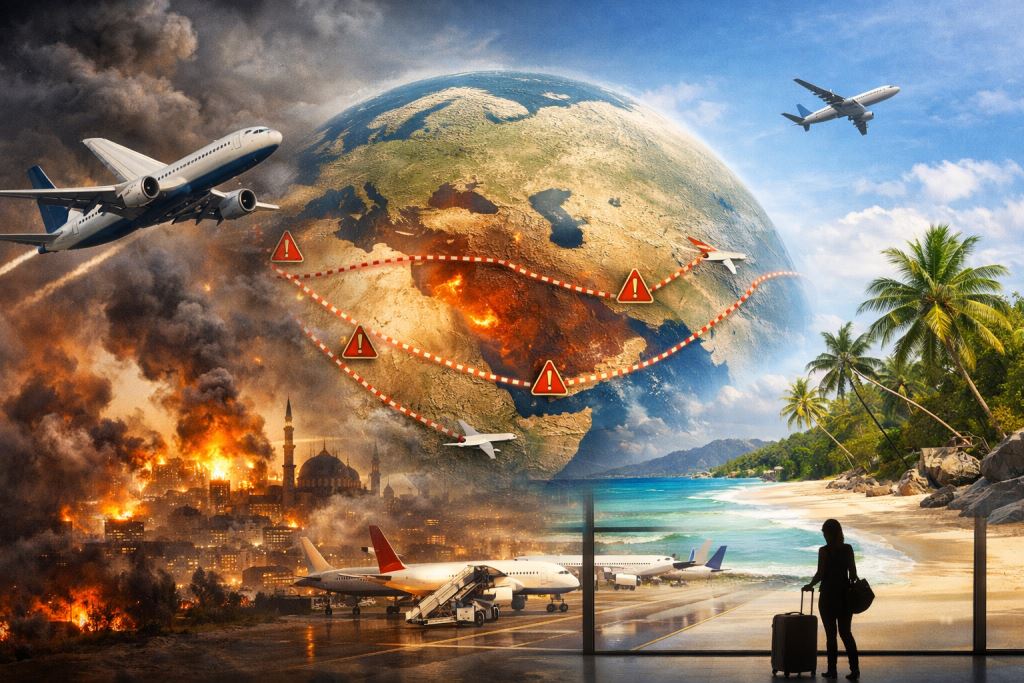
Why it matters: The crisis demonstrates that geopolitical instability can now paralyze global mobility and commerce through airspace, not just borders, forcing a strategic rethink for airlines, destinations, and travelers.
Context: This follows a pattern where tourism’s foundational assumptions—first open borders during the pandemic, now open skies—are being systematically stress-tested by external shocks, revealing deep systemic dependencies.
"According to estimates by the World Travel & Tourism Council, the travel and tourism sector in the Middle East is already losing at least 600 million US dollars per day in international visitor spending due to disruptions in air traffic, weakening traveller confidence and damaged regional connectivity." — KARLOBAG.EU
Commentary: The $600 million daily loss metric crystallizes the immediate economic impact, but the deeper implication is the potential for a permanent shift in network design. Airlines may accelerate fleet and route diversification to reduce corridor dependency, while secondary destinations could gain leverage to demand direct air links, reshaping global aviation economics. This moves the risk calculus from localized destination safety to the integrity of the aerial highways themselves.
Date: April 26, 2026 12:00 AM ET
URL: https://karlobag.eu/en/traffic/the-conflict-in-the-middle-east-is-disrupting-air-traffic-and-tourism-more-expensive-flights-longer-routes-and-a-new-warning-to-the-market-hgcxl
AI Sentiment Score: Negative (75%)
AI Credibility Score: 8.6/10 — High
Scores and text generated by AI analysis of the source article indicated.
How war in the Middle East is disrupting travel, trade & supply chains (Atradius.Co.Uk)
Summary: The Middle East conflict is disrupting global travel and trade at a scale not seen since the pandemic, with over a million travelers stranded and tens of thousands of flights canceled. Air freight faces inconsistent but significant impacts, particularly for sensitive cargo like pharmaceuticals, while sea freight is being rerouted around Africa, driving container rates up 28%. The World Travel & Tourism Council estimates a daily loss of at least $600 million in international visitor spending for the region, jeopardizing a projected 2026 recovery for the sector.
Why it matters: The disruption is forcing structural realignments in global logistics and travel patterns, with costs and delays cascading through supply chains and corporate travel budgets.
Context: The Middle East is a critical nexus, accounting for 5% of global arrivals and 14% of transit traffic, and its instability creates immediate chokepoints for both passenger and cargo flows.
"The conflict in the Middle East has triggered disruption to global travel and trade on a scale we haven’t seen since the pandemic. The region plays a vital role in global travel." — ATRADIUS.CO.UK
Commentary: The bifurcation between short-haul European carriers and long-haul networks signals a potential permanent re-routing of global aviation corridors, with Lufthansa and Air France-KLM’s pivot to Asia being a leading indicator. The 28% spike in container rates, layered on pandemic-era strains, will test inventory strategies and margin resilience across industries, making supply chain agility a primary competitive differentiator. The conflict has moved from a regional crisis to a global operational stress test, where resilience is now measured in nautical miles and airspace bypasses.
Date: April 20, 2026 12:00 AM ET
URL: https://atradius.co.uk/knowledge-and-research/blog/how-war-in-the-middle-east-is-disrupting-travel-trade-and-supply-chains
AI Sentiment Score: Negative (87%)
AI Credibility Score: 7.0/10 — Medium
Scores and text generated by AI analysis of the source article indicated.
UN attempt to open Strait of Hormuz fails at Security Council vote (Fibre2Fashion)
Summary: A UN Security Council resolution aimed at coordinating defensive efforts to secure the Strait of Hormuz has failed to pass. The draft, submitted by several Gulf states, received 11 votes in favour but was vetoed by China and Russia, with Colombia and Pakistan abstaining. The measure sought to deter interference with international navigation through the critical chokepoint.
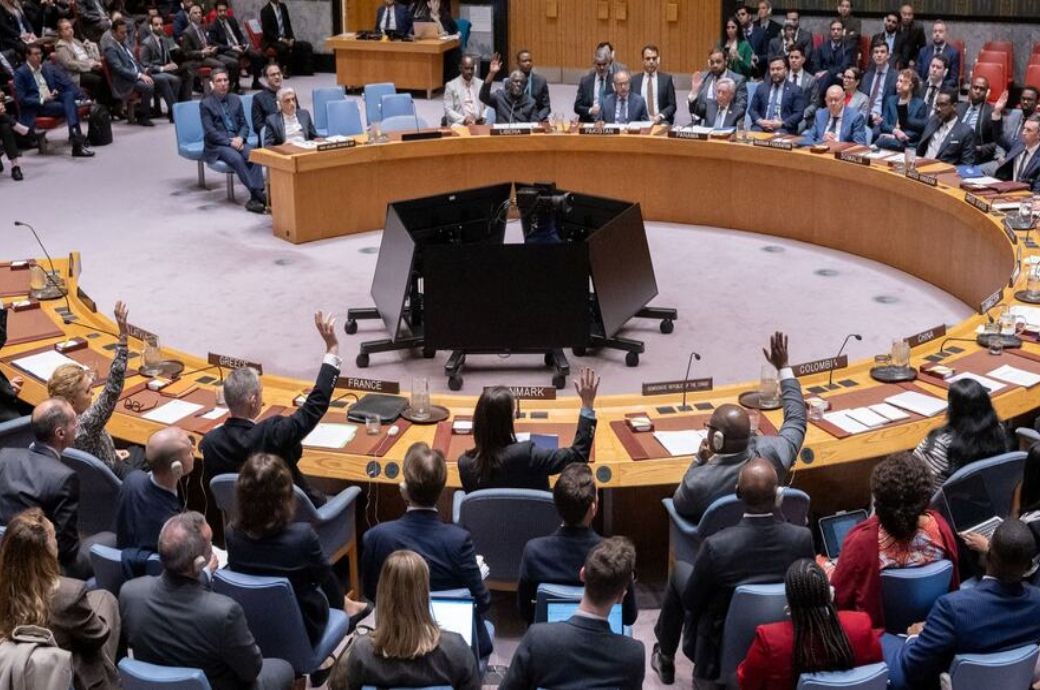
Why it matters: The failure of multilateral coordination shifts security and insurance burdens directly onto commercial shippers and flag states, increasing volatility for global energy and trade flows.
Context: The Strait of Hormuz handles about 20% of global oil trade, and its security has been a persistent flashpoint, often managed through ad-hoc naval coalitions rather than UN-mandated frameworks.
"# UN attempt to open Strait of Hormuz fails at Security Council vote 08 Apr ’26 … ### Insightss- The UN Security Council has rejected a draft resolution submitted by several Gulf." — FIBRE2FASHION
Commentary: The veto entrenches a bifurcated security landscape where formal UN backing is unavailable, pushing Gulf states and Western allies toward more unilateral or minilateral naval patrols. It signals Russia and China’s strategic intent to complicate Western-aligned maritime security architectures, likely accelerating regional arms buildups and private security contracts. For logistics planners, the political deadlock converts a geopolitical risk into a persistent operational cost.
Date: April 22, 2026 12:00 AM ET
URL: https://www.fibre2fashion.com/news/textile-news/un-attempt-to-open-strait-of-hormuz-fails-at-security-council-vote-309542-newsdetails.htm
AI Sentiment Score: Negative (60%)
AI Credibility Score: 10.0/10 — High
Scores and text generated by AI analysis of the source article indicated.
Middle East Situation – Wendy Wu Tours (Wendywutours.Co.Uk)
Summary: Wendy Wu Tours, a UK-based tour operator, is managing widespread flight disruptions across the Middle East through August 2026, primarily affecting clients booked on Emirates, Etihad, and Qatar Airways. The firm is rebooking passengers on alternative carriers in departure date order, offering free amendments where flights are unavailable, and maintaining that all tours except Jordan are operating normally. The policy delineates between ‘Flight Inclusive’ and ‘Land Only’ packages, with the latter leaving passengers to coordinate directly with airlines. The operator cites ongoing airspace closures, media reports of fuel shortages, and adherence to UK FCDO advice as key operational factors.

Why it matters: This illustrates how a major regional crisis is being managed at the operational level by a commercial intermediary, revealing the resilience and friction points in global travel logistics under sustained pressure.
Context: The notice follows months of regional geopolitical instability leading to airspace closures, creating a prolonged operational challenge distinct from short-term weather or strike disruptions.
"# Current Situation Impacting Operations in the Middle East … Flight disruption continues across the Middle East due to ongoing airspace closures and widespread cancellations. Despite this, the majority of Wendy Wu." — WENDYWUTOURS.CO.UK
Commentary: The operator’s tiered, date-based triage system and the distinction between flight-inclusive and land-only packages create a two-tiered customer experience, shifting significant logistical burden onto a subset of clients. The explicit exclusion of Jordan, based solely on FCDO advice, shows how government travel advisories directly dictate commercial viability in crisis zones. The suggest against price changes for confirmed bookings is a notable financial risk assumption, likely hedged through insurance or supplier contracts, that aims to lock in customer loyalty amid uncertainty.
Date: April 24, 2026 12:00 AM ET
URL: https://www.wendywutours.co.uk/help-and-visas/middle-east-situation/
AI Sentiment Score: Negative (84%)
AI Credibility Score: 7.0/10 — Medium
Scores and text generated by AI analysis of the source article indicated.
Strait of Hormuz reopened, Gulf tourism cautious – Karlobag.eu (Karlobag.Eu)
Summary: The Strait of Hormuz reopened to commercial traffic on 17 April 2026, prompting an immediate market response of falling oil prices and rising shares for airlines and tourism firms. However, security assessments from U.S., European, and aviation authorities describe the situation as a fragile ceasefire, requiring operators to monitor restrictions in near real-time. The reopening alleviates direct pressure on global energy and transport corridors but does not signal a return to pre-crisis stability for the regional tourism and logistics ecosystem.

Why it matters: The reopening of a critical global chokepoint recalibrates risk and cost calculations for all mobility-dependent industries, from aviation to cruise lines, with second-order effects on travel insurance, fuel surcharges, and long-haul flight planning.
Context: The Strait of Hormuz handles about one-third of the world’s seaborne oil and is a vital aerial transit corridor; its closure or threat triggers cascading disruptions across global supply chains and passenger mobility.
"## The Strait of Hormuz has reopened, but tourism is not returning to the same Gulf as before the crisishThe reopening of the Strait of Hormuz on 17 April 2026 is currently." — KARLOBAG.EU
Commentary: The market’s swift reaction to the reopening reveals a system optimized for price signals over geopolitical stability, creating a volatile gap between financial optimism and operational risk. Gulf tourism’s recovery will be structurally cautious, as insurers and carriers bake in permanent contingency premiums for corridor volatility, reshaping destination economics. This episode reinforces that for the cosmopolitan traveler, geopolitical risk is now a direct line-item cost, mediated through fuel surcharges and dynamic insurance underwriting.
Date: April 27, 2026 12:00 AM ET
URL: https://karlobag.eu/en/tourism-world/the-strait-of-hormuz-has-reopened-but-tourism-in-the-gulf-is-returning-cautiously-amid-expensive-flights-and-a-fragile-ceasefire-ei34m
AI Sentiment Score: Negative (77%)
AI Credibility Score: 9.4/10 — High
Scores and text generated by AI analysis of the source article indicated.
New analysis maps out impacts of marine chokepoint closures (Sciencedaily)
Summary: A new GIS-enabled analysis models the global trade and shipping impacts of a closure at any of the world’s 11 busiest marine chokepoints. The study, led by Lincoln Pratson, simulates disruptions at critical passages like the Strait of Hormuz, Malacca Strait, and Suez Canal, estimating trade flow redirections, port backlogs, and increased shipping times and costs. It finds the economic value transiting some chokepoints rivals the GDP of major economies, with daily operational costs for container ships running around $2 million. The research aims to provide a predictive tool for governments and businesses to develop mitigation strategies for supply chain resilience.

Why it matters: Global supply chains and just-in-time logistics are predicated on the uninterrupted flow of maritime traffic; a predictive model for chokepoint failures shifts risk management from reactive to strategic planning.
Context: This analysis formalizes the systemic vulnerability exposed by incidents like the Ever Given blockage in the Suez Canal, providing a comparative framework for geopolitical, accident, or piracy-related disruptions across all major straits.
"New GIS-enabled analysis maps what the far-reaching impacts to international trade and shipping could be if any of the world’s 11 busiest marine chokepoints, or shipping straits, are closed due to politics,." — SCIENCEDAILY
Commentary: The study’s value lies not in identifying vulnerability—which is well-known—but in quantifying the differential second-order effects, allowing firms to prioritize contingency plans based on their specific exposure to, say, Bab el Mandeb versus the Danish Straits. It turns a generic geopolitical risk into a calculable operational and financial variable, potentially reshaping insurance underwriting and national stockpiling policies. The $2 million daily operating cost figure underscores that delay is not just a logistical nuisance but a direct, massive capital burn.
Date: April 22, 2026 12:00 AM ET
URL: https://www.sciencedaily.com/releases/2022/12/221222162408.htm
AI Sentiment Score: Negative (75%)
AI Credibility Score: 10.0/10 — High
Scores and text generated by AI analysis of the source article indicated.
Maritime Security: High-level Open Debate : What’s In Blue (Securitycouncilreport)
Summary: The UN Security Council will hold a high-level debate on maritime security, chaired by Bahrain, focusing on threats to critical waterways and freedom of navigation. The meeting aims to discuss strengthening international cooperation and practical measures to protect global trade routes. This follows a recent failed attempt to adopt a Security Council resolution on the topic, which was vetoed by China and Russia.

Why it matters: The stability of global maritime chokepoints is a foundational element of international trade and supply chain resilience; political deadlock at the Security Council level directly impacts operational security and economic planning.
Context: This debate occurs amid persistent attacks on commercial shipping in key regions, highlighting a gap between broad consensus on the problem and actionable multilateral policy, with UNCLOS often cited as the contested legal framework.
"Despite differing views among Council members on how to address recent disruptions to maritime security, there is broad acknowledgement that promoting maritime security requires coherent and effective multilateral approaches, given the transnational nature of these challenges." — SECURITYCOUNCILREPORT
Commentary: The debate formalizes a strategic impasse: while member states universally decry disruptions, the veto by China and Russia demonstrates that geopolitical competition will continue to override collective security mechanisms. The practical outcome is likely limited to rhetorical reinforcement of UNCLOS, pushing tangible risk mitigation further onto regional coalitions and private maritime security operators. This institutional paralysis effectively privatizes and regionalizes the enforcement of global maritime norms.
Date: April 25, 2026 12:00 AM ET
URL: https://www.securitycouncilreport.org/whatsinblue/2026/04/maritime-security-high-level-open-debate-3.php
AI Sentiment Score: Negative (66%)
AI Credibility Score: 10.0/10 — High
Scores and text generated by AI analysis of the source article indicated.
Global Trade at Risk: Rethinking Resilience at Maritime Chokepoints (Hstoday.Us)
Summary: A new analytical framework from the report ‘From Canals to Arctic Fronts’ distinguishes between two types of maritime chokepoints: those where disruption can be absorbed through rerouting, and those that act as single points of failure with no viable alternatives. The Strait of Hormuz exemplifies the latter, where a disruption directly constrains flow. The system’s resilience is defined by its ability to trade efficiency for continuity, but this adaptation is not universally available and imposes measurable costs in longer voyages and sustained pressure on global shipping capacity.
Why it matters: For global trade, security planning, and corporate logistics, understanding which chokepoints are truly irreplaceable versus those that are merely expensive to bypass is critical for risk management and operational continuity.
Context: This analysis arrives amid persistent disruptions at the Suez and Panama Canals, shifting the focus from individual incidents to the structural vulnerabilities of the global maritime network.
"Global trade relies on a small set of maritime chokepoints—geographic bottlenecks through which much of the world’s energy, food, and goods must pass. When these routes function, they enable speed and efficiency." — HSTODAY.US
Commentary: The framework moves resilience from a vague aspiration to a quantifiable property of network topology. This forces a recalibration for insurers, national security planners, and corporate procurement teams: risk is no longer just about the probability of an event at a chokepoint, but the system’s inherent capacity to route around it. The immediate implication is capital allocation—investments in redundancy or security will see sharply diminishing returns at points like Hormuz where geography precludes alternatives.
Date: April 22, 2026 12:00 AM ET
URL: https://www.hstoday.us/subject-matter-areas/maritime-security/maritime-chokepoints-where-global-trade-efficiency-becomes-strategic-vulnerability/
AI Sentiment Score: Negative (80%)
AI Credibility Score: 10.0/10 — High
Scores and text generated by AI analysis of the source article indicated.
Drones, missiles, and jamming: UN aviation chief calls for … (Icao.Int)
Summary: ICAO Secretary General Juan Carlos Salazar has issued a stark warning at the 2026 World Overflight Risk Conference, declaring that emerging military technologies like long-range missiles, drones, and electronic jamming are creating a global escalation of risk for civilian aircraft operating near conflict zones. The UN aviation body is responding by finalizing a Global Crisis Management Framework and updating its safety manuals to better assess and mitigate these threats. This represents a direct institutional acknowledgment that the traditional separation between civilian air corridors and military engagements is breaking down.
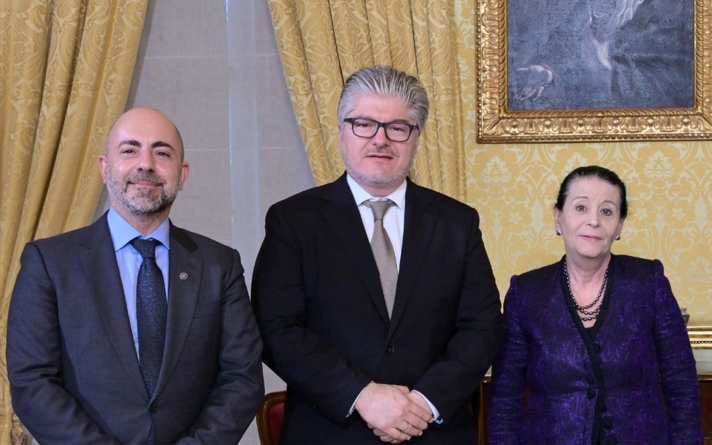
Why it matters: The normalization of airspace as a contested battlespace directly threatens the foundational assumption of safe global connectivity, forcing airlines, insurers, and regulators into a new era of operational and financial risk assessment.
Context: This follows a decade of incidents—from MH17 to recent drone and missile attacks on regional airports—that have exposed the inadequacy of existing conflict-zone advisories and the vulnerability of civilian aviation to state and non-state military action.
"# Drones, missiles, and jamming: UN aviation chief calls for urgent action to protect civil aircraft operating near or over conflict zones The International Civil Aviation Organization (ICAO) is calling for stronger." — ICAO.INT
Commentary: ICAO’s move from advisory guidance to a formal crisis framework signals a shift from managing known risks to preparing for systemic failures. The practical effect will be more complex, dynamic no-fly zones, higher insurance premiums on vulnerable routes, and increased pressure on flag carriers to make real-time geopolitical judgments. This institutionalizes contingency planning for what was once considered an aberration, making conflict-zone overflight a permanent, high-stakes calculus for global logistics.
Date: April 22, 2026 12:00 AM ET
URL: https://www.icao.int/news/drones-missiles-and-jamming-un-aviation-chief-calls-urgent-action-protect-civil-aircraft
AI Sentiment Score: Negative (81%)
AI Credibility Score: 8.8/10 — High
Scores and text generated by AI analysis of the source article indicated.
Post ID: 201722c8