

Content distribution trends and creator shifts
TikTok’s $14B Sale: Creator Migration Wave to YouTube Shorts (2026) (Outlierkit)
Summary: The March 2026 sale of TikTok US to an Oracle/Silver Lake consortium for $14B has triggered a significant migration of mid-tier creators to YouTube Shorts and Instagram Reels. This cohort, defined as creators with 50K to 2M followers who rely on platform payouts, is moving due to algorithm instability on the retrained TikTok and superior monetization prospects elsewhere. YouTube Shorts is capturing roughly two-thirds of this migration, leveraging a 3-5x RPM advantage and its structural ability to convert short-form reach into long-form subscribers and revenue.

Why it matters: This migration redistributes audience attention and creator economic power, reshaping the competitive landscape for short-form video and forcing platforms to compete on creator economics and audience durability, not just algorithmic reach.
Context: The divestiture follows years of geopolitical pressure, culminating in the forced sale under PAFACA, with ByteDance retaining a minority stake. The migration wave validates long-standing critiques of TikTok’s feed-first model and its weaker creator monetization and audience-ownership tools.
"- ▶TikTok US was sold in March 2026 to an Oracle/Silver Lake consortium for roughly $14 billion. ByteDance retained a 19.9% stake, the maximum allowed under PAFACA. – ▶The For You algorithm." — OUTLIERKIT
Commentary: The shift underscores that algorithmic distribution alone is insufficient to retain professional creators; economic stability and audience portability are now primary competitive vectors. YouTube’s integrated ecosystem is proving a decisive structural advantage, potentially cementing its dominance as the central platform for multi-format creator careers. Incumbent YouTube creators will face intensified short-form competition but also gain access to a new cohort of TikTok-native viewers, altering content dynamics across the platform.
Date: April 24, 2026 12:00 AM ET
URL: https://outlierkit.com/resources/tiktok-sale-impact-youtube-creators-2026/
AI Sentiment Score: Negative (50%)
AI Credibility Score: 10.0/10 — High
Scores and text generated by AI analysis of the source article indicated.
Short Form Video Statistics You Should Know in 2026 | Conbersa (Conbersa.Ai)
Summary: Short-form video has matured from a growth category to the default video format for consumer-facing brands by 2026. Audience consumption now totals multiple hours per day for heavy users, a behavioral shift on par with the rise of algorithmic feeds. Advertising spend has consolidated here, and platform dynamics have stabilized: TikTok leads in dedicated engagement, Instagram Reels in reach, and YouTube Shorts in integrated watch-time growth. Key recent shifts include algorithm-driven democratization of reach and the normalization of multi-account brand distribution.
Why it matters: For marketers and platforms, the battle for attention and ad dollars is now fought and measured almost entirely within the short-form vertical, requiring recalibrated strategies around creator ecosystems, platform-specific strengths, and content allocation.
Context: The format’s rapid ascent since 2019 has redefined content production, platform competition, and audience metrics, moving past the phase of explosive growth into one of strategic optimization and saturation management.
"Short form video statistics track the rapid shift in audience attention, advertising spend, and content production toward vertical video under 60 seconds. The category has gone from emerging tactic in 2019 to." — CONBERSA.AI
Commentary: This maturation signals the end of experimental budget allocation; short-form is now the core of video strategy, not an adjunct. The decreasing reach concentration on top creators forces brands to invest in quality over pure influencer scale, while the rise of multi-account distribution reflects an operational shift to managing content as a portfolio across platform sub-communities.
Date: April 29, 2026 12:00 AM ET
URL: https://www.conbersa.ai/learn/short-form-video-statistics
AI Sentiment Score: Negative (57%)
AI Credibility Score: 7.0/10 — Medium
Scores and text generated by AI analysis of the source article indicated.
What Streamers Are Buying Next — Short-Form, Anthologies & Interactive Content | EWA Panel (Youtube)
Summary: A panel of industry executives at the EWA conference outlines a strategic pivot in streaming content acquisition, moving from a focus on narrative ambition to a data-driven, format-agnostic model. The new calculus prioritizes content that can be tested cheaply via short-form, scaled across platforms, and leveraged into broader IP ecosystems. Attention metrics, retention, and completion rates are now the primary commissioning criteria, superseding traditional pitch-based development.

Why it matters: This shift redefines creative risk, accelerates the commodification of attention, and reshapes the leverage between creators, distributors, and audiences.
Context: This follows years of streaming platform consolidation and the normalization of A/B testing for content, mirroring tactics from social media and gaming.
"The conversation highlights a major shift in the industry: fragmented audiences, mobile-first consumption, and the rise of short-form storytelling as the entry point for experimentation and audience testing. Key insights from the." — YOUTUBE
Commentary: The industry is institutionalizing a pipeline where short-form content functions as a low-cost R&D lab, de-risking larger investments. This creates a two-tier system: proven concepts that scale receive funding, while untested, singular visions face higher barriers. The implication is a further homogenization of mainstream output, with ‘global appeal + local authenticity’ becoming a standardized, often superficial, production formula. For creators, execution quality and multi-format adaptability become non-negotiable, reducing the power of pure narrative pitch.
Date: April 28, 2026 12:00 AM ET
URL: https://www.youtube.com/watch?v=72X4Gr1VbQI
AI Sentiment Score: Negative (60%)
AI Credibility Score: 10.0/10 — High
Scores and text generated by AI analysis of the source article indicated.
Eventized Streaming Disruption: From Fixed TV Rituals to Global Viewing Moments (Insighttrendsworld)
Summary: Streaming platforms are abandoning fixed weekly release schedules in favor of data-driven, strategic deployment of content. This shift prioritizes global audience optimization, aligning premieres with peak consumption windows like weekends to maximize engagement and cultural impact. The model treats major releases as global viewing events, where timing is a competitive lever as critical as the content itself.

Why it matters: This redefines the economics of content distribution, forcing studios and platforms to compete on scheduling intelligence and global coordination, which in turn reshapes audience habits, marketing cycles, and cultural conversation velocity.
Context: The move continues the decade-long erosion of linear TV’s programming power, but now focuses the competitive battle on algorithmic and behavioral optimization of the release moment itself.
"### Trend Overview: streaming platforms redefine when and how audiences watch • What is happening: traditional TV release schedules are being disrupted o Major shows are no longer tied to fixed weekly." — INSIGHTTRENDSWORLD
Commentary: This turns the calendar into a proprietary dataset. Platforms that master global-first, eventized scheduling gain outsized influence over the cultural agenda, while smaller or regionally-bound services risk being drowned out in the orchestrated noise of these engineered moments.
Date: May 03, 2026 12:00 AM ET
URL: https://www.insighttrendsworld.com/post/eventized-streaming-disruption-from-fixed-tv-rituals-to-global-viewing-moments
AI Sentiment Score: Negative (60%)
AI Credibility Score: 7.0/10 — Medium
Scores and text generated by AI analysis of the source article indicated.
The New Format Funnel: – altMedia by Jonathan Glazier (Altmediajg.Substack)
Summary: Banijay’s acquisition of global rights to the YouTube-originated format ‘Stop the Train’ illustrates a structural shift in content development. The model is moving from traditional commissioning to a creator-led prototype phase, where audience heat is built organically online, followed by industrial-scale packaging for linear and streaming distribution. This inverts the traditional media development funnel.
Why it matters: This shift reallocates power and financial upside toward creators and digital platforms in the early, high-risk phase, while forcing legacy distributors to become downstream adapters rather than upstream gatekeepers.
Context: The trend of digital-native IP moving to mainstream media is accelerating, with global production giants like Banijay acting as scaling agents for proven online concepts.
"Banijay taking global rights to Stop the Train is a clean example. It starts life on YouTube with a creator, then gets packaged for international adaptation. That is the new path: build." — ALTMEDIAJG.SUBSTACK
Commentary: This is a fundamental re-architecting of the entertainment supply chain, reducing upfront capital risk for studios but commoditizing their scaling function. It demands new deal structures that compensate creators for the prototype’s market validation and requires linear networks to reconceive their development slates as adaptation pipelines.
Date: April 27, 2026 12:00 AM ET
URL: https://altmediajg.substack.com/p/the-new-format-funnel
AI Sentiment Score: Negative (50%)
AI Credibility Score: 7.0/10 — Medium
Scores and text generated by AI analysis of the source article indicated.
Blog | The Operator’s Last Move: Own The Conversation Before Someone Else Does (3Ss.Tv)
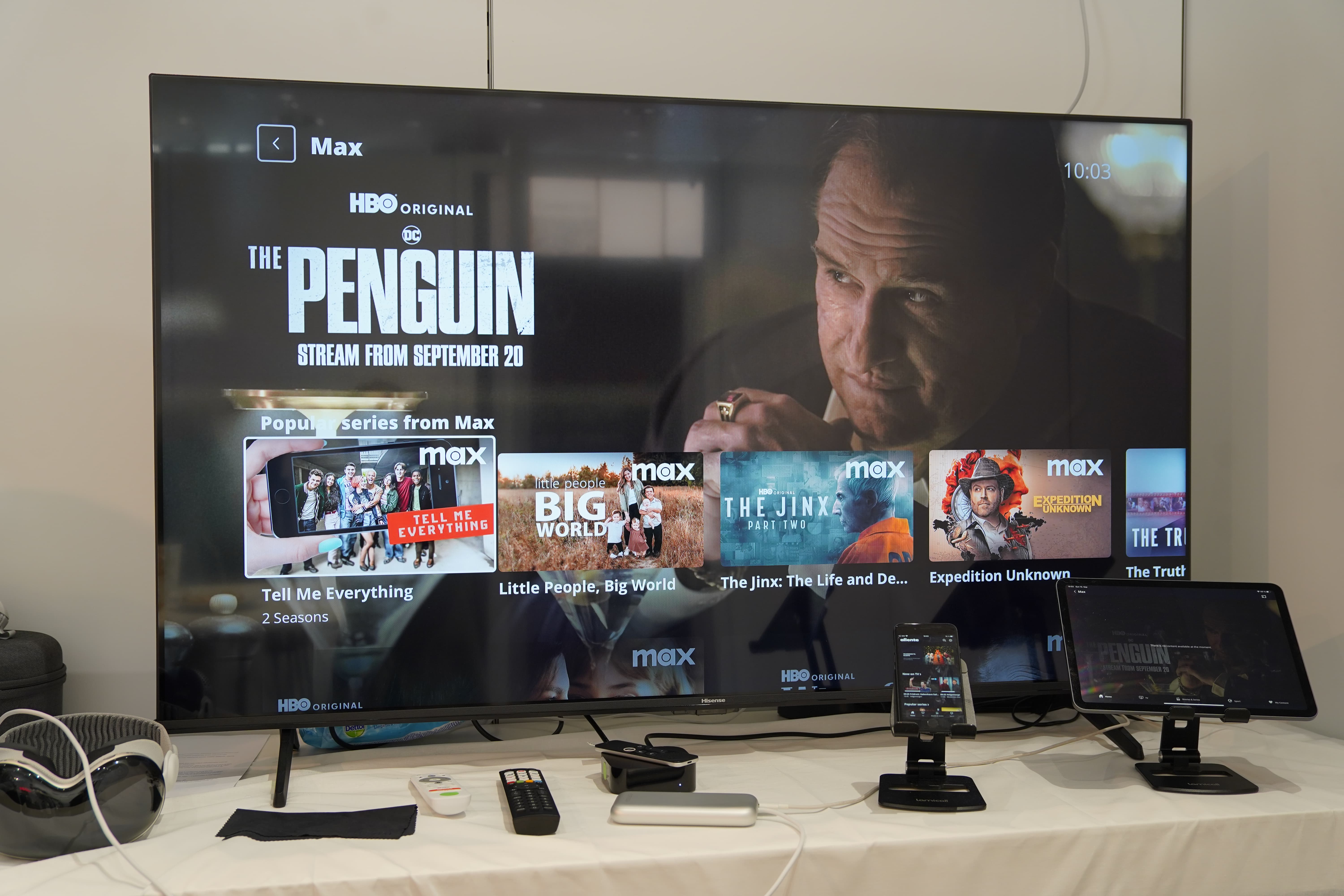
Summary: At NAB 2026 and StreamTV Europe, industry leaders revealed a fundamental strategic schism over the future of TV aggregation, with diagnoses ranging from ‘content is king’ to ‘aggregation is over’ to ‘piracy is winning.’ The core issue is the accelerating loss of the viewer relationship, as AI-powered conversational assistants embedded in retail devices become the new primary interface for discovery and control. Operators’ traditional surfaces—the set-top box, homepage, and EPG—are being bypassed, with nearly half of Gen Alpha already using AI chatbots as their primary recommendation source.
Why it matters: The shift from owned hardware interfaces to portable, AI-driven conversational layers redefines the basis of competition in media, moving it from content bundling to controlling the context of discovery.
Context: This follows the industry’s historical pattern of reframing distribution threats as transformations, from linear to VOD to apps, each time attempting to maintain control of the viewer interface.
"From Gracenote’s research published at NAB a 49% of Gen Alpha already name AI chatbots as their best source for TV and movie recommendations, ahead of streaming and cable UIs at 41%. Discovery is migrating off the operator surface for the next generation while the industry is still working out how to ground it." — 3SS.TV
Commentary: The data point on Gen Alpha is the canary in the coal mine; it quantifies a behavioral shift that renders most current operator strategies obsolete. The operational challenge is no longer just scaling AI for metadata or ads, but deploying a portable, authoritative conversational layer that can compete with embedded assistants from Google and Amazon. The strategic imperative is to own the conversation itself, as the last defensible point of contact before the viewer relationship is fully ceded to platform AI.
Date: April 29, 2026 12:00 AM ET
URL: https://www.3ss.tv/blog/the-operators-last-move-own-the-conversation-before-someone-else-does
AI Sentiment Score: Negative (50%)
AI Credibility Score: 9.1/10 — High
Scores and text generated by AI analysis of the source article indicated.
The Last Mile of Direct To Audience (D2A) Distribution Is Capital … (Glosserman.Substack)
Summary: The direct-to-audience (D2A) distribution model has matured beyond theory. A suite of operational tools now enables rights holders to manage the entire audience lifecycle—from identification and communication to direct sales and data retention—across multiple release formats. This technical scalability shifts leverage from traditional gatekeepers back to content creators and owners.

Why it matters: It reconfigures power dynamics in media, allowing creators to build independent revenue streams and retain critical data, thereby altering negotiation leverage with studios and platforms.
Context: This follows a decade of experimentation with direct sales, crowdfunding, and creator-led platforms, moving from niche proof-of-concept to a viable, industrialized alternative to legacy distribution.
"Direct To Audience distribution now has working, tested, scalable tools. Rights holders can identify audiences, communicate with them, sell directly to them, retain first-party data, generate early revenue signals, and strengthen downstream." — GLOSSERMAN.SUBSTACK
Commentary: The operationalization of D2A tools marks a phase change; it’s no longer a speculative bet but a concrete capital allocation decision for producers. This could pressure incumbent distributors to offer more favorable terms and accelerate the fragmentation of release windows. The real test is whether the capital required for audience acquisition at scale makes this a sustainable model outside of established fan bases.
Date: April 25, 2026 12:00 AM ET
URL: https://glosserman.substack.com/p/the-last-mile-of-direct-to-audience
AI Sentiment Score: Negative (60%)
AI Credibility Score: 7.0/10 — Medium
Scores and text generated by AI analysis of the source article indicated.
Media streaming rights and anti-piracy technology brief 2026 (Neojn)
Summary: Anti-piracy strategies are shifting from blunt IP-based enforcement to granular, multi-signal analysis of user behavior to distinguish legitimate sharing from systematic abuse. Rights holders are implementing forensic watermarking and structured KPIs to measure enforcement ROI, moving anti-piracy from a cost center to a measurable business function. The focus is on integrating technical, legal, and operational efforts into dedicated ‘fusion cells’ with clear performance targets.

Why it matters: This evolution directly impacts content valuation, subscription pricing models, and platform leverage, as effective piracy containment protects revenue and justifies premium content investment.
Context: The streaming industry’s growth has been shadowed by widespread credential sharing and digital piracy, forcing a reactive, legal-focused response that often failed to demonstrate clear financial returns.
"Key performance indicators should include mean takedown latency from detection to removal, repeat infringer recurrence rate, estimated audience reached before takedown, and where measurable, incremental revenue attributed to enforcement actions." — NEOJN
Commentary: The push for quantifiable KPIs and ‘fusion cells’ signals a maturation of anti-piracy from a legal and PR exercise into a core business operation. This could pressure smaller studios and platforms lacking the capital for such sophisticated systems, potentially consolidating enforcement power with major rights holders. The behavioral analysis techniques, while aimed at pirates, will inevitably refine how all user engagement is measured and monetized.
Date: April 29, 2026 12:00 AM ET
URL: https://www.neojn.com/en/insights/reports/media-streaming-rights-anti-piracy-technology-brief-2026
AI Sentiment Score: Positive (40%)
AI Credibility Score: 8.2/10 — High
Scores and text generated by AI analysis of the source article indicated.
BMA’S VIEW • Content Protection In The Digital Age: Fighting Piracy … (News.Broadcastmediaafrica)
Summary: New data from Irdeto and Kenyan regulators quantifies the scale of digital piracy and subscription churn in key African markets. The top ten piracy sites in five countries drew 17.4 million visits in a quarter, while pay-TV operators like GoTV and DStv report active subscriber rates below 20% of their registered decoder base. This reveals a market where formal subscription models are failing to capture value from a vast installed hardware footprint.

Why it matters: It demonstrates that piracy is not just a content loss issue but a core indicator of failed monetization and product-market fit, forcing a reevaluation of pricing, distribution, and anti-piracy strategy beyond mere enforcement.
Context: African media markets have long been characterized by high hardware penetration but low recurring revenue, often attributed to affordability and content gaps. This data provides hard metrics on the resulting behavioral shift toward piracy and non-payment.
"Irdeto’s research found that the top ten piracy websites across just five African countries attracted 17.4 million visits in a single three-month period. … And Communications Authority of Kenya data tells its." — NEWS.BROADCASTMEDIAAFRICA
Commentary: The data suggests anti-piracy efforts are failing at a structural level; enforcement cannot outpace demand when 80% of a hardware base is non-paying. The operational implication is that content owners and distributors must innovate on pricing and access models—perhaps through micro-transactions or ad-supported tiers—or cede the market entirely. This isn’t a piracy fight; it’s a business model collapse.
Date: April 27, 2026 12:00 AM ET
URL: https://news.broadcastmediaafrica.com/2026/04/27/bmas-view-content-protection-in-the-digital-age-fighting-piracy-and-staying-secure/
AI Sentiment Score: Negative (66%)
AI Credibility Score: 10.0/10 — High
Scores and text generated by AI analysis of the source article indicated.
Post ID: 11f3e1a8