Streaming business models, windows, and measurement
The Streaming Reset: Scale, Survival and Sustainability – NAB Show (Nabshow)
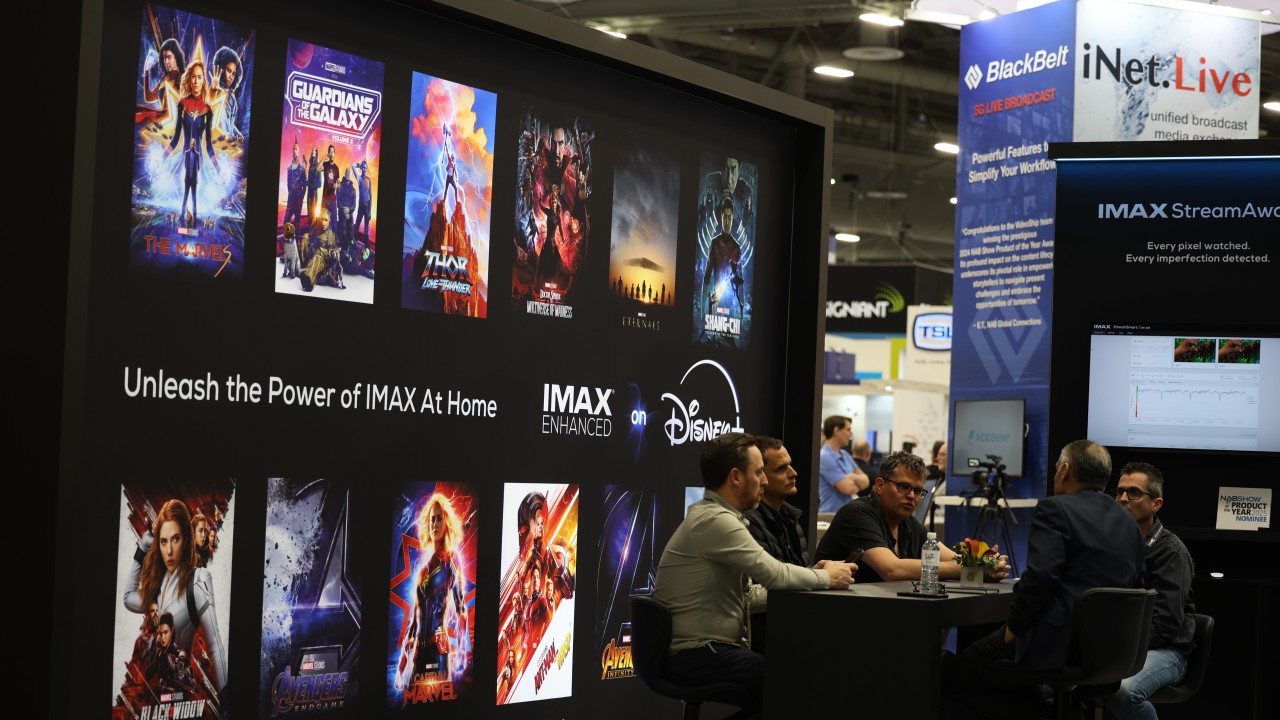
Summary: The streaming industry’s growth-at-all-costs phase has ended, with investor focus shifting decisively to profitability, margin expansion, and free cash flow. In response, media companies are pivoting to strategies like expanding ad-supported tiers, leveraging AI for efficiency, and pursuing consolidation for scale, as exemplified by the high-stakes bidding for Warner Bros. Discovery. The strategic reset prioritizes operational savings and diversified revenue over raw subscriber acquisition.
Why it matters: The shift from scale to sustainable economics could reshape content investment, platform strategies, and the competitive landscape, determining which media conglomerates survive the next phase.
Context: This follows years of unsustainable spending on original content and subscriber acquisition, leading to market saturation and investor impatience with persistent losses from major streaming divisions.
"Consolidation is no longer optional — it’s strategic. For marketers, the next era of the streaming market will likely be built on diversified monetization and new engagement strategies, advanced advertising and AI-driven efficiencies." — NABSHOW
Commentary: The ‘bidding war’ for Warner Bros. Discovery is the concrete manifestation of this reset, where premium IP and scale become survival assets. This forces a brutal triage: marginal services will be shuttered or absorbed, content budgets will be rationalized toward proven franchises, and the ad-tech stack becomes a core competitive moat. The consumer outcome is a more consolidated, aggressively monetized landscape where churn management often trumps user experience.
Date: May 01, 2026 12:00 AM ET
URL: https://www.nabshow.com/article/the-streaming-reset-scale-survival-and-sustainability/
AI Sentiment Score: Negative (66%)
AI Credibility Score: 10.0/10 — High
Scores and text generated by AI analysis of the source article indicated.
Measure the value of TV advertising (Nielsen)
Summary: Nielsen is positioning its national and local TV measurement as the industry’s transactional currency, now incorporating first-party live streaming data and person-level metrics from a panel of 45 million households. The pitch emphasizes MRC accreditation, granular demographic inclusivity, and confidence for media buyers and sellers navigating a fragmented landscape.

Why it matters: The definition of ‘TV’ and its audience measurement directly dictates where billions in advertising budgets flow, shaping the economics of content creation and platform competition.
Context: The long-standing monopoly of traditional TV ratings is under pressure from walled-garden digital platforms and proprietary streaming metrics, forcing legacy measurement firms to adapt or risk irrelevance.
"Measure the value of TV advertising Connect with TV audiences that matter most with our comprehensive television audience measurement solutions To navigate today’s fragmented TV landscape, you need a deep understanding of." — NIELSEN
Commentary: Nielsen’s move to integrate streaming and tout MRC accreditation is a defensive play to maintain its currency status, but it also signals a broader institutional shift: the industry is demanding a single, audited standard for cross-platform video, which could erode the pricing power of platforms that refuse third-party verification.
Date: April 30, 2026 12:00 AM ET
URL: https://www.nielsen.com/solutions/audience-measurement/us-national-and-local-tv-measurement/
AI Sentiment Score: Negative (66%)
AI Credibility Score: 10.0/10 — High
Scores and text generated by AI analysis of the source article indicated.
Content Licensing As… (Filmtake)
Summary: The economics of premium video are shifting from content-as-product to access-as-product. Studios and streamers, facing margin pressure from social video platforms, are moving beyond blanket subscription hikes toward sophisticated windowing and licensing strategies. These include tiered releases, early-access add-ons, and segmented subscriptions tailored to specific genres or audiences.

Why it matters: This signals a structural change in how media companies capture value, moving from pure content ownership to managing access timing and audience segments as primary revenue levers.
Context: The traditional studio/streamer model is being unbundled by fragmented attention and advertising competition, forcing a reevaluation of catalog monetization and subscriber retention tactics.
"> Traditional studios and streamers, long the gatekeepers of premium content, are now under pressure from social video platforms that dominate both audience attention and advertising dollars. As viewer behavior fragments and." — FILMTAKE
Commentary: The strategic pivot to ‘windowing as product’ represents a maturation of the streaming market, where operational and financial discipline must replace growth-at-all-costs content spending. It creates new leverage points for studios but also risks further complicating the consumer experience with a labyrinth of access tiers and release schedules.
Date: April 27, 2026 12:00 AM ET
URL: https://www.filmtake.com/distribution/the-window-is-the-product-why-streamings-next-battleground-is-access-not-content/
AI Sentiment Score: Neutral (33%)
AI Credibility Score: 10.0/10 — High
Scores and text generated by AI analysis of the source article indicated.
Window Shopping: Why Holding Back Pays Off in Streaming … (Filmtake)
Summary: The rigid theatrical-to-streaming pipeline has dissolved into a complex, multi-platform calculus. Studios now deploy staggered Pay-One windows across transactional VOD, their own SVOD services, and third-party platforms like Amazon Prime, with timing and platform choice becoming key revenue levers. Disney maintains a relatively consistent three-month theatrical-to-Disney+ window, while Lionsgate extends transactional exclusivity to four months before Starz, and Universal splits its Pay-One period between Peacock and Amazon. This fragmentation turns release strategy into a bespoke financial instrument for each title.

Why it matters: This shift redefines competitive advantage in entertainment, moving it from content creation alone to sophisticated distribution arbitrage that directly impacts subscriber retention and per-title monetization.
Context: The post-pandemic collapse of universal release windows accelerated experimentation, but the current phase is marked by systematic, data-driven tiering rather than ad-hoc crisis management.
"Windowing no longer determines when a film is available; it defines how much value can be extracted, where, and when it is available." — FILMTAKE
Commentary: The strategic implication is that content libraries are becoming less valuable than distribution algorithms. Studios that master this—like Universal’s split between Peacock and Amazon—can optimize for both subscriber growth and high-margin transactional revenue. Those adhering to a single, fixed window cede pricing power and audience segmentation to more agile competitors, effectively commoditizing their own IP.
Date: April 27, 2026 12:00 AM ET
URL: https://www.filmtake.com/distribution/window-shopping-why-holding-back-pays-off-in-streaming-distribution/
AI Sentiment Score: Positive (50%)
AI Credibility Score: 10.0/10 — High
Scores and text generated by AI analysis of the source article indicated.
US Movies: Theatrical, TVOD, SVOD, and Other Windowing … – Omdia (Omdia.Tech.Informa)
Summary: Omdia analysis indicates the US film distribution landscape in 2024 was defined by shorter theatrical windows and a more selective audience, forcing studios to optimize revenue across a fragmented ecosystem of theatrical, transactional video-on-demand (TVOD), subscription video-on-demand (SVOD), and advertising-based video-on-demand (AVOD). This shift recalibrates the financial model for studios, placing greater emphasis on managing a title’s entire lifecycle across multiple, often compressed, release windows. The data suggests a move away from a one-size-fits-all theatrical strategy toward more nuanced, title-by-title windowing decisions.

Why it matters: The compression of theatrical exclusivity and the rise of selective moviegoing directly impact studio greenlight decisions, marketing budgets, and long-term franchise planning, reshaping Hollywood’s core economic engine.
Context: This follows years of pandemic-driven experimentation with day-and-date releases and a persistent industry debate over the optimal windowing strategy to maximize total revenue from a shrinking pool of frequent cinema-goers.
"Shorter theatrical windows and a more selective moviegoing audience were key factors in 2024. We look at the key drivers of shifting movie revenue across the full windows ecosystem: theatrical, TVOD, SVOD, AVOD, pay TV, YouTube, and more." — OMDIA.TECH.INFORMA
Commentary: The industry is moving from defending a monolithic theatrical window to engineering a revenue cascade, where each platform’s timing is a variable in a portfolio optimization problem. This forces a more forensic understanding of a film’s audience segments—die-hard fans who drive opening weekend versus the larger, more patient SVOD crowd. Consequently, marketing campaigns must now serve multiple, staggered launches, and a film’s performance will be judged on a cumulative, multi-platform gross rather than a standalone box office figure.
Date: April 29, 2026 12:00 AM ET
URL: https://omdia.tech.informa.com/om144902/us-movies-theatrical-tvod-svod-and-other-windowing-strategies-in-2025
AI Sentiment Score: Negative (60%)
AI Credibility Score: 10.0/10 — High
Scores and text generated by AI analysis of the source article indicated.
Content Paywall Changes Shape, Not Size – 3Vision (3Vision.Tv)
Summary: 3Vision data shows the first-window scripted TV market has reconfigured around SVOD and studio-owned platforms, diminishing Pay TV’s central role. The fundamental access model, however, remains subscription-led; the paywall has morphed rather than broken. Broadcasters are adapting with BVOD-first releases and boxsets to compete on convenience, but free access is not displacing paid gateways for premium content.

Why it matters: This structural shift reallocates audience attention and revenue, forcing distributors, advertisers, and creators to recalibrate their strategies around a fragmented but persistently paywalled ecosystem.
Context: The post-2018 pivot by major studios to direct-to-consumer platforms fragmented the first-window market, initially reducing third-party SVOD acquisitions as originals dominated. Recent signs point to a partial reversion, with global SVODs like Netflix and Amazon re-engaging, notably for second-window content.
"3Vision’s Show Tracker data shows a first window scripted TV market that has changed significantly in shape, but less in how audiences access premium content. … Pay TV is no longer the." — 3VISION.TV
Commentary: The persistence of the subscription model, despite platform fragmentation, underscores the entrenched economics of premium scripted production. For studios, this validates the DTC pivot but imposes continuous content investment burdens. For audiences, it means navigating a multi-paywall landscape where convenience, not cost, is the primary battleground, as evidenced by broadcasters adopting SVOD-style release patterns.
Date: April 22, 2026 12:00 AM ET
URL: https://www.3vision.tv/news-insights/content-paywall-changes-shape-not-size
AI Sentiment Score: Positive (50%)
AI Credibility Score: 10.0/10 — High
Scores and text generated by AI analysis of the source article indicated.
Streaming Giants vs Cinema Chains: Who’s Really Winning in 2026? (Analyticsinsight.Net)
Summary: The 2026 entertainment landscape is defined by a functional, if tense, coexistence between streaming platforms and cinema chains. Streaming services dominate volume and accessibility, particularly in emerging markets, while theaters retain cultural and financial control over event films through premium formats. Mid-budget films have largely migrated to streaming, and hybrid release models are now standard operating procedure for studios. The economic models are diverging: streaming relies on ad-tier expansion and subscription scale, while cinemas depend on premium ticket pricing and concessions.
Why it matters: The bifurcation of the market dictates content strategy, capital allocation, and cultural impact for studios, financiers, and creators.
Context: This is the maturation of a decade-long disruption, moving from a zero-sum war to a segmented, if still competitive, ecosystem.
"In 2026, neither side is clearly winning; instead, streaming and cinemas are coexisting, reshaping the entertainment industry through competition, collaboration, and evolving consumer expectations." — ANALYTICSINSIGHT.NET
Commentary: The ‘coexistence’ is structurally unequal: streaming captures the entire middle of the market and global scale, while cinemas become high-margin, event-driven venues. This pressures studios to bifurcate production slates and forces independent filmmakers onto streaming’s crowded playing field. The real competition is now less between channels and more within them—streaming services fighting for subscriber attention, and theaters competing for a shrinking number of must-see-on-the-big-screen releases.
Date: May 03, 2026 12:00 AM ET
URL: https://www.analyticsinsight.net/ampstories/entertainment/streaming-giants-vs-cinema-chains-whos-really-winning-in-2026
AI Sentiment Score: Negative (60%)
AI Credibility Score: 7.0/10 — Medium
Scores and text generated by AI analysis of the source article indicated.
Theatrical vs Streaming: Is the Hybrid Model the New Standard … (Filmplatforms)
Summary: The binary war between theatrical exclusivity and streaming-first strategies is collapsing into a pragmatic, integrated model. Major studios and platforms are now structuring releases where a theatrical window builds cultural capital and awareness, which is then leveraged for long-tail monetization on streaming services. This hybrid approach reframes the core strategic question from format competition to orchestration of timing, audience exposure, and revenue streams across both channels.

Why it matters: This shift redefines the economics of film production, marketing spend, and talent compensation, while altering how cultural moments are built and sustained.
Context: The pandemic-era experiment with day-and-date releases has evolved into a more calibrated, post-theatrical windowing strategy, as seen with recent tentpole films from both traditional studios and streamers.
"The debate between theatrical and streaming releases is no longer a simple either-or decision. Recent strategies from studios like Warner Bros. and platforms such as Netflix suggest that hybrid releases are becoming." — FILMPLATFORMS
Commentary: The hybrid model institutionalizes a two-tiered monetization system: theaters capture premium pricing and event status, while streaming platforms bank the film’s long-term library value and subscriber retention. This forces a re-evaluation of marketing budgets, where theatrical campaigns must now serve a dual purpose, and puts pressure on exhibitors to justify their share of the value chain beyond mere exclusivity.
Date: April 30, 2026 12:00 AM ET
URL: https://filmplatforms.com/threads/theatrical-vs-streaming-is-the-hybrid-model-the-new-standard.127/
AI Sentiment Score: Negative (80%)
AI Credibility Score: 10.0/10 — High
Scores and text generated by AI analysis of the source article indicated.
CinemaCon 2026: The Studios Make Their Case for Theatrical (Celluloidjunkie)
Summary: At CinemaCon 2026, major studios presented a unified front, advocating for theatrical distribution with specific, enforceable commitments. Universal pledged a five-weekend theatrical run for all releases, Paramount Skydance promised a 45-day exclusive window and 30 films annually, and Amazon MGM highlighted extended windows and substantial box office revenue. The presentations revealed an industry-wide consensus around a 45-day theatrical-exclusive corridor, with PVOD permitted before subscription streaming access.

Why it matters: The emergence of a stable, post-pandemic distribution settlement recalibrates power between studios, exhibitors, and streamers, directly impacting release strategies, revenue models, and cultural shelf life for films.
Context: Since 2020, the theatrical window has been in constant flux, with studios experimenting with day-and-date streaming releases and drastically shortened exclusivity periods, undermining the traditional economic model for cinemas.
"There is now a working consensus inside the major-studio system: a roughly 45-day theatrical-exclusive corridor, with premium video on demand (PVOD) tolerated sooner than subscription-streaming availability." — CELLULOIDJUNKIE
Commentary: This consensus is less a revival of old dogma than a pragmatic, revenue-maximizing truce. It grants theaters a protected period to drive premium ticket sales while allowing studios to capitalize on high-margin PVOD shortly after. The real shift is institutional: streamer-studios like Amazon are now active participants in pro-theatrical rhetoric, signaling a maturation of their hybrid distribution playbooks. This settlement, however, remains vulnerable to the first major studio that defects for a quarter-end streaming subscriber bump.
Date: April 30, 2026 12:00 AM ET
URL: https://celluloidjunkie.com/2026/04/30/cinemacon-2026-the-studios-make-their-case-for-theatrical/
AI Sentiment Score: Negative (50%)
AI Credibility Score: 10.0/10 — High
Scores and text generated by AI analysis of the source article indicated.
Box Office Duds to Streaming Hits on Digital Platforms (Homebusinessmag)
Summary: Films that underperform at the box office are increasingly finding robust second lives on streaming platforms, where algorithmic discovery and lower viewer risk convert them into hits. This shift decouples a film’s ultimate commercial and cultural success from its theatrical opening, forcing studios to evaluate projects across a full lifecycle. The industry is adapting with shortened theatrical-to-streaming windows and data-driven re-marketing strategies.

Why it matters: This recalibrates studio economics, de-risks mid-budget and niche projects, and shifts power toward platforms that control discovery and long-tail audience access.
Context: The bifurcation of success metrics—theatrical urgency versus streaming accessibility—reflects a broader renegotiation of value between legacy distribution channels and platform ecosystems.
"In the modern entertainment industry, a disappointing theatrical release no longer means the end of a movie’s life. Many films that underperform in cinemas are now discovering a second chance through streaming." — HOMEBUSINESSMAG
Commentary: The decoupling of these metrics undermines the traditional opening-weekend report as a definitive verdict, empowering streamers to arbitrage cultural latency. It incentivizes studios to greenlight films optimized for algorithmic rediscovery, potentially at the expense of cinematic spectacle designed solely for the big screen.
Date: April 27, 2026 12:00 AM ET
URL: https://homebusinessmag.com/blog/newsstand-blog/box-office-duds-streaming-hits/
AI Sentiment Score: Negative (50%)
AI Credibility Score: 10.0/10 — High
Scores and text generated by AI analysis of the source article indicated.
Report Archives (Nielsen)
Summary: Nielsen’s 2026 report highlights that 61% of Asian American, Native Hawaiian, and Pacific Islander (AANHPI) ad-supported TV time is spent with streaming services. This audience over-indexes on streaming consumption compared to the general population, signaling a decisive shift in media engagement and advertising channel efficacy.

Why it matters: For marketers and media strategists, this quantifies a critical audience segment’s migration away from linear TV, forcing a reallocation of ad budgets and a reevaluation of content strategy to maintain reach and relevance.
Context: This data point fits within a broader, sustained trend of audience fragmentation and the ascendancy of streaming, but it underscores that these shifts are not uniform across all demographic groups.
"#1 61% of AANHPI ad supported TV time is spent with streaming. AANHPI audiences spend more time streaming than…." — NIELSEN
Commentary: The figure isn’t just a statistic; it’s a market signal. Media buyers can no longer treat AANHPI audiences as a monolith reachable via broad, linear buys. This demands platform-specific creative, nuanced measurement beyond top-line ratings, and pressures legacy networks to accelerate their own streaming ad offerings or risk irrelevance with a key growth demographic.
Date: May 01, 2026 12:00 AM ET
URL: https://www.nielsen.com/insights/type/report/
AI Sentiment Score: Neutral (33%)
AI Credibility Score: 10.0/10 — High
Scores and text generated by AI analysis of the source article indicated.
Live Streaming Pay-Per-View (PPV) Market Report 2026: Global Revenue to Hit $4.2 Billion by 2030 (Globenewswire)
Summary: The live streaming pay-per-view market is projected to grow from $1.88 billion in 2025 to $4.2 billion by 2030, driven by demand for live sports, exclusive content, and improved broadband infrastructure. Strategic moves like Veeps Inc.’s ‘All Access’ subscription pivot and JW Player’s acquisition of InPlayer highlight a competitive landscape focused on monetization and audience analytics. North America currently leads, but the Asia-Pacific region is forecast for the fastest growth.
Why it matters: This growth signals a structural shift in how premium live events are monetized and distributed, moving beyond traditional broadcast models and reshaping revenue streams for sports, media, and education sectors.
Context: The PPV model is evolving from one-off event purchases toward bundled subscriptions and integrated platforms, reflecting broader digital media trends where access and exclusivity are being repackaged.
"This growth is driven by increased internet penetration, smartphone adoption, demand for live sports content, expansion of digital media, and enhanced broadband infrastructure." — GLOBENEWSWIRE
Commentary: The projected CAGR of 17-18% underscores not just market expansion but a fundamental re-routing of audience attention and wallet share. The strategic acquisitions and subscription pivots indicate a maturation phase where infrastructure providers are consolidating to own the full monetization stack, from delivery to analytics. This sets the stage for intensified competition between integrated platforms and niche vertical specialists, particularly in high-growth regions like Asia-Pacific.
Date: April 28, 2026 12:00 AM ET
URL: https://www.globenewswire.com/news-release/2026/04/28/3282492/28124/en/live-streaming-pay-per-view-ppv-market-report-2026-global-revenue-to-hit-4-2-billion-by-2030.html
AI Sentiment Score: Positive (75%)
AI Credibility Score: 10.0/10 — High
Scores and text generated by AI analysis of the source article indicated.
Global TV, Film & Media Industry News Roundup, Friday 1 May 2026 (Furtherandbetter.Substack)
Summary: Netflix’s new TikTok-style ‘Clips’ feed marks a strategic pivot toward vertical, algorithm-driven content sampling, directly importing social media engagement mechanics into a premium streaming environment. Concurrently, Australia’s film sector demonstrates that increased production volume, fueled by government incentives, does not automatically translate to audience growth, revealing a critical disconnect between funding mechanisms and market strategy. Meanwhile, the migration of YouTube-born formats into mainstream TV production, as seen with studios like Banijay, illustrates a fundamental shift in the development pipeline, where pre-existing digital audiences now drive traditional studio greenlight decisions.
Why it matters: These shifts collectively redefine content discovery, the efficacy of cultural subsidies, and the very source of IP, forcing a recalibration of strategy across production, distribution, and platform economics.
Context: This follows years of streaming platforms optimizing for binge-watching and algorithmic recommendations, while traditional film subsidies have been criticized for prioritizing production metrics over commercial outcomes.
"Netflix introduces a vertical discovery feed to drive engagement and content sampling, signalling a major shift in how streaming platforms surface and monetise content." — FURTHERANDBETTER.SUBSTACK
Commentary: Netflix’s move validates the ‘snackable’ content model as a primary discovery tool, potentially eroding the distinction between social video and premium SVOD. Australia’s admissions problem suggests that offset schemes require built-in audience development mandates to avoid becoming mere fiscal exercises. The Banijay example confirms that digital-native IP with proven engagement now carries lower financial risk than traditional development, permanently altering the power dynamics between creators and studios.
Date: May 01, 2026 12:00 AM ET
URL: https://furtherandbetter.substack.com/p/global-tv-film-and-media-industry-71e
AI Sentiment Score: Negative (75%)
AI Credibility Score: 10.0/10 — High
Scores and text generated by AI analysis of the source article indicated.
Markets – European Audiovisual Observatory – obs.coe.int (Obs.Coe.Int)
Summary: The European Audiovisual Observatory’s 2026 data suite reveals a European film and television sector grappling with structural concentration, uneven distribution, and a widening gap between production volume and audience reach. Key findings include a stark contrast between the diversity of titles produced and their actual availability on streaming platforms, persistent challenges in financing theatrical fiction, and the dominant role of a handful of top groups shaping the industry. International performance of European films remains a focal point, alongside detailed tracking of creative workforce trends over the past decade.

Why it matters: These reports quantify the pressure points—market concentration, discoverability, and financing—that define the strategic environment for European creators, distributors, and policymakers.
Context: This annual data release serves as the definitive statistical baseline for debates on European cultural sovereignty, platform dominance, and the viability of independent production.
"The report highlights a stark contrast between the diversity of individual titles available and their actual presence across streaming and VOD catalogues in the European Union." — OBS.COE.INT
Commentary: The data confirms that platform catalogues are not neutral libraries but curated gateways, creating a ‘visibility crisis’ for European works even when they are technically produced. This forces a reassessment of cultural quota efficacy beyond mere production funding toward guaranteed distribution. The concentration analysis suggests regulatory interventions may need to shift from targeting individual platforms to examining the ecosystem power of vertically integrated groups.
Date: May 01, 2026 12:00 AM ET
URL: https://www.obs.coe.int/en/web/observatoire/industry
AI Sentiment Score: Negative (75%)
AI Credibility Score: 10.0/10 — High
Scores and text generated by AI analysis of the source article indicated.
Post ID: d7eec02f