
New York City, NY
The Gate Guy Preparing for a Very Busy Season (Curbed)
Summary: A 2009 New York City law banning solid roll-down security gates in favor of see-through ‘grill gates’ takes effect July 1, 2026, with compliance largely ignored for 17 years. Vincent Greco, owner of City Gates, reports a sudden surge in inquiries and orders as small businesses and national retailers realize the deadline is imminent. The retrofit, costing $1,500-$3,000 per storefront, presents a logistical and financial strain on tens of thousands of bodegas, banks, and laundromats, with only a handful of manufacturers capable of meeting demand. Enforcement is complaint-driven via 311, but Greco anticipates a last-minute panic that will overwhelm his industry.
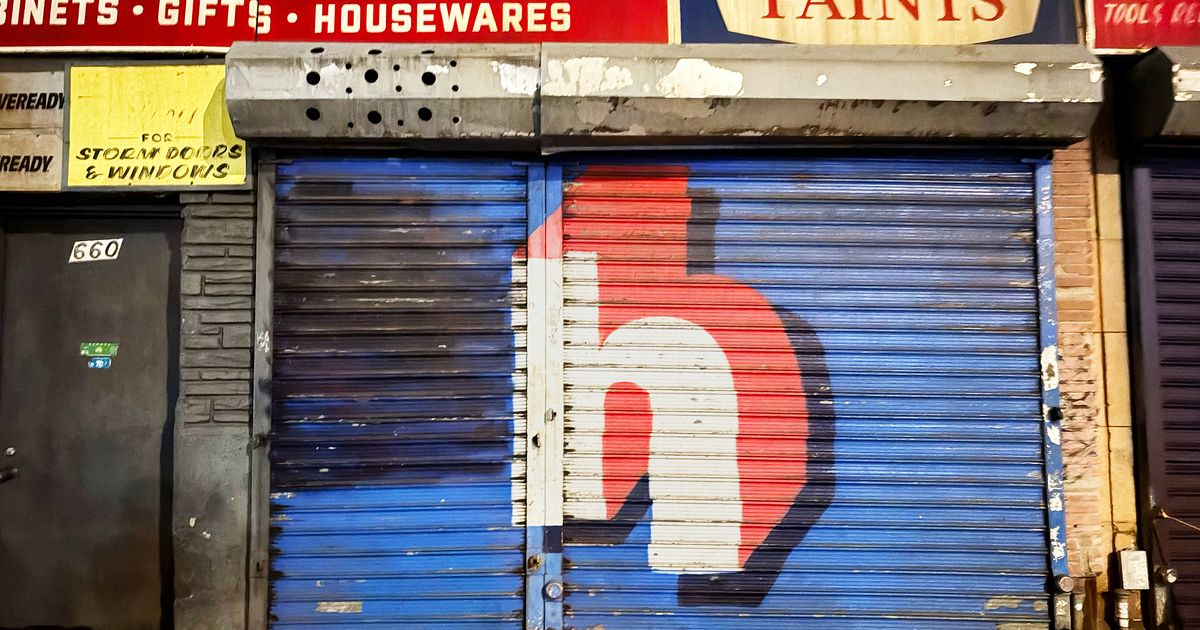
Why it matters: The mandate could reshape the nighttime streetscape of entire commercial corridors, impose a sudden, unplanned capital expense on a fragile small-business ecosystem, and test the city’s capacity for equitable enforcement of long-dormant regulations.
Context: The law reflects a Bloomberg-era preference for ‘broken windows’ aesthetics and crime deterrence through visibility, but its 17-year lead time created a classic governance blind spot where anticipation dissolved into collective amnesia.
"It’s an incredible task, so I can’t believe they actually passed it, it’s going to be so expensive to every retailer. All the bodegas are solid, so I don’t know where they’re going to get the money to do this." — CURBED
Commentary: The impending scramble reveals a systemic failure in municipal communication and business preparedness, turning a well-intentioned design policy into a potential crisis for marginal retailers. It could force a reckoning on whether aesthetic uniformity is worth the survival risk for bodegas, and whether the city’s enforcement apparatus can handle the wave of non-compliance without appearing capricious or punitive. The gate industry’s bottleneck underscores how hyper-local manufacturing niches become critical infrastructure during regulatory shocks.
Date: Tue, 28 Apr 2026 12:00:43 -0400
URL: http://www.curbed.com/article/nyc-storefront-gate-manufacturer-roll-down-solid-law.html
AI Sentiment Score: Negative (87%)
AI Credibility Score: 10.0/10 — High
Scores and text generated by AI analysis of the source article indicated.
NYC affordable housing preferences for artists? A bill auditions in Albany. (Gothamist)
Summary: A bill introduced in Albany seeks to clarify a legal gray area in New York City’s Human Rights Law, explicitly allowing affordable housing developments to give preference to artists. The proposal, citing a 32-56% decline in artist populations in core creative neighborhoods over the last decade, aims to stem an exodus of creative talent by providing a tool modeled on historic complexes like Manhattan Plaza. Critics raise questions about fairness and potential discrimination, while advocates argue artists face a unique ‘three layers of real estate affordability’ challenge involving living, rehearsal, and performance spaces.

Why it matters: It tests a policy lever for preserving New York’s cultural capital by treating a profession as a protected class for housing, with implications for urban planning, equity debates, and the city’s creative economy.
Context: Artist-specific housing has historical precedent in NYC but exists in tension with non-discrimination law; the current affordability crisis is accelerating the geographic and demographic reshaping of the city’s creative class.
"The report found that the population of artists dropped by 32% on the Upper West Side, 18% in Chelsea and 56% on the Lower East Side and Chinatown over the last decade." — GOTHAMIST
Commentary: The bill operationalizes a defensive cultural policy, acknowledging that market forces alone will not preserve the density of talent that defines New York’s soft power. Its passage would create a formal, if contentious, mechanism for municipal cultural patronage, potentially setting a precedent for other creative capitals while inviting legal challenges on equal protection grounds. The underlying data suggests stabilization efforts may already be chasing a dispersed population, as artists relocate to the city’s lowest-income neighborhoods or leave entirely.
Date: Thu, 30 Apr 2026 15:33:00 +0000
URL: https://gothamist.com/news/nyc-affordable-housing-preferences-for-artists-a-bill-auditions-in-albany
AI Sentiment Score: Negative (75%)
AI Credibility Score: 10.0/10 — High
Scores and text generated by AI analysis of the source article indicated.
NYC shelters need ‘reassessment’ after Gothamist probe into violent site, lawmaker says (Gothamist)
Summary: A Gothamist investigation reveals systemic violence and dysfunction at the Tillary Street Women’s Shelter in Downtown Brooklyn, a 200-bed facility for women with mental illness and addiction. The shelter’s rate of serious incidents, including assaults and overdoses, was more than double the citywide average last fiscal year, leading some residents to prefer sleeping on the street. In response, City Councilmember Crystal Hudson, who oversees homeless services, called for a ‘reassessment’ of shelter size and services. The shelter’s long-time operator exited its contract early, and a new nonprofit has taken over as city officials signal a broader shift toward smaller, trauma-informed facilities.

Why it matters: The failure of a high-budget, city-contracted shelter signals a systemic accountability crisis in New York’s right-to-shelter mandate, with direct implications for public safety, municipal spending, and the lived reality of urban poverty.
Context: This investigation lands as Mayor Mamdani’s administration begins closing large congregate shelters like Bellevue, suggesting a policy pivot toward smaller-scale models, but the Tillary case shows the deep operational challenges in transitioning a system built on nonprofit contractors.
"A Gothamist investigation into long-standing dangerous conditions at the 200-bed Tillary Street Women’s Shelter in Downtown Brooklyn shows why homeless people sometimes choose to sleep on the streets rather than enter New." — GOTHAMIST
Commentary: The Tillary Street shelter is a stress test for New York’s model of outsourcing social services to nonprofits: the high incident rate and operator churn reveal a structural mismatch between contract-based management and the needs of a clinically complex population. Councilmember Hudson’s call for reassessment, coupled with the mayor’s closure of Bellevue, suggests political momentum for downsizing, but the real friction will be in recalibrating billions in contracts and decades of institutional practice. Watch for whether the new operator, Bowery Residents’ Committee, can materially improve outcomes or if the scale itself is the flaw, forcing a costly and contentious redesign of the city’s shelter infrastructure.
Date: Thu, 30 Apr 2026 12:00:50 +0000
URL: https://gothamist.com/news/nyc-shelters-need-reassessment-after-gothamist-probe-into-violent-site-lawmaker-says
AI Sentiment Score: Negative (62%)
AI Credibility Score: 10.0/10 — High
Scores and text generated by AI analysis of the source article indicated.
Annual Report on Capital Debt and Obligations, Fiscal Year 2025 (Comptroller.Nyc.Gov)
Summary: The City of New York’s annual capital debt report details the $68.4 billion MTA capital plan for 2025-2029, a program heavily reliant on the now-resurrected Central Business District Tolling Program (congestion pricing). The program, paused in June 2024 and reinstated for a January 2025 start, is projected to generate revenue supporting $15 billion of that capital plan. Its on-again, off-again status underscores the precarious funding model for the region’s core transit infrastructure.
Why it matters: The fiscal health of New York’s transit system directly shapes the city’s density, labor mobility, and economic competitiveness, making its funding mechanisms a critical lever for the city’s future character.
Context: New York’s capital projects are constitutionally debt-limited, forcing reliance on novel revenue tools like congestion pricing to fund multi-billion-dollar infrastructure plans, a model other global cities watch closely.
"The implementation of the CBD Tolling Program, which is projected to generate revenue to support $15.0 billion of funding for the MTA Capital Program, was paused in early June, just weeks before it was scheduled to go into effect on June 30, 2024." — COMPTROLLER.NYC.GOV
Commentary: The report formalizes the financial bet placed on congestion pricing, turning a political compromise into a binding fiscal obligation. The MTA’s five-year capital plan now operates on the assumption of a steady revenue stream that remains politically volatile, creating a brittle dependency. This institutionalizes a tension between Manhattan’s economic centrality and its accessibility, with future infrastructure upgrades hostage to the tolling program’s endurance. For the city’s role as a capital node, it means that the physical and technological capacity of its transit—the system that concentrates talent and capital—is now explicitly priced into the cost of entry to its core.
Date: April 24, 2026 12:00 AM ET
URL: https://comptroller.nyc.gov/reports/annual-report-on-capital-dept-and-obligations-fiscal-year-2025/
AI Sentiment Score: Negative (83%)
AI Credibility Score: 10.0/10 — High
Scores and text generated by AI analysis of the source article indicated.
NYC Department of City Planning – Organization – Idealist (Idealist)
Summary: The NYC Department of City Planning (DCP) operates as the central node for the city’s physical and regulatory evolution, reviewing roughly 450 land use applications annually. Its mandate to promote strategic growth and transit-oriented development directly shapes the density, character, and economic viability of neighborhoods and business districts. Through zoning changes and policy analysis, the DCP’s decisions are the primary lever for determining where housing, public space, and commercial activity can expand.

Why it matters: For a global city like New York, the DCP’s operational tempo and policy direction are a leading indicator for shifts in real estate capital, cultural geography, and the lived experience of density.
Context: The DCP’s role sits at the convergence of political will, developer capital, and community pressure, making its processes a constant site of negotiation over the city’s future form.
"The Department of City Planning (DCP) promotes strategic growth, transit-oriented development and sustainable communities to enhance quality of life in the City, in part by initiating comprehensive, consensus-based planning and zoning changes for individual neighborhoods and business districts, as well as establishing policies and zoning regulations applicable citywide." — IDEALIST
Commentary: The DCP’s annual review of hundreds of applications represents not just bureaucratic throughput but the continuous, granular rewriting of New York’s urban fabric. Its emphasis on ‘transit-oriented development’ and ‘sustainable communities’ signals a post-pandemic recalibration towards density and climate resilience, which will increasingly channel investment into specific corridors and away from others. The agency’s ability to forge ‘consensus’—or impose it—will determine whether New York’s growth exacerbates or mitigates its chronic crises of affordability and access.
Date: April 24, 2026 12:00 AM ET
URL: https://www.idealist.org/en/government/fe0eae554c35498c90f27225f44f52e4-nyc-department-of-city-planning-new-york
AI Sentiment Score: Negative (71%)
AI Credibility Score: 10.0/10 — High
Scores and text generated by AI analysis of the source article indicated.
New York Historical Society Renovation and Expansion – KCI.com (Kci)
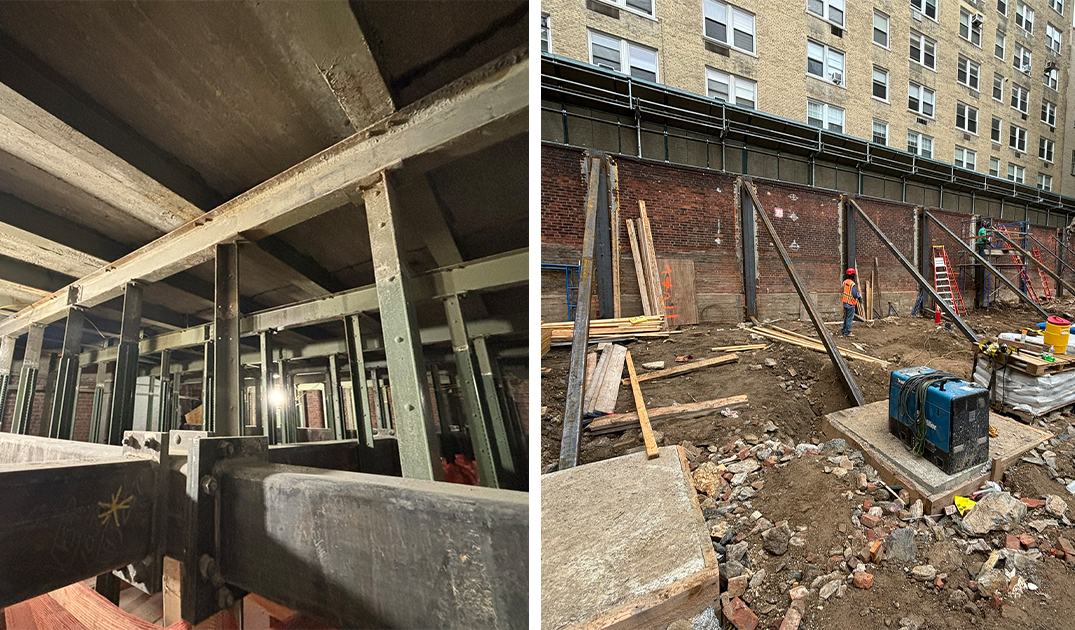
Summary: The New York Historical Society is undergoing a major structural expansion, adding 80,000 square feet to its Central Park West campus. The project integrates a new annex with the 1908 landmark building, creating new galleries, classrooms, a children’s museum, and a permanent home for the American LGBTQ+ Museum. Engineering firm KCI provided the demolition, temporary support, and structural design to enable the complex integration within tight urban constraints.
Why it matters: This expansion reshapes a key cultural node on Manhattan’s Museum Mile, altering the physical and institutional landscape of New York’s history sector.
Context: Major cultural institutions in New York are under pressure to expand and modernize their physical plants to accommodate new narratives, educational mandates, and audience expectations, often within the severe constraints of landmarked structures and dense urban sites.
"The project adds approximately 80,000 square feet of new space, including exhibition galleries, classrooms, a children’s history museum, and the first permanent home for the American LGBTQ+ Museum, integrating a new annex with the original 1908 historic structure." — KCI
Commentary: The expansion signals a strategic pivot for the NYHS, moving beyond a repository of traditional Americana to formally institutionalize newer, contested narratives under one roof. The engineering feat of physically grafting a modern annex onto a landmarked shell is a microcosm of the institution’s broader challenge: updating its intellectual framework without destabilizing its foundational structure. Providing a permanent home for the American LGBTQ+ Museum within this bastion of historical authority represents a significant consolidation of cultural capital and a redefinition of what constitutes ‘American history’ worthy of preservation on Central Park West.
Date: April 20, 2026 12:00 AM ET
URL: https://www.kci.com/projects/new-york-historical-society-renovation-and-expansion/
AI Sentiment Score: Negative (50%)
AI Credibility Score: 8.7/10 — High
Scores and text generated by AI analysis of the source article indicated.
Post ID: d8a16859