The rise of FAST and free streaming TV
FAST: Distribution’s Newest Frontier | 3Vision (3Vision.Tv)
Summary: FAST channels are no longer just a secondary window for archived content; they are becoming a primary distribution channel for high-value and original programming. The US dominates the sector, but European markets are evolving distinct models, complicating global expansion strategies.

Why it matters: The maturation of FAST forces content owners to reassess windowing strategies and platform partnerships, while advertisers face a fragmented but growing alternative to traditional TV.
Context: FAST emerged as a monetization tool for library content, but its growth is now reshaping the competitive dynamics between AVOD, SVOD, and linear TV.
"FAST has potentially opened the door to an increasing amount of high-value, branded, and even original content." — 3VISION.TV
Commentary: The shift from library filler to premium content signals FAST’s transition from a clearance market to a primary channel, forcing studios to recalibrate exclusivity and syndication models. The stark US dominance and Europe’s divergent path suggest a bifurcated market where scale and local curation will dictate winners.
Date: April 27, 2026 12:00 AM ET
URL: https://www.3vision.tv/reports/fast-distributions-newest-frontier
AI Sentiment Score: Positive (50%)
AI Credibility Score: 10.0/10 — High
Scores and text generated by AI analysis of the source article indicated.
FAQ on FAST: How free streaming TV is reshaping the ad market in … (Emarketer)
Summary: Free ad-supported streaming TV (FAST) platforms like Roku Channel, Tubi, and Pluto TV will reach 131.4 million US viewers in 2026, capturing 54% of CTV users. Their combined share of total US TV viewing, however, remains a single-digit percentage, indicating a reach-versus-engagement gap. The market is characterized by viewer growth outpacing advertiser demand, creating a temporary window of lower ad rates and available premium inventory.

Why it matters: For advertisers and media strategists, FAST represents a critical, cost-efficient vector for mass reach in a fragmenting landscape, but its integration requires a nuanced approach distinct from subscription ad tiers.
Context: This continues the shift of linear TV’s audience and ad dollars to streaming, but through an ad-supported, channel-based model that replicates traditional viewing habits more closely than on-demand services.
"Free ad-supported streaming TV (FAST) is a category of streaming services that delivers linear-style, scheduled programming at no cost to viewers, supported entirely by advertising. FAST channels replicate the lean-back experience of." — EMARKETER
Commentary: The data suggests FAST is transitioning from a curiosity to a core broadcast replacement, yet its 5.7% total TV share reveals a ceiling on attention. The ‘underexploited’ dynamic creates an arbitrage opportunity for brands, but one contingent on avoiding the ad overload that degraded the linear experience. Success will depend on treating FAST not as a cheap bulk buy, but as a distinct environment requiring contextual targeting and frequency control to prevent viewer flight.
Date: April 22, 2026 12:00 AM ET
URL: https://www.emarketer.com/content/faq-on-fast--how-free-streaming-tv-reshaping-ad-market-2026
AI Sentiment Score: Negative (62%)
AI Credibility Score: 10.0/10 — High
Scores and text generated by AI analysis of the source article indicated.
As Viewers Shift to Free Streaming, Ad Dollars and Live Sports Are … (Johnwallstreet)
Summary: Free ad-supported streaming television (FAST) platforms, historically repositories for repackaged library content, are now scaling viewership and attracting live sports and original digital-first programming. Nielsen data shows PlutoTV, Roku, and Tubi accounted for 5.7% of all TV viewing minutes in May 2025, a significant increase from 3.7% fifteen months prior. This shift is driven by younger audiences moving to free streaming, prompting rights holders to reconsider distribution strategies. The revenue model, typically a 50/50 or 60/40 split without minimum suggests, is being tested as Connected TV ad spend grows double-digits annually.

Why it matters: The migration of live sports and younger audiences to FAST channels reshapes content valuation, advertising economics, and the leverage dynamics between rights holders, platforms, and advertisers.
Context: This reflects a broader re-fragmentation of the streaming market, where ad-supported tiers and free platforms are gaining share as subscription fatigue sets in, forcing a recalibration of content windowing and monetization strategies.
"Free ad-supported streaming television (or FAST) has long been a home to repackaged libraries of network TV content (think: Hell’s Kitchen or Star Trek reruns). But that’s starting to change as viewership." — JOHNWALLSTREET
Commentary: The entry of live sports into the FAST ecosystem is a critical inflection point; it validates the platform’s reach and signals a move from a low-CPM, library-content model to one capable of commanding premium, appointment-viewing ad budgets. This forces rights holders to navigate a new trade-off: sacrificing per-subscriber fees for potentially greater aggregate audience scale and a direct share of growing CTV ad revenue, fundamentally altering the sports rights landscape.
Date: April 21, 2026 12:00 AM ET
URL: https://www.johnwallstreet.com/p/as-viewers-shift-to-free-streaming-ad-dollars-and-live-sports-are-following
AI Sentiment Score: Neutral (50%)
AI Credibility Score: 10.0/10 — High
Scores and text generated by AI analysis of the source article indicated.
FASTMaster’s April 2026 FAST Update – by Gavin Bridge – Substack (Fastmaster.Substack)
Summary: FAST channel counts continue to rise against industry consensus, adding 49 channels since January 2026 despite widespread acknowledgment of poor monetization and an ‘infinite inventory crisis.’ Gavin Bridge’s analysis notes a reactive, fragmented expansion, with 60% of channels available on only one or two platforms, while most major services now operate their own O&O-branded channels. The disconnect between acknowledged problems and persistent growth suggests misaligned incentives and a lack of strategic stewardship.
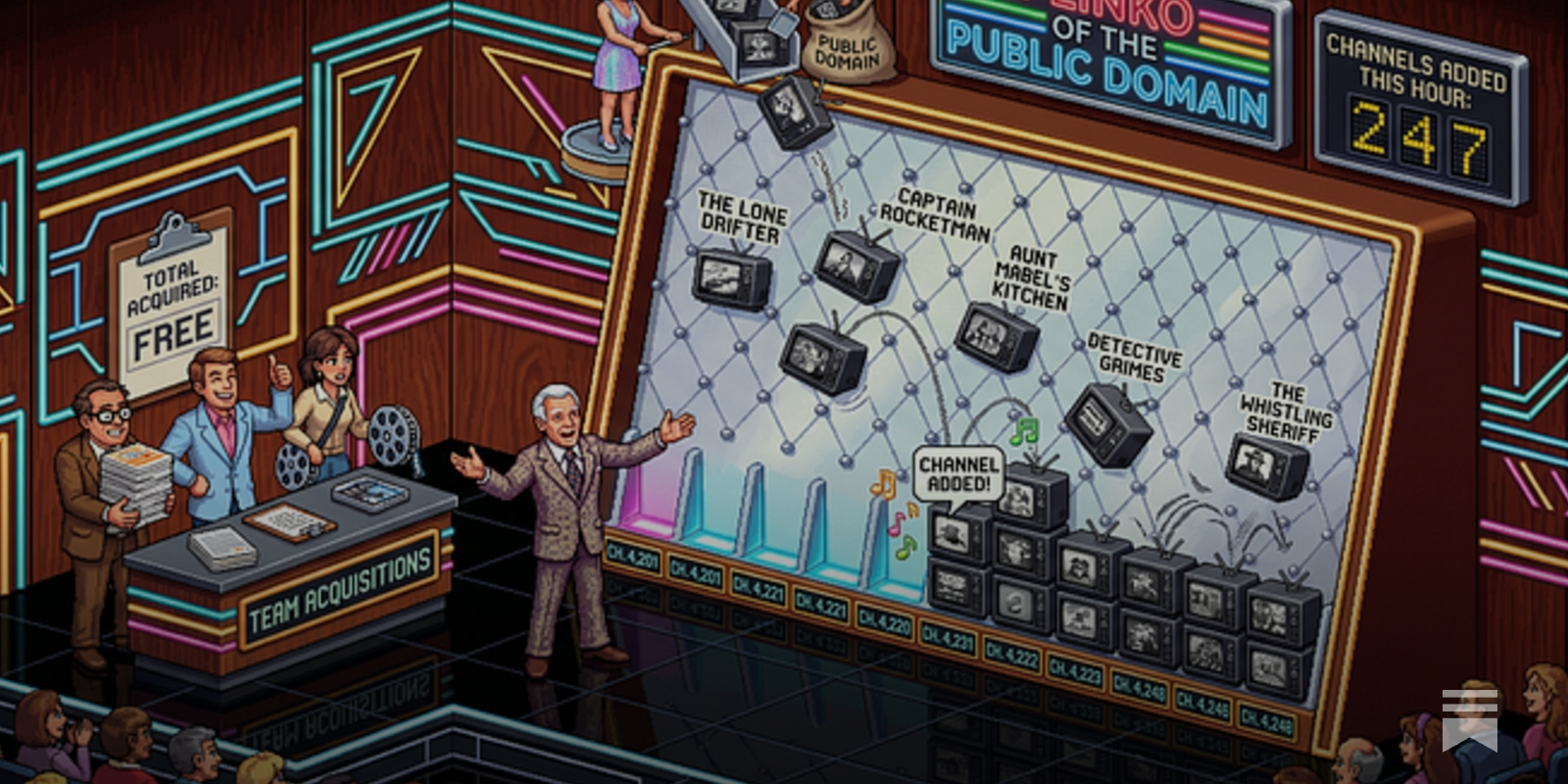
Why it matters: Unchecked channel proliferation degrades viewer experience, depresses ad revenue for all participants, and signals a market failure where platform growth metrics override partner economics.
Context: The FAST sector has been grappling with oversaturation and weak monetization for over a year, with recent industry reports like Bridge’s for Luminate Intelligence painting a grim picture of the need for consolidation and better curation.
"FASTMaster’s April 2026 FAST Update Guess which direction the channel count went. It’s April 2026 and FAST channels are…. on the increase. Okay in fairness, that’s only 9 more than last month." — FASTMASTER.SUBSTACK
Commentary: The continued expansion of channels, particularly O&O offerings from hardware and platform brands, reveals a strategic pivot: platforms are opting for controlled, cost-efficient content licensing over rev-sharing with third-party channels, even as it exacerbates the inventory crisis. This creates a two-tier system where platform-owned channels capture disproportionate viewer trust and attention, further marginalizing the fragmented long tail. The industry’s inability to coordinate a pullback, despite consensus on the problem, illustrates how individual platform incentives for content volume and user engagement directly conflict with collective ecosystem health.
Date: April 28, 2026 12:00 AM ET
URL: https://fastmaster.substack.com/p/fastmasters-april-2026-fast-update
AI Sentiment Score: Negative (58%)
AI Credibility Score: 10.0/10 — High
Scores and text generated by AI analysis of the source article indicated.
YouTube Stations Will Cap Legacy FAST Growth (Fastmaster.Media)
Summary: It is two compounding technical disadvantages: a broken discovery mechanism and a broken ad-fill pipeline. Together, FASTMaster Intelligence projects they will suppress legacy FAST category growth by 10–15% over the next eighteen months post-Stations launch relative to what the category would have achieved without Stations in market. YouTube Stations’ structural changes may temper expected growth in the linear, ad-supported streaming sector.
Why it matters: YouTube Stations’ structural changes may temper expected growth in the linear, ad-supported streaming sector.
Context: The confluence of discovery and ad-fill pipeline issues suggests a material drag on established FAST category expansion.
"It is two compounding technical disadvantages: a broken discovery mechanism and a broken ad-fill pipeline. Together, FASTMaster Intelligence projects they will suppress legacy FAST category growth by 10–15% over the next eighteen." — FASTMASTER.MEDIA
Commentary: The signal is still worth tracking, but the current extraction path did not yield enough body text for a fuller analytical read. The immediate implication is operational rather than speculative: watch how this changes budgets, workflows, or risk assumptions over the next cycle.
Date: April 20, 2026 12:00 AM ET
URL: https://www.fastmaster.media/the-fast-suppressor/
AI Sentiment Score: Positive (50%)
AI Credibility Score: 8.7/10 — High
Scores and text generated by AI analysis of the source article indicated.
The FAST Suppressor – by Gavin Bridge – The FASTMaster (Fastmaster.Substack)
Summary: Gavin Bridge argues that the rise of FAST (Free Ad-Supported Streaming TV) channels, while expanding the free streaming market, will ultimately suppress its long-term growth potential. He contends that these channels will cap audience expansion, divert programmatic advertising revenue away from the broader free-streaming ecosystem, and fundamentally shape the viewing habits of younger generations. This shift ensures that Gen Z and Gen Alpha will be acclimated to algorithmic, feed-based content discovery rather than traditional electronic program guide (EPG) interfaces.

Why it matters: This structural shift in audience acquisition and monetization will reallocate advertising budgets and define the competitive landscape for all video content distributors.
Context: The debate over FAST’s role centers on whether it is a transitional phase or a permanent, dominant distribution model that redefines television economics and viewer behavior.
"What Stations will do is cap the free-streaming industry’s growth ceiling — suppressing future audience expansion, siphoning programmatic ad dollars out of the category, and ensuring that Gen Z and Gen Alpha viewers never migrate to the legacy EPG interface." — FASTMASTER.SUBSTACK
Commentary: Bridge’s analysis frames FAST not as pure growth but as a market-shaping force with inherent trade-offs. The ‘suppression’ thesis suggests a future where the free-TV ad market becomes concentrated within walled-garden FAST platforms, reducing liquidity for independent publishers. For legacy media and new entrants, this means competing for attention and revenue within an environment designed to limit, not expand, total addressable market growth over time.
Date: April 20, 2026 12:00 AM ET
URL: https://fastmaster.substack.com/p/the-fast-suppressor
AI Sentiment Score: Positive (40%)
AI Credibility Score: 10.0/10 — High
Scores and text generated by AI analysis of the source article indicated.
How many Americans have cut the cord? (Q1 2026) – Adwave (Adwave)
Summary: Pay-TV subscriber decline has slowed to a 1-2 percentage point annual drop in household penetration, a deceleration from the steep losses of the early 2020s. As of late 2025, roughly 34.4% of U.S. households remain on traditional cable, satellite, or telco TV services. This establishes a stable, if diminished, linear audience base.

Why it matters: The maturation of cord-cutting reshapes the economics and targeting of mass-market video advertising, forcing a definitive reallocation of media budgets.
Context: The transition from linear to streaming dominance has been the central narrative of media distribution for a decade; this data marks the point where the decline curve flattens, defining the new equilibrium.
"Cord cutting has entered a mature phase. The dramatic year-over-year subscriber losses that shook the pay-TV industry through the late 2010s and early 2020s have slowed, but pay-TV continues to decline. Per." — ADWAVE
Commentary: The strategic implication is operational: media plans must now treat linear TV as a targeted, demographic-specific layer rather than a universal reach vehicle. Bundled CTV platforms gain leverage as the necessary infrastructure for managing fragmented streaming campaigns, while legacy cable networks face a permanent downshift in their advertising CPMs and upfront clout.
Date: April 29, 2026 12:00 AM ET
URL: https://adwave.com/resources/cord-cutting-statistics-q1-2026
AI Sentiment Score: Negative (50%)
AI Credibility Score: 10.0/10 — High
Scores and text generated by AI analysis of the source article indicated.
Post ID: bcdb69c2