
Business Strategies & Market Dynamics
Glossy+ Research: Marketing workflows benefit from AI, but trust is still a barrier to adoption (Glossy.Co)
Summary: A Glossy+ Research survey of 142 brand and agency professionals finds generative AI is now deeply embedded in creative production (82%), marketing (81%), and communications workflows, with Unilever reporting a shift from 20 to hundreds of assets per campaign. Predictive AI sees narrower use, primarily in measurement and KPI analysis (48%). However, trust issues and operational complexity are significant barriers to the adoption of more autonomous agentic AI, with 54% of respondents reporting no current use.

Why it matters: For marketing and creative teams, the transition from AI as an assistant to an operator changes resourcing, vendor relationships, and output volume, while unresolved trust and integration challenges dictate the practical speed of this shift.
Context: The industry is moving past initial AI experimentation into workflow integration, but adoption is uneven across functions, revealing a gap between high-volume creative automation and more cautious, trust-dependent operational applications.
"Overall, the marketers who are incorporating AI into their workflows are seeing the benefits of the tech, but issues with trust and complexity are proving to be barriers to widespread adoption among marketers." — GLOSSY.CO
Commentary: The bifurcation between high-adoption creative tasks and low-adoption planning/financial functions underscores that trust is a function of consequence: low-stakes asset generation scales easily, while high-stakes budget or media allocation requires verifiable accuracy. The agentic AI barrier isn’t just technical; it’s a governance and liability problem for brands deciding what rights to delegate. This could force a formalization of AI risk frameworks within marketing departments, moving from ad-hoc tool use to managed policy.
Date: Wed, 06 May 2026 04:00:00 +0000
URL: https://www.glossy.co/research/glossy-research-marketing-workflows-benefit-from-ai-but-trust-is-still-a-barrier-to-adoption/
AI Sentiment Score: Positive (50%)
AI Credibility Score: 10.0/10 — High
Scores and text generated by AI analysis of the source article indicated.
Chaos and confusion in the Strait of Hormuz could drive apparel production costs up 15% (Glossy.Co)
Summary: Geopolitical instability in the Strait of Hormuz has halted commercial shipping for three days, with Iran imposing new tolls and application processes while the U.S. threatens sanctions on compliant carriers. This chokepoint disruption forces rerouting around the Cape of Good Hope, adding up to a month in transit time for apparel shipments from South Asian hubs. Analysts project a 10-15% increase in global textile production costs and a 30-50% near-term spike in shipping rates, directly impacting brands reliant on seasonal inventory cycles from manufacturers in India and Bangladesh.

Why it matters: For fashion operations, this translates to immediate pressure on landed costs, inventory runway modeling, and the viability of air freight for time-sensitive lines, requiring revised forwarder contracts and SKU-level financial planning.
Context: This follows the pattern of Red Sea disruptions in 2024, where cost impacts lagged the crisis by 60 days, catching brands unprepared for surcharges and capacity constraints.
"According to the Business and Human Rights Centre, global textile production costs are likely to increase by 10-15% as delays continue. The United Nations Conference on Trade and Development expects shipping costs alone to increase 30-50% in the near future." — GLOSSY.CO
Commentary: The operational shift is from just-in-time to just-in-case logistics: forwarders must now provide itemized landed-cost reports by SKU, including war risk insurance surcharges, while brands lock in allocation contracts above spot rates. This moves cost management from the procurement department to the CFO’s runway calculus, prioritizing weeks of inventory by SKU over dollar-value targets.
Date: Fri, 08 May 2026 21:27:47 +0000
URL: https://www.glossy.co/fashion/chaos-and-confusion-in-the-strait-of-hormuz-could-drive-apparel-production-costs-up-15/
AI Sentiment Score: Negative (88%)
AI Credibility Score: 10.0/10 — High
Scores and text generated by AI analysis of the source article indicated.
Fashion Briefing: How Steve Madden is using resale to ‘hedge against tariffs’ (Glossy.Co)
Summary: Steve Madden reported strong Q1 earnings despite earlier tariff-related uncertainty, with net income up 77% and revenue rising 18% to $653 million. The company attributes its resilience to a rebalanced marketing spend, now 5-6% of revenue, and growth in direct-to-consumer sales. A key strategic move is its expansion into resale, framed not just as a sustainability play but as a ‘hedge against tariffs’ by domesticating a portion of inventory. The company is formalizing this through a ThredUp partnership for closet-cleanout kits and integrating secondhand product into its brand sites.

Why it matters: It demonstrates how a mid-market fashion brand is operationalizing resale as a supply-chain and margin defense against persistent trade policy volatility.
Context: Footwear and apparel brands face sustained margin pressure from Section 301 tariffs, driving a search for cost insulation beyond mere sourcing shifts.
"This week, we’re taking a look at the surprising resilience of Steve Madden and how the company is betting on resale as a hedge against tariff-related problems. In February, the footwear company." — GLOSSY.CO
Commentary: Steve Madden is treating its own product returns as a domestic sourcing channel, a pragmatic shift that turns circular economy infrastructure into a tariff buffer. This moves resale from a marketing or sustainability sidebar into the core P&L strategy for margin protection. The ThredUp partnership operationalizes this by creating a closed-loop system that recaptures value and reduces tariff exposure on new imports. For practitioners, it signals a move toward hybrid inventory models where secondhand stock is managed as a strategic buffer against geopolitical supply chain risk.
Date: Thu, 07 May 2026 04:02:00 +0000
URL: https://www.glossy.co/fashion/fashion-briefing-how-steve-madden-is-using-resale-to-hedge-against-tariffs/
AI Sentiment Score: Negative (75%)
AI Credibility Score: 10.0/10 — High
Scores and text generated by AI analysis of the source article indicated.
Gap Q4 2025 slides: tariff pressures weigh on margins … (Investing)
Summary: Gap Inc. reported Q4 FY2025 results that met analyst expectations on top-line sales growth, but its stock declined due to margin pressure from tariffs. The company absorbed a 200 basis point gross margin hit from tariffs, resulting in an 80 bps year-over-year decline to 38.1%, though underlying business margins expanded by approximately 120 bps. Performance diverged across its brand portfolio: the Gap brand posted strong 7% comparable sales growth, Banana Republic improved, while Athleta continued to struggle with a 10% decline.

Why it matters: For apparel operators and supply chain managers, this illustrates the tangible, margin-level impact of trade policy on brand economics and the divergent execution challenges within a multi-brand portfolio.
Context: This follows a multi-year period where apparel retailers have been navigating volatile tariff landscapes, forcing a strategic choice between absorbing costs, raising prices, or accelerating supply chain diversification.
"The company’s Q4 gross margin of 38.1% declined 80 basis points year-over-year, but management emphasized this figure included roughly 200 basis points of net tariff impact, implying approximately 120 basis points of underlying margin expansion." — INVESTING
Commentary: The 200 bps tariff drag quantifies the operational tax on a stable North American apparel supply chain, forcing Gap to fund its brand turnarounds and new growth accelerators from a diminished profit pool. Athleta’s persistent double-digit decline signals a deep-seated product-market misfit that operational execution alone cannot fix, demanding a more fundamental repositioning. The cash balance build suggests management is prioritizing financial flexibility over near-term shareholder returns, likely reserving capital for supply chain reconfiguration or potential M&A within its stated ‘growth accelerators’ like beauty and accessories.
Date: May 03, 2026 12:00 AM ET
URL: https://www.investing.com/news/company-news/gap-q4-2025-slides-tariff-pressures-weigh-on-margins-despite-sales-momentum-93CH-4545807
AI Sentiment Score: Positive (42%)
AI Credibility Score: 10.0/10 — High
Scores and text generated by AI analysis of the source article indicated.
Nike Says It’s ‘Deeply Committed’ to Snkrs App After Speculation Swirls (Wwd)
Summary: Nike has publicly reaffirmed its commitment to the Snkrs app following internal restructuring and layoffs that fueled market speculation. The company is merging the Snkrs engineering team with the broader Nike App team to create a unified digital platform, aiming for operational efficiency and a more seamless consumer experience. This move is part of a broader, multi-round cost-cutting initiative that has impacted over 2,200 jobs in 2026 alone, against a backdrop of declining profitability.

Why it matters: For brands and digital teams, this signals a strategic shift towards platform consolidation and leaner operations, directly impacting vendor relationships, internal tech career paths, and the pipeline for high-heat product launches.
Context: Nike’s ongoing corporate restructuring focuses on sharpening business alignment and reducing costs, with technology and operations teams being repeatedly targeted for consolidation.
"After speculation swirled about the future of Nike‘s popular Snkrs app, the company said Saturday it is “deeply committed” to the platform. “Snkrs remains a critical tool in our digital marketplace strategy,." — WWD
Commentary: The integration of Snkrs into the main Nike App engineering stack reduces dedicated resources for the sneaker-drop platform, potentially standardizing its development cycle and diluting its cult status. For competitors and vendors, this consolidation means a single point of contact and a more corporate procurement process, altering negotiation dynamics. The move prioritizes cost efficiency over specialized team autonomy, a trade-off that may affect the agility and distinctiveness of future limited-edition launches.
Date: Sat, 09 May 2026 21:58:16 +0000
URL: https://wwd.com/footwear-news/shoe-industry-news/nike-snkrs-app-layoffs-strategy-explained-1238948965/
AI Sentiment Score: Negative (50%)
AI Credibility Score: 10.0/10 — High
Scores and text generated by AI analysis of the source article indicated.
Kobe Bryant’s Rare Air Force 1s Are Coming Out for the First Time and They’re Getting a Major Upgrade (Wwd)
Summary: Nike is commercializing a previously player-exclusive 2006 denim Air Force 1 designed for Kobe Bryant, releasing it publicly on May 22. The release is not a simple reissue; it incorporates a ‘Protro’ (performance retro) upgrade, including a ReactX drop-in insole for modernized cushioning and signature branding swaps on the midsole and outsole.

Why it matters: This signals Nike’s strategy to monetize deep-cut archival assets by retrofitting them with modern performance tech, altering the economics and production pipeline for heritage releases.
Context: Nike’s ‘Protro’ program, initially for Bryant’s signature basketball line, is now being applied to non-signature lifestyle models, expanding the retro-upgrade category beyond core performance footwear.
"After news surfaced in August of Kobe Bryant’s exclusive denim-draped Nike Air Force 1 making its way to retail this year, the release is now imminent with the arrival of official e-commerce." — WWD
Commentary: This move expands the Protro framework from a performance-line refresh tool into a broader product strategy for the entire Nike Sportswear archive, creating a new tier of ‘heritage-plus’ product. It sets a precedent for future retro releases across categories, requiring development teams to integrate modern component sourcing (like ReactX insoles) into legacy silhouettes. For retailers and the secondary market, it recalibrates the value proposition of player exclusives, shifting them from collectible artifacts into commercially upgraded products.
Date: Sat, 09 May 2026 17:35:34 +0000
URL: https://wwd.com/footwear-news/sneaker-news/kobe-bryant-nike-air-force-1-protro-denim-release-date-im1980-400-1238948938/
AI Sentiment Score: Neutral (50%)
AI Credibility Score: 10.0/10 — High
Scores and text generated by AI analysis of the source article indicated.
EXCLUSIVE: Aura Blockchain Consortium’s CEO on Building a Value-creating Industry Ecosystem (Wwd)
Summary: The Aura Blockchain Consortium, a nonprofit backed by LVMH, Prada, Cartier, OTB, and Mercedes-Benz, is shifting from a tech startup posture to a ‘value-creating industry orchestrator.’ Under new CEO Marcel Härtlein, formerly of Lalique, the focus is scaling adoption of its blockchain platform for digital product passports (DPPs), driven by impending EU regulations and a need to rebuild consumer trust through verifiable data. The consortium argues AI and blockchain are complementary—AI makes data intelligent, blockchain makes it trustworthy—and sees its neutral, member-governed structure as a strategic advantage amid geopolitical tensions and reliance on U.S. tech giants.

Why it matters: For luxury brand operations, this signals a move from experimental pilots to mandatory, regulated implementation of traceability systems, requiring internal digital and business transformation.
Context: The EU’s Ecodesign for Sustainable Products Regulation (ESPR) mandates digital product passports by 2027-2028, forcing the industry to standardize supply chain data. Aura’s position as a consortium-owned utility contrasts with for-profit SaaS vendors.
"MILAN — The Aura Blockchain Consortium is ready to make its next big leap — from fashiontech start-up to full-fledged responsibility enabler — mindful of the incoming regulatory frameworks and digital product." — WWD
Commentary: The operational mandate is clear: DPP projects are now business transformation initiatives, not IT checkboxes. For member brands, this means re-engineering non-digital processes—sourcing, compliance, resale—around a shared data ledger. Aura’s nonprofit pitch is a direct counter to vendor lock-in, offering a governance lever against tech giants, but it also centralizes industry data infrastructure under a consortium of rivals. The real labor will be upstream, forcing brands to systematize and expose supply chain data they’ve historically kept opaque.
Date: Wed, 06 May 2026 05:00:00 +0000
URL: https://wwd.com/sustainability/business/aura-blockchain-consortiums-ceo-next-phase-growth-1238939098/
AI Sentiment Score: Neutral (33%)
AI Credibility Score: 10.0/10 — High
Scores and text generated by AI analysis of the source article indicated.
Luxury Briefing: Pinterest’s luxury pitch is AI discovery, not AI answers (Glossy.Co)
Summary: Pinterest sharpens its luxury strategy by positioning its AI as a discovery engine, not a chatbot, leveraging its Taste Graph to map user intent from saves and searches. Its Performance+ ad suite now accounts for 30% of lower-funnel revenue, with case studies from Prada showing significant efficiency gains. Meanwhile, Coach’s marketing spend approaches $1 billion annually, driving customer acquisition, and Revolve accelerates growth through owned brands and celebrity launches.

Why it matters: Luxury marketers face pressure to suggest ROI on inspiration platforms and must decide whether to reallocate budgets toward AI-driven discovery tools that promise measurable intent.
Context: Platforms are competing to monetize visual discovery and saved content, with Pinterest differentiating through planning-centric user behavior and automated ad tools.
"Pinterest’s challenge is proving that a platform still associated with moodboards can become a worthwhile investment for luxury brands." — GLOSSY.CO
Commentary: Pinterest’s Performance+ suite reduces campaign inputs by 50%, shifting labor from manual targeting to creative and strategic oversight. For luxury houses, this means re-evaluating media mixes to capture early-funnel intent, but the platform must still close the monetization gap between engagement and conversion to justify budget shifts.
Date: Fri, 08 May 2026 04:00:00 +0000
URL: https://www.glossy.co/fashion/luxury/luxury-briefing-pinterests-luxury-pitch-is-ai-discovery-not-ai-answers/
AI Sentiment Score: Negative (66%)
AI Credibility Score: 10.0/10 — High
Scores and text generated by AI analysis of the source article indicated.
5 takeaways from Glossy’s Leaders Dinner: Retail’s growth playbook is getting more human (Glossy.Co)
Summary: A private dinner for brand and retail executives revealed a strategic pivot away from pure digital efficiency toward human-centric operations. Leaders report rising customer acquisition costs and algorithmic discovery fatigue are forcing a reallocation of resources into in-store programming, intimate events, and community management. This shift repositions physical stores as marketing and content hubs, while commerce teams adapt web and chat infrastructure for both human shoppers and AI agents. The calculus on influencer partnerships and channels like TikTok Shop is also becoming more ruthlessly data-driven, favoring measurable sales over follower counts.

Why it matters: This signals a material change in the retail operating model, directly impacting budget allocation, staffing, real estate strategy, and vendor selection for brands.
Context: This follows a decade of e-commerce and digital marketing dominance, where physical retail was often framed as a cost center rather than a growth lever.
"During the most recent Glossy and Modern Retail Leaders Dinner, hosted in partnership with Global Payments on April 29, brand and retail leaders discussed the current dynamics impacting their growth. Among them:." — GLOSSY.CO
Commentary: The move from digital ad spend to salaried community managers represents a fundamental shift in cost structure and skill-set demand. It implies a longer-term investment in owned channels and local activation over rented traffic, with direct consequences for agency relationships and internal team composition. The emphasis on programming stores and intimate events turns real estate from a fixed cost into a variable marketing asset, requiring new operational playbooks for retail staff.
Date: Fri, 08 May 2026 04:02:00 +0000
URL: https://www.glossy.co/fashion/5-takeaways-from-glossys-leaders-dinner-retails-growth-playbook-is-getting-more-human/
AI Sentiment Score: Negative (60%)
AI Credibility Score: 10.0/10 — High
Scores and text generated by AI analysis of the source article indicated.
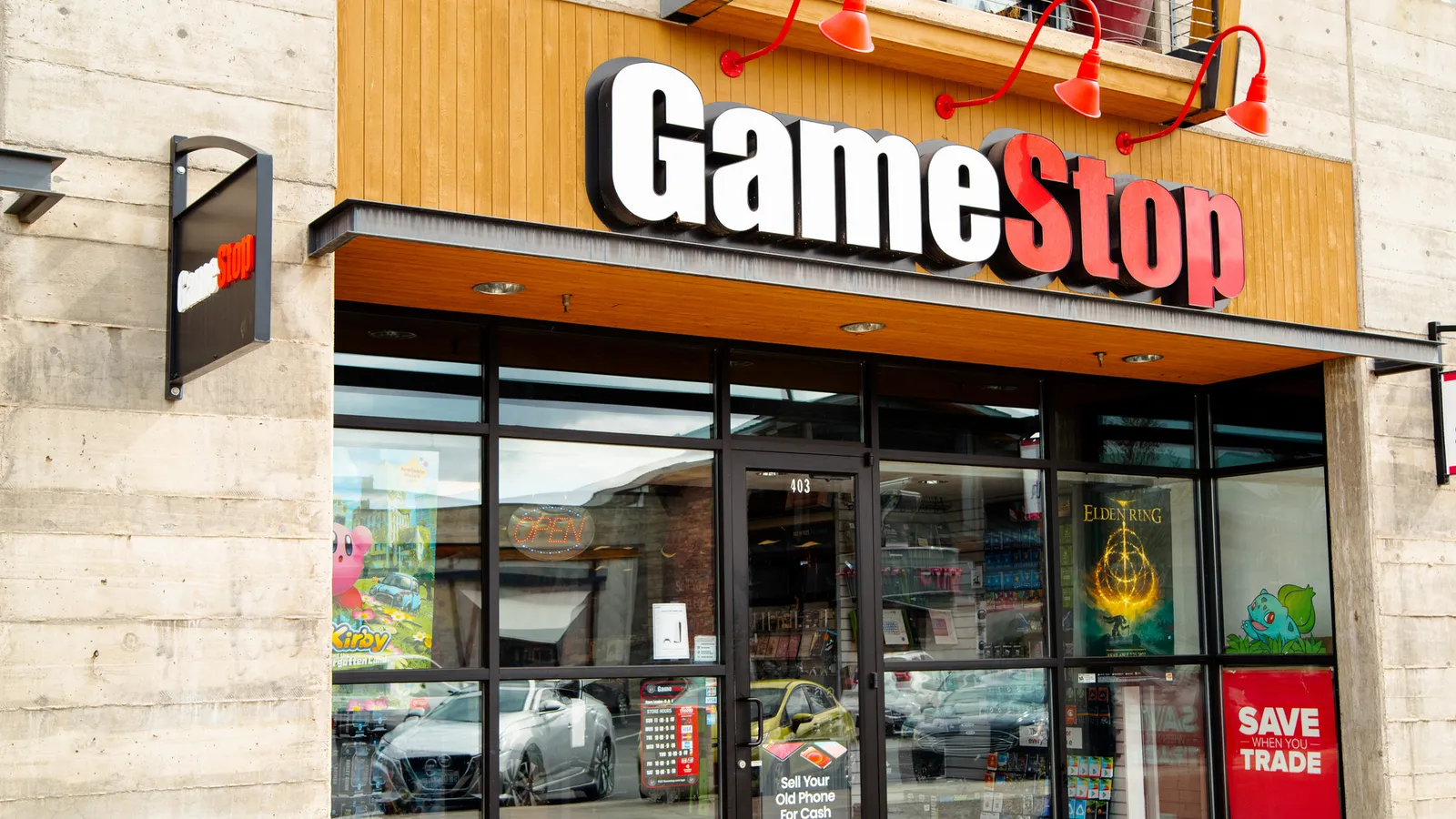
GameStop’s $56B eBay bid aims to create collectibles powerhouse (Retaildive)
Summary: <figure><div><img src="https://imgproxy.divecdn.com/a7pm0HD2E4s03Bfl9g_F6HXwv7x36WVQ5Qy8loa5xdQ/g:nowe:2:67/c:1888:1066/rs:fill:1600:900:1/Z3M6Ly9kaXZlc2l0ZS1zdG9yYWdlL2RpdmVpbWFnZS8yMl9hcHJpbF9yZXRhaWwtNi5qcGc=.webp" /></div></figure><p>The gaming retailer submitted an unsolicited acquisition proposal for the online marketplace and suggested its store fleet could serve as eBay’s fulfillment network.</p> Proposed integration of physical store network into eBay’s fulfillment model requires immediate operational due diligence on logistics capacity and overhead.
Why it matters: Proposed integration of physical store network into eBay’s fulfillment model requires immediate operational due diligence on logistics capacity and overhead.
Context: The bid structure suggests a pivot toward physical retail infrastructure supporting digital marketplace scale, impacting vendor onboarding and inventory flow.
"<figure><div><img src="https://imgproxy.divecdn.com/a7pm0HD2E4s03Bfl9g_F6HXwv7x36WVQ5Qy8loa5xdQ/g:nowe:2:67/c:1888:1066/rs:fill:1600:900:1/Z3M6Ly9kaXZlc2l0ZS1zdG9yYWdlL2RpdmVpbWFnZS8yMl9hcHJpbF9yZXRhaWwtNi5qcGc=.webp" /></div></figure><p>The gaming retailer submitted an unsolicited acquisition proposal for the online marketplace and suggested its store fleet could serve as eBay’s fulfillment network.</p>." — RETAILDIVE
Commentary: The signal is still worth tracking, but the current extraction path did not yield enough body text for a fuller analytical read. The immediate implication is operational rather than speculative: watch how this changes budgets, workflows, or risk assumptions over the next cycle.
Date: Mon, 04 May 2026 12:39:00 -0400
URL: https://www.retaildive.com/news/gamestop-ebay-acquisition-collectibles-powerhouse/819184/
AI Sentiment Score: Negative (50%)
AI Credibility Score: 10.0/10 — High
Scores and text generated by AI analysis of the source article indicated.
Post ID: 026dcda4