AI Tools & Workflows for Creators and Operators
The AI Agency Race Is a Data Race (Medium)
Summary: Publicis Groupe’s $2.2 billion acquisition of data collaboration platform LiveRamp signals a strategic pivot for major advertising holding companies. The move highlights that the competitive advantage in AI-powered marketing will be determined by underlying data infrastructure—identity resolution, clean rooms, and partner connectivity—not just by flashy agent interfaces. This pattern is evident across WPP’s purchase of InfoSum and Omnicom’s development of its Omni platform, indicating a broader shift where agencies are building proprietary operational environments.

Why it matters: It reframes the agency-client relationship from campaign vendor to strategic infrastructure provider, creating new dependencies and governance challenges for enterprise marketing operations.
Context: The acquisition follows a series of similar moves by holding companies to secure data collaboration and identity assets, positioning them as essential layers for commercially viable, governed AI agent systems.
"The agency holding company is trying to become less like a vendor that performs tasks and more like an environment where marketing work happens. That environment connects data, workflows, partner ecosystems, activation, and measurement. It makes the agency stickier. It also changes what clients are buying." — MEDIUM
Commentary: The analysis correctly identifies the infrastructural land grab as the core strategic play, moving beyond AI hype to the less glamorous but critical mechanics of data governance and activation. For clients, the trade-off is operational speed for increased lock-in and complex vendor management, requiring legal, privacy, and technology teams to engage at a platform-evaluation level. The real competition will be won by those who can provide both utility and credible auditability, not just automation.
Date: Wed, 20 May 2026 10:01:02 GMT
URL: https://medium.com/@markus_brinsa/the-ai-agency-race-is-a-data-race-62fa5376bd5b
AI Sentiment Score: Negative (66%)
AI Credibility Score: 10.0/10 — High
Scores and text generated by AI analysis of the source article indicated.
Artificial Organizations — Chapter 7: Turn Your Routines Into AI Workflows (Youtube)
Summary: A creator details the operational shift from manual weekly reporting and task management to automated AI workflows. The system begins with a simple command, ‘/today’, which triggers an AI agent to synthesize information, assess priorities, and generate a daily briefing. This exemplifies a move from using AI for discrete tasks to embedding it into the core routines of an independent operation.

Why it matters: It signals a maturation of the ‘AI-native’ operator, where competitive advantage shifts from content creation to the efficiency and intelligence of the underlying operational system.
Context: This follows a broader trend of solopreneurs and small teams using agentic workflows to overcome scale limitations, moving beyond content generation tools to build proprietary execution engines.
"{ts:328} often one of the key things that they have to do each week is is just report. Right, what’s going on? What’s {ts:334} happening? What are the key KPIs? And and." — YOUTUBE
Commentary: The key evolution is the codification of judgment—’what’s due today’—into a repeatable, automated process. This reduces cognitive overhead and creates a durable, transferable operational asset. The risk is an over-optimization for the creator’s personal rhythm, which may not generalize, but the template for building such systems is now publicly documented.
Date: May 22, 2026 12:00 AM ET
URL: https://www.youtube.com/watch?v=gsywQYEBWz0
AI Sentiment Score: Negative (50%)
AI Credibility Score: 10.0/10 — High
Scores and text generated by AI analysis of the source article indicated.
Twegs – how to automate your work with AI (Twegs)
Summary: Twegs, a newsletter focused on AI automation for independent operators, publishes a mix of workflow walkthroughs, tool analyses, and reported stories. Its latest content includes a profile of three women using Claude for work delegation, a technical guide for automating release note intelligence, and a critical analysis of the data reseller Clay’s pricing model. The central thesis argues that while AI features are proliferating in individual apps, the real productivity gain comes from automating the handoffs between them.

Why it matters: For operators building businesses alone or in small teams, the efficiency gap is no longer in individual tasks but in the connective tissue between tools; automating these handoffs is the next frontier of leverage.
Context: The ‘AI inside every app’ phase has matured, creating a new problem of tool sprawl and manual coordination that negates the promised time savings.
"What none of them do is hand off to each other. So you do. You read the Granola recap and paste the action items into Asana. A lead replies to a sequence, so you go update the deal in HubSpot. Every step got faster. The handoffs between them didn’t." — TWEGS
Commentary: Twegs shifts the conversation from AI as a feature to AI as an integrator, a more valuable and defensible thesis for operators. The Clay pricing exposé exemplifies its useful, adversarial stance on tool economics. The publication’s value is in field observation and concrete workflow mechanics, not speculative futurism.
Date: May 19, 2026 12:00 AM ET
URL: https://twegs.com
AI Sentiment Score: Positive (50%)
AI Credibility Score: 9.7/10 — High
Scores and text generated by AI analysis of the source article indicated.
Why AI Workflow Compression Lets One Person Do a Team’s Work (Plansale.Ca)
Summary: A 2026 article from Plansale.Ca argues that AI’s primary impact on small businesses is structural, enabling a single ‘operator’ to execute workflows that previously required a multi-person team. The piece frames this as ‘AI workflow compression,’ a shift from adding headcount or tools to redesigning core processes like lead intake, content production, and CRM management into connected, automated systems. It positions this as a competitive necessity for lean companies seeking faster iteration and lower operational drag.

Why it matters: This redefines the minimum viable team for digital execution, altering hiring strategies, software procurement, and the competitive dynamics for small and medium-sized businesses.
Context: The argument extends beyond generic AI productivity hype, focusing on the operational redesign and process integration required to realize gains, a theme echoed by consultancies like McKinsey but rarely detailed for the independent operator.
"The real AI shift is not that companies have one more software category to buy; it is that one person can now operate with the leverage of a small team. AI workflow compression turns scattered tasks into connected systems, which is why it changes company structure instead of simply improving individual efficiency." — PLANSALE.CA
Commentary: The piece is valuable as field observation and a practical argument, though it serves as a lead generator for the author’s audit service. Its core thesis—that compression alters structure, not just speed—is correct and has implications for organizational design, management overhead, and the valuation of ‘human judgment’ roles. The risk is that implementation, as noted, remains the hard part, and many businesses will fail at the integration stage, creating a new layer of consulting dependency.
Date: May 18, 2026 12:00 AM ET
URL: https://www.plansale.ca/insights/ai-workflow-compression
AI Sentiment Score: Negative (75%)
AI Credibility Score: 7.0/10 — Medium
Scores and text generated by AI analysis of the source article indicated.
Creator Economy in 2026: How AI Became a New Team … (Mgid)
Summary: The creator economy’s operational core is shifting from audience growth to operational scale, with AI moving from experimental tool to embedded workflow component. By 2026, AI is handling scriptwriting, brand deal sorting, fan communication, and analytics, creating a performance gap between those who automate operations and those who do not.
Why it matters: This signals a maturation phase where competitive advantage for independent operators hinges on back-office efficiency, not just creative talent, potentially restructuring the labor and business models of the digital content industry.
Context: This follows the broader trend of AI moving from content generation to workflow orchestration, mirroring the automation of middle-office functions in other knowledge industries.
"*For years, creators positioned themselves as the human alternative to algorithmic content. Although now, generative AI is no longer sitting on the sidelines of the creator economy. In 2026, it’s becoming part." — MGID
Commentary: The report’s 80% adoption figure suggests a tipping point; the ‘widening gap’ it describes will likely manifest in audience retention and revenue stability for AI-equipped operators. This pressures the ‘authentic human’ brand proposition, forcing a renegotiation of what ‘creator-led’ means when the interface is increasingly automated. The real market shift may be the emergence of AI-as-service firms that manage creator operations, further professionalizing and centralizing a fragmented field.
Date: May 22, 2026 12:00 AM ET
URL: https://www.mgid.com/blog/creator-economy-how-ai-became-a-new-team-member
AI Sentiment Score: Neutral (33%)
AI Credibility Score: 7.2/10 — Medium
Scores and text generated by AI analysis of the source article indicated.
Structuring Your Company For AI In 2026 (Blackmatter.Vc)
Summary: A venture capital firm outlines a 90-day operational blueprint for integrating AI agents into a company’s workflow, moving from audit and tool consolidation to establishing monitored, high-leverage automated routines. The framework emphasizes ruthless cancellation of redundant or unused tools, centralizing execution logs, and starting with just three core automated tasks before scaling.

Why it matters: It provides a concrete, phased operational plan for moving beyond AI experimentation to disciplined, scalable implementation, a critical transition for operators managing costs and complexity.
Context: As AI tool sprawl and ‘shadow AI’ projects proliferate, companies face rising costs and operational fragility without a governance structure.
"Secrets management: one place. Vercel environment variables for things deployed on Vercel. GitHub Secrets for CI. A password manager (1Password, Bitwarden) for human-held credentials. … One database table — call it
agent_runs." — BLACKMATTER.VC
Commentary: The prescription is valuable as field-tested operator analysis, shifting the focus from capability to accountability via the agent_runs table. Its ruthless consolidation phase targets the real cost center: unmanaged subscriptions and duplicated functions. The insistence on starting with only three routines is a crucial discipline against the common failure mode of over-extending brittle systems before they are proven.
Date: May 18, 2026 12:00 AM ET
URL: https://blackmatter.vc/lab/structuring-your-company-for-ai-2026
AI Sentiment Score: Negative (66%)
AI Credibility Score: 8.6/10 — High
Scores and text generated by AI analysis of the source article indicated.
The State of AI in the Creator Economy (2026 Survey) – Kit (Kit)
Summary: A 2026 survey of creators by Kit finds AI adoption is concentrated in upstream cognitive tasks: 82.7% use it for writing/editing and brainstorming, 72.8% for research/summarization, and 48.2% for data analysis. Visual creation and content repurposing lag at 46.9%, with project management at 33%. The data suggests AI’s primary value is as an augmentation layer for ideation and workflow efficiency, not as an autonomous content producer.
Why it matters: This quantifies the operational shift from AI as a content factory to a cognitive co-pilot, defining where creator tools should invest and how creator workflows are being re-architected.
Context: The creator economy has been saturated with AI content-generation hype; this survey provides a counter-narrative grounded in actual operator use, revealing a preference for intelligence amplification over automation.
"Across the creator economy, AI is most valuable upstream of content creation, as a thinking partner, rather than as a content generator that replaces the creator’s voice." — KIT
Commentary: The data validates a maturation phase: AI’s economic moat for creators is in reducing cognitive load and accelerating the ‘thinking’ layer, not in final-output substitution. This pressures toolmakers (like Notion, Jasper, or ChatGPT) to deepen research, analysis, and brainstorming features, while marginalizing pure content-spinning utilities. For creators, it reinforces that defensibility remains in unique voice and judgment, now accelerated by AI-augmented preparation.
Date: May 19, 2026 12:00 AM ET
URL: https://kit.com/resources/blog/ai-creator-economy-report
AI Sentiment Score: Negative (75%)
AI Credibility Score: 7.0/10 — Medium
Scores and text generated by AI analysis of the source article indicated.
Report: AI’s Role In Creator Monetization Shifts From … (Netinfluencer)
Summary: A Fanvue report argues that the primary monetization value of AI for creators has shifted from content production to fan engagement. It claims most creators are misallocating their focus, using AI for content creation when AI-driven interaction tools offer a higher return. The creator economy is projected to grow to over $1 trillion by 2033, making the efficiency of this shift a material concern for platform economics and operator livelihoods.
Why it matters: This signals a tactical pivot for independent operators: optimizing for relationship scalability and recurring revenue over content volume, which could redefine platform feature roadmaps and competitive moats.
Context: The debate over AI’s role has centered on automating creation; this report reframes it as an automation of intimacy and community management, a higher-margin activity.
"AI-powered fan engagement now represents a more significant income driver than AI-assisted content production." — NETINFLUENCER
Commentary: If validated, this shifts investment from creation tools to CRM-like systems for creators, privileging platforms with robust messaging, analytics, and automated interaction APIs. It also implies a stratification where creators who master engagement-layer AI will capture disproportionate value, potentially accelerating the professionalization of the sector.
Date: May 18, 2026 12:00 AM ET
URL: https://www.netinfluencer.com/report-ai-role-in-creator-monetization-shifts-from-content-output-to-fan-engagement/
AI Sentiment Score: Positive (50%)
AI Credibility Score: 10.0/10 — High
Scores and text generated by AI analysis of the source article indicated.
Build the room before you write the memo. Grab the 4-prompt pro (Abovo.Co)
Summary: Abovo.Co proposes a four-prompt methodology for structuring research and writing projects within file-system tools, emphasizing systematic source management and citation before drafting. The approach treats the digital workspace as a ‘room’ to be built with inventory, duplication logs, context tracking, and grounded drafts.
Why it matters: For independent operators and newsletter authors, this formalizes a defensible workflow for producing rigorous, source-anchored analysis, directly addressing credibility and auditability in a market saturated with opinion.
Context: This reflects a growing operational discipline among solo analysts and creators, moving beyond content calendars to architecting verifiable research systems.
"May 22, 2026 @ 2:08 PM … Build the room before you write the memo. Grab the 4-prompt project room kit: source inventory, duplicate log, missing-context list, grounded draft. … – **Grab." — ABOVO.CO
Commentary: The value is in packaging a researcher’s tacit workflow into a repeatable, tool-agnostic protocol. This is less a technical innovation than a signal that serious independent analysis now requires institutional-grade traceability to compete. It pressures adjacent operators to document their process or risk being perceived as merely speculative.
Date: May 22, 2026 12:00 AM ET
URL: https://www.abovo.co/natesnewsletter@substack.com/145435
AI Sentiment Score: Negative (66%)
AI Credibility Score: 7.0/10 — Medium
Scores and text generated by AI analysis of the source article indicated.
From Creator Content to Pipeline: The CFO-Ready Framework for … (Limelighthq)
Summary: A framework for quantifying creator marketing’s financial impact proposes treating creator programs as a measurable customer acquisition channel. It advocates for a ‘Creator Identity Layer’ within CRM systems to track creator-driven engagements and map them to target accounts, enabling the calculation of a ‘Creator CAC’ (Customer Acquisition Cost) that includes all associated fees and labor. This approach seeks to translate creator influence into CFO-ready metrics comparable to other marketing spend.
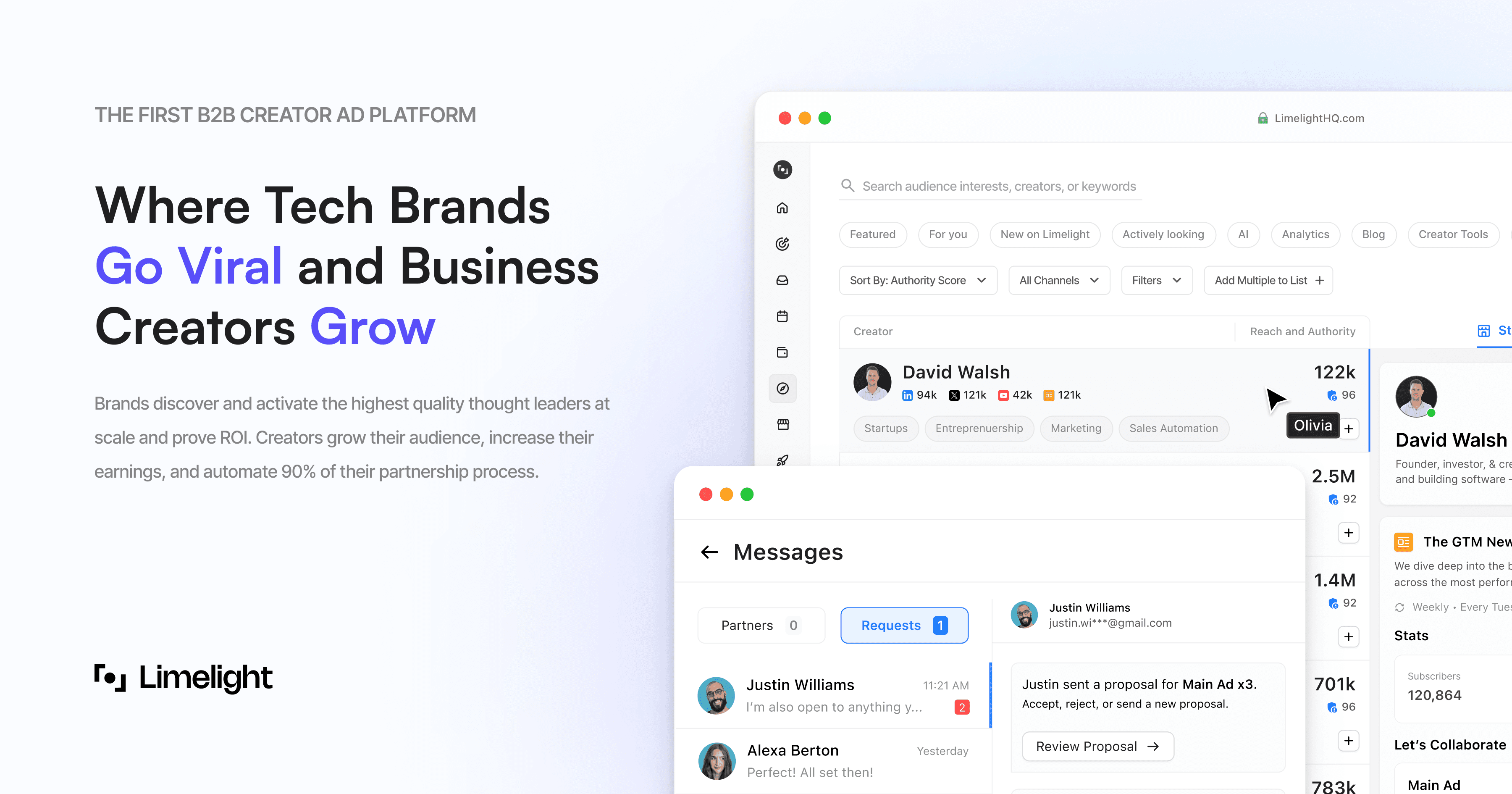
Why it matters: It provides a concrete operational model for moving creator partnerships from a nebulous brand exercise to a financially accountable pipeline driver, directly addressing the pressure on marketing to suggest ROI.
Context: This reflects the broader maturation of the creator economy, where brands seek predictable returns and scalable systems, moving beyond one-off sponsorships toward integrated, performance-based partnerships.
"Creator CAC calculation requires clear denomination definition that finance teams can trust: Customer-Level CAC (Most Accurate) Creator CAC = Total Creator Program Spend ÷ New Customers with Verified Creator Attribution **Opportunity-Level CAC." — LIMELIGHTHQ
Commentary: The framework’s value lies in its procedural specificity—it’s a field manual for integration, not a theory. The insistence on ‘fully-loaded internal labor costs’ is a critical, often omitted, rigor that forces honest comparison against channels like paid search. Success hinges on the feasibility of the ‘verified attribution’ layer, a significant data engineering and process challenge for most organizations.
Date: May 19, 2026 12:00 AM ET
URL: https://www.limelighthq.com/insights/creator-content-pipeline-cfo-framework-b2b-creator-roi-2026
AI Sentiment Score: Positive (40%)
AI Credibility Score: 10.0/10 — High
Scores and text generated by AI analysis of the source article indicated.
AI Clipping for Newsrooms in 2026: How to Build a Short- … (Overlap.Ai)
Summary: An analysis from Overlap.Ai outlines a tactical workflow for newsrooms to systematically repurpose long-form content into short-form clips using AI, with specific daily publishing targets across platforms and a designated internal owner for the process. It argues that algorithmic momentum requires a minimum cadence of 5-8 clips per day on video platforms, supplemented by strategic posts on X and LinkedIn. The core operational thesis is that treating all long-form assets as a clip library and embedding performance data into editorial meetings can transform content strategy.

Why it matters: For independent operators and newsletter publishers, this represents a concrete, scalable model for audience growth and revenue diversification that moves beyond theory into daily logistics and resource allocation.
Context: This reflects the ongoing professionalization of the creator economy, where media businesses are adopting product management disciplines—feedback loops, defined cadences, and owned workflows—to compete in algorithmic environments.
"### Treat Every Long-Form Asset as a Clip Library Every broadcast, field interview, press conference, and panel discussion your newsroom produces contains multiple clips. … ### Set a Minimum Publishing Cadence Algorithmic." — OVERLAP.AI
Commentary: The piece is valuable as field observation and operational analysis, translating platform incentives into a repeatable system. Its implied critique is that most media operations treat short-form as ancillary, not core. The risk is optimizing for algorithmic feed velocity over editorial coherence, but the prescribed editorial ownership and meeting integration are safeguards against pure automation. For independents, the resource question—who owns the workflow—is the critical implementation hurdle.
Date: May 19, 2026 12:00 AM ET
URL: https://overlap.ai/blogs/ai-clipping-for-newsrooms-in-2026-how-to-build-a-short-form-video-distribution-workflow-that-actually-scales
AI Sentiment Score: Positive (42%)
AI Credibility Score: 7.0/10 — Medium
Scores and text generated by AI analysis of the source article indicated.
Key Metrics To Track (Foundra.Ai)
Summary: A 2026 framework for newsletter business planning emphasizes operational rigor over creative aspiration, framing the venture through three investor-grade questions: market reality, profitable customer acquisition, and differentiation. It outlines a six-section plan requiring genuine research on editorial focus, content format, platform choice, growth strategy, monetization, and milestone targets built from unit economics. The analysis notes the intensifying platform competition among Beehiiv, ConvertKit, and Substack, while asserting that newsletters are fundamentally capital-efficient, requiring minimal funding beyond time.
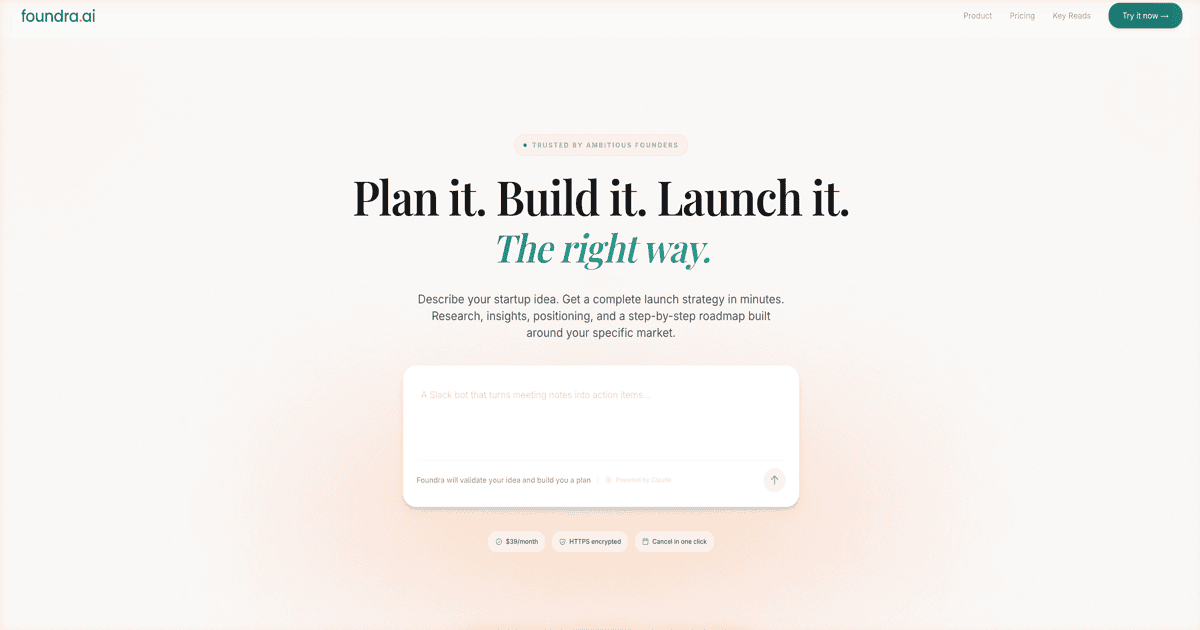
Why it matters: It signals the professionalization of the independent operator space, shifting the bar from hobbyist publishing to financially accountable media businesses.
Context: The ‘solopreneur’ and creator economy narratives often obscure the operational discipline required for sustainable media businesses; this is a corrective template.
"Updated March 2026 … For a newsletter business plan, you need to answer three questions that investors and partners care about: Is the market real? Can you reach customers profitably? And what." — FOUNDRA.AI
Commentary: The piece is valuable as a field-tested operational argument, directly countering the ‘build it and they will come’ fallacy pervasive in creator circles. Its insistence on bottom-up financial projections and the 3-6 month timeline to first sponsorship imposes a reality check that will separate viable ventures from vanity projects. The emphasis on cross-promotion as the most capital-efficient growth strategy implicitly critiques over-reliance on paid acquisition or platform algorithms, reinforcing the network-centric nature of the modern media landscape.
Date: May 22, 2026 12:00 AM ET
URL: https://www.foundra.ai/business-plan/newsletter
AI Sentiment Score: Positive (57%)
AI Credibility Score: 8.4/10 — High
Scores and text generated by AI analysis of the source article indicated.
Greg Isenberg (Gregisenberg)
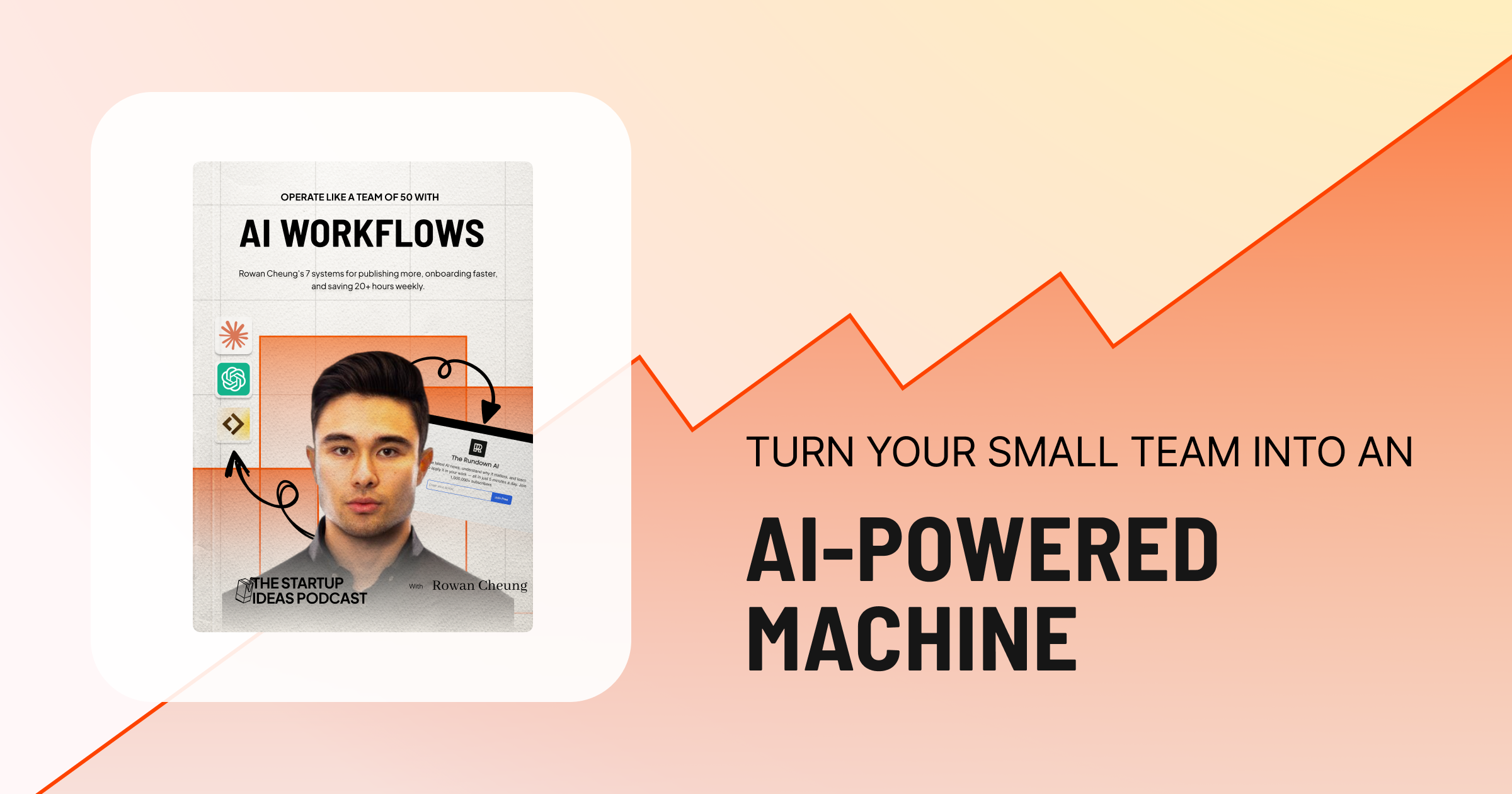
Summary: 7 systems to operate like a 50-person team Automate the work that slows teams down. Inside: workflows for content creation, meeting scheduling, onboarding, and email. Complete with tools, prompts, and step-by-step setup instructions.
Why it matters: The commoditization of operational efficiency tools suggests a new ceiling on independent scaling.
Context: Focus on the mechanics of ‘automation’ itself; the value proposition shifts from the guide to the underlying workflow IP.
"7 systems to operate like a 50-person team Automate the work that slows teams down. Inside: workflows for content creation, meeting scheduling, onboarding, and email. Complete with tools, prompts, and step-by-step setup." — GREGISENBERG
Commentary: The signal is still worth tracking, but the current extraction path did not yield enough body text for a fuller analytical read. The immediate test is whether this becomes repeatable operator practice rather than another surface-level workflow claim.
Date: May 19, 2026 12:00 AM ET
URL: https://www.gregisenberg.com/ai-workflows
AI Sentiment Score: Neutral (50%)
AI Credibility Score: 7.0/10 — Medium
Scores and text generated by AI analysis of the source article indicated.
Post ID: 07356a11