Creator Economy Trends, Data & Monetization
Creators Go All in on AI, Niche Content | TV Tech (Tvtechnology)
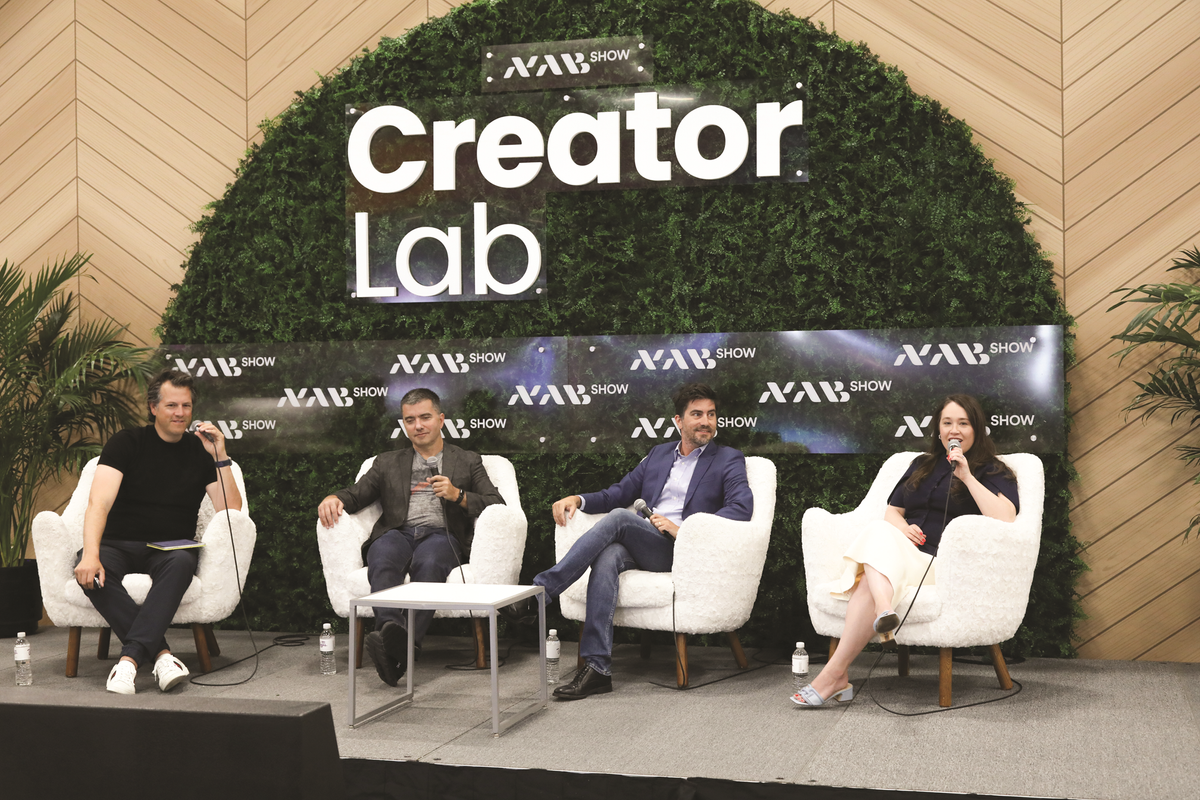
Summary: At NAB Show’s Creator Lab, industry analysts from Tubefilter, The Influencer Marketing Factory, Ankler Media, and Traackr outlined a strategic pivot in the creator economy. The focus is shifting from mass-scale ‘Beastification’ to niche content that drives higher engagement and conversion, with AI tools being integrated to unify operational silos rather than replace human connection. New formats like microdramas are creating durable brand partnerships, while live video is receding in favor of creator-led studios that operate like production houses.
Why it matters: This signals a maturation of the creator economy where sustainable business models are built on community depth, not just follower breadth, forcing a recalibration of investment, platform features, and brand partnership strategies.
Context: The ‘creator economy’ narrative has long been dominated by the outlier success of mega-creators, but platform algorithm shifts and audience fatigue with generic content are reshaping the viable growth path.
"Creators Go All in on AI, Niche Content Growth trends now favor engagement over audience scale, panelists say One of the highlights in Central Hall at NAB Show is the Creator Lab,." — TVTECHNOLOGY
Commentary: The panel’s consensus moves the discourse from hype to mechanics: AI’s role is infrastructural (connecting datasets), not creative, while the real arbitrage is in owned, serialized formats like microdramas. This validates a ‘middle-class’ creator thesis—growth capital and M&A may now flow toward vertically integrated studios mastering specific audience subcultures, not just the top 0.1% of influencers.
Date: 1 month ago
URL: https://www.tvtechnology.com/production/creators-go-all-in-on-ai-niche-content
AI Sentiment Score: Positive (60%)
AI Credibility Score: 10.0/10 — High
Scores and text generated by AI analysis of the source article indicated.
Creator economy statistics for 2026 (honest, sourced where possible) (Kompozy.Io)
Summary: A 2026 estimate places the global creator economy’s market size between $250 billion and $500 billion, with growth persisting at 10-20% annually. Approximately 200 million people identify as creators, but only 8-10 million (4-5%) earn a full-time income from it. The revenue distribution is profoundly skewed, with the top 1% capturing 50-70% of total creator earnings.

Why it matters: These figures quantify the maturation and structural stratification of the creator economy, informing investment, platform strategy, and policy debates about labor and income inequality in digital work.
Context: The creator economy has evolved from a niche phenomenon into a significant labor and market category, yet reliable, standardized metrics have been historically scarce, leading to widely varying estimates.
"The income distribution is extreme — top 1% of creators earn 50-70% of total creator revenue." — KOMPOZY.IO
Commentary: The data confirms the creator economy’s consolidation mirrors traditional media and entertainment power laws, challenging narratives of democratized access. For platforms and investors, the focus shifts from scaling total creator count to monetizing the entrenched professional tier and servicing the vast aspirational base.
Date: May 22, 2026 12:00 AM ET
URL: https://kompozy.io/creator-growth/creator-economy-statistics-2026
AI Sentiment Score: Negative (50%)
AI Credibility Score: 9.2/10 — High
Scores and text generated by AI analysis of the source article indicated.
Creator Economy Report 2026 – ClickAnalytic (Clickanalytic)
Summary: ClickAnalytic’s 2026 report analyzes 23.6 million creator profiles across Instagram, TikTok, and YouTube, revealing systemic inefficiencies in the influencer marketing market. It finds that TikTok dominates creator supply, Instagram offers superior contactability, and YouTube creators show the strongest growth momentum. The data challenges core brand assumptions, showing that most high-growth opportunities and wasted spend occur in the micro-creator tier, while elite audience quality is exceedingly rare.
Why it matters: For brands and operators, this large-scale data shifts strategy from anecdotal, profile-level decisions to systemic, market-aware allocation, directly impacting campaign ROI and budget efficiency.
Context: The creator economy has matured into a multi-billion dollar market, yet brand investment decisions often remain reliant on surface metrics and isolated case studies rather than comprehensive market data.
"Most brands don’t overpay because creators are expensive. They overpay because they don’t understand what they’re buying." — CLICKANALYTIC
Commentary: The report’s value lies in its operational framing: it treats the creator economy as a logistics and intelligence problem, not a creative one. The stark platform divergences—TikTok’s scale versus Instagram’s reachability—mandate distinct workflow and procurement strategies. The micro-creator concentration and scarce audience quality metrics could pressure agencies to justify premium placements and force finance teams to re-evaluate tier-based budgeting models.
Date: May 18, 2026 12:00 AM ET
URL: https://www.clickanalytic.com/creator-economy-report/
AI Sentiment Score: Negative (66%)
AI Credibility Score: 9.6/10 — High
Scores and text generated by AI analysis of the source article indicated.
How the creator economy is changing traditional entertainment’s discovery, distribution, and supply (Midiaresearch)
Summary: The creator economy is no longer a parallel ecosystem but is being structurally integrated into traditional entertainment’s core operations. HBO hiring TikTok fan editors like Mellie, Global consolidating creator-led YouTube channels into media franchises, and Tubi giving creator content equal discovery weight to Hollywood titles illustrate a three-pronged convergence. This shift redefines discovery, supply, and distribution by treating creator talent and assets as central components of the media infrastructure.

Why it matters: This signals a permanent reconfiguration of media industry power structures, talent pipelines, and audience economics, moving beyond marketing partnerships to operational mergers.
Context: Traditional media companies, facing fragmented attention and aging distribution models, are adopting creator-native strategies for scale and relevance.
"Traditional entertainment’s embrace of the creator economy is no longer superficial. As creators build audiences at scale, entertainment companies are using their financial clout to hire, licence, and buy creator-led brands. The result is a convergence of playbooks, where traditional media and the creator economy are no longer separate forces, but part of a single interconnected video ecosystem." — MIDIARESEARCH
Commentary: The piece is valuable as field observation, documenting a tangible shift from co-option to assimilation. The implications are systemic: talent acquisition now targets community gatekeepers, M&A strategies target creator-led media systems, and distribution algorithms must treat professional and creator content as fungible. This erodes the institutional moats of traditional studios and networks, forcing them to compete on creator economy terms—speed, authenticity, and direct community access—while leveraging their capital advantage for consolidation.
Date: April 14, 2026
URL: https://www.midiaresearch.com/blog/how-the-creator-economy-is-changing-traditional-entertainments-discovery-distribution-and-supply
AI Sentiment Score: Positive (66%)
AI Credibility Score: 10.0/10 — High
Scores and text generated by AI analysis of the source article indicated.
Industry Snapshot: The new social playbook – Campaign Middle East (Campaignme)
Summary: Anna Rozwandowicz of The Story Mob outlines a strategic pivot for brands as social media matures: investment is consolidating into audience-first ecosystems, with creator partnerships as core infrastructure and owned channels treated as media products. The role of AI is framed as a tool for signal-informed planning and faster iteration, amplifying the need for cultural taste rather than replacing it. Consumer behavior demands participation and trust in individuals over institutions, pushing brands toward sustained world-building over campaign bursts. The forecast is for social to become a core business function, integrated with product and revenue, where advantage comes from shaping conversations, not reacting to them.

Why it matters: This signals a structural shift in marketing and brand management, moving social from a discretionary spend to a central operational pillar with direct revenue implications.
Context: The interview reflects a broader industry convergence where marketing, community management, and product development are merging, accelerated by AI tools and the economic leverage of creator ecosystems.
"Social will move from a marketing channel to a core business function, sitting closer to product, community, and revenue. Brands will build direct relationships with audiences, using platforms as infrastructure. We will also see a shift from storytelling to world-building." — CAMPAIGNME
Commentary: Rozwandowicz’s analysis is valuable as field observation from an operator, diagnosing a move from tactical distribution to strategic infrastructure. The emphasis on ‘world-building’ over storytelling suggests brands must now operate as persistent cultural entities, which demands new internal capabilities and budget reallocation. The warning that AI exposes a lack of taste is a sharp corrective to the prevailing ‘scale-at-all-costs’ narrative, underscoring that competitive advantage could remain human-curated.
Date: April 13, 2026
URL: https://campaignme.com/industry-snapshot-the-new-social-playbook
AI Sentiment Score: Negative (50%)
AI Credibility Score: 7.0/10 — Medium
Scores and text generated by AI analysis of the source article indicated.
Monetization, user engagement and customer retention with Site Kit – WordPress.tv (WordPress.Tv)
Summary: Site Kit by Google has come a long way since its 2020 release. Now, with powerful new features including newsletter sign-ups, paywalls, and contribution requests, you’ll learn how to easily monetize your site and more effectively engage with your audience.

Why it matters: Integration of monetization tools (paywalls, sign-ups) into core CMS functions signals a shift toward platform-level revenue capture.
Context: The feature expansion suggests a tightening of the digital publishing ecosystem, favoring integrated, proprietary tooling.
"Site Kit by Google has come a long way since its 2020 release. Now, with powerful new features including newsletter sign-ups, paywalls, and contribution requests, you’ll learn how to easily monetize your." — WORDPRESS.TV
Commentary: The signal is still worth tracking, but the current extraction path did not yield enough body text for a fuller analytical read. The immediate test is whether this becomes repeatable operator practice rather than another surface-level workflow claim.
Date: 1 week ago
URL: https://wordpress.tv/2026/05/14/monetization-user-engagement-and-customer-retention-with-site-kit/
AI Sentiment Score: Neutral (50%)
AI Credibility Score: 9.9/10 — High
Scores and text generated by AI analysis of the source article indicated.
Best Content Strategy for Twitch Streamers and YouTubers (Cutsio)
Summary: Cutsio outlines a ‘Stream-as-Studio’ content strategy, advocating that creators treat live broadcasts as raw footage sessions explicitly structured for efficient post-production of multiple polished videos. The method involves pre-stream planning around a YouTube premise, performing live with editing markers, and using AI tools for deterministic moment discovery and pacing refinement. The proposed workflow enables a solo creator to convert one stream into several long-form and short-form assets within days.
Why it matters: It operationalizes a scalable production model for independent creators, directly addressing the core constraint of time and the competitive pressure to maintain multi-platform output.
Context: This reflects the ongoing industrialization of the creator economy, where workflow efficiency and asset repurposing become critical competitive advantages over raw charisma or volume.
"The best content strategy for Twitch streamers and YouTubers is the "Stream-as-Studio" approach: treat every live broadcast as a raw material session designed to generate footage for multiple polished videos, rather than." — CUTSIO
Commentary: The argument is valuable as field observation and a concrete operational thesis. It correctly identifies that the primary product for most streamers is no longer the ephemeral live event but the durable, algorithmically favored video asset, making the live session a cost center for raw input. The prescribed cadence, however, reads as a vendor-specific ideal; the real test is whether this factory discipline is sustainable for personalities whose appeal often relies on spontaneity and perceived authenticity.
Date: May 19, 2026 12:00 AM ET
URL: https://cutsio.com/blog/best-content-strategy-for-twitch-streamers-and-youtubers
AI Sentiment Score: Negative (75%)
AI Credibility Score: 9.6/10 — High
Scores and text generated by AI analysis of the source article indicated.
‘I’m playing the long game’: Journalists are striking out alone and discovering the business is toughest beat of all – Digiday (Digiday)
Summary: A Digiday report examines the growing cohort of journalists leaving legacy media to build independent, personality-driven brands. While infrastructure and audience appetite exist, business fluency lags: only three of 26 ‘indie info providers’ studied fully fund their lifestyle from their work. Case studies like Tara Palmeri, Dave Jorgenson, and the Howtown duo show success in building substantial followings and hybrid revenue models, but they highlight the ongoing challenge of converting audience into sustainable income and absorbing legal/commercial risks previously managed by institutions.

Why it matters: This shift redefines the media labor market, fragments audience attention, and tests whether individual credibility can be scaled into a durable business outside the corporate umbrella.
Context: The trend follows the maturation of creator infrastructure (Substack, YouTube, Patreon) and coincides with continued cuts and corporate tightening at legacy publishers, making independence a calculated risk rather than a pure act of frustration.
"It is not one-way traffic with journalists leaving to become creators,” said Laura Darcey, research analyst at Enders Analysis. “Journalists that have grown up within legacy media can find new freedoms and monetization opportunities by branching out alone, but we’re not about to see a mass exodus. Journalists will find themselves competing in the broader attention and subscription economy where challenges of subscription fatigue and limited discretionary spending apply." — DIGIDAY
Commentary: The report valuably grounds a cultural narrative in operator-level financial reality, showing the gap between audience scale and personal sustainability. The reluctance of subjects to discuss actual earnings speaks volumes; the business model remains aspirational for most. This is field observation, not theory: it signals that the independent path is viable only for those who can master hybrid monetization and absorb institutional functions like legal defense, creating a new class of micro-entrepreneurs who are as much business operators as journalists.
Date: April 13, 2026
URL: https://digiday.com/media/im-playing-the-long-game-journalists-are-striking-out-alone-and-discovering-the-business-is-toughest-beat-of-all
AI Sentiment Score: Negative (50%)
AI Credibility Score: 10.0/10 — High
Scores and text generated by AI analysis of the source article indicated.
Independent journalists are mission-driven, but financially strained, a new report says | Nieman Journalism Lab (Niemanlab)
Summary: A CNTI report surveying 43 US independent information providers finds a field defined by professional mission but financial precarity. Only five could fully fund their lifestyle from their content; over half could not fund it at all. Most lack formal business strategies, rely on mixed income streams, and struggle with monetization, especially when serving non-wealthy audiences. The work is often solitary, platform maintenance is exhausting, and AI use is limited to business tasks, not content creation.

Why it matters: The report quantifies the structural instability at the core of the ‘indie’ media movement, revealing that mission-driven journalism is not a scalable business model for most operators without serving affluent niches.
Context: This follows years of optimism around the creator economy and newsletter-driven media, suggesting a maturation phase where financial realities are colliding with ideological commitments to open access.
"Writing for a wealthy group of people is the only way at this point, as far as I can tell, to run a media business…90% of media businesses just write for upper-middle-class people if not just upper-class people." — NIEMANLAB
Commentary: The report’s value is as a field observation that punctures the myth of the sustainable solo operator. The central tension—information as a public good versus a product for paying customers—remains unresolved, pushing the model toward serving professional or affluent audiences. This creates a systemic bias in the independent information ecosystem, mirroring the audience stratification of legacy media.
Date: April 13, 2026
URL: https://niemanlab.org/2026/04/independent-journalists-are-mission-driven-but-financially-strained-a-new-report-says
AI Sentiment Score: Negative (66%)
AI Credibility Score: 8.8/10 — High
Scores and text generated by AI analysis of the source article indicated.
Post ID: 00b633e0