

Investigations into Corporations, Politics, and the Environment
We are bombarding America’s forests with Roundup (Motherjones)
Summary: Mother Jones reports that glyphosate spraying in US forests, particularly on public and private timberland in California, has reached record levels, driven by post-fire recovery and commercial forestry goals. The investigation reveals that regulatory approvals relied heavily on industry-ghostwritten studies, one of which was recently retracted. Meanwhile, the Forest Service plans to expand spraying despite evidence of ecological harm and ongoing litigation over health risks.

Why it matters: This exposes a systemic capture of regulatory science with direct consequences for public health, ecological integrity, and the management of public lands, all while legal and political shields are being erected for the chemical’s manufacturers.
Context: Glyphosate’s use has expanded from agriculture into forestry as a cost-effective means to favor commercial conifer growth, even as its safety profile remains fiercely contested in science and courts.
"Forest spraying, which practically nobody knows about, is happening at record levels. The amount applied annually in state forests—266,000 pounds of pure glyphosate in 2023, the latest year for which data was available—is nearly five times what it was two decades ago." — MOTHERJONES
Commentary: The operational shift toward chemical-dependent forestry, justified by discredited science, creates a locked-in dependency that mirrors agricultural monoculture. This entrenches Bayer’s market while externalizing long-term ecological and liability costs onto public agencies and communities.
Date: 3 weeks ago
URL: https://www.motherjones.com/politics/2026/04/roundup-glyphosate-spraying-forests-monsanto-science-retraction-cancer-health-concerns-maha-trump-executive-order-supreme-court-bayer-lawsuits/
AI Sentiment Score: Positive (50%)
AI Credibility Score: 10.0/10 — High
Scores and text generated by AI analysis of the source article indicated.
Ag Front Group Shields Bayer in Controversial Roundup Liability Fights – EXPOSEDbyCMD (Exposedbycmd)
Summary: The Modern Ag Alliance, a coalition claiming to represent over 110 agricultural organizations, is revealed as a Bayer-created and funded front group designed to shield the company from Roundup liability. Led by Bayer’s chief lobbyist, the group has spent millions on PR and lobbying for state and federal immunity laws while obscuring its corporate origins. Its tactics include leveraging a Trump executive order declaring glyphosate critical to national defense and pushing for a liability shield in the 2026 Farm Bill.

Why it matters: This exposes how corporate liability fights are increasingly waged through orchestrated astroturf campaigns that reshape regulatory and legislative landscapes, with direct consequences for public health litigation and agricultural policy.
Context: This follows a decades-long pattern, seen in tobacco and pharmaceuticals, where industries facing mass torts create third-party groups to influence public opinion, science, and legislation.
"Bayer AG, the German pharmaceutical giant that produces Roundup — and whose Roundup-related liabilities topped $11 billion last year — launched the group in 2024 to help protect its bottom line and shield the company from rising public anger over the product’s cancer risks. Bayer’s lead lobbyist, Hallie Utley, serves as its CEO and board president."
Commentary: The operational model—using a ‘coalition’ as a fiscal and rhetorical pass-through for corporate lobbying—demonstrates a sophisticated, post-tobacco playbook for managing existential liability. Its success hinges on the Supreme Court’s Monsanto v. Durnell decision and the Farm Bill, making agricultural policy a direct proxy for corporate indemnity. The retraction of a key glyphosate study for undisclosed Monsanto authorship underscores how scientific and political narratives are being contested in parallel.
Date: 1 month ago
URL: https://www.exposedbycmd.org/2026/04/23/ag-front-group-shields-bayer-in-controversial-roundup-liability-fights/
AI Sentiment Score: Negative (60%)
AI Credibility Score: 7.0/10 — Medium
Scores and text generated by AI analysis of the source article indicated.
A young reporter discovers a mysterious trove of data that exposes a global surveillance empire (Motherjones)
Summary: A collaborative investigation led by Lighthouse Reports, involving 13 news outlets, has exposed the inner workings of the global surveillance-for-hire industry. The probe began with reporter Gabriel Geiger’s discovery of a massive archive detailing over a million tracking operations. Using undercover methods at the ISS World trade fair in Prague, journalists recorded executives from firms like First Wap openly negotiating deals—including with sanctioned entities—to sell phone-tracking software for targeting environmental protesters.

Why it matters: This investigation moves beyond theoretical risks to document the actual, transactional mechanics of a largely unregulated industry that enables private actors and governments to target civilians globally.
Context: This follows a pattern of investigative work, like the Pegasus Project, that uses leaked data and undercover reporting to map the opaque ecosystem where surveillance technology flows from corporate vendors to state and non-state end-users.
"The archive contained more than a million tracking operations: efforts to grab real-time locations of thousands of people worldwide. What emerged is one of the most complete pictures to date of the modern surveillance industry." — MOTHERJONES
Commentary: The reporting validates two critical dynamics: the industry’s operational brazenness, where vendors openly discuss illegal applications, and the normalization of surveillance as a commodity for private commercial disputes, shifting the threat model beyond traditional state intelligence. The use of the secretive ISS World conference as a reporting venue underscores how trade shows function as critical nodes in this gray market, necessitating a focus on supply-chain enforcement rather than just end-use policies.
Date: April 18, 2026
URL: https://motherjones.com/politics/2026/04/cellphone-surveillance-firstwap-reports-lighthouse
AI Sentiment Score: Negative (75%)
AI Credibility Score: 10.0/10 — High
Scores and text generated by AI analysis of the source article indicated.
Russia trains teenage influencers to churn out pro-war content | National | the-messenger.com (The-Messenger)
Summary: Russia is trying to produce more pro-war influencers through content creation camps, training teenagers to spread the Kremlin’s hardline, anti-West narrative to the next generation. State-sponsored narrative engineering targeting youth suggests a long-term effort to reshape domestic ideological consensus.

Why it matters: State-sponsored narrative engineering targeting youth suggests a long-term effort to reshape domestic ideological consensus.
Context: The focus on ‘influencers’ signals a pivot from overt propaganda to culturally embedded, seemingly organic messaging.
"Russia is trying to produce more pro-war influencers through content creation camps, training teenagers to spread the Kremlin’s hardline, anti-West narrative to the next generation." — THE-MESSENGER
Commentary: The signal is still worth tracking, but the current extraction path did not yield enough body text for a fuller analytical read. The immediate implication is operational rather than speculative: watch how this changes budgets, workflows, or risk assumptions over the next cycle.
Date: April 17, 2026
URL: https://the-messenger.com/news/national/article_4de1bba1-7c6b-5838-b0af-0f64a90ba256.html
AI Sentiment Score: Neutral (50%)
AI Credibility Score: 7.0/10 — Medium
Scores and text generated by AI analysis of the source article indicated.
‘Mad Men Fuelling the Madness’: Meet the Advertising CEOs Boosting Big Oil – DeSmog (Desmog)
Summary: A DeSmog investigation profiles the advertising CEOs whose firms have directed over $1.5 billion in U.S. ad spend for ExxonMobil, Chevron, BP, and Shell since the 2015 Paris Agreement. The report details how agency leaders like WPP’s Mark Read and Omnicom’s John Wren have publicly advocated for supporting client ‘transitions’ while overseeing campaigns regulators and watchdogs have cited as greenwashing. It notes the recent merger of IPG and Omnicom consolidates this service, and highlights internal contradictions, such as Havas’s Yannick Bolloré championing clean energy just before winning a Shell contract.
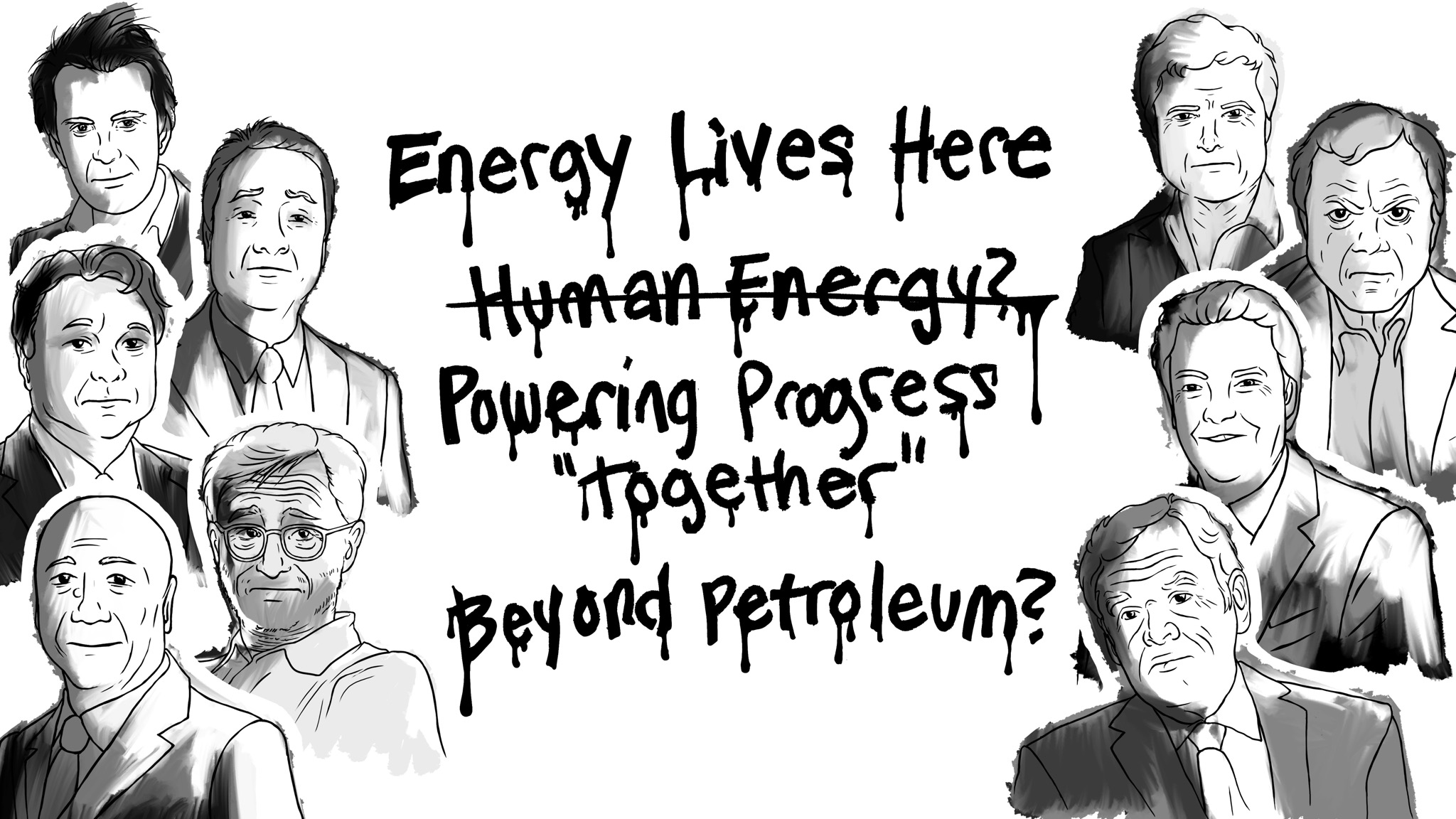
Why it matters: The report shifts accountability from abstract corporate entities to named executives and their strategic choices, framing climate disinformation as a service industry with identifiable leaders and financial incentives.
Context: This scrutiny follows a wave of state lawsuits against oil majors for disinformation and growing activist pressure on the professional services—law, finance, PR, and advertising—that enable fossil fuel operations.
"Dentsu found these were 32 times higher than the emissions from its core operations, such as powering its offices." — DESMOG
Commentary: The ‘advertised emissions’ metric, quietly disclosed by Dentsu, provides a devastatingly simple accountability framework: it quantifies the downstream carbon impact of the agency’s creative work. This moves the debate beyond client lists to measurable consequence, creating a potential liability and reporting standard for the entire sector. The executive profiles reveal a common playbook of performative climate concern paired with contractual continuity, suggesting regulatory or litigation pressure on agencies themselves—not just their clients—may be the next necessary escalation.
Date: 3 weeks ago
URL: https://desmog.com/2026/04/29/mad-men-fuelling-the-madness-meet-the-advertising-ceos-boosting-big-oil
AI Sentiment Score: Negative (80%)
AI Credibility Score: 8.8/10 — High
Scores and text generated by AI analysis of the source article indicated.
The Supreme Court Is Deciding Whether Roundup Needs A Cancer Warning – Honolulu Civil Beat (Civilbeat)
Summary: The Supreme Court is considering whether federal pesticide labeling law preempts state-level failure-to-warn claims, using a case involving Bayer’s Roundup. The plaintiff, awarded $1.25 million under Missouri law, argues the glyphosate-based herbicide caused his cancer and lacked adequate warnings. Bayer contends the EPA-approved label should shield it from such state lawsuits. The ruling will determine whether federal uniformity under FIFRA overrides state consumer protection statutes, potentially reshaping liability for regulated products.

Why it matters: The decision will define the balance of power between federal regulatory approval and state tort law, with direct consequences for corporate liability, public health warnings, and environmental regulation.
Context: This case arrives amid Bayer’s multi-billion-dollar settlement of Roundup litigation and ongoing scientific and political debate over glyphosate’s safety, with the EPA’s own assessments under judicial scrutiny.
"Two analyses his organization co-released with the Center for Food Safety in March found that the EPA has routinely left cancer warnings off pesticide products even when its own assessments have identified cancer risks." — CIVILBEAT
Commentary: A ruling for Bayer would functionally outsource regulatory vigilance to a federal agency whose processes are slow, politically malleable, and, as evidence suggests, prone to under-warning. This would insulate large chemical registrants from agile state-level legal responses to emerging science, shifting risk management from corporations to a strained public system. The political dimension—evident in the administration’s support for Bayer and the ‘MAHA’ backlash—shows this is not merely a legal preemption question but a fight over who bears the cost of regulatory uncertainty.
Date: 2 weeks ago
URL: https://www.civilbeat.org/2026/05/the-supreme-court-is-deciding-whether-roundup-needs-a-cancer-warning/
AI Sentiment Score: Negative (70%)
AI Credibility Score: 7.0/10 — Medium
Scores and text generated by AI analysis of the source article indicated.
Record amounts of Roundup are being sprayed in California’s forests (Revealnews)
Summary: A yearlong investigation by Reveal and Mother Jones reveals that glyphosate (Roundup) application in California’s forests has more than quadrupled over the past two decades, setting new annual records. The US Forest Service and private timber companies, notably Sierra Pacific Industries, are deploying it at unprecedented scale on post-fire landscapes to eliminate competing vegetation and accelerate commercial timber regrowth. The practice is concentrated near major tourist destinations like Yosemite and Lake Tahoe, with the Forest Service planning its single largest project yet. The agency’s safety assessment heavily relies on a 2000 scientific paper recently retracted due to evidence of ghostwriting by Monsanto.

Why it matters: This exposes a systemic reliance on a contested chemical in public ecosystems, linking regulatory failure, corporate influence over science, and accelerated industrial forestry practices in the wake of climate-driven megafires.
Context: Glyphosate faces over 180,000 lawsuits alleging carcinogenic effects, with billions in settlements, while its regulatory status remains contested. The Biden administration’s 2026 executive order invoked the Defense Production Act to protect glyphosate supply, and the Supreme Court is poised to rule on liability shield limits.
"Spraying in the forest has increased every year for nearly a decade, meaning that almost every year has set a new record for the amount of glyphosate sprayed in California’s forests. I expected this kind of spraying in the croplands of California Central Valley, but I had thought of the forest as a sanctuary where wildlife was safe from pesticides. The data shows that’s just not the case." — REVEALNEWS
Commentary: The investigation frames forest management not as a neutral technical choice but as a political economy, where cost-driven chemical dependency overrides manual alternatives that create local jobs. The retraction of the foundational Williams Paper collapses a key regulatory pillar, suggesting the Forest Service’s ‘gold standard’ science is compromised. This creates immediate liability and reputational risk for the agency and its private partners, while illustrating how post-fire ‘restoration’ can industrialize wildlands under crisis cover.
Date: 4 weeks ago
URL: https://revealnews.org/podcast/california-forests-roundup-glyphosate-weed-killer/
AI Sentiment Score: Negative (83%)
AI Credibility Score: 7.0/10 — Medium
Scores and text generated by AI analysis of the source article indicated.
Michigan 2026 Primary Poll Deep Dive: Senate Race Wide Open (Dailydetroit)
Summary: A Detroit Regional Chamber/Glengariff poll reveals a fluid Michigan political landscape two years ahead of the 2026 primaries. The Democratic Senate primary remains wide open, with 36% of voters undecided among Abdul El-Sayed, Haley Stevens, and Mallory McMorrow. Meanwhile, Donald Trump commands an 86% favorability rating among state GOP voters, and Governor Gretchen Whitmer emerges as a pivotal figure for the 2028 presidential race.

Why it matters: The data signals a critical realignment phase in a key battleground state, with implications for Senate control, the future of both parties’ coalitions, and the 2028 presidential field.
Context: Michigan’s political identity has been in flux, with Democrats recently securing major wins but facing internal factional tensions, while the state Republican party remains firmly in Trump’s orbit.
"With 36% of Democratic voters still undecided in the Senate race between Abdul El-Sayed, Haley Stevens, and Mallory McMorrow? There’s a huge universe of undecided voters." — DAILYDETROIT
Commentary: The high undecided rate suggests no Democratic frontrunner has consolidated a base, making the primary a contest of factional mobilization rather than personality. Trump’s enduring dominance within the Michigan GOP cements the state as a laboratory for a post-policy, loyalty-driven Republicanism. Whitmer’s positioning as both a potential candidate and a kingmaker for 2028 underscores her operational influence extending well beyond the state’s borders.
Date: 3 weeks ago
URL: https://www.dailydetroit.com/michigan-2026-primary-poll-deep-dive-senate-race-wide-open/
AI Sentiment Score: Positive (50%)
AI Credibility Score: 7.0/10 — Medium
Scores and text generated by AI analysis of the source article indicated.
Strength in Numbers, if Higher Ed Can Stand It (Insidehighered)
Summary: Lee Bollinger’s call for a ‘NATO for universities’ highlights a defensive posture against political attacks, but the article reveals a deeper, systemic tension. The real challenge is whether institutions can overcome their prized autonomy to forge operational alliances that address shared threats like financial strain and enrollment decline, not just political assaults. Existing consortia show the benefits of shared infrastructure and cost-saving, yet the closure of Hampshire College within the Five College Consortium underscores the limits of collaboration against existential pressures.

Why it matters: The sector’s survival may depend on trading institutional sovereignty for collective resilience, a shift with profound implications for how universities are governed and funded.
Context: Political scrutiny and financial pressures are converging on higher education, forcing a reevaluation of long-held models of institutional independence.
"The question I put to our presidents is this: How much autonomy would you trade for whatever the good is you think you’re getting—a firmer financial footing or a stronger ability to serve your mission or an ability to meet the needs of current students in a better way?" — INSIDEHIGHERED
Commentary: Bollinger’s defensive alliance is a reactive, elite-centric model; the more transformative, and difficult, proposal is a peacetime consortium for shared operational burden. This reframes the crisis from external political attacks to internal structural fragility. The sector’s future hinges on whether institutions can prioritize survival over sovereignty, a cultural shift as significant as any regulatory change. The failure to do so will see more closures, regardless of political cycles.
Date: 3 weeks ago
URL: https://insidehighered.com/opinion/columns/editors-note/2026/04/30/strength-numbers-if-higher-ed-can-stand-it
AI Sentiment Score: Negative (57%)
AI Credibility Score: 8.6/10 — High
Scores and text generated by AI analysis of the source article indicated.
As one Vermont college finishes its last semester, a new projection shows that 442 more are at similar risk (Hechingerreport)
Summary: Sterling College, a small rural institution in Vermont, is closing at the end of the semester, offering a human-scale view of a systemic crisis. A new projection from Huron Consulting Group estimates 442 private, nonprofit four-year colleges—with a combined 670,000 students—are at risk of closing or merging within a decade. The article traces the converging pressures: a long-term decline in college-going students, plummeting international enrollment, and financial strains affecting even large universities. It details the local economic and social craters left by such closures and the grim statistics for displaced students, fewer than half of whom continue their education.

Why it matters: The accelerating closure of colleges represents a structural realignment of higher education, with profound consequences for regional economies, social mobility, and the diversity of educational models.
Context: This is part of a multi-year trend of small college closures, but the scale of the projected risk—over a quarter of private nonprofits—signals a systemic contraction, not just a thinning of outliers.
"A new estimate projects that 442 of the nation’s 1,700 private, nonprofit four-year colleges and universities, with a combined 670,000 students, are at risk of closing or having to merge within the next 10 years." — HECHINGERREPORT
Commentary: The closure wave is a supply-demand correction decades in the making, but its acceleration now is a stress test for the entire sector’s financial model. The human and local community impacts, vividly shown at Sterling, will be replicated hundreds of times, hollowing out rural intellectual and economic infrastructure. The political framing of these closures as ‘woke’ failures obscures the demographic and financial inevitability, allowing a cultural war to distract from a looming policy crisis for regional stability and educational access.
Date: April 13, 2026
URL: https://hechingerreport.org/more-than-a-quarter-of-private-colleges-are-at-risk-of-closing-new-projection-shows
AI Sentiment Score: Negative (71%)
AI Credibility Score: 7.0/10 — Medium
Scores and text generated by AI analysis of the source article indicated.
Post ID: 927ec83f