Archaeological Discoveries and Artifacts
1,200-year-old giant ‘death jar’ in Laos contains generations of human skeletons (Livescience)
Summary: Archaeologists have confirmed the mortuary function of the Plain of Jars in Laos through the first undisturbed excavation of a giant stone vessel, ‘Jar 1’. The jar contained the curated, secondary remains of multiple individuals—from children to adults—deposited over centuries, alongside trade beads from India. This provides definitive evidence for a complex, multi-generational burial tradition.
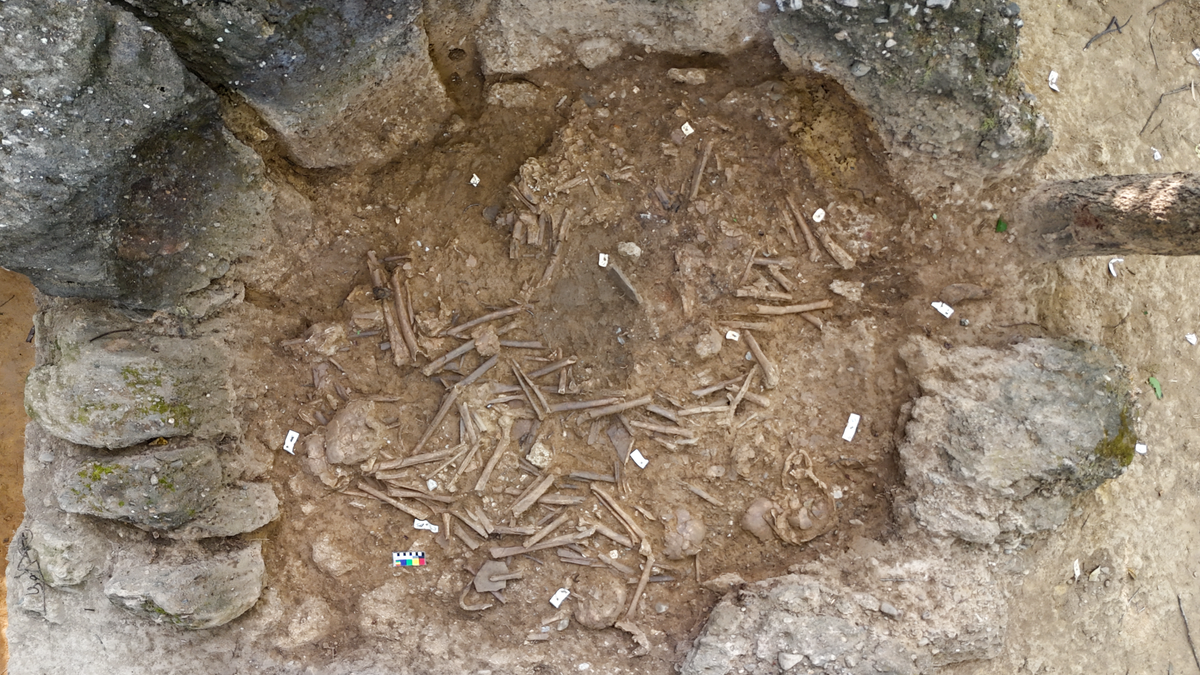
Why it matters: It resolves a long-standing archaeological hypothesis about the jars’ purpose and reveals a sophisticated, enduring mortuary practice that challenges simplistic narratives of isolated prehistoric cultures.
Context: The Plain of Jars, with over 2,000 stone vessels, has been a persistent mystery since its discovery, with its creators and rituals largely unknown. Previous excavations found human remains outside jars, but never conclusively inside them.
"1,200-year-old giant ‘death jar’ in Laos contains generations of human skeletons Excavation of a large stone vessel from the mysterious Laos Plain of Jars has confirmed its use in an ancient funerary." — LIVESCIENCE
Commentary: The discovery shifts understanding from speculative ritual to documented practice, revealing a society with stable, long-term traditions for processing the dead. The presence of Indian glass beads within the jar, not just as grave goods but as integral ritual components, directly ties local ancestor veneration to pan-Asian trade networks, complicating the boundary between local custom and global exchange.
Date: Mon, 18 May 2026 23:01:00 +0000
URL: https://www.livescience.com/archaeology/1-200-year-old-giant-death-jar-in-laos-contains-generations-of-human-skeletons
AI Sentiment Score: Negative (50%)
AI Credibility Score: 10.0/10 — High
Scores and text generated by AI analysis of the source article indicated.
Neanderthal Dentistry Dates Back 60,000 Years (Archaeology)
Summary: A Neanderthal molar from Chagyrskaya Cave in Siberia shows a precisely drilled hole into the pulp cavity, dated to 60,000 years ago. Analysis indicates the hole was likely made with a stone tool to alleviate pain from a cavity, representing a deliberate dental intervention. This predates the earliest known evidence of such behavior in Homo sapiens by over 40,000 years and is the first documented instance outside our own species.
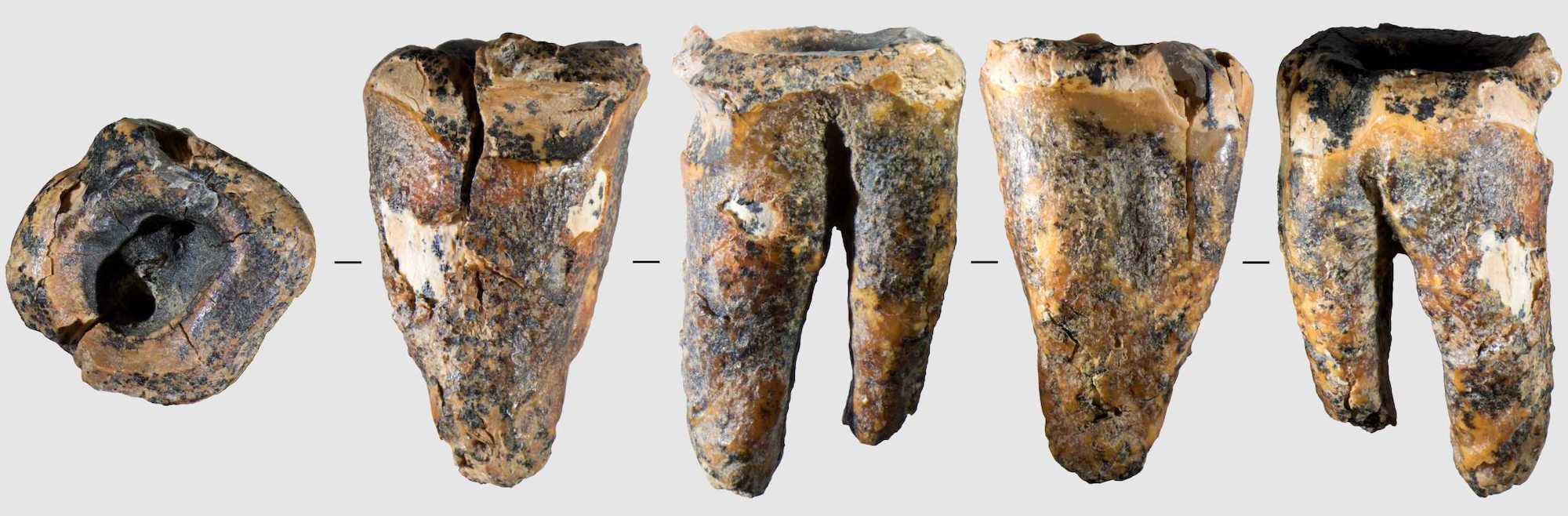
Why it matters: It fundamentally recalibrates the timeline and attribution of complex, intuitive healthcare, moving it from a uniquely modern human behavior to a shared, deep hominin capacity with significant implications for understanding Neanderthal cognition and social cohesion.
Context: Previous evidence for Neanderthal healthcare, such as the use of medicinal plants from El Sidrón, suggested palliative care. This find shifts the narrative from general nursing to targeted, invasive intervention requiring technical skill and anatomical understanding.
"SIBERIA, RUSSIA—According to a CNN report, Neanderthal dentists may have used sophisticated tools to treat toothaches 60,000 years ago. A lone Neanderthal lower molar recently stood out among dozens of hominin teeth,." — ARCHAEOLOGY
Commentary: The operational implication is a Neanderthal capacity for diagnostic reasoning and fine motor skill application, challenging simplistic cognitive hierarchies. For cultural memory, it suggests care networks sophisticated enough to justify a painful, risky procedure on another individual, implying strong social bonds. This moves the needle from speculative ‘compassion’ to evidence of practical, technical empathy as an evolutionary strategy.
Date: Mon, 18 May 2026 17:30:00 +0000
URL: https://archaeology.org/news/2026/05/18/neanderthal-dentistry-dates-back-60000-years/
AI Sentiment Score: Negative (50%)
AI Credibility Score: 10.0/10 — High
Scores and text generated by AI analysis of the source article indicated.
Daunian kyathos: A 2,700-year-old ceramic cup from Italy decorated with an exuberant-looking, bug-eyed fellow (Livescience)
Summary: A Daunian kyathos, a 2,700-year-old ceramic cup or ladle from pre-Roman southern Italy, features a distinctive handle formed by a stylized human figure with raised arms and wide eyes. Found at the Daunian city of Herdonia, this artifact exemplifies a local ceramic tradition that flourished before Roman conquest. Recent analysis has detected opium alkaloids on similar Daunian vessels, suggesting potential ritual or medicinal use beyond mere tableware. The object’s exact function—whether for wine service or psychoactive mixtures—remains debated, highlighting the interpretive challenges posed by a culture that left no written records.
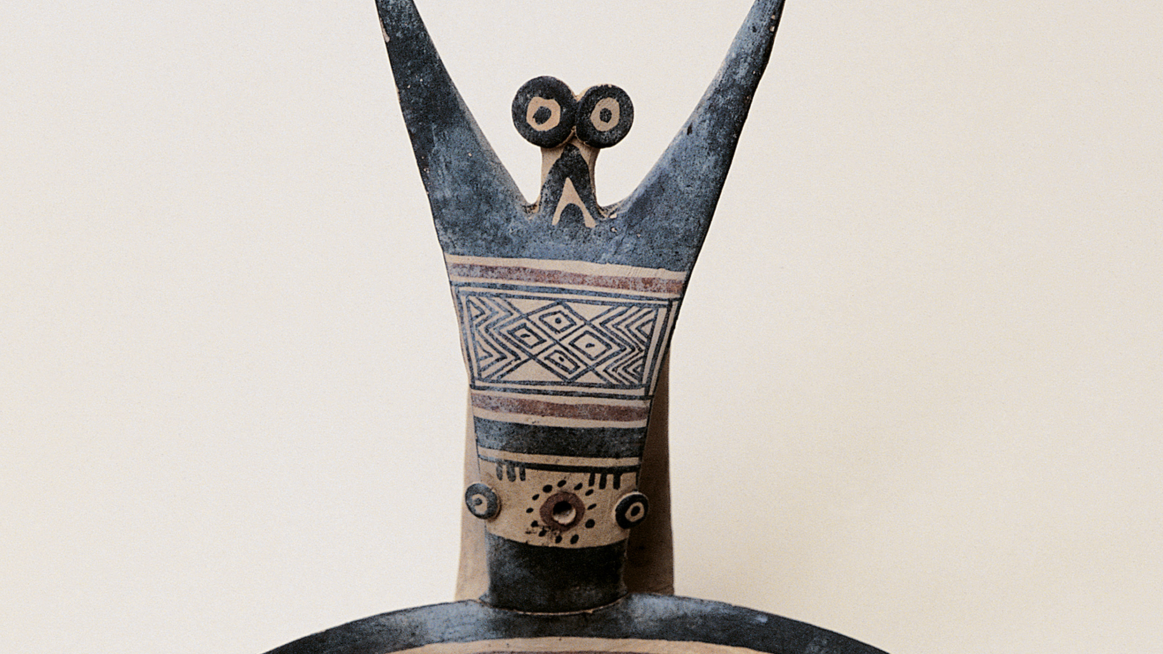
Why it matters: It reframes our understanding of Italic material culture before Roman hegemony, showing sophisticated, autonomous artistic production and possible ritual pharmacology that operated outside Greek and later Roman norms.
Context: The Daunians, an Italic people in Apulia, are known almost exclusively through archaeology; their unique pottery style, including human-handled vessels, represents a significant but poorly understood strand of pre-Roman Italian art and technology.
"In a 2023 research study, scientists tested a series of Daunian ceramics and detected opium alkaloids in most of them, supporting the idea that some vessels were used to create opium mixtures, perhaps to induce religious trances or to aid in pain relief." — LIVESCIENCE
Commentary: The opium residue finding shifts the kyathos from a curious art object to a potential tool in a ritual or therapeutic complex, suggesting Daunian society had specialized knowledge of psychoactive substances. This aligns with broader archaeological patterns where ‘decoration’ is inseparable from function in ritual contexts. It also challenges the default assumption that such forms were primarily for wine service, a Greek-derived interpretation that may obscure indigenous practices. The artifact thus becomes a node connecting material culture, belief systems, and early biotechnological application in a non-literate society.
Date: Mon, 18 May 2026 10:00:00 +0000
URL: https://www.livescience.com/archaeology/daunian-kyathos-a-2-700-year-old-ceramic-cup-from-italy-decorated-with-an-exuberant-looking-bug-eyed-fellow
AI Sentiment Score: Positive (50%)
AI Credibility Score: 10.0/10 — High
Scores and text generated by AI analysis of the source article indicated.
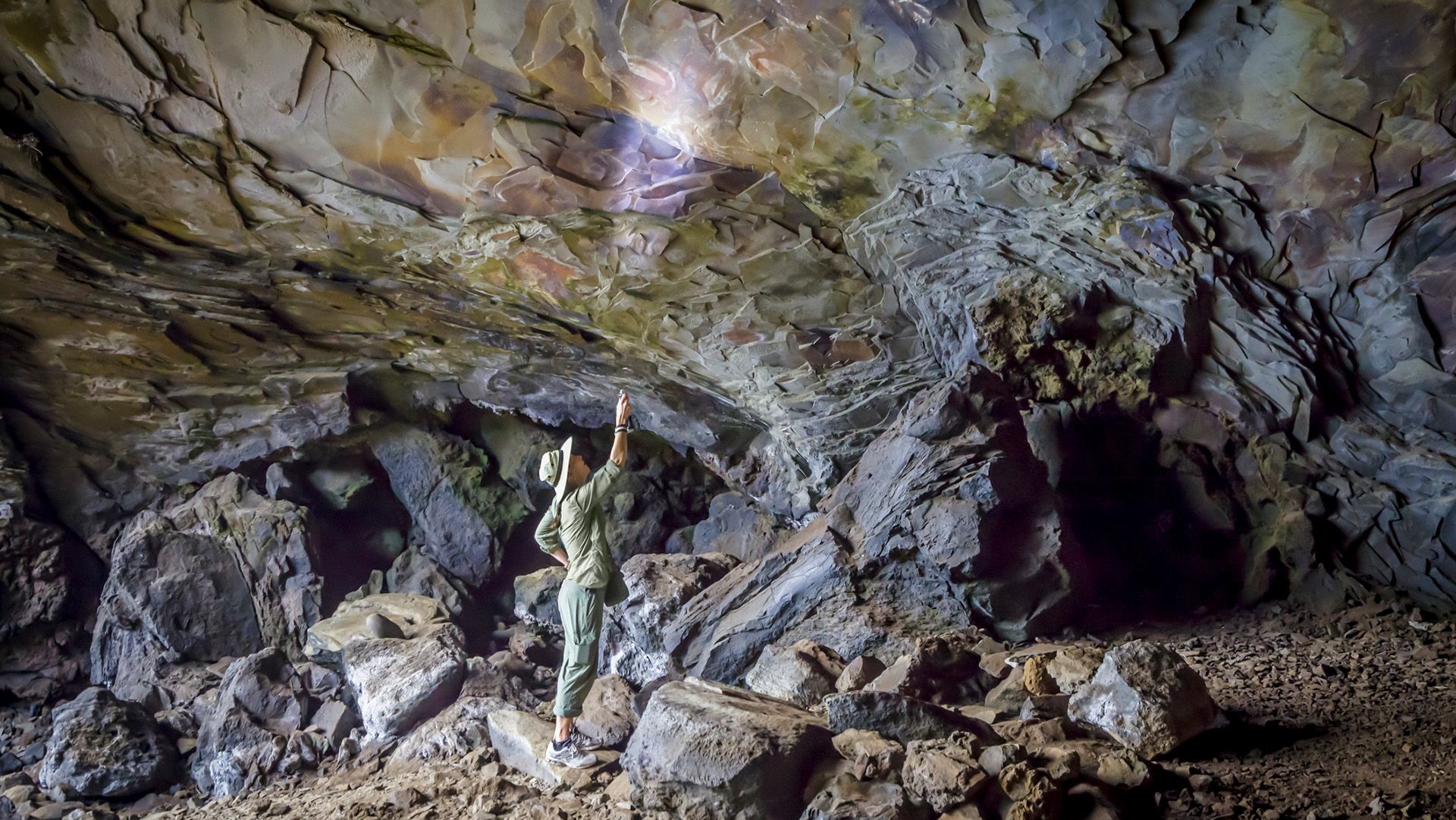
Scientists claimed the world’s oldest rock art is 67,800 years old. But is the science behind that estimate flawed? (Livescience)
Summary: A methodological critique published in AOJ of Histoarchaeology and Anthropological Exploration argues that uranium-thorium (U-Th) dating, the technique behind headline-grabbing claims of the world’s oldest rock art, may systematically overestimate ages due to open-system contamination. Georges Sauvet contends that without cross-validation, a ‘race towards the earliest rock art’ driven by grant prestige risks distorting the timeline of human cognitive evolution, particularly regarding Neanderthal artistic capability. Defenders of the method, including Maxime Aubert whose team dated a 67,800-year-old hand stencil, counter that advanced techniques like laser ablation can identify and exclude contaminated calcite layers, ensuring reliability when properly applied.
Why it matters: The integrity of the timeline for symbolic thought and artistic expression in hominins hinges on the accuracy of these dating methods, with direct implications for how we understand Neanderthal cognition and the deep history of human culture.
Context: U-Th dating has revolutionized Pleistocene archaeology by providing dates for mineral-based art beyond the range of radiocarbon, but its assumption of a chemically ‘closed system’ is perpetually vulnerable to groundwater leaching uranium from calcite samples.
"Scientists claimed the world’s oldest rock art is 67,800 years old. But is the science behind that estimate flawed? A technique that has rewritten the timeline of prehistoric art may be overestimating." — LIVESCIENCE
Commentary: This is less a debate about a single technique and more a structural conflict between discovery-driven science and methodological rigor. The stakes are historiographic: if Sauvet’s critique holds, the recent cascade of ultra-old dates represents a calibration error that rewrites cognitive history based on flawed instrumentation. The operational response—laser ablation mapping—acknowledges the problem while attempting to salvage the method’s authority, but it also raises the bar for data transparency, making studies like Hoffmann’s 2018 Neanderthal art paper retrospectively untenable. The field is now forced to choose between retracting landmark claims or accepting a higher standard of geochemical proof.
Date: Fri, 22 May 2026 15:00:00 +0000
URL: https://www.livescience.com/archaeology/scientists-claimed-the-worlds-oldest-rock-art-is-67-800-years-old-but-is-the-science-behind-that-estimate-flawed
AI Sentiment Score: Negative (60%)
AI Credibility Score: 10.0/10 — High
Scores and text generated by AI analysis of the source article indicated.
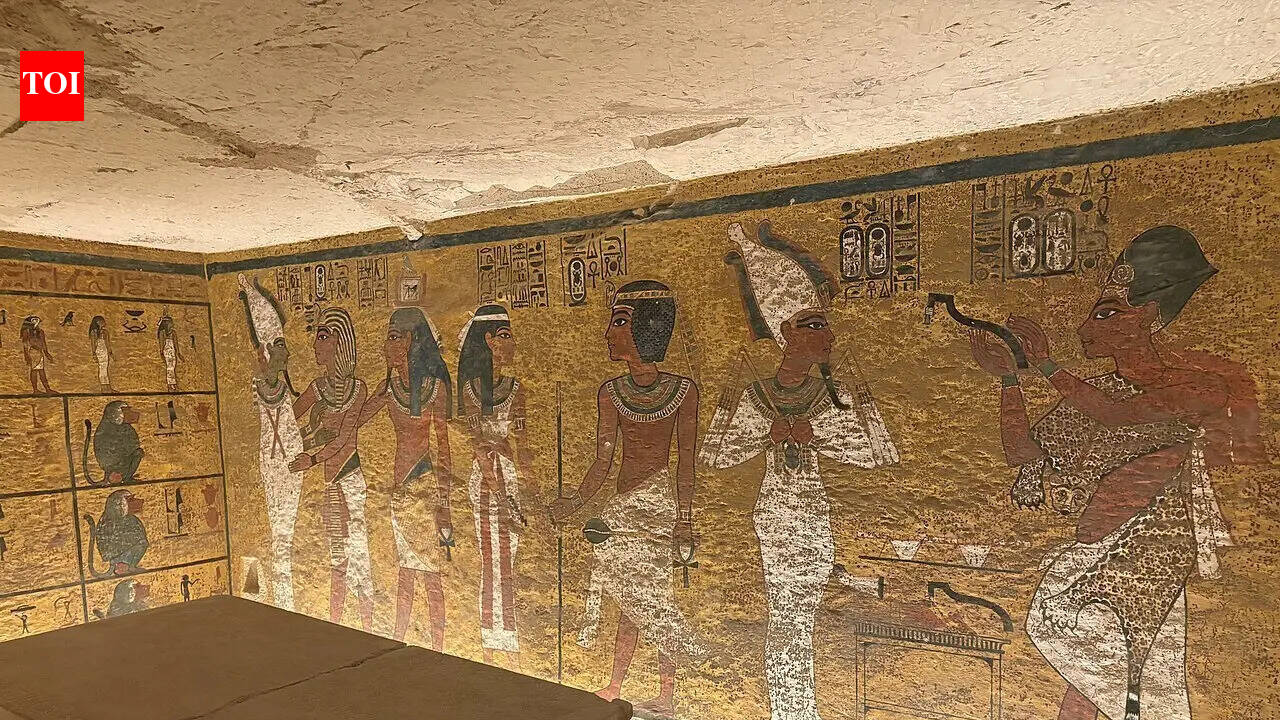
In 1922, an Egyptian worker hit a hidden stone step that uncovered … (Timesofindia.Indiatimes)
Summary: A century after its discovery, the tomb of Tutankhamun continues to yield new insights through advanced scientific techniques. A recent study published in the journal Gels employed non-invasive chemical analysis on the pharaoh’s organic funeral garments, precisely identifying the plant dyes used. This level of preservation for such materials is exceptionally rare, providing a direct material link to ancient Egyptian technology and trade networks.
Why it matters: It demonstrates how legacy archaeological collections, when subjected to modern analytical tools, can fundamentally revise our understanding of ancient economic and technological systems, moving beyond the initial spectacle of discovery.
Context: The 1922 discovery was a pivotal moment that shifted perceptions of the Valley of the Kings from ‘exhausted’ to a site of potential, but its long-term scientific value has been realized through iterative, non-destructive analysis decades later.
"- In 1922, an Egyptian worker hit a hidden stone step that uncovered the untouched tomb of King Tutankhamun … In November of 1922, after many years of unfruitful excavation work in." — TIMESOFINDIA.INDIATIMES
Commentary: The shift from treasure hunting to precise material science reframes the tomb’s value from a cache of objects to a preserved dataset on Bronze Age biochemistry and logistics. Identifying specific plant dyes maps onto agricultural practices and long-distance exchange routes, offering concrete evidence for economic models previously inferred from texts or pottery. This underscores a critical principle for cultural heritage: the greatest discoveries often occur not in the field, but in the laboratory, generations later.
Date: May 20, 2026 12:00 AM ET
URL: https://timesofindia.indiatimes.com/science/in-1922-an-egyptian-worker-hit-a-hidden-stone-step-that-uncovered-the-untouched-tomb-of-king-tutankhamun/articleshow/131198182.cms
AI Sentiment Score: Negative (50%)
AI Credibility Score: 10.0/10 — High
Scores and text generated by AI analysis of the source article indicated.
Melting Mountain Ice Is Bringing Ancient Secrets to the Surface. Archaeologists Are Racing to Find the Artifacts Before They’re Lost to Time (Smithsonianmag)
Summary: The accelerating melt of mountain ice patches is creating a brief, non-renewable archaeological window. Programs like Norway’s Secrets of the Ice are recovering thousands of perfectly preserved organic artifacts—from 6,000-year-old arrows to Roman sandals—that rewrite the history of high-altitude trade, subsistence, and mobility. This emergent field operates under extreme physical and temporal pressure, as artifacts degrade within days of exposure and the ice archives themselves are projected to vanish within decades. The race is global, from the Altai to the Rockies, but is constrained by funding and manpower, leading to a ‘massive dead-weight loss to science.’

Why it matters: This represents a final, irreversible opportunity to recover primary data on ancient human adaptation to mountain environments, with direct implications for understanding long-term climate resilience, trade network evolution, and biocultural history.
Context: Glacial archaeology is a discipline born of anthropogenic climate change, formalized after the 1991 discovery of Ötzi. Its methodology and urgency are defined by the paradox of discovery through loss.
"Melting Mountain Ice Is Bringing Ancient Secrets to the Surface. Archaeologists Are Racing to Find the Artifacts Before They’re Lost to Time In Norway’s highest mountains, experts are scouring perilous terrain for." — SMITHSONIANMAG
Commentary: The field’s operational model is a salvage archaeology driven by ecological collapse, creating a generational burden to document civilizations that mastered these landscapes. The discovery of a Roman sandal in Norway recalibrates timelines for alpine trade, suggesting earlier, more robust trans-mountain connectivity than models assumed. However, the institutional response remains fragmented, treating these sites as ephemeral data bursts rather than a systematic global heritage emergency.
Date: May 21, 2026 12:00 AM ET
URL: https://www.smithsonianmag.com/science-nature/melting-mountain-ice-is-bringing-ancient-secrets-to-the-surface-archaeologists-are-racing-to-find-the-artifacts-before-theyre-lost-to-time-180988777/
AI Sentiment Score: Negative (57%)
AI Credibility Score: 10.0/10 — High
Scores and text generated by AI analysis of the source article indicated.
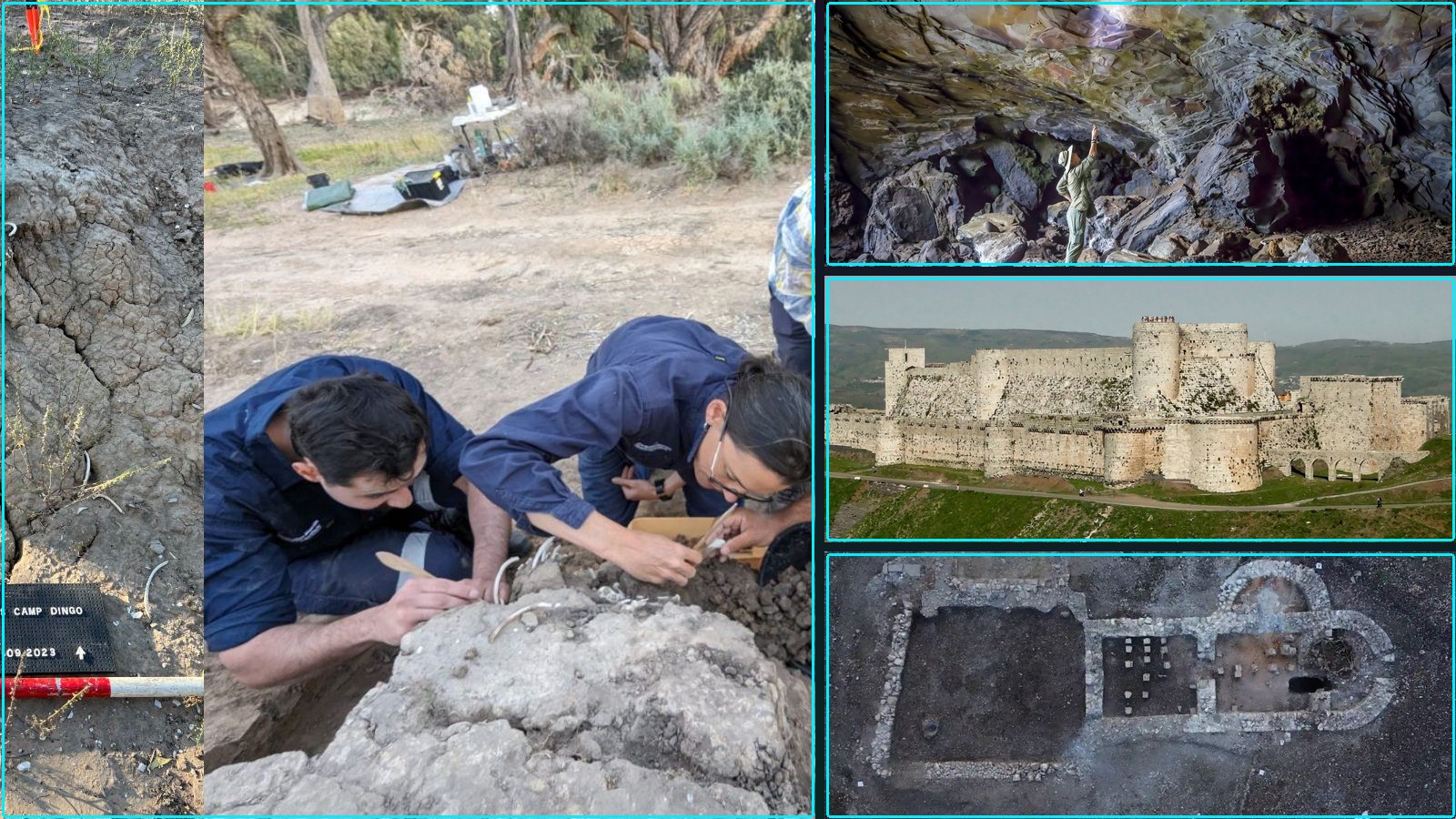
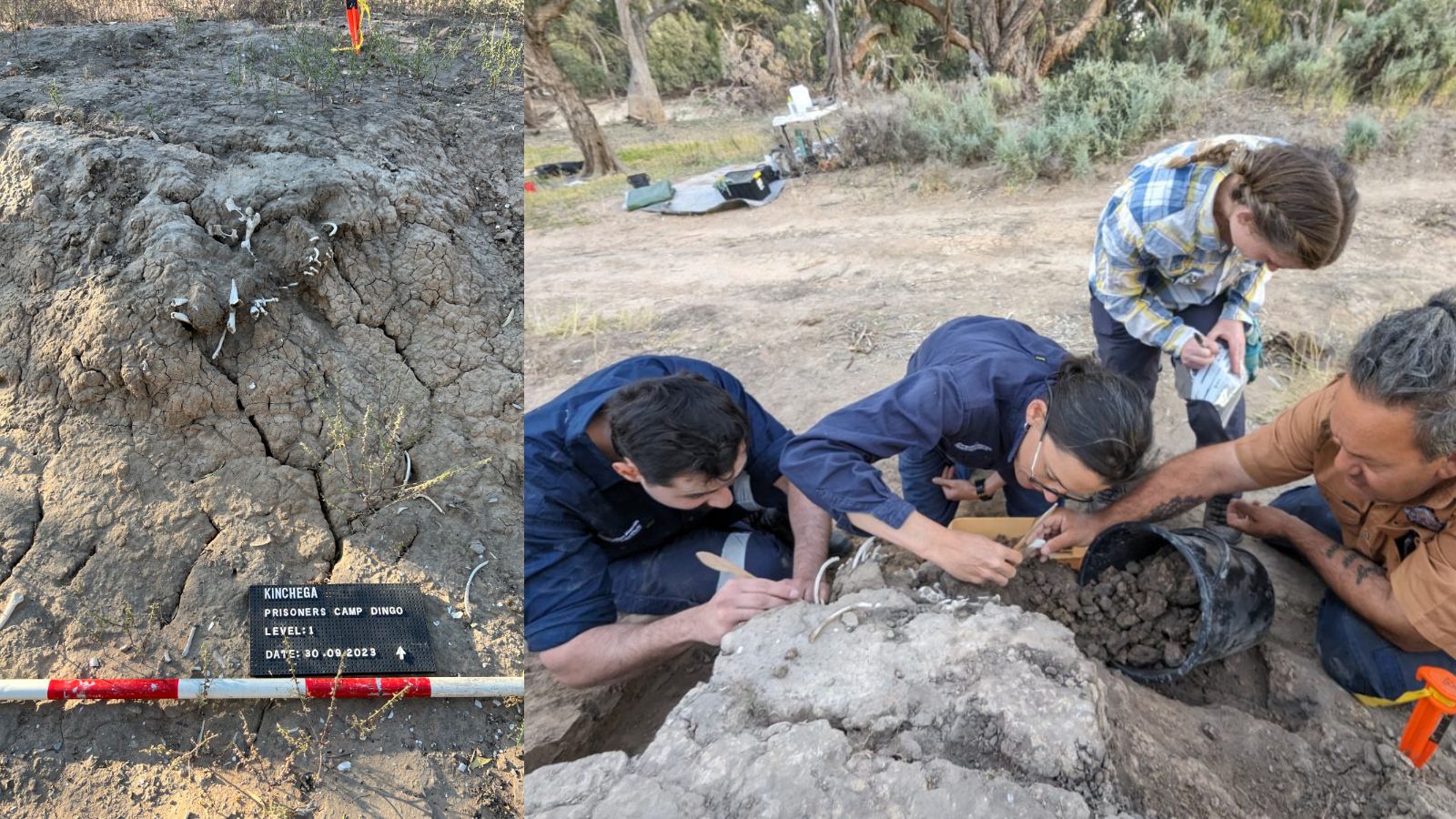
950-year-old burial of a pet dingo reveals unique archaeological evidence of humans ritually ‘feeding’ a grave (Livescience)
Summary: Archaeologists working with the Barkindji Aboriginal Elders Council have documented a 950-year-old dingo burial in western New South Wales, where the practice of adding river mussel shells to the midden continued for approximately 500 years after the animal’s interment. The study, published in Australian Archaeology, interprets this as a ritual ‘feeding’ of the grave, a practice informed directly by Barkindji traditional knowledge. The dingo, a male with healed injuries suggesting human care, was buried by ancestors of the Barkindji people, whose descendants maintained this commemorative act across generations.
Why it matters: This provides a rare, materially documented case of long-term, cross-generational ritual engagement with a non-human ancestor, challenging simplistic divisions between ‘pet’ and ‘ancestor’ and offering a concrete model for how deep-time social memory can be enacted.
Context: While dingo burials are known in Australian archaeology, this is the first where sustained post-interment ritual activity has been identified and explicitly interpreted through Indigenous perspective as symbolic feeding, shifting the evidentiary frame from static burial to dynamic, maintained relationship.
""The idea, as explained to me by the Barkindji, is that it involved a cross-generational remembering of this garli ancestor, which specifically involved generation after generation returning to the burial site to add mussel shells to the midden that was initiated at the time of the dingo’s burial," Way said." — LIVESCIENCE
Commentary: The finding operationalizes Indigenous knowledge as primary interpretive framework, moving beyond seeing middens as mere refuse to recognizing them as curated ritual archives. It demonstrates how obligations to non-human kin can structure landscape use and material practice over centuries, offering a counter-narrative to Western archaeological typologies of domestication and memorialization. The 500-year continuity suggests a formalized tradition of inter-species kinship, with implications for understanding the deep history of Aboriginal land management and social ecology.
Date: Mon, 18 May 2026 19:20:42 +0000
URL: https://www.livescience.com/archaeology/950-year-old-burial-of-a-pet-dingo-is-first-clear-archaeological-evidence-of-humans-ritually-feeding-a-grave-anywhere-in-the-world
AI Sentiment Score: Neutral (50%)
AI Credibility Score: 10.0/10 — High
Scores and text generated by AI analysis of the source article indicated.
Plaster Wall from Tut’s Tomb Revealed (Archaeology)
Summary: Egyptian authorities have revealed a previously unseen plaster wall from the burial chamber of Tutankhamun’s tomb. The wall, constructed as a final seal before the chamber was closed, bears original stamps from funerary rituals and seals belonging to both the pharaoh and the necropolis guards. Its survival is exceptionally rare, as such blocking walls were typically destroyed by ancient looters; Tut’s tomb was found largely intact by Howard Carter in 1922.
Why it matters: This artifact provides a unique, unmediated material record of the final, ritualized act of securing a royal burial, offering a concrete point of analysis for understanding ancient Egyptian funerary security and state administrative practices.
Context: Most royal tombs were looted in antiquity, destroying this type of ephemeral architectural evidence. The 1922 discovery of Tutankhamun’s intact tomb remains the singular exception that allows for this level of preservation.
"LUXOR, EGYPT—Authorities from Egypt’s Luxor Museum revealed a never-before-seen plaster wall from King Tutankhamun’s tomb, The Independent reports. The wall was originally constructed just before the burial chamber was sealed to protect." — ARCHAEOLOGY
Commentary: The wall’s significance lies not in artistic grandeur but in its bureaucratic footprint—the seals transform it from mere masonry into a signed administrative document. It materially confirms the layered authority (royal and guard) involved in tomb security, refining our model of the necropolis as a managed institution. Its display now, a century post-discovery, underscores how major finds continue to yield primary data, challenging any notion that Tut’s tomb is a fully exhausted archive.
Date: Mon, 18 May 2026 18:00:00 +0000
URL: https://archaeology.org/news/2026/05/18/plaster-wall-from-tuts-tomb-revealed/
AI Sentiment Score: Negative (50%)
AI Credibility Score: 10.0/10 — High
Scores and text generated by AI analysis of the source article indicated.
Doctor’s kit found on Mount Vesuvius victim in Pompeii (Livescience)
Summary: A new CT scan of a plaster body cast from Pompeii’s ‘Garden of the Fugitives’ has revealed a small, locked case containing surgical instruments and a slate tablet, identifying the victim as a Roman medicus. The discovery, made by the Pompeii Archaeological Park, shows the physician was carrying his professional kit, coins, and personal items during the A.D. 79 eruption. This provides a rare, individualized snapshot of a skilled practitioner’s mobility and preparedness in a crisis.
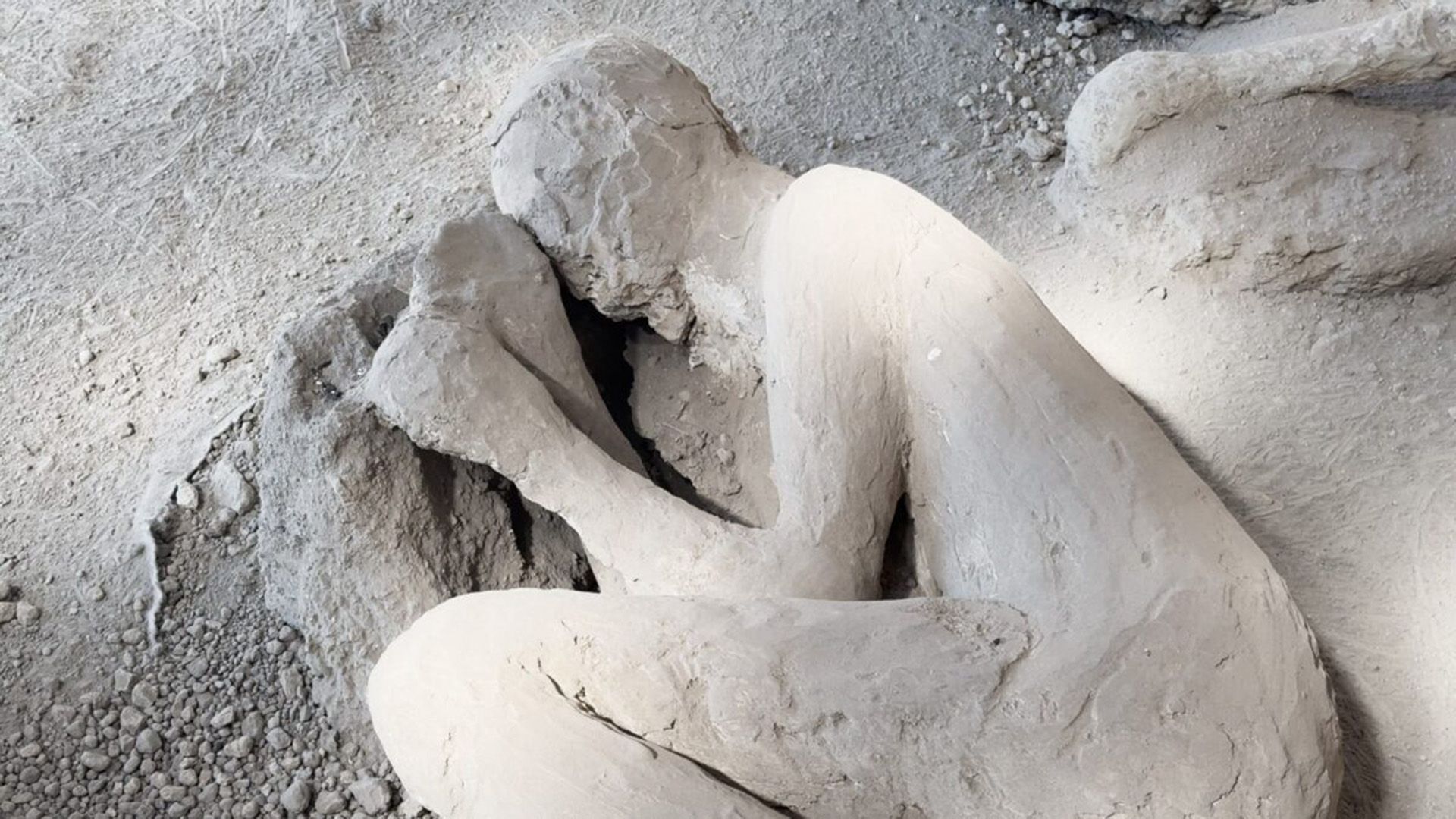
Why it matters: It transforms an anonymous victim into a specific historical actor, offering concrete evidence for the material culture, social role, and crisis behavior of a Roman medical professional.
Context: While Pompeii’s plaster casts are iconic, non-invasive scanning is increasingly revealing personal artifacts and occupational identities preserved within them, moving analysis from general demographics to individual biographies.
"Doctor’s kit found on Mount Vesuvius victim in Pompeii A man who died in Pompeii during the eruption of Mount Vesuvius in A.D. 79 was carrying a medical kit with him, new." — LIVESCIENCE
Commentary: The find underscores medicine as a portable, valued skill in the 1st century Roman economy—a tangible asset for post-disaster recovery. The locked case and slate tablet point to a standardized, organized professional toolkit, contrasting with the more common finds of keys or jewels, and suggests a calculated decision to preserve means of livelihood over mere wealth. It materially supports the narrative of individual agency and professional identity amid catastrophic social collapse.
Date: Mon, 18 May 2026 21:14:52 +0000
URL: https://www.livescience.com/archaeology/romans/doctors-kit-found-on-mount-vesuvius-victim-in-pompeii
AI Sentiment Score: Negative (71%)
AI Credibility Score: 10.0/10 — High
Scores and text generated by AI analysis of the source article indicated.
New Details Emerge About Pompeii Victim (Archaeology)
Summary: Advanced imaging of a plaster cast from Pompeii’s Garden of the Fugitives, made in 1961, has revealed new details about one victim. The scans show a bag of coins and a box containing a slate tablet and small metal instruments, interpreted as a physician’s surgical kit. This leads researchers to identify the individual as a doctor attempting to flee the eruption with his professional tools.
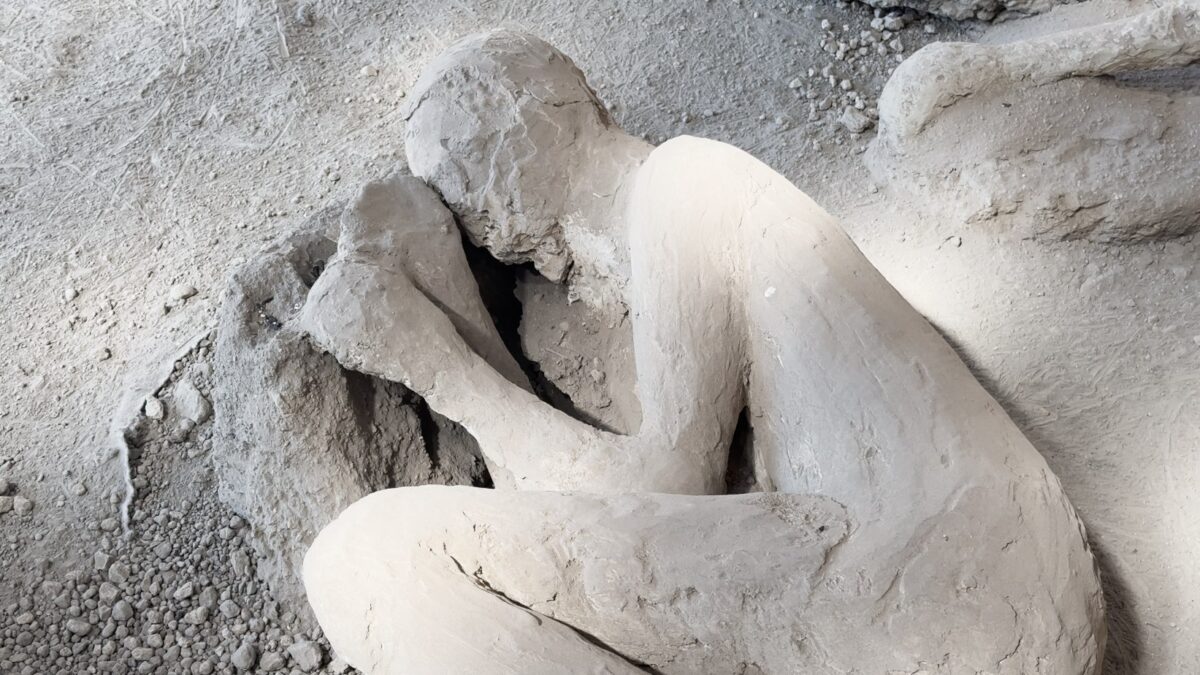
Why it matters: It transforms an anonymous cast from a mass tragedy into a specific professional biography, offering a granular view of crisis behavior, economic status, and occupational identity in a terminal moment.
Context: This continues a methodological shift in Pompeian studies from static display to active forensic re-examination, using new technologies to extract socioeconomic and biographical data from existing collections.
"New X-ray and CT scanning recently revealed that one of the victims had a cloth bag by his side filled with bronze and silver coins, as well as a box containing a small slate tablet and a series of small metal instruments. Experts believe that the slate was used for preparing cosmetic or medical concoctions and the small utensils likely comprised a physician’s surgical kit." — ARCHAEOLOGY
Commentary: The identification reframes the victim not merely as a casualty but as a practitioner in flight, prioritizing portable capital and professional identity. It underscores how non-destructive technologies are revising historical narratives locked in museum storage, turning typological ‘victims’ into individuals with discernible social roles and economic strategies during collapse.
Date: Mon, 18 May 2026 17:00:00 +0000
URL: https://archaeology.org/news/2026/05/18/new-details-emerge-about-pompeii-victim/
AI Sentiment Score: Negative (75%)
AI Credibility Score: 10.0/10 — High
Scores and text generated by AI analysis of the source article indicated.
Six Bronze Age mines may reveal metal source of ancient … (Jpost)
Summary: A joint survey by Swedish and Spanish universities has identified six previously unknown Bronze Age mines in southwestern Spain. The sites contain veins of copper, lead, and silver. Isotopic analysis of Scandinavian artifacts had previously suggested a southwestern Iberian origin for their metal, but the precise source was undefined. These mines now provide a likely candidate, indicating a more extensive and organized extraction network than previously documented.

Why it matters: It materially revises the scale and sophistication of prehistoric European metallurgy and trade, forcing a reassessment of Bronze Age political economy and long-distance connectivity.
Context: Archaeometallurgy has long used lead isotope analysis to trace artifact origins, but often lacks the corroborating discovery of the actual extraction sites. This creates a gap between chemical signature and archaeological context.
"The mines were found in early February 2026 during a joint archaeological survey by Sweden’s University of Gothenburg, Spain’s University of Seville, and the local Provincial Archaeological Museum of Badajoz in Extremadura,." — JPOST
Commentary: The discovery shifts the narrative from sporadic, local exploitation to a coordinated, industrial-scale operation capable of feeding pan-European networks. This implies a level of social organization, logistical control, and elite demand in southwestern Iberia that rivals more traditionally studied centers, potentially elevating its role from peripheral supplier to core production zone. It concretely anchors the isotopic data, turning a theoretical trade route into an operational chain of extraction, processing, and distribution.
Date: May 24, 2026 12:00 AM ET
URL: https://www.jpost.com/archaeology/article-897062
AI Sentiment Score: Negative (66%)
AI Credibility Score: 10.0/10 — High
Scores and text generated by AI analysis of the source article indicated.
‘Secrets of the Sunken City’ exhibit reveals Alexandria underwater … (English.Ahram.Eg)
Summary: Egypt’s Ministry of Tourism has launched a new exhibition, ‘Secrets of the Sunken City,’ at the Alexandria National Museum, featuring artefacts from the submerged ancient cities of Canopus and Heraklion in Abu Qir Bay. The event is part of a broader cultural initiative and follows the government’s announcement in May to explore the feasibility of an underwater museum at the same site. The recovered objects focus on daily life, religious rituals, and funerary traditions from the Ptolemaic and Roman periods.

Why it matters: This signals a strategic shift in Egyptian cultural policy, moving from salvage archaeology toward the institutionalization and monetization of submerged heritage as a permanent tourist asset.
Context: The sunken cities of the Alexandria region, known since the early 2000s, have long been subjects of archaeological excavation but have not been systematically integrated into public-facing cultural infrastructure.
"Prime Minister Mostafa Madbouly instructed officials to study the project’s feasibility and, within a month, present proposals for either developing underwater viewing facilities or recovering and exhibiting artefacts on land." — ENGLISH.AHRAM.EG
Commentary: The directive to choose between in-situ preservation and terrestrial display within a month reveals a tourism-driven, expedited timeline that may prioritize economic impact over long-term conservation strategy. This formalizes a tension between creating an immersive archaeological experience and the logistical, preservationist challenges of maintaining artefacts in a marine environment. The move reflects a broader pattern of states leveraging unique heritage for ‘experiential’ tourism, with potential implications for site management and academic access.
Date: May 19, 2026 12:00 AM ET
URL: https://english.ahram.org.eg/News/551631.aspx
AI Sentiment Score: Negative (66%)
AI Credibility Score: 10.0/10 — High
Scores and text generated by AI analysis of the source article indicated.
Catapult the cow! 6 medieval castles that were never conquered (Livescience)
Summary: A Livescience article catalogs six medieval fortifications that reportedly withstood every direct assault or siege attempt throughout their operational histories. The list includes Bohus Fortress in Sweden, which survived 13 sieges; Hochosterwitz Castle in Austria, defended by 14 gates; Burgdorf Castle in Switzerland, bought rather than taken; Mont-Saint-Michel in France; Kost Castle in the Czech Republic; and Château Pèlerin in Israel, abandoned but never conquered. The piece frames these sites as exemplars of defensive design, strategic location, and occasional mythologized ingenuity, such as the apocryphal tale of a grain-stuffed cow being catapulted to bluff besiegers at Hochosterwitz.
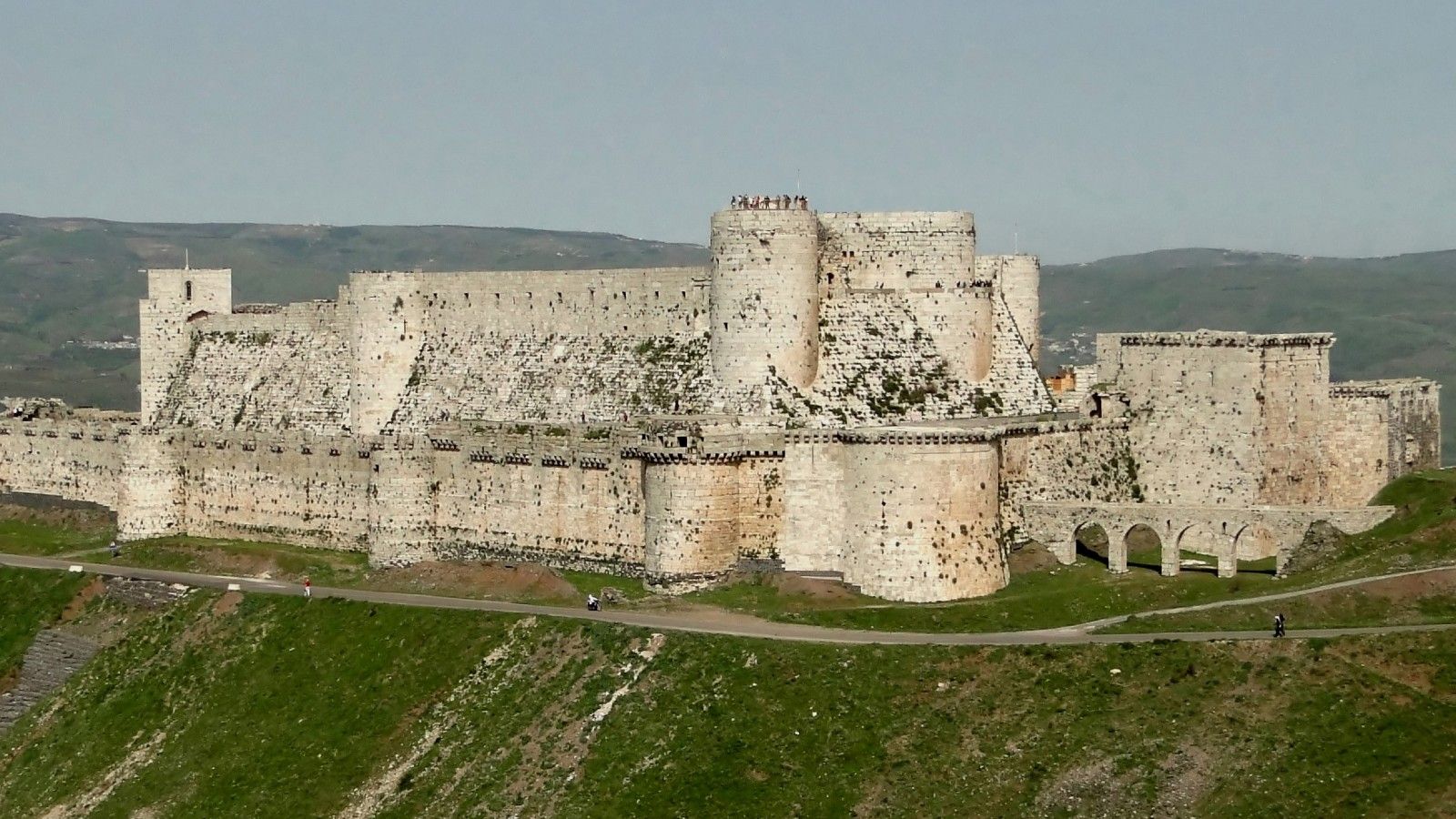
Why it matters: For historians and strategists, the persistent myth of the ‘unconquered’ castle reveals more about the narratives we build around power and permanence than about pure military history.
Context: The popular fascination with impregnable castles often overlooks the more common historical realities of negotiation, economic attrition, and political transfer, where control changed hands without a breach.
[Summary note] A Livescience article catalogs six medieval fortifications that reportedly withstood every direct assault or siege attempt throughout their operational histories.
Commentary: The article’s premise inadvertently highlights a key interpretive flaw: ‘never conquered’ is a politically contingent category. Burgdorf was purchased, Château Pèlerin was evacuated under strategic duress, and Bohus’s sovereignty shifted via treaty—outcomes that redefine ‘conquest’ as a failure of narrative, not just of walls. The enduring appeal of these stories speaks to a cultural desire for symbols of immutable order, even as historical analysis shows resilience was often a function of diplomacy, geography, and economic calculus, not just martial virtue.
Date: Sun, 24 May 2026 15:05:00 +0000
URL: https://www.livescience.com/archaeology/catapult-the-cow-medieval-castles-that-were-never-conquered
AI Sentiment Score: Negative (75%)
AI Credibility Score: 10.0/10 — High
Scores and text generated by AI analysis of the source article indicated.
Archaeologists reveal pre-Hispanic cities in Bolivia with laser … (Sciencedaily)
Summary: LIDAR survey in Bolivia’s Llanos de Mojos has revealed extensive, low-density urban settlements of the Casarabe culture, dating from 500-1400 AD. The largest site, Cotoca, covered 315 hectares with monumental architecture including pyramids, platforms, and U-shaped structures, connected by causeways and canals within a four-tiered settlement network. This constitutes the first confirmed evidence of pre-Hispanic urbanism in the Amazon basin.

Why it matters: It fundamentally revises the historical narrative of Amazonia, demonstrating sophisticated, large-scale social organization existed independently of Andean or Mesoamerican models, challenging long-held assumptions about environmental limitations on cultural development.
Context: The Amazon was long considered a pristine wilderness incapable of supporting complex societies; recent archaeological work has contested this, but evidence for genuine urban centers has remained elusive until now.
""With a north-south extension of 1.5 kilometers and an east-west extension of about one kilometer, the largest site found so far is as large as Bonn was in the 17th century," says co-author Prof. Dr. Carla Jaimes Betancourt." — SCIENCEDAILY
Commentary: The Cotoca site’s scale and planned infrastructure force a recalibration of ‘urbanism’ to include low-density, integrated networks, a model with parallels to Angkor or Maya cities. This discovery shifts the locus of early New World complexity, suggesting the Amazon was not a periphery but a core region of innovation and political power, with significant implications for indigenous land rights and contemporary conservation paradigms that often exclude human history.
Date: May 23, 2026 12:00 AM ET
URL: https://www.sciencedaily.com/releases/2022/05/220525110924.htm
AI Sentiment Score: Positive (66%)
AI Credibility Score: 10.0/10 — High
Scores and text generated by AI analysis of the source article indicated.
Vikings’ Darkest Secret Just Found Buried In Minnesota (Youtube)
Summary: New genetic and chronological evidence is converging to challenge the long-dismissed Kensington Runestone as a hoax. Metagenomic sequencing of Minnesota lake sediment has identified low-frequency Scandinavian genetic markers in layers dating to the Medieval Warm Period, coinciding with the Norse activity described in the Vinland Sagas. Concurrently, advanced dating techniques have reportedly pinpointed the origin of the stone’s inscription to a specific year within the 11th century. This multi-disciplinary push is forcing a formal re-evaluation of a century-old archaeological controversy.
Why it matters: It represents a potential paradigm shift in the chronology and scope of pre-Columbian transatlantic contact, moving the debate from artifact authentication to population-level evidence.
Context: The Kensington Runestone, discovered in 1898, has been largely dismissed by mainstream academia as a 19th-century forgery, despite persistent fringe theories and ancillary finds like the Maine Norse coin.
"In 1898 a Swedish immigrant named Olof Ohman was clearing land in western Minnesota when his plough caught on a two hundred pound slab of grey stone in the roots of an." — YOUTUBE
Commentary: The significance lies not in a single ‘smoking gun’ artifact but in the convergence of weak signals—genetic, chronological, numismatic—that collectively erode the categorical dismissal of inland Norse presence. If validated, it rewrites the narrative of European exploration from a coastal, failed colony to a more persistent, if sparse, pattern of inland reconnaissance. This forces institutional archaeology to confront how consensus forms around negative evidence and what constitutes sufficient proof to reopen a settled case. The operational shift is from debating the Runestone’s carving to modeling pathways and motives for small-group travel deep into the continent.
Date: May 20, 2026 12:00 AM ET
URL: https://www.youtube.com/watch?v=ltQKE0BXJXE
AI Sentiment Score: Neutral (50%)
AI Credibility Score: 10.0/10 — High
Scores and text generated by AI analysis of the source article indicated.
Valeriana Mayan City: Lost Civilization Found by Accident 2024 (Youtube)
Summary: In 2024, a PhD student analyzing routine LiDAR aerial scan data from Guatemala identified the urban footprint of a previously unknown Maya settlement, provisionally named Valeriana. The site’s scale, reportedly larger than Edinburgh, and its complex of pyramids, causeways, and urban layouts were revealed without physical excavation. This discovery, made from a laptop, exemplifies a paradigm shift in how archaeological prospecting is conducted.
Why it matters: It demonstrates that foundational historical narratives about the scale and sophistication of pre-Columbian societies are being rewritten not by new expeditions, but by re-examining existing data with new analytical lenses.
Context: This event is part of a broader pattern where LiDAR technology is systematically unveiling a vastly more populated and interconnected ancient Maya landscape across Central America, challenging decades of field-based research assumptions.
"Valeriana Mayan city 2024 — a PhD student accidentally discovered a lost city bigger than Edinburgh while clicking through aerial scan data on a laptop, and it changes everything we thought we." — YOUTUBE
Commentary: The operational implication is profound: the frontier of discovery has moved from the jungle floor to the dataset, privileging computational literacy alongside traditional fieldwork. This forces a reassessment of Maya demography and political economy, suggesting urban networks may have rivaled contemporaneous global centers. The real shift is epistemological—our understanding of past complexity is now limited more by our capacity to process digital surveys than by physical access to sites.
Date: May 21, 2026 12:00 AM ET
URL: https://www.youtube.com/watch?v=cGovdLHIHDA
AI Sentiment Score: Negative (66%)
AI Credibility Score: 10.0/10 — High
Scores and text generated by AI analysis of the source article indicated.
Roman Empire – La Brújula Verde (Labrujulaverde)
Summary: Three separate archaeological studies are reshaping foundational narratives of the Roman Empire and its aftermath. Genomic analysis of burials in southern Germany challenges the 19th-century ‘migration period’ model, suggesting more complex population dynamics than a violent Germanic influx. Meanwhile, a fragmentary inscription from the Sanctuary of Hercules Victor in Tivoli hints at a previously unknown monumental basilica, and residue analysis from dolia at Portus provides the first scientific evidence for their specific use in bulk storage and transport.
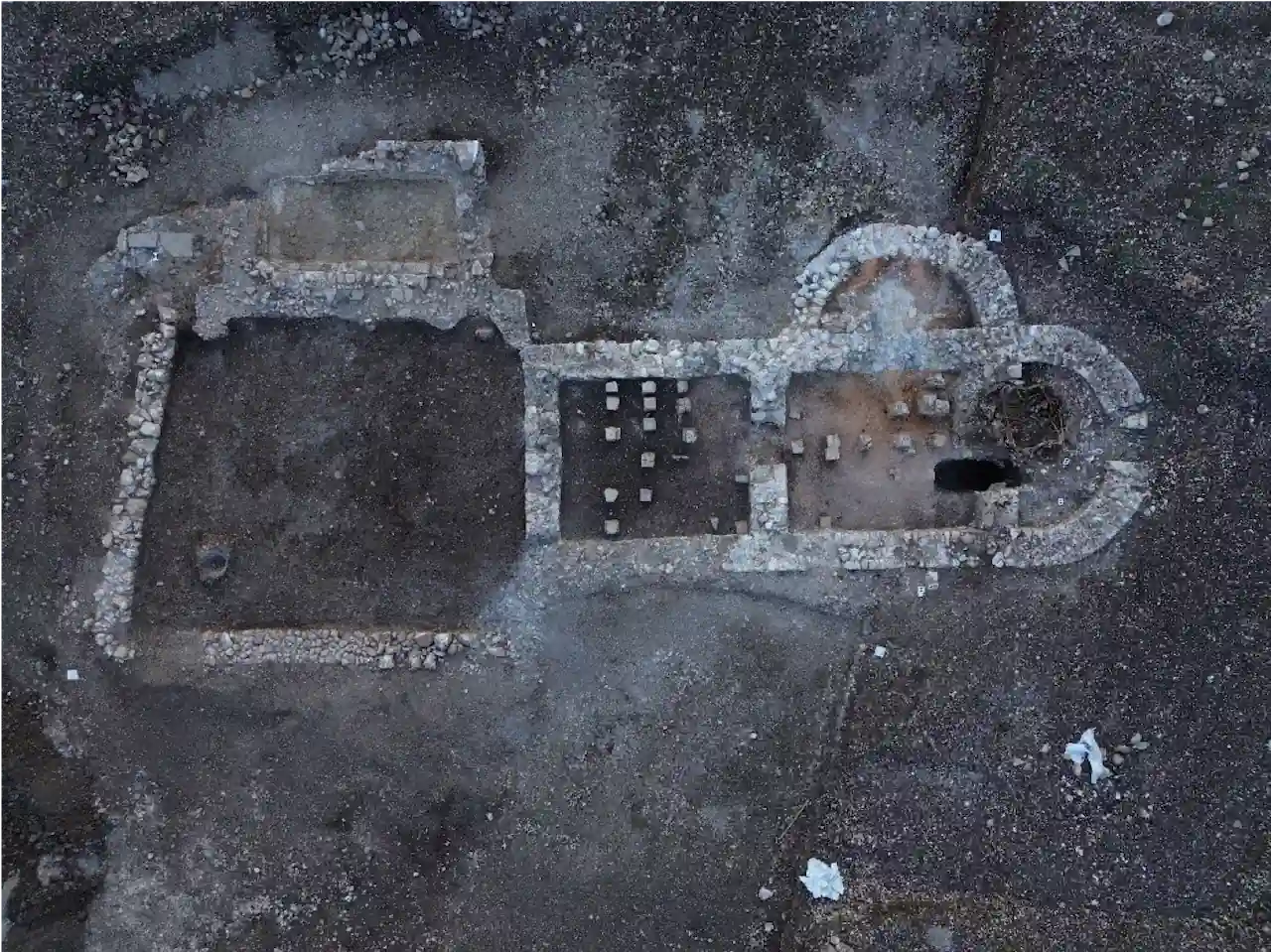
Why it matters: These findings collectively shift the evidentiary ground from grand, inherited narratives to data-driven reconstructions of economy, identity, and power.
Context: The study of Late Antiquity and the Roman economy has long been constrained by literary tropes and typological assumptions, now being overturned by scientific archaeology.
"A genomic analysis conducted on 258 individuals buried in the so-called row cemeteries of southern Germany has just demolished the 19th-century image of a great Germanic migration that supposedly burst violently after the collapse of the Western Roman Empire." — LABRUJULAVERDE
Commentary: The German genomic study directly undermines a politically instrumental narrative of ethnic replacement, forcing a recalibration of ‘collapse’ towards continuity and integration. The Tivoli inscription exemplifies how epigraphy continues to reveal the scale of lost monumental patronage, complicating our map of central Italian sanctuaries. The dolia analysis moves maritime economics from speculation to material fact, quantifying the logistical capacity of Roman imperial supply chains.
Date: May 18, 2026 12:00 AM ET
URL: https://www.labrujulaverde.com/en/tag/roman-empire/
AI Sentiment Score: Negative (85%)
AI Credibility Score: 10.0/10 — High
Scores and text generated by AI analysis of the source article indicated.
They Opened A Viking Grave In Maine — What Was Inside Shouldn’t Exist (Youtube)
Summary: A YouTube video from 2026 investigates a site in Maine long rumored to be a Viking grave. The investigation finds no grave, longship, or cemetery, but instead a single Norse coin and evidence the location was a meeting place. The core mystery shifts from proving a settlement to understanding the nature of the exchange that occurred there.
Why it matters: It reframes the evidence for pre-Columbian transatlantic contact from a question of settlement to one of intermittent, perhaps transactional, interaction, challenging simplistic narratives of discovery.
Context: The search for Norse sites in North America has often focused on physical settlements like L’Anse aux Meadows; isolated artifacts like the Maine penny have been treated as outliers or later losses.
"Just one coin with a life story written into its own surface, and a site that the archaeology suggests was not a fishing camp but a meeting place, and I find the question of what was being exchanged there considerably harder to answer than it first appears." — YOUTUBE
Commentary: The implication is a move from settlement archaeology to contact archaeology. The site’s function as a meeting place suggests structured, possibly seasonal, interaction between Norse and Indigenous groups, not accidental loss. This elevates the Maine penny from a curious anomaly to a potential token in a broader, poorly understood system of exchange, demanding a reassessment of coastal interaction spheres in the North Atlantic.
Date: May 23, 2026 12:00 AM ET
URL: https://www.youtube.com/watch?v=NhVbpDdfVDk
AI Sentiment Score: Neutral (33%)
AI Credibility Score: 10.0/10 — High
Scores and text generated by AI analysis of the source article indicated.
DNA Just Proved Vikings Lived In America For 350 Years — Not One Voyage (Youtube)
Summary: New evidence from timber analysis and DNA studies is overturning the long-held view of a brief, failed Norse settlement in the Americas. Analysis of wood from Norse sites in Greenland, particularly American species like hemlock and jack pine, shows these materials were imported over a span of centuries, not clustered around the single, precisely dated 1021 camp at L’Anse aux Meadows. This indicates sustained, intermittent transatlantic voyages for resource extraction over approximately 350 years. Crucially, genetic evidence now suggests people also made these crossings, moving beyond mere timber trade to imply settlement or sustained biological exchange.
Why it matters: This shifts the historical model of pre-Columbian transatlantic contact from a short-lived anomaly to a persistent, economically driven activity integrated into Norse Greenlandic society.
Context: The traditional narrative, supported by the sagas and the L’Anse aux Meadows site dated to 1021, framed Norse presence in North America as a brief exploratory episode. The new evidence recontextualizes that site as one node in a long-term pattern of resource procurement.
"That is what the science keeps insisting every time another piece is pulled from a collapsed Norse farmstead in Greenland. The species is wrong, the grain is wrong, and everything about it." — YOUTUBE
Commentary: The operational implication is profound: Norse Greenland was not a failed, isolated colony but a functioning hub within a sporadic but durable North Atlantic resource network. This reframes the economic logic of Norse expansion, suggesting Greenland’s viability depended on access to North American timber and possibly other goods. It also raises urgent questions for archaeology, demanding a re-survey of the North American eastern seaboard for evidence of these repeated landfalls beyond the single known camp.
Date: May 24, 2026 12:00 AM ET
URL: https://www.youtube.com/watch?v=-NrJaMGWOGc
AI Sentiment Score: Negative (50%)
AI Credibility Score: 10.0/10 — High
Scores and text generated by AI analysis of the source article indicated.
Workers Were Building a Highway—and Discovered an Ancient … (Popularmechanics)
Summary: Construction of the Padana Inferiore highway in Ponso, Italy, uncovered a previously unknown ritual site buried under ten feet of river sediment. The site, dating to the 5th–4th centuries BCE, contains numerous inscribed votive stones, or cippi, bearing texts in both Latin and the ancient Venetic language. This discovery was made not through planned archaeology but as a direct result of modern infrastructure development.

Why it matters: It provides a rare, stratified snapshot of cultural and linguistic interaction in a key region of pre-Roman Italy, directly challenging narratives of simple Roman cultural dominance.
Context: The Veneti were a distinct Italic people inhabiting the Po Valley, known from scattered inscriptions but whose ritual practices and degree of integration with early Latin culture remain poorly documented. Major finds in this region often emerge from unplanned construction work.
"- Road crews looking to extend connection through the Padua province in Italy uncovered a lost archaeological site. – Dated to the fifth and fourth centuries B.C.E., the site was buried under." — POPULARMECHANICS
Commentary: The find’s location under deep flood sediment offers a precise environmental timestamp, suggesting a catastrophic Adige River event that sealed the site. The bilingual inscriptions are the critical data, indicating a period of sustained, formalized contact and possibly shared ritual practice between Venetic and early Latin communities before Roman political hegemony was fully established. This materially refines models of ‘Romanization’ from conquest to a more complex, earlier process of negotiation. For heritage management, it underscores the high probability of significant, unrecorded archaeological strata lying in the path of Italy’s ongoing infrastructure modernization.
Date: May 20, 2026 12:00 AM ET
URL: https://www.popularmechanics.com/science/archaeology/a71352141/pre-roman-temple-discovery/
AI Sentiment Score: Positive (50%)
AI Credibility Score: 10.0/10 — High
Scores and text generated by AI analysis of the source article indicated.
Clues from an ancient Viking trading centre: A tantalizing hint of an … (Sciencedaily)
Summary: Archaeologists working on a highway expansion near Trondheim, Norway, have uncovered evidence they believe identifies the site of a major Viking Age trading center described in Norse sagas. The location, near the modern town of Steinkjer, was a logical hub due to higher sea levels a millennium ago. This discovery potentially resolves a long-standing historical puzzle about the precise location of this key node in the Norse trade network.
Why it matters: It transforms a legendary place from saga literature into a concrete archaeological site, allowing for a material analysis of Viking Age economics and settlement patterns.
Context: Norse sagas often contain kernels of historical truth, but correlating their descriptions with physical geography has been a persistent challenge for archaeologists.
"Based on the fact that sea levels were four or five metres higher in this area 1000 years ago, the location of the existing church in Steinkjer is the most logical place for the trading place to have been, the researchers say." — SCIENCEDAILY
Commentary: This finding underscores how environmental data—specifically paleogeography—is critical for interpreting historical texts. It shifts Steinkjer from a peripheral modern town to a central past economic locus, forcing a recalibration of regional power and exchange maps. The methodology validates using climatic and geological records as a primary key for locating ‘lost’ sites mentioned in oral or written traditions.
Date: May 24, 2026 12:00 AM ET
URL: https://www.sciencedaily.com/releases/2013/07/130709094454.htm
AI Sentiment Score: Negative (66%)
AI Credibility Score: 10.0/10 — High
Scores and text generated by AI analysis of the source article indicated.
Among Viking societies, Norway was much more violent than Denmark (Sciencedaily)
Summary: A new study published in the Journal of Anthropological Archaeology overturns the long-held assumption that violence was uniformly high across Viking societies. By analyzing skeletal trauma and weaponry evidence, researchers led by David Jacobson found interpersonal violence was significantly more prevalent in Norway than in Denmark. This disparity points to underlying differences in social structure and governance between the two regions during the Viking Age.
Why it matters: It refines our understanding of state formation and social control in early medieval Scandinavia, moving beyond monolithic ‘Viking’ stereotypes to analyze specific political ecologies of violence.
Context: Historical scholarship has often treated Viking Age Scandinavia as a culturally and politically cohesive bloc, with violence attributed to a shared warrior ethos or external raiding. This study forces a comparative, intra-regional analysis.
"A new study sheds light on how Viking Age societies in Norway and Denmark differed in their experiences with violence and the role social structures played in shaping those patterns. … Rates." — SCIENCEDAILY
Commentary: The distinction between interpersonal and state-sanctioned violence is critical. It suggests Denmark’s earlier centralization under monarchs like Harald Bluetooth may have suppressed feuding and private conflict more effectively than Norway’s more fragmented, chiefdom-based power structures. This recalibrates the narrative of the Viking Age from one of uniform brutality to a laboratory for studying how political centralization directly curtails everyday lethal conflict.
Date: May 20, 2026 12:00 AM ET
URL: https://www.sciencedaily.com/releases/2024/08/240828155028.htm
AI Sentiment Score: Negative (80%)
AI Credibility Score: 10.0/10 — High
Scores and text generated by AI analysis of the source article indicated.
Archaeologists used 1,500-year-old map to uncover a lost city … (Timesofindia.Indiatimes)
Summary: Archaeologists have identified the likely site of the Byzantine city of Tharais in southern Jordan, using the 6th-century Madaba Mosaic Map as a primary guide. The discovery, made through surveys and excavations from 2021 to 2024, revealed structural remains of churches, buildings, and agricultural systems. This confirms the map’s enduring geographic accuracy and provides a new physical anchor for understanding Byzantine settlement patterns in the region.
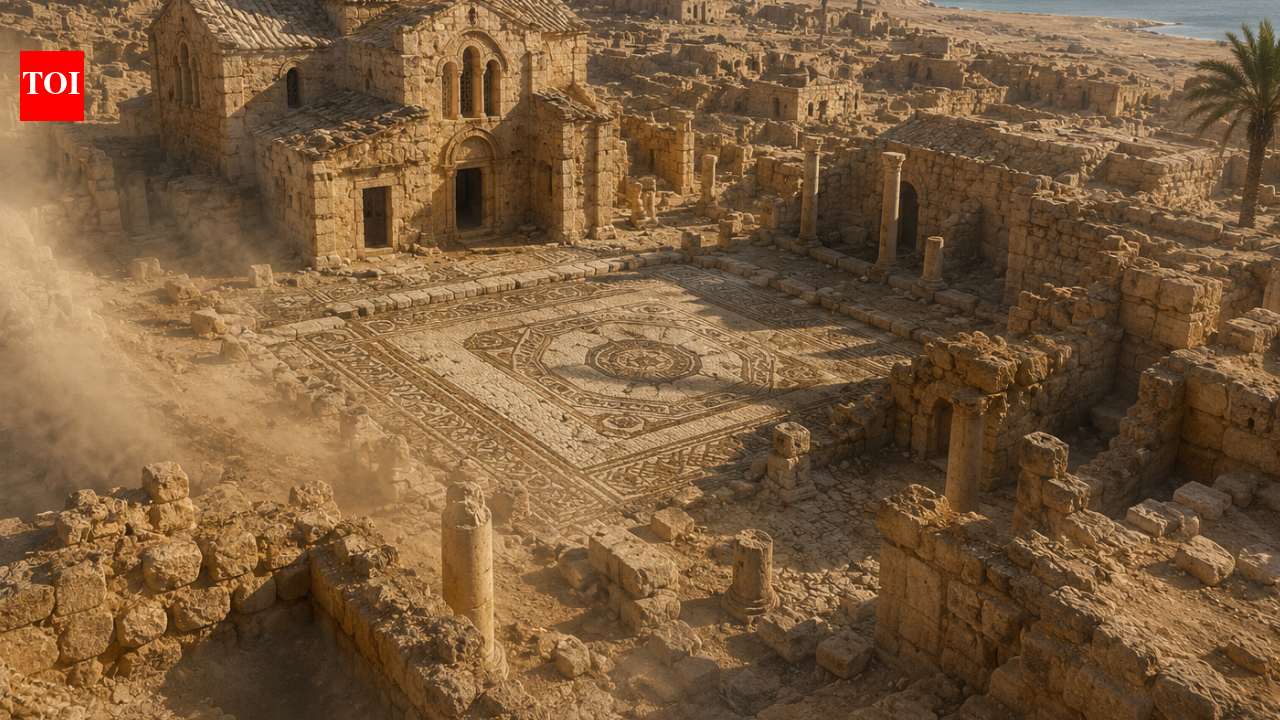
Why it matters: It validates a key historical source as a functional tool for discovery, shifting the Madaba Map from a symbolic artifact to an operational guide, and refines our model of Byzantine administrative and economic networks in a marginal zone.
Context: The Madaba Map, a floor mosaic in a Jordanian church, is a renowned but often abstracted cultural relic; its utility for precise, field-based archaeology has been historically debated.
"The discovery emerged after archaeologists combined clues from the ancient map with modern field surveys and excavations carried out between 2021 and 2024 in southern Jordan." — TIMESOFINDIA.INDIATIMES
Commentary: The operational success here recalibrates the value of pre-modern cartography from illustrative to instrumental, suggesting other ‘symbolic’ sources may hold untapped locational data. It also underscores how Byzantine infrastructure extended into arid regions, complicating narratives of decline and highlighting adaptive agricultural strategies that sustained urban life.
Date: May 18, 2026 12:00 AM ET
URL: https://timesofindia.indiatimes.com/science/archaeologists-used-1500-year-old-map-to-uncover-a-lost-city-buried-under-the-desert-in-jordan/articleshow/131020849.cms
AI Sentiment Score: Neutral (33%)
AI Credibility Score: 10.0/10 — High
Scores and text generated by AI analysis of the source article indicated.
If They Open This Chamber Inside the Great Pyramid, Egyptian History Ends (Youtube)
Summary: Advanced non-invasive scanning techniques, including muon tomography and electrical resistivity tomography, have confirmed the existence of two previously unknown sealed spaces within the Great Pyramid of Giza: a 40-meter chamber and a 9-meter corridor. The discovery of the corridor in 2023, via a 5mm endoscope inserted through chevron blocks, marked the first visual contact with a space untouched since the Fourth Dynasty. These findings, published with high statistical confidence, fundamentally challenge the long-held architectural model of the pyramid as a fully mapped structure.
Why it matters: This shifts the paradigm of Fourth Dynasty archaeology from a discipline of cataloging known spaces to one of active discovery, forcing a reevaluation of the pyramid’s construction logic, ritual purpose, and the political economy of Old Kingdom Egypt.
Context: The ScanPyramids mission, a multinational scientific collaboration begun in 2015, represents a decisive turn from speculative archaeology to physics-based, peer-reviewed investigation of ancient megastructures, rendering previous assumptions provisional.
"Three independent physics teams fired cosmic ray particles through the Great Pyramid of Giza and found two sealed spaces hidden for 4,500 years. In 2017, researchers from Nagoya University, KEK Japan, and." — YOUTUBE
Commentary: The existence of major, architecturally integrated voids suggests either a previously unappreciated ritual complexity—potentially linked to the king’s celestial journey—or a radical revision of load-bearing engineering principles. The operational consequence is that Egyptology must now contend with a physical archive it cannot yet access, creating tension between preservation ethics and the demand for knowledge. This materially undermines any canonical narrative of the pyramid’s final form and function, placing the institution of the Egyptian Ministry of Antiquities and Tourism at the center of a high-stakes decision on invasive exploration.
Date: May 20, 2026 12:00 AM ET
URL: https://www.youtube.com/watch?v=c83rTcqHExo
AI Sentiment Score: Negative (50%)
AI Credibility Score: 10.0/10 — High
Scores and text generated by AI analysis of the source article indicated.
5243 ‒ Cemenelum – Roman Inscriptions of Britain (Romaninscriptionsofbritain)
Summary: – If you already know the number of the inscription from RIB, or tablet from the Vindolanda or Bloomberg Tablets, you could Search by number. … – Enter the search term you are interested in, e.g., Mithras, Vindolanda, or Caracalla.

Why it matters: Direct access to structured epigraphic data facilitates comparative analysis of provincial cultic practices and military deployment patterns.
Context: The searchable index structure suggests a shift towards digital aggregation, potentially standardizing interpretation across disparate archaeological finds.
"- If you already know the number of the inscription from RIB, or tablet from the Vindolanda or Bloomberg Tablets, you could Search by number. … – Enter the search term you." — ROMANINSCRIPTIONSOFBRITAIN
Commentary: The signal is still worth tracking, but the current extraction path did not yield enough body text for a fuller analytical read. The immediate implication is operational rather than speculative: watch how this changes budgets, workflows, or risk assumptions over the next cycle.
Date: May 19, 2026 12:00 AM ET
URL: https://romaninscriptionsofbritain.org/place/5243
AI Sentiment Score: Negative (50%)
AI Credibility Score: 10.0/10 — High
Scores and text generated by AI analysis of the source article indicated.
Post ID: 8e5fd41b