Ancient DNA and Genetics Rewriting History
DNA sequencing is rewriting our understanding of historic outbreaks, but it can’t tell the whole story (Livescience)
Summary: Genomic sequencing has become a primary tool for tracing the evolutionary history and spread of pathogens, from ancient plague to modern COVID-19. It provides a biological record of mutations, allowing researchers to connect cases and identify outbreak origins. However, the technique alone cannot explain the environmental, social, and behavioral factors that drive pandemics. A complete narrative requires integrating genetic data with historical records, archaeological evidence, and trade networks.

Why it matters: It reframes historical epidemiology from a speculative discipline into a forensic science, but also cautions against over-reliance on molecular data at the expense of human context.
Context: The field of paleogenomics has matured over the past decade, enabling the extraction of pathogen DNA from ancient remains and reshaping narratives of historic pandemics like the Black Death.
"Sequencing provided the biological clue, revealing the pathogen’s identity and ancestry. History and archaeology turned that clue into a plausible narrative." — LIVESCIENCE
Commentary: The operational shift is from sequencing as an endpoint to sequencing as a hypothesis generator. The 2020 Biogen conference case demonstrates its power for real-time forensic epidemiology, while the Kyrgyzstan gravesite study shows its dependency on archival serendipity. The implication for institutions like the WHO or CDC is a necessary, deeper integration of bioinformatics teams with historians and social scientists, moving beyond siloed outbreak reports. For our understanding of ancient exchange, it concretely ties pathogen evolution to nodes in trade networks, making disease a tracer for globalization’s earliest phases.
Date: Sat, 23 May 2026 14:00:00 +0000
URL: https://www.livescience.com/health/genetics/dna-sequencing-is-rewriting-our-understanding-of-historic-outbreaks-but-it-cant-tell-the-whole-story
AI Sentiment Score: Negative (80%)
AI Credibility Score: 10.0/10 — High
Scores and text generated by AI analysis of the source article indicated.
Ancient DNA reveals reason for high multiple sclerosis and Alzheimer’s rates in Europe (Sciencedaily)
Summary: A study analyzing the world’s largest ancient human gene bank has traced the high prevalence of multiple sclerosis in Northern Europe to genetic variants introduced by Yamnaya pastoralists migrating from the Pontic Steppe around 5,000 years ago. These variants, which also correlate with height differences, likely offered protection against zoonotic infections from livestock. The research also links genetic risk for Alzheimer’s and type 2 diabetes to earlier hunter-gatherer populations. This provides a direct evolutionary explanation for modern disease gradients and redefines these conditions as mismatches between ancient genetic adaptations and contemporary environments.

Why it matters: This transforms neurodegenerative and autoimmune diseases from purely modern pathologies into evolutionary trade-offs, directly impacting etiological models and therapeutic strategies by grounding them in deep historical causality.
Context: The study leverages a novel, colossal ancient DNA dataset to map the spatiotemporal spread of disease-associated alleles, moving beyond association studies to causal historical narratives.
"Ancient DNA reveals reason for high multiple sclerosis and Alzheimer’s rates in Europe – Date: – January 10, 2024 – Source: – University of Cambridge – Summary: – Researchers have created the." — SCIENCEDAILY
Commentary: The finding operationalizes evolutionary medicine, shifting MS from an idiopathic immune dysfunction to a documented genetic adaptation with a clear historical vector and selective advantage. This demands a recalibration of drug discovery and public health strategy, treating such diseases as legacies of specific subsistence shifts rather than random malfunctions. The methodology establishes a new precision tool for deconstructing the deep ancestry of complex disorders, with immediate implications for research on Parkinson’s, ADHD, and schizophrenia.
Date: May 23, 2026 12:00 AM ET
URL: https://www.sciencedaily.com/releases/2024/01/240110120200.htm
AI Sentiment Score: Negative (60%)
AI Credibility Score: 10.0/10 — High
Scores and text generated by AI analysis of the source article indicated.
Ancient DNA reveals a family ossuary and long-distance migration on the Pacific coast before the Inca Empire – PubMed (Pubmed.Ncbi.Nlm.Nih.Gov)
Summary: A study of ancient DNA from 21 individuals in Peru’s Chincha Valley reveals a family ossuary and long-distance migration patterns preceding the Inca Empire. The analysis shows individuals with ancestry linked to groups 700 km to the north, with migration beginning by the 13th century AD. The research employs a generation-scale Bayesian model to overcome dating challenges from the marine reservoir effect, tracing population continuity and intermarriage over two centuries within the Chincha Kingdom.

Why it matters: It refines our understanding of pre-Inca political integration and kinship networks, demonstrating how long-distance mobility and endogamous family structures underpinned coastal state formation.
Context: Archaeological dating on the Pacific coast has long been hampered by the marine reservoir effect, which complicates radiocarbon calibration and obscures the tempo of social change.
"We reveal close-knit and far-reaching coastal interaction networks that shaped the sociopolitical landscape encountered by Inca emissaries before they integrated these communities into their empire." — PUBMED.NCBI.NLM.NIH.GOV
Commentary: The findings recalibrate the timeline of Andean statecraft, showing the Chincha Kingdom was not a static entity but a dynamic polity built on sustained, long-range kinship and trade networks. The methodological advance in dating, using aDNA and dietary proxies, sets a new standard for temporal precision in coastal archaeology. This underscores that imperial expansion, like the Inca’s, often capitalized on pre-existing, robust regional systems rather than encountering fragmented societies.
Date: May 22, 2026 12:00 AM ET
URL: https://pubmed.ncbi.nlm.nih.gov/42173833/
AI Sentiment Score: Positive (66%)
AI Credibility Score: 10.0/10 — High
Scores and text generated by AI analysis of the source article indicated.
Ancient DNA Reveals How Farming Spread and Nearly Broke a … (Scitechdaily)
Summary: A study in Nature reconstructs over two millennia of population history in Argentina’s Uspallata Valley, using ancient DNA, isotopes, and paleoclimate data. It finds that local hunter-gatherers gradually adopted farming, showing genetic continuity rather than population replacement. Later maize-farming communities endured prolonged hardship, and resilience was maintained through migration via extended family networks during periods of environmental stress and disease.
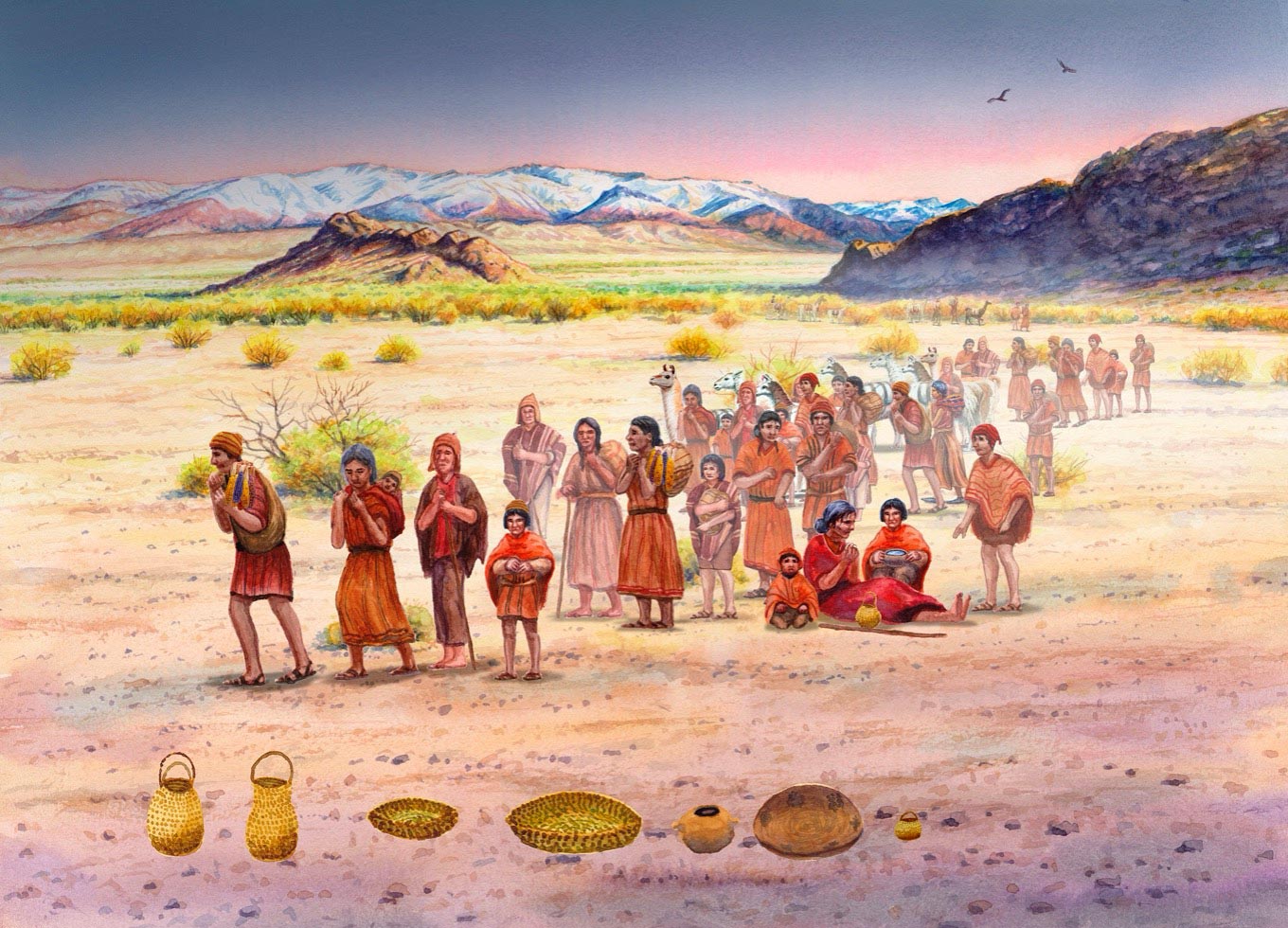
Why it matters: It refines the model of agricultural transition from one of disruptive replacement to one of local adaptation and social-network resilience, with direct implications for understanding societal responses to compounding crises.
Context: The ‘Neolithic transition’ is often framed as a wave of advance where migrating farmers displace hunter-gatherers. This study tests that model at the southern periphery of Andean agricultural expansion.
"The research sheds new light on how agriculture transformed societies and how communities responded to environmental and health crises over time." — SCITECHDAILY
Commentary: The finding of genetic continuity challenges simplistic diffusionist narratives and centers adaptive social structures—specifically kin-based migration—as a critical technology for survival. This shifts the analytical focus from demography alone to the operational mechanics of resilience, offering a historical precedent for how societies manage polycrisis through flexible, decentralized networks rather than rigid institutional control.
Date: May 22, 2026 12:00 AM ET
URL: https://scitechdaily.com/ancient-dna-reveals-how-farming-spread-and-nearly-broke-a-civilization/
AI Sentiment Score: Neutral (33%)
AI Credibility Score: 10.0/10 — High
Scores and text generated by AI analysis of the source article indicated.
Largest-ever ancient-DNA study illuminates millennia of South and … (Sciencedaily)
Summary: A landmark genomic study of 524 ancient individuals, including the first genome from the Indus Valley Civilization, has dramatically reshaped the population history of South and Central Asia. The data, which increases the global corpus of published ancient genomes by roughly 25%, provides decisive evidence against a long-held model of demic diffusion for the spread of agriculture into the region. Instead of finding ancestry linked to early Anatolian or Iranian farmers, the research identifies a distinct, deeply diverged Iranian-related lineage in South Asian populations.
Why it matters: This fundamentally rewrites the narrative of a major civilizational transition—the Neolithic Revolution in South Asia—from one of population replacement to one of local adoption, with profound implications for interpreting cultural and linguistic change.
Context: The dominant paradigm for the spread of farming from the Fertile Crescent has involved the westward and eastward movement of people. In Europe, genetics confirmed this model; in South Asia, the mechanism remained a major open question, entangled with debates on Indo-European origins.
"Researchers analyzed the genomes of 524 never before-studied ancient people, including the first genome of an individual from the ancient Indus Valley Civilization. Insights answer longstanding questions about the origins of farming." — SCIENCEDAILY
Commentary: This decouples the spread of a core technology from large-scale human migration in a key region, forcing a reassessment of how complex practices transmit. It strengthens the case for the Indo-European language family entering South Asia later, via steppe pastoralist migrations, while elevating the role of indigenous foragers in the Indus Valley’s agricultural foundation. The finding challenges simplistic civilizational ‘diffusion’ maps and underscores that technological adoption is often a process of local synthesis, not wholesale population replacement.
Date: May 23, 2026 12:00 AM ET
URL: https://www.sciencedaily.com/releases/2019/09/190905145348.htm
AI Sentiment Score: Negative (50%)
AI Credibility Score: 10.0/10 — High
Scores and text generated by AI analysis of the source article indicated.
Ancient DNA reveals a hidden Neanderthal group frozen in time (Sciencedaily)
Summary: Analysis of mitochondrial DNA from eight Neanderthal teeth found in Stajnia Cave, Poland, has reconstructed the genetic profile of a group living there approximately 100,000 years ago. The study, published in Current Biology, provides a rare snapshot of a contemporaneous Neanderthal community in a single location. The genetic ties of this group to populations across Europe and the Caucasus suggest a previously widespread lineage that later vanished.
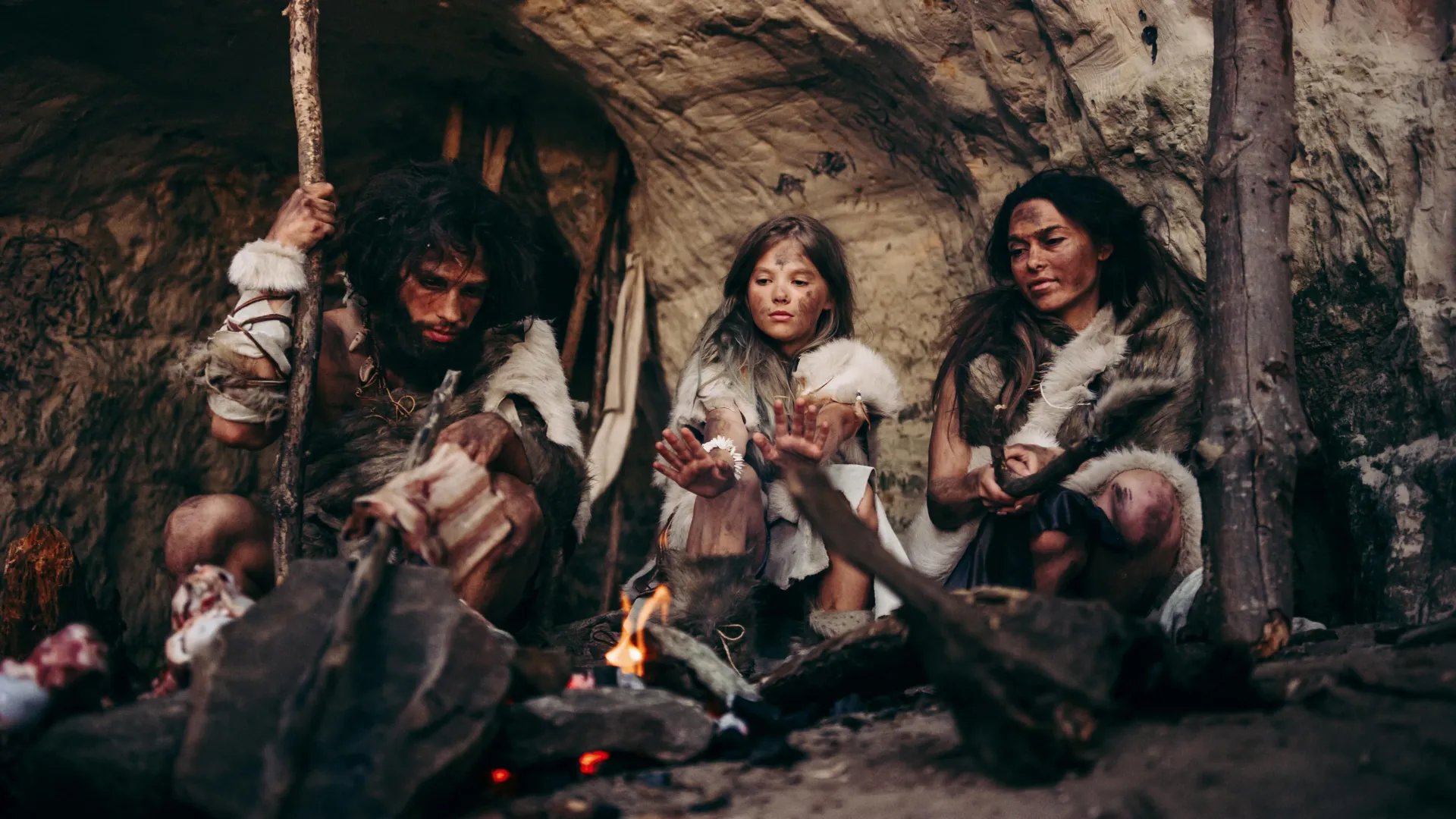
Why it matters: It refines our model of Neanderthal social structure and migration by providing a localized, contemporaneous genetic dataset, moving beyond isolated individual analyses to community-level understanding.
Context: Previous ancient DNA studies of Neanderthals have often relied on remains from disparate times and locations, making it difficult to distinguish between deep population structure and local family groups.
"This marks the first time scientists have rebuilt a genetic picture of multiple Neanderthals from a single site and era in this region." — SCIENCEDAILY
Commentary: The operational shift here is methodological: treating a cave not as a repository of isolated fossils but as a potential snapshot of a living community. This allows researchers to ask new questions about kinship, group size, and local genetic diversity, directly testing hypotheses about Neanderthal social organization. The finding of a widespread genetic lineage that later disappeared also sharpens the narrative of Neanderthal population dynamics, suggesting regional extinctions and replacements well before their final demise.
Date: May 20, 2026 12:00 AM ET
URL: http://www.sciencedaily.com/releases/2026/04/260421042757.htm
AI Sentiment Score: Negative (50%)
AI Credibility Score: 10.0/10 — High
Scores and text generated by AI analysis of the source article indicated.
Ancient DNA reveals the world’s oldest family tree – University of York (York.Ac.Uk)
Summary: Analysis of ancient DNA from the 5,700-year-old Hazleton North long cairn in Britain has reconstructed the world’s oldest known family tree. The study, published in Nature, found that 27 of the 35 individuals analyzed belonged to five continuous generations of a single extended family. The lineage was traced through four women who all had children with the same founding male.
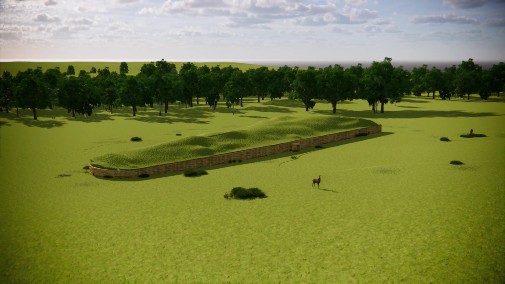
Why it matters: It provides the first high-resolution genomic evidence for the social organization and kinship structures of early Neolithic farming communities in Britain, moving beyond speculation to concrete genealogical data.
Context: Neolithic collective tombs have long been assumed to represent kin groups, but prior evidence was largely circumstantial, based on burial proximity and artifact assemblages rather than direct genetic kinship analysis.
"They found that 27 of them were descended from four women who all had children with the same man." — YORK.AC.UK
Commentary: This finding concretizes the patrilineal and potentially polygynous structure of this community, suggesting a social system where male lineage and the consolidation of kinship ties were central to monument-building and territorial claims. It shifts the study of Neolithic society from interpreting symbolic artifacts to analyzing operational social units, with implications for understanding inheritance, labor organization, and the transmission of authority. The methodology sets a new standard for archaeogenetics, moving from population ancestry to detailed familial reconstruction.
Date: May 19, 2026 12:00 AM ET
URL: https://www.york.ac.uk/news-and-events/news/2021/research/dna-tree-neolithic/
AI Sentiment Score: Negative (50%)
AI Credibility Score: 10.0/10 — High
Scores and text generated by AI analysis of the source article indicated.
Ancient DNA reveals the world’s oldest family tree | ScienceDaily (Sciencedaily)
Summary: A genomic study of a 5,700-year-old Neolithic tomb in Britain has constructed the world’s oldest family tree. Analysis of 35 individuals from the Hazleton North long cairn shows 27 were biologically related, representing five sequential generations of a single extended family. The structure reveals a patrilineal kinship system, with descent traced through males, and suggests deliberate inclusion of women from outside the lineage.
Why it matters: It provides the first high-resolution genetic blueprint of social organization and kinship in early farming societies, moving beyond speculation to concrete evidence of how these communities structured power, inheritance, and alliance.
Context: Neolithic collective tombs have long been interpreted as kin-based, but prior evidence was circumstantial, relying on burial practice and artifact analysis rather than direct biological data.
"Analysis of ancient DNA from one of the best-preserved Neolithic tombs in Britain has revealed that most of the people buried there were from five continuous generations of a single extended family." — SCIENCEDAILY
Commentary: This finding materially shifts the study of early social complexity from inference to documented fact. The patrilineal pattern suggests stable property transmission and a formalized social hierarchy were operational in Britain centuries before metallurgy. It also implies Neolithic communities actively managed reproductive partnerships with external groups, framing the tomb not just as a sepulchre but as a political record of lineage and alliance.
Date: May 18, 2026 12:00 AM ET
URL: https://www.sciencedaily.com/releases/2021/12/211222153113.htm
AI Sentiment Score: Positive (40%)
AI Credibility Score: 10.0/10 — High
Scores and text generated by AI analysis of the source article indicated.
Deep dive into bioarchaeological data reveals Mediterranean … (Sciencedaily)
Summary: A comprehensive bioarchaeological analysis of Mediterranean populations from the Neolithic to the Late Roman period (c. 7,500 BC to AD 500) challenges the assumption that deep cultural connections were primarily driven by large-scale population movements. The study, led by Thomas Leppard, quantifies migration rates across this long durée, finding they remained relatively low, between 6% and 9%, and may have decreased over time. This suggests cultural diffusion and trade, rather than mass migration, were the dominant engines of shared practices and material culture across the sea.
Why it matters: It recalibrates foundational models of Mediterranean history, forcing a shift from migrationist narratives to more nuanced understandings of how ideas and goods travel independently of people.
Context: Historical and archaeological narratives have often linked the spread of languages, technologies, and art styles to major population displacements, such as the ‘Sea Peoples’ or ‘Greek colonization.’
"A team of international researchers has analyzed reams of data from the Neolithic to Late Roman period looking at migration patterns across the Mediterranean and found that despite evidence of cultural connections,." — SCIENCEDAILY
Commentary: The finding pressures historians to explain the region’s profound cultural unity—from shared religious motifs to trade networks—through mechanisms of elite emulation, maritime connectivity, and localized adoption. It implies that the Mediterranean’s role as a ‘cultural highway’ operated more through information exchange and selective integration than through demographic replacement, reshaping how we model the transmission of power and belief. A decreasing trend in migration rates over millennia further suggests that established political and economic structures may have solidified local populations, making cultural exchange a more deliberate, managed process.
Date: May 20, 2026 12:00 AM ET
URL: https://www.sciencedaily.com/releases/2021/03/210301151556.htm
AI Sentiment Score: Positive (50%)
AI Credibility Score: 10.0/10 — High
Scores and text generated by AI analysis of the source article indicated.
Post ID: ba35ad41