Retailer Strategies and Collaborations
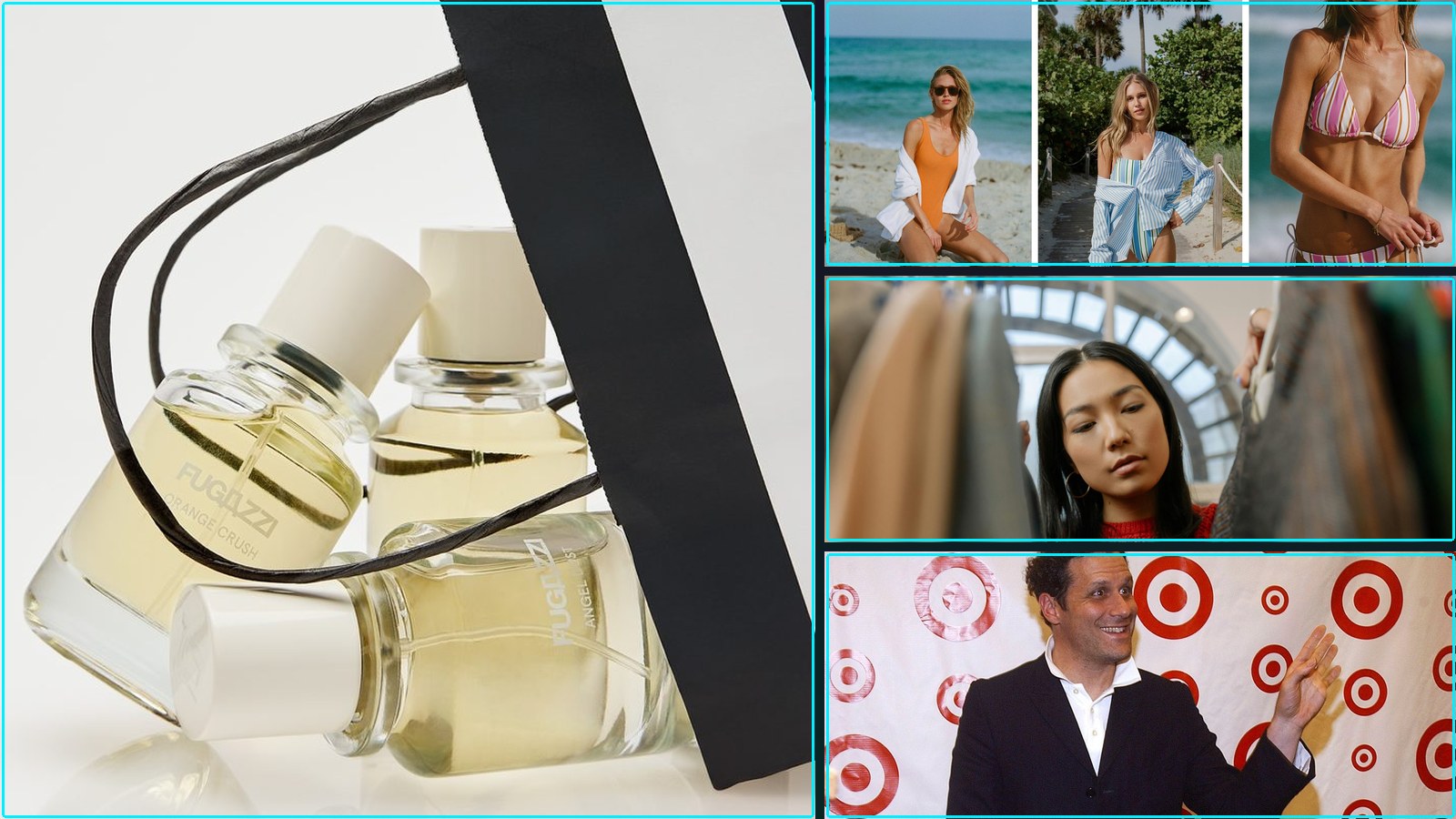
No. 1 in women’s swimwear for 10 years, Target is refining its approach to the category (Glossy.Co)
Summary: Target is leveraging its decade-long dominance in women’s swimwear to execute a broader merchandising strategy, treating the category as a full summer outfitting business. It combines owned brands (Wild Fable, Shade & Shore), influencer collaborations, and exclusive partnerships (Solid & Striped) to drive traffic and attach sales of adjacent products like sandals and sun care. This push comes as the retailer seeks to reassert authority in discretionary categories like apparel, where sales have lagged, and uses proprietary Gen AI trend tools to accelerate decision-making.

Why it matters: For brands and retailers, it demonstrates how a category leader uses portfolio strategy, data-driven trend forecasting, and partnership mechanics to defend market share in a fragmented, social-first competitive landscape.
Context: The swim market fragmented after Victoria’s Secret’s 2016 exit, creating space for DTC and social-first brands; Target’s sustained leadership relies on integrating trend intelligence and collaborations into a full-outfit merchandising model.
"Target is using swimwear to sell more than swimsuits. The retailer is positioning the category as part of a full summer wardrobe that includes bikinis, one-pieces and cover-ups, as well as Havaianas sandals, accessories and sun-care products." — GLOSSY.CO
Commentary: Target’s operational shift from swim as a seasonal basic to a curated outfitting platform pressures specialty DTC brands on reach and adjacency sales, while its use of Trend Brain signals a move toward closed-loop, AI-accelerated design cycles that could compress traditional development timelines. The Solid & Striped partnership illustrates a wholesale calculus where national brick-and-mortar distribution is traded for brand dilution risk, a recurring tension for collaboration-driven growth.
Date: Thu, 21 May 2026 04:04:00 +0000
URL: https://www.glossy.co/fashion/no-1-in-womens-swimwear-for-10-years-target-is-refining-its-approach-to-the-category/
AI Sentiment Score: Negative (50%)
AI Credibility Score: 10.0/10 — High
Scores and text generated by AI analysis of the source article indicated.
Isaac Mizrahi Seen Returning to Target: Sources (Wwd)
Summary: Target CEO Michael Fiddelke is reportedly bringing designer Isaac Mizrahi back to the retailer, according to industry sources. This move aligns with Fiddelke’s stated strategy to revive Target’s ‘style and design savvy’ following a 1.7% sales decline last year. Mizrahi’s original 2002-2009 collaboration was a landmark in democratizing fashion and defining Target’s ‘cheap chic’ identity.

Why it matters: For brand managers, designers, and retail buyers, this signals a strategic pivot back to high-profile, emotive designer partnerships as a lever for growth in a challenging market.
Context: This follows a pattern of legacy brands and retailers reviving past successful collaborations to recapture market momentum, often under new leadership seeking a clear, nostalgic signal.
"Michael Fiddelke stepped up as Target Corp.’s new chief executive officer in February promising to bring back the discounter’s style and design savvy. And it looks like he’s going to do it." — WWD
Commentary: The operational consequence is a likely reallocation of Target’s private-label development budget and merchandising calendar to accommodate a major external brand, potentially squeezing other labels. For WHP Global, this provides a high-volume, mainstream distribution channel to monetize the Isaac Mizrahi IP, validating its 2022 acquisition. The risk is that a re-run collaboration may lack the novelty of the original, requiring a refreshed playbook to resonate with a changed consumer base.
Date: Mon, 18 May 2026 21:42:39 +0000
URL: https://wwd.com/business-news/retail/isaac-mizrahi-target-return-news-1238972177/
AI Sentiment Score: Negative (50%)
AI Credibility Score: 10.0/10 — High
Scores and text generated by AI analysis of the source article indicated.
Sephora Strategies: With its launch at Sephora US, Fugazzi wants to bring luxury fragrance to the masses (Glossy.Co)
Summary: Fugazzi, a niche fragrance brand, has entered over 100 U.S. Sephora doors with a lower-priced Eau de Parfum line, priced $120-$175, to complement its pricier Extrait de Parfum sold in independent retailers. Founder Bram Niessink cites a ‘Supreme-like’ community-driven strategy and leveraged an existing distributor relationship to secure the placement. The brand also created a Sephora-exclusive scent, Cloudh Nine, and will launch a $35 mini size in September, reflecting retail’s demand for accessible entry points.

Why it matters: This move illustrates the operational playbook for niche brands scaling via mass-prestige retail: adjusting concentration and price tiering to meet channel requirements while maintaining exclusivity elsewhere.
Context: Sephora is expanding its fragrance assortment beyond designer mainstays, creating a competitive launchpad for niche brands that can balance broad appeal with indie credibility.
"When describing his fragrance brand Fugazzi, Bram Niessink points to a somewhat unexpected comparison: Supreme, the streetwear brand that defined much of 2010s fashion and made a white box logo T-shirt into." — GLOSSY.CO
Commentary: Fugazzi’s channel-specific product strategy—EDP for Sephora, Extrait for independents—is a direct response to retailer pricing power and consumer segmentation. It pressures traditional prestige brands by undercutting them on price within the same retail environment while using flagship-exclusive releases to preserve scarcity. The $35 mini-size launch signals Sephora’s push to lower the trial barrier, which could force other niche entrants to similarly tier their offerings. This bifurcated model may become standard for brands aiming to capture both mass discovery and connoisseur spending.
Date: Mon, 18 May 2026 04:02:00 +0000
URL: https://www.glossy.co/beauty/sephora-strategies-with-its-launch-at-sephora-us-fugazzi-wants-to-bring-luxury-fragrance-to-the-masses/
AI Sentiment Score: Negative (88%)
AI Credibility Score: 10.0/10 — High
Scores and text generated by AI analysis of the source article indicated.
9 Commons Launches With Indiana Fever Collection (Wwd)
Summary: 9 Commons, a new brand founded by former Gucci executive Maria McClay, has launched its debut collection exclusively for the Indiana Fever WNBA team. The capsule, designed by Parsons-trained Kat Hoelck, features premium materials like long-staple cotton and is priced from $24 for tees to $175 for hoodies. The brand commits to reinvesting 9% of annual net proceeds to expand sports access for under-resourced girls and is actively negotiating rights deals with other professional teams and colleges.

Why it matters: It signals a new, premium-tier vendor entering the women’s sports licensing market, shifting the economics and design expectations for team merchandise.
Context: The women’s sports apparel market is expanding beyond traditional replica jerseys, with brands competing on design quality and brand ethos to capture higher-margin segments.
"It may seem like a big jump from Gucci to the hardwood court, but that’s the path Maria McClay took when she founded 9 Commons last year. The one-time general manager of." — WWD
Commentary: The launch establishes a high-design, high-price-point lane within team merchandise, pressuring incumbents and potentially altering royalty structures for teams. McClay’s Gucci background suggests a deliberate strategy to elevate the category’s perceived value, which could recalibrate sourcing and design budgets across the league’s vendor ecosystem. The 9% reinvestment model creates a new operational benchmark for cause-related marketing in sports apparel, likely influencing future licensing negotiations.
Date: Mon, 18 May 2026 20:21:07 +0000
URL: https://wwd.com/fashion-news/fashion-scoops/9-commons-indiana-fever-maria-mcclay-1238971135/
AI Sentiment Score: Positive (50%)
AI Credibility Score: 10.0/10 — High
Scores and text generated by AI analysis of the source article indicated.
The new rules of retail include buying into retail media networks (Glossy.Co)
Summary: A Glossy/Modern Retail town hall highlighted a fragmented retail landscape where brand executives are navigating contradictory consumer signals—a desire for convenience and online shopping versus a reported preference for in-person experiences among younger demographics. The discussion centered on the obsolescence of traditional retail playbooks, with brand leaders emphasizing the need to suggest commitment to physical retail partners to meet buyer quotas. Key operational themes included the rising strategic importance of retail media networks for on-site advertising and the concentrated power of mass retailers like Walmart and Target, whose proximity dictates national distribution strategies.

Why it matters: For fashion brands managing distribution, this signals a shift in resource allocation towards proving physical retail performance and investing in retailer-controlled advertising platforms to secure shelf space.
Context: This follows a period of mass brick-and-mortar closures and channel consolidation, forcing brands to reassess partnership models and marketing spend within a retailer’s ecosystem.
"The American retail landscape has changed dramatically over the past few years. This includes the closure of thousands of brick-and-mortar drugstores, consolidation within the luxury department store ecosystem, and growth across off-price." — GLOSSY.CO
Commentary: The operational consequence is a dual mandate: brands must now optimize for digital convenience while simultaneously deploying labor and trade spend to satisfy the quarterly metrics of physical retail buyers. The growing clout of retail media networks turns shelf space into a bundled offer of inventory plus required advertising spend, altering brand P&Ls. Success stories, like a DTC hair-care brand scaling via Ulta, demonstrate that route-to-market strategy is now a primary competitive lever, not a secondary consideration.
Date: Mon, 18 May 2026 04:01:00 +0000
URL: https://www.glossy.co/beauty/brand-leaders-share-winning-retail-strategies-at-glossys-new-rules-of-retail-town-hall/
AI Sentiment Score: Neutral (33%)
AI Credibility Score: 10.0/10 — High
Scores and text generated by AI analysis of the source article indicated.
Post ID: 3679d7c6