
Advocacy, Community, and Adult Life Resources
ASAN April Update (Autisticadvocacy)
Summary: The Autistic Self Advocacy Network’s April update details a coordinated political and administrative assault on autistic rights and public health infrastructure under the current HHS leadership. It highlights Secretary Robert F. Kennedy Jr.’s dissemination of misinformation to Congress, the Interagency Autism Coordinating Committee’s push to create a ‘profound autism’ category, and systemic funding threats to Medicaid, IDEA, and SNAP. ASAN is responding with advocacy campaigns, coalition letters, and community resources to counter these narratives and policy shifts.

Why it matters: The operational capture of HHS and key advisory bodies threatens to redirect federal autism policy away from community-defined needs and civil rights, towards segregationist frameworks and service cuts.
Context: This follows a pattern where administrative rulemaking and budget reconciliation are used to enact disability policy changes that would not survive standalone legislative scrutiny.
"ASAN April Newsletter Dear friend, This Autism Acceptance Month has been a challenging one, but our community has continued to fight back against attacks on our rights. Over the last year, many." — AUTISTICADVOCACY
Commentary: The IACC’s move to institutionalize ‘profound autism’ is a bureaucratic maneuver to fracture community solidarity and justify resource allocation away from cross-disability civil rights frameworks. Combined with RFK Jr.’s testimony, it signals a deliberate pivot from public health to a deficit-based, segregated service model. The concrete risk is the re-channeling of federal research and service dollars away from community integration, accessibility, and self-determination.
Date: Thu, 30 Apr 2026 19:30:27 +0000
URL: https://autisticadvocacy.org/2026/04/asan-april-26-update/
AI Sentiment Score: Negative (75%)
AI Credibility Score: 10.0/10 — High
Scores and text generated by AI analysis of the source article indicated.
Reasons You Didn’t Realize You’re Autistic (Autisticadvocacy)
Summary: A foundational piece from the Autistic Self-Advocacy Network outlines systemic and social reasons for late-identified autism, moving beyond individual deficit models. It details how ableist frameworks, racial stereotyping, misattribution of traits, and the exhaustion of masking and burnout collectively obscure diagnosis. The analysis centers on the lived experience of autistic adults, particularly those from BIPOC communities, who have navigated systems not built to recognize them.

Why it matters: This reframes late diagnosis from a personal failure to a systemic one, directly impacting clinical practice, workplace accommodations, and community-building efforts for a significant, underserved adult population.
Context: The neurodiversity movement is shifting diagnostic paradigms from external observation to internal lived experience, challenging decades of research and clinical training built on narrow, often non-representative samples.
"When you’re perceived as being from a model minority, your autistic traits may be validated. When you’re perceived as being from an over-policed minority, your autistic traits may be pathologized, criminalized, or even demonized. When you’re slotted into these or the many racial stereotypes in between, your autistic traits are likely seen through a racial lens first, not a neurological one, leaving you misread, mistreated, exhausted, without support, and worse, without knowing all of who you are." — AUTISTICADVOCACY
Commentary: The explicit linkage of racial bias to neurological misdiagnosis operationalizes a critical failure point in healthcare and education systems. This forces a reevaluation of screening tools and clinician training, which often lack cultural competency. For institutions, the liability is clear: standardized protocols that ignore this intersectionality perpetuate harm and miss a growing demographic seeking identity and support. The market consequence is a rising demand for services tailored to adult, particularly BIPOC, autistic communities, creating pressure on traditional diagnostic and therapeutic providers.
Date: Thu, 30 Apr 2026 15:02:51 +0000
URL: https://autisticadvocacy.org/2026/04/reasons-you-didnt-realize-youre-autistic/
AI Sentiment Score: Negative (75%)
AI Credibility Score: 10.0/10 — High
Scores and text generated by AI analysis of the source article indicated.
Autism Justice Center | Autism Society (Autismsociety)
Summary: The Autism Society of America has launched the Autism Justice Center, a dedicated initiative focused on the intersection of autism and the criminal legal system. Its core strategies include developing resources for legal professionals, legislative advocacy, and training for first responders and correctional staff. A key pilot program, Project Unlock PEACE, aims to provide autism education to correctional healthcare workers and officers, starting in North Carolina in 2025.

Why it matters: This institutionalizes a systemic intervention for a critical failure point—the justice system’s treatment of autistic individuals—moving from awareness to operational training and legal advocacy.
Context: Advocacy has increasingly shifted from general disability rights to targeted, condition-specific legal and procedural reforms, particularly for neurodivergent populations facing disproportionate policing and incarceration risks.
"The Autism Justice Center is developing resources for legal professionals so they may better represent and support Autistic clients. The Autism Justice Center works closely with the Autism Society’s Public Policy team on legislative initiatives, and with our National Programs team on training first responders and other safety initiatives." — AUTISMSOCIETY
Commentary: The Center’s focus on public defenders and correctional staff training indicates a pragmatic, downstream approach to mitigating harm within existing systems, rather than solely upstream prevention. Piloting Project Unlock PEACE in a state correctional system is a concrete test of whether autism-specific training can alter institutional outcomes. Success or failure here could set a precedent for similar interventions in other states and could influence standards of care in custodial settings.
Date: May 18, 2026 12:00 AM ET
URL: https://autismsociety.org/autism-justice-center/
AI Sentiment Score: Negative (66%)
AI Credibility Score: 9.1/10 — High
Scores and text generated by AI analysis of the source article indicated.
Autistic Culture Presents… | Listen on JioSaavn #SaavnOriginals (Jiosaavn)
Summary: The podcast episode ‘Late Diagnosis Club’ features an interview with Sha’mya Jones, a graphic designer diagnosed as autistic in early childhood but not informed until a high school IEP meeting. She describes navigating childhood differences, academic success paired with social isolation, and the eventual impact of learning her diagnosis. The conversation explores masking, burnout in college, and her subsequent path to entrepreneurship focused on neurodivergent and underrepresented clients.
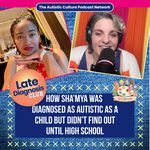
Why it matters: It highlights a critical failure in clinical and educational disclosure protocols, showing how withheld diagnoses can delay self-understanding and compound mental health risks, even when accommodations are technically in place.
Context: This reflects a documented pattern within neurodiversity advocacy where early diagnoses, particularly for girls and children of colour, are often not disclosed to the individual, treating the diagnosis as a management tool for systems rather than a source of identity and agency for the person.
"Sha’mya was diagnosed as Autistic as a toddler, but her diagnosis was not shared with her until she was in high school during an IEP meeting." — JIOSAAVN
Commentary: The episode operationalizes a systemic critique: the IEP apparatus functioned as a data silo, not a support framework. This creates a market failure for adolescent mental health and a latent demand for adult-diagnosis services and coaching, which entrepreneurs like Jones are now serving. The business model shift from generic design to neurodivergent-specific services indicates a maturation of niche markets built on reclaimed identity.
Date: May 22, 2026 12:00 AM ET
URL: https://www.jiosaavn.com/shows/late-diagnosis-club-how-sha%E2%80%99mya-was-diagnosed-as-autistic-as-a-child-but-didn%E2%80%99t-find-out-until-high-school/wxkbbHPE0MI_
AI Sentiment Score: Negative (75%)
AI Credibility Score: 7.0/10 — Medium
Scores and text generated by AI analysis of the source article indicated.
ADHD in the News 2026-05-21 – CHADD (Chadd)
Summary: A CHADD roundup for May 2026 synthesizes multiple research threads on ADHD and neurodevelopmental conditions. Key findings include a new Lancet Psychiatry study providing optimal dosage data for five common ADHD medications, accompanied by a free online clinical tool. Separate research links undiagnosed adult ADHD to high-risk driving post-accident, while another systematic review finds no clear causal link between antidepressant use in pregnancy and autism or ADHD. Clinical commentary calls for more thorough diagnostic assessments beyond symptom checklists, noting the masking effect of external structure.

Why it matters: The dosage tool and driving risk data shift ADHD management from generalized protocols toward precision and public safety imperatives, while the antidepressant findings may influence perinatal psychiatric care.
Context: This arrives amid sustained increases in ADHD diagnosis rates and mental health presentations in pediatric primary care, coupled with ongoing debates over diagnostic rigor and the role of medication versus broader supports.
"In a cross-sectional study of 95 adults hospitalized for traffic-related injuries in Santo Domingo, Dominican Republic, 34.7% of participants screened positive for ADHD despite no prior diagnosis. Those who screened positive were more likely to engage in dangerous driving behaviors, with 66.6% falling into a high-risk driving category, compared with 30.6% of those without ADHD symptoms." — CHADD
Commentary: The driving study implies a significant public health cost to underdiagnosis in adults, potentially reframing ADHD screening in trauma and emergency settings. The dosage tool, if validated and adopted, could reduce the trial-and-error period for medication titration, improving patient outcomes and system efficiency. The antidepressant meta-analysis may partially decouple a persistent clinical anxiety from prescribing decisions, though observational limitations remain.
Date: May 21, 2026 12:00 AM ET
URL: https://chadd.org/weekly-editions/adhd-in-the-news-2026-05-21/
AI Sentiment Score: Negative (77%)
AI Credibility Score: 10.0/10 — High
Scores and text generated by AI analysis of the source article indicated.
National Survey of Autistic Adults Reveals What Shapes Their … (Nextforautism)
Summary: A 2026 national survey of over 400 autistic employees by NEXT for AUTISM shifts the focus of workplace inclusion from formal policy to managerial relationships. It finds that 49% of respondents disclose their diagnosis to a manager versus 44% to HR, and that a manager’s trust is the primary determinant of an employee’s sense of safety and ability to contribute. This positions line managers, not HR departments, as the critical interface for retention and performance.
Why it matters: It redirects corporate inclusion investment from policy drafting to frontline manager capability, with direct consequences for talent retention, productivity metrics, and legal risk.
Context: This follows a decade of increased corporate neurodiversity programming that has often been HR-led and policy-centric, with mixed results on actual workplace experience.
"The data shows that employees are turning to managers, not HR, as their primary point of trust: 49% report disclosing their autism diagnosis to a manager or supervisor, compared to 44% who disclose to HR." — NEXTFORAUTISM
Commentary: The survey operationalizes a known but under-invested truth: inclusion is a relational, not a procedural, outcome. It implies a need to audit and retrain middle management—a costly but necessary shift—and suggests that HR’s role should pivot to equipping managers with concrete tools, not serving as the primary disclosure receptacle. Failure to act here turns a compliance asset into a retention liability.
Date: May 19, 2026 12:00 AM ET
URL: https://nextforautism.org/updates/national-survey-of-autistic-adults-reveals-what-shapes-their-workplace-experience/
AI Sentiment Score: Negative (80%)
AI Credibility Score: 7.8/10 — Medium
Scores and text generated by AI analysis of the source article indicated.
Applied Behavioral Analysis (ABA) Hurts Autistic People (Autisticadvocacy)
Summary: A New York Times investigation reveals systemic issues at a major Applied Behavioral Analysis (ABA) provider chain, including alleged abuse, profit-driven scheduling of up to 40 hours of therapy per week for children, and questionable efficacy. The report coincides with growing scrutiny of Medicaid’s substantial spending on ABA, an industry increasingly consolidated under private equity ownership. The Autistic Self Advocacy Network (ASAN) argues ABA is fundamentally harmful, seeking to suppress autistic traits rather than support well-being, and advocates for reallocating funds to evidence-based alternatives and home- and community-based services.
Why it matters: This investigation crystallizes operational, financial, and ethical critiques of a dominant autism intervention, directly challenging its Medicaid funding model and forcing a policy reckoning over what constitutes effective, ethical support.
Context: ABA has been the default, Medicaid-reimbursed intervention for autism for decades, but its efficacy is contested by a growing body of research and sustained criticism from autistic adults who report trauma. The industry’s shift toward private equity ownership intensifies concerns about profit motives overriding patient welfare.
"They found that when they controlled for whether studies were biased or used poor-quality design, there was no statistical evidence that ABA was effective." — AUTISTICADVOCACY
Commentary: The convergence of investigative journalism, systematic review of evidence, and activist critique creates a potent catalyst for Medicaid policy reform. The financial incentive to maximize billable hours, now amplified by private equity, structurally conflicts with ethical care and educational inclusion. Policymakers face pressure to decouple autism funding from a specific, contested methodology and move toward a portfolio of person-centered, community-integrated supports.
Date: Fri, 29 May 2026 16:35:03 +0000
URL: https://autisticadvocacy.org/2026/05/aba-hurts-autistic-people/
AI Sentiment Score: Negative (55%)
AI Credibility Score: 10.0/10 — High
Scores and text generated by AI analysis of the source article indicated.
Synaptic podcast | The Transmitter (Thetransmitter)
Summary: The Transmitter’s ‘Synaptic’ podcast concludes its second season, having featured interviews with neuroscientists on topics ranging from autism research disparities to synaptic transmission. The season’s episodes highlight both the personal trajectories of researchers and specific scientific challenges, such as the funding gap for adult autism studies and the push to reintegrate basic biology into autism research conferences.
Why it matters: The podcast’s curation reflects the evolving priorities and internal debates within neuroscience, particularly around neurodiversity, research ethics, and the balance between clinical and basic science.
Context: Neuroscience media is increasingly platforming researcher narratives to humanize the field and contextualize scientific disputes, while professional societies like INSAR grapple with their strategic focus.
"An autistic researcher’s paper called attention to a huge disparity in autism funding research between children and adults. It nearly derailed her life." — THETRANSMITTER
Commentary: The selection of episodes signals a deliberate editorial shift toward foregrounding systemic critiques—like the adult autism funding cliff—and the lived experience of neurodivergent scientists. This moves discussion beyond pure mechanism, applying pressure to funding bodies like the NIH and INSAR’s program committees. The call to embed ethicists in labs further indicates a field in operational transition, anticipating scrutiny over neurotechnology and AI convergence.
Date: May 20, 2026 12:00 AM ET
URL: https://www.thetransmitter.org/synaptic/
AI Sentiment Score: Negative (75%)
AI Credibility Score: 10.0/10 — High
Scores and text generated by AI analysis of the source article indicated.
ASAN May Update (Autisticadvocacy)
Summary: The Autistic Self Advocacy Network’s May update details a dual-track operational strategy: direct community support through its Teighlor McGee Mini Grant program and broad-spectrum policy engagement via coalition letters and legal analysis. The organization is mobilizing against a Supreme Court ruling in Louisiana v. Callais that weakens Voting Rights Act protections, warning of increased difficulty in challenging racially discriminatory election maps. Concurrently, it is distributing small grants for grassroots disability projects and educating on workplace accommodations.

Why it matters: ASAN’s activity illustrates how neurodiversity and disability rights organizations are navigating a hostile legal landscape while building community capacity, making their strategic choices a leading indicator for advocacy tactics and resource allocation.
Context: This follows a pattern of disability rights groups increasingly functioning as civil rights organizations, engaging on issues from appropriations to voting rights that extend beyond traditional disability-specific policy.
"The Supreme Court’s decision changes how the Voting Rights Act works. It will be much harder to make election maps that are fair to people of color. It will be easier for states to keep people of color from electing the people they want and harder for people to fight against unfair maps." — AUTISTICADVOCACY
Commentary: ASAN’s explicit linkage of voting rights to disability advocacy signals a maturation of its political analysis, framing democratic participation as a core disability issue. The grant program’s focus on self-advocates of color and the policy letter endorsements—spanning Medicaid access, housing funding, and fiduciary rights—demonstrate an integrated theory of change that connects community material support to systemic legislative defense.
Date: Sun, 31 May 2026 19:30:48 +0000
URL: https://autisticadvocacy.org/2026/05/asan-may-26-update/
AI Sentiment Score: Negative (60%)
AI Credibility Score: 10.0/10 — High
Scores and text generated by AI analysis of the source article indicated.
Autism and adult life – NHS (Nhs.Uk)
Summary: The NHS has published a comprehensive guide for autistic adults, detailing the lifecycle of support needs from education through employment and into later life. It clarifies statutory rights under the Equality Act 2010 for workplace adjustments and outlines available financial benefits and social care pathways. The guide explicitly notes the limitation of Education, Health and Care Plans (EHCPs) at the university level and distinguishes between support for independent living and lifelong care requirements.

Why it matters: This codifies the UK state’s operational framework for adult autism support, setting baseline expectations for service provision, legal rights, and the transition points where systemic gaps are formally acknowledged.
Context: This follows increased scrutiny of adult autism services and the implementation of the Autism Act 2009, representing a centralised attempt to standardise information amid a postcode lottery of local support.
"If you’re autistic you may need support to: – eat healthily and stay active – sleep well – look after your mental health, including managing anxiety or depression – manage other conditions." — NHS.UK
Commentary: The document’s blunt demarcation of the EHCP’s cutoff at university highlights a critical institutional cliff-edge in the transition to adulthood. By itemising support across domains, it inadvertently maps the administrative burden placed on autistic individuals to navigate disparate systems—health, education, DWP, social services—to secure entitlements. The variation noted (‘The support available will depend on where you live.’) remains the operative constraint, rendering this guide a statement of intent rather than a suggest of uniform provision.
Date: May 22, 2026 12:00 AM ET
URL: https://www.nhs.uk/conditions/autism/adult-life/
AI Sentiment Score: Positive (57%)
AI Credibility Score: 9.5/10 — High
Scores and text generated by AI analysis of the source article indicated.
Navigating neurodiversity: A spotlight on ADHD, autism … (Cbhs.Au)
Summary: A CBHS health fund article details the systemic barriers to accessing diagnosis and support for ADHD and autism in Australia, citing public wait times of up to two years and private costs exceeding $1,500. It notes the NDIS generally excludes ADHD-only diagnoses and outlines upcoming policy shifts, including the National Autism Strategy and the Thriving Kids program from 2028. The piece frames neurodiversity not as a condition to ‘fix’ but as a reality where timely, evidence-based intervention is critical for health and quality of life.

Why it matters: The gap between clinical understanding and systemic capacity creates tangible risks for individuals and families, while emerging policy frameworks signal a contested future for support allocation.
Context: This reflects a broader, global tension between rising neurodiversity awareness and strained public health infrastructures, where private coverage and community organizations increasingly act as de facto safety nets.
"Neurodivergent conditions include autism spectrum disorder (ASD), attention deficit hyperactivity disorder (ADHD), dyslexia and others. Autism and ADHD are two of the most commonly diagnosed neurodivergent conditions in Australia and can occur." — CBHS.AU
Commentary: The operational reality—a two-tiered system buckling under demand—undercuts policy rhetoric about early intervention. The NDIS’s exclusion of standalone ADHD formalizes a clinical hierarchy that could push more cases into private and primary care, testing the GP training initiative’s capacity. The 2028 Thriving Kids program, by redirecting low-to-moderate needs to mainstream providers, attempts to manage NDIS cost growth but risks creating a new access cliffface.
Date: May 19, 2026 12:00 AM ET
URL: https://www.cbhs.com.au/mind-and-body/blog/navigating-neurodiversity--a-spotlight-on-adhd--autism-and-the-support-that-is-available
AI Sentiment Score: Negative (57%)
AI Credibility Score: 7.0/10 — Medium
Scores and text generated by AI analysis of the source article indicated.
Autism Research Institute (Autism)
Summary: The Autism Research Institute (ARI) has announced the allocation of nearly $600,000 in grant funding for early-stage scientific research aimed at benefiting autistic individuals and their families. The announcement is framed by an editorial from Executive Director Stephen M. Edelson, PhD, emphasizing an ‘Imperative to Follow the Science,’ published in the institute’s journal, Autism Research Review International.
Why it matters: The allocation and philosophical framing of this funding signals ARI’s current research priorities and operational stance, which directly influences the near-term pipeline of autism studies and the organizations that will conduct them.
Context: ARI is a long-established player in autism research advocacy and funding. Its grant announcements and editorial positions are closely monitored as indicators of shifting emphases within the field, especially concerning the balance between biological, behavioral, and neurodiversity-aligned research.
"ARI recently awarded nearly $600,000 to support early-stage research and advance new discoveries for autistic individuals and their families." — AUTISM
Commentary: The coupling of a significant funding announcement with an editorial titled ‘Imperative to Follow the Science’ suggests ARI is reinforcing a specific, likely biomedical or intervention-focused, research paradigm. This move will shape which hypotheses receive initial validation, potentially sidelining community-prioritized or purely phenomenological studies in favor of projects aligning with ARI’s established scientific model.
Date: May 20, 2026 12:00 AM ET
URL: https://autism.org
AI Sentiment Score: Negative (66%)
AI Credibility Score: 9.0/10 — High
Scores and text generated by AI analysis of the source article indicated.
CPSD Co-Chairs’ Letter Opposing Loosened Limits on 14(c) (Autisticadvocacy)
Summary: The Collaboration to Promote Self-Determination (CPSD), a coalition of disability advocacy organizations, has formally opposed H.R. 8736, the ‘Restoration of Employment Choice for Adults with Disabilities Act.’ The CPSD argues the bill would weaken Section 511 safeguards and expand access to subminimum wage certificates under Section 14(c), a practice they label discriminatory and antiquated. They cite U.S. Commission on Civil Rights and Washington Post findings of wage violations and a lack of professional development in sheltered workshops, while pointing to data from states that ended 14(c) showing increased competitive employment for people with cognitive disabilities.

Why it matters: This signals a critical legislative battle over the future of subminimum wage and competitive integrated employment for people with disabilities, with direct implications for funding, service models, and civil rights enforcement.
Context: The 14(c) certificate program, allowing payment below federal minimum wage, has faced sustained pressure from disability rights advocates pushing for its phase-out via bills like the Transformation to Competitive Integrated Employment Act (TCIEA).
"This letter is available as a PDF here. May 20th, 2026 House Education and the Workforce Committee 2176 Rayburn House Office Building Washington, DC 20515-6100 To Chair Walberg and Ranking Member Scott,." — AUTISTICADVOCACY
Commentary: The CPSD’s opposition frames H.R. 8736 not as expanding choice but as actively regressing from proven outcomes. Their strategic pivot to cite post-14(c) employment data provides a concrete counter-narrative to ‘choice’ rhetoric, directly challenging the economic justification for sheltered workshops. This positions the debate beyond moral argument into a cost-benefit analysis of policy efficacy, raising the stakes for legislators weighing competing bills.
Date: Wed, 20 May 2026 21:47:57 +0000
URL: https://autisticadvocacy.org/2026/05/cpsd-co-chairs-letter-opposing-loosened-limits-on-14c/
AI Sentiment Score: Negative (75%)
AI Credibility Score: 10.0/10 — High
Scores and text generated by AI analysis of the source article indicated.
Diversity and Equity in Autism Research (Frontiersin)
Summary: Frontiers in Psychiatry is launching a dedicated research topic on diversity and equity in autism research, calling for submissions that address systemic disparities. The call explicitly identifies racial/ethnic minorities, females, and low-resourced children as populations experiencing late diagnosis and unmet needs. It outlines a framework for inclusive research, emphasizing cross-cultural studies, community advisory boards, and intersectional analysis.

Why it matters: This formalizes a critical shift in research priorities from a purely clinical focus to one that addresses systemic inequities in diagnosis and support, directly impacting funding, publication trends, and ultimately, service delivery.
Context: Autism research has historically suffered from homogeneity in study populations, leading to diagnostic tools and interventions that fail marginalized groups. This call represents a growing institutional acknowledgment of that gap.
"Evidence shows that racial/ ethnic minorities, females, and low-resourced autistic children often receive late diagnosis and have substantial unmet needs. To address these disparities in diagnosis, intervention, and/or support service it is necessary for researchers to include diverse populations and address issues of equity in their studies." — FRONTIERSIN
Commentary: This moves DEI from a peripheral concern to a central methodological requirement. The emphasis on ‘culturally-informed interventions’ and ‘community advisory boards’ signals a move toward participatory research, which could challenge traditional academic hierarchies. Funders and tenure committees will now have a clear publication venue to point to, potentially redirecting career incentives. The risk is performative inclusion without substantive change in research power structures.
Date: May 19, 2026 12:00 AM ET
URL: https://www.frontiersin.org/research-topics/71115/diversity-and-equity-in-autism-researchundefined
AI Sentiment Score: Negative (81%)
AI Credibility Score: 10.0/10 — High
Scores and text generated by AI analysis of the source article indicated.
Transition to Adulthood in Autism: Challenges and Opportunities in … (Autism)
Summary: A 2026 study of 64 interviews with autistic youth, parents, and providers maps the systemic failures in the transition to adulthood. Key findings identify a fragmented ecosystem where adult services are distinct from, and insufficient compared to, youth supports, with access hampered by laborious processes and a lack of navigational aid. The research proposes principles like intentional access, integrated multisector engagement, and lifespan care to refocus the system on self-determination and quality of life.

Why it matters: This diagnostic of systemic failure provides a concrete blueprint for policymakers, service providers, and funders to restructure adult support systems, moving from crisis management to proactive, integrated care.
Context: The transition to adulthood represents a well-documented ‘services cliff’ for autistic individuals, where structured educational supports end and disparate, under-resourced adult systems begin.
"Specifically, he notes that support needs are not well understood across care and that the process of transitioning to adulthood requires more community/system-level support and increased focus on the individual (7:29). ." — AUTISM
Commentary: The study operationalizes a known crisis, shifting the framing from individual deficit to systemic design failure. The call for ‘integrated navigational services’ and ‘timely mobilization of evidence to action’ targets the coordination gap between health, social services, and community sectors. For venture and philanthropy, this signals investable models in navigation platforms and cross-sector integration. The emphasis on ‘QoL as the pinnacle’ reframes success metrics away from mere service provision toward tangible outcomes in autonomy and belonging.
Date: May 20, 2026 12:00 AM ET
URL: https://autism.org/webinar/examining-the-transition-to-adulthood-in-autism-challenges-and-opportunities-in-the-aim-of-thriving/
AI Sentiment Score: Negative (70%)
AI Credibility Score: 7.8/10 — Medium
Scores and text generated by AI analysis of the source article indicated.
Remote and Online ADHD Research Studies a Patient Can … (Adhdfocusforward.Substack)
Summary: The ADHD Research Consortium (ADDRC) has published a curated list of remote and online ADHD research studies for patient participation, including a multi-site study examining medication effects in youth with autism. The list directs patients to primary registries like ClinicalTrials.gov and CHADD’s vetted directory, emphasizing these as faster-updating sources than static compilations. This represents a systematized effort to bridge the recruitment gap between researchers and the neurodiverse community.
Why it matters: It provides a trusted, actionable pathway for a historically underserved population to directly influence the research that defines their care, potentially accelerating and diversifying clinical evidence.
Context: Patient recruitment, especially for comorbid conditions like AuDHD, remains a critical bottleneck in neurodiversity research; decentralized, registry-based models are becoming the standard to improve access and trial diversity.
"1. ClinicalTrials.gov — search “ADHD,” filter by Recruiting and your state. The single most comprehensive database." — ADHDFOCUSFORWARD.SUBSTACK
Commentary: The explicit endorsement of ClinicalTrials.gov as the primary source signals a maturation of patient advocacy toward infrastructure literacy, not just curation. This shifts the operational burden from intermediaries to empowered individuals, which could increase participant volume but also requires patients to navigate complex federal databases—a trade-off between scalability and accessibility. For research institutions, it underscores that their recruitment strategies must now compete directly in an open, searchable marketplace.
Date: May 22, 2026 12:00 AM ET
URL: https://adhdfocusforward.substack.com/p/remote-and-online-adhd-research-studies
AI Sentiment Score: Negative (66%)
AI Credibility Score: 9.4/10 — High
Scores and text generated by AI analysis of the source article indicated.
We need to stop arguing about mental health and neurodiversity – and start understanding it — Tellmi (Tellmi.Help)
Summary: The UK’s Independent Review into Mental Health Conditions, ADHD and Autism, chaired by Professor Peter Fonagy, has published an interim report that reframes the crisis in service demand. It disentangles rising distress, particularly among youth, from systemic drivers like diagnostic gatekeeping and fragmented care pathways. The report finds evidence for a real increase in impairing distress while noting that ADHD and autism diagnoses have surged despite stable underlying prevalence, indicating a shift in recognition and help-seeking behavior tied to how support is allocated.

Why it matters: This shifts the policy debate from arguing over prevalence to analyzing systemic design, with direct implications for NHS resource allocation, educational support frameworks, and workplace accommodations.
Context: This interim report represents a formal, evidence-based intervention into a highly polarized public and professional debate, aiming to reset terms ahead of final recommendations that could reshape service delivery and funding models.
"We need to stop arguing about mental health and neurodiversity – and start understanding it The Department of Health and Social Care commissioned an Independent Review into Mental Health Conditions, ADHD and." — TELLMI.HELP
Commentary: The review’s core move is to treat diagnosis as a system output rather than a pure measure of need, exposing how resource-rationing mechanisms create their own demand. This frames the operational challenge as one of system architecture—tying support to labels amplifies diagnostic queues—which could pressure the DHSC and Integrated Care Systems to decouple early intervention from formal assessment. For workplaces and schools, it signals a move toward need-based rather than diagnosis-dependent accommodations, potentially reducing administrative burden but increasing complexity in defining eligibility.
Date: 1 week ago
URL: https://www.tellmi.help/news/mental-health-and-neurodiversity-review
AI Sentiment Score: Negative (66%)
AI Credibility Score: 9.5/10 — High
Scores and text generated by AI analysis of the source article indicated.
Public Policy | Autism Society (Autismsociety)
Summary: The Autism Society has published a comprehensive public policy resource outlining its federal advocacy agenda across healthcare, home and community-based services (HCBS), income support, education, employment, and civil rights. The document details specific legislative goals for the 119th Congress, active bills, and key laws like the ACA, IDEA, and the DD Act, while emphasizing coalition work with major disability organizations. It functions as a tactical guide for affiliates and allies, mapping the current policy landscape and pinpointing where advocacy pressure is intended.

Why it matters: This consolidates the leading grassroots autism organization’s legislative strategy, revealing its operational priorities and coalitional leverage points for the coming congressional cycle.
Context: Disability policy advocacy has shifted toward defending existing entitlements (Medicaid, ACA) while pushing for expansion in HCBS funding and competitive integrated employment, against a backdrop of perennial underfunding for mandates like IDEA.
"Resources Public Policy Connecting to Change Making a Difference Together Everyone has the right to live fully and to understand laws that affect them. The Autism Society’s Public Policy Committee and Board." — AUTISMSOCIETY
Commentary: The resource’s structure reveals a defensive posture in healthcare—centered on preserving ACA provisions and Medicaid—contrasted with an offensive push in HCBS and employment via bills like the HCBS Access Act and Transformation to Competitive Employment Act. The extensive bill tracking indicates a move beyond awareness-raising to direct legislative engineering, with state-level toolkits showing a federated strategy to replicate federal models locally.
Date: May 18, 2026 12:00 AM ET
URL: https://autismsociety.org/resources/public-policy/
AI Sentiment Score: Neutral (50%)
AI Credibility Score: 7.0/10 — Medium
Scores and text generated by AI analysis of the source article indicated.
Building systems that help autistic children thrive – Dal News – Dalhousie University (Dal.Ca)
Summary: Dr. Giacomo Vivanti has been appointed as the Joan and Jack Craig Chair in Autism Research at Dalhousie University, a position endowed by Autism Nova Scotia founders Joan and Jack Craig. His research focuses on bridging the gap between scientific advances in early autism identification and the systemic failures families face, such as late diagnosis and fragmented services. He advocates for embedding individualized, early intervention in everyday settings like preschools and centering families as experts. The appointment signals an institutional effort to use Nova Scotia’s evolving service systems as a testbed for globally scalable, evidence-based models.

Why it matters: This represents a concrete institutional move to operationalize neurodiversity research into public systems, testing whether early, family-centered intervention embedded in community settings can become a replicable policy model.
Context: The endowed chair, established in 2001, provides stable funding for long-term systems research, contrasting with typical grant cycles. Nova Scotia’s Provincial Preschool Autism Services is the immediate real-world environment for this work.
"“We are at a moment where the science is very strong, the needs are clear, and the systems are actively evolving,” he says, pointing to Nova Scotia’s Provincial Preschool Autism Services as a real-world transformation already underway." — DAL.CA
Commentary: Vivanti’s appointment formalizes a shift from lab-based discovery to implementation science within public systems. The explicit goal of making Nova Scotia a global model pressures provincial agencies to align with research outcomes, creating a natural experiment in policy-research integration. Success hinges on whether the ‘local experience’ can export protocols that bypass traditional clinical gatekeeping and reduce socioeconomic disparities in access—a direct challenge to entrenched healthcare and educational bureaucracies.
Date: 6 days ago
URL: https://dal.ca/news/2026/05/15/autism-research-dalhousie.html
AI Sentiment Score: Negative (77%)
AI Credibility Score: 7.8/10 — Medium
Scores and text generated by AI analysis of the source article indicated.
Study Details | NCT07597707 | ClinicalTrials.gov – Clinical Trials (Clinicaltrials.Gov)
Summary: The University of Calgary has registered a new observational study, ADHD-Her, focused on compiling health and well-being indicators for girls and women with ADHD across the lifespan. The cross-sectional online protocol explicitly frames its investigation around health, equity, and resilience. The study’s registration on ClinicalTrials.gov, with a last update in May 2026, signals a formal, longitudinal research commitment to a historically understudied demographic.

Why it matters: It represents a targeted, institutional effort to address the documented research gap in female ADHD presentation, outcomes, and systemic barriers, with potential to reshape clinical frameworks and support systems.
Context: ADHD in women and girls is often underdiagnosed or misdiagnosed due to differing symptom presentation and societal bias, leading to a significant evidence deficit regarding long-term health trajectories and effective interventions.
"The ADHD-Her: Health, Equity and Resilience Study is an observational cross-sectional online study aiming to compile multiple indicators of health and well-being in girls and women with ADHD." — CLINICALTRIALS.GOV
Commentary: The study’s design as an observational, cross-sectional online protocol prioritizes breadth and accessibility over longitudinal causality, a pragmatic first step for mapping the terrain. Its explicit naming of ‘Equity’ and ‘Resilience’ signals a shift from a purely deficit-focused model to one incorporating systemic barriers and adaptive strengths, which could influence future funding priorities and patient-reported outcome measures. The Canadian academic lead suggests this research axis is gaining formal traction outside traditional U.S. hubs.
Date: May 19, 2026 12:00 AM ET
URL: https://clinicaltrials.gov/study/NCT07597707
AI Sentiment Score: Negative (60%)
AI Credibility Score: 10.0/10 — High
Scores and text generated by AI analysis of the source article indicated.
Autistic adults’ experiences of accessing and receiving mental … (Journals.Plos)
Summary: A PLOS Mental Health study of autistic adults in the UK finds systemic failures in mental healthcare access and delivery, with participants reporting being misunderstood, dismissed, and subjected to harmful, non-accommodating practices. Key priorities for improvement include mandatory autism training for all staff, proactive communication adjustments, and the creation of autism-specific services or pathways.
Why it matters: It provides direct evidence for systemic reform, moving beyond awareness to actionable service design and clinician training mandates.
Context: This adds to a growing body of qualitative research documenting the ‘treatment gap’ and iatrogenic harm autistic adults face in general mental health systems, countering narratives that focus solely on individual coping.
"Citation: Taylor F, Ahmed N, Pemovska T, Dar F, Lloyd-Evans B, Johnson S (2026) Autistic adults’ experiences of accessing and receiving mental health care and their priorities for improvements: A qualitative." — JOURNALS.PLOS
Commentary: The findings shift the policy onus from patient adaptation to system redesign, implying liability for services that fail to implement ‘reasonable adjustments’ under equality law. For service providers and insurers, this creates a clear checklist for compliance and quality metrics, while for the autistic community, it validates advocacy for separated, specialist care models over forced integration into unfit mainstream systems.
Date: May 19, 2026 12:00 AM ET
URL: https://journals.plos.org/mentalhealth/article?id=10.1371%2Fjournal.pmen.0000581
AI Sentiment Score: Negative (75%)
AI Credibility Score: 10.0/10 — High
Scores and text generated by AI analysis of the source article indicated.
Autism and the Accountability Gap (Autism.Uk)
Summary: A 2026 analysis of UK case law finds that the Equality Act 2010’s protections for autistic individuals are systematically under-enforced, creating an ‘accountability gap’ where workplace discrimination persists despite legal frameworks. The study identifies failures in application and enforcement mechanisms, suggesting the law’s intent is not translating into practical outcomes for neurodivergent employees.
Why it matters: This exposes a systemic failure in corporate governance and legal compliance, directly impacting workplace equity, talent retention, and the operational reality of neurodiversity inclusion policies.
Context: This follows a decade of increased corporate neurodiversity rhetoric and coincides with growing scrutiny of ESG and DEI accountability, highlighting the gap between policy pronouncements and legal remedy.
"The Equality Act 2010 requires employers to promote equality and prevent discrimination in the workplace, but enforcement and application are currently insufficient due to a lack of accountability." — AUTISM.UK
Commentary: The finding shifts the discourse from awareness to enforcement, implicating HR systems, tribunal processes, and corporate legal strategies. It suggests future pressure points will be class-action suits and regulatory mandates, not voluntary initiatives, forcing a recalibration of risk for employers who treat inclusion as purely reputational.
Date: May 18, 2026 12:00 AM ET
URL: https://www.autism.org.uk/learn/knowledge-hub/professional-practice/autism-and-the-accountability-gap
AI Sentiment Score: Negative (75%)
AI Credibility Score: 10.0/10 — High
Scores and text generated by AI analysis of the source article indicated.
Research Updates: Microbiome and Autism – 2026 (Youtube)
Summary: There’s about 500 ASD associated microbes that were found um differentially in children with ASD and {ts:950} about 169 that were more commonly found in their counterparts. … {ts:1411} analysis of shotgun metagenomics, we found that there were beneficial bacteria also increasing very similar to
Why it matters: Focus on the directionality of findings: identifying beneficial increases, not just differential presence.
Context: The shift from broad association counts (500) to specific, actionable patterns (beneficial increases) suggests methodological refinement.
"There’s about 500 ASD associated microbes that were found um differentially in children with ASD and {ts:950} about 169 that were more commonly found in their counterparts. … {ts:1411} analysis of shotgun." — YOUTUBE
Commentary: The signal is still worth tracking, but the current extraction path did not yield enough body text for a fuller analytical read. The immediate implication is operational rather than speculative: watch how this changes budgets, workflows, or risk assumptions over the next cycle.
Date: May 20, 2026 12:00 AM ET
URL: https://www.youtube.com/watch?v=f3ppWU4sNGc
AI Sentiment Score: Positive (66%)
AI Credibility Score: 10.0/10 — High
Scores and text generated by AI analysis of the source article indicated.
ADHD Isn’t a Lack of Focus. It’s 13 Years of Stolen Life. (Youtube)
Summary: {ts:381} A study published in Psychiatric Times, October 2025, confirmed that women are diagnosed with ADHD on average 5 years {ts:389} later than men, despite symptoms appearing at the same age. Diagnostic lag in women suggests systemic underrecognition; review diagnostic criteria for gender bias.
Why it matters: Diagnostic lag in women suggests systemic underrecognition; review diagnostic criteria for gender bias.
Context: Five-year diagnostic delay in women vs. men, despite symptom onset parity, signals persistent clinical blind spots.
"{ts:381} A study published in Psychiatric Times, October 2025, confirmed that women are diagnosed with ADHD on average 5 years {ts:389} later than men, despite symptoms appearing at the same age." — YOUTUBE
Commentary: The signal is still worth tracking, but the current extraction path did not yield enough body text for a fuller analytical read. The immediate implication is operational rather than speculative: watch how this changes budgets, workflows, or risk assumptions over the next cycle.
Date: May 20, 2026 12:00 AM ET
URL: https://www.youtube.com/watch?v=BKyx14iW5io
AI Sentiment Score: Negative (50%)
AI Credibility Score: 10.0/10 — High
Scores and text generated by AI analysis of the source article indicated.
Microbiome biomarkers in autism spectrum disorder – PubMed (Pubmed.Ncbi.Nlm.Nih.Gov)
Summary: A 2026 review in Cell Reports Medicine synthesizes the progression of microbiome biomarker research for autism spectrum disorder (ASD). It traces the field’s evolution from correlational 16S rRNA studies to more functionally integrated shotgun metagenomics and multi-omics approaches. The authors argue these microbial signatures hold translational potential for early diagnosis, risk prediction, and personalized interventions, while acknowledging the need for prospective validation and specificity testing against comorbidities.

Why it matters: It signals a maturation point for a long-hypothesized biological pathway in ASD, moving from mechanistic speculation toward concrete, if still preliminary, clinical applications.
Context: The search for objective biomarkers in ASD has been a persistent challenge, with the gut-brain axis offering a promising but complex target; this review arrives as the technical capacity for functional genomic analysis catches up to the hypothesis.
"Although clinical causal evidence remains indirect, these microbial signatures show potential for early diagnosis, presymptomatic risk prediction, and tailored therapies." — PUBMED.NCBI.NLM.NIH.GOV
Commentary: The framing is strategically cautious, emphasizing ‘potential’ and ‘indirect’ causality to manage expectations while staking a claim for clinical relevance. The explicit call for prospective validation in diverse cohorts is a direct critique of prior research limitations. If validated, this pathway could shift diagnostic paradigms and create new markets for prebiotic, probiotic, or dietary interventions, though it risks oversimplifying a heterogeneous condition if commercialized prematurely.
Date: May 19, 2026 12:00 AM ET
URL: https://pubmed.ncbi.nlm.nih.gov/42049031/
AI Sentiment Score: Negative (66%)
AI Credibility Score: 10.0/10 — High
Scores and text generated by AI analysis of the source article indicated.
Post ID: bf3ea3f9