Research, Diagnosis, and Understanding AuDHD
Survey finds 25% of adults suspect they have undiagnosed ADHD (Sciencedaily)
Summary: A national survey commissioned by Ohio State University Wexner Medical Center finds 25% of U.S. adults suspect they have undiagnosed ADHD, a figure far exceeding the estimated 4.4% prevalence in the 18-44 age group. Only 13% of those with suspicions have consulted a doctor, raising expert concerns about self-diagnosis driven by social media and the risks of incorrect treatment for overlapping conditions like anxiety or depression.

Why it matters: This reveals a significant and growing gap between public perception and clinical reality for adult ADHD, creating pressure on diagnostic systems and risks for mismanaged mental health.
Context: This follows a multi-year trend of increased ADHD awareness via social media, particularly TikTok, which has destigmatized the condition but also flattened diagnostic nuance, leading to a surge in adult self-referral.
"A new national survey of 1,000 American adults commissioned by The Ohio State University Wexner Medical Center and College of Medicine finds that 25% of adults now suspect they may have undiagnosed ADHD. But what worries mental health experts is that only 13% of survey respondents have shared their suspicions with their doctor." — SCIENCEDAILY
Commentary: The 12-point gap between suspicion and professional consultation represents a systemic strain point. It signals a public health communication failure where awareness campaigns have succeeded but the clinical pathway has not scaled, potentially flooding primary care with unvetted referrals. This could force payers and providers to develop new triage protocols for adult neurodevelopmental assessments, while creating a market for unregulated digital diagnostics and coaching services that operate in the consultation void.
Date: May 24, 2026 12:00 AM ET
URL: https://www.sciencedaily.com/releases/2024/10/241014210502.htm
AI Sentiment Score: Negative (57%)
AI Credibility Score: 10.0/10 — High
Scores and text generated by AI analysis of the source article indicated.
AuDHD Is Not Two Conditions. It Is One. Nicola Knobel (Nicolaknobel)
Summary: A 2026 article by Nicola Knobel synthesizes peer-reviewed research to argue that the co-occurrence of autism and ADHD (AuDHD) constitutes a distinct clinical entity, not an additive combination. Neuroimaging and clinical phenotyping data demonstrate a unique neurological profile and intermediate symptom presentation. The absence of a formal diagnostic category leads to high rates of misdiagnosis and inappropriate treatment, while current workplace accommodations fail to address the specific ‘oscillatory’ regulatory needs of this population.

Why it matters: Formal recognition would reshape clinical pathways, treatment protocols, and workplace accommodations for a large, currently underserved population, while forcing a structural update to diagnostic manuals and research funding.
Context: The DSM-5 (2013) removed a prohibition on dual diagnosis, but clinical and research infrastructure still lags, treating the presentation as two separate conditions rather than one integrated syndrome.
"AuDHD Is Not Two Conditions. It Is One. The Research Case for Recognising the Co-occurring Presentation of Autism and ADHD as a Distinct Clinical Entity If you have been diagnosed with both." — NICOLAKNOBEL
Commentary: The push for a new diagnostic category like ‘Oscillatory Dysregulation Syndrome’ is a direct challenge to psychiatric taxonomy’s inertia. For employers, this signals that current neurodiversity frameworks, which often silo conditions, will soon be obsolete, requiring integrated accommodation strategies. The misdiagnosis data, particularly linking AuDHD to BPD in women, underscores a systemic failure with tangible liability for healthcare providers and workplaces that inherit its consequences.
Date: May 22, 2026 12:00 AM ET
URL: https://nicolaknobel.com/audhd-is-not-two-conditions-it-is-one/
AI Sentiment Score: Negative (80%)
AI Credibility Score: 9.4/10 — High
Scores and text generated by AI analysis of the source article indicated.
Diagnosed with ADHD at 67: What comes next (Addrc)
Summary: A clinical review from the Adult ADHD Resource Center (Addrc) outlines the evidence base and practical framework for managing ADHD diagnosed in later adulthood. It confirms a persistent prevalence of roughly 2.2% in older adults, clarifies the differential diagnosis from mild cognitive impairment, and details a treatment protocol combining cautious medication management with behavioral and environmental adaptations tailored to an older patient’s life stage.

Why it matters: This codifies a clinical and support pathway for a growing, historically overlooked patient cohort, with direct implications for geriatric psychiatry, primary care, and the adult ADHD coaching industry.
Context: Late-life ADHD diagnosis is rising as awareness increases, creating demand for age-specific protocols that move beyond frameworks designed for children or younger working adults.
"Reviewed: May 15, 2026 Published: May 22, 2026 … – ADHD does not disappear with age. A systematic review and meta-analysis estimated a pooled prevalence of roughly 2.2% in older adults based." — ADDRC
Commentary: The 2.2% prevalence figure, while seemingly low, represents a significant undiagnosed population whose symptoms have been misattributed to aging or other conditions. The emphasis on ‘what you actually want from the next decades’ shifts the clinical goal from productivity optimization to quality-of-life adaptation, requiring a different toolkit from coaches and therapists. This formalizes a sub-specialty, creating market opportunity for services targeting this demographic while pressuring insurers to cover age-appropriate ADHD coaching.
Date: May 22, 2026 12:00 AM ET
URL: https://www.addrc.org/diagnosed-with-adhd-at-67-what-comes-next/
AI Sentiment Score: Positive (66%)
AI Credibility Score: 10.0/10 — High
Scores and text generated by AI analysis of the source article indicated.
ADHD Medication Risks And Realities Revealed In Study (Evrimagaci)
Summary: A 2026 Swedish cohort study in BMJ Mental Health finds adults with comorbid ADHD and substance use disorder (SUD) are nearly twice as likely to discontinue ADHD medication within a year compared to those with ADHD alone. The discontinuation risk is highest for those with stimulant abuse history or criminal justice involvement. Counterintuitively, higher prescribed doses correlate with better adherence, and effective treatment is linked to reduced criminality and substance misuse.
Why it matters: This challenges clinical caution that may be inadvertently harming a high-risk population, forcing a recalibration of treatment protocols and risk-benefit frameworks in dual-diagnosis care.
Context: Research consistently shows ADHD treatment reduces adverse outcomes, yet stigma and fear of diversion often lead to restrictive prescribing, especially for patients with SUD histories.
"The study found that adults with both ADHD and SUD are nearly twice as likely to stop their medication within a year compared to those with ADHD alone." — EVRIMAGACI
Commentary: The data indicts a defensive, low-dose prescribing model as ineffective for adherence, suggesting systems are optimizing for liability reduction rather than patient outcomes. For correctional and public health systems, the implication is clear: untreated ADHD in this cohort is a driver of recidivism and harm, making medication continuity a tangible social determinant of health.
Date: May 21, 2026 12:00 AM ET
URL: https://evrimagaci.org/gpt/adhd-medication-risks-and-realities-revealed-in-study-540060
AI Sentiment Score: Negative (70%)
AI Credibility Score: 9.6/10 — High
Scores and text generated by AI analysis of the source article indicated.
Framing the Landscape: Autism in Adulthood & Mental Health Needs (Youtube)
Summary: A clinical presentation frames the systemic failure to support autistic adults, highlighting a diagnostic and care infrastructure designed for children that collapses at age 18. It details how communication mismatches and high-pressure clinical environments exacerbate misdiagnosis and masking, leaving needs unmet. The core argument is that creating predictability through environmental and linguistic adjustments is a prerequisite for effective, affirming care.

Why it matters: This directly challenges the operational and financial models of mainstream healthcare and therapeutic practices, requiring a re-evaluation of productivity metrics and clinician training to serve a growing, underserved adult population.
Context: The neurodiversity-affirming care movement is gaining clinical traction, but implementation lags due to entrenched systems and reimbursement structures that disincentivize the necessary time and adaptation.
"This presentation explored how autism presents in adulthood and examines the persistent barriers autistic adults face in accessing effective, affirming mental health care. Attendees gained a deeper understanding of the clinical and." — YOUTUBE
Commentary: The explicit naming of the age-18 cliff shifts the problem from individual clinician competency to institutional design failure. This creates liability for health systems and payers ignoring the continuum of care. The emphasis on ‘productivity numbers’ versus ‘slowing down’ pits business operations against clinical efficacy, a tension that could force contract renegotiations and new service codes. For investors, this signals a market gap for adult-focused diagnostic tools, supported living services, and clinician training platforms that bypass the pediatric-centric public system.
Date: May 18, 2026 12:00 AM ET
URL: https://www.youtube.com/watch?v=1VQeKIwsmmM
AI Sentiment Score: Negative (83%)
AI Credibility Score: 10.0/10 — High
Scores and text generated by AI analysis of the source article indicated.
Adults with ADHD and autism get answers via AuDHD testing | The Jerusalem Post (Jpost)
Summary: The Jerusalem Post profiles the Sachs Center’s virtual clinical testing service for adults seeking diagnosis of AuDHD—the co-occurrence of autism and ADHD. The article emphasizes that symptom masking between the two conditions complicates identification, necessitating structured professional evaluation beyond online screenings. The service provides a full diagnostic review via licensed psychologists, aiming to deliver clarity and enable strategic life adjustments.

Why it matters: It signals a maturation of the neurodiversity diagnostic market, moving from generic online tools to specialized, clinical-grade virtual assessments that address complex co-occurring conditions, with direct implications for adult access, workplace accommodations, and support systems.
Context: Adult diagnosis of autism and ADHD has surged, but clinical pathways for co-occurring presentations (AuDHD) have lagged, often leaving high-masking individuals, particularly women, underserved by fragmented or siloed assessments.
"Because hyperactive and autistic symptoms may cleverly conceal one another, this duality greatly complicates diagnosis, making the truth impossible to determine without professional clinical examination." — JPOST
Commentary: The Sachs Center model represents a commercial response to a clinical gap: it packages integrated AuDHD assessment as a telehealth product, implicitly challenging public health systems’ slower adaptation. This shifts the market toward private, precision diagnostics, potentially creating a two-tier access landscape while forcing employers and insurers to grapple with more nuanced accommodation requests. The framing of ‘strategic decisions’ post-diagnosis underscores a shift from mere labeling to operational life redesign—a value proposition that will resonate in performance-oriented neurodiversity circles.
Date: May 19, 2026 12:00 AM ET
URL: https://www.jpost.com/consumerism/article-896679
AI Sentiment Score: Positive (50%)
AI Credibility Score: 10.0/10 — High
Scores and text generated by AI analysis of the source article indicated.
Missed Treatment Appointments, Mental Health, and Recidivism Among Forensic ADHD Patients (Paloaltou.Edu)
Summary: A 2018 study from a Dutch forensic outpatient clinic examined factors linked to missed appointments among 60 male patients with ADHD and a history of aggressive or antisocial behavior. It found that higher no-show rates correlated with more severe ADHD symptoms, rule-breaking behavior, and somatic complaints, while anxiety was associated with better attendance. The research highlights a specific clinical challenge: core ADHD symptoms and antisocial traits directly undermine treatment adherence in a compulsory setting, elevating recidivism risk.
Why it matters: This identifies a concrete operational failure point where neurodevelopmental disorder symptoms intersect with forensic system mandates, directly impacting public safety outcomes and healthcare efficiency.
Context: ADHD is vastly overrepresented in forensic populations, and treatment non-adherence is a known recidivism driver, but granular data linking specific symptomatology to appointment failure has been sparse.
"Independent sample t-tests showed a trend in which patients with high no-show rates (15–45% missed appointments) had more ADHD symptoms compared to patients with low no-show rates (0–14.9% missed appointments). Furthermore, multivariate regression analyses showed that rule breaking, externalizing problems and somatic problems were associated with higher no-show rates, whereas anxiety problems were associated with lower no-show rates." — PALOALTOU.EDU
Commentary: The findings operationalize a critical feedback loop: the very symptoms that bring individuals into forensic care (impulsivity, disorganization) systematically prevent the treatment intended to mitigate those risks. This demands a redesign of forensic ADHD protocols—shifting from punitive discharge for no-shows to adaptive scheduling, proactive reminders, and integrated somatic care. The anxiety correlation suggests behavioral levers; fear of sanction may compel attendance, but leveraging that requires nuanced ethical calibration.
Date: May 18, 2026 12:00 AM ET
URL: https://paloaltou.edu/resources/translating-research-into-practice-blog/missed-treatment-appointments-mental-health-and-recidivism-among-forensic-adhd-patients/
AI Sentiment Score: Negative (85%)
AI Credibility Score: 7.0/10 — Medium
Scores and text generated by AI analysis of the source article indicated.
Autistic Inertia vs. ADHD Paralysis: Why You Can’t Get Started (2026 Research Update) | Sachs Center | Autism & ADHD Testing and Treatment (Sachscenter)
Summary: The Sachs Center article reframes executive dysfunction by distinguishing ‘autistic inertia’—a pattern-based resistance to state transitions—from ‘ADHD paralysis’—an overwhelm-based breakdown of task processing. It cites 2026 research suggesting autism and ADHD are often ‘two sides of the same biological coin,’ making the combined AuDHD experience common. The piece offers neurotype-specific strategies and promotes its virtual assessment services.

Why it matters: For clinicians, employers, and the neurodivergent community, this operational distinction clarifies intervention targets and validates the prevalence of AuDHD, moving beyond generic productivity advice.
Context: The neurodiversity field is shifting from diagnostic silos to recognizing frequent co-occurrence, demanding more precise models of cognitive mechanics for support and accommodation.
"The study found that autism and ADHD often represent two sides of the same biological coin – different expressions of similar underlying neurological differences." — SACHSCENTER
Commentary: The clinical implication is a push toward integrated assessment and treatment protocols, while the workplace consequence is that accommodations must address both transition rigidity and executive overwhelm. The article’s service promotion, however, frames this insight within a commercial telehealth model, raising questions about access and the standard of care in virtual evaluations.
Date: April 14, 2026
URL: https://sachscenter.com/autistic-inertia-vs-adhd-paralysis-why-you-can-t-get-started-2026-research-updat/
AI Sentiment Score: Neutral (33%)
AI Credibility Score: 10.0/10 — High
Scores and text generated by AI analysis of the source article indicated.
Scientists succeed in testing potential brain-based method to … (Sciencedaily)
Summary: Researchers at Wake Forest School of Medicine have published a study demonstrating a potential brain-based biomarker for autism spectrum disorder (ASD). Using fMRI, they measured the response in the ventromedial prefrontal cortex (vmPFC) of children to images of their favorite people, finding a significantly diminished response in the ASD group compared to typically developing (TD) controls. The method, requiring only a single stimulus and 30 seconds of imaging data, successfully differentiated between the groups. The findings, published in Biological Psychology, represent an early step toward an objective diagnostic tool.
Why it matters: This moves the field toward an objective, physiological diagnostic standard, which could reduce reliance on subjective behavioral assessments and potentially enable earlier, more precise intervention.
Context: The search for reliable neurobiological markers for ASD has been a long-standing but elusive goal in psychiatry and neuroscience, with most diagnoses still based on observed behavior and clinical evaluation.
"# Scientists succeed in testing potential brain-based method to diagnose autism – Date: May 20, 2019 … Scientists have taken the first step in developing an objective, brain-based test to diagnose autism." — SCIENCEDAILY
Commentary: The operational simplicity—single stimulus, brief scan—is notable for potential clinical translation, but the study’s scale and generalizability are unstated. A validated biomarker would reshape diagnostic pathways and service eligibility, but also raises questions about cost, access, and the risk of reducing neurodiversity to a binary brain scan output. The focus on social valuation circuitry aligns with core ASD theories, offering a testable model rather than a purely correlational finding.
Date: May 22, 2026 12:00 AM ET
URL: https://www.sciencedaily.com/releases/2019/05/190520125756.htm
AI Sentiment Score: Negative (85%)
AI Credibility Score: 10.0/10 — High
Scores and text generated by AI analysis of the source article indicated.
Substance Use Disorder Doubles the Risk of ADHD … (Additudemag)
Summary: A Swedish cohort study published in BMJ Mental Health finds that adults with ADHD and a comorbid substance use disorder (SUD) are nearly twice as likely to discontinue ADHD medication within one year compared to those with ADHD alone. The data shows a 44% discontinuation rate for the ADHD+SUD group versus 25% for the ADHD-only group. This highlights a critical gap in treatment retention for a high-risk, dual-diagnosis population.

Why it matters: This identifies a systemic failure point in clinical pathways for comorbid ADHD and SUD, directly impacting patient outcomes, public health costs, and the efficacy of current treatment models.
Context: Treatment adherence is a known challenge in ADHD management, but this quantifies the disproportionate risk when substance use disorder is present, complicating standard care protocols.
"The Swedish cohort study found that almost half (44%) of adults with ADHD and substance use disorder stopped medication within one year of diagnosis or first SUD-related event, compared to 25% in the ADHD-only group." — ADDITUDEMAG
Commentary: The data forces a re-evaluation of integrated care models; treating ADHD and SUD in parallel silos is failing nearly half of patients within a year. This suggests a need for specialized protocols that address stigma, medication misuse fears, and coordinated support systems to improve retention. The high discontinuation rate likely exacerbates both conditions, creating a costly feedback loop for health systems.
Date: May 20, 2026 12:00 AM ET
URL: https://www.additudemag.com/adhd-substance-use-disorder-research/
AI Sentiment Score: Negative (57%)
AI Credibility Score: 10.0/10 — High
Scores and text generated by AI analysis of the source article indicated.
Groundbreaking study connects genetic risk for autism to changes … (Sciencedaily)
Summary: A new study led by Daniel Geschwind, published in the May 24, 2024 issue of Science, establishes a direct link between genetic risk factors for autism spectrum disorder (ASD) and observable cellular and genetic activity across distinct layers of the brain. This work provides the most detailed biological map to date of the molecular mechanisms underlying autism, building on decades of prior research into genetic susceptibility. The findings represent a significant step beyond cataloging risk genes toward understanding their functional convergence in brain tissue.
Why it matters: This moves the field from genetic association to mechanistic biology, offering a concrete foundation for future diagnostics, targeted research, and potentially more precise therapeutic strategies.
Context: This study is part of a larger suite of nine papers in the same Science issue, indicating a coordinated push to deepen the molecular understanding of neurodevelopmental conditions. Geschwind’s lab has long been a leader in profiling ASD risk genes and their expression patterns.
"A groundbreaking study has unveiled the most detailed view of the complex biological mechanisms underlying autism, showing the first link between genetic risk of the disorder to observed cellular and genetic activity across different layers of the brain." — SCIENCEDAILY
Commentary: The critical advance is the spatial mapping of genetic risk onto actual brain architecture, moving past blood or bulk tissue analyses. This creates a testable model for how disparate genetic vulnerabilities funnel into common neurobiological pathways, which could reshape how subtypes are defined and how interventions are evaluated for efficacy. For the AuDHD community, it underscores the biological substantiation of the condition while highlighting the complexity that defies simple, uniform solutions.
Date: May 20, 2026 12:00 AM ET
URL: https://www.sciencedaily.com/releases/2024/05/240523205043.htm
AI Sentiment Score: Negative (71%)
AI Credibility Score: 10.0/10 — High
Scores and text generated by AI analysis of the source article indicated.
AuDHD Is Not Autism Plus ADHD. It Is a Different Operating System | by J.K. Hamilton | Unheard Voices | May, 2026 | Medium (Medium)
Summary: AuDHD Is Not Autism Plus ADHD. It Is a Different Operating System Why neuroscience is beginning to challenge the old diagnostic boxes around autism, ADHD, executive function, sensory overload …

Why it matters: Conceptual shift from additive diagnoses to systemic operating model warrants clinical review.
Context: Focus on ‘operating system’ framing suggests need for integrated, functional diagnostic frameworks.
"AuDHD Is Not Autism Plus ADHD. It Is a Different Operating System Why neuroscience is beginning to challenge the old diagnostic boxes around autism, ADHD, executive function, sensory overload …." — MEDIUM
Commentary: The signal is still worth tracking, but the current extraction path did not yield enough body text for a fuller analytical read. The immediate implication is operational rather than speculative: watch how this changes budgets, workflows, or risk assumptions over the next cycle.
Date: 1 week ago
URL: https://medium.com/@j.k.hamilton/audhd-is-not-autism-plus-adhd-it-is-a-different-operating-system-e13920f9c9aa
AI Sentiment Score: Negative (50%)
AI Credibility Score: 10.0/10 — High
Scores and text generated by AI analysis of the source article indicated.
Neurodiversity Affirmative Therapy for Autistic, ADHD, and AuDHD. (Autism.Uk)
Summary: A neurodivergent BACP-accredited counsellor outlines a private practice offering neurodiversity-affirmative therapy for autistic, ADHD, and AuDHD adults. The approach explicitly rejects deficit models, centering on affirmation, trauma-informed care, and nervous system regulation. It is positioned as a specialist alternative to standard NHS or private pathways, with global reach and self-referral.
Why it matters: It signals the professionalization and market segmentation of neurodiversity-affirmative care, creating a distinct service tier outside traditional mental health frameworks.
Context: The UK’s mental health infrastructure struggles with neurodivergent adult needs, often pathologizing traits. This creates demand for private, identity-affirming specialists.
"Neurodiversity Affirmative Therapy for Autistic, ADHD, and AuDHD. Main information Service categories: Counselling and therapies Neurodiversity Affirmative Counselling Specialised support for autistic, ADHD, AuDHD, and neurodivergent adults, grounded in neurodiversity affirmation and." — AUTISM.UK
Commentary: This practice operationalizes the neurodiversity paradigm into a billable service, shifting therapeutic goals from normalization to identity integration. Its global, private-pay model highlights both the unmet NHS demand and the emergence of a credentialed, lived-experience professional class. The explicit focus on AuDHD and nervous system regulation reflects a clinical pivot from behavioral management to somatic co-regulation.
Date: 6 days ago
URL: https://www.autism.org.uk/autism-services-directory/neurodiversity-affirmative-therapy-for-autistic-adhd-and-audhd
AI Sentiment Score: Negative (50%)
AI Credibility Score: 9.1/10 — High
Scores and text generated by AI analysis of the source article indicated.
Adult Autism, ADHD & AuDHD Assessments In California (Loveontheautismspectrum)
Summary: A California-based neurodivergent clinician is offering telehealth assessments for adult Autism, ADHD, and AuDHD, priced at $1,500, $900, and $1,800 respectively. The service explicitly targets late-diagnosed, high-masking adults, particularly women, BIPOC, and LGBTQIA+ individuals, framing diagnosis as a tool for self-knowledge and accommodation rather than pathology. It uses a suite of validated diagnostic instruments and offers optional reports and accommodation letters for an additional fee, operating on an out-of-pocket model with potential insurance reimbursement.

Why it matters: This commercializes and systematizes a growing demand for adult neurodivergence diagnosis, revealing the market structure, pricing, and clinical protocols emerging to serve a population historically missed by traditional healthcare pathways.
Context: The private-pay assessment market is expanding rapidly in response to systemic diagnostic gaps, creating a new layer of specialized, often peer-led, clinical services outside traditional insurance networks.
"AuDHD describes the experience of living with both Autism Spectrum Disorder and ADHD. Research shows that roughly 50–70% of autistic individuals also meet criteria for ADHD — and vice versa. Yet for many adults, especially women and late-identified individuals, the overlap goes undiagnosed for decades." — LOVEONTHEAUTISMSPECTRUM
Commentary: The explicit bundling and discounting of AuDHD assessment ($1,800) as a distinct, integrated product signals clinical and market recognition of the co-occurrence as a unique presentation, not merely comorbid conditions. This operationalizes emerging research into a billable service, potentially setting a pricing and procedural benchmark for other providers. The out-of-pocket model highlights both the accessibility barrier and the failure of standard insurance networks to meet this demand, creating a two-tier system for those who can afford private clarity.
Date: 3 weeks ago
URL: https://www.loveontheautismspectrum.com/adult-assessments/
AI Sentiment Score: Negative (83%)
AI Credibility Score: 9.8/10 — High
Scores and text generated by AI analysis of the source article indicated.
DBT Therapy for ADHD, AuDHD & Autism | Kind Soul Psych (Kindsoulpsych.Co.Uk)
Summary: A UK-based private psychotherapy practice, Kind Soul Psych, is marketing a specialized, DBT-informed therapeutic service explicitly designed for adults with ADHD and AuDHD. The practitioner, Sabbir Ahmed, positions his approach as ‘neuroinclusive from the ground up,’ adapting Dialectical Behavior Therapy’s structured skill modules to address core challenges like emotional dysregulation, rejection sensitivity, and executive dysfunction. The service highlights the high co-occurrence of ADHD and autism (up to 70%) and tailors its methods for this combined neurotype, offering both in-person and online sessions.

Why it matters: This represents a commercial and clinical response to a growing, underserved adult market for neurodivergence-informed therapy, moving beyond generic CBT or accommodations to a purpose-built methodology.
Context: The private mental health sector is increasingly segmenting around specific neurotypes, driven by late-diagnosed adults seeking therapies that move beyond pathology to skill-building aligned with their neurology.
"My approach is neuroinclusive from the ground up, not neurotypical therapy with ADHD bolted on as an afterthought. I understand how emotional dysregulation, executive dysfunction, rejection sensitivity dysphoria (RSD), and sensory differences interact, and I adapt the pace, structure, and delivery of every session to how your brain actually works." — KINDSOULPSYCH.CO.UK
Commentary: The service’s framing as a ‘neuroinclusive’ product signals a shift from disability accommodation to neurotype-specific design, creating a premium tier in mental health services. Its explicit focus on AuDHD and citation of emerging research (e.g., Brandstetter et al., 2024) attempts to establish clinical credibility for an adaptation still building its evidence base. The model’s viability hinges on convincing a demographic historically failed by standard therapy that this adaptation is substantively different, not just repackaged.
Date: 3 weeks ago
URL: https://kindsoulpsych.co.uk/dbt-for-adhd-london/
AI Sentiment Score: Negative (66%)
AI Credibility Score: 9.8/10 — High
Scores and text generated by AI analysis of the source article indicated.
AuDHD in Adult Men: The Push-Pull of Having Both — Sagebrush Counseling (Sagebrushcounseling)
Summary: A clinical practice specializing in neurodivergent-affirming therapy publishes a detailed framework for understanding AuDHD (co-occurring autism and ADHD) in adult men. The article argues this combined presentation is frequently missed due to diagnostic silos, masking, and cultural expectations of masculinity, leading to cycles of misdiagnosis, burnout, and career instability. It outlines the distinct ‘push-pull’ experience—contradictory needs for routine and novelty, focus and distraction—and positions recognition of this framework as a critical step toward sustainable support.

Why it matters: It highlights a significant diagnostic and care gap affecting a population where high-functioning masking delays recognition, with direct implications for workplace sustainability, mental health systems, and the efficacy of therapeutic interventions.
Context: Clinical and community recognition of AuDHD as a distinct lived experience is emerging, challenging historical diagnostic separation of autism and ADHD. This intersects with broader trends in adult diagnosis and a growing market for specialized, neurodivergent-affirming care.
"AuDHD (the term used by the community for adults who are both autistic and ADHD) is more common than the diagnostic frameworks have historically recognized. In men, AuDHD often gets one diagnosis caught while the other goes missed for years." — SAGEBRUSHCOUNSELING
Commentary: The piece operationalizes a community-derived framework for clinical practice, signaling a market shift toward niche, condition-specific therapy. Its focus on adult men, particularly high-achieving ones, targets an underserved demographic where late recognition carries high costs for individuals and employers. The detailed mapping of ‘push-pull’ contradictions provides a tangible schema for reinterpreting career volatility and burnout, moving it from personal failing to systemic mismatch.
Date: 1 week ago
URL: https://www.sagebrushcounseling.com/blog/audhd-in-men
AI Sentiment Score: Positive (66%)
AI Credibility Score: 8.6/10 — High
Scores and text generated by AI analysis of the source article indicated.
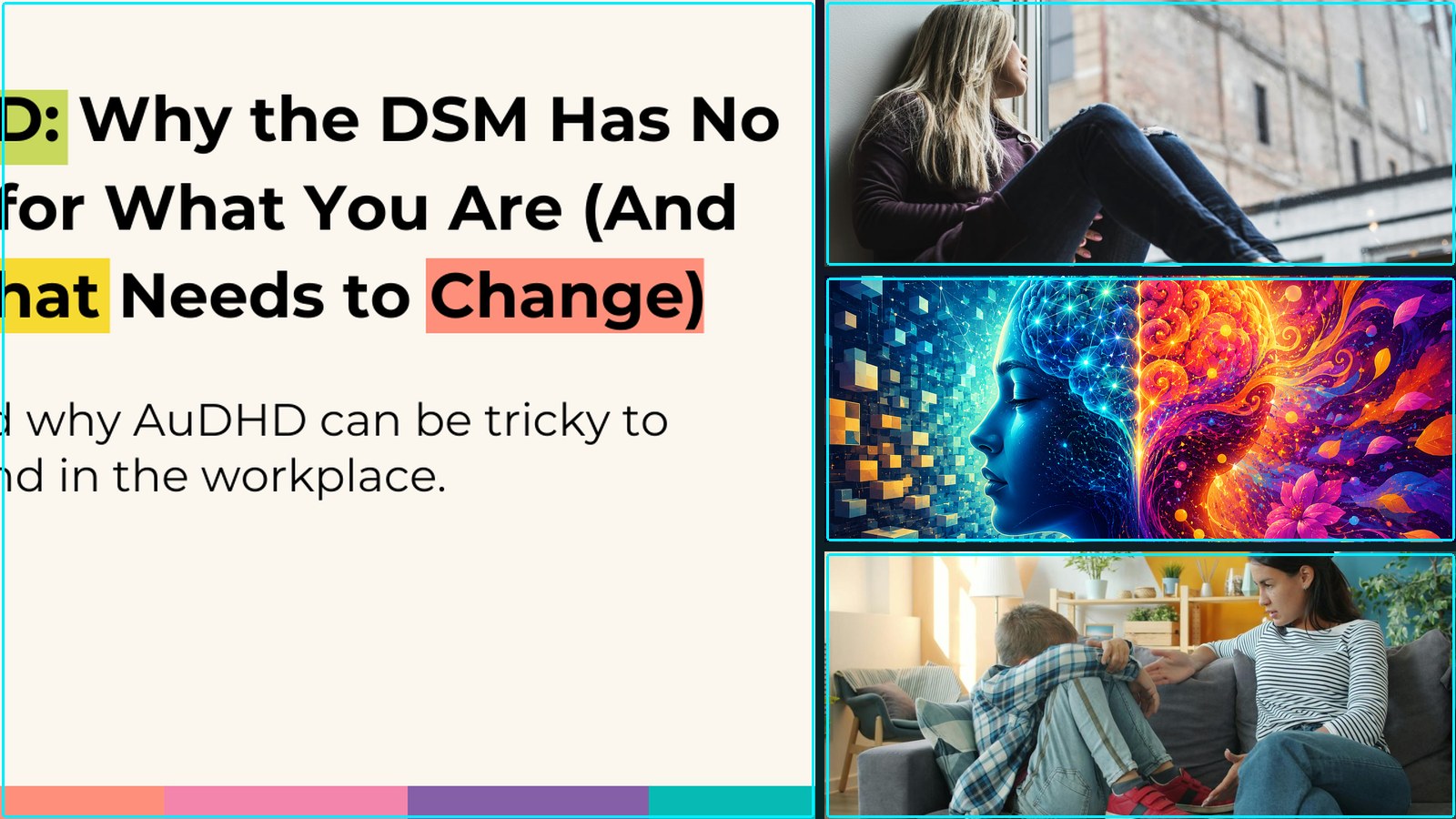
AuDHD: Why the DSM Has No Name for What You Are (And Why That Needs to Change) (Youtube)
Summary: And yet, {ts:335} no such diagnosis exists. ADHD has no formal clinical home in the DSM.
Why it matters: Lack of formal DSM categorization for ADHD suggests diagnostic gaps impacting clinical pathway development.
Context: The absence of a unified diagnostic framework for AuDHD highlights systemic limitations in current psychiatric classification.
[Metadata-only note] The available source data did not expose a direct source quote this cycle.
Commentary: The signal is still worth tracking, but the current extraction path did not yield enough body text for a fuller analytical read. The immediate implication is operational rather than speculative: watch how this changes budgets, workflows, or risk assumptions over the next cycle.
Date: May 22, 2026 12:00 AM ET
URL: https://www.youtube.com/watch?v=A5Un0EIM25o
AI Sentiment Score: Negative (50%)
AI Credibility Score: 10.0/10 — High
Scores and text generated by AI analysis of the source article indicated.
Long-term study sheds new light on autism and ADHD in childhood (News.Ki.Se)
Summary: Karolinska Institutet and Uppsala University have secured a SEK 10 million, five-year donation from the Marianne and Marcus Wallenberg Foundation to extend a longitudinal study tracking child development from infancy to age ten. The funding enables a decade-long observation window, a critical timeframe for understanding the emergence and trajectory of neurodevelopmental conditions like autism and ADHD.

Why it matters: Longitudinal data of this scale and duration is foundational for moving beyond cross-sectional snapshots to model causal pathways, environmental interactions, and the long-term efficacy of early interventions for neurodivergent children.
Context: Research on autism and ADHD has been hampered by short-term studies; decade-long cohorts are rare but essential for distinguishing transient traits from persistent conditions and for validating early biomarkers.
"A donation of SEK 10 million over five years from the Marianne and Marcus Wallenberg Foundation now makes it possible to follow the children up to ten years of age." — NEWS.KI.SE
Commentary: This funding shift operationalizes a core research need: longitudinal granularity. The decade-spanning data could pressure diagnostic models reliant on point-in-time assessments, potentially recalibrating early intervention strategies and resource allocation within Swedish child psychiatry and education systems. It also sets a benchmark for private foundation funding in neurodevelopmental research, prioritizing infrastructure over isolated clinical trials.
Date: May 18, 2026 12:00 AM ET
URL: https://news.ki.se/long-term-study-sheds-new-light-on-autism-and-adhd-in-childhood
AI Sentiment Score: Negative (80%)
AI Credibility Score: 10.0/10 — High
Scores and text generated by AI analysis of the source article indicated.
AI Can Accurately Flag Pediatric ADHD: New Study (Additudemag)
Summary: A study in Nature Mental Health demonstrates an AI model achieving 92% accuracy in predicting a pediatric ADHD diagnosis between ages 5 and 9, using medical data available by age 5. This finding is coupled with separate research indicating earlier diagnosis correlates with higher academic achievement and lower high school dropout rates. The convergence suggests a potential pathway to shift diagnostic timelines and intervention strategies.

Why it matters: This represents a tangible step toward operationalizing predictive analytics in developmental psychiatry, with direct implications for clinical pathways, educational outcomes, and healthcare resource allocation.
Context: The long-standing challenge in ADHD care has been the lag between symptom onset and formal diagnosis, often occurring in middle childhood or adolescence, despite evidence that earlier support improves trajectories.
"Using data available at age 5, the AI model predicted which children would be diagnosed with ADHD between ages 5 and 9 with 92% accuracy." — ADDITUDEMAG
Commentary: The high accuracy rate, if validated, moves the discussion from theoretical risk modeling to practical triage tools, forcing a reckoning on implementation ethics, data privacy, and the risk of creating a predictive shadow system within pediatric care. The link to academic outcomes provides a powerful, if utilitarian, argument for health systems and schools to invest in earlier screening infrastructure.
Date: May 19, 2026 12:00 AM ET
URL: https://www.additudemag.com/artificial-intelligence-diagnosis-adhd/
AI Sentiment Score: Negative (57%)
AI Credibility Score: 10.0/10 — High
Scores and text generated by AI analysis of the source article indicated.
When ADHD and Autism Overlap: What Northern Virginia Parents Should Know About AuDHD (Insidenova)
Summary: A sponsored article in a Northern Virginia publication frames the clinical overlap of ADHD and autism as a common diagnostic blind spot for parents, using the community term ‘AuDHD’ to describe the co-occurring presentation. It argues that single-condition evaluations often miss the interactive effects, leading to incomplete support, and promotes Blackbird Health’s comprehensive assessment model as a solution to reduce wait times and provide targeted care.

Why it matters: It highlights a persistent gap in clinical practice and school-based identification that leaves neurodivergent children with mismatched support, while signaling how specialized providers are marketing directly to families to fill that service void.
Context: The neurodiversity-aware discourse increasingly focuses on dual diagnoses, but mainstream diagnostic manuals (DSM-5-TR, ICD-11) still treat ADHD and autism as separate, creating a chasm between community experience and formal assessment pathways.
"In Northern Virginia, many parents find themselves navigating long waitlists and even longer questions when it comes to their child’s development. Often, they’ve already received one diagnosis — usually Attention-Deficit/Hyperactivity Disorder (ADHD)." — INSIDENOVA
Commentary: The article’s utility is its operational framing of a real clinical dilemma, but its sponsorship by Blackbird Health makes it a direct-to-consumer lead generation tool, illustrating how the private mental health sector is capitalizing on systemic diagnostic failures. The promotion of ‘AuDHD’ as a functional descriptor, despite its lack of formal code, pressures the establishment to adapt its categorical models to complex, real-world presentations.
Date: April 13, 2026
URL: https://insidenova.com/lifestyles/health/when-adhd-and-autism-overlap-what-northern-virginia-parents-should-know-about-audhd/article_571229de-a4a8-4af0-9374-39500fbac92f.html
AI Sentiment Score: Negative (50%)
AI Credibility Score: 7.0/10 — Medium
Scores and text generated by AI analysis of the source article indicated.
Psychology of Adults With Undiagnosed ADHD Explained (You’re Not Lazy) (Youtube)
Summary: A 2026 video analysis frames the psychology of adults with undiagnosed ADHD as a state of high-functioning depletion, driven by a neurological difficulty in making the future feel real until it is imminent. It cites a 4.4% prevalence among U.S. adults and affirms the established efficacy of stimulant medications (amphetamines and methylphenidate) as a core, evidence-based treatment.
Why it matters: This reframes a widespread workplace and personal struggle from a character flaw to a neurocognitive condition, with direct implications for productivity systems, managerial training, and access to clinical diagnosis and treatment.
Context: Public and clinical understanding of adult ADHD has accelerated, moving beyond hyperactive childhood stereotypes to focus on executive dysfunction and its masking in high-pressure environments.
"##### May 21, 2026 (0:11:38) The psychology of adults with undiagnosed ADHD explains one of the most misunderstood behavioral patterns of modern life: performing at a high level while quietly running on." — YOUTUBE
Commentary: The ‘future realism’ deficit is a precise operational description of a core ADHD impairment, explaining chronic procrastination and crisis-driven work patterns not as laziness but as a temporal perception issue. This neurological framing challenges moralistic productivity culture and underscores the need for workplace accommodations focused on externalizing time and structure, not just willpower.
Date: May 21, 2026 12:00 AM ET
URL: https://www.youtube.com/watch?v=pMNsm8ZRuro
AI Sentiment Score: Negative (66%)
AI Credibility Score: 10.0/10 — High
Scores and text generated by AI analysis of the source article indicated.
Eye-tracking techniques could help primary care providers diagnose … (Sciencedaily)
Summary: A study published in JAMA Network Open demonstrates that integrating eye-tracking biomarker data with primary care clinician assessment significantly improves the accuracy of autism diagnosis in community settings. The research, conducted across primary care clinics in Indiana, found that the combined model achieved 91% sensitivity and 87% specificity. This suggests a scalable method for reducing diagnostic delays and improving access outside specialized centers.
Why it matters: It validates a scalable, objective tool that could decentralize and accelerate autism diagnosis, directly addressing systemic bottlenecks in access to care.
Context: Autism diagnosis traditionally relies on specialist evaluation, creating long waitlists and access disparities; the search for reliable, scalable biomarkers for use in primary care has been a persistent but challenging goal.
"When primary care clinician diagnosis and diagnostic certainty was combined with eye-tracking biomarker metrics, the sensitivity of the model was 91% and the specificity was 87%, meaning that they made a more accurate autism diagnosis." — SCIENCEDAILY
Commentary: The operational implication is a potential shift in diagnostic workflow, where primary care becomes a high-throughput screening and triage point, reducing pressure on specialist backlogs. However, successful deployment will require addressing the logistics of equipment, clinician training, and interpretation—turning a research finding into a reimbursable, standardized clinical pathway. This also raises questions about data ownership and the risk of over-reliance on algorithmic outputs in nuanced developmental assessments.
Date: May 22, 2026 12:00 AM ET
URL: https://www.sciencedaily.com/releases/2024/05/240531145006.htm
AI Sentiment Score: Negative (66%)
AI Credibility Score: 10.0/10 — High
Scores and text generated by AI analysis of the source article indicated.
Post ID: a6e34dc7