
Deep-dive essays and reported features
The Last Nation to Play – Longreads (Longreads)
Summary: The Marshall Islands men’s national soccer team, formed from a global diaspora and players with tenuous roots to the atolls, plays its first international match in Springdale, Arkansas. The event is less about competitive soccer and more about creating a new cultural institution for a nation facing existential threats from climate change and a traumatic nuclear legacy. The team’s formation, chronicled in a long-form narrative, represents a deliberate act of nation-building and identity creation beyond tragedy, centered in a US community that hosts the largest Marshallese population outside the islands.

Why it matters: It demonstrates how stateless and diasporic communities are constructing new forms of sovereignty and cultural continuity through sport, offering a model for other nations facing dispersal.
Context: This follows a pattern of micro-states and contested nations using FIFA recognition as a soft-power tool, but is unique for its genesis within a diaspora community and its explicit framing against climate displacement.
"People are now realizing that the world wants to help,” Owers told the BBC interviewer. “They want to be part of it and they want to see where it can take them. And ultimately, they do want to be part of the worldwide stage." — LONGREADS
Commentary: The team’s symbolic first goal matters more than the match results, reframing national identity from a geographic fate to a voluntary, global project. Its operational base in Springdale, not Majuro, signals a pragmatic shift in how diasporas will steward cultural institutions as homelands become uninhabitable. This is less a sports story and more a blueprint for institutional resilience in the Anthropocene.
Date: 1 month ago
URL: https://longreads.com/2026/04/21/marshall-islands-soccer-team/
AI Sentiment Score: Neutral (50%)
AI Credibility Score: 10.0/10 — High
Scores and text generated by AI analysis of the source article indicated.
How David Frum and Danielle Crittenden grieved their daughter Miranda – The Washington Post (Washingtonpost)
Summary: For journalists Danielle Crittenden and David Frum, processing their grief meant telling Miranda’s story, in an essay and in a new memoir, “Dispatches From Grief.” Public intellectuals leveraging personal tragedy for narrative control; examine the commodification of grief.

Why it matters: Public intellectuals leveraging personal tragedy for narrative control; examine the commodification of grief.
Context: The public articulation of private loss by prominent political commentators suggests a narrative strategy.
"For journalists Danielle Crittenden and David Frum, processing their grief meant telling Miranda’s story, in an essay and in a new memoir, “Dispatches From Grief.”." — WASHINGTONPOST
Commentary: The signal is still worth tracking, but the current extraction path did not yield enough body text for a fuller analytical read. The immediate implication is operational rather than speculative: watch how this changes budgets, workflows, or risk assumptions over the next cycle.
Date: 2 weeks ago
URL: https://www.washingtonpost.com/style/2026/05/06/dispatches-from-grief-danielle-crittenden-memoir/
AI Sentiment Score: Negative (66%)
AI Credibility Score: 10.0/10 — High
Scores and text generated by AI analysis of the source article indicated.
‘We laced Nicole into her corset and her rib broke again’: Moulin Rouge at 25 – an oral history by cast and crew | Movies | The Guardian (Theguardian)
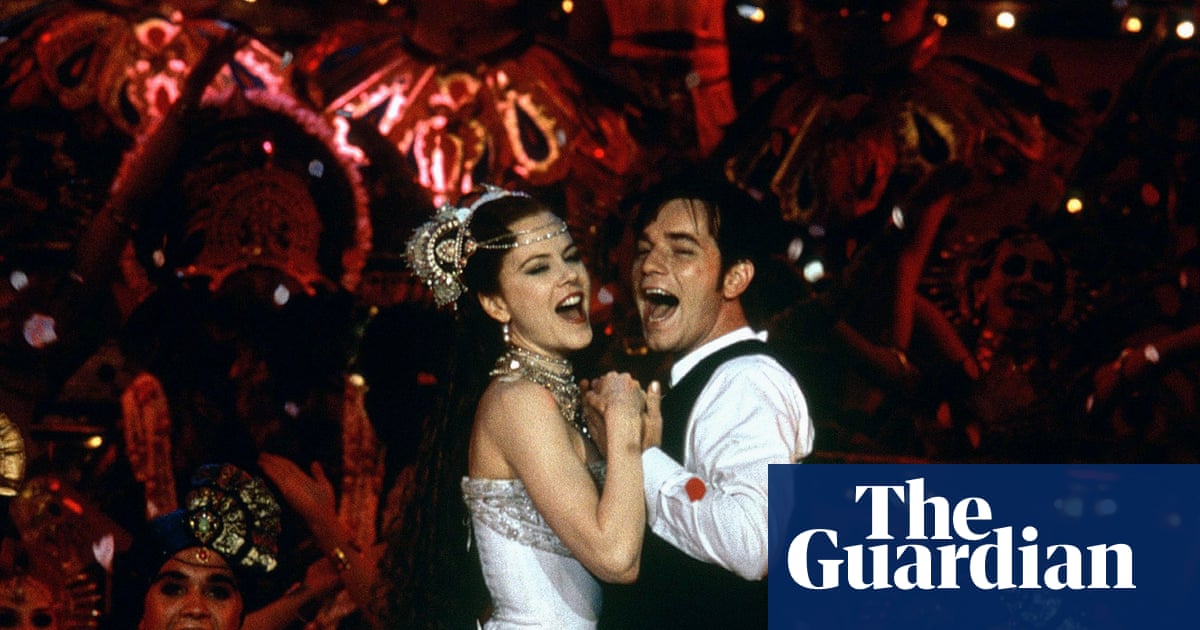
Summary: An oral history of Baz Luhrmann’s ‘Moulin Rouge!’ on its 25th anniversary reveals the extreme physical and creative demands behind its production. The cast and crew detail Nicole Kidman’s cracked ribs from corsetry, the bulldozed 60-foot elephant set, and a chaotic, Coca-Cola-slicked ‘Like a Virgin’ sequence. The film’s Cannes premiere was met with polarized reviews, yet it revived the musical genre commercially and won two Oscars, cementing its status as a modern classic.
Why it matters: It demonstrates how a film’s enduring cultural impact is forged through a volatile, high-stakes production process, offering a case study in artistic risk-taking and physical endurance.
Context: The piece arrives as the ‘Red Curtain’ aesthetic and maximalist musical have been absorbed into mainstream cinema, making the origin story of its most iconic example a valuable historical document.
"CM: We’re not quite sure how the first cracked rib happened. She came back to work. Her doctors, who were there, were saying: “The corset will be great.” When we were lacing her in tightly, we broke her rib again." — THEGUARDIAN
Commentary: The anecdote underscores the literal physical cost of the film’s aesthetic, framing its exuberance as a product of near-industrial labor. This oral history reframes the film’s legacy from mere stylistic triumph to a record of collective, grueling craftsmanship, where artistic vision directly translated into bodily risk and institutional friction, from bulldozed sets to Oscar-night snubs.
Date: 2 weeks ago
URL: https://www.theguardian.com/film/2026/may/06/we-laced-nicole-into-her-corset-and-her-rib-broke-again-moulin-rouge-at-25-an-oral-history-by-cast-and-crew
AI Sentiment Score: Negative (55%)
AI Credibility Score: 10.0/10 — High
Scores and text generated by AI analysis of the source article indicated.
The Hardest Part Of History To Tell Is How It Felt – Longreads (Longreads)
Summary: Craig Fehrman’s essay examines the challenge of historical writing that moves beyond dates and names to capture lived experience. His own research on the Lewis and Clark expedition, punctuated by a personal violent encounter, led him to seek the sensory and emotional realities of his subjects. This approach reveals contradictions, like the expedition’s consumption of horse flesh—a survival necessity for them but a cultural taboo for the Shoshone guide Sacajawea’s people. The piece argues that history’s hardest task is reconstructing the felt dimension of the past, a process that requires empathy and a confrontation with the gaps between different cultural understandings.
Why it matters: It matters because it challenges the default, sanitized mode of historical narrative, insisting that the texture of human experience is the core of understanding, not a decorative add-on.
Context: This fits within a broader movement in narrative nonfiction and historiography that prioritizes embodied experience and microhistory, often using personal connection as a methodological tool to bridge temporal and cultural distance.
"I was trying to find the human side of history, and humans were often my best source. When I thought about Sacajawea in the Rockies, trying to keep her infant son alive, I thought about my own kids at that age—about my wife breastfeeding them, both parties always hungry, always thirsty." — LONGREADS
Commentary: Fehrman’s method—using personal, physical empathy as a research tool—elevates the piece from a craft essay to a polemic on historical epistemology. The implication is that rigorous history requires a kind of vulnerable, analogical thinking that official records often exclude, forcing a reckoning with whose ‘felt’ experience gets preserved. For institutions from museums to publishers, this argues for supporting work that dwells in ambiguity and contradiction rather than clean causality. The risk, of course, is solipsism, but the essay’s power lies in showing how that very risk is necessary to avoid abstraction.
Date: April 16, 2026
URL: https://longreads.com/2026/04/16/history-writing-lewis-clark/
AI Sentiment Score: Negative (87%)
AI Credibility Score: 10.0/10 — High
Scores and text generated by AI analysis of the source article indicated.
Politics After Literacy – Longreads (Longreads)
Summary: Sam Kriss, writing in Jacobin, argues that the shift from text-based to video-streaming discourse represents a fundamental regression in political thought, akin to a return to pre-literate orality. He observes that streamers’ reliance on repetition, formulaic language, and stereotype-driven narration mirrors the characteristics of oral societies described by Walter Ong, fostering a culture of incuriosity and low-resolution understanding. This postliterate environment, Kriss suggests, structurally undermines the capacity for complex, linear argument and revolutionary politics that literacy once enabled.
Why it matters: The medium structuring public discourse directly shapes the quality of political thought and collective action, with material consequences for governance, activism, and cultural production.
Context: This essay enters a long-running debate about media ecology and cognition, updating concerns about television’s effects—explored by Neil Postman and others—for the algorithmic, always-streaming present.
"Reading changes your brain. Reading may also be—at least according to Lenin during the rise of socialism—a precursor to revolutionary politics. But what happens when a society moves beyond reading? What happens." — LONGREADS
Commentary: Kriss’s thesis reframes the anxiety over ‘attention spans’ as a deeper, structural shift in cognitive tools. The implication is that political movements birthed in streaming culture will be inherently episodic, emotive, and resistant to the sustained, programmatic thinking historically required for institutional change. This creates a vulnerability for democratic systems predicated on literate debate while advantaging populist and reactionary forces that thrive on resonant, repetitive narrative formulas.
Date: April 14, 2026
URL: https://longreads.com/2026/04/14/politics-after-literacy/
AI Sentiment Score: Negative (66%)
AI Credibility Score: 10.0/10 — High
Scores and text generated by AI analysis of the source article indicated.
The Car-Crash Conspiracy – Longreads (Longreads)
Summary: Patrick Radden Keefe’s latest investigation for Longreads, ‘The Car-Crash Conspiracy,’ details a sprawling, multi-generational fraud ring in New Orleans East where personal-injury lawyers and ‘slammers’ collaborated to stage accidents with commercial trucks to extract massive insurance settlements. The piece centers on informant Damien Kennedy, whose rueful testimony reveals a local subculture where the scheme is normalized as a quasi-legal path to sudden wealth. Keefe maps the intricate network of enablers and participants, showing how systemic vulnerability and legal loopholes can corrupt an entire community.
Why it matters: This story matters because it reveals how complex fraud networks evolve to exploit systemic weaknesses in insurance and legal systems, creating parallel economies with profound local social consequences.
Context: Keefe specializes in deep, character-driven narratives that expose the operational mechanics of illicit systems, from narcotics trafficking to corporate espionage, often revealing how legal and institutional frameworks are gamed.
"It wasn’t just Turner staging accidents, she informed the private investigator; lots of people in New Orleans East were doing it. Some even argued that it was “legal,” she explained, because they were getting paid by lawyers. “It’s three generations of them doing it!” she exclaimed." — LONGREADS
Commentary: The piece earns reader attention by framing a hyper-local crime story as a case study in institutional failure. Its core thesis is that when a lucrative fraud becomes culturally normalized across generations, it ceases to be seen as crime and becomes a distorted form of economic development. The structural takeaway is that the scheme’s longevity depended on a symbiotic, if parasitic, ecosystem of desperate participants, complicit attorneys, and an insurance-adjudication process ill-equipped to detect collusion. This is classic Keefe: using forensic reporting to show how a broken feedback loop between law, commerce, and community can sustain a criminal enterprise in plain sight.
Date: April 13, 2026
URL: https://longreads.com/2026/04/13/new-orleans-slammers-accident-scam/
AI Sentiment Score: Negative (75%)
AI Credibility Score: 10.0/10 — High
Scores and text generated by AI analysis of the source article indicated.
The Absolute Hell of Watching a Movie at the Alamo Drafthouse in 2026 – Longreads (Longreads)
Summary: A Longreads piece dissects the operational and cultural collapse of Alamo Drafthouse, once hailed as a premium cinema experience. It details how a core brand promise—a phone-free, immersive environment—was fatally undermined by the introduction of QR-code ordering, forcing patrons to use the very devices they were meant to suppress. The article frames this as a case study in how a business model can actively sabotage its own founding principles.
Why it matters: This is a signal case of how operational decisions driven by short-term revenue logic can hollow out a cultural brand, with implications for any business trading on curated experience.
Context: The piece fits within a broader critique of ‘experience economy’ ventures that degrade their own value proposition through cost-cutting or misguided tech integration.
"If you force people to turn on their device and navigate to an app whenever they want another $11 box of Peanut M&Ms, you can’t reasonably expect them to set their phones to airplane mode before the movie starts—to ignore notifications, take their stupid pictures of the screen, resist the urge to google if Rosalina is single, and otherwise remain mindful of the collective viewing experience." — LONGREADS
Commentary: The analysis moves beyond mere nostalgia to identify a structural contradiction: the platform demanding user attention (the phone-as-menu) inherently competes with the platform demanding user immersion (the screen). This creates a predictable, self-inflicted degradation of the core product—the shared, focused audience—that no amount of brand equity can repair. It’s a lesson in how operational ‘efficiency’ can be catastrophically inefficient for the customer experience.
Date: April 13, 2026
URL: https://longreads.com/2026/04/13/alamo-drafthouse-hell/
AI Sentiment Score: Negative (77%)
AI Credibility Score: 10.0/10 — High
Scores and text generated by AI analysis of the source article indicated.
Failure To Lawn – Longreads (Longreads)
Summary: A personal essay traces the author’s five-year struggle with a suburban lawn in Bozeman, Montana, framing it as a microcosm of the American environmental and social dilemma. Her initial failure to maintain conventional turfgrass leads to ecological guilt and neighborhood shame, culminating in a pivot toward native, water-conscious landscaping. The narrative documents a shift from individual anxiety to community action and examines the broader cultural movement against ornamental grass.

Why it matters: It crystallizes a growing cultural and policy rebellion against the ecologically costly norms of suburban aesthetics, revealing how personal property becomes a site for environmental negotiation.
Context: Municipalities from Las Vegas to Bozeman are implementing turfgrass restrictions and rebates, while a social media-driven ‘NoLawns’ movement challenges the historic link between lawn care and social status.
"Turfgrass covers an estimated 62,500 square miles in the US—it’s a callous waste of water and habitat, neither of which we can afford to squander." — LONGREADS
Commentary: The piece effectively reframes lawn care from a private burden of conformity into a public act of ecological stewardship, signaling a potential decoupling of property value from monoculture aesthetics. Its power lies in mapping the internal shame mechanics that uphold an unsustainable norm, providing a template for individual and municipal policy change.
Date: 6 days ago
URL: https://longreads.com/2026/05/14/kill-your-lawn-maggie-slepian/
AI Sentiment Score: Negative (66%)
AI Credibility Score: 10.0/10 — High
Scores and text generated by AI analysis of the source article indicated.
Meet the Sad Wives of AI – Longreads (Longreads)
Summary: Alessandra Ram’s Wired piece profiles the ‘sad wives of AI’—partners, predominantly women, whose lives are reshaped by the obsessive work patterns of their AI-pilled spouses. The article frames this as a predictable, gendered domestic imbalance exacerbated by the current tech boom, where the ‘ideal worker’ model extracts everything from the individual, leaving care work and relational stability to falter. It connects this moment to historical cycles of technological fervor, from the Gold Rush to the dotcom era, arguing the human cost remains structurally similar.
Why it matters: It reveals the human infrastructure—often invisible and unpaid—that sustains technological booms, and questions the sustainability of an innovation model built on personal sacrifice.
Context: The ‘ideal worker’ paradigm is a well-documented economic and sociological concept; its application to the AI gold rush highlights how technological revolutions often reinforce traditional gender roles even within ostensibly progressive industries.
"Alessandra Ram is currently wrangling two babies in her household: a 10-month-old daughter and an LLM. For Wired, Ram writes a dispiriting yet sharp and funny piece about being to be married." — LONGREADS
Commentary: The piece’s value lies not in diagnosing a new phenomenon, but in documenting its specific, contemporary texture within the AI hype cycle. It signals a maturation point where the societal externalities of the boom—strained families, gendered labor divides—become impossible to ignore, potentially foreshadowing a backlash or a recalibration of work-life norms within tech. For investors and operators, it’s a canary-in-the-coal-mine for talent burnout and reputational risk; for culture, it’s a reminder that disruption rarely disrupts patriarchy.
Date: 5 days ago
URL: https://longreads.com/2026/05/14/ai-wives-relationships/
AI Sentiment Score: Negative (50%)
AI Credibility Score: 10.0/10 — High
Scores and text generated by AI analysis of the source article indicated.
I Mean, Why Shouldn’t We All Smoke Cigarettes Again? – Longreads (Longreads)
Summary: A Longreads curation surfaces three essays that collectively reframe smoking not as a public health failure but as a complex cultural and social ritual, with writers like Xochitl Gonzalez questioning the point of quitting in a chaotic world, Peter Schjeldahl reflecting on his life and lung cancer, and John Sherman advocating for taking up the habit as an act of defiance.
Why it matters: This signals a cultural pivot where a once-universally condemned behavior is being re-evaluated as a site of solidarity, personal agency, and philosophical reflection, challenging the dominant public health narrative.
Context: The reevaluation occurs against a backdrop of pervasive societal anxiety and a growing distrust of institutional health mandates, where personal rituals are reasserted as forms of control.
"This piece made me very nostalgic for my long-gone days smoking Marlboro menthols. I was never proud of the habit, but I did love the interesting chats in the smokers’ area, the." — LONGREADS
Commentary: The curation frames smoking as a marker of a specific, accelerated adulthood and social currency, positioning its loss as a cultural as much as a health issue. This intellectual rehabilitation, while not endorsing the act, creates space for a more nuanced public conversation that acknowledges the trade-offs between longevity and lived experience, potentially diluting the effectiveness of future public health campaigns.
Date: 3 weeks ago
URL: https://longreads.com/2026/05/01/cigarettes-smoking-smokers/
AI Sentiment Score: Negative (80%)
AI Credibility Score: 10.0/10 — High
Scores and text generated by AI analysis of the source article indicated.
The Secret Door – Longreads (Longreads)
Summary: Mac Barnett’s essay, excerpted from his forthcoming book ‘Make Believe: On Telling Stories to Children,’ argues that children are literature’s ideal audience due to their innate capacity for ‘make-believe’—an active, willing, and sophisticated engagement with fiction. He critiques the publishing industry’s disconnect from young readers, exemplified by jargon like ‘middle grade’ and the often-didactic, simplistic nature of early readers. Barnett posits that children’s natural flexibility and comfort with ambiguity allow them to straddle the threshold between reality and fiction, a state adults must relearn to access truly transformative stories.

Why it matters: This is a foundational argument for the cultural and artistic legitimacy of children’s literature, with implications for creators, educators, and publishers about respecting young audiences.
Context: The piece arrives amid ongoing debates about reading pedagogy, gatekeeping in children’s publishing, and the perennial adult anxiety over what constitutes ‘appropriate’ content for young readers.
"Children are perceptive, flexible, and open-minded. They have to be. Childhood is a long series of experiments—testing out hypotheses and making adjustments. It seems only right that so much of the best children’s literature is experimental too." — LONGREADS
Commentary: Barnett reframes the child reader not as a passive recipient to be protected from complexity, but as an active, critical collaborator in the fiction-making process. This challenges the pedagogical and commercial instincts that produce simplistic, lesson-driven primers. The essay’s core thesis—that the ‘unfinished’ state of childhood is a literary asset, not a deficit—serves as a quiet rebuke to an industry often more concerned with categorization and messaging than with artistic ambition and trust in its audience.
Date: 2 weeks ago
URL: https://longreads.com/2026/05/05/mac-barnett-childrens-books-make-believe/
AI Sentiment Score: Negative (50%)
AI Credibility Score: 10.0/10 — High
Scores and text generated by AI analysis of the source article indicated.
The role of literature as the key to personal freedom | Aeon Essays (Aeon.Co)
Summary: Stripped of easy moralising, literature makes us relish the search for truth in an age when many believe truth to be dead Literature’s enduring utility lies in its capacity to sustain the difficult pursuit of truth against currents of convenient falsehood.
Why it matters: Literature’s enduring utility lies in its capacity to sustain the difficult pursuit of truth against currents of convenient falsehood.
Context: The essay frames literary engagement as a necessary countermeasure to contemporary epistemic complacency.
"Stripped of easy moralising, literature makes us relish the search for truth in an age when many believe truth to be dead." — AEON.CO
Commentary: The signal is still worth tracking, but the current extraction path did not yield enough body text for a fuller analytical read. The immediate implication is operational rather than speculative: watch how this changes budgets, workflows, or risk assumptions over the next cycle.
Date: 1 month ago
URL: https://aeon.co/essays/the-role-of-literature-as-the-key-to-personal-freedom
AI Sentiment Score: Negative (50%)
AI Credibility Score: 10.0/10 — High
Scores and text generated by AI analysis of the source article indicated.
What I Learned About Billionaires at Jeff Bezos’s Private Retreat – Longreads (Longreads)
Summary: Noah Hawley’s account of attending Jeff Bezos’s ‘Campfire’ retreat reveals a gathering of elite achievers marked by collective unease and the host’s profound social isolation. The event functions as a curated playground for Bezos, who, when presented with a minor human problem, chose immediate retreat over even performative empathy. The piece dissects the psychological landscape of extreme wealth, where normal social contracts dissolve and human connection becomes a managed variable.
Why it matters: It provides a rare, unvarnished look at the social and psychological architecture of the billionaire class, revealing how extreme wealth can create operational and emotional isolation that impacts cultural and economic leadership.
Context: This joins a growing genre of reportage on the ultra-wealthy, examining not just their economic power but their social ecosystems—from fortified enclaves and luxury services to the transfer of generational wealth—and how these systems insulate them from public life.
"When presented with the opportunity for empathy, even performative empathy, he chose escape." — LONGREADS
Commentary: Hawley’s narrative moves beyond mere exposé to diagnose a core dysfunction: the logistical machinery built to sustain billionaire life actively corrodes the host’s capacity for basic human interaction. This isn’t just a personal failing; it’s a systemic output with implications for how these individuals wield influence, make philanthropic decisions, and shape the institutions they control. The piece earns its length by using a specific, awkward incident to illuminate a broader, more consequential alienation.
Date: 1 month ago
URL: https://longreads.com/2026/04/21/jeff-bezos-billionaire-retreat/
AI Sentiment Score: Negative (80%)
AI Credibility Score: 10.0/10 — High
Scores and text generated by AI analysis of the source article indicated.
The Great Ozempic Experiment – Longreads (Longreads)
Summary: GLP-1 agonists like Ozempic are being used off-label by millions of Americans for conditions far beyond their approved indications, from long Covid to addiction, creating a vast, patient-driven medical experiment. This real-world usage, fueled by telehealth and online communities, is outpacing formal clinical research and regulatory oversight.
Why it matters: This signals a fundamental shift in how medical innovation and evidence generation occur, with profound implications for healthcare delivery, pharmaceutical regulation, and patient autonomy.
Context: The rapid, widespread adoption of GLP-1 drugs mirrors earlier moments of patient-led drug repurposing, but at an unprecedented scale and speed due to digital platforms and direct-to-consumer healthcare models.
"Millions of Americans are taking GLP-1 drugs like Ozempic and Zepbound for more than weight loss. As Julia Belluz reports in this interactive New York Times story, people are finding unexpected relief." — LONGREADS
Commentary: The ‘great experiment’ is a de facto decentralization of clinical research, forcing traditional institutions to react rather than lead. This creates a dual-track system: one of peer-reviewed, slow-moving science, and another of rapid, crowd-sourced anecdotal evidence. The long-term risk is not just safety, but the entrenchment of a two-tiered medical epistemology where patient forums rival journals for influence.
Date: 1 month ago
URL: https://longreads.com/2026/04/21/ozempic-glp1-drug-health/
AI Sentiment Score: Negative (66%)
AI Credibility Score: 10.0/10 — High
Scores and text generated by AI analysis of the source article indicated.
It’s Time To Stop Interviewing This Kid (Aftermath.Site)
Summary: A recent 60 Minutes Australia interview with Braden ‘Clavicular’ Peters, a 20-year-old figurehead of the ‘looksmaxxing’ subculture, has prompted a call from Aftermath to stop platforming him. The interview, conducted by Adam Hegarty, effectively dismantled Peters’s ideology by calmly challenging its core premise—that physical appearance is the paramount determinant of life success—and exposing its intellectual bankruptcy. Peters ultimately walked off the set, a move seen as a culmination of his inability to defend his views against basic, good-faith scrutiny. The piece argues that the media’s fascination with such figures has run its course, yielding diminishing returns for public understanding.

Why it matters: It demonstrates a model for effectively interrogating and deflating harmful online ideologies without amplification, and signals a potential turning point in media’s engagement with internet-born extremist figures.
Context: Looksmaxxing and its adjacent ‘manosphere’ philosophies have broken into mainstream discourse, creating a cycle where controversial figures are interviewed for shock value, granting their ideas undue legitimacy and reach.
"I have just two arguments against interviewing Clavicular: 1) He is 20 years old and stupid as hell. 2) 60 Minutes Australia recently conducted an interview that covers all of the above bases and these as well, though especially the former." — AFTERMATH.SITE
Commentary: Hegarty’s interview represents a tactical shift: engaging not to ‘understand’ but to expose the emptiness of the ideology on its own terms, using the subject’s logic against him. This approach, rather than earnest debate or mockery, neutralizes the performance and denies the oxygen of controversy. For media, the lesson is that the exhaustion point for a story isn’t when the subject stops generating clicks, but when a definitive, public deconstruction renders further engagement redundant. The walk-off wasn’t just drama; it was an admission of defeat that should inform editorial calendars.
Date: April 14, 2026
URL: https://aftermath.site/clavicular-looksmaxxing-60-minutes-interview-storm-off
AI Sentiment Score: Negative (60%)
AI Credibility Score: 9.6/10 — High
Scores and text generated by AI analysis of the source article indicated.
Leaving America – Longreads (Longreads)
Summary: Lindsey Tramuta, in The Bitter Southerner, examines the structural drivers—unaffordable housing, broken healthcare, eroding rights—behind a rising number of Americans leaving the U.S. The piece, alongside linked reports, frames this not as a singular trend but as a series of distinct departures: Black Americans seeking refuge from political hostility, professionals pursuing science-respecting cultures, and creatives finding space free from fear. It explores the question of whether leaving constitutes giving up, while presenting expatriation as a multifaceted response to systemic failure.
Why it matters: This signals a shift in the American narrative from aspiration to evacuation, reflecting a loss of confidence in core institutions and a re-evaluation of the national project among its own citizens.
Context: The piece situates individual stories within a broader pattern of skilled and middle-class emigration, often to nations perceived as offering greater social stability, personal safety, or professional respect.
"Record numbers of US citizens are leaving America, or are seriously planning to relocate. In The Bitter Southerner, Lindsey Tramuta, an expat who has lived in France for 20 years, examines the." — LONGREADS
Commentary: The framing moves the conversation beyond anecdote by linking personal exit to public policy failure, making emigration a tangible metric of institutional decay. It also complicates the expat narrative, distinguishing between privilege-driven digital nomadism and necessity-driven flight, which carries different implications for domestic political pressure and international talent flows. The central question—’Does leaving mean you’ve given up?’—is ultimately a strategic one: it asks whether reform is more viable from within or without.
Date: April 17, 2026
URL: https://longreads.com/2026/04/17/leaving-america-expat-migration/
AI Sentiment Score: Negative (66%)
AI Credibility Score: 10.0/10 — High
Scores and text generated by AI analysis of the source article indicated.
500-Year-Old Slave Revolt of 1526 Redefines Freedom as US Turns 250 | Truthout (Truthout)
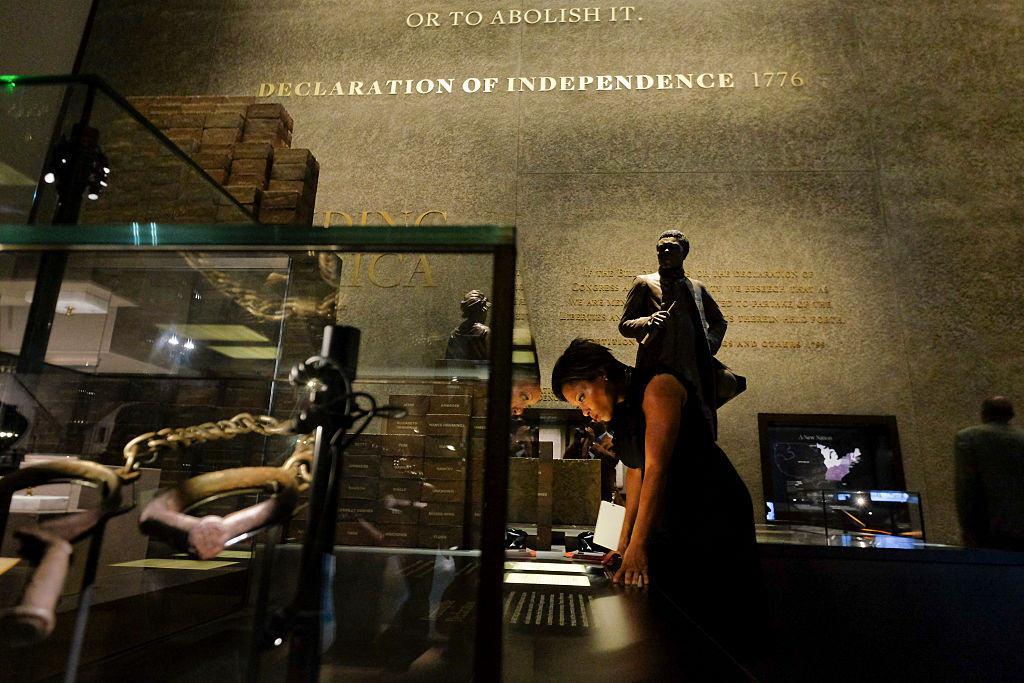
Summary: As the federal government launches its ‘America 250’ patriotic programming, a Truthout essay argues the nation’s foundational narrative is being deliberately narrowed. The piece centers the 500-year-old 1526 San Miguel de Gualdape rebellion, where enslaved Africans burned a Spanish colony and escaped, as the earliest documented act of collective liberation on U.S. soil. This history, largely absent from mainstream curricula, reframes freedom not as a declaration by enslavers but as a seizure by the enslaved, establishing a lineage of resistance that predates 1619 and 1776. The author contrasts this with the state-sponsored semiquincentennial celebration, framing the omission as a political act that upholds a myth of benevolent elite-driven democracy.
Why it matters: The contest over which anniversaries are commemorated and which are erased defines the operational mythos of the state, directly informing contemporary battles over education, memory, and political legitimacy.
Context: This is part of a broader, intensifying conflict over historical narrative between state-sponsored patriotism projects (like the 1776 Commission) and critical public history initiatives (like The 1619 Project), with immediate stakes for curriculum, museum funding, and civic identity.
"The story of 1526 is not peripheral — it is the central story we have been taught not to see. Because the rebellion of 1526 was not an aberration — it was an early expression of a pattern that would repeat across centuries." — TRUTHOUT
Commentary: The essay’s power lies in its structural inversion: it treats the 1526 rebellion not as a prelude but as the core template, rendering 1776 a later, compromised episode in a longer struggle. This directly challenges the state’s semiquincentennial narrative by asserting that the most relevant tradition for contemporary movements is one of seized, not granted, liberty. For institutions from schools to media, the implication is that ‘context’ is insufficient; the fight is over which date serves as the primary origin point for the nation’s story.
Date: 2 weeks ago
URL: https://truthout.org/articles/500-year-old-slave-revolt-of-1526-redefines-freedom-as-us-turns-250
AI Sentiment Score: Negative (66%)
AI Credibility Score: 10.0/10 — High
Scores and text generated by AI analysis of the source article indicated.
Messi and the forgotten tape: Oral history of Argentina’s race vs. Spain to recruit young Barcelona star – ESPN (Espn)
Summary: An ESPN oral history reconstructs the frantic, amateur-hour scramble by the Argentine Football Association in 2003-04 to secure Lionel Messi’s international allegiance, spurred by Spain’s quiet courtship. The narrative hinges on a VHS highlight tape, a chef’s taunt, and a misspelled fax, culminating in a hastily arranged FIFA-sanctioned friendly designed solely to lock in his eligibility. It reveals how close football’s defining international career came to unfolding under a different flag.

Why it matters: It exposes the fragile, human-scale machinery behind epochal sporting decisions, where generational talent was nearly lost to bureaucratic inertia and a rival’s sharper scouting.
Context: This fits a pattern of international football’s shadow recruitment wars, where youth eligibility is a high-stakes, pre-emptive game often decided by personal connections and administrative hustle, not formal systems.
"How would the past 20 years of international football have looked if Lionel Messi had played for Spain and not Argentina? For Messi, not representing the country of his birth was never." — ESPN
Commentary: The episode underscores how institutional legacy often rests on individual hustle and sheer luck—a VHS tape and a chef’s comment—rather than optimized systems. For Spain, it represents a monumental near-miss, altering the historical balance of power in international football. The administrative comedy of errors—misspelled names, phone book searches—contrasts sharply with the cosmic stakes of the outcome.
Date: 1 week ago
URL: https://www.espn.com/soccer/story/_/id/48636037/lionel-messi-forgotten-vhs-tape-oral-history-argentina-spain-recruit-barcelona-world-cup
AI Sentiment Score: Neutral (33%)
AI Credibility Score: 10.0/10 — High
Scores and text generated by AI analysis of the source article indicated.
Finding God and Leaving Psychiatry: An Interview With Kelsey Osgood – Mad In America (Madinamerica)
Summary: Kelsey Osgood’s interview traces her journey from a deliberate, media-influenced anorexia diagnosis in adolescence through a decade of psychiatric treatment, culminating in her departure from both psychiatry and medication. She frames her eventual conversion to Orthodox Judaism as a more hopeful narrative structure than the ‘broken brain’ model, arguing that modern therapeutic culture often misinterprets existential and social crises as individual pathologies.

Why it matters: It challenges the dominant medicalized framework of mental distress and spotlights a growing cultural search for meaning and community outside clinical settings.
Context: This interview appears on Mad in America, a platform critical of mainstream psychiatry, and aligns with a broader cultural reevaluation of therapy, medication, and institutional authority in personal well-being.
"Welcome to the Mad in America podcast. My name is Brooke Siem, and I am the author of the award-winning memoir on antidepressant withdrawal, May Cause Side Effects. Today, I am excited." — MADINAMERICA
Commentary: Osgood’s critique reframes the mental health conversation from individual treatment to social architecture, questioning whether psychiatry has become a secular replacement for communal and spiritual frameworks. Her personal trajectory signals a potential market and cultural shift where traditional institutions face competition not from newer therapies, but from older forms of meaning-making.
Date: 1 month ago
URL: https://www.madinamerica.com/2026/04/kelsey-osgood/
AI Sentiment Score: Neutral (50%)
AI Credibility Score: 7.0/10 — Medium
Scores and text generated by AI analysis of the source article indicated.
The Very American, Very Intense World of High-School Debate | The New Yorker (Newyorker)
Summary: The photographer Eli Durst travelled with students to district tournaments in Arkansas and California and to national tournaments at Harvard and the University of Kentucky. Jay Caspian Kang writes about what happens when ethical and political questions become a high-speed game.

Why it matters: Debate circuit reveals how complex ethical debates are gamified, suggesting transferable models of high-stakes argumentation.
Context: The intensity of competitive rhetoric, observed across diverse geographic and academic settings, warrants examination beyond mere extracurricular activity.
"The photographer Eli Durst travelled with students to district tournaments in Arkansas and California and to national tournaments at Harvard and the University of Kentucky. Jay Caspian Kang writes about what happens." — NEWYORKER
Commentary: The signal is still worth tracking, but the current extraction path did not yield enough body text for a fuller analytical read. The immediate implication is operational rather than speculative: watch how this changes budgets, workflows, or risk assumptions over the next cycle.
Date: 2 weeks ago
URL: https://newyorker.com/magazine/2026/05/11/the-very-american-very-intense-world-of-high-school-debate
AI Sentiment Score: Positive (50%)
AI Credibility Score: 10.0/10 — High
Scores and text generated by AI analysis of the source article indicated.
Analysis: The Church of Jesus Christ isn’t suing Mormon Stories over the word ‘Mormon.’ Here’s what’s really happening (Deseret)
Summary: The Church of Jesus Christ of Latter-day Saints has filed a trademark and copyright infringement lawsuit against the ex-Mormon podcast ‘Mormon Stories.’ The church’s legal position, as detailed in the article, hinges not on policing the word ‘Mormon’ but on demonstrating a ‘likelihood of confusion’ caused by the podcast’s visual branding and use of copyrighted church imagery. The podcast’s adoption of a logo, color palette, and design elements closely resembling official church media, coupled with its use of the term ‘Mormon,’ forms the core of the trademark claim. The article frames this as a standard IP enforcement action, noting the church’s legal obligation to protect its trademarks and its proposal for a simple audio disclaimer as a resolution, which the podcast host has refused.

Why it matters: This case tests the boundaries of criticism, branding, and intellectual property law, illustrating how established institutions leverage legal frameworks to manage dissent and control narrative adjacency.
Context: This follows a long-standing tension between the LDS Church and its critics, occurring against the backdrop of the church’s public efforts to distance itself from the ‘Mormon’ nickname while legally retaining trademark control over it.
"When The Church of Jesus Christ of Latter-day Saints publicly announced on Friday afternoon that it had filed a lawsuit against the ex-Mormon podcast “Mormon Stories” for trademark and copyright infringement, the." — DESERET
Commentary: The lawsuit represents a strategic shift from doctrinal debate to legal brand management, weaponizing IP law to force a critic’s rebrand. It demonstrates how institutions can use dry legal mechanisms to impose narrative costs on opponents, forcing them to spend resources on litigation or rebranding rather than content. The church’s focus on visual mimicry, supported by consumer confusion evidence, provides a stronger legal footing than a mere challenge over the word ‘Mormon,’ making this a more consequential and defensible action.
Date: 1 month ago
URL: https://www.deseret.com/opinion/2026/04/23/mormon-stories-lawsuit/
AI Sentiment Score: Negative (75%)
AI Credibility Score: 9.7/10 — High
Scores and text generated by AI analysis of the source article indicated.
‘Mad Men Fuelling the Madness’: Meet the Advertising CEOs Boosting Big Oil – DeSmog (Desmog)
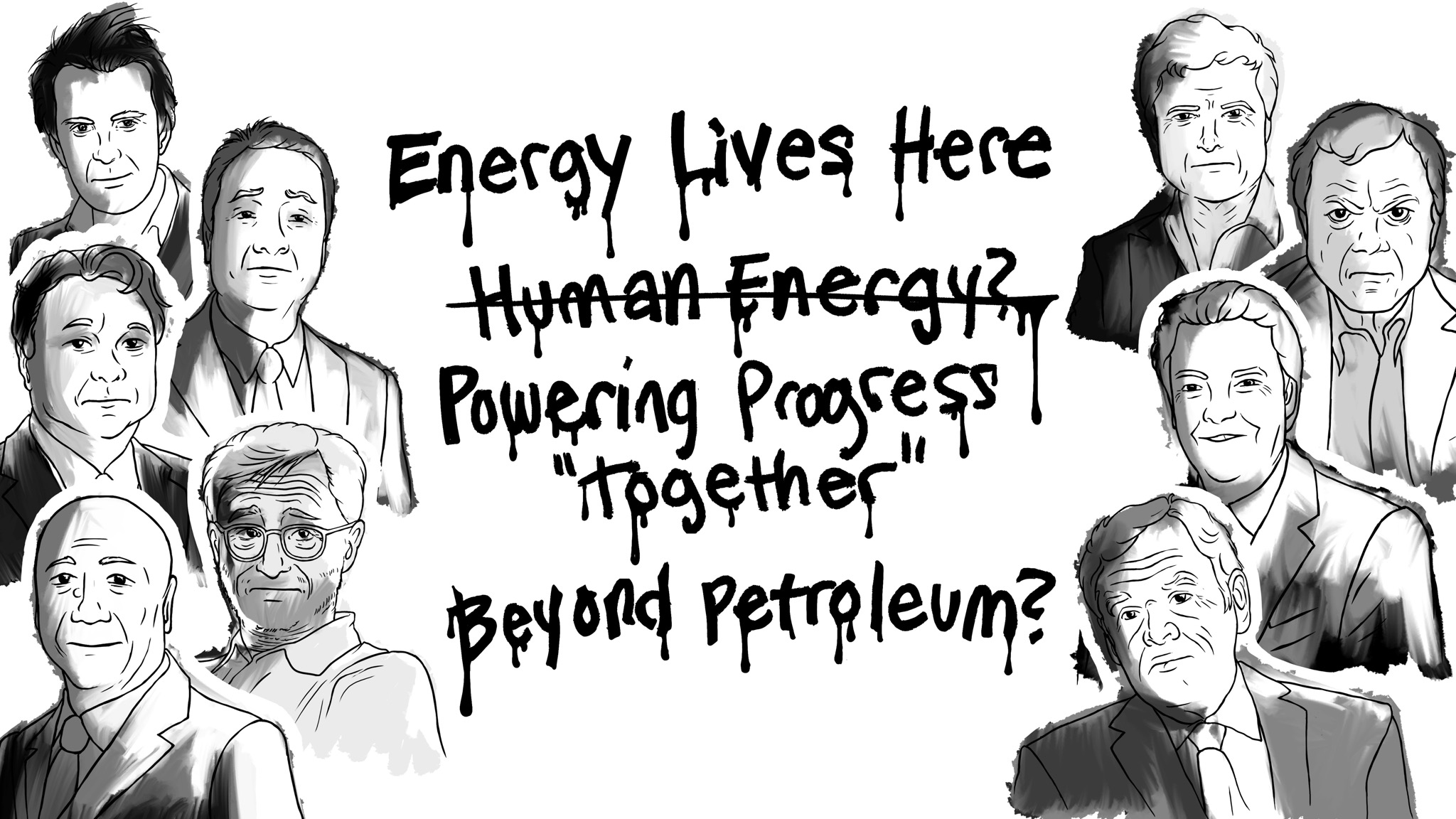
Summary: A DeSmog investigation profiles the advertising CEOs whose firms have managed an estimated $1.5 billion in U.S. ad spend for ExxonMobil, Chevron, BP, and Shell since the 2015 Paris Agreement. The report ranks executives like WPP’s Mark Read and Omnicom’s John Wren by the volume of fossil fuel client spending they oversaw, detailing how their agencies have crafted campaigns accused of greenwashing while executives publicly advocate for ‘supporting the transition.’ The analysis reveals a structural dependency between major ad holding groups and oil majors, even as regulatory actions and activist pressure mount.
Why it matters: It exposes the specific corporate actors and financial relationships enabling fossil fuel disinformation at scale, moving criticism from abstract ‘advertising’ to named executives and their strategic choices.
Context: This report arrives amid escalating legal and regulatory scrutiny of fossil fuel marketing, including U.S. state lawsuits over climate disinformation and UK advertising bans, forcing a reckoning for the service industries that amplify polluter narratives.
"Dentsu found these were 32 times higher than the emissions from its core operations, such as powering its offices." — DESMOG
Commentary: The ‘advertised emissions’ metric, pioneered by Dentsu, quantifies the core ethical dilemma: an agency’s operational carbon footprint is trivial next to the emissions its work induces. This frames ad work not as a neutral service but as a material climate lever. The CEO profiles show that despite public climate pledges, the industry’s business model remains structurally tied to fossil fuel clients, with mergers like Omnicom-IPG consolidating that dependency. The real conflict is between transition rhetoric and retained revenue streams.
Date: 3 weeks ago
URL: https://desmog.com/2026/04/29/mad-men-fuelling-the-madness-meet-the-advertising-ceos-boosting-big-oil
AI Sentiment Score: Negative (66%)
AI Credibility Score: 8.8/10 — High
Scores and text generated by AI analysis of the source article indicated.
Post ID: f843d959