Investigations into media, news, and digital culture
Your Feed Is the Product of a Stealth Marketing Campaign (Vulture)
Summary: A Vulture investigation reveals the industrial scale of ‘clipping’—a marketing practice where agencies use networks of dummy accounts to post manufactured video fragments across social platforms, simulating organic trends for clients ranging from major music labels to political campaigns. The piece details how this manipulates algorithmic discovery and media coverage, creating a feedback loop where fabricated popularity becomes indistinguishable from the real thing. It traces the tactic’s evolution from Andrew Tate’s early use to its current professionalization within Discord communities, where campaigns for artists like Justin Bieber and Bad Bunny are executed for pennies per thousand views. The article further explores ‘narrative campaigns’ that astroturf online discourse, a tactic now documented in corporate espionage and celebrity PR battles.

Why it matters: The core signals of cultural and political relevance—what’s trending, what people are talking about—are now systematically compromised, undermining public trust and distorting market and media landscapes.
Context: This follows increased scrutiny of inauthentic online activity, but shifts the focus from foreign influence ops to a commercialized, domestic gray-market industry that platforms tacitly rely on for content.
"I don’t know if we’ve found a true viral trend in a while. All of them are going to have some sort of inauthentic behavior behind them." — VULTURE
Commentary: The normalization of clipping represents a fundamental market failure in attention economics: when the cost to simulate demand falls below the cost to measure it authentically, the ‘market’ for cultural products ceases to function. This forces artists, politicians, and brands into a prisoner’s dilemma where participation is rational but collectively erodes the informational value of the public sphere. The platforms’ anemic enforcement, contrasted with the FTC’s theoretical but unapplied power, highlights a regulatory gap where commercial speech has outpaced both detection and deterrence.
Date: 5 days ago
URL: https://vulture.com/article/social-media-feeds-chaotic-good-projects-clipping.html
AI Sentiment Score: Negative (60%)
AI Credibility Score: 10.0/10 — High
Scores and text generated by AI analysis of the source article indicated.
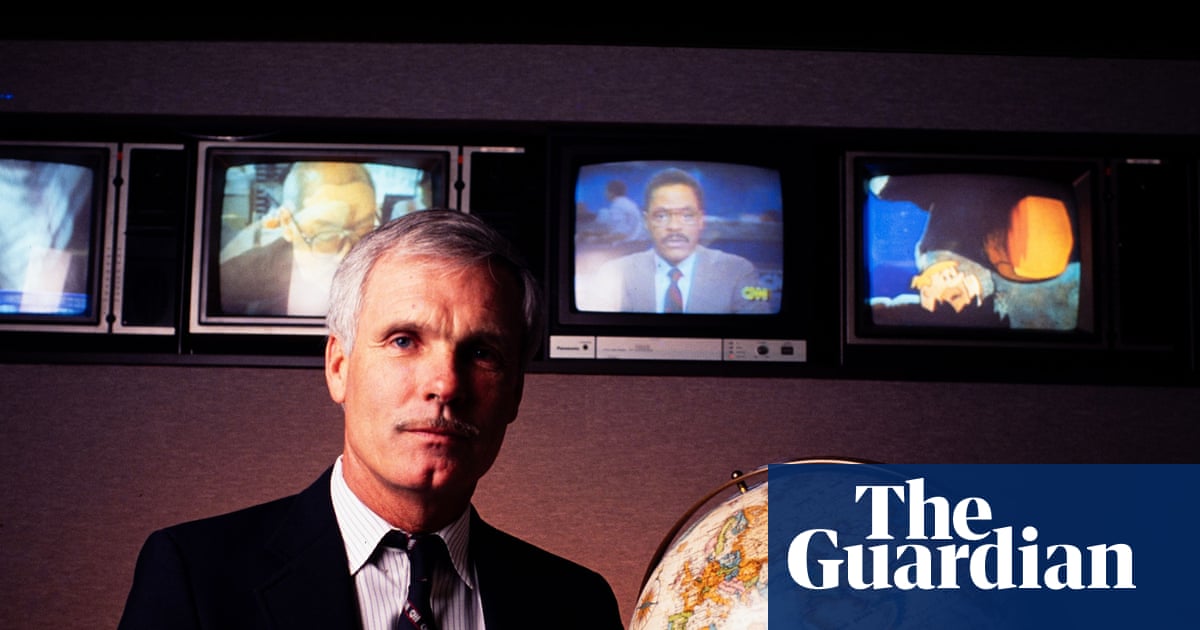
Ted Turner: the man whose 24-hour CNN network broke the news | CNN | The Guardian (Theguardian)
Summary: A long-form retrospective on Ted Turner’s founding of CNN frames the channel’s origin not as a journalistic mission but as a technological and commercial gamble by a maverick entrepreneur. It details Turner’s personal contradictions—his anti-communist upbringing versus his pragmatic deal-making with Fidel Castro—and his initial vision of a unifying, always-on global news feed. The piece traces how this infrastructure, built on cable-satellite tech and sheer audacity, inadvertently created the expectation of instantaneous, omnipresent news, setting the stage for the modern media landscape.
Why it matters: It provides a foundational case study on how a technological platform, divorced from ideological intent at its inception, can reshape public consciousness and later become a contested political weapon.
Context: This arrives amid ongoing reassessments of legacy media’s role in polarization and the decline of the ‘objective’ news model Turner once believed Castro endorsed.
"It’s hard for even those of us who were alive back at CNN’s dawn to remember that time, when the universe wasn’t wired for 24/7 everything – a time when “breaking news” was actually that. We can thank Ted Turner for turning on the TV spigot." — THEGUARDIAN
Commentary: The article’s power lies in its juxtaposition of Turner’s naive, unifying idealism with the fragmenting, weaponized reality his creation helped enable. It underscores that infrastructure shapes culture more durably than intent, a lesson critical for understanding today’s algorithmic media ecosystems.
Date: 2 weeks ago
URL: https://theguardian.com/media/2026/may/07/ted-turner-cnn-news
AI Sentiment Score: Negative (66%)
AI Credibility Score: 10.0/10 — High
Scores and text generated by AI analysis of the source article indicated.
With TV News In Free Fall, More Anchors Try Breaking Away (Hollywoodreporter)
Summary: As linear TV news revenue declines, established anchors are exploring independent digital ventures to offset shrinking network salaries. This shift involves high startup costs and requires a strong personal brand, with success stories like Mehdi Hasan’s Zeteo and Piers Morgan’s Uncensored demonstrating the potential. Networks are responding by licensing video podcasts and encouraging hybrid deals, while the content ecosystem increasingly rewards opinionated, clippable segments over traditional straight-news formats.

Why it matters: The migration of marquee talent and capital away from legacy networks accelerates the fragmentation of news media and redefines the economics of journalism.
Context: This follows a decade-long trend of audience and advertising moving to digital platforms, forcing a reevaluation of the traditional anchor-as-employee model.
"With TV News In Free Fall, Anchors Try Breaking Away As cost cuts roil the networks, A-list talent (and their agents) are mulling ways to go indie to make up for slashed." — HOLLYWOODREPORTER
Commentary: The capital-intensive barrier to entry means only the most commercially viable personalities—those with a pre-sold point of view—can realistically attempt the leap, further polarizing the media landscape. Networks’ embrace of clipping and hybrid deals institutionalizes the prioritization of distributable content over journalistic coherence, making every broadcast a potential feedstock for social platforms. This structural shift turns anchors into entrepreneurs and audiences into subscribers, fundamentally altering the covenant between news providers and the public.
Date: 2 weeks ago
URL: https://hollywoodreporter.com/business/business-news/tv-news-anchors-1236587685
AI Sentiment Score: Negative (50%)
AI Credibility Score: 10.0/10 — High
Scores and text generated by AI analysis of the source article indicated.
Meet the YouTube whisperers, a booming class of advisors behind MrBeast and other million-dollar channels (Cnbc)
Summary: A professional class of YouTube strategists, exemplified by consultants like Paddy Galloway, now provides high-stakes, data-driven guidance to top creators such as MrBeast and Jesser. Their services, which can cost upwards of $15,000 per month, focus on optimizing thumbnails, titles, and content concepts to align with YouTube’s evolving algorithm, particularly as the platform shifts toward longer-form, TV-optimized content. This consultancy layer has emerged as creators transition from amateurs to multi-million dollar media businesses, seeking to sustain growth beyond initial viral success.

Why it matters: The institutionalization of YouTube strategy signals the platform’s maturation into a professional media industry, where algorithmic optimization is a core business function, not just creative intuition.
Context: This reflects the broader professionalization of the creator economy, where success increasingly depends on specialized, repeatable processes rather than organic discovery, paralleling shifts in other digital media sectors.
"Our average increase in views after a year — so, year-on-year after working with us — is 350%."
Commentary: The emergence of a premium consultancy tier, with claims of 350% view growth, formalizes a power law within the creator economy: top talent can now buy systematic advantage, potentially cementing incumbency and raising the capital requirements for competitive entry. This shifts influence from platform-provided tools to private, opaque expertise, creating a new layer of gatekeepers who understand the algorithm’s behavioral economics better than the platform’s own partner managers.
Date: 1 week ago
URL: https://cnbc.com/2026/05/10/youtube-advisors-mrbeast-top-creators-platform-viewership.html
AI Sentiment Score: Positive (66%)
AI Credibility Score: 10.0/10 — High
Scores and text generated by AI analysis of the source article indicated.
The clipping economy: How short-form video ‘clippers’ are overrunning the internet | STLPR (Stlpr)
Summary: A freelance-driven ‘clipping economy’ has emerged, where individuals repackage long-form content into short-form clips for algorithmic distribution and direct payment per view. Platforms like Content Rewards and Vyro facilitate cash-for-clips campaigns from marketing agencies and startups, creating a shadow labor market dominated by young, often international, freelancers. This system prioritizes virality over creator monetization, turning clips from promotional tools into primary content. Social platforms are caught between fueling this ecosystem and policing its spam-like, duplicate outputs.

Why it matters: The professionalization of clipping redefines content value chains, commodifying attention in a way that sidelines original creators and tests platform integrity.
Context: Short-form video’s dominance is evolving from a consumption format into a parallel, incentive-driven production economy, separate from the original content it excerpts.
"Something changed for me when a few people in a row came up to me on the street and said, ‘Hey you’re Ed Elson, you’re the Prof G Markets guy,’ and I said, ‘oh yeah, do you listen to the podcast?’ And they said, ‘No I don’t listen to the podcast, but I love your clips.’." — STLPR
Commentary: The clip economy formalizes a parasitic but efficient attention arbitrage, where the middleman’s cut—not the creator’s—defines value. It pressures platforms to choose between engagement metrics and content provenance, while marketing budgets increasingly flow to this unregulated, performance-based grey market. The structural shift from clips as promotion to clips as product suggests a future where the most valuable IP is not the narrative but its most algorithmically optimized fragment.
Date: 1 week ago
URL: https://stlpr.org/npr/2026-05-12/the-clipping-economy-how-short-form-video-clippers-are-overrunning-the-internet
AI Sentiment Score: Positive (50%)
AI Credibility Score: 10.0/10 — High
Scores and text generated by AI analysis of the source article indicated.
‘It was nonsense and lies’: Ex-Infowars staffer exposes Alex Jones’s ‘fake news machine’ – including staged stunts, drunken antics, and office chaos – in explosive new tell-all | Daily Mail Online (Dailymail.Co.Uk)
Summary: A new memoir by former Infowars producer Josh Owens details the operational mechanics of Alex Jones’s media empire, alleging systematic fabrication of news events, staged stunts, and a workplace culture of intimidation and gaslighting. Owens describes a ‘churn and burn’ content model designed to stoke audience fear and drive merchandise sales, with specific accounts of fabricating evidence for stories about ISIS at the border and nuclear fallout. The book provides a ground-level view of the production of conspiracy content, framing it not as ideological fervor but as a cynical, profit-driven enterprise built on deception.

Why it matters: It moves the critique of conspiratorial media from external analysis to internal testimony, detailing the specific production practices that translate paranoid narratives into profitable content.
Context: This emerges as the MAGA-aligned media ecosystem experiences internal fractures, with figures like Jones being publicly dismissed by Trump, and as Jones faces monumental financial penalties for defamation.
"’It was nonsense and lies’: Ex-Infowars staffer exposes Alex Jones’s ‘fake news machine’ – including staged stunts, drunken antics, and office chaos – in explosive new tell-all – See more Daily Mail." — DAILYMAIL.CO.UK
Commentary: Owens’s account reframes Infowars from a platform of conviction to a managed operation of manufactured outrage, revealing the industrial logic behind the chaos. The memoir’s value lies less in exposing Jones’s personal antics and more in documenting the procedural gaslighting that turns employees into compliant instruments of disinformation. This shifts the liability discussion from solely the figurehead to the enabling production apparatus, offering a blueprint for how such systems recruit and retain complicity.
Date: April 14, 2026
URL: https://dailymail.co.uk/news/article-15729877/alex-jones-infowars-fake-news-exposed.html
AI Sentiment Score: Negative (50%)
AI Credibility Score: 9.5/10 — High
Scores and text generated by AI analysis of the source article indicated.
A young reporter discovers a mysterious trove of data that exposes a global surveillance empire (Motherjones)
Summary: An undercover investigation by Lighthouse Reports, based on a reporter’s discovery of a vast data archive detailing over a million tracking operations, exposes the inner workings of the global surveillance-for-hire industry. The report captures an executive from First Wap, Guenther Rudolph, pitching sophisticated phone-tracking software to a sanctioned private mining company for use against environmental protesters, explicitly noting the illegality of the deal. This collaborative investigation across 14 outlets provides one of the most comprehensive maps of this opaque market.

Why it matters: It demonstrates how surveillance technology, once the domain of states, is now a commercial product accessible to private actors for suppressing dissent, with legal and ethical boundaries openly negotiated.
Context: This follows a pattern of investigative work, like the Pegasus Project, that continues to chip away at the secrecy of the surveillance-industrial complex, revealing its customers and operational scale.
"The executive, Guenther Rudolph, was seated at a booth at ISS World in Prague, a secretive trade fair for police and intelligence agencies and advanced surveillance technology companies. Rudolph went on to explain how his firm, First Wap, could provide sophisticated phone-tracking software capable of pinpointing any person in the world. The potential buyer? A private mining company, owned by an individual under sanction, who intended to use it to surveil environmental protesters." — MOTHERJONES
Commentary: The transaction’s brazen nature—discussing prison risk before proceeding—signals a market confident in its impunity. The shift from state intelligence to corporate clients targeting civil society recalibrates the threat model for activists and journalists. Each such exposure incrementally pressures the legal and diplomatic frameworks meant to govern these tools, though enforcement remains the persistent lagging indicator.
Date: April 18, 2026
URL: https://motherjones.com/politics/2026/04/cellphone-surveillance-firstwap-reports-lighthouse
AI Sentiment Score: Negative (66%)
AI Credibility Score: 10.0/10 — High
Scores and text generated by AI analysis of the source article indicated.
AI Agents Linked to OpenAI Are Pretending to Be Human Journalists (Futurism)
Summary: An investigation by The Midas Project’s Model Republic alleges that the news site The Wire by Acutus, which launched in late 2025, uses AI agents to pose as human reporters to solicit interviews and quotes from experts. Its content, largely AI-generated, promotes pro-AI arguments and attacks critics. The report identifies circumstantial links to OpenAI via a network of PR firms and a super PAC funded by OpenAI’s Greg Brockman.

Why it matters: This represents a potential new frontier in influence operations, where AI agents conduct deceptive outreach to shape public and policy discourse under the guise of independent journalism.
Context: This follows a pattern of tech giants acquiring or launching media properties, but escalates it by automating both content creation and source cultivation while obscuring provenance.
"A news website with apparent links to OpenAI is using AI agents that pose as flesh-and-blood reporters to get quotes from human experts — and many of its articles discuss the AI." — FUTURISM
Commentary: If substantiated, this moves AI’s role in media from a content-generation tool to an active participant in the reporting process, fundamentally corrupting the source-journalist relationship. The operational speed—a 44-second median review process—and the targeting of critics’ professional relationships suggest a scalable model for reputation management and policy advocacy. The circumstantial links to OpenAI, while not conclusive, would mark a significant and risky departure from its stated public positioning on AI safety and transparency.
Date: 3 weeks ago
URL: https://futurism.com/artificial-intelligence/ai-agents-openai-pretending-human-journalists
AI Sentiment Score: Neutral (33%)
AI Credibility Score: 10.0/10 — High
Scores and text generated by AI analysis of the source article indicated.
F.B.I. Said to Have Investigated Times Reporter After Article on Patel’s Girlfriend – The New York Times (Nytimes)
Summary: The bureau said it is not pursuing a case, but the scrutiny is an example of the Trump administration weighing whether to criminalize routine news gathering. Federal scrutiny of journalism, even if dismissed, signals a potential chilling effect on investigative reporting.

Why it matters: Federal scrutiny of journalism, even if dismissed, signals a potential chilling effect on investigative reporting.
Context: The incident suggests a precedent being weighed regarding the boundaries of press freedom versus perceived national security concerns.
"The bureau said it is not pursuing a case, but the scrutiny is an example of the Trump administration weighing whether to criminalize routine news gathering." — NYTIMES
Commentary: The signal is still worth tracking, but the current extraction path did not yield enough body text for a fuller analytical read. The immediate implication is operational rather than speculative: watch how this changes budgets, workflows, or risk assumptions over the next cycle.
Date: 1 month ago
URL: https://www.nytimes.com/2026/04/22/us/politics/fbi-times-reporter.html
AI Sentiment Score: Neutral (50%)
AI Credibility Score: 10.0/10 — High
Scores and text generated by AI analysis of the source article indicated.
Newsletters, live coverage, a one-time magazine: The World Cup is becoming a testbed for journalism experiments | Nieman Journalism Lab (Niemanlab)
Summary: The 2026 FIFA World Cup is prompting a wave of journalistic experimentation beyond traditional match coverage. The Guardian U.S. is scaling up its soccer desk and launching a historical newsletter, The Athletic is deploying multi-tiered newsletters and a fan-centric oral history project, and a one-off literary magazine, Golden Goal, is being produced as a print artifact. These efforts aim to serve both die-hard fans and new audiences, using the tournament’s scale to test new formats and deepen engagement.

Why it matters: The World Cup is acting as a high-stakes laboratory for media organizations, revealing strategies for audience building, format innovation, and navigating the tension between immediate news cycles and enduring cultural reflection.
Context: Major sporting events have long been catalysts for media innovation and audience acquisition, but the scale and political complexity of this World Cup, hosted across North America, intensifies the pressure to serve a fragmented and politically aware audience.
"What we’ve kind of lost are things that take a step back and are more reflective or quiet or just try to figure out the meaning of things. Not their significance or their impact, but what they mean." — NIEMANLAB
Commentary: The experiments map a spectrum from scalable, institutional audience growth (The Guardian, The Athletic) to niche, artisanal cultural production (Golden Goal). The key tension is between serving the instantaneous demand of live coverage and creating lasting, perspective-driven work that outlives the news cycle. This bifurcation suggests a maturing media landscape where mass-audience tactics and deeply curated, community-focused projects can coexist, using the same global event as their justification.
Date: 2 weeks ago
URL: https://niemanlab.org/2026/05/newsletters-live-coverage-a-one-time-magazine-the-world-cup-is-becoming-a-testbed-for-journalism-experiments
AI Sentiment Score: Positive (44%)
AI Credibility Score: 10.0/10 — High
Scores and text generated by AI analysis of the source article indicated.
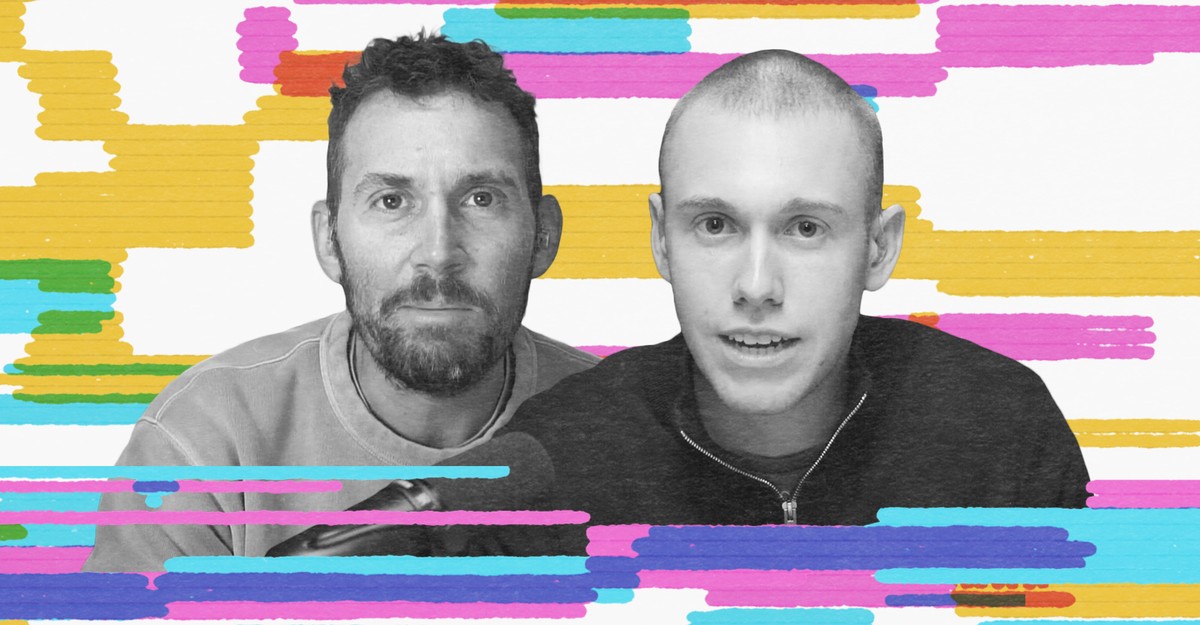
How Short-Form Clips Took Over the Internet – The Atlantic (Theatlantic)
Summary: The ‘clip economy’ has matured from a promotional tactic into the primary unit of online media consumption, where short snippets from podcasts and livestreams now generate billions of views—often far exceeding the audience for the original long-form content. Figures like Andrew Tate pioneered paid ‘clipping armies’ to flood platforms, creating a parallel content ecosystem. Legacy media, sitting on vast archives, is now urged to treat clips as core content and monetize them directly to compete.
Why it matters: The shift from clips as promotion to clips as the primary product redefines audience reach, creator economics, and the competitive landscape for all media institutions.
Context: This follows the broader trajectory of attention fragmentation and platform dominance, but crystallizes a new operational reality: distribution volume and algorithmic seeding now trump traditional content creation as the key lever for influence.
"And so what I started to realize is: It’s not about the show. It’s about the clip. That’s how these guys are reaching people. And not only that, that is how the content is primarily being consumed. So it’s not just a medium to get the word out about who you are. It’s the entire medium." — THEATLANTIC
Commentary: The operationalization of clipping—through paid armies and agencies—formalizes a content arms race where sheer volume and algorithmic penetration determine cultural presence, not quality or originality. This forces a stark choice for legacy players: either weaponize their archives in the same volume game or cede the field to actors who already treat clips as the only product that matters. The implication is a media landscape where the ‘trailer’ is the only film most audiences will ever see, fundamentally altering the calculus of influence and revenue.
Date: 4 weeks ago
URL: https://www.theatlantic.com/podcasts/2026/04/how-short-form-clips-took-over-the-internet/686922/
AI Sentiment Score: Negative (75%)
AI Credibility Score: 10.0/10 — High
Scores and text generated by AI analysis of the source article indicated.
Inside Kash Patel’s F.B.I. – The New York Times (Nytimes)
Summary: Current and former employees discussed the changes under the Trump administration they say are undermining the agency and making America less safe. Internal critique of FBI operational decay suggests systemic institutional risk.
Why it matters: Internal critique of FBI operational decay suggests systemic institutional risk.
Context: Focus on personnel shifts and perceived erosion of agency standards under recent political administrations.
"Current and former employees discussed the changes under the Trump administration they say are undermining the agency and making America less safe." — NYTIMES
Commentary: The signal is still worth tracking, but the current extraction path did not yield enough body text for a fuller analytical read. The immediate implication is operational rather than speculative: watch how this changes budgets, workflows, or risk assumptions over the next cycle.
Date: 1 month ago
URL: https://www.nytimes.com/2026/04/22/podcasts/the-daily/kash-patel-fbi.html
AI Sentiment Score: Negative (75%)
AI Credibility Score: 10.0/10 — High
Scores and text generated by AI analysis of the source article indicated.
Russia trains teenage influencers to churn out pro-war content | National | the-messenger.com (The-Messenger)
Summary: Russia is trying to produce more pro-war influencers through content creation camps, training teenagers to spread the Kremlin’s hardline, anti-West narrative to the next generation. State-sponsored youth narrative engineering signals a deepening, institutionalized effort to shape future public opinion.
Why it matters: State-sponsored youth narrative engineering signals a deepening, institutionalized effort to shape future public opinion.
Context: The focus shifts from mere propaganda dissemination to cultivating a dedicated, ideologically aligned digital cohort.
"Russia is trying to produce more pro-war influencers through content creation camps, training teenagers to spread the Kremlin’s hardline, anti-West narrative to the next generation." — THE-MESSENGER
Commentary: The signal is still worth tracking, but the current extraction path did not yield enough body text for a fuller analytical read. The immediate implication is operational rather than speculative: watch how this changes budgets, workflows, or risk assumptions over the next cycle.
Date: April 17, 2026
URL: https://the-messenger.com/news/national/article_4de1bba1-7c6b-5838-b0af-0f64a90ba256.html
AI Sentiment Score: Neutral (50%)
AI Credibility Score: 7.0/10 — Medium
Scores and text generated by AI analysis of the source article indicated.
Records show Ted Carter tried to get podcaster an NU job during his tenure | Nebraska Public Media (Nebraskapublicmedia)
Summary: Former University of Nebraska President Ted Carter, who recently resigned from Ohio State University over an inappropriate relationship, used his NU position to advocate for a job for podcaster Krisanthe Vlachos. Emails show he forwarded her resume to the head of a strategic research institute and a foundation official. The episode illustrates how personal relationships can leverage institutional access, a pattern that continued when both men moved to OSU, where Carter directed staff to assist Vlachos’s business.

Why it matters: It reveals how personal entanglements can distort hiring and resource allocation in major public institutions, with consequences that follow administrators across state lines.
Context: This follows a pattern of university presidents facing scrutiny for blending personal and professional conduct, with governance failures often trailing executives as they move between institutions.
"Records made available by NU show that in April 2023, Carter requested the same woman, who has been identified as podcaster Krisanthe Vlachos, be considered for a position at the National Strategic Research Institute that operates for the NU system in Omaha." — NEBRASKAPUBLICMEDIA
Commentary: The operational continuity—from NU job advocacy to OSU resource channeling—shows how personal patronage networks become embedded in administrative machinery. The lateral hiring of implicated staff, like Kabourek to West Virginia University, suggests a systemic failure to treat such conduct as a professional disqualifier, normalizing the seepage of personal favoritism into public institution management.
Date: 3 weeks ago
URL: https://nebraskapublicmedia.org/en/news/news-articles/records-show-ted-carter-tried-to-get-podcaster-an-nu-job-during-his-tenure
AI Sentiment Score: Negative (50%)
AI Credibility Score: 7.0/10 — Medium
Scores and text generated by AI analysis of the source article indicated.
RIP social media. What comes next is messy. – Ars Technica (Arstechnica)
Summary: Petter Törnberg’s research, using agent-based models and LLMs to simulate online communities, finds that echo chambers emerge organically from social media’s basic architecture, not from algorithmic filter bubbles. His counterintuitive conclusion is that algorithmic curation, often blamed for polarization, can actually mitigate segregation by exposing users to diverse viewpoints within a single platform. This challenges the prevailing reform narrative that focuses on removing algorithmic feeds.

Why it matters: It reframes the core pathology of social media from a software problem to a structural one, redirecting policy and platform design efforts away from simplistic fixes.
Context: This follows a growing academic consensus that platform dynamics are driven by network effects and user choice more than by curation algorithms, complicating regulatory and design interventions.
"Last fall, we featured an extensive interview with Petter Törnberg of the University of Amsterdam, who studies the underlying mechanisms of social media that give rise to its worst aspects: the partisan." — ARSTECHNICA
Commentary: Törnberg’s work suggests that ‘fixing’ social media requires re-engineering its fundamental connective tissue—the ability to freely choose and abandon communities—rather than tweaking recommendation engines. This places the onus on platform architects to consider forced integration or designed friction, moves that would directly conflict with growth-centric engagement metrics. The research implies that any functional successor to today’s platforms will feel less like an open bazaar and more like a curated public square, a trade-off that could redefine online speech and association.
Date: 2 weeks ago
URL: https://arstechnica.com/science/2026/05/rip-social-media-what-comes-next-is-messy
AI Sentiment Score: Negative (71%)
AI Credibility Score: 10.0/10 — High
Scores and text generated by AI analysis of the source article indicated.
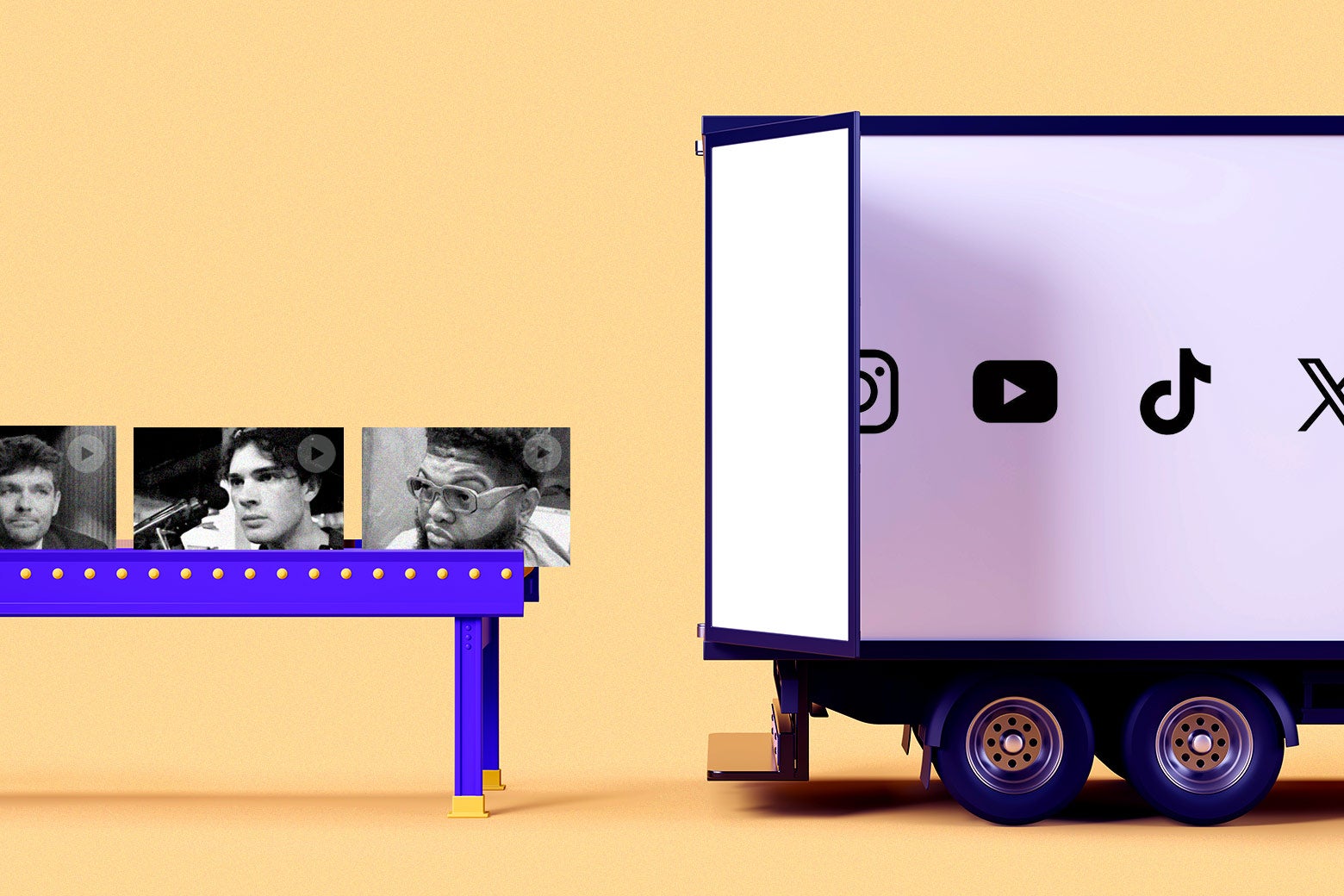
Inside the gig work creating almost every viral clip on the internet. (Slate)
Summary: A new industrial-scale clipping ecosystem, pioneered by firms like Clipping and adopted by figures from MrBeast to Andrew Tate, is systematically manufacturing viral moments from long-form content. These paid editors, often working for pennies per view, deploy armies of sock-puppet accounts to seed platforms with curated snippets, exploiting regulatory loopholes to avoid ad disclosure. The result is a feed where organic discovery is largely supplanted by engineered, context-collapsed impressions designed to build fame or shift narratives.
Why it matters: This practice systematically degrades the epistemic integrity of social platforms, making it nearly impossible for users to distinguish between organic cultural moments and paid narrative operations.
Context: This represents the industrialization of a long-standing promotional tactic (the movie trailer), accelerated to internet scale and leveraged by both influencers and institutional clients to bypass traditional advertising and platform algorithms.
"Sign up for the Slatest to get the most insightful analysis, criticism, and advice out there, delivered to your inbox daily. There’s a pernicious form of viral video that’s reshaping our collective." — SLATE
Commentary: The clipping economy formalizes the ‘Dead Internet Theory’ as a business model, creating a permanent incentive for the most outrageous and problematic content to dominate feeds. It shifts cultural gatekeeping from platforms and media to a shadow economy of freelance editors and their clients, rendering traditional audience metrics and influencer marketing increasingly obsolete. For institutions, the risk is a public discourse shaped by covert, hyper-efficient propaganda arms.
Date: 2 weeks ago
URL: https://slate.com/technology/2026/05/viral-videos-clipping-clavicular-druski.html
AI Sentiment Score: Neutral (33%)
AI Credibility Score: 10.0/10 — High
Scores and text generated by AI analysis of the source article indicated.
These for-profit local news sites have become the “papers” of record in their communities | Nieman Journalism Lab (Niemanlab)
Summary: Nieman Lab has launched a new traffic ranking for for-profit, digital-native local news sites, revealing a significant and often overlooked segment of the media landscape. Franchise networks like TAPinto and single-site operations like Muddy River News in Quincy, Illinois, are regularly outperforming legacy local newspapers in audience reach, sometimes by factors of six to ten. These sites, often members of LION Publishers, are achieving commercial viability and community relevance through digital-first models.

Why it matters: The audience and revenue dominance of these for-profit digital natives signals a structural shift in local information ecosystems, challenging assumptions about which institutions serve as a community’s primary news source.
Context: Analysis of local news has historically focused on legacy newspapers, nonprofits, and public media, while venture capital has flowed to national or niche digital outlets.
"In Similarweb’s most recent traffic estimates, Muddy River News drew 6.5× the monthly visitors of the Quincy Herald-Whig, the local newspaper that traces its history back to 1835." — NIEMANLAB
Commentary: The success of these sites demonstrates that local news demand persists, but the supply mechanism has decisively shifted from capital-intensive print to agile, often personality-driven digital operations. Their for-profit status and franchise models suggest a viable, if fragmented, commercial path distinct from philanthropic dependency, potentially reshaping local advertising markets and civic engagement. The data forces a recalibration of what constitutes a ‘paper of record’ from an institutional legacy to a functional metric of audience reach and relevance.
Date: 5 days ago
URL: https://niemanlab.org/2026/05/these-for-profit-local-news-sites-have-become-the-papers-of-record-in-their-communities
AI Sentiment Score: Positive (66%)
AI Credibility Score: 10.0/10 — High
Scores and text generated by AI analysis of the source article indicated.
Silicon Valley is building its own news-industrial complex (Axios)
Summary: "Monitoring the Situation" has become one of the most viral and lucrative memes in tech. The commodification of ‘monitoring’ suggests a new infrastructure layer for attention capture.
Why it matters: The commodification of ‘monitoring’ suggests a new infrastructure layer for attention capture.
Context: Viral meme status signals the professionalization of ambient digital surveillance.
[Metadata-only note] The available source data did not expose a direct source quote this cycle.
Commentary: The signal is still worth tracking, but the current extraction path did not yield enough body text for a fuller analytical read. The immediate implication is operational rather than speculative: watch how this changes budgets, workflows, or risk assumptions over the next cycle.
Date: 1 month ago
URL: https://axios.com/2026/04/21/monitoring-the-situation-livestream-news-cycle
AI Sentiment Score: Neutral (50%)
AI Credibility Score: 10.0/10 — High
Scores and text generated by AI analysis of the source article indicated.
Celebrity Culture Is Swallowing the News Media (Jacobin)
Summary: Legacy news organizations, facing collapsing trust and revenue, are increasingly adopting the formats and priorities of celebrity media. The New York Times, NPR, and others are producing short-form video content and personality-driven interviews that prioritize access and familiarity over adversarial scrutiny. This shift, which began with the media’s symbiotic relationship with Donald Trump’s 2016 campaign, represents a strategic pivot toward attention economics in a digital landscape dominated by social platforms. The result is a journalism that often amplifies power rather than holding it to account.

Why it matters: The conflation of news and celebrity culture redefines journalistic authority, trading critical distance for engagement and potentially ceding democratic accountability to the logic of fame.
Context: This trend accelerates a decades-long erosion of trust in institutions and coincides with an existential financial crisis for legacy media, exacerbated by AI summaries and platform dominance.
"The danger of organizing our media around celebrity is clearest in the case of Donald Trump. In 2016, Trump was an unlikely presidential candidate — but, as a reality television host with a cable-news addiction and a flair for the dramatic, he made great headlines. The media discovered that covering him like a celebrity was extraordinarily good for business in an otherwise dire industry climate, and consequently treated Trump’s campaign as a mass media spectacle." — JACOBIN
Commentary: The strategic embrace of celebrity content is not merely a revenue tactic but a fundamental reorientation of journalism’s social function. It signals a shift from an authority based on institutional credibility to one based on personal familiarity and platform engagement. This creates a feedback loop where the metrics of success—clicks, views, shares—incentivize coverage that flatters rather than interrogates, making the media a participant in the spectacle it should analyze. The long-term risk is the normalization of a public sphere where power is negotiated through celebrity access rather than democratic accountability.
Date: 2 weeks ago
URL: https://jacobin.com/2026/05/celebrity-culture-news-media-journalism
AI Sentiment Score: Negative (50%)
AI Credibility Score: 9.1/10 — High
Scores and text generated by AI analysis of the source article indicated.
Pulitzer-winning newsrooms are quietly publishing mountains of gambling slop (Popular.Info)
Summary: Advance Local, a network of Pulitzer-winning regional newspapers including The Oregonian and The Cleveland Plain Dealer, has published over 17,000 low-quality articles since 2022 promoting gambling and prediction market promo codes. These articles, often nearly identical across different local sites, are framed as journalism and leverage the high search-engine authority of the legacy brands to drive affiliate revenue. The operation began outsourced to affiliate marketing firm Catena Media and has since moved in-house, employing two dozen writers previously from such firms. The strategy explicitly uses the editorial credibility of these newsrooms to rank highly for geographically irrelevant search queries, converting journalistic capital into gambling customer acquisition.

Why it matters: This represents a systemic degradation of journalistic integrity, where the reputational capital of legacy newsrooms is directly monetized to fuel a predatory affiliate marketing scheme, eroding public trust and blurring the line between editorial and commercial content.
Context: This is part of a broader trend of local news monetization through low-value, high-volume SEO content, but its scale within prestigious institutions and its focus on gambling—a sector with significant social harm—marks a distinct escalation.
"Pulitzer-winning newsrooms are quietly publishing mountains of gambling slop A large network of prominent regional newspapers has posted thousands of low-quality articles promoting gambling and prediction markets — and is pretending it’s." — POPULAR.INFO
Commentary: The operational model here is a direct, cynical arbitrage: the search-engine authority earned through decades of public-service journalism is being liquidated to funnel users into gambling products. This isn’t just an ethical breach; it’s a financial short-circuit that consumes the very asset—trust—that it exploits. The institutional response, claiming these writers are journalists and each piece is ‘unique,’ demonstrates a managed, corporate-level commitment to the charade, suggesting the rot is not at the fringe but in the core business strategy.
Date: 1 week ago
URL: https://popular.info/p/pulitzer-winning-newsrooms-are-quietly
AI Sentiment Score: Positive (57%)
AI Credibility Score: 8.2/10 — High
Scores and text generated by AI analysis of the source article indicated.
Journalism Succumbs To Its Wounds – Commentary Magazine (Commentary)
Summary: A Commentary piece argues that Western journalism has structurally failed in its coverage of the Israel-Hamas conflict, citing the uncritical propagation of unverified atrocity claims and the documented infiltration of militant operatives into journalistic and aid organizations. It highlights the New York Times repeating a baseless rumor and the Committee to Protect Journalists listing a Hamas figure as a slain journalist. The author frames Gaza as a ‘Land of Make-Believe’ where institutional roles are routinely co-opted for propaganda.

Why it matters: The credibility of major media and international NGOs is being actively eroded, with real consequences for public understanding and policy.
Context: This continues a long-running critique of media reliability in conflict zones, accelerated by the October 7 attacks and the subsequent war, where sourcing and verification are intensely contested.
"The famous saying attributed to Jean-Paul Sartre holds that “the anti-Semite doesn’t accuse the Jew of stealing because he actually believes he stole. He accuses the Jew of stealing because he enjoys." — COMMENTARY
Commentary: The piece’s core accusation is institutional capture: if a majority of Gaza’s ‘journalists’ are combatants, then Western outlets relying on their reports are functionally broadcasting combatant narratives. This isn’t a failure of individual bias but a structural collapse of the reporter-source relationship, turning major news desks into amplifiers for one side’s information operations. The quiet post-facto corrections by groups like CPJ underscore a system designed for plausible deniability rather than accountability.
Date: 1 week ago
URL: https://www.commentary.org/seth-mandel/journalism-succumbs-to-its-wounds/
AI Sentiment Score: Negative (80%)
AI Credibility Score: 8.0/10 — High
Scores and text generated by AI analysis of the source article indicated.
Ted Turner’s Beef With Big Media | Washington Monthly (Washingtonmonthly)
Summary: In a 2004 essay republished upon his death, media mogul Ted Turner argued that regulatory changes favoring consolidation had systematically eliminated the conditions that allowed independent broadcasters like him to challenge incumbents. He detailed how the repeal of rules like fin-syn and the raising of ownership caps forced a vertical integration strategy, making mergers like his with Time Warner a matter of survival, not choice. Turner posited that this shift from a competitive, risk-taking landscape to an oligopolistic one has degraded media quality, localism, and democratic debate.

Why it matters: The structural critique from a pivotal insider provides a durable lens for understanding today’s media landscape, where platform power has replaced network power but the central tension between independent innovation and conglomerate control persists.
Context: Turner’s argument prefigures contemporary debates over platform monopolies and creator economies, framing consolidation not as an inevitable market outcome but as a deliberate policy choice with cultural and political consequences.
"In the media, as in any industry, big corporations play a vital role, but so do small, emerging ones. When you lose small businesses, you lose big ideas." — WASHINGTONMONTHLY
Commentary: Turner’s lament is less a nostalgic memoir than a precise autopsy of how policy engineered a specific market failure. His warning that ‘controversial and dissenting views may not be aired at all’ under monolithic control reads as a direct antecedent to current anxieties over algorithmic curation and content moderation by a handful of gatekeepers.
Date: 2 weeks ago
URL: https://washingtonmonthly.com/2026/05/06/ted-turners-beef-with-big-media
AI Sentiment Score: Negative (66%)
AI Credibility Score: 7.0/10 — Medium
Scores and text generated by AI analysis of the source article indicated.
Post ID: 4ef47782