Supply Chain, Tariffs & Global Sourcing Shifts
Chaos and confusion in the Strait of Hormuz could drive apparel production costs up 15% (Glossy.Co)
Summary: Geopolitical instability in the Strait of Hormuz has halted commercial shipping for three days, with Iran imposing new tolls and the U.S. threatening sanctions on compliant carriers. This chokepoint disruption forces reroutes around the Cape of Good Hope, adding up to a month in transit time for apparel shipments from South Asian hubs. Analysts project a 10-15% increase in global textile production costs and a 30-50% near-term rise in shipping expenses, directly impacting brands reliant on these lanes for seasonal inventory.

Why it matters: For fashion operations, this translates to immediate pressure on landed costs, inventory runway, and seasonal fulfillment, requiring rapid adjustments to freight strategy and financial modeling.
Context: This follows the established pattern from the 2024 Red Sea disruptions, where cost impacts lagged the initial event by 60 days, catching many brands unprepared.
"According to the Business and Human Rights Centre, global textile production costs are likely to increase by 10-15% as delays continue. The United Nations Conference on Trade and Development expects shipping costs alone to increase 30-50% in the near future." — GLOSSY.CO
Commentary: The operational imperative shifts from cost optimization to risk mitigation: forwarders must now provide SKU-level landed cost reports including war risk surcharges, and procurement teams need to lock in allocation contracts on critical lanes despite elevated rates. This will accelerate the bifurcation of supply chains, with high-margin, time-sensitive SKUs moving to air freight while bulk basics absorb the extended lead times and cost hits, reshaping category-level profitability.
Date: Fri, 08 May 2026 21:27:47 +0000
URL: https://www.glossy.co/fashion/chaos-and-confusion-in-the-strait-of-hormuz-could-drive-apparel-production-costs-up-15/
AI Sentiment Score: Negative (81%)
AI Credibility Score: 10.0/10 — High
Scores and text generated by AI analysis of the source article indicated.
fashion brands’ purchasing practices during the US tariff crisis (Business-Humanrights)
Summary: The 2025 US tariff regime, though later ruled unlawful, triggered immediate and severe disruptions in global apparel supply chains. Brands responded by rapidly shifting purchasing practices to avoid costs, including pausing orders, demanding supplier price cuts, and relocating sourcing to lower-tariff jurisdictions. This financial pressure was passed directly to factory operators, leading to documented spikes in labor rights abuses and wage theft for garment workers.
 "Freak Pulse placeholder: no illustrative image available from news item source")
Why it matters: For industry practitioners, this documents a concrete operational playbook for how brands manage external shocks, revealing the systemic fragility of supplier relationships and the human cost of financial risk transfer.
Context: This follows a historical pattern where trade policy volatility exposes the power asymmetry in apparel sourcing, with financial risk consistently offloaded onto the weakest contractual links: suppliers and their workforce.
"In supply chains characterised by significant power asymmetries between buyers and suppliers, rapid purchasing practice adjustments place immediate, severe financial pressure on factories operating on narrow margins – with direct implications for workers at the bottom of the supply chain." — BUSINESS-HUMANRIGHTS
Commentary: The report operationalizes corporate social responsibility failure, showing ethical sourcing pledges are functionally suspended during financial crises. For procurement teams, the implied mandate is clear: preserve margin by any means, with supplier stability and labor commitments treated as variable costs. This creates a predictable vendor risk—any future trade or economic shock will trigger the same cost-shifting behaviors, making long-term supplier investment and compliance auditing a performative exercise.
Date: May 07, 2026 12:00 AM ET
URL: https://www.business-humanrights.org/en/from-us/briefings/us-tariffs/commercial-priorities-human-costs-brand-purchasing-practices-during-the-us-tariff-crisis/
AI Sentiment Score: Negative (88%)
AI Credibility Score: 10.0/10 — High
Scores and text generated by AI analysis of the source article indicated.
Apparel brands’ responses to the 2025 US tariffs led to significant … (Business-Humanrights)
Summary: A 2026 report from the Business and Human Rights Centre documents how apparel brands’ reactive sourcing shifts following 2025 US tariffs transferred financial shocks directly to suppliers, leading to order cancellations, price pressure, and factory closures. The commercial adjustments resulted in widespread labor rights violations, including layoffs, wage cuts, and delayed payments, with women and migrant workers disproportionately affected. The research identifies a direct causal chain from tariff policy to brand purchasing practices to human rights outcomes.

Why it matters: For sourcing executives and production managers, this establishes a concrete operational and reputational risk model where tariff-response strategies directly dictate labor conditions in the supply chain.
Context: This pattern validates long-standing critiques of fast-fashion purchasing practices, demonstrating how macroeconomic policy shocks are absorbed not by brands but by the most vulnerable nodes in the production network.
"# Apparel brands’ responses to the 2025 US tariffs led to significant human rights risks for workers Apparel brands’ responses to the US tariffs in 2025 exposed suppliers to sudden commercial shocks." — BUSINESS-HUMANRIGHTS
Commentary: The report operationalizes ‘responsible purchasing’ as a specific set of actions: maintaining agreed prices, honoring existing orders, and collaborating on worker protections. For brands, this shifts compliance from a post-audit corrective action to a pre-negotiated contractual and operational discipline during volatility. The documented country shifts (e.g., away from higher-tariff locations) could force logistics and quality control teams into rapid, destabilizing reconfigurations, increasing short-term error rates and compliance gaps.
Date: April 23, 2026 12:00 AM ET
URL: https://www.business-humanrights.org/en/from-us/press-releases/apparel-brands-responses-to-the-2025-us-tariffs-led-to-significant-human-rights-risks-for-workers/
AI Sentiment Score: Neutral (33%)
AI Credibility Score: 10.0/10 — High
Scores and text generated by AI analysis of the source article indicated.
China Insight: Why Fashion Must Rethink Globalization (Wwd)
Summary: The logic of globalization for fashion is shifting from a model of cost-optimized manufacturing and distribution toward deeper industrial integration, supply chain resilience, and participation in setting standards. This is exemplified by the composition of a recent U.S. business delegation to China, which featured CEOs from firms like Apple and Nvidia, signaling a focus on technological collaboration and embedded operations. Chinese apparel companies are already bifurcating, with leaders like Anta, Shenzhou International, and Shein moving beyond OEM roles to build global brands, acquire assets, and construct integrated supply networks.

Why it matters: For fashion practitioners, the operating environment is being redefined by sustainability mandates, traceability requirements, and the need for strategic local integration, moving the competitive advantage from pure cost arbitrage to ecosystem participation.
Context: This follows a broader trend where global trade governance is increasingly shaped by non-tariff barriers like carbon targets and digital transparency, forcing a structural rethink of offshore production strategies.
"As globalization moves beyond the circulation of goods toward deeper industrial integration, a new question is emerging for the fashion industry: how can the sector secure a meaningful seat at the global." — WWD
Commentary: The practical consequence is a forced maturation of the supply chain. Sourcing teams must now evaluate partners not just on cost and quality, but on their digital traceability, sustainability compliance, and ability to operate as strategic regional nodes. For Western brands, this means supplier relationships are shifting from transactional to integrative, requiring deeper collaboration on standards. For Chinese manufacturers, the path to margin protection and influence runs through owning brands, controlling technology, and building overseas production hubs that serve as tariff-advantaged platforms for key markets.
Date: Sun, 31 May 2026 17:52:19 +0000
URL: https://wwd.com/business-news/business-features/shein-anta-sustainability-fashion-globalization-1238987366/
AI Sentiment Score: Positive (50%)
AI Credibility Score: 10.0/10 — High
Scores and text generated by AI analysis of the source article indicated.
Asia on Edge as Beijing Summit Rekindles Xi-Trump ‘Frenemies’ Relationship (Wwd)
Summary: A recent diplomatic summit between U.S. President Donald Trump and Chinese President Xi Jinping has introduced fresh uncertainty into Asia’s apparel manufacturing landscape. Regional exporters in Vietnam, Bangladesh, India, and Cambodia, which had benefited from the ‘China plus one’ sourcing shift, now fear a potential recalibration of trade flows back toward China. While Chinese apparel exports to the U.S. have dropped sharply, its industrial dominance and record trade surplus remain intact. The industry’s primary concern is whether a thaw in U.S.-China relations will reverse the momentum of supply chain diversification that has defined the past several years.

Why it matters: For sourcing executives and manufacturers, the stability of client orders and long-term investment in production capacity hinges on predictable U.S.-China trade policy.
Context: Since 2017, U.S.-China trade tensions prompted a significant re-routing of apparel manufacturing orders from China to Southeast Asia and South Asia, reshaping global supply chains.
"According to data from the Office of Textiles and Apparel (OTEXA) under the U.S. Department of Commerce, Chinese apparel exports to the U.S. dropped sharply by approximately 53 percent, falling from $3.61 billion in the first quarter of the previous year to $1.70 billion this year." — WWD
Commentary: The operational consequence is a hedging mandate: brands must maintain diversified sourcing footprints even during diplomatic thaws, as the underlying strategic rivalry persists. For manufacturers in beneficiary nations, this uncertainty complicates capital expenditure decisions and labor planning, forcing a focus on value-added specialization to lock in buyer relationships. The data shows a massive shift has already occurred, but the summit signals that pipeline stability is now a function of geopolitics, not just cost.
Date: Mon, 18 May 2026 13:00:00 +0000
URL: https://wwd.com/sourcing-journal/industry-news/beijing-summit-rekindles-xi-trump-frenemies-relationship-1238957415/
AI Sentiment Score: Positive (40%)
AI Credibility Score: 10.0/10 — High
Scores and text generated by AI analysis of the source article indicated.
Who pays for fashion’s green transition? The reality for Bangladesh’s suppliers and workers – Business and Human Rights Centre (Business-Humanrights)
Summary: A survey of 15 major fashion brands sourcing from Bangladesh reveals a systemic failure to support suppliers and workers in the climate transition. While brands impose decarbonization targets, none pay a price premium for green production, adjust buying terms, or provide comprehensive wage protection for climate-related disruptions. Only one brand, Marks & Spencer, named a concrete wage protection mechanism, and engagement with trade unions on just transition issues is minimal. The operational burden and financial cost of compliance are being transferred down the supply chain, ultimately borne by workers.
 "Freak Pulse placeholder: no illustrative image available from news item source")
Why it matters: For sourcing executives and compliance officers, this exposes a critical operational and financial misalignment: brand climate mandates are creating untenable cost pressures on suppliers without the commercial reforms or direct investment needed to implement them justly.
Context: This follows the BHRC’s June 2025 report, ‘The Missing Thread,’ which found that while brands set supply chain decarbonization targets, none had adopted just transition policies protecting workers. The current survey tests those findings against concrete brand actions in a key production hub.
"0 responding brands confirmed paying a price premium for garments produced in green certified factories or by suppliers meeting emissions targets, raising critical questions about how the cost of decarbonisation is being distributed across supply chains and whether workers are bearing the brunt in the form of wage squeezes, worsened conditions, and job losses." — BUSINESS-HUMANRIGHTS
Commentary: The refusal to pay a green premium turns climate compliance into a direct cost center for suppliers, forcing austerity that will manifest in wage suppression and worsened conditions. This creates a perverse incentive structure where meeting brand environmental KPIs degrades social performance. For procurement teams, the implication is clear: current purchasing practices make a just transition financially impossible, embedding human rights risk into decarbonization efforts. The operational consequence is that supplier resilience and worker welfare are being traded for Scope 3 emissions reductions on brand balance sheets.
Date: May 07, 2026 12:00 AM ET
URL: https://www.business-humanrights.org/en/latest-news/the-cost-of-transition-bangladeshs-suppliers-and-workers-in-fashions-green-rush/
AI Sentiment Score: Negative (85%)
AI Credibility Score: 10.0/10 — High
Scores and text generated by AI analysis of the source article indicated.
April 2026 – FASH455 Global Apparel … (Shenglufashion)
Summary: A February 2026 factory list from H&M, comprising 1,455 entries, provides a concrete dataset for analyzing fast-fashion sourcing under tariff pressure. Public statements from major US apparel firms like Kontoor Brands and Oxford Industries reveal active mitigation strategies, including brand-specific price hikes and assortment elevation. The study frames these actions within a broader interrogation of whether responsible sourcing remains feasible as tariffs increase costs and competitive intensity.

Why it matters: For sourcing managers and brand strategists, this reveals the operational playbook—price architecture, vendor management, and product mix adjustments—required to navigate a high-tariff environment, directly impacting margin forecasts and supply chain configuration.
Context: This analysis emerges against a backdrop of sustained tariff hikes and geopolitical tensions, forcing a recalibration of global apparel sourcing economics and the practical meaning of corporate responsibility pledges.
"To better understand H&M’s fast fashion business model and its implications for the company’s sourcing practices, this study analyzed H&M’s detailed factory list published in February 2026, which includes 1,455 entries." — SHENGLUFASHION
Commentary: The quoted mitigation strategy—selective price increases paired with reduced promotions—signals a shift from volume-driven to margin-protection logic, testing brand equity in real time. This pragmatic response underscores that ‘responsible sourcing’ is being redefined as a cost-absorption calculus, likely prioritizing supply chain consolidation and near-shoring over diffuse social audits, fundamentally altering vendor relationships and development timelines.
Date: April 21, 2026 12:00 AM ET
URL: https://shenglufashion.com/2026/04/
AI Sentiment Score: Negative (60%)
AI Credibility Score: 10.0/10 — High
Scores and text generated by AI analysis of the source article indicated.
Textile sector steps up production amid global supply … (En.Nhandan.Vn)
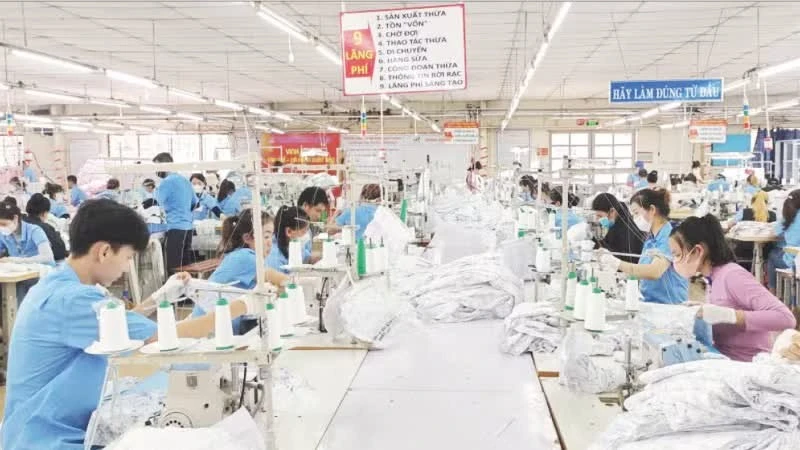
Summary: Vietnamese textile and garment manufacturers are navigating a volatile 2026 marked by a 20%+ surge in logistics costs, rising interest rates, and compressed delivery timelines from Western partners. Companies like Eight March Textile and Nha Be Garment are responding with operational agility—reallocating machinery, expanding domestic sourcing, and providing worker travel subsidies—to protect margins and maintain order flow. Vinatex leadership is urging a sector-wide shift from passive adaptation to proactive risk management, emphasizing supply chain control and accelerated investment to capitalize on market opportunities despite geopolitical and cost pressures.
Why it matters: For brands and sourcing managers, this signals tighter lead times, higher cost pressures from key manufacturing hubs, and a need for closer partnership with suppliers on logistics and financing.
Context: This reflects the ongoing strain on Asian supply chains from energy volatility and shifting US trade policy, forcing manufacturers to prioritize operational flexibility over pure cost efficiency.
"Nguyen Dang Loi, General Director of Dong Xuan Knitting One Member Co., Ltd., said that the company recorded total revenue of 109.6 billion VND (4.19 million USD) in the first quarter of." — EN.NHANDAN.VN
Commentary: The metaphor ‘spin like a top’ captures the new operational reality: sourcing is no longer about static cost arbitrage but dynamic production reallocation. This forces brands to provide more predictable forecasts or absorb the cost of this flexibility. The cited travel subsidies for workers indicate labor retention is now a direct input cost, not just an HR concern.
Date: May 02, 2026 12:00 AM ET
URL: https://en.nhandan.vn/textile-sector-steps-up-production-amid-global-supply-pressures-post161728.html
AI Sentiment Score: Negative (80%)
AI Credibility Score: 10.0/10 — High
Scores and text generated by AI analysis of the source article indicated.
Monthly Cotton Economic Newsletter: May 2026 (Wwd)
Summary: Cotton futures and global price benchmarks rose across all major markets in May 2026, with the A Index climbing from 84 to 95 cents/lb. The USDA’s first forecast for the 2026/27 crop year projects a significant production gap of 5.7 million bales, driven by lower output in China, Brazil, and Australia and higher mill use in China and India. Speculator positions have swung from a record net short to a substantial net long of nearly 95,000 contracts, a shift that began before the Iran conflict but has been amplified by supply-side concerns.

Why it matters: For apparel brands and sourcing executives, this signals sustained input cost pressure, necessitating earlier price hedging, fabric sourcing adjustments, and potential retail price recalibration for 2027 lines.
Context: Cotton prices have been depressed for years, encouraging speculator short positions; the forecasted structural shift to a tighter market, compounded by geopolitical risk to fertilizer and energy inputs, represents a fundamental change in cost-base assumptions.
"The May USDA report is the first to include a complete set of forecasts for an upcoming crop year. Relative to 2025/26, the USDA expects 2026/27 to bring lower production (-6.6 million bales to 116.0 million) and higher mill use (+1.6 million bales to 121.7 million). This divergence is projected to result in a 5.7 million bale production gap." — WWD
Commentary: The synchronized forecast of lower production and higher consumption moves the market from a surplus to a deficit narrative, forcing procurement teams to shift from opportunistic buying to strategic inventory building. The speculator reversal, particularly its magnitude and link to Chinese policy shifts and Persian Gulf fertilizer risk, adds volatility that will complicate forward contracting. Brands heavily reliant on cotton basics must now model the demand destruction risk from broader energy-led inflation against this tighter supply picture.
Date: Mon, 18 May 2026 14:00:00 +0000
URL: https://wwd.com/sourcing-journal/industry-news/cotton-incorporated-price-trends-outlook-may-2026-1238957008/
AI Sentiment Score: Negative (72%)
AI Credibility Score: 10.0/10 — High
Scores and text generated by AI analysis of the source article indicated.
U.S. Apparel Manufacturing Plummets 17% in 2025 (Worldtextilesjournal)
Summary: The 2026 Kearney Reshoring Index reports U.S. apparel manufacturing output fell 17% in 2025, contradicting the intended effect of aggressive tariff policies. Instead of repatriating production, 75% of companies pulling sourcing from China moved to other low-cost Asian nations, with only 20% considering domestic manufacturing viable. The sector’s low R&D budgets and reliance on manual labor, combined with volatile tariff implementation, created market paralysis.

Why it matters: For sourcing executives and production managers, this data confirms that tariff volatility, not cost, is the primary operational blocker, forcing a pivot to regional diversification over any meaningful reshoring.
Context: This follows a multi-year trend where protectionist trade policy, absent parallel investment in industrial automation, fails to alter the fundamental economics of apparel manufacturing.
"The aggressive tariff policies launched by the Trump administration with the promise of reviving "Made in America" have yielded a bitter result for the U.S. textile sector. Instead of ushering in a." — WORLDTEXTILESJOURNAL
Commentary: The failure is structural: tariffs increased input costs and policy uncertainty without addressing the sector’s lack of capital for automation. The practical outcome is a hardened, diversified Asian supply chain, making future reshoring politically harder and economically more distant. For brands, the operational playbook is now clear—manage for geopolitical risk through nearshoring to regions like Central America, not domestic revival.
Date: May 05, 2026 12:00 AM ET
URL: https://worldtextilesjournal.com/index.php/america/446-u-s-apparel-manufacturing-plummets-17-in-2025
AI Sentiment Score: Negative (66%)
AI Credibility Score: 7.0/10 — Medium
Scores and text generated by AI analysis of the source article indicated.
War and tariffs trigger historic shock in $82 bn US apparel sourcing (Fibre2Fashion)
Summary: The US apparel import market, valued at $82 billion, is experiencing its most severe supply chain shock since the pandemic due to war-driven disruptions in the Strait of Hormuz and the Red Sea. This has triggered a surge in container freight rates, emergency war surcharges, and rising polyester costs, embedding a significant ‘war tax’ into garment production. The shock arrives as the industry was already reeling from tariff-driven sourcing shifts away from China.
Why it matters: For sourcing executives and supply chain managers, this shock forces immediate, costly re-routing of shipments, recalculation of landed costs, and a potential acceleration of nearshoring strategies.
Context: This disruption compounds a multi-year trend of geopolitical realignment in apparel sourcing, marked by declining Chinese market share and growing volatility in global logistics corridors.
"For an industry where more than per cent of clothing sold in America is imported, and where tariffs had already driven China’s share from .* per cent to **.* per cent in four years, this war-driven supply chain rupture arrives at the worst possible moment." — FIBRE2FASHION
Commentary: The operational consequence is a forced, rapid re-evaluation of supplier viability based on logistics risk, not just cost. Bangladesh’s acute disruption versus Vietnam’s relative advantage will trigger contract renegotiations and inventory crises for brands locked into Q3 deliveries. The embedded ‘war tax’ on petrochemical-derived materials like polyester could pressure margins and accelerate testing of alternative fibers, but with a 12-18 month lag.
Date: April 29, 2026 12:00 AM ET
URL: https://www.fibre2fashion.com/news/apparel-news/war-and-tariffs-trigger-historic-shock-in-82-bn-us-apparel-sourcing-309054-newsdetails.htm
AI Sentiment Score: Negative (62%)
AI Credibility Score: 10.0/10 — High
Scores and text generated by AI analysis of the source article indicated.
Amazon Hit With Consumer Lawsuit Over Trump Tariff Refunds (Wwd)
Summary: A class-action lawsuit filed in Seattle federal court alleges Amazon engaged in deceptive conduct by not seeking refunds of IEEPA tariffs ruled illegal by the Supreme Court, and by not passing potential recoveries to consumers. The plaintiffs claim Amazon’s refusal to pursue recovery is a political calculation to curry favor with the Trump administration. The suit, which covers purchases from February 2025 to February 2026, joins similar litigation against Nike, Shein, Temu, Costco, and Lululemon. Customs and Border Protection estimates up to $166 billion in collected tariffs could be reimbursed, with $35.5 billion already finalized.

Why it matters: This litigation establishes a new financial and legal liability for importers of record, forcing a strategic decision between consumer restitution and political capital that will affect pricing, vendor contracts, and compliance workflows.
Context: The Supreme Court’s February ruling invalidated the IEEPA tariffs, but the Court of International Trade placed the right and burden of seeking refunds solely on importers of record, creating a windfall recovery process with no obligation to pass savings to end consumers.
"Amazon has been put on blast in a class-action lawsuit by consumers seeking refunds for higher product prices stemming from last year’s IEEPA tariffs imposed by President Donald Trump. The suit was." — WWD
Commentary: The lawsuit operationalizes a previously abstract political risk: importers must now model the cost of consumer class actions against the benefit of regulatory goodwill. For fashion brands and retailers, this adds a post-sale reconciliation layer to cost-plus pricing models and necessitates explicit tariff-recovery clauses in supplier agreements. Logistics providers like FedEx are already refunding business customers, creating a competitive pressure point on marketplaces that withhold recoveries.
Date: Mon, 18 May 2026 21:53:36 +0000
URL: https://wwd.com/sourcing-journal/logistics/amazon-tariff-refunds-class-action-consumer-lawsuit-president-donald-trump-ieepa-1238972203/
AI Sentiment Score: Negative (50%)
AI Credibility Score: 10.0/10 — High
Scores and text generated by AI analysis of the source article indicated.
Fashion Briefing: Canadian fashion brands are caught between geopolitical tensions and the lucrative US market (Glossy.Co)
Summary: Geopolitical friction and tariff policy are forcing Canadian fashion brands to recalculate their U.S. expansion strategies. While the USMCA currently allows duty-free movement for goods made within North America, the upcoming July review and existing tariffs on non-domestic production create significant uncertainty. Brands like Jack Victor, which derives 80% of its business from the U.S., are proceeding with expansion but face margin pressure and retailer hesitancy. Smaller brands, however, are being pushed out of the market entirely by the removal of the de minimis exemption and tariff costs.

Why it matters: For brands and their operational partners, this introduces new supply chain and market-access risks that directly impact inventory planning, costing, and partnership negotiations.
Context: This occurs as the USMCA faces a scheduled review in July 2025, with political tensions between the U.S. and Canada complicating the outlook for trade policy stability.
"This week, a look at the rising tensions between the U.S. and Canada, and the Canadian brands trying to tune them out as they pursue the American market. Over the last year,." — GLOSSY.CO
Commentary: The bifurcation between large, integrated firms and small exporters creates a new market structure: scale becomes a prerequisite for U.S. market entry. Brands must now dual-track their sourcing, favoring domestic North American production for U.S.-bound goods while managing separate lines for Canadian ‘Buy Canadian’ demand. For U.S. retailers, this adds vendor risk assessment to the buying process, favoring partners with established U.S. distribution or domestic manufacturing footprints.
Date: Thu, 14 May 2026 04:00:00 +0000
URL: https://www.glossy.co/fashion/fashion-briefing-canadian-fashion-brands-are-caught-between-geopolitical-tensions-and-the-lucrative-us-market/
AI Sentiment Score: Negative (75%)
AI Credibility Score: 10.0/10 — High
Scores and text generated by AI analysis of the source article indicated.
Post ID: efe7895a