Ancient Cities, Religion & Civilization
Ancient Israelite & Judean Religion: Its History and Development (Worldhistory)
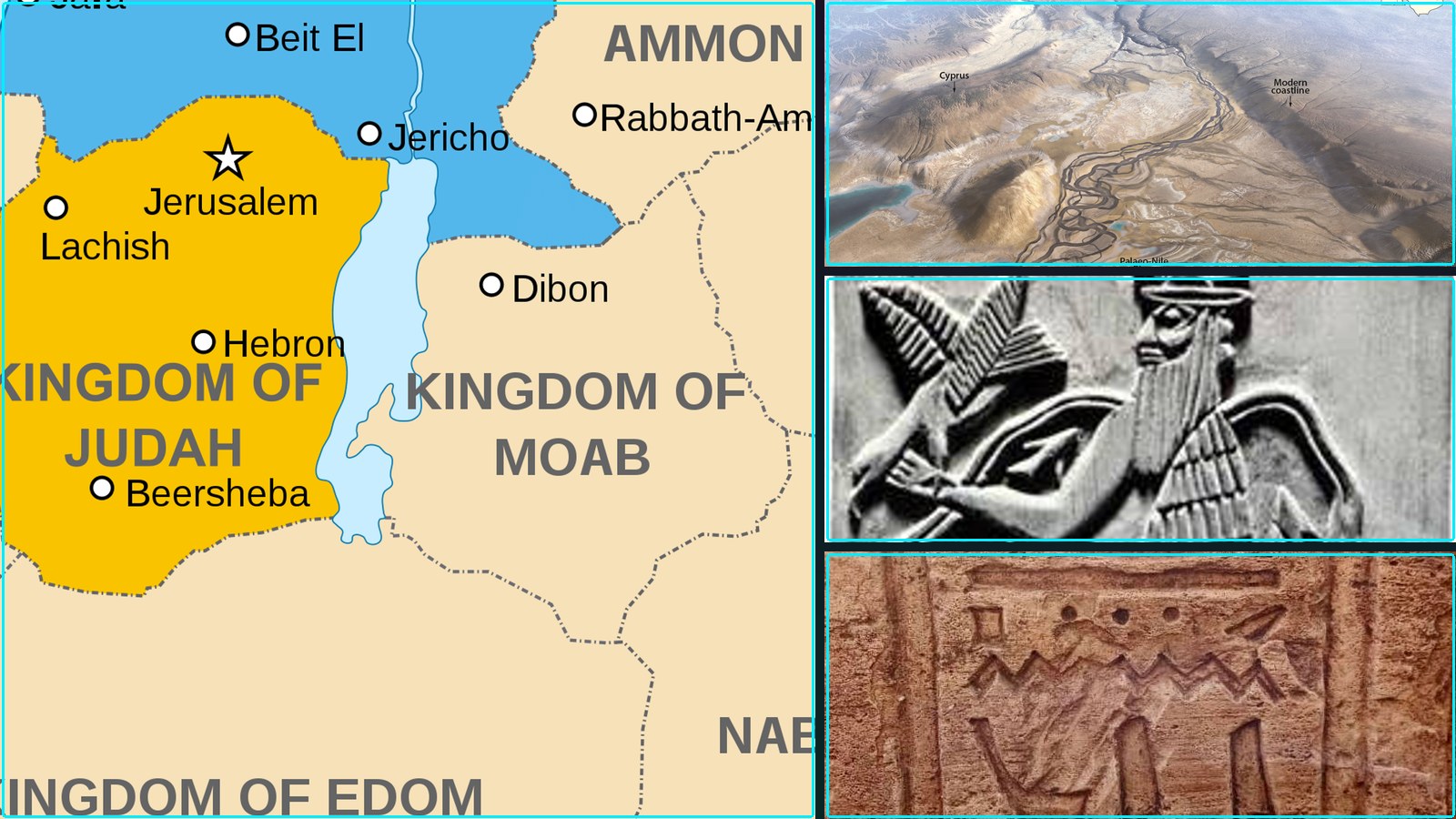
Summary: Archaeological and textual evidence confirms that Israelite and Judean religion from the 10th to 7th centuries BCE was fundamentally polytheistic and henotheistic, with Yahweh as a primary but not exclusive national deity. Practices like temple sacrifice, divination, and ancestor veneration were embedded in a broader West Semitic (Canaanite) cultural framework. The Hebrew Bible’s later monotheistic narrative is a retrospective theological construct from the 7th-3rd centuries BCE, obscuring the earlier, more complex religious reality.

Why it matters: This reframes the origins of a major world religion from a story of exceptional, revealed monotheism to a documented process of cultural evolution, with implications for historiography, theology, and the politics of religious identity.
Context: Scholarly consensus, built on epigraphy and critical biblical scholarship, has long moved beyond the biblical narrative of pristine monotheism, but public and political discourse often lags. This synthesis underscores the gap between foundational texts and historical practice.
"As early as the 10th century BCE, Israelite and Judean religion began to emerge within the broader West Semitic culture, otherwise known as Canaanite culture. Between the 10th century and the 7th." — WORLDHISTORY
Commentary: The operational consequence is that ‘Judeo-Christian’ tradition is a later synthesis, not a primordial fact. This forces a recalibration of how political and religious movements use ‘biblical’ authority for claims of cultural continuity. It also elevates archaeology and comparative ritual study over textual dogma as the primary tools for understanding early belief systems.
Date: Wed, 27 May 2026 16:00:02 +0000
URL: https://www.worldhistory.org/article/1097/ancient-israelite--judean-religion/
AI Sentiment Score: Neutral (33%)
AI Credibility Score: 10.0/10 — High
Scores and text generated by AI analysis of the source article indicated.
Ancient Egyptian Capital City Investigated (Archaeology)
Summary: A stone block bearing the cartouche of the 12th Dynasty pharaoh Senwosret III has been discovered at the site of Heracleopolis Magna, the capital of Egypt’s 9th and 10th Dynasties. The find, alongside evidence of a Doric Greek temple and a Roman-era basilica, illustrates the site’s long-term significance as a political and religious center. The Doric temple components were repurposed in the sixth century A.D. for the basilica’s foundation, demonstrating continuous, pragmatic reuse of sacred architecture across millennia.
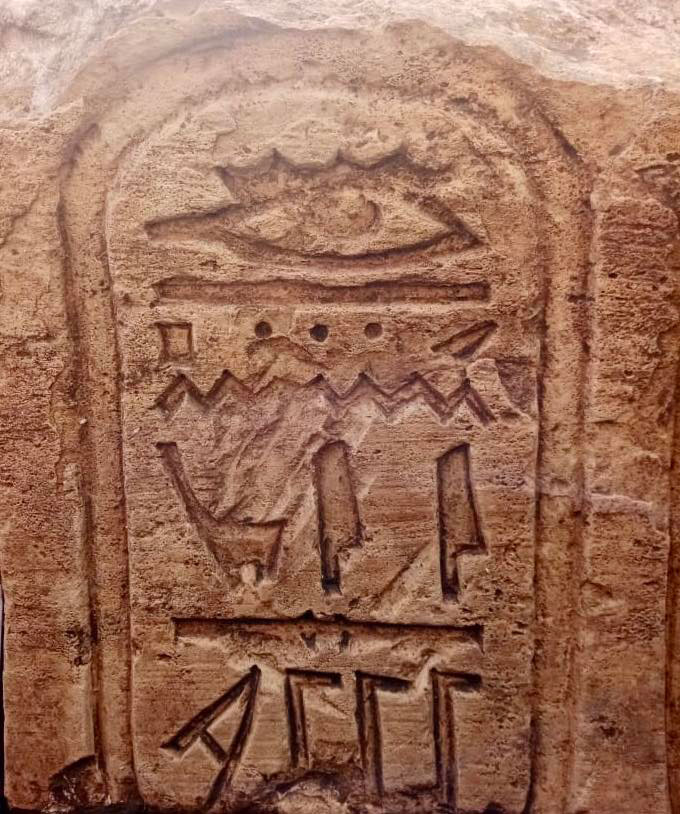
Why it matters: It reframes Heracleopolis Magna not as a provincial backwater of the First Intermediate Period, but as a persistent locus of royal authority and cultural synthesis that endured through Greco-Roman occupation.
Context: Heracleopolis Magna’s role as a capital during a period of political fragmentation has often been overshadowed by the narrative of centralized Old and Middle Kingdom power. Recent archaeology increasingly highlights the longevity and adaptive reuse of cult centers beyond the traditional Memphite and Theban heartlands.
"Components of the Doric temple were reused in the sixth century A.D. in the foundation of the basilica and in platforms for its massive pillars, El-Leithy explained." — ARCHAEOLOGY
Commentary: The operational continuity of repurposing a Greek temple for a Christian basilica underscores a pragmatic, rather than purely iconoclastic, approach to religious transition. This materially challenges simplistic narratives of cultural replacement, showing Heracleopolis as a palimpsest where political power and divine patronage were continuously re-inscribed on the same landscape, affecting local governance and ritual practice for over two thousand years.
Date: June 05, 2026 01:00 PM ET
URL: https://archaeology.org/news/2026/06/05/ancient-egyptian-capital-city-investigated/
AI Sentiment Score: Neutral (50%)
AI Credibility Score: 10.0/10 — High
Scores and text generated by AI analysis of the source article indicated.
Scientists reveal the origin of the Euphrates — a river that fed the ‘cradle of civilization’ (Livescience)
Summary: A study in Nature Geoscience reconstructs the Euphrates River’s formation, showing it originated from the merger of two ancient rivers—the Paleo-Karasu and Paleo-Murat—around 3.6 million years ago, rather than from a single waterway. Using seismic and satellite data, researchers traced these rivers’ paths from the Mediterranean to the Persian Gulf, with the Paleo-Karasu described as larger than the modern Nile prior to merging. The river’s establishment by roughly 1.6 million years ago created the hydrological conditions that later enabled the Fertile Crescent’s development.
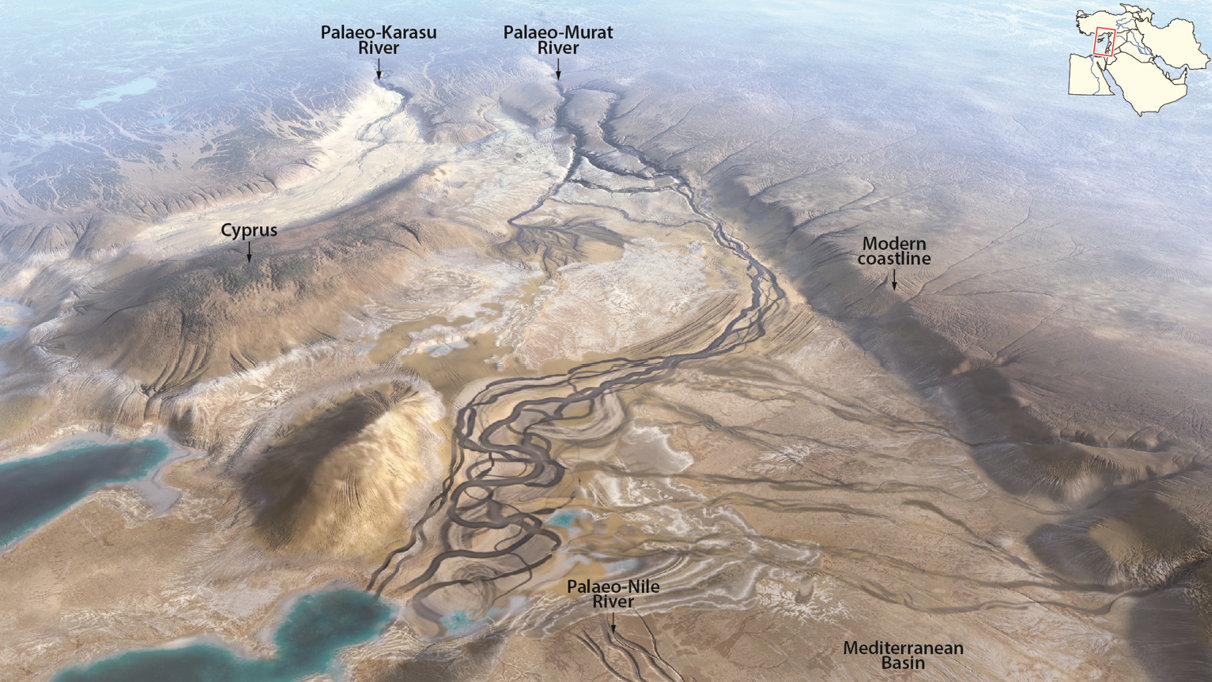
Why it matters: This redefines the environmental precondition for Mesopotamia, shifting the narrative from a static geographic given to a contingent outcome of tectonic and fluvial dynamics over deep time.
Context: The Euphrates’ origins have been debated, with prior hypotheses proposing a single source river; this study resolves the debate with high-resolution geological evidence and reframes the river as a product of specific, timed tectonic events.
"If the Palaeo-Murat and Palaeo-Karasu rivers had not switched course and merged when they did, it is unclear whether the Fertile Crescent would have formed in the way it did,." — LIVESCIENCE
Commentary: The finding underscores that civilization’s ‘cradle’ rested on a geologically recent and fragile arrangement. It elevates tectonic activity from a background process to a decisive shaper of human history, suggesting that the routes for early human migration out of Africa were similarly contingent on these waterway shifts. For contemporary water policy in the region, it’s a reminder that the river’s flow is not an eternal suggest but the current phase of a dynamic system.
Date: Mon, 01 Jun 2026 15:01:03 +0000
URL: https://www.livescience.com/planet-earth/geology/scientists-reveal-the-origin-of-the-euphrates-a-river-in-the-cradle-of-civilization
AI Sentiment Score: Neutral (33%)
AI Credibility Score: 10.0/10 — High
Scores and text generated by AI analysis of the source article indicated.
Enki: The Tricky Sumerian God of Wisdom (Worldhistory)
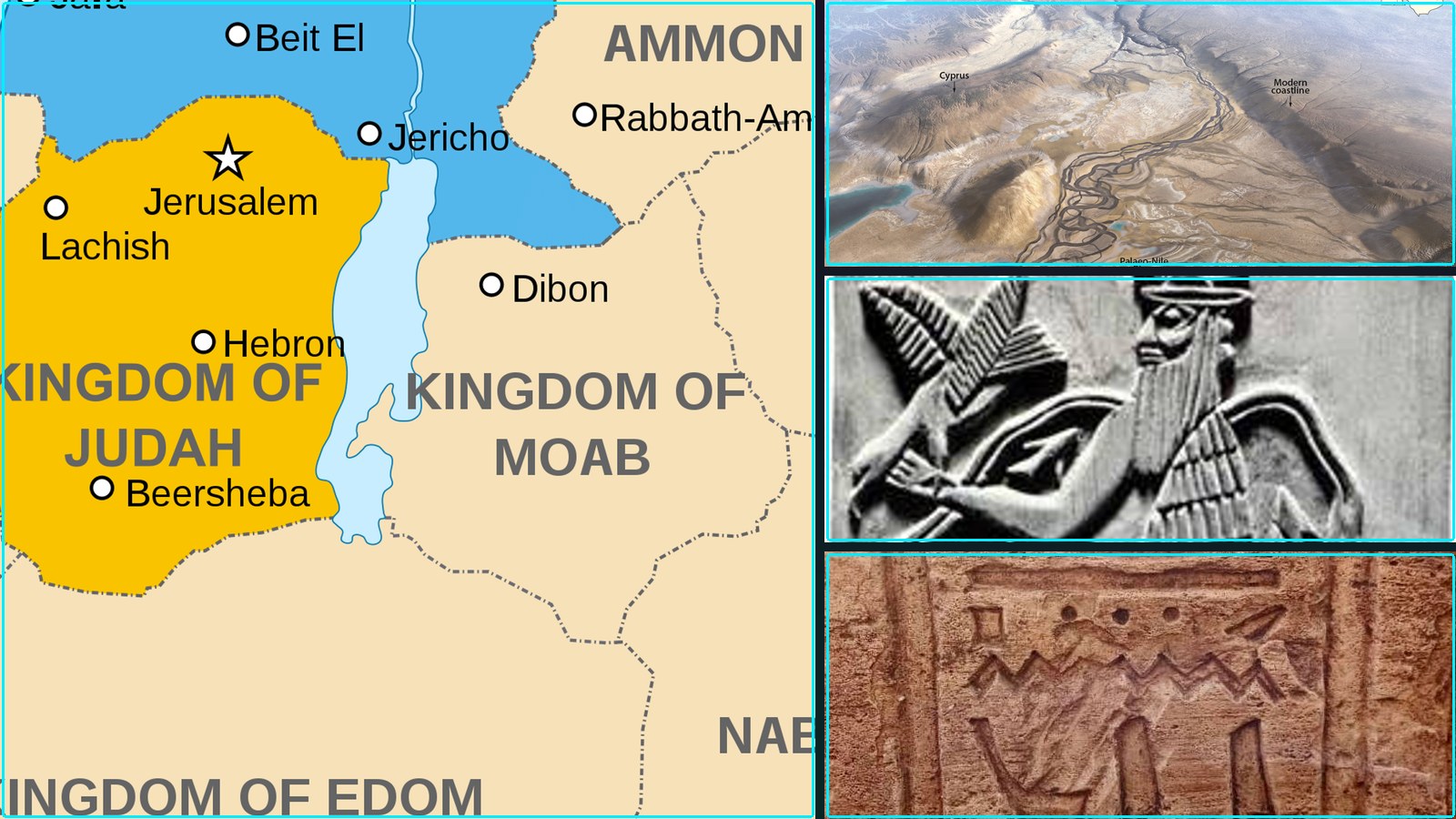
Summary: A new synthesis of Enki’s role in Mesopotamian mythology positions him not merely as a god of wisdom and water, but as a foundational trickster deity whose narrative function was to mediate between divine order and human survival. His actions—from orchestrating humanity’s creation and survival in Atrahasis to enabling Inanna’s theft of the meh—consistently subvert rigid hierarchies to inject adaptability and compassion into the cosmic framework. This reframes the Sumerian pantheon’s internal dynamics, showing Enki as a necessary counterbalance to the sterner authority of Enlil.

Why it matters: This interpretation recalibrates our understanding of early urban ideology, suggesting that the conceptual underpinnings of civilization (law, craft, irrigation) were seen as emerging not from pure order, but from a negotiated, often subversive intelligence.
Context: The analysis builds on a long scholarly trend of rehabilitating trickster figures from marginal to central roles in cosmogony, connecting Mesopotamian thought to broader patterns where cultural foundations require cleverness and rule-breaking.
"In every story or legend, Enki is associated with the heights and depths of universal understanding and is always seen as a friend of humanity. When given a choice between serving the will of the gods or the needs of the people, Enki always chose human interests and always the path of compassion, forgiveness, and wisdom." — WORLDHISTORY
Commentary: This positions Enki as a theological prototype for the patron of civil society—a deity whose loyalty is to the project of human flourishing, even at the expense of divine consensus. It implies that the earliest urban cultures encoded a recognition that their survival depended on principles (cleverness, negotiation, ethical flexibility) that stood in tension with raw power. For historians of religion, this elevates Eridu’s legacy from a mere first city to a conceptual source for a particular model of governance: one managed through wisdom and subterfuge rather than sheer command.
Date: Thu, 28 May 2026 09:00:01 +0000
URL: https://www.worldhistory.org/Enki/
AI Sentiment Score: Negative (75%)
AI Credibility Score: 10.0/10 — High
Scores and text generated by AI analysis of the source article indicated.
Funeral Cache Discovered in Egypt at Heliopolis (Archaeology)
Summary: A mudbrick tomb at Heliopolis, belonging to an individual named Panehsy, has yielded a significant funeral cache beneath its floor. The find includes cosmetic tools, a copper mirror, alabaster and obsidian kohl containers, faience vessels holding inscribed scarabs, a variety of amulets, and five pairs of gold earrings. Additional inscribed limestone blocks were also recovered.
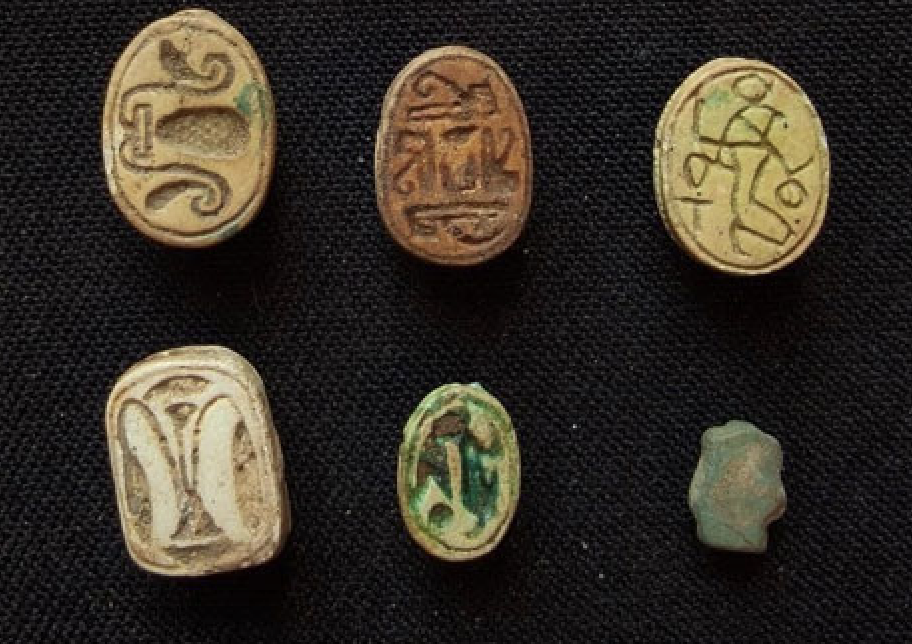
Why it matters: This cache provides a granular look at the material culture of personal adornment and ritual in a non-royal context, offering data on trade networks, craft specialization, and the democratization of elite symbols in the Heliopolis necropolis.
Context: Heliopolis was a major cult center, but its non-royal cemeteries are less documented than royal burial sites; such finds refine the social and economic stratification of the period.
"“Additional limestone blocks bearing hieroglyphic inscriptions were also uncovered, further enhancing the archaeological significance of the site and supporting efforts to better understand its chronological and cultural development,” commented Mohamed Abdel Badie of the Supreme Council of Antiquities." — ARCHAEOLOGY
Commentary: The obsidian kohl pot and gold-framed stone point to long-distance exchange, while the mix of materials—faience, carnelian, gold—illustrates a graduated hierarchy of value accessible to a mid-level official. The inscribed blocks are the critical element, potentially linking this individual’s mortuary practices to specific theological or administrative lineages within the Heliopolitan priesthood.
Date: Tue, 02 Jun 2026 18:00:00 +0000
URL: https://archaeology.org/news/2026/06/02/funeral-cache-discovered-in-egypt-at-heliopolis/
AI Sentiment Score: Neutral (50%)
AI Credibility Score: 10.0/10 — High
Scores and text generated by AI analysis of the source article indicated.
Colombian Emeralds Identified in Panama Burials (Archaeology)
Summary: Chemical analysis confirms that five emeralds found in elite burials at Panama’s Gran Coclé sites (circa A.D. 800–1000) originated from Colombian mines over 435 miles away. The stones were not direct trade items but moved through intermediary coastal and river communities, with some arriving pre-worked and others being reworked locally. Their presence alongside gold, pyrite mirrors, and megalodon teeth underscores their status as high-value, symbolically charged goods.
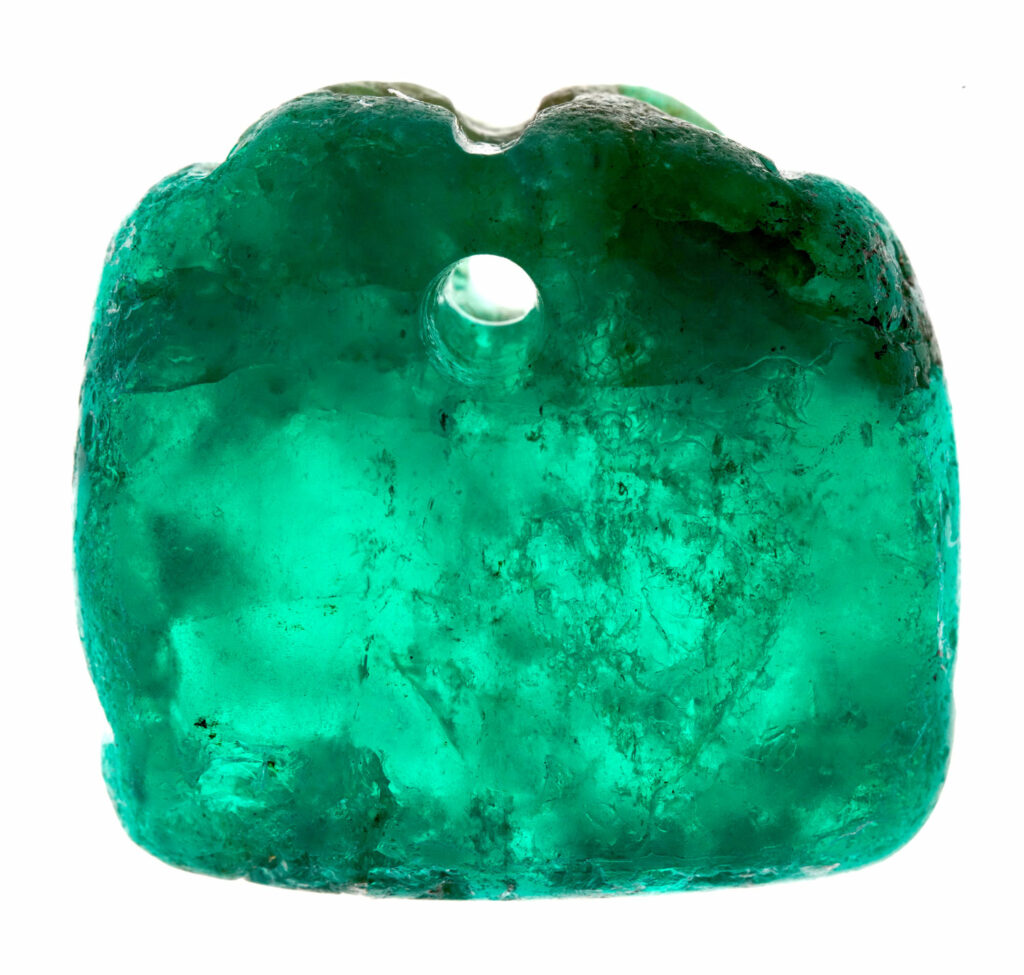
Why it matters: This refines our understanding of pre-Columbian exchange networks, demonstrating that long-distance trade in prestige goods was indirect, multi-stage, and involved local value-adding—challenging simpler core-periphery models.
Context: The Gran Coclé region is known for complex chiefdoms with elaborate mortuary practices; provenancing exotic materials is key to mapping pre-Hispanic political economies.
"PANAMA CITY, PANAMA—Phys.org reports that X-ray fluorescence, infrared spectroscopy, and photoluminescence have been used to confirm that five green stones found at two archaeological sites on Panama’s Pacific coastline are emeralds that." — ARCHAEOLOGY
Commentary: The evidence of local reworking indicates that value was not merely imported but culturally constructed, embedding distant materials into local hierarchies. It suggests a trade system more resilient and socially mediated than a simple luxury pipeline, with implications for how we model the relationship between resource extraction zones and political centers.
Date: Fri, 29 May 2026 18:30:00 +0000
URL: https://archaeology.org/news/2026/05/29/colombian-emeralds-identified-in-panama-burials/
AI Sentiment Score: Neutral (50%)
AI Credibility Score: 10.0/10 — High
Scores and text generated by AI analysis of the source article indicated.
In 2023, AI helped reveal hidden text inside scrolls buried by Vesuvius for nearly 2,000 years (Timesofindia.Indiatimes)
Summary: In 2023, a team leveraged high-resolution X-ray imaging and machine learning to non-destructively read text from a Herculaneum scroll carbonized by the eruption of Vesuvius. The breakthrough was achieved through an open-source competition, the Vesuvius Challenge, enabling the first extraction of legible content from a still-sealed scroll. This resolves a long-standing material science and philological impasse.
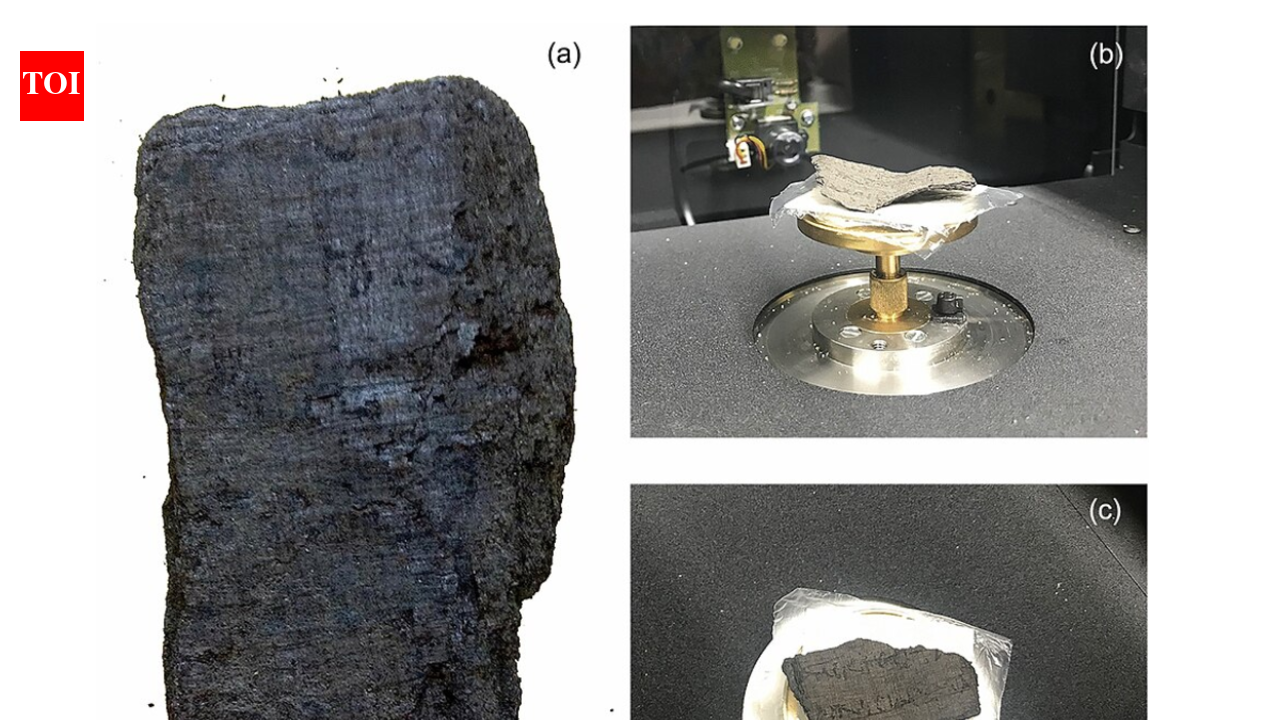
Why it matters: It demonstrates a paradigm shift in recovering primary sources from damaged classical artifacts, potentially unlocking a vast, unread library that could reshape our understanding of ancient thought, literature, and science.
Context: The Herculaneum papyri, a library of carbonized scrolls from a Roman villa, have been largely inaccessible since their 18th-century discovery. Previous attempts to physically unroll them caused irreversible damage, leaving their contents a mystery.
"By combining high-resolution X-ray imaging with advanced machine learning, researchers have managed to peer inside the sealed scrolls and read the hidden words within, all without touching the delicate physical artefacts." — TIMESOFINDIA.INDIATIMES
Commentary: The method establishes a new technical standard for non-invasive archaeology, moving the field from physical reconstruction to virtual unwrapping. It transforms the scrolls from static museum objects into active, readable archives. The open-source competition model suggests a scalable framework for tackling other intractable material puzzles, from damaged codices to lead curse tablets. The primary implication is not just recovering lost texts, but altering the velocity and collaborative nature of historical discovery itself.
Date: May 27, 2026 12:00 AM ET
URL: https://timesofindia.indiatimes.com/science/in-2023-scanners-uncovered-hidden-text-inside-scrolls-buried-since-vesuvius-destroyed-rome/articleshow/131312371.cms
AI Sentiment Score: Negative (66%)
AI Credibility Score: 10.0/10 — High
Scores and text generated by AI analysis of the source article indicated.
AI-based method for dating archeological remains (Sciencedaily)
Summary: A research team has developed Temporal Population Structure (TPS), an AI-based method for dating human genomes up to 10,000 years old. It analyzes DNA to provide chronological estimates, functioning as a complement or corrective to traditional radiocarbon dating. The technique addresses scenarios where radiocarbon results are uncertain or contested.

Why it matters: It introduces a molecular clock independent of material context, potentially recalibrating timelines for human migration, settlement, and interaction where archaeological evidence is ambiguous.
Context: Radiocarbon dating has been the dominant chronological tool for decades, but its accuracy can be compromised by sample contamination, calibration curve plateaus, and the absence of organic material. Paleogenomics has focused on ancestry and selection, less on direct dating.
"By analyzing DNA with the help of artificial intelligence (AI), an international research team has developed a method that can accurately date up to ten-thousand year-old human remains. … The standard dating." — SCIENCEDAILY
Commentary: TPS shifts dating from the environmental context of a sample to the biological signal within it, making chronology a direct product of genetic analysis. This could resolve long-standing debates where archaeological layers and carbon dates conflict, but it also centralizes interpretive authority in genomic labs and their algorithmic models. The real test will be its application to contested chronologies in regions like Southeast Asia or the early Americas, where it may force revisions of population histories.
Date: May 27, 2026 12:00 AM ET
URL: https://www.sciencedaily.com/releases/2022/08/220823162730.htm
AI Sentiment Score: Negative (80%)
AI Credibility Score: 10.0/10 — High
Scores and text generated by AI analysis of the source article indicated.
ICE returns looted cultural artifacts to Islamic Republic of Afghanistan (Dvidshub.Net)
Summary: U.S. Immigration and Customs Enforcement (ICE) is repatriating a collection of looted gold artifacts and an ancient vase to Afghanistan. The items were intercepted in Newark, New Jersey, en route to a New York business suspected of trafficking in illicit cultural property. The operation was conducted by ICE Homeland Security Investigations (HSI) New York special agents.
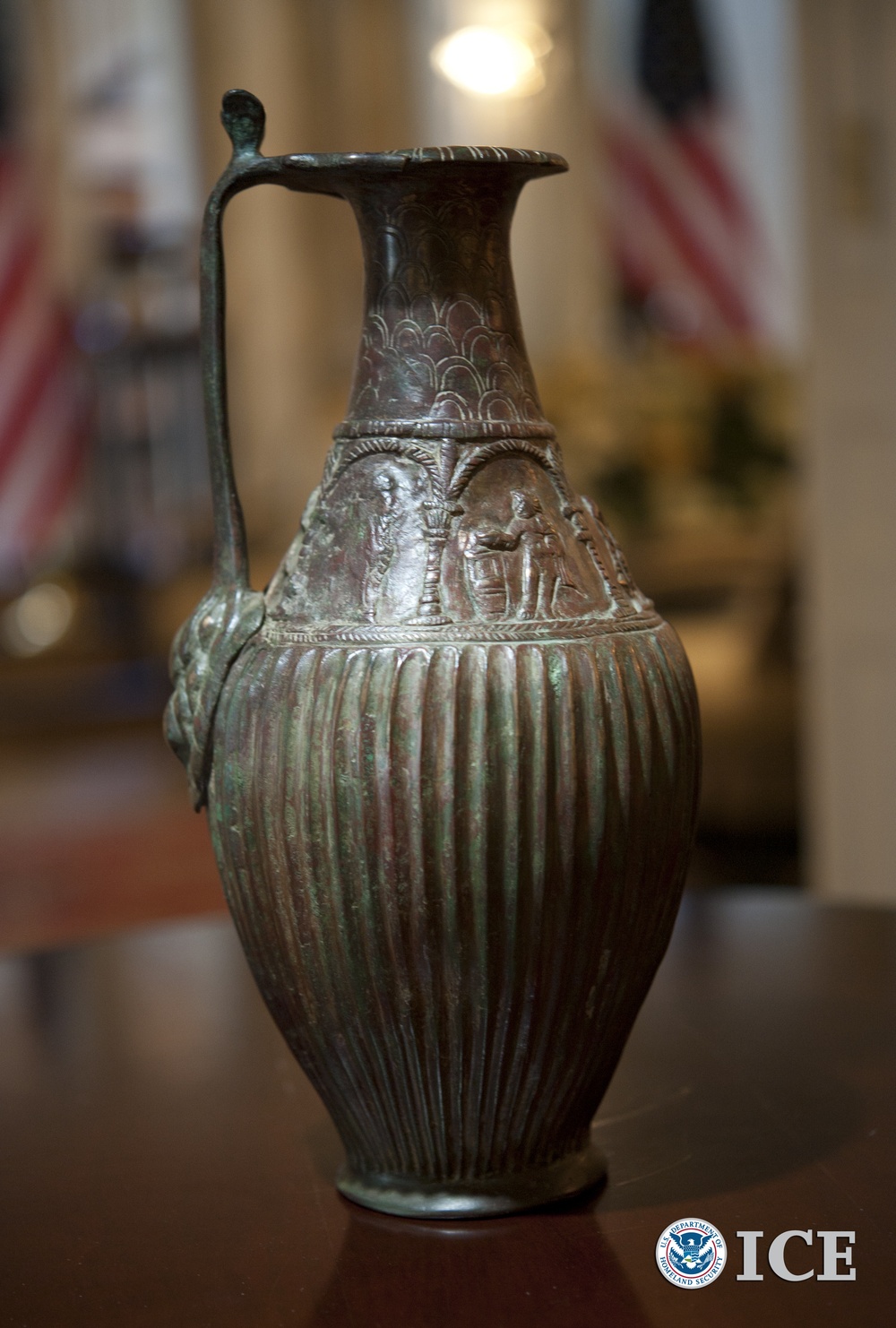
Why it matters: This action highlights the persistent role of Western markets in the illicit antiquities trade and tests the operational capacity of cultural repatriation frameworks in a period of political instability for the receiving state.
Context: The repatriation of looted artifacts to Afghanistan occurs against a backdrop of ongoing Taliban governance, raising questions about the long-term security and stewardship of returned cultural heritage.
"U.S. Immigration and Customs Enforcement (ICE) will repatriate gold artifacts and an ancient vase to the Islamic Republic of Afghanistan. The antiquities were seized in Newark, N.J., after ICE Homeland Security Investigations." — DVIDSHUB.NET
Commentary: This repatriation is less a conclusion and more a stress test for the international cultural property regime. It forces a confrontation between the legal principle of restitution and the practical realities of returning objects to a state whose capacity and ideological commitment to preservation are in serious doubt. The named New York business suggests ongoing, localized nodes within the supply chain that survive despite increased scrutiny.
Date: May 26, 2026 12:00 AM ET
URL: https://www.dvidshub.net/image/1012303/ice-returns-looted-cultural-artifacts-islamic-republic-afghanistan
AI Sentiment Score: Negative (85%)
AI Credibility Score: 10.0/10 — High
Scores and text generated by AI analysis of the source article indicated.
FirstView articles | Antiquity | Cambridge Core (Cambridge)
Summary: A quantitative analysis of residential floor area at Mohenjo-daro, a major Indus Valley city, challenges the standard archaeological assumption that early urbanism inherently produces marked economic stratification. By calculating Gini coefficients from early excavation data, researchers found that inequality actually declined over the city’s lifespan, a trend that coincided with increased prosperity and the formalization of its street grid.
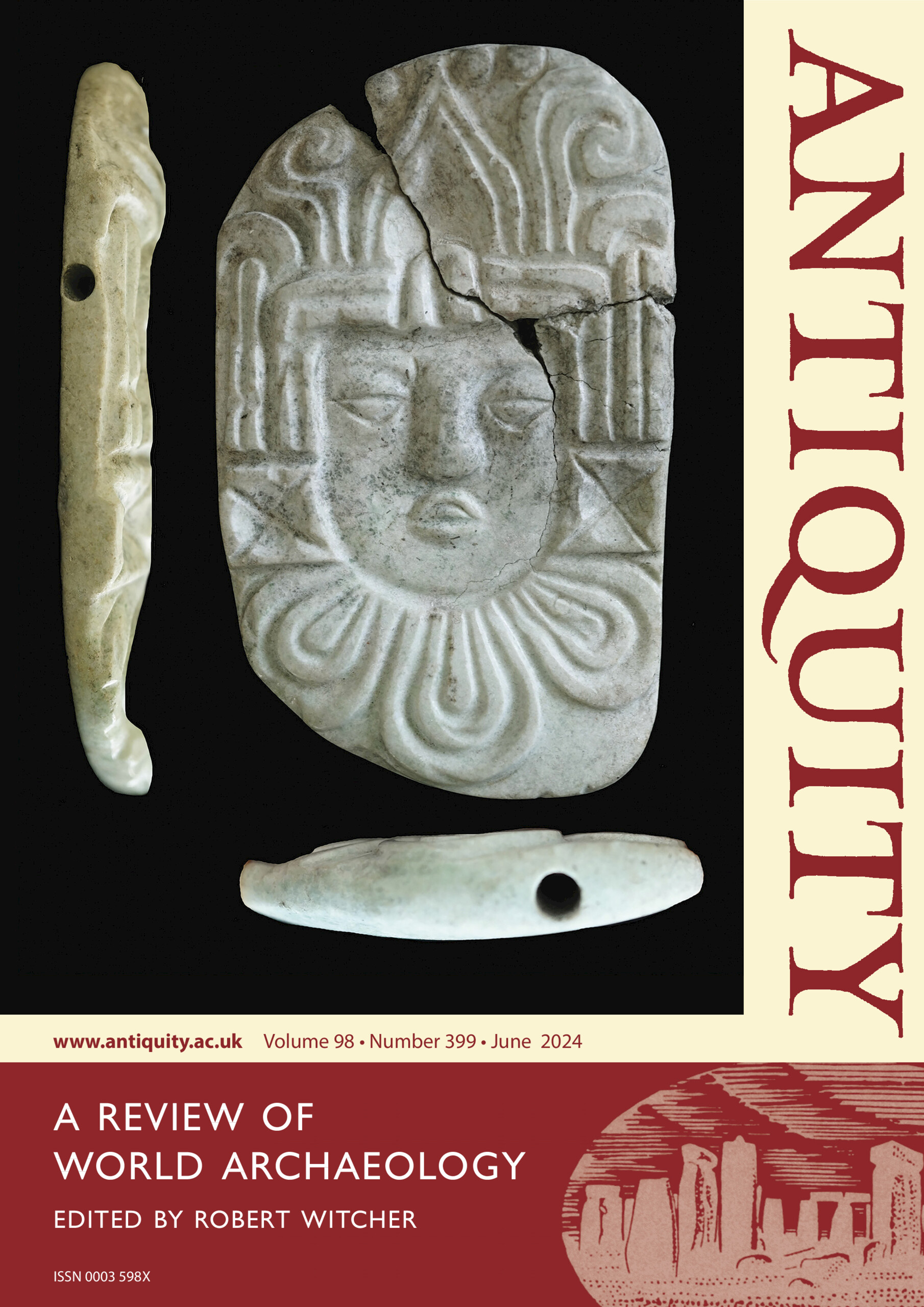
Why it matters: This reframes the fundamental narrative of state formation, suggesting that complex urban societies could develop sophisticated governance mechanisms to actively manage, rather than merely reflect, economic disparity.
Context: The Indus Valley Civilisation is often presented as an enigmatic, relatively egalitarian counterpart to the more hierarchical contemporary states of Mesopotamia and Egypt, but this has largely been a qualitative argument.
"Their results indicate that Gini coefficients, and thus inequality, declined over time, coinciding with increased prosperity and the development of the city’s street plan, indicating that governance likely helped limit economic inequality." — CAMBRIDGE
Commentary: The finding forces a reconsideration of the political economy of early states, positioning Mohenjo-daro not as a primitive anomaly but as a potential case study in pre-modern urban welfare policy. It shifts the analytical burden from proving inequality existed to explaining the institutional mechanisms that suppressed it, with direct implications for models of social complexity and resilience.
Date: May 26, 2026 12:00 AM ET
URL: https://www.cambridge.org/core/journals/antiquity/firstview
AI Sentiment Score: Negative (80%)
AI Credibility Score: 10.0/10 — High
Scores and text generated by AI analysis of the source article indicated.
Post ID: 8bd889c9