

Disasters, Crises, and Extreme Weather Worldwide
The terrifying day the U.S.-Iran war reached a sleepy Sri Lankan town (Npr)
Summary: A deadly strike during the first days of the Iran war hit far away in the Indian Ocean, jolting a quiet seaside town and showing how far the conflict’s reach extends.<br /> Geopolitical flashpoints now project kinetic risk across distant maritime nodes, complicating regional stability.

Why it matters: Geopolitical flashpoints now project kinetic risk across distant maritime nodes, complicating regional stability.
Context: The incident underscores the diffuse, non-linear reach of major power confrontations into seemingly peripheral zones.
"A deadly strike during the first days of the Iran war hit far away in the Indian Ocean, jolting a quiet seaside town and showing how far the conflict’s reach extends.<br />." — NPR
Commentary: The signal is still worth tracking, but the current extraction path did not yield enough body text for a fuller analytical read. The immediate implication is operational rather than speculative: watch how this changes budgets, workflows, or risk assumptions over the next cycle.
Date: Sun, 31 May 2026 17:11:15 -0400
URL: https://www.npr.org/2026/05/31/nx-s1-5820634/the-terrifying-day-the-u-s-iran-war-reached-a-sleepy-sri-lankan-town
AI Sentiment Score: Negative (50%)
AI Credibility Score: 10.0/10 — High
Scores and text generated by AI analysis of the source article indicated.
Typhoon Jangmi threatens Japan as Europe swelters (Theguardian)
Summary: Typhoon Jangmi is forecast to track near Okinawa before moving towards southeastern Japan, bringing powerful winds and rain. Simultaneously, Europe faces a heatwave with temperatures in Spain potentially reaching 40°C. The typhoon formed within a monsoonal gyre over the Philippine Sea, a system known for spawning and intensifying such storms.

Why it matters: Concurrent extreme weather events in key global regions disrupt critical transport and logistics hubs, strain emergency services, and signal persistent climate-driven volatility for international mobility and supply chains.
Context: The Western Pacific typhoon season regularly impacts one of the world’s busiest shipping and air travel corridors, while European heatwaves increasingly test infrastructure and public health resilience.
"A monsoonal gyre is a large, slow-rotating weather system that spawns typhoons through smaller vortices formed within it. This flow can intensify storms." — THEGUARDIAN
Commentary: The specific meteorological mechanism noted—formation within a monsoonal gyre—suggests a broader, less predictable storm structure, complicating forecasting and risk modeling for insurers and logistics planners. The co-occurrence with a European heat dome exemplifies the compound, hemispheric-scale disruptions that now routinely challenge global operational continuity.
Date: Mon, 01 Jun 2026 07:17:53 GMT
URL: https://www.theguardian.com/environment/2026/jun/01/typhoon-jangmi-japan-europe-temperatures-australia
AI Sentiment Score: Negative (83%)
AI Credibility Score: 10.0/10 — High
Scores and text generated by AI analysis of the source article indicated.
5 Are Freed in Laos Cave Rescue After More Than a Week (Nytimes)
Summary: Rescuers pumped water from the flooded cave, enabling four miners to crawl out. One used diving gear to escape earlier, and two remain missing.

Why it matters: Cave rescue complexity highlights persistent, localized infrastructural fragility and rescue logistics challenges in remote regions.
Context: The partial success underscores the high operational risk profile associated with subterranean access and resource extraction in Southeast Asia.
"Rescuers pumped water from the flooded cave, enabling four miners to crawl out. One used diving gear to escape earlier, and two remain missing." — NYTIMES
Commentary: The signal is still worth tracking, but the current extraction path did not yield enough body text for a fuller analytical read. The immediate implication is operational rather than speculative: watch how this changes budgets, workflows, or risk assumptions over the next cycle.
Date: Sat, 30 May 2026 18:53:08 +0000
URL: https://www.nytimes.com/2026/05/30/world/asia/laos-cave-rescue-four.html
AI Sentiment Score: Positive (40%)
AI Credibility Score: 10.0/10 — High
Scores and text generated by AI analysis of the source article indicated.
Inside the Ebola Epicenter, the Virus Rages With Little to Stop It (Nytimes)
Summary: A remote gold mining town is under siege, as medical workers struggle to beat back a surge of deaths and infections. Persistent outbreak in a remote mining hub signals fragile regional health infrastructure and potential cross-border contagion risk.

Why it matters: Persistent outbreak in a remote mining hub signals fragile regional health infrastructure and potential cross-border contagion risk.
Context: Focus shifts to logistical bottlenecks and the efficacy of containment measures in resource-strained, isolated locales.
"A remote gold mining town is under siege, as medical workers struggle to beat back a surge of deaths and infections." — NYTIMES
Commentary: The signal is still worth tracking, but the current extraction path did not yield enough body text for a fuller analytical read. The immediate implication is operational rather than speculative: watch how this changes budgets, workflows, or risk assumptions over the next cycle.
Date: Sat, 30 May 2026 16:15:30 +0000
URL: https://www.nytimes.com/2026/05/30/world/africa/ebola-epicenter-congo.html
AI Sentiment Score: Negative (66%)
AI Credibility Score: 10.0/10 — High
Scores and text generated by AI analysis of the source article indicated.
The drivers risking death on Ukraine’s most dangerous bus routes (Bbc)
Summary: In Kherson, Ukraine, municipal bus drivers operate under persistent and deliberate drone attacks from Russian forces, which have killed three workers and wounded eight this year alone. The city’s transport company reports that public transit has become a ‘priority target,’ with drones now using fiber-optic cables to evade jamming. Drivers, equipped with limited detectors and protective gear, continue routes to serve the remaining 65,000 residents, primarily the elderly and infirm, who rely on them for access to pharmacies and hospitals.

Why it matters: This illustrates the weaponization of civilian infrastructure and the erosion of urban mobility in contested territories, forcing essential workers into frontline roles.
Context: Kherson, retaken by Ukraine in late 2022 but under constant bombardment from across the Dnipro River, represents a pattern of hybrid warfare where sustaining basic municipal services becomes a form of civilian resistance.
"Public transport has become a priority target for Russian drone operators, the company said in a statement shared with the BBC." — BBC
Commentary: The systematic targeting of buses transforms routine mobility into a lethal gamble, collapsing the distinction between frontline and rear area. This tactic aims to paralyze civic life by making sustenance travel untenable, testing the limits of municipal resilience. The drivers’ continued operation, despite detectors being obsolete against fiber-optic guided drones, underscores a grim adaptation where institutional duty persists even as protective technology fails.
Date: Sun, 31 May 2026 23:40:57 GMT
URL: https://www.bbc.com/news/articles/c87q2eq8r1yo
AI Sentiment Score: Negative (80%)
AI Credibility Score: 10.0/10 — High
Scores and text generated by AI analysis of the source article indicated.
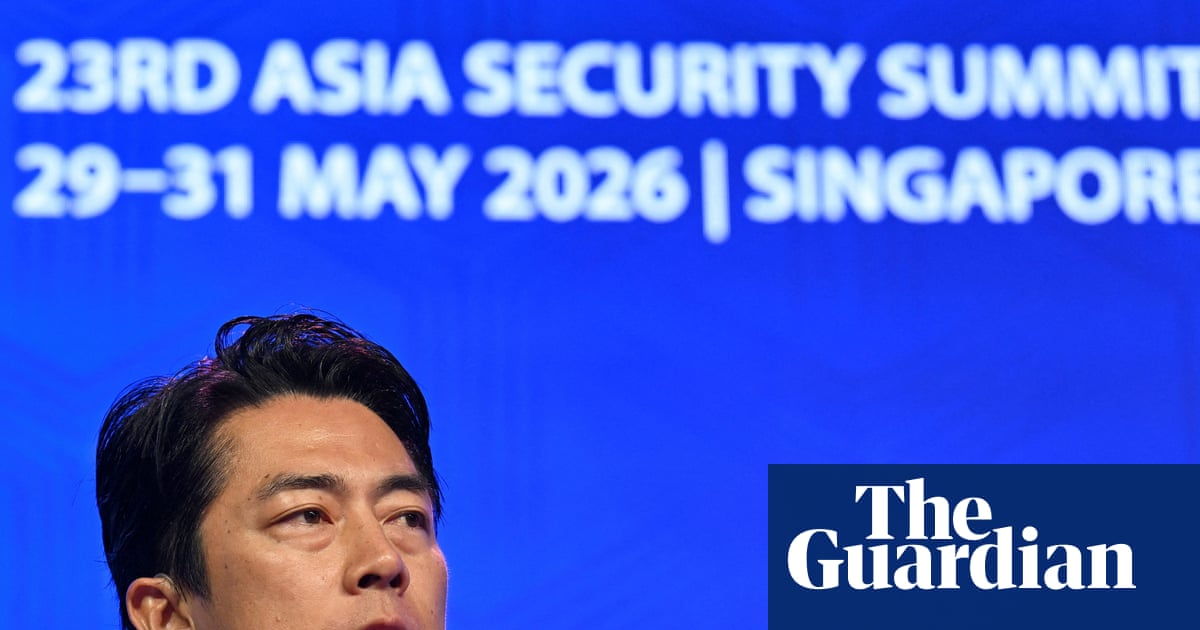
Japan defence minister rebuffs claims of ‘new militarism’ levelled by China (Theguardian)
Summary: Japanese Defence Minister Shinjiro Koizumi has publicly countered Chinese accusations of ‘new militarism,’ framing Japan’s military strengthening as a necessary response to China’s own opaque military expansion. The article notes Japan’s accelerated pivot toward a more proactive defence policy under Prime Minister Sanae Takaichi, a shift actively encouraged by the United States. This represents a continued departure from Japan’s post-war pacifist stance.
Why it matters: This public diplomatic exchange signals a hardening of security postures in East Asia, directly impacting regional stability, alliance dynamics, and global travel corridors dependent on predictable state relations.
Context: Japan’s constitutional reinterpretations and increased defence spending over the past decade have been a point of persistent tension with China, which frames the moves as historical revisionism.
"Japan’s defence minister took a veiled swipe at China on Sunday, pledging to keep strengthening the military despite Beijing’s criticism of Tokyo’s increasingly muscular security stance." — THEGUARDIAN
Commentary: The framing—Japan as ‘peace-loving’ versus China’s opaque buildup—is a deliberate rhetorical tool to legitimize Japan’s policy shift to domestic and international audiences. This public rebuff suggests diplomatic channels are insufficient to resolve the underlying security dilemma, locking both nations into a cycle of action and public condemnation that will further militarize the region.
Date: Sun, 31 May 2026 05:02:39 GMT
URL: https://www.theguardian.com/world/2026/may/31/japan-defence-minister-rebuffs-claims-of-new-militarism-levelled-by-china
AI Sentiment Score: Negative (50%)
AI Credibility Score: 10.0/10 — High
Scores and text generated by AI analysis of the source article indicated.
Post ID: 6c97eb5f