

Travel Trends and Consumer Advice
15 Things to Know Before Booking a Trip to the Maldives (Cntraveler)
Summary: A Condé Nast Traveler guide for prospective visitors to the Maldives details operational and cultural considerations beyond the standard marketing imagery. It highlights new entry regulations, including a generational smoking ban and strict prohibitions on vaping, alongside practical advice on airport logistics, resort transfers, and the fine print of honeymoon packages. The article also underscores the financial and temporal calculus of choosing between seaplane-accessible and near-Malé resorts, and advises on selecting properties with genuine sustainability commitments.

Why it matters: For high-net-worth travelers and luxury operators, these granular details affect trip viability, cost predictability, and compliance, while the sustainability emphasis reflects a shifting consumer expectation for destination resilience.
Context: The Maldives’ resort economy is navigating post-pandemic demand alongside increased regulatory scrutiny and climate pressures, forcing a more complex operational reality beneath the veneer of effortless luxury.
"The Maldives has introduced a generational smoking ban that applies to both residents and visitors: anyone born on or after January 1, 2007 cannot legally buy or use tobacco in the country. While older travelers can still smoke in designated areas (mostly within resorts), local islands tend to enforce stricter rules. Vaping, meanwhile, is banned outright, and devices will be confiscated at the airport and may even attract fines." — CNTRAVELER
Commentary: The generational ban and vaping prohibition represent a significant, non-negotiable shift in visitor compliance, moving beyond resort-bound rules to national law. This creates a new due diligence layer for travel advisors and a potential friction point for younger affluent travelers. Concurrently, the detailed advice on transfers and proof-of-marriage requirements signals a market maturation where premium pricing demands rigorous operational transparency to avoid brand-damaging disappointments.
Date: Tue, 28 Apr 2026 11:00:00 +0000
URL: https://www.cntraveler.com/story/15-things-to-know-before-booking-a-trip-to-the-maldives
AI Sentiment Score: Negative (50%)
AI Credibility Score: 10.0/10 — High
Scores and text generated by AI analysis of the source article indicated.
What Travelers Should Know About the Hantavirus, According to Medical Experts (Cntraveler)
Summary: A rare outbreak of the Andes strain of hantavirus on the expedition cruise ship MV Hondius has resulted in a coordinated international evacuation and quarantine. The virus, which can transmit person-to-person, has caused at least three deaths and several illnesses among passengers. The response involved charter flights with biocontainment units and specialized quarantine facilities, notably in the United States. Health authorities, including the WHO and CDC, assess the overall public health risk as low, with transmission requiring close contact.

Why it matters: The incident tests international outbreak response protocols for a pathogen with human-to-human transmission potential and demonstrates the operational and reputational risks for niche expedition travel.
Context: This follows a pattern of high-containment pathogen management in transport hubs and specialized medical facilities, but involves a rarely seen strain with different transmission dynamics than typical hantaviruses.
"The species of hantavirus involved in this case is the Andes virus,” Dr. Tedros Adhanom Ghebreyesus, general director of WHO, said in a press conference on May 7. This strain is “found in Latin America and is the only species known to be capable of limited transmission between humans." — CNTRAVELER
Commentary: The deployment of the National Quarantine Unit in Omaha signals a continued, post-COVID institutional capacity for high-consequence pathogen management. For the expedition cruise sector, this outbreak underscores a unique vulnerability: prolonged close contact in remote environments amplifies the risk from pathogens with even limited human transmissibility. The efficient, non-commercial evacuation likely prevented wider dissemination but will intensify scrutiny of health screening and sanitation protocols for adventure tourism in endemic regions.
Date: Tue, 12 May 2026 16:06:44 +0000
URL: https://www.cntraveler.com/story/what-travelers-should-know-about-the-hantavirus-according-to-medical-experts-3
AI Sentiment Score: Negative (63%)
AI Credibility Score: 10.0/10 — High
Scores and text generated by AI analysis of the source article indicated.
For Haitian Americans Like Myself, Soccer Keeps Us Connected to the Homeland (Cntraveler)
Summary: Haiti’s national soccer team has qualified for the 2026 World Cup, its first appearance in 52 years. For the Haitian diaspora, this is a moment of profound cultural and emotional connection, but it is shadowed by the impossibility of traveling to a homeland in crisis, where the capital’s airport is closed and gang violence is rampant. The event highlights how global sporting moments can both bridge and expose the painful distance between diasporic communities and their countries of origin.

Why it matters: It illustrates how global events can simultaneously unify a dispersed population and starkly reveal the political and infrastructural barriers that prevent full participation, reframing travel as an act of cultural access rather than mere tourism.
Context: The 2026 World Cup will be hosted across North America, placing major matches within easier reach of large diaspora communities like Haiti’s in the US. This occurs against a backdrop of prolonged political instability and travel restrictions for Haitian passport holders.
"This story is part of a series celebrating soccer cultures around the world—and the communities shaped by them. Read more 2026 World Cup coverage here. I remember the exact Sunday when I." — CNTRAVELER
Commentary: The qualification transforms the World Cup from a spectator event into a geopolitical stress test for diaspora mobility. It forces a reckoning with what ‘access’ means when symbolic participation in Los Angeles or Brooklyn substitutes for physical presence in Port-au-Prince. The team’s success, achieved while playing entirely abroad, becomes a metaphor for national resilience operating in exile, with watch parties serving as de facto embassies of culture.
Date: Sat, 30 May 2026 09:00:00 +0000
URL: https://www.cntraveler.com/story/for-haitian-americans-like-myself-soccer-keeps-us-connected-to-the-homeland
AI Sentiment Score: Negative (71%)
AI Credibility Score: 10.0/10 — High
Scores and text generated by AI analysis of the source article indicated.
Booking Flights for this Summer? What to Know About the Fuel Crisis (Cntraveler)
Summary: A jet fuel shortage, exacerbated by the Iran war, is forcing airlines to trim schedules and cancel marginal routes. While major hubs remain largely unaffected, regional and off-peak flights in Europe and North America are being cut. Carriers are strategically targeting unprofitable routes to conserve fuel and manage costs, with Europe and Asia seen as most vulnerable to further disruption.

Why it matters: The fuel crisis directly impacts travel mobility, pricing, and itinerary reliability for summer plans, forcing a recalibration of consumer expectations and airline network economics.
Context: This follows a pattern of post-pandemic aviation where carriers, having restored capacity, now face a new supply-side shock, testing the resilience of just-in-time global travel networks.
"Jet fuel prices have more than doubled since the start of the Iran war in late February, costing airlines billions of dollars and leading to a rise in global airfare. Now, a." — CNTRAVELER
Commentary: The strategic pruning of marginal routes reveals airline networks as portfolios of varying profitability, now stress-tested by fuel costs. This creates a two-tier summer: secure hub-to-hub travel and increasingly fragile regional connectivity, particularly in Europe. The crisis incentivizes a shift in traveler behavior towards direct flights and flexible tickets, effectively passing on risk management costs to the consumer.
Date: Tue, 28 Apr 2026 20:49:15 +0000
URL: https://www.cntraveler.com/story/booking-flights-for-this-summer-what-to-know-about-the-fuel-crisis
AI Sentiment Score: Negative (85%)
AI Credibility Score: 10.0/10 — High
Scores and text generated by AI analysis of the source article indicated.
Europ Assistance Holiday Barometer 2026: Geopolitical Risk Is Shaping … (Europ-Assistance)
Summary: The Europ Assistance Holiday Barometer 2026 survey finds resilient global travel enthusiasm, with 77% of Europeans planning a summer holiday despite a slight dip. However, destination calculus is shifting decisively toward security, which is now the top selection criterion in North Asia (37%), India (37%), and North America (32%). This is reshaping regional flows, with Asia, the Middle East, and North America seeing significant declines as preferred destinations from Europe. Concurrently, AI adoption for trip planning is accelerating but creating a two-speed landscape, with Asia, India, and the Middle East far ahead.

Why it matters: For travelers and the industry, the primacy of security over cost or experience signals a durable re-routing of global mobility and capital, with second-order effects on tourism economies and geopolitical soft power.
Context: This continues a multi-year trend of geopolitical risk recalibrating travel behavior, now quantified as the leading decision factor in major markets, surpassing pre-pandemic priorities.
"Safety has now become the leading destination-choice criterion in North Asia, where it reaches 37%, as well as in India (37%) and North America (32%)." — EUROP-ASSISTANCE
Commentary: The data formalizes a market correction: travel demand is inelastic, but its vectors are not. Destinations perceived as politically volatile are being penalized at scale, which could pressure national tourism boards and hospitality investors to reframe their security narratives. The bifurcation in AI adoption suggests emerging markets are leapfrogging into tech-integrated travel ecosystems, potentially creating durable competitive advantages in customer acquisition and experience design.
Date: April 28, 2026 12:00 AM ET
URL: https://www.europ-assistance.com/europ-assistance-holiday-barometer-2026-geopolitical-risk-is-shaping-travelers-trade-offs-without-dampening-the-desire-to-travel/
AI Sentiment Score: Negative (87%)
AI Credibility Score: 7.0/10 — Medium
Scores and text generated by AI analysis of the source article indicated.
Climate risk reshapes travel trends, Booking.com data shows (Ota-News)
Summary: Booking.com’s 2026 report, based on a survey of 32,500 travelers and 3,715 accommodation partners, quantifies a mainstream behavioral shift: 74% of travelers now factor extreme weather risk into destination and timing choices, with 31% having altered plans in the past year. This is driving measurable demand reallocation toward cooler destinations like Norway and Slovenia and into shoulder seasons like September, while 68% actively avoid destinations known for extreme weather. Accommodation providers are responding, with 40% adjusting operations due to climate risks.

Why it matters: This signals a structural re-pricing of destination and seasonal risk, moving from a theoretical ESG concern to an operational factor reshaping capital flows, marketing strategies, and competitive dynamics across the global travel industry.
Context: The data follows years of anecdotal reports of heatwaves and wildfires disrupting tourism, but provides the first large-scale, platform-level evidence that avoidance is now a dominant consumer preference, not just a post-disaster reaction.
"# Climate Risk Is Reshaping When and Where People Travel, Booking.com Data Shows … Climate uncertainty is no longer a niche concern for eco-conscious travelers — it is a mainstream factor actively." — OTA-NEWS
Commentary: The report crystallizes a market correction in leisure geography, where ‘peak season’ and ‘hot spot’ are being redefined by thermal comfort and predictability. This creates arbitrage opportunities for previously peripheral destinations while pressuring traditional sun-and-sea hubs to invest in resilience or diversify their offerings. The 40% of partners adjusting operations indicates this is now a core business continuity issue, not just a marketing angle.
Date: April 20, 2026 12:00 AM ET
URL: https://www.ota-news.com/booking/climate-risk-is-reshaping-when-and-where-people-travel-bookingcom-data-shows
AI Sentiment Score: Negative (66%)
AI Credibility Score: 7.0/10 — Medium
Scores and text generated by AI analysis of the source article indicated.
Study: Weather influences most travel decisions – Asian Hospitality (Asianhospitality)
Summary: Booking.com’s 2026 Travel & Sustainability Report reveals that extreme weather is now a primary factor in travel planning, with 74% of travelers considering it for destination and timing. A quarter of travelers experienced extreme weather or natural disasters in the past year, and 31% have canceled trips due to these risks. This is driving a structural shift in demand away from peak seasons and traditionally hot destinations, while forcing accommodation providers to adapt operations and manage guest expectations.

Why it matters: Weather volatility is reshaping global travel patterns, supply chains, and business models, moving from a peripheral concern to a core operational and strategic variable for the entire industry.
Context: This follows years of increasing climate-related travel disruptions, but the data now shows the behavioral and commercial tipping point where consumer anxiety is altering booking windows, destination popularity, and hospitality risk management.
"“Holidays are a big emotional and financial investment for most of us and deciding where and when to go to minimize disruption or discomfort is a key part of the decision-making process,” said Matthias Schmid, Booking.com senior vice president for accommodations." — ASIANHOSPITALITY
Commentary: The report quantifies a market correction already in motion: destinations and operators are now graded on climate resilience, not just amenities. This creates arbitrage opportunities for cooler, less-crowded locales and forces incumbent hubs to invest in reliability narratives or face off-season hollowing out. Initiatives like Radisson’s net-zero program are less about virtue signaling and more about securing a premium as a predictable, low-risk option in an unstable climate.
Date: April 29, 2026 12:00 AM ET
URL: https://www.asianhospitality.com/weather-influences-travel-decisions-study/
AI Sentiment Score: Negative (83%)
AI Credibility Score: 7.0/10 — Medium
Scores and text generated by AI analysis of the source article indicated.
8 Destinations Travel Experts Say to Skip This Summer (Travelpirates)
Summary: A 2026 travel advisory identifies Venice, Barcelona, and the Canary Islands as destinations buckling under overtourism, with cities implementing access fees, higher taxes, and potential arrival caps. The piece frames these moves not as temporary inconveniences but as systemic responses to environmental strain and local affordability crises, suggesting alternative cities like Utrecht as viable escapes from the crowds.

Why it matters: For a mobile professional class, these shifts redefine the logistics and ethics of travel, turning once-routine destinations into case studies in managed access and resilience planning.
Context: This follows a multi-year trend of European cities moving from marketing to mitigation, using fiscal and regulatory tools to manage visitor impact on infrastructure and housing.
"If your summer plans involve fighting through shoulder-to-shoulder crowds in 100-degree heat just to snap a photo of a famous fountain, we have some news for you. Several of the world’s most." — TRAVELPIRATES
Commentary: The operationalization of access fees and QR codes marks a pivot from soft nudges to hard gates, formalizing a tiered system of mobility. This creates a new class of friction for spontaneous travel and shifts competitive advantage to secondary cities, potentially redistricting economic flows across Europe. The policy spillover—from Venice’s fines to Barcelona’s rental phase-outs—signals a consolidation of municipal power over tourism, treating visitors as a regulated resource flow rather than an unalloyed good.
Date: April 23, 2026 12:00 AM ET
URL: https://www.travelpirates.com/captains-log/places-to-avoid-summer-2026
AI Sentiment Score: Positive (50%)
AI Credibility Score: 7.0/10 — Medium
Scores and text generated by AI analysis of the source article indicated.
Travelers Aren’t Canceling Their Trips to Europe This Summer—They’re Just Asking More Questions (Cntraveler)
Summary: Despite geopolitical tensions and airspace disruptions, European summer travel demand remains resilient, with bookings up 17% year-on-year according to one agency. Travelers are not canceling but are asking more questions, booking earlier, and prioritizing flexibility and private accommodations like villas. While some Eastern Mediterranean destinations see a slowdown, the overall trend is a shift toward perceived safe havens in Western and Northern Europe, with cost and control as key decision drivers.

Why it matters: This reveals how global instability is reshaping travel flows and consumer behavior in real time, with significant implications for destination economies, airline and hospitality strategies, and the broader experience of mobility.
Context: This follows years of post-pandemic travel volatility, where ‘revenge travel’ is now tempered by a more calculated, risk-aware approach, further complicated by regional conflicts affecting flight paths and perceptions.
"Geopolitical tensions are encouraging travel to Europe rather than acting as a deterrence. Bookings to Europe in general are currently up 17% year on year." — CNTRAVELER
Commentary: Europe’s role as a ‘safe haven’ is less about an absence of risk and more about its relative predictability and infrastructure. The surge in villa bookings and earlier reservations indicates a market adapting to uncertainty by seeking control through private space and locked-in logistics. This recalibration, favoring flexibility over fear, could pressure the industry to offer more modular, insured products while potentially accelerating the economic divergence between ‘perceived safe’ and ‘perceived risky’ destinations within the continent itself.
Date: Mon, 18 May 2026 20:52:10 +0000
URL: https://www.cntraveler.com/story/travelers-arent-canceling-their-trips-to-europe-this-summer-theyre-just-asking-more-questions
AI Sentiment Score: Negative (72%)
AI Credibility Score: 10.0/10 — High
Scores and text generated by AI analysis of the source article indicated.
Trump BEGS Tourists to Return After European Union Issues DIRE WARNING (Youtube)
Summary: Multiple European nations, including France, Germany, Ireland, and the UK, have issued formal travel advisories citing security conditions, immigration enforcement tensions, and potential for unrest in specific U.S. cities. This coincides with a reported 14% drop in European summer bookings to the U.S., with TUI customers redirecting to Canada, Africa, and Asia. The shift is attributed to perceptions of unpredictability in U.S. border policy and a higher-risk travel environment.
Why it matters: The coordinated advisory updates and booking data signal a structural shift in how key allied nations perceive operational risk within the U.S., with direct economic consequences for tourism-dependent regions and transatlantic travel operators.
Context: This follows a pattern of U.S. domestic policy, particularly around immigration enforcement, generating international diplomatic and commercial spillover effects, recalibrating global travel flows.
"New data indicates a significant tourism decline, as Canadians are increasingly avoiding usa travel. This trend is causing a major impact on the us economy and has become a big topic in." — YOUTUBE
Commentary: The advisory language transforms subjective political climate into actuarial risk, allowing corporate travel departments and insurers to formally deprioritize the U.S. This creates a feedback loop where reduced inbound travel from high-spending demographics further isolates specific American political narratives from external, moderating perspectives. The rerouting of TUI’s volume to alternative long-haul destinations suggests a durable reallocation of European discretionary spend, not just a temporary pause.
Date: April 20, 2026 12:00 AM ET
URL: https://www.youtube.com/watch?v=khqDRKBmJvI&vl=ru
AI Sentiment Score: Negative (66%)
AI Credibility Score: 10.0/10 — High
Scores and text generated by AI analysis of the source article indicated.
Higher fuel costs set to reroute travel across AP – Visa (Usa.Visa)
Summary: Visa’s analysis of Asia Pacific travel spending identifies a $17 billion segment spent in Europe, the Middle East, and Africa (EMEA) that is now in motion due to higher fuel costs and airspace disruptions. The report forecasts a significant rerouting of travel flows within AP in 2026, creating both risk for EMEA-dependent destinations and opportunity for AP businesses and alternative corridors. Key markets like India, Australia, Mainland China, and Hong Kong, where over 30% of outbound spend went to EMEA, will be the primary sources of this shifting demand.
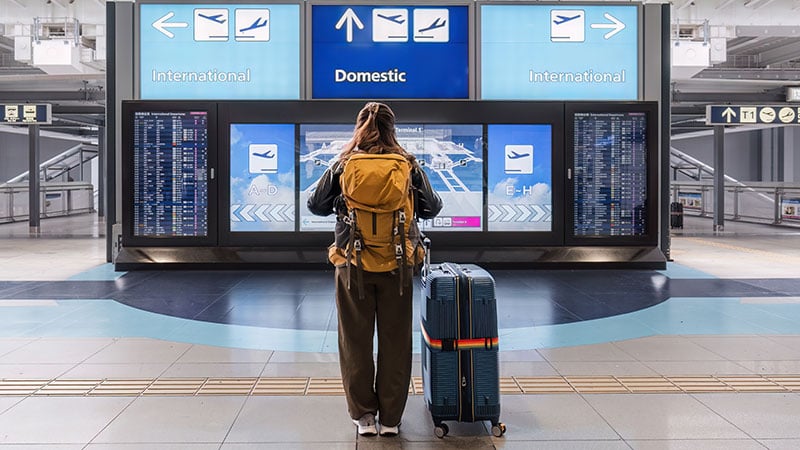
Why it matters: This reallocation of a major spending flow could reshape regional tourism economies, force rapid operational adjustments across the travel industry, and test the resilience of national tourism strategies.
Context: The analysis follows a period of post-pandemic travel recovery now confronted by new structural cost pressures and geopolitical disruptions to long-haul aviation corridors.
"# Travel and cross border Higher fuel costs set to reroute travel across Asia Pacific … Broadly defined, travel spending last year by Visa cards issued in Asia Pacific totaled nearly $180." — USA.VISA
Commentary: The report frames the disruption not just as a cost problem but as a portfolio rebalancing exercise for the entire AP travel ecosystem. Success will hinge on the speed of institutional adaptation—from visa policy adjustments in Nepal or Cambodia to payment infrastructure readiness—to capture the redirected $17 billion. The most exposed destinations, like the Maldives (68% of tourist spend from EMEA), now face an urgent need for market diversification, while secondary AP hubs have a narrow window to position themselves as substitutes for European getaways.
Date: April 22, 2026 12:00 AM ET
URL: https://usa.visa.com/partner-with-us/visa-consulting-analytics/economic-insights/higher-costs-reroute-travel-across-asia-pacific.html
AI Sentiment Score: Negative (66%)
AI Credibility Score: 10.0/10 — High
Scores and text generated by AI analysis of the source article indicated.
Travellers adapting to extreme weather – HOSPA (Hospa)
Summary: A Booking.com survey of 32,500 travelers reveals that adaptation to extreme weather is now a primary driver of travel planning, with 74% factoring in climate risks when choosing destinations and timing. Nearly a third (31%) have canceled or changed trips due to extreme weather in the past year, and over half have removed destinations from consideration due to heat or natural disasters. This is paralleled by a significant operational shift among accommodation providers, with 40% adjusting their businesses in response to climate risks. While sustainable travel intent is high across ages, older generations report more concrete sustainable actions, though demand for certified sustainable properties is consistent.

Why it matters: Climate volatility is now a core operational and strategic variable for the entire travel industry, reshaping destination viability, seasonal patterns, and consumer choice architecture.
Context: This follows years of anecdotal evidence and regional crises, crystallizing into quantifiable, global behavioral and operational shifts that are moving faster than many destination marketing organizations and infrastructure plans.
"74% of travellers consider the risk of extreme weather both when choosing destination and timing of trips, and almost a third of travellers globally (31%) reported having to cancel or change trip plans as a result of it." — HOSPA
Commentary: The data signals a transition from climate as a niche ESG concern to a mainstream risk management and product definition factor. Destinations and operators now face a bifurcated market: ‘climate-resilient’ locations and seasons will capture premium demand, while traditionally popular but vulnerable hotspots risk rapid devaluation. The uniformity of demand for sustainability-certified stays, regardless of generation, suggests certification is becoming a baseline hygiene factor rather than a differentiator, forcing industry-wide operational upgrades.
Date: April 22, 2026 12:00 AM ET
URL: https://www.hospa.org/post/travellers-adapting-to-extreme-weather
AI Sentiment Score: Negative (75%)
AI Credibility Score: 9.6/10 — High
Scores and text generated by AI analysis of the source article indicated.
Fresh research shows travellers are searching, not booking (Travelweekly.Au)
Summary: Propellic’s analysis of 60 travel brands shows a ‘frozen pipeline’ in Middle East and Mediterranean travel, where surging research traffic coincides with collapsed bookings. The data reveals a confidence crisis, quantified by a new Certainty Gap Index, with spillover effects suppressing conversions in destinations like Greece and Spain despite massive session growth. Demand is migrating to perceived safe-haven regions like Southeast Asia.

Why it matters: This quantifies a structural market failure where marketing spend is decoupling from revenue, forcing a strategic rethink for brands, investors, and destination planners.
Context: Geopolitical volatility is increasingly causing non-linear, cascading disruptions in global mobility patterns, challenging traditional regional risk models.
"Propellic has released an Intelligence Briefing on the Impact of the Middle East Conflict on Travel Marketing and a live webinar briefing to help travel brands navigate the disruption in real time.." — TRAVELWEEKLY.AU
Commentary: The CGI metric formalizes a critical insight: in unstable periods, curiosity is not a leading indicator. This forces a pivot from inspiration marketing to confidence-building logistics—insurance, cancellation terms, real-time advisories. The Mediterranean spillover shows risk perception is now geographically elastic, rendering ‘safe distance’ a fluid concept and punishing even tangential destinations. For operators, the immediate playbook shifts from acquisition to retention, servicing the anxious existing bookers who now dominate traffic.
Date: April 26, 2026 12:00 AM ET
URL: https://travelweekly.com.au/propellic-research-reveals-collapse-in-travel-bookings-beyond-the-middle-east/
AI Sentiment Score: Negative (66%)
AI Credibility Score: 9.4/10 — High
Scores and text generated by AI analysis of the source article indicated.
International Travel News 2026 – New Rules & Tourist Guidelines (Parcharmanch)
Summary: By 2026, international travel is governed by a fluid, digital-first regulatory regime. Tourist entry now hinges on pre-submitted digital visas, biometric verification, and real-time document checks, with requirements subject to rapid monthly updates. The physical process at airports—facial recognition boarding, contactless clearance—is becoming seamless only for those who have meticulously complied with pre-travel digital protocols.

Why it matters: For the globally mobile, travel has shifted from a predictable logistical exercise to a continuous compliance task, where failure to navigate the digital pre-clearance layer can result in denied entry irrespective of a physical visa.
Context: This represents the maturation of post-pandemic digital governance tools into a permanent, granular layer of border control, shifting administrative burden and risk onto the traveler ahead of arrival.
"20 April 2026 … You book a flight, pack your bag, reach the airport and suddenly there are forms, apps, scans, digital approvals. … The truth is, travel rules are no longer." — PARCHARMANCH
Commentary: The operational implication is that ‘possession of a visa’ is now a dynamic, not static, status, contingent on continuous data feeds from the traveler. This creates a two-tier system: frictionless for the digitally compliant and prepared, and impassable for others. It also embeds a new form of commercial and institutional risk for airlines, corporate travel, and event planners, who must now audit travelers’ digital pre-clearance status as diligently as their passport validity.
Date: April 20, 2026 12:00 AM ET
URL: https://www.parcharmanch.com/blog/international-travel-news-2026-new-rules-and-guidelines-for-tourists
AI Sentiment Score: Negative (87%)
AI Credibility Score: 7.0/10 — Medium
Scores and text generated by AI analysis of the source article indicated.
Booking.com Shares Findings From Travel and Sustainability Report (Lodgingmagazine)
Summary: Booking.com’s 2026 Travel & Sustainability Report reveals a significant operational shift in global travel patterns driven by climate risk. Nearly three-quarters of travelers now factor extreme weather into destination and timing choices, with over half finding trip planning stressful due to unpredictability. This is translating into concrete behavioral changes: a move away from peak summer months, a search for cooler destinations, and a willingness to visit less popular locales to avoid crowds and climate disruption.

Why it matters: This quantifies a fundamental re-routing of global tourism flows, creating immediate winners and losers among destinations and forcing accommodation providers to adapt operations and marketing.
Context: This data follows years of anecdotal reports of ‘overtourism’ and climate disruption, but provides large-scale, commercial validation that these are now primary decision-making factors for a mainstream travel audience.
"The impact of climate-related travel disruptions has already been felt by accommodation partners, 40% have already adjusted operations due to climate risks, with nearly 1 in 4 (24%) experiencing disruption in guest arrival / departure due to extreme weather, and 23% witnessing guest discomfort directly leading to negative reviews." — LODGINGMAGAZINE
Commentary: The report moves climate risk from a theoretical ESG concern to a core operational and reputational metric for the hospitality sector. Providers in traditionally ‘shoulder season’ or temperate regions now hold a tangible market advantage, while Mediterranean and tropical hotspots face a demand de-risking challenge that extends beyond marketing into infrastructure and insurance. Booking.com’s role shifts subtly from a passive aggregator to a risk intermediary, as its data increasingly dictates property valuation.
Date: April 21, 2026 12:00 AM ET
URL: https://lodgingmagazine.com/booking-com-shares-findings-from-travel-and-sustainability-report/
AI Sentiment Score: Negative (66%)
AI Credibility Score: 9.6/10 — High
Scores and text generated by AI analysis of the source article indicated.
Brand USA Launches Fact-Checking Platform to Win Back International Travelers (Skift)
Summary: Brand USA, the nation’s destination marketing organization, has launched a fact-checking platform called ‘Get Facts. Get Going.’ to counter international traveler misconceptions about new U.S. fees and entry requirements. The initiative responds to a 5.5% decline in international arrivals in 2025, partly attributed to concerns over policies like visa bonds and national park fees. The platform aims to clarify which rules are in effect and which are merely proposed, such as a $250 visa integrity fee or a requirement for five years of social media history, which have not been implemented.

Why it matters: This signals a shift from pure destination promotion to reputation management, acknowledging that policy perception now directly impacts inbound tourism revenue and market resilience.
Context: The move follows a U.S. Travel Association survey indicating significant traveler hesitancy based on unenacted proposals, highlighting how regulatory uncertainty can inflict tangible economic damage even before policies are finalized.
"The launch follows a spring survey from the U.S. Travel Association that found roughly one-third of potential World Cup visitors were concerned about a new $250 visa integrity fee and a proposed rule requiring five years of social media history from tourists. Neither rule has been implemented." — SKIFT
Commentary: Brand USA’s pivot to fact-checking is an institutional admission that marketing cannot outrun policy. It creates a public, canonical source to counter misinformation, but its necessity underscores how proposed regulations now function as de facto travel barriers. The platform’s success will be measured not by clicks but by whether it can decouple arrival numbers from the political news cycle, a task that may suggest impossible if the underlying policy environment remains volatile.
Date: Mon, 18 May 2026 13:30:00 +0000
URL: https://skift.com/2026/05/18/brand-usa-get-facts-get-going/
AI Sentiment Score: Negative (57%)
AI Credibility Score: 10.0/10 — High
Scores and text generated by AI analysis of the source article indicated.
New Research Reveals A Collapse In Travel Bookings Beyond The … (Catererlicensee)
Summary: Propellic’s Travel Marketing Index reveals a ‘frozen pipeline’ in travel bookings following the 2026 Middle East conflict, where consumer research surges but conversions collapse to near-zero across affected destinations like Jordan and the UAE. The crisis has triggered a ‘Mediterranean Sentiment Spillover,’ suppressing bookings in Greece, Spain, and Croatia despite massive year-over-year traffic increases. The data indicates a structural decoupling of intent and action, driven by safety concerns and advisory volatility, while Southeast Asia emerges as a beneficiary due to perceived distance from the conflict.
Why it matters: This represents a systemic shock to travel economics, where marketing spend becomes decoupled from revenue, forcing a recalibration of risk models, destination portfolios, and operational liquidity for the entire sector.
Context: The travel industry’s recovery post-pandemic was predicated on predictable booking curves and stable regional sentiment; this conflict has introduced a new variable of geopolitical volatility that disrupts those fundamentals.
"The report, which draws on 30 days of live performance data across more than 60 middle-market travel brands and 27 destinations, reveals a consistent and alarming pattern: traveller research is surging while booking conversions have collapsed." — CATERERLICENSEE
Commentary: The ‘Mediterranean Sentiment Spillover’ is the critical finding: it shows risk perception is now geographically unmoored, contaminating regions via airspace and advisory contagion. This forces operators to model cascading confidence failures, not just direct conflict zones. The shift to Southeast Asia is less about its inherent appeal and more about its function as a perceived safe harbor, revealing a market being reshaped by negative selection.
Date: April 24, 2026 12:00 AM ET
URL: https://catererlicensee.com/new-research-reveals-a-collapse-in-travel-bookings-beyond-the-middle-east/
AI Sentiment Score: Negative (50%)
AI Credibility Score: 8.4/10 — High
Scores and text generated by AI analysis of the source article indicated.
Travel warning escalates for popular getaway as dangers and … (Waaccommodation)
Summary: Canada has escalated its travel advisory for Morocco, urging a high degree of caution due to risks including petty and armed crime, terrorism, and kidnapping threats, particularly in southern and border regions. The advisory aligns with the U.S. State Department’s Level 2 designation and specifically warns against travel near the Algerian border and remote areas. The notice highlights that risks are not confined to remote locales, citing the potential for violent demonstrations in major cities like Rabat and Casablanca.

Why it matters: For globally mobile professionals and travelers, this reflects a tangible recalibration of risk in a major tourism hub, affecting travel logistics, corporate duty-of-care policies, and the operational stability of regional hospitality and tour sectors.
Context: This advisory is part of a broader pattern of Western governments reassessing security postures in popular tourist destinations, often driven by geopolitical tensions and domestic instability, as seen in recent warnings for Albania and Trinidad and Tobago.
"# Travel warning escalates for popular getaway as dangers and security threats mountat24 Apr 2026 By foxnews … One of America’s neighbors is warning travelers about safety risks in a North African." — WAACCOMMODATION
Commentary: The advisory’s specificity, particularly regarding border ambiguity and urban demonstrations, signals a shift from generic caution to actionable intelligence, likely prompting insurers and corporate security teams to tighten protocols. This could pressure Morocco’s tourism-dependent economy, potentially diverting mid-market travel while luxury and adventure segments recalibrate with enhanced security provisions. The parallel warnings for disparate regions underscore a fragmented global security landscape where leisure destinations are no longer insulated from geopolitical and criminal volatility.
Date: May 02, 2026 12:00 AM ET
URL: https://www.waaccommodation.com/news/travel-warning-escalates-for-popular-getaway-as-dangers-and-security-threats-mount/53357
AI Sentiment Score: Negative (75%)
AI Credibility Score: 9.0/10 — High
Scores and text generated by AI analysis of the source article indicated.
EU urges tourists not to postpone their vacation (Community.Ricksteves)
Summary: The European Commission is urging tourists not to postpone travel despite a regional conflict causing significant market volatility. Weekly passenger data shows a sharp decline in March, with US-to-Europe travel falling 35% year-over-year at its peak, driven by fuel surcharges and geopolitical uncertainty. A subsequent stabilization, termed the ‘Tzitzikostas Effect,’ followed public reassurances, though bookings remain depressed. The underlying message is that operational disruptions are manageable, and the industry is normalizing.

Why it matters: This signals a deliberate, high-level effort to stabilize a key economic sector by managing consumer psychology and preempting a summer booking collapse.
Context: The travel industry often faces demand shocks from geopolitical events, but recovery typically depends on coordinated institutional messaging to counteract perceived, rather than actual, operational risks.
"Fuel prices may continue to rise but I suspect even in the worst case –no resolution for weeks and weeks– nobody will truly be unable to get home. There may be fewer." — COMMUNITY.RICKSTEVES
Commentary: The Commission’s directive is less about logistics and more about economic triage, treating consumer sentiment as a critical infrastructure. The data reveals a market hypersensitive to official statements, where a commissioner’s reassurance can move metrics. This creates a new playbook for crisis management where public institutions directly underwrite market confidence, blurring the line between regulator and stakeholder. The lingering ‘wait-and-see’ mode suggests that while the immediate panic has subsided, the underlying risk premium on European travel has been permanently recalibrated.
Date: April 29, 2026 12:00 AM ET
URL: https://community.ricksteves.com/travel-forum/general-europe/eu-urges-tourists-not-to-postpone-their-vacation
AI Sentiment Score: Positive (42%)
AI Credibility Score: 9.2/10 — High
Scores and text generated by AI analysis of the source article indicated.
Why 2026 Is the Year of Slow Travel: What Rising Costs Mean for … (Rentremote)
Summary: Rising travel costs, led by a 7.1% YoY increase in airfares and sustained high oil prices, are structurally reshaping digital nomad behavior in 2026. Nomads are reducing locations visited annually and extending average stays, formalizing a shift toward ‘slow travel.’ This trend is reinforced by explicit policy signals from European energy officials urging reduced air travel, indicating a durable end to cheap, frictionless transit.

Why it matters: The economics and policy environment for international mobility are hardening, forcing a recalibration of remote work lifestyles and the businesses that cater to them.
Context: This follows a pre-existing trajectory captured in the MBO Partners 2025 Digital Nomads Trends Report, which showed a 14% drop in locations per year and a 19% increase in average stay length between 2023 and 2025.
"# Why 2026 Is the Year of Slow Travel: What Rising Costs Mean for Digital Nomads Airfares are up 7.1% YoY and oil prices are surging. Here’s why digital nomads are staying." — RENTREMOTE
Commentary: The shift from discretionary trend to economic imperative could pressure the short-term coliving sector while rewarding operators built for monthly-plus commitments. It also signals a broader re-localization of the digital nomad economy around regional transport hubs, potentially deepening intra-regional cultural and economic ties at the expense of long-haul connectivity.
Date: April 29, 2026 12:00 AM ET
URL: https://rentremote.com/blog/why-2026-is-the-year-of-slow-travel-rising-costs
AI Sentiment Score: Negative (57%)
AI Credibility Score: 7.0/10 — Medium
Scores and text generated by AI analysis of the source article indicated.
Travel warning escalates for popular getaway as dangers and security threats mount (Noticias.Foxnews)
Summary: Canada has updated its travel advisory for Morocco, urging a high degree of caution due to threats including terrorism, kidnapping in border regions, and violent demonstrations in major cities. The advisory aligns with the U.S. State Department’s Level 2 rating, highlighting risks that extend beyond petty crime to include instability near the Algerian border and in remote areas. This escalation comes amid a broader pattern of Western governments revising risk assessments for previously stable tourist destinations.
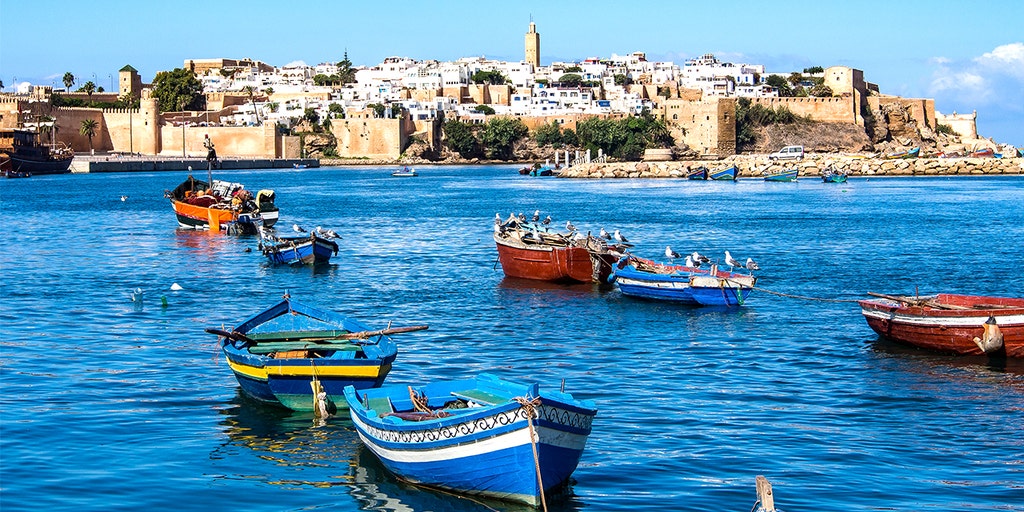
Why it matters: For a mobile professional class, these advisories recalibrate the risk calculus for leisure and business travel, affecting supply chains for creative production, event planning, and the operational security of distributed teams.
Context: This follows a pattern of Western travel advisories becoming more granular and geographically specific, often reflecting spillover from regional conflicts and internal security dynamics, as seen recently with updates for Albania and Trinidad and Tobago.
"#### Mexico travel warning issued after drug lord was killed. Cartel violence traps Americans in Mexico after a drug lord’s killing. Former U.S. Ambassador-at-large Nathan Sales advises sheltering in place, warning against." — NOTICIAS.FOXNEWS
Commentary: The advisory’s explicit mention of kidnapping and border instability signals a shift from generic warnings to actionable intelligence, forcing a reassessment of Morocco’s ‘stable destination’ brand. This could pressure tour operators and corporate travel departments to implement stricter duty-of-care protocols, potentially rerouting investment and cultural exchange. The parallel to Albania’s Iran-related advisory suggests a widening net of geopolitical friction now directly dictating tourist itineraries.
Date: April 22, 2026 12:00 AM ET
URL: https://noticias.foxnews.com/travel/travel-warning-escalates-popular-getaway-dangers-security-threats-mount
AI Sentiment Score: Negative (75%)
AI Credibility Score: 7.0/10 — Medium
Scores and text generated by AI analysis of the source article indicated.
Post ID: c9cfb522