Mars Missions and Discoveries
ExoMars rover targets vast bed of clay in search for life (Esa.Int)
Summary: A new study using orbital data from Mars Express and Mars Reconnaissance Orbiter reveals the clay-rich deposits at the ExoMars Rosalind Franklin rover’s landing site, Oxia Planum, are part of a vast regional formation extending 600 km to Mawrth Vallis. The continuity and scale suggest a large-scale, water-driven process—potentially a deep ancient ocean or massive groundwater floods—around four billion years ago. The analysis also identified a paleosurface marking a significant pause in sedimentation and a shift in water chemistry, indicating an intermittently wet early Martian climate. The rover’s upcoming surface mission is now framed to ground-truth these orbital findings and investigate the region’s potential to preserve biosignatures.

Why it matters: This recontextualizes the ExoMars mission from a local geological survey to a regional climate investigation, raising the stakes for its biosignature search by linking the site to planet-scale hydrological processes.
Context: ExoMars has faced significant delays; this pre-landing science refines the mission’s specific objectives and provides a stronger, evidence-based narrative for its public and institutional stakeholders ahead of its anticipated launch and landing.
"ExoMars rover targets vast bed of clay in search for life In the region where the ExoMars Rosalind Franklin rover will search for signs of life, clay deposits extend beyond previous estimates,." — ESA.INT
Commentary: The study effectively upgrades Oxia Planum from a promising clay site to a key node in a major paleohydrological system, shifting the mission’s primary value from sample analysis to climate reconstruction. Identifying the paleosurface and depositional pause provides the rover with a specific, testable sequence of environmental change to investigate, moving beyond generic ‘habitability’ claims. This creates a clearer benchmark for mission success: the rover must now explain the mechanism behind this regional clay formation and its associated geochemical shift.
Date: June 04, 2026 02:30 AM ET
URL: https://www.esa.int/Science_Exploration/Human_and_Robotic_Exploration/ExoMars_rover_targets_vast_bed_of_clay_in_search_for_life
AI Sentiment Score: Negative (55%)
AI Credibility Score: 10.0/10 — High
Scores and text generated by AI analysis of the source article indicated.
NASA Says Farewell to MAVEN Mars Mission, Hosts Media Call Today (Nasa.Gov)
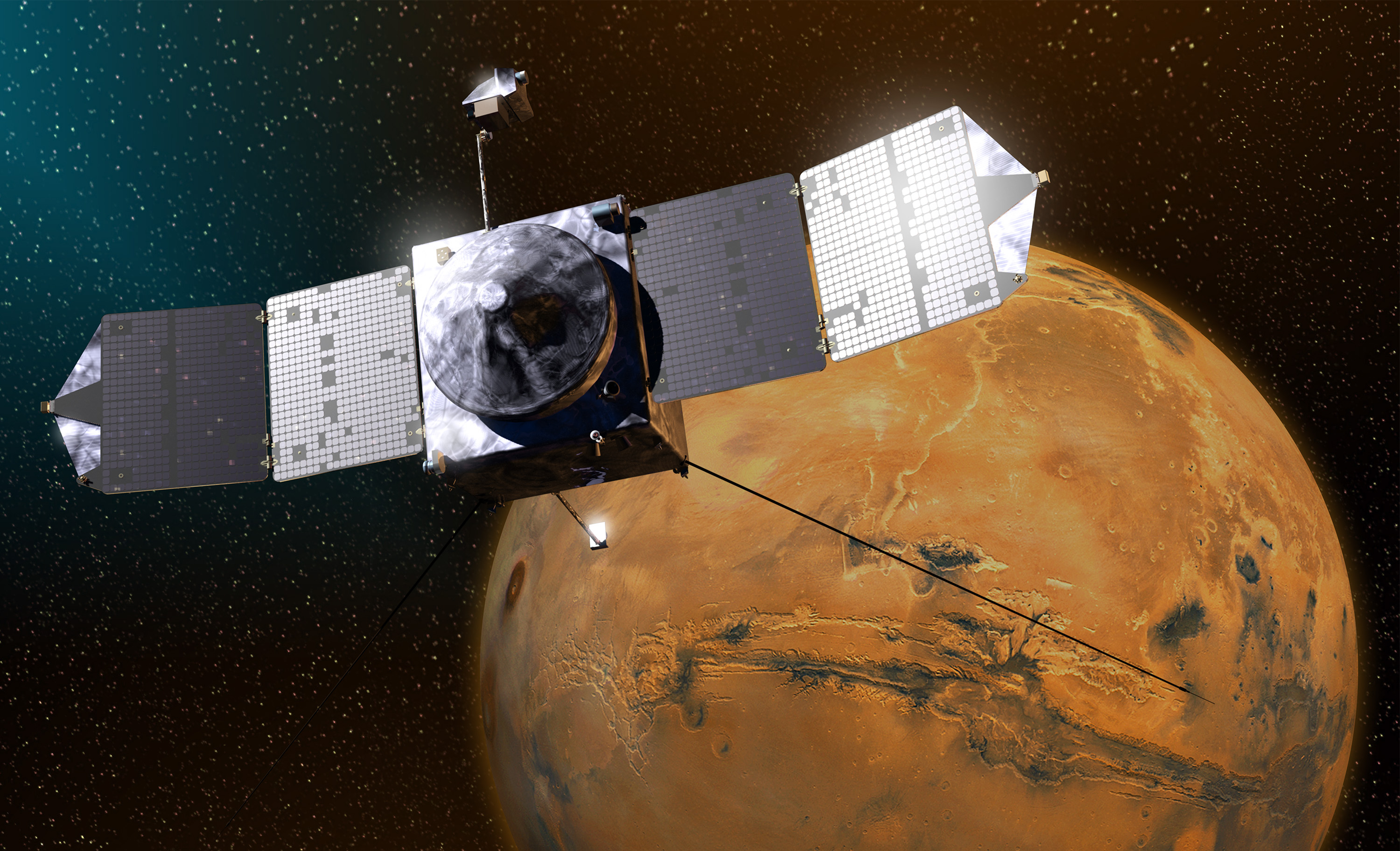
Summary: NASA has officially ended the MAVEN Mars mission after an anomaly in December left the spacecraft unrecoverable. The mission, which far exceeded its planned one-year lifespan, provided foundational data on atmospheric loss and space weather effects critical for future human exploration. Its termination also removes a key node from the Mars Relay Network, impacting data throughput from surface assets.
Why it matters: The loss of MAVEN degrades Mars orbital infrastructure and ends a unique dataset on atmospheric evolution, directly affecting mission planning for human landings and the operational cadence of current rovers.
Context: MAVEN launched in 2013 as the first mission dedicated to studying Mars’s upper atmosphere and its interaction with solar wind. Its decade of extended operations provided the primary evidence for how Mars lost its atmosphere and water.
"The first mission devoted to observing the Martian atmosphere and its evolution, NASA’s MAVEN (Mars Atmosphere and Volatile Evolution), has ended after more than 11 years in orbit at Mars and a." — NASA.GOV
Commentary: The sudden failure mode—a high rotation rate draining batteries after occultation—suggests a possible propulsion or attitude control fault, a concern for aging orbital assets. NASA’s methodical decommissioning and archive process underscores the mission’s transition from operational tool to historical dataset, while the pending anomaly report will inform future spacecraft longevity models. The immediate operational consequence is a reduction in Mars relay bandwidth, pressuring the remaining orbiters (MRO, Odyssey, TGO) and highlighting the network’s fragility.
Date: Wed, 03 Jun 2026 13:12:05 +0000
URL: https://www.nasa.gov/news-release/nasa-says-farewell-to-maven-mars-mission-hosts-media-call-today/
AI Sentiment Score: Negative (71%)
AI Credibility Score: 10.0/10 — High
Scores and text generated by AI analysis of the source article indicated.
After 11 years at Mars, NASA’s MAVEN spacecraft went out with a whisper (Arstechnica)
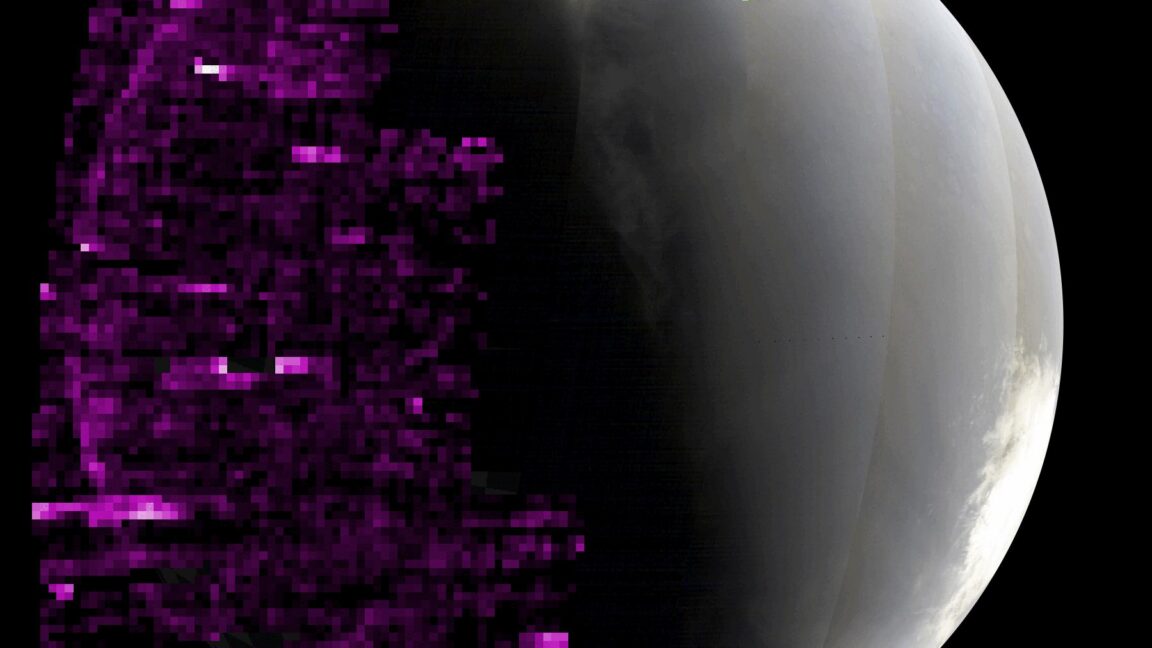
Summary: NASA’s MAVEN spacecraft, which had been studying the Martian atmosphere for 11 years, ceased communications during a routine occultation behind Mars on December 6, 2025. After months of unsuccessful recovery efforts, NASA has declared the mission lost and is beginning decommissioning procedures. The failure was sudden and unexpected for a spacecraft in excellent health, though engineers recovered fragments of post-occultation telemetry from recorded signals. The cause may remain undetermined.
Why it matters: The unexplained loss of a high-performing, long-duration science asset signals a potential new failure mode for aging orbital infrastructure at Mars, with implications for mission longevity assumptions and end-of-life planning.
Context: MAVEN far exceeded its primary mission, joining a cohort of long-lived Mars orbiters like Mars Odyssey and MRO. Its sudden failure contrasts with the gradual degradation or planned decommissioning typical of such missions.
"“NASA has ceased efforts to search for the MAVEN spacecraft and are beginning activities to decommission the mission,” said Mike Moreau, MAVEN’s project manager at NASA’s Goddard Space Flight Center in Maryland." — ARSTECHNICA
Commentary: The failure’s timing—during an occultation—suggests a critical systems fault triggered by a routine orbital event, perhaps a power or attitude control anomaly. This underscores the operational fragility of even robust platforms in deep space and will prompt reviews of contingency protocols for NASA’s remaining Mars fleet, which relies on inter-orbiter relay support.
Date: June 04, 2026 12:21 PM ET
URL: https://arstechnica.com/space/2026/06/after-11-years-at-mars-nasas-maven-spacecraft-went-out-with-a-whisper/
AI Sentiment Score: Negative (60%)
AI Credibility Score: 10.0/10 — High
Scores and text generated by AI analysis of the source article indicated.
NASA concludes MAVEN mission at Mars, uses data to discover new atmospheric phenomenon (Nasaspaceflight)
Summary: NASA has formally concluded the MAVEN mission after a six-month communications battle, ending an 11-year orbital study of the Martian atmosphere that far exceeded its planned two-year lifespan. The spacecraft, which also served as a critical communications relay for surface rovers, failed after entering an uncontrolled spin that depleted its batteries. While the anomaly’s cause remains under investigation, the mission’s extensive dataset continues to yield discoveries, including a recent identification of the Zwan-Wolf effect—a solar wind deflection process—operating within Mars’s ionosphere, a phenomenon previously thought exclusive to planetary magnetospheres.

Why it matters: The mission’s end signals a shift in Mars orbital assets and highlights the enduring value of long-duration datasets for uncovering fundamental planetary physics, with direct implications for modeling space weather risks for future human missions.
Context: MAVEN was the final mission of NASA’s Mars Scout program and a foundational asset for atmospheric science; its loss reduces redundancy in the Mars relay network and occurs as new orbital science platforms, like ESA’s ExoMars Trace Gas Orbiter, assume greater roles.
"Following a six-month battle to regain communication with its Mars Atmosphere and Volatile Evolution (MAVEN) spacecraft around Mars, NASA announced the conclusion of the MAVEN mission on June 3rd. The mission, which." — NASASPACEFLIGHT
Commentary: The discovery redefines the boundary conditions for solar wind interaction, suggesting induced magnetospheres in bodies like Venus and Titan may host similar, previously undetected dynamics. For mission planning, it underscores that atmospheric models for human-rated radiation protection must account for these nonlinear ionospheric processes, not just simple shielding analogs. The unresolved spacecraft failure, while ending operations, provides a critical engineering telemetry case for future long-duration orbiter design, particularly for battery management during attitude anomalies.
Date: June 07, 2026 04:11 PM ET
URL: https://www.nasaspaceflight.com/2026/06/maven-end-of-mission/
AI Sentiment Score: Negative (75%)
AI Credibility Score: 10.0/10 — High
Scores and text generated by AI analysis of the source article indicated.
Curiosity Blog, Sols 4908-4912: Goodbye Campo Marte, It’s Been Fun! (Science.Nasa.Gov)
Summary: Curiosity has completed its 47th successful drill, ‘Campo Marte,’ on Mount Sharp. The rover team is now analyzing the sample with CheMin and SAM instruments while conducting extensive remote sensing on layered sediments and a dark float rock. After a week of intensive post-drill science, including a potential record-breaking long-distance imaging mosaic, the rover is preparing to drive onward to investigate cross-bedding structures higher on the slope.
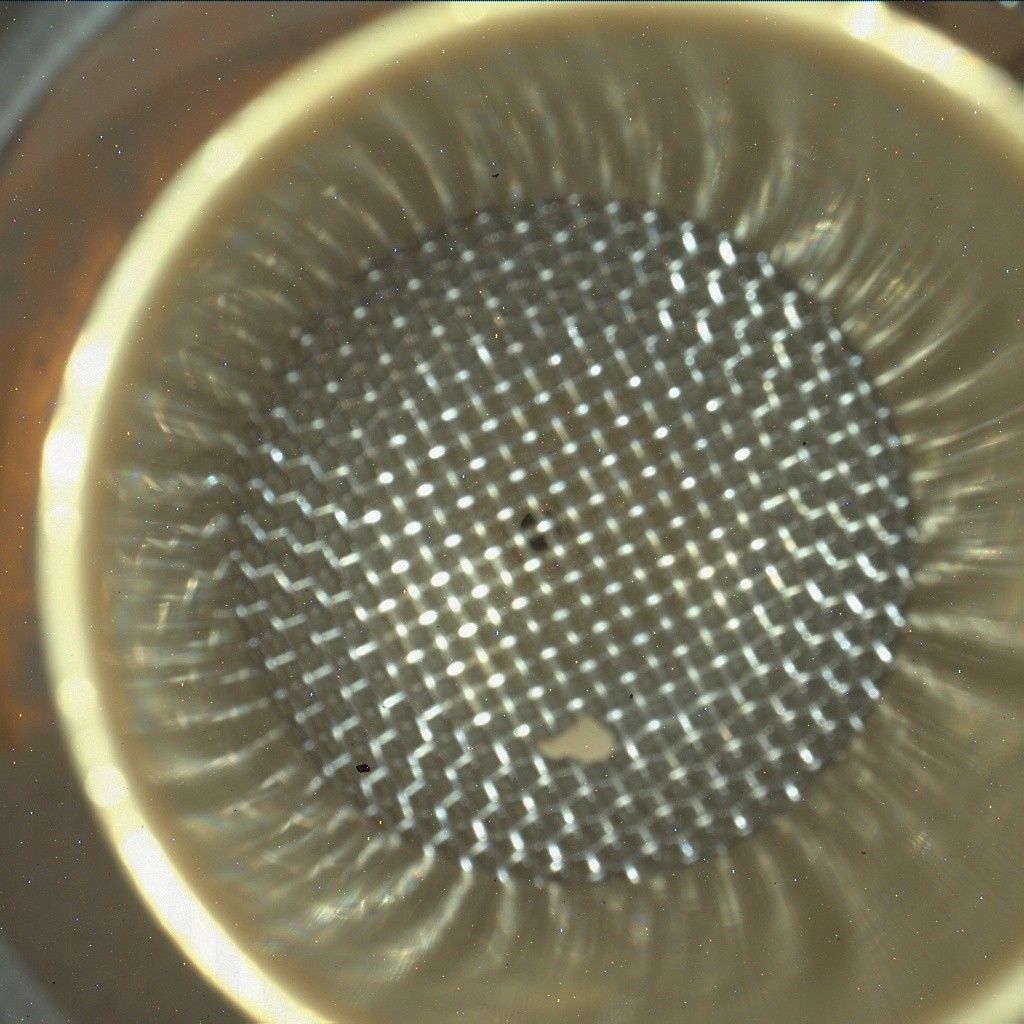
Why it matters: It demonstrates Curiosity’s sustained operational excellence and evolving science strategy, shifting from pure discovery to detailed, hypothesis-driven interrogation of Gale Crater’s geological record.
Context: Curiosity’s mission has transitioned from assessing ancient habitability to a detailed vertical traverse of Mount Sharp’s sedimentary layers, reading a climatic history of Mars. Each drill site now represents a deliberate stratigraphic sample.
"The team decided that this is a very good opportunity to increase counting statistics beyond the usual and well-tested levels by significantly increasing the measurement time. To achieve that, it measured the Campo Marte drill fines in all plans of this week." — SCIENCE.NASA.GOV
Commentary: The decision to exceed ‘usual and well-tested’ APXS measurement times signals a shift in tactical science: with core mission objectives met, the team is now investing extra time for higher-fidelity data on select targets, trading rover mobility for deeper geochemical insight. The mention of a potential imaging record after 13 years underscores an institutional culture that still incentivizes and celebrates engineering optimization, a non-trivial factor in the mission’s longevity. The drive toward ‘cross-bedding’ indicates the strategic pivot is continuing, targeting specific sedimentary structures that record ancient wind or water flow directions.
Date: Thu, 04 Jun 2026 01:28:11 +0000
URL: https://science.nasa.gov/blog/curiosity-blog-sols-4908-4912-goodbye-campo-marte-its-been-fun/
AI Sentiment Score: Positive (80%)
AI Credibility Score: 10.0/10 — High
Scores and text generated by AI analysis of the source article indicated.
NASA Finds New Way Earth May Have Received Elements Needed for Life (Science.Nasa.Gov)
Summary: A NASA-supported study in Science Advances proposes a revised model for Earth’s acquisition of life-essential phosphorus and nitrogen. By analyzing phosphorus-to-nitrogen ratios in iron meteorites and chondrites, the research indicates Earth’s inventory came primarily from inner solar system planetesimals, not from outer solar system chondrites. The model highlights Jupiter’s formative role in restricting material flow, which altered the chemical distribution for the second generation of planetesimals.

Why it matters: This reframes the geochemical pathway for terrestrial habitability and suggests a Jupiter-like planet may be a key factor in establishing a life-essential element budget on rocky worlds.
Context: The origin of Earth’s volatile elements has been debated, with some models favoring late accretion from outer solar system material.
"NASA-supported scientists have provided new information about how the early Earth may have acquired some elements necessary for the planet to become habitable. They also suggest a new role for Jupiter in." — SCIENCE.NASA.GOV
Commentary: The finding shifts the narrative from late-stage delivery to in-situ accretion, tightening the timeline for Earth’s potential habitability. It also provides a testable constraint for exoplanet system models: a giant planet’s mass and orbital history may be a prerequisite for replicating Earth’s specific elemental signature.
Date: Wed, 03 Jun 2026 18:01:00 +0000
URL: https://science.nasa.gov/science-research/planetary-science/astrobiology/nasa-finds-new-way-earth-may-have-received-elements-needed-for-life/
AI Sentiment Score: Negative (75%)
AI Credibility Score: 10.0/10 — High
Scores and text generated by AI analysis of the source article indicated.
Let’s build the moon base, but not lose sight of Mars (Spacenews)
Summary: NASA Administrator Jared Isaacman frames the Artemis lunar base program as a deliberate proving ground for Mars missions, emphasizing operational learning over standalone exploration. The opinion piece argues for a dual-track approach where lunar surface activities—power systems, infrastructure deployment, and human performance studies—are intentionally designed to reduce Mars mission risks. It warns against allowing lunar focus to eclipse parallel development of Mars-specific technologies like advanced Entry, Descent, and Landing systems, which have long lead times.

Why it matters: This signals a strategic pivot within NASA’s human exploration directorate, linking lunar program funding and political support directly to Mars readiness, which could reshape contractor incentives and mission design priorities.
Context: The argument reflects an ongoing tension within the space policy community between ‘Moon First’ and ‘Moon to Mars’ frameworks, occurring as Artemis moves from concept to early operational phases and Mars architecture studies remain underfunded.
"These are heady days for NASA and the space industry. The Artemis 2 crew flew around the moon, traveling farther into space than any humans previously had; NASA announced an ambitious new." — SPACENEWS
Commentary: Isaacman’s public framing is a political and budgetary necessity, but its operational success depends on mandating Mars-derived requirements for lunar systems—a non-trivial engineering and cost challenge. Without such mandates, the ‘feed forward’ concept risks becoming rhetorical, leaving critical Mars technologies like HIAD testing perpetually deferred. The call for parallel development acknowledges that lunar gravity, dust, and day-night cycles are poor analogs for key Martian challenges, particularly atmospheric entry.
Date: June 05, 2026 09:00 AM ET
URL: https://spacenews.com/lets-build-the-moon-base-but-not-lose-sight-of-mars/
AI Sentiment Score: Negative (62%)
AI Credibility Score: 10.0/10 — High
Scores and text generated by AI analysis of the source article indicated.
Post ID: a1c9263a