
Mars Missions and Planetary Science Discoveries
Push Back On NASA Mars Mission Cuts (Nasawatch)
Summary: Four U.S. Senators have formally requested at least $400 million for NASA’s Mars Future Missions program in the FY 2027 appropriations bill, warning that sustained underfunding will cause ‘severe and irreversible harm’ to U.S. Mars landing capabilities. The letter, addressed to the Senate Appropriations subcommittee, frames the Mars Sample Return mission as a critical testbed for technologies required for eventual human missions. It argues that the specialized workforce and infrastructure for complex Mars missions cannot be quickly reconstituted if lost.
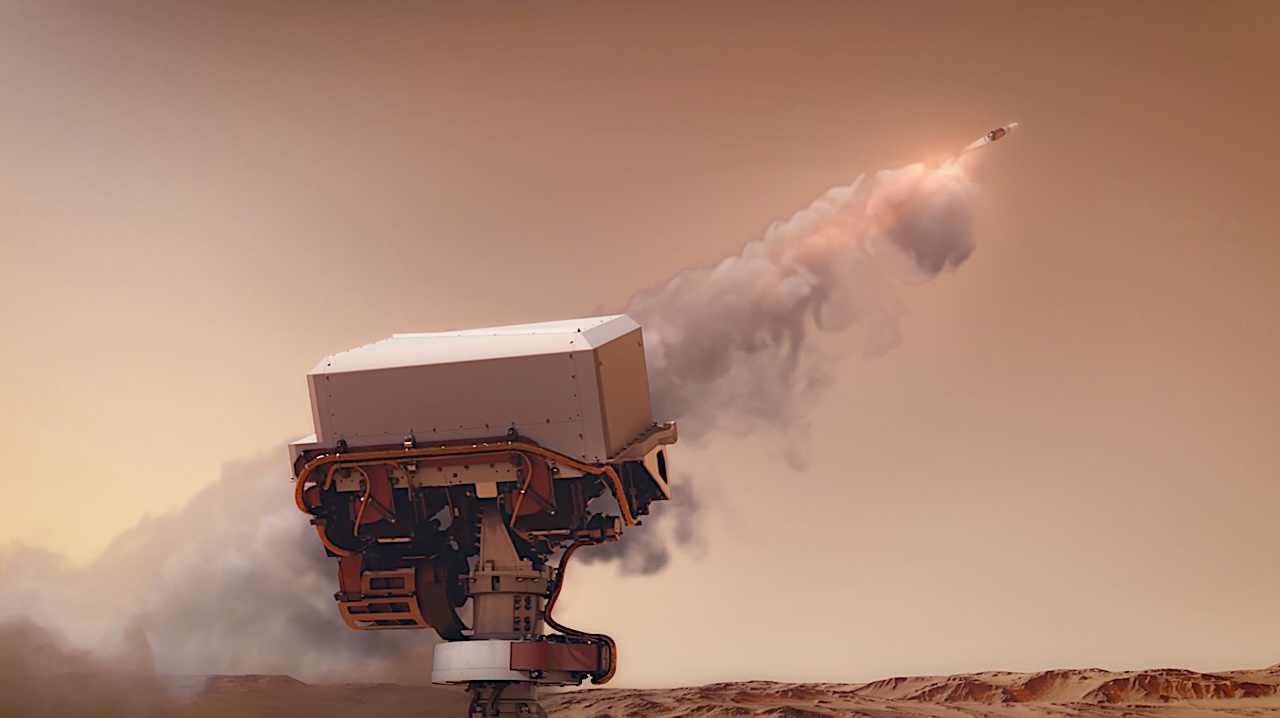
Why it matters: This is a direct political intervention to shape the budget for a flagship science program, with concrete consequences for mission cadence, industrial base preservation, and strategic competition with China.
Context: The Mars Sample Return mission has faced significant cost overruns and schedule delays, leading to congressional scrutiny and proposed budget cuts in prior years. This letter represents a counter-push from lawmakers with ties to NASA centers and the aerospace industry.
"If this funding trajectory continues and is not reversed, NASA’s Mars programs will face severe and irreversible harm, jeopardizing the United States’ ability to land spacecraft on the surface of Mars, not just in the near future, but for decades to come." — NASAWATCH
Commentary: The senators are explicitly linking robotic sample return to human Mars exploration, a political framing designed to broaden the mission’s constituency beyond planetary science. The requested report language, which encourages NASA to leverage commercial capabilities while preserving core expertise, signals a pragmatic shift toward a more hybrid public-private model for deep-space systems, even as it seeks to protect incumbent workforce and knowledge.
Date: April 21, 2026 12:00 AM ET
URL: https://nasawatch.com/congress/push-back-on-nasa-mars-mission-cuts/
AI Sentiment Score: Neutral (33%)
AI Credibility Score: 10.0/10 — High
Scores and text generated by AI analysis of the source article indicated.
NASA’s Recent Advances in Planetary Defense and Space … (Orbysa)
Summary: NASA’s operational tempo from March to April 2026 shows a portfolio balancing near-term logistics, mid-term exploration, and long-term planetary defense. Key updates include the use of James Webb Space Telescope data to refine the orbit of asteroid 2024 YR4, the rollout of Artemis 2 for testing, a scheduled Progress resupply mission to the ISS, and the upcoming launch of the Nancy Grace Roman Space Telescope. The agency also reported a successful March test of thermal protection systems via a commercial launch.

Why it matters: The integration of flagship science assets like JWST into planetary defense operations signals a shift toward more precise, data-driven hazard assessment, while the concurrent progress across multiple major programs indicates sustained budgetary and political support for NASA’s diversified agenda.
Context: This period reflects the maturation of programs initiated in the early 2020s (Artemis, DART, NEO Surveyor) into operational or near-operational phases, requiring careful schedule and resource management to avoid conflicts and maintain public confidence.
"The Center for Near-Earth Object Studies (CNEOS) at the Jet Propulsion Laboratory has utilized refined data from the James Webb Space Telescope (JWST) to improve the orbital predictions of near-Earth asteroid 2024 YR4, which poses a potential hazard within 30 million miles of Earth." — ORBYSA
Commentary: Repurposing JWST for NEO tracking is a clever, cost-effective use of existing infrastructure, but it also highlights the continued gap before the dedicated NEO Surveyor becomes operational. The Artemis 2 rollout is a visible milestone, yet its timing relative to the stated 2025 lunar return goal now appears aspirational at best, underscoring the persistent challenge of schedule realism in major human spaceflight.
Date: April 25, 2026 12:00 AM ET
URL: https://orbysa.com/news/misc/2026-04-25-nasas-recent-advances-in-planetary-defense-and-space-technology-march-april-2026-highlights
AI Sentiment Score: Positive (60%)
AI Credibility Score: 7.0/10 — Medium
Scores and text generated by AI analysis of the source article indicated.
Rover Finds Evidence of Past Life on Mars. Are We Asking the Right Questions About Life in the Universe? (Pjmedia)
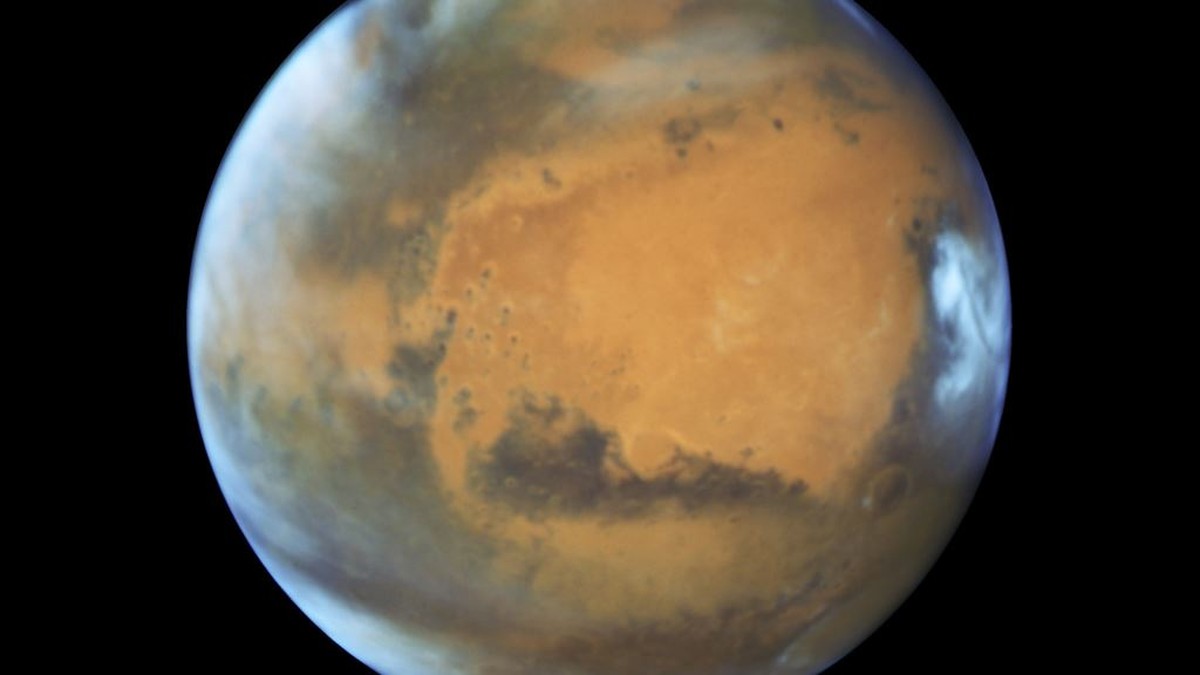
Summary: NASA’s Curiosity rover has identified a diverse mix of complex organic molecules, including a nitrogen-containing compound resembling proto-DNA, in the shallow subsurface of Gale Crater on Mars. The findings, published in Nature Communications, confirm the preservation of such materials but leave their origin—biological, meteoritic, or geological—unresolved. Concurrently, the search for extraterrestrial life is expanding methodologically, with the SETI Institute’s Allen Telescope Array now employing NVIDIA AI for real-time signal processing.
Why it matters: This moves the Mars exploration program from a search for habitability to a forensic investigation of preserved organic chemistry, while parallel efforts in astronomy and technosignature detection are adopting new computational tools, collectively shifting the operational paradigm for astrobiology.
Context: Curiosity’s mission design was optimized for detecting organic molecules, not life itself; positive results were long anticipated but remained elusive until now. The SETI Institute’s shift to AI-aided real-time analysis reflects a broader industry trend toward using machine learning to manage vast data streams from observational science.
"The Curiosity Rover has been scouring Gale Crater since it arrived on the Red Planet in 2012. Gale Crater almost certainly contained liquid water at one time in its history, and NASA." — PJMEDIA
Commentary: The discovery validates the mission’s geological targeting but creates a new bottleneck: distinguishing abiotic organic synthesis from potential biosignatures requires sample return or in-situ labs beyond Curiosity’s capabilities. The parallel investment in AI for SETI signals a pragmatic turn toward managing data volume, but it does not alter the fundamental sensitivity or strategy of the search; both developments highlight that the next phase of astrobiology will be defined by analytical precision, not just detection.
Date: April 22, 2026 12:00 AM ET
URL: https://pjmedia.com/rick-moran/2026/04/22/rover-finds-evidence-of-past-life-on-mars-are-we-asking-the-right-questions-about-life-in-the-universe-n4952051
AI Sentiment Score: Negative (75%)
AI Credibility Score: 7.0/10 — Medium
Scores and text generated by AI analysis of the source article indicated.
The great parachute bake-out (Esa.Int)
Summary: ESA has completed the planetary protection sterilization of the 35-meter diameter parachute for the ExoMars Rosalind Franklin rover. The parachute was baked at 125°C for 36 hours in a specialized cleanroom oven to eliminate terrestrial microbes, a critical step to prevent forward contamination and comply with international protocols. This parachute, the largest ever designed for a non-Earth planetary landing, will be integrated onto the spacecraft ahead of the mission’s 2028 launch.

Why it matters: This operational milestone demonstrates the non-negotiable engineering and procedural constraints imposed by planetary protection on a flagship astrobiology mission, directly affecting its schedule and integration flow.
Context: ExoMars has faced repeated delays, partly due to the complexity of its landing system; this sterilization is a prerequisite for final spacecraft assembly. Planetary protection requirements for Mars life-detection missions are exceptionally stringent, often dictating unique manufacturing and handling processes.
"Through multiple rounds of testing, they found that sterilising at 125°C for 36 hours – following a 50-hour preheating procedure to make sure even the innermost parts of the parachute reach that temperature – results in a parachute clean enough to meet all planetary protection requirements." — ESA.INT
Commentary: The 86-hour thermal cycle underscores the material science challenge of sterilizing large, complex textile assemblies without degrading performance—a hidden cost and schedule driver for sensitive missions. Successfully clearing this hurdle moves ExoMars from paper compliance to verified hardware readiness, but the real test remains the supersonic deployment in Martian atmosphere, where material properties post-baking are untested in that environment.
Date: Thu, 30 Apr 2026 13:30:00 +0200
URL: https://www.esa.int/ESA_Multimedia/Images/2026/04/The_great_parachute_bake-out
AI Sentiment Score: Negative (60%)
AI Credibility Score: 10.0/10 — High
Scores and text generated by AI analysis of the source article indicated.
Baking a parachute for Mars (Esa.Int)
Summary: ESA engineers have sterilized the 35-meter diameter parachute for the ExoMars Rosalind Franklin rover using a specialized dry-heat oven, a critical step for planetary protection. The parachute, the largest ever deployed beyond Earth, must be exceptionally clean to prevent terrestrial microbes from contaminating the Martian environment and compromising the rover’s search for life. The mission is scheduled for launch in 2028.

Why it matters: This operational detail highlights the stringent, non-negotiable engineering constraints imposed by planetary protection protocols, which directly affect mission design, schedule, and cost for any life-detection effort.
Context: Planetary protection requirements, governed by COSPAR policy, impose sterilization burdens that escalate with mission ambition, particularly for Mars where forward contamination risks could invalidate scientific objectives.
"Watch ESA’s Mars chief engineer Albert Haldemann explain the sterilisation process of one of the parachutes of the ExoMars Rosalind Franklin rover mission and why it matters. Carefully wrapped inside a donut-shaped." — ESA.INT
Commentary: The sterilization of a 74 kg nylon-Kevlar structure underscores the scale and material complexity of complying with Category IVb requirements. This procedural step, while seemingly mundane, is a direct cost and schedule driver for ExoMars, representing the tangible trade-off between scientific purity and engineering pragmatism. It also signals the mission’s continued, if delayed, progression toward its 2028 launch window.
Date: Thu, 30 Apr 2026 11:29:00 +0200
URL: https://www.esa.int/ESA_Multimedia/Videos/2026/04/Baking_a_parachute_for_Mars
AI Sentiment Score: Negative (80%)
AI Credibility Score: 10.0/10 — High
Scores and text generated by AI analysis of the source article indicated.
For the first time in history, a mission will land on Mars’ moon … (En.Clickpetroleoegas.Br)
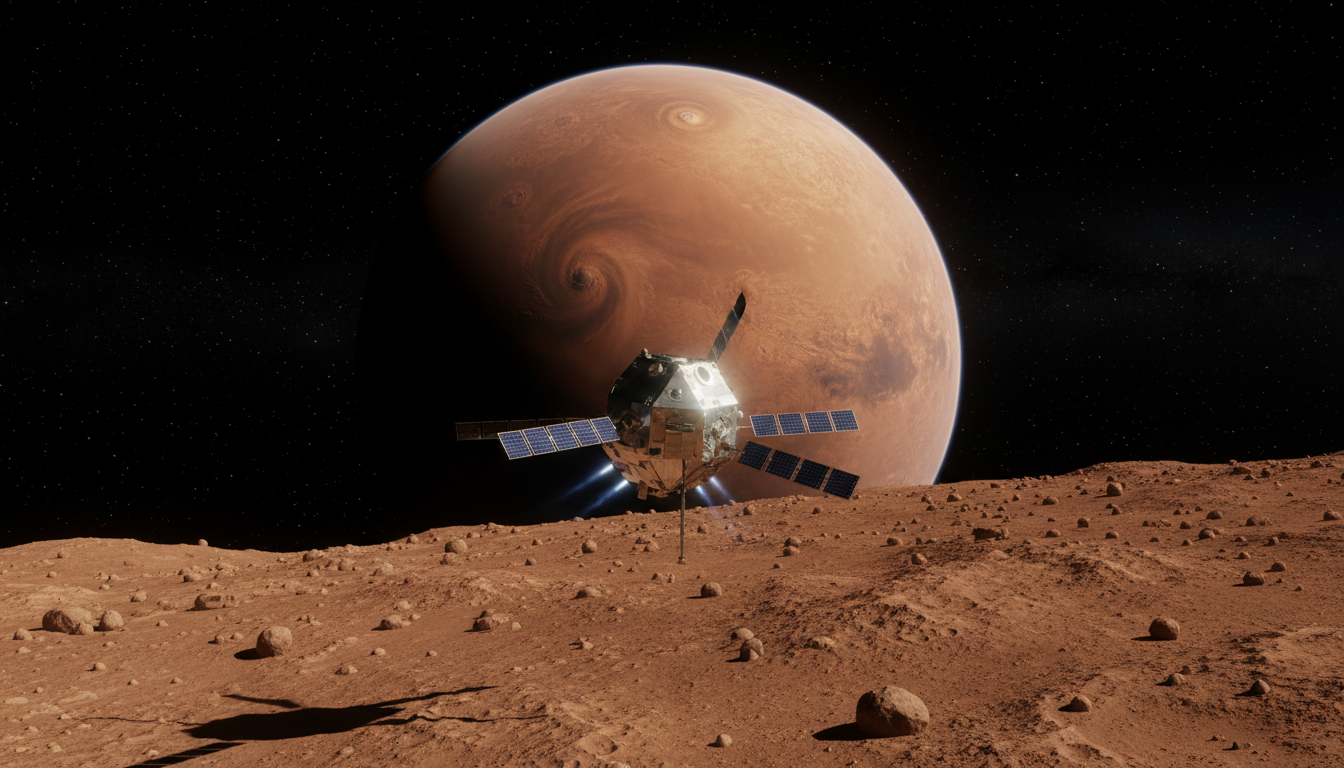
Summary: JAXA’s Martian Moons eXploration (MMX) mission, scheduled for a late 2026 launch, will attempt the first landing on the Martian moon Phobos and return samples to Earth by 2031. The mission involves an unprecedented level of international cooperation, with instruments contributed by JAXA, NASA, ESA, and CNES. Its primary scientific goal is to determine the origin of Phobos and Deimos and to analyze material that may include fragments ejected from Mars itself, potentially containing evidence of past aqueous environments.
Why it matters: This mission represents a major technological and diplomatic step in deep space exploration, with the potential to answer fundamental questions about Martian history and the solar system’s formation through direct sample analysis.
Context: Sample return missions are the gold standard for planetary science, but they are complex and high-risk. MMX follows JAXA’s successful Hayabusa2 asteroid sample return, applying similar operational concepts to a more distant target with a unique gravitational and orbital environment.
"This is the first time a mission to Mars has direct participation from four space agencies — a rare level of international cooperation in deep space exploration.." — EN.CLICKPETROLEOEGAS.BR
Commentary: The multi-agency instrument suite transforms MMX from a national project into a de facto international facility, distributing risk and broadening the scientific constituency. A successful return would not only deliver unique Mars-adjacent material but also validate the complex ascent-from-a-small-body and Mars-orbit-departure maneuvers critical for future human-scale cargo missions. The 2024 launch slip to 2026, due to H3 rocket issues, underscores the programmatic fragility of these long-lead projects; a further slip to 2028 would cascade delays through the entire international planetary science calendar.
Date: April 20, 2026 12:00 AM ET
URL: https://en.clickpetroleoegas.com.br/for-the-first-time-in-history-a-mission-will-land-on-mars-moon-that-orbits-just-6000-kilometers-from-the-planet-and-japan-intends-to-bring-a-davila/
AI Sentiment Score: Negative (75%)
AI Credibility Score: 10.0/10 — High
Scores and text generated by AI analysis of the source article indicated.
A new method in the search for life: Brilliant news (Nasaspacenews)
Summary: Researchers from the Institute of Science Tokyo propose a new statistical method for detecting extraterrestrial life. The approach shifts from analyzing single-planet biosignatures to identifying population-level patterns across clusters of exoplanets. It models how terraforming or panspermia could systematically modify observable properties, aiming to prioritize targets for intensive study while minimizing false positives from ambiguous chemical signals.

Why it matters: This represents a strategic pivot in astrobiology from definitive chemical detection to probabilistic, pattern-based inference, which could accelerate candidate selection for next-generation observatories.
Context: The search for biosignatures has been hampered by false positives from abiotic processes and the inherent difficulty of confirming life from a single, ambiguous atmospheric reading.
"A new method in the search for life identifies biological presence through statistical patterns in exoplanet clusters. This agnostic approach avoids false positives associated with single-planet biosignatures during deep space surveys. Scientists." — NASASPACENEWS
Commentary: The method is a clever statistical hedge against ignorance, but its operational utility depends on the scale and quality of exoplanet atmospheric data, which remains sparse. It reframes the search as a data science problem, requiring large, uniform survey datasets that missions like the Habitable Worlds Observatory are designed to provide. If validated, it could redirect telescope time from individual ‘goldilocks’ planets to anomalous stellar neighborhoods, changing the economics and politics of observation scheduling.
Date: April 22, 2026 12:00 AM ET
URL: https://nasaspacenews.com/2026/04/a-new-method-in-the-search-for-life/
AI Sentiment Score: Negative (75%)
AI Credibility Score: 8.2/10 — High
Scores and text generated by AI analysis of the source article indicated.
New Mars Discovery Is BIGGER News Than Artemis — But It’s Being Ignored (Youtube)
Summary: A YouTube video from April 2026 claims a new Mars discovery is more significant than the Artemis program, citing unidentified anomalies in NASA data and surface observations. It specifically references the detection of opal gemstones in a dried-up lake bed, suggesting recent aqueous activity, and an ambiguous 2025 Perseverance rover observation likened to ‘spider eggs.’

Why it matters: For space intelligence, distinguishing between peer-reviewed mission data and speculative claims is critical for assessing real programmatic and scientific priorities.
Context: Mars rover and orbital missions routinely publish geological and mineralogical findings; extraordinary claims require extraordinary evidence and formal publication through established channels like NASA or journals.
"##### Apr 21, 2026 (1:29:17) A recent discovery on Mars may be far more important than the Artemis mission, yet it’s receiving surprisingly little attention. Scientists analyzing NASA data, Mars surface observations,." — YOUTUBE
Commentary: The framing as ‘bigger than Artemis’ is a rhetorical device, not an engineering or funding reality. Opal detection would be a notable mineralogical datum confirming past water, but its presentation here lacks the mission context, instrument verification, and publication trail required for serious analysis. The ‘spider eggs’ reference is a non-technical analogy with no scientific definition, typical of sensationalist content that obscures actual rover operations.
Date: April 21, 2026 12:00 AM ET
URL: https://www.youtube.com/watch?v=YEd54yvVEoE
AI Sentiment Score: Negative (50%)
AI Credibility Score: 10.0/10 — High
Scores and text generated by AI analysis of the source article indicated.
Lockheed Martin Delivers Neutron Spectrometer to Help … (Lockheedmartin)
Summary: Lockheed Martin has delivered a Neutron Spectrometer System (NSS) to NASA’s Ames Research Center for integration into the Japan-India LUPEX lunar rover mission. The instrument, designed to detect subsurface water ice by measuring neutron flux from cosmic ray interactions, is a key hardware delivery for a planned international science mission. Its data on hydrate distribution is framed as critical infrastructure for future in-situ resource utilization to support human settlements.
Why it matters: This delivery signals tangible progress in the hardware pipeline for lunar surface exploration and moves a key resource-mapping capability from design to integration, with direct implications for the architecture of future sustained operations.
Context: The LUPEX (Lunar Polar Exploration) mission, a collaboration between JAXA and ISRO, is a flagship effort targeting the lunar south pole for volatile prospecting. Neutron spectroscopy is a proven technique, previously used on NASA’s Lunar Prospector and Mars Odyssey orbiters, now being miniaturized for surface rovers.
"Lockheed Martin’s Neutron Spectrometer System (NSS) is an instrument designed in partnership with NASA to detect water ice on planetary bodies, measuring cosmic ray interactions with hydrates in lunar or planetary regolith." — LOCKHEEDMARTIN
Commentary: The delivery, while a routine milestone, underscores the industrial shift toward supplying dedicated, flight-ready instruments for international partnerships, with Lockheed positioning itself as a subsystem provider beyond its traditional prime contractor role. The emphasis on settlement utility over pure science in the press release reflects the growing political and budgetary need to frame exploration hardware in terms of downstream human activity. Success here would validate surface-based neutron spectroscopy and provide ground-truth data to calibrate orbital maps, directly influencing landing site selection for Artemis and commercial ventures.
Date: April 21, 2026 12:00 AM ET
URL: https://www.lockheedmartin.com/en-us/news/features/2026/lockheed-martin-delivers-neutron-spectrometer-to-help-space-mission-find-water-on-moon.html
AI Sentiment Score: Positive (60%)
AI Credibility Score: 7.0/10 — Medium
Scores and text generated by AI analysis of the source article indicated.
Post ID: 460aadf0