Hacker Community
Pluralistic: Hold on for dear life (28 May 2026) (Pluralistic.Net)
Summary: Cory Doctorow’s ‘Hold on for dear life’ argues that cryptocurrency’s foundational promise of liberation from state coercion has inverted, creating a world where key holders face escalating physical danger from wrench attacks. The immutable, public ledger of crypto transactions enables long-term reidentification attacks, making anonymity a decaying defense. This reality forces crypto holders into extreme, costly personal security measures, contradicting the cypherpunk ideal of mathematical sovereignty.

Why it matters: This is a core critique of the cypherpunk/bitcoin-maximalist worldview from within the hacker community, highlighting a fatal operational flaw that transforms digital asset holders into high-value physical targets.
Context: The piece is a direct rebuttal to the ‘not your keys, not your wallet’ ethos, positioning the EFF/technopolitics faction’s view of cryptography as a tool for organizing within legal frameworks against the anti-state secessionist model.
"Today’s links – Hold on for dear life: Not your keys, not your wallet, entirely your problem. – Hey look at this: Delights to delectate. – Object permanence: Who owns "Web 2.0";." — PLURALISTIC.NET
Commentary: Doctorow frames this as a digital-rights fight and an ignored warning. The implication is a hardening of factional lines: the pragmatic, policy-oriented hacker culture versus the libertarian-secessionist wing. The concrete consequence is the normalization of extreme physical security among crypto elites, a market shift where personal safety becomes a primary cost of participation, undermining any claim to being a practical ‘internet of money.’
Date: Thu, 28 May 2026 11:24:23 +0000
URL: https://pluralistic.net/2026/05/28/we-live-in-a-society/
AI Sentiment Score: Negative (60%)
AI Credibility Score: 10.0/10 — High
Scores and text generated by AI analysis of the source article indicated.
The World’s First GPIB Speech Synthesizer, and it’s for a GRiD Compass (Hackaday)
Summary: A hardware hacker has restored a rare GRiD Compass portable computer and built a novel GPIB speech synthesizer peripheral for it. The synthesizer uses a modular design with a GPIB carrier board and plug-in modules to accommodate various vintage speech chips, emulating a printer to simplify software interfacing. This project revives a historically significant machine and expands its capabilities through a bespoke, standards-compliant interface.
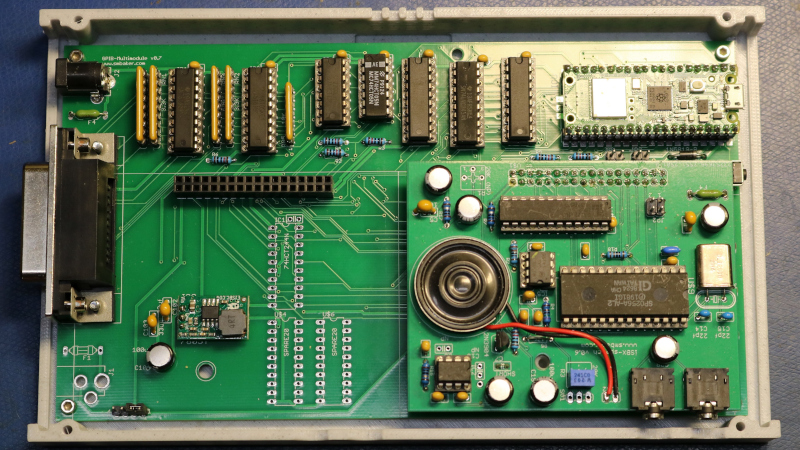
Why it matters: It demonstrates a high-fidelity, modular approach to hardware preservation and peripheral creation that treats vintage computing as a living platform, not just a museum piece.
Context: The GRiD Compass is a seminal, ruggedized laptop from the early 1980s used by NASA and the military, making functional examples and compatible new hardware rare. GPIB (IEEE-488) was its standard expansion bus.
"The GRiD Compass is a legendary portable computer — a taste of an early-80s future with bubble memory, tough enough for NASA to take them into space, and one of the machines." — HACKADAY
Commentary: This is a village/workshop signal: a deep technical restoration paired with a forward-looking, modular peripheral architecture. The project treats the GRiD not as a closed artifact but as an open platform, using its original bus to create new functionality—a practice that sustains hacker culture’s material connection to computing history. The modular chip design is a pragmatic, collector-friendly solution that acknowledges the scarcity of specific vintage components.
Date: Thu, 04 Jun 2026 15:30:20 +0000
URL: https://hackaday.com/2026/06/04/the-worlds-first-gpib-speech-synthesizer-and-its-for-a-grid-compass/
AI Sentiment Score: Negative (50%)
AI Credibility Score: 10.0/10 — High
Scores and text generated by AI analysis of the source article indicated.
When Your Little Helper Needs Help (Ifixit)
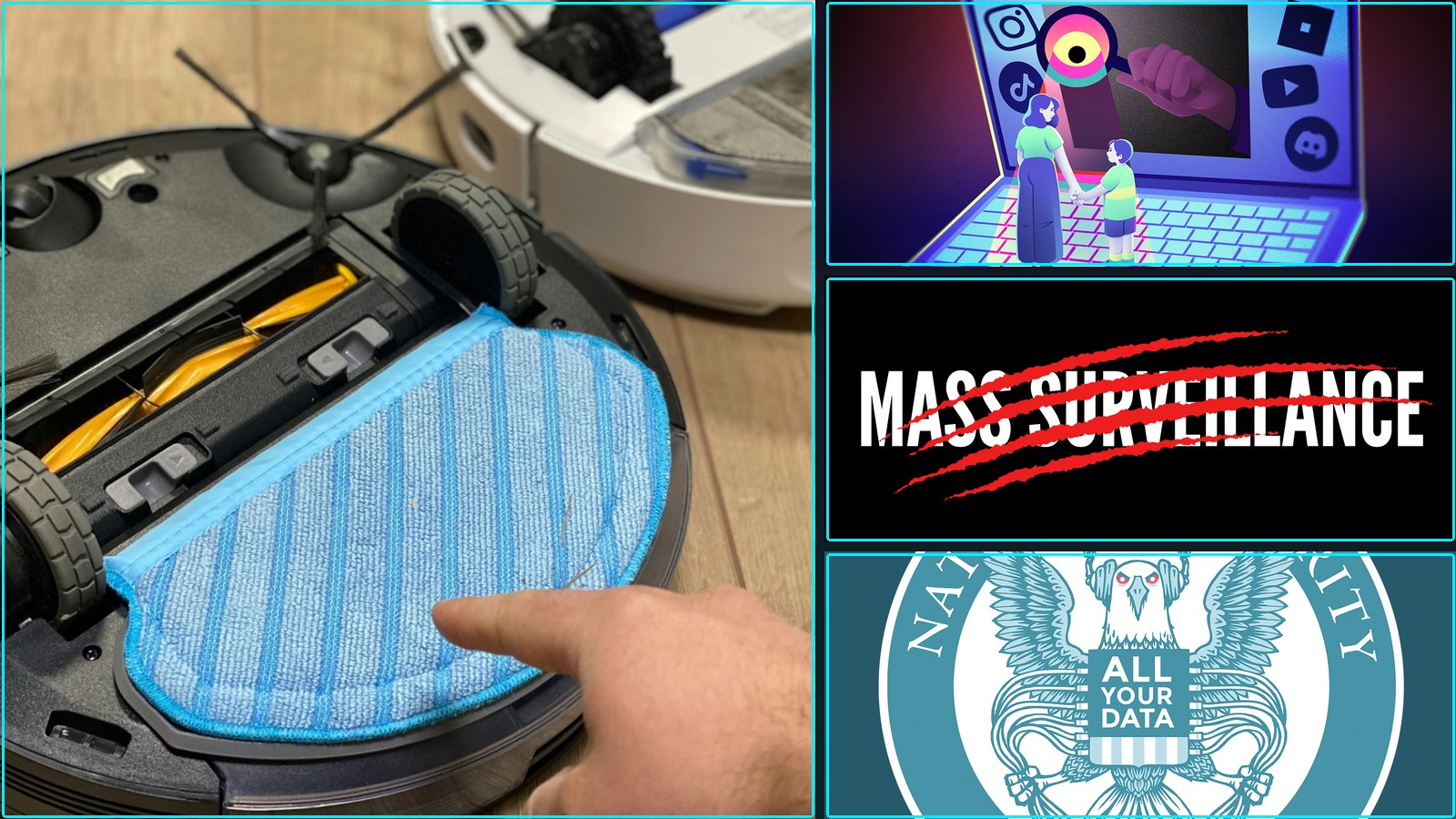
Summary: iFixit has published a comprehensive, symptom-based troubleshooting wiki for robot vacuums, developed by a community moderator. The resource systematically addresses common failures like navigation errors, battery depletion, and suction loss, steering users toward cleaning and modular part replacement over disposal. This coincides with data from the French repairability index showing many robot vacuum models score surprisingly high on repairability metrics.

Why it matters: It operationalizes the right-to-repair ethos for a ubiquitous, failure-prone consumer appliance, shifting the cultural default from replacement to diagnosis and modular fix.
Context: This is a village/workshop signal, representing the systematization of hands-on repair knowledge for a specific device class. It moves beyond ad-hoc forum posts to a structured, community-vetted decision tree.
"Robot vacuums are convenient until they aren’t. One moment, your robot is dutifully making its way across the living room. The next, it’s stuck under the sofa, failing to find its charging." — IFIXIT
Commentary: The high repairability scores are a tactical data point for advocates, undermining manufacturer narratives of inherent disposability. The symptom-first wiki structure lowers the skill barrier, potentially converting frustration into repair victories and creating a feedback loop for part compatibility data. This turns a common household annoyance into a concrete recruitment tool for the repair movement.
Date: Wed, 27 May 2026 13:35:50 +0000
URL: https://www.ifixit.com/News/117490/when-your-little-helper-needs-help
AI Sentiment Score: Negative (60%)
AI Credibility Score: 10.0/10 — High
Scores and text generated by AI analysis of the source article indicated.
In NetChoice V. Murrill, The Copia Institute Asks The Fifth Circuit Not To Keep Ignoring The First Amendment (Techdirt)
Summary: The Copia Institute has filed an amicus brief in NetChoice v. Murrill, urging the Fifth Circuit to uphold an injunction against Louisiana’s age-gating law for social media. The brief argues the law harms young people by isolating them and cutting off access to support networks, while also violating the First Amendment rights of all users by mandating invasive age verification. This case is part of a pattern where the Fifth Circuit has repeatedly overturned preliminary injunctions on similar speech-restrictive state laws, creating a critical judicial bottleneck for digital rights.

Why it matters: The Fifth Circuit’s continued hostility to First Amendment arguments in tech cases creates a direct threat to the open internet and the hacker community’s foundational tools for communication, organization, and anonymous expression.
Context: This is a digital-rights fight and an ignored-warning signal. The Fifth Circuit has become a consistent outlier, upholding state laws (Texas’s social media law, age-gating laws) that other courts and the Supreme Court have blocked, forcing repeated, costly appeals to preserve basic online speech protections.
"The problem is that if the courts can look past the constitutional problems with this one, then it can look past the constitutional problems with any of them, including ones that are even more onerous or restrictive." — TECHDIRT
Commentary: The Copia Institute’s brief frames the stakes correctly: this is about preventing a precedent that would greenlight a cascade of restrictive laws. The Fifth Circuit’s jurisprudence isn’t just wrong on the merits; its habit of dissolving preliminary injunctions allows unconstitutional laws to take effect, creating immediate, irreparable harm to speech communities before higher courts can intervene. For hackers and cypherpunks, this legal chokepoint directly threatens the infrastructure of anonymous publishing and secure communication they rely on.
Date: Thu, 04 Jun 2026 20:35:55 +0000
URL: https://www.techdirt.com/2026/06/04/in-netchoice-v-murrill-the-copia-institute-asks-the-fifth-circuit-not-to-keep-ignoring-the-first-amendment/
AI Sentiment Score: Negative (71%)
AI Credibility Score: 10.0/10 — High
Scores and text generated by AI analysis of the source article indicated.
Internet Age Gates Are a Growing Global Threat (Eff)
Summary: A global wave of legislative action is imposing mandatory age verification and outright bans for minors on social media platforms, moving from policy debate to operational enforcement. Australia has implemented a complete ban for users under 16 on ten major platforms, Indonesia and Malaysia are enacting similar restrictions, and Brazil has passed a law requiring age checks for services deemed risky to children. The EU is advancing a cross-border age verification system linked to its Digital Identity Wallet, while the UK’s Online Safety Act mandates age-gating for harmful content. These regimes compel platforms to collect biometric or government ID data, deactivate accounts, and alter algorithmic delivery, creating a new architecture of identity-based access control.

Why it matters: These laws are creating a mandatory, privacy-invasive identity layer for internet access, forcing toolchain changes for platforms and directly attacking the hacker ethic of pseudonymous, open participation.
Context: This represents a digital-rights fight escalating from advocacy to concrete, multi-jurisdictional compliance deadlines, with Australia’s ban already in effect and Brazil’s full implementation set for 2027.
"The problem of censorship and surveillance goes far beyond the borders of the internet. EFF continues to explore support for legislative and litigation challenges that recognize how these laws harm everyone’s rights to privacy, free expression and due process." — EFF
Commentary: The operational consequence is a forced re-engineering of platform access controls, creating a lucrative market for age-verification vendors while pushing privacy-preserving and free-software projects into legal non-compliance. This is a cypherpunk infrastructure fight: the state is demanding a trusted third party for basic digital citizenship, directly contradicting the movement’s foundational principles. Reddit’s constitutional challenge in Australia is the first major legal test; its outcome will signal whether judicial review can slow this regulatory cascade.
Date: June 05, 2026 03:28 PM ET
URL: https://www.eff.org/deeplinks/2026/06/internet-age-gates-are-growing-global-threat
AI Sentiment Score: Negative (75%)
AI Credibility Score: 10.0/10 — High
Scores and text generated by AI analysis of the source article indicated.
We’re Fighting Mass Surveillance Tech—and Winning (Eff)
Summary: The Electronic Frontier Foundation (EFF) highlights a successful defense of the anti-surveillance website DeFlock.me, which maps automated license plate reader (ALPR) cameras. The site’s creator, Will Freeman, faced a cease-and-desist from Flock Safety, a major ALPR vendor, citing trademark law. EFF intervened, framing the site as protected First Amendment criticism, and the legal threat was withdrawn. The case is presented as part of a broader, winning grassroots campaign pressuring municipalities to cancel ALPR contracts.
Why it matters: It demonstrates a viable counter-tactic against surveillance infrastructure: public mapping and legal defense can create tangible friction for vendors and political risk for adopters.
Context: ALPR networks represent a core, expanding plank of mass surveillance, with companies like Flock Safety building proprietary, cloud-connected systems sold directly to law enforcement and neighborhoods.
"EFF is on the front lines of the fight against tech-enabled tyranny, but we aren’t alone. Our team depends on your help to fight back against the surveillance state. People around the." — EFF
Commentary: This is a digital-rights fight with a clear hacker-world hook: a community-built tool (DeFlock.me) for counter-surveillance faced a predictable legal attack from a corporate adversary, and a pre-established relationship with institutional defenders (EFF) proved decisive. The pattern—vendor uses IP law to silence criticism, defense orgs intervene—is becoming a standard playbook, but its success here signals that these fights are winnable and can scale from individual defense to municipal policy shifts. The critical element is the pre-emptive outreach by EFF, which functions as a strategic early-warning network for at-risk activists.
Date: Tue, 02 Jun 2026 16:41:54 +0000
URL: https://www.eff.org/deeplinks/2026/06/get-flock-out-here
AI Sentiment Score: Negative (77%)
AI Credibility Score: 10.0/10 — High
Scores and text generated by AI analysis of the source article indicated.
Pulte Appointment Underscores Need to Reform Section 702 Spying (Eff)
Summary: President Trump appointed Bill Pulte, a housing finance official with no intelligence background, as acting Director of National Intelligence. The appointment bypasses Senate confirmation and places an individual with a history of using government data for political targeting in charge of the entire U.S. intelligence apparatus. This occurs as Congress faces a June 12 deadline to reauthorize Section 702 of FISA, a warrantless surveillance authority that grants access to vast databases of communications involving Americans.
Why it matters: The appointment of a politically loyalist to oversee intelligence agencies, combined with the imminent renewal of a powerful surveillance tool, creates a direct, tangible risk of weaponized spying against domestic targets, validating long-standing hacker and civil liberties concerns.
Context: The fight over Section 702 reauthorization has been a core digital-rights issue for years, with reformers demanding a warrant requirement for U.S. person queries. Political appointments that prioritize loyalty over expertise shift the institutional risk calculus from abstract to operational.
"“William has deep experience managing the most sensitive matters in America, the safety and soundness of the Markets, and over 10 Trillion Dollars at Fannie Mae/Freddie Mac, a substantial increase from where it was just 12 months ago,” Trump wrote on his Truth Social platform." — EFF
Commentary: This is a digital-rights fight and an ignored-warning signal converging. The EFF’s argument is no longer theoretical; it points to a specific individual with a documented pattern of weaponizing administrative data now gaining access to the most sensitive surveillance databases. The hacker community’s focus must shift from advocating for abstract reform to modeling the concrete operational vulnerabilities and potential abuse pathways this appointment enables within the existing 702 architecture.
Date: June 04, 2026 05:18 PM ET
URL: https://www.eff.org/deeplinks/2026/06/pulte-appointment-underscores-need-reform-section-702-spying
AI Sentiment Score: Negative (87%)
AI Credibility Score: 10.0/10 — High
Scores and text generated by AI analysis of the source article indicated.
An RGB Keyboard For Your Hackaday Communicator Badge (Hackaday)
Summary: A community member has significantly modified the official Hackaday Communicator badge, replacing its silicone keyboard with a custom-built, RGB-backlit version using side-emitting LEDs and 3D-printed components. The project was showcased at Hackaday Europe, highlighting a move from the badge’s standard utility toward personalized, aesthetic hardware hacking. This represents a shift in conference badge culture from functional prototyping to bespoke craftsmanship.
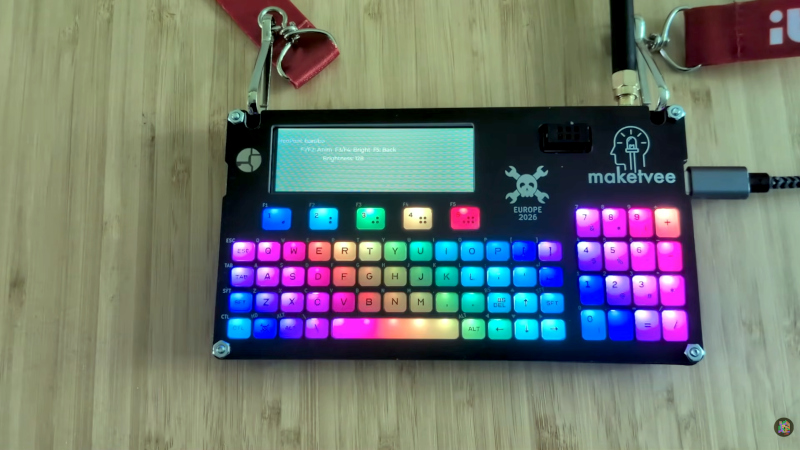
Why it matters: It signals the maturation of the conference badge as a platform for advanced, aesthetic hardware modding, moving beyond mere functionality into a form of personal expression and community signaling.
Context: Conference badges have evolved from simple attendee identifiers to programmable hardware platforms, but modifications typically focus on software or added sensors, not core input device overhauls.
"The most recent Hackaday event badge has been the Communicator, a handheld wireless terminal with a rather nice QWERTY keyboard. It’s good enough as delivered, but [makeTVee] has gone one better and." — HACKADAY
Commentary: This is a village/workshop signal: the effort invested in a non-essential but highly visible mod elevates the badge from a tool to an art object, setting a new benchmark for community craftsmanship. It reflects a growing hacker-space pipeline where mainstream manufacturing techniques (like TPU mats and side-emitting LEDs) are repurposed for one-off community artifacts. The implication is a subtle pressure on future badge designers to either enable such customization or be surpassed by community-driven improvements.
Date: Thu, 04 Jun 2026 18:30:20 +0000
URL: https://hackaday.com/2026/06/04/an-rgb-keyboard-for-your-hackaday-communicator-badge/
AI Sentiment Score: Negative (66%)
AI Credibility Score: 10.0/10 — High
Scores and text generated by AI analysis of the source article indicated.
Post ID: b52cc78c