Astronomical Discoveries & Observations
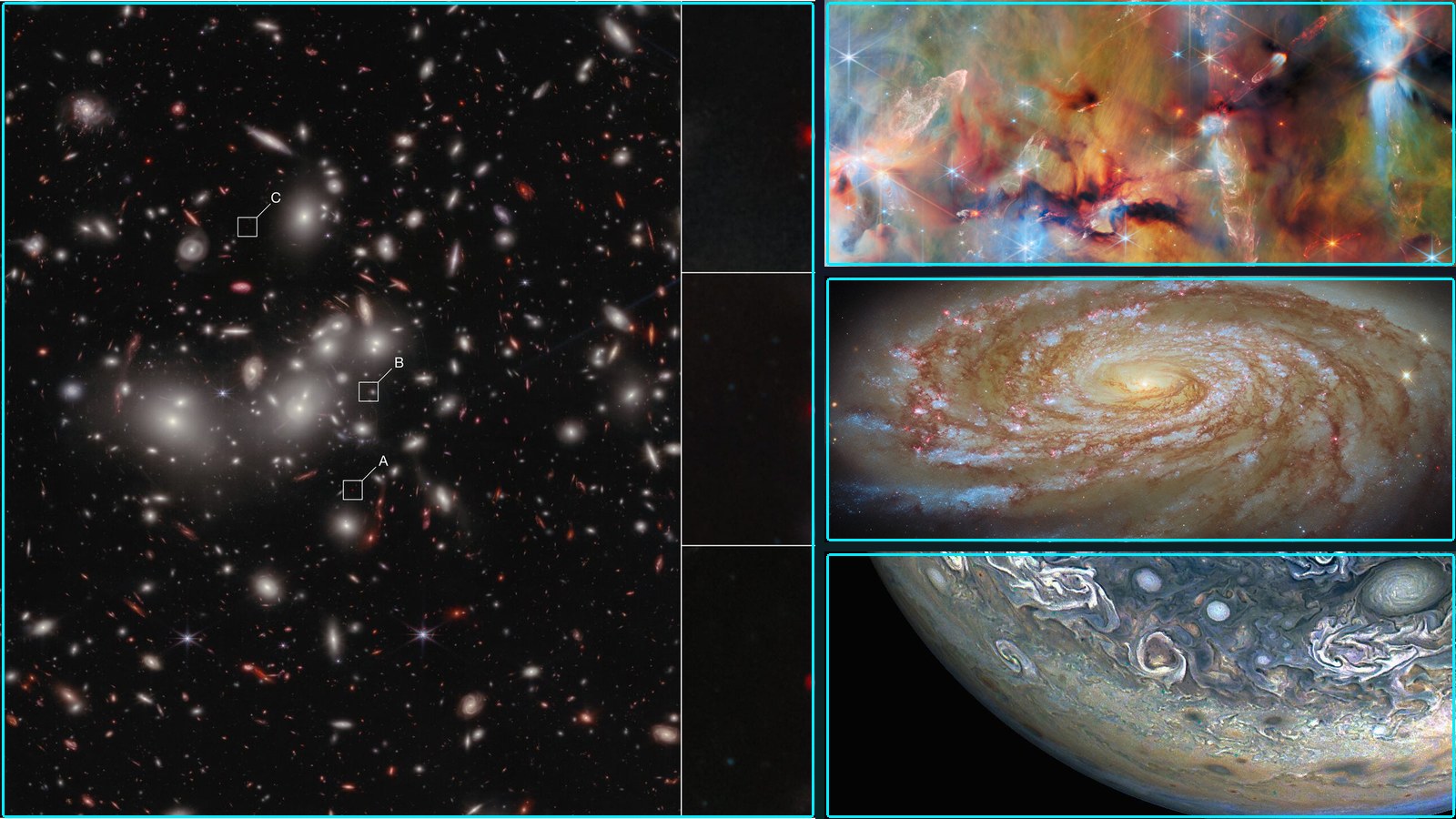
Webb reveals black hole that formed before its galaxy (Esa.Int)
Summary: Webb NIRSpec integral field unit observations of the lensed, high-redshift quasar Abell2744-QSO1 have provided the first direct, kinematic mass measurement of a supermassive black hole in the early Universe. The data show Keplerian gas rotation, confirming a central black hole mass of ~50 million solar masses, which constitutes an unprecedented two-thirds of the host system’s total mass. The system’s extremely low metallicity and minimal stellar component indicate the black hole formed before its nascent galaxy, challenging the standard model where black holes grow gradually within established stellar structures.

Why it matters: This provides the first direct observational evidence for primordial or direct-collapse black hole formation scenarios, forcing a revision of models for early cosmic structure and seeding mechanisms for all subsequent galaxies.
Context: Webb’s early deep-field surveys have revealed a population of surprisingly massive black holes at high redshifts, but until now, their masses were inferred indirectly, leaving open questions about their origins and growth rates.
"They found that not only is the black hole immense – roughly 50 million solar masses – it makes up an astonishing two-thirds of QSO1’s total mass. This proportion is thousands of times greater than in nearby galaxies, where supermassive black holes make up only a tiny fraction of the host galaxy’s total mass." — ESA.INT
Commentary: The direct mass measurement validates prior indirect estimates, increasing confidence in the census of early-universe black holes. The mass fraction implies a ‘heavy seed’ origin, shifting the theoretical focus from accretion physics to initial conditions in the first billion years. This supports the hypothesis that some galactic cores formed around pre-existing massive black holes, inverting the classical sequence of structure formation.
Date: Wed, 27 May 2026 17:00:00 +0200
URL: https://www.esa.int/Science_Exploration/Space_Science/Webb/Webb_reveals_black_hole_that_formed_before_its_galaxy
AI Sentiment Score: Negative (50%)
AI Credibility Score: 10.0/10 — High
Scores and text generated by AI analysis of the source article indicated.
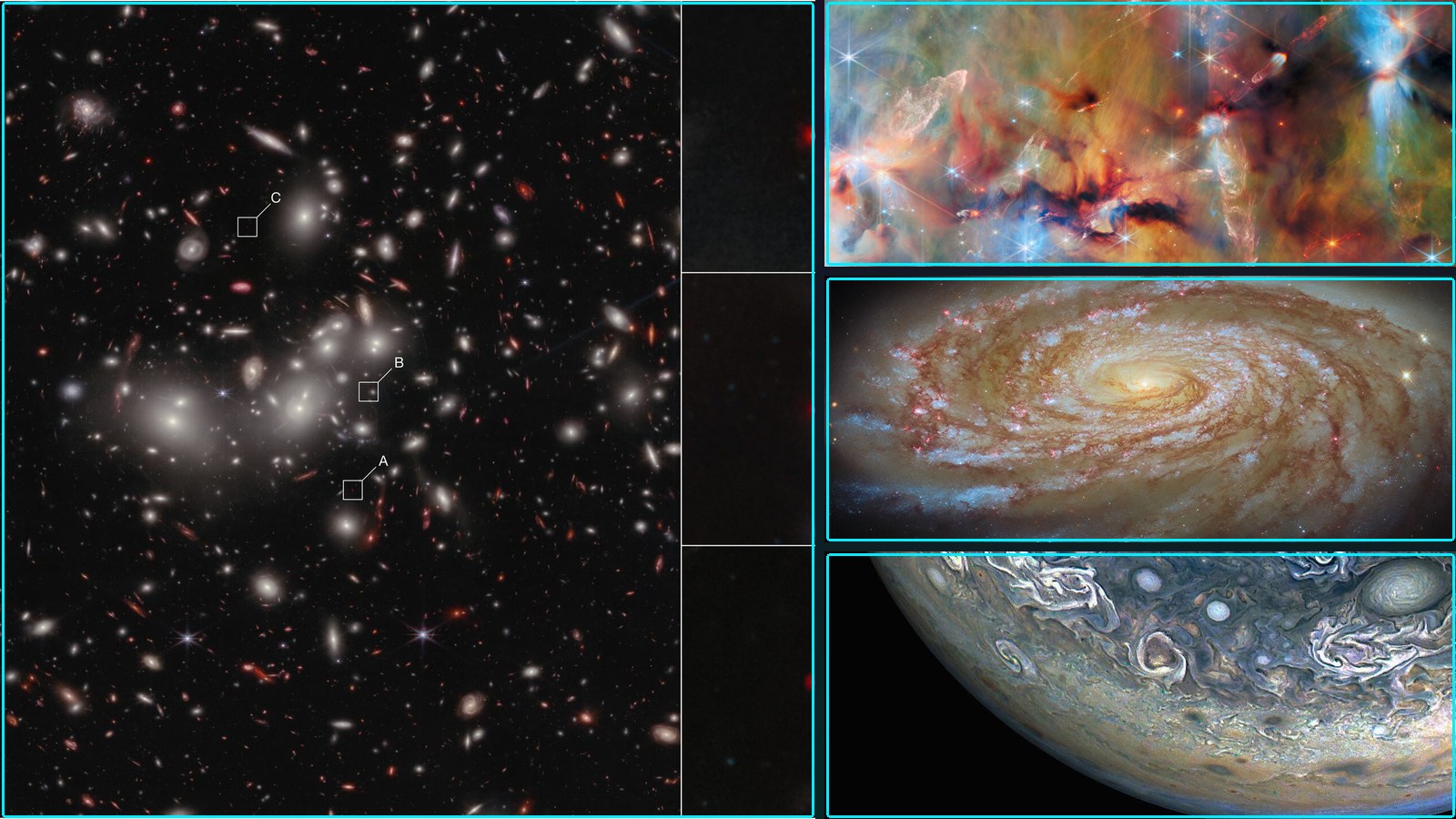
Webb unveils young stars across every stage of formation (Esa.Int)
Summary: The James Webb Space Telescope has imaged a northern portion of the OMC-2 molecular cloud in Orion, capturing a 150-light-year cross-section containing every stage of star formation, from embryonic protostars to pre-main sequence stars. The image reveals dense, cold dust, warm dust, and complex outflows from young stars, with data collected under observing programme #5804. Astronomers will use this data to study how stellar outflows influence star formation, how ultraviolet light from young stars affects the chemistry of future planetary systems, and how gas accretes onto protostars.

Why it matters: This provides a high-fidelity, contiguous laboratory for studying the complete lifecycle of star formation in a nearby region, moving astronomy from cataloging individual objects to understanding systemic interactions.
Context: Webb’s infrared capability systematically pierces dust-obscured stellar nurseries that were opaque to previous observatories, turning qualitative models of star formation into quantitative, population-level studies.
"Every stage of star formation – from the youngest stellar embryos, to protoplanetary discs, to newly-minted pre-main sequence stars – is contained within just this scene, which stretches 150 light-years across." — ESA.INT
Commentary: The operational consequence is a shift from studying isolated exemplars to analyzing a full statistical population within a single, coherent environment. This allows for direct comparison of evolutionary stages under similar initial conditions, refining models of feedback mechanisms where outflows from one generation may trigger or suppress the next. For mission planners, it validates the utility of deep, wide-field NIRCam surveys in molecular clouds as a primary strategy for foundational astrophysics.
Date: June 05, 2026 04:00 AM ET
URL: https://www.esa.int/ESA_Multimedia/Images/2026/06/Webb_unveils_young_stars_across_every_stage_of_formation
AI Sentiment Score: Neutral (33%)
AI Credibility Score: 10.0/10 — High
Scores and text generated by AI analysis of the source article indicated.
Journey to the Center of the Virgo Cluster (Nasa.Gov)
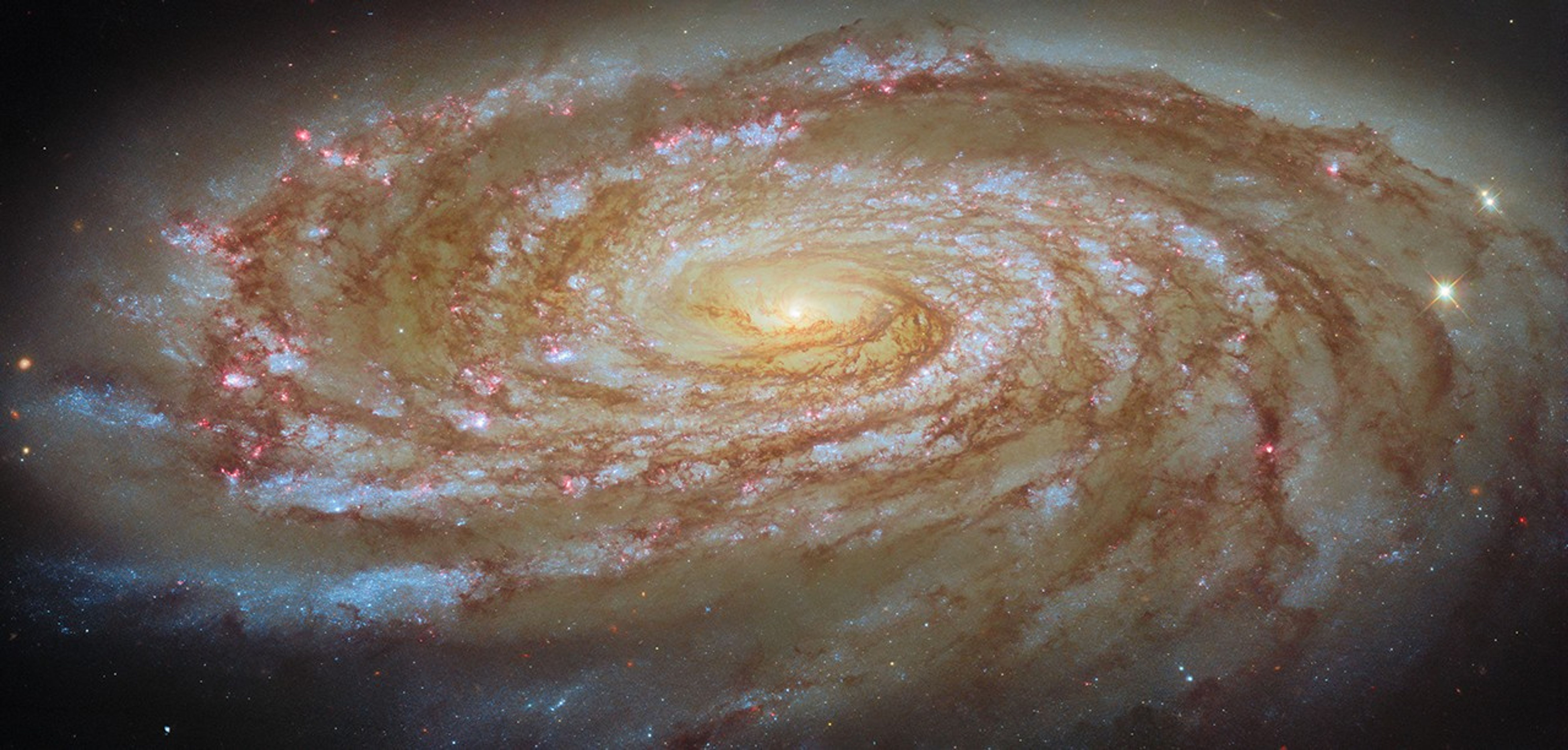
Summary: NASA/ESA Hubble Space Telescope imagery released in May 2026 highlights the active spiral galaxy Messier 88 (M88), located 63 million light-years away in the constellation Coma Berenices. The galaxy is noted for its central supermassive black hole, estimated at 100 million solar masses, which is actively accreting material and driving outflows of gas. This observation provides a high-resolution data point on galactic dynamics and black hole feedback mechanisms within the Virgo Cluster region.
Why it matters: For mission planners and astrophysics observers, this represents a routine but vital data product from Hubble, underscoring the observatory’s continued role in characterizing active galactic nuclei and informing target selection for next-generation instruments like the James Webb Space Telescope.
Context: Hubble remains operational deep into the 2020s, providing complementary optical/UV data to JWST’s infrared focus. Observations of nearby active galaxies like M88 serve as benchmarks for models of black hole-galaxy co-evolution and feedback, a key area of study for understanding galactic lifecycles.
"M88 is an active galaxy, which means that its center harbors a supermassive black hole that is snacking on gas and dust. Astronomers estimate the black hole is around 100 million times as massive as the Sun, and it appears to be powering outflows of gas from the galaxy’s center." — NASA.GOV
Commentary: The release is a standard Hubble science product, not a mission update or engineering milestone. Its value lies in the continued curation of a high-fidelity observational archive for comparative studies. The ‘2026’ datestamp is a projection, indicating planned data pipeline operations, not a new discovery. For the specialist audience, this reinforces Hubble’s sustained utility in a multi-observatory ecosystem, providing the foundational imaging that guides more detailed spectroscopic and time-domain investigations.
Date: Wed, 03 Jun 2026 15:48:44 +0000
URL: https://www.nasa.gov/image-article/journey-to-the-center-of-the-virgo-cluster/
AI Sentiment Score: Positive (40%)
AI Credibility Score: 10.0/10 — High
Scores and text generated by AI analysis of the source article indicated.
Colorful, Chaotic Jupiter (Nasa.Gov)
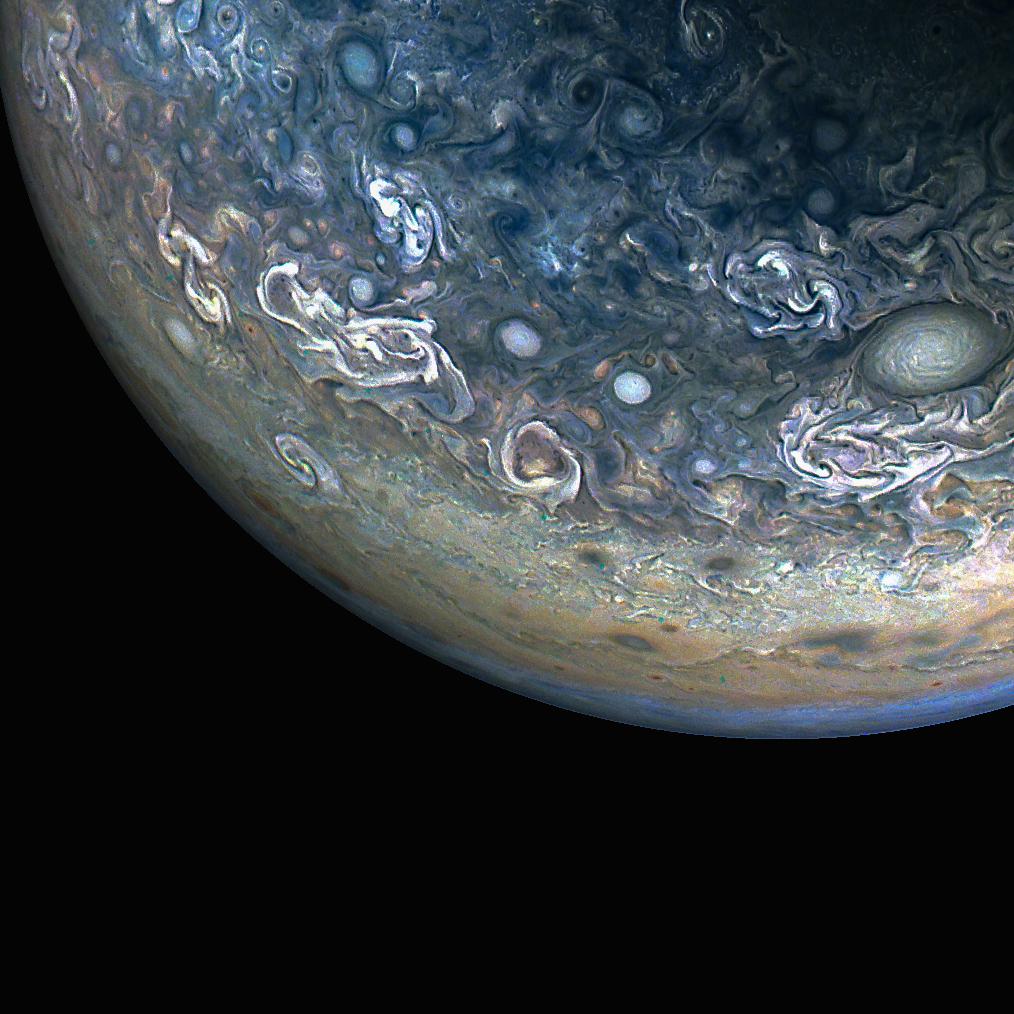
Summary: NASA’s Juno spacecraft continues its extended mission, returning raw data from its 61st perijove pass over Jupiter’s northern hemisphere on May 12, 2024. A citizen scientist processed the JunoCam data, highlighting a ‘folded filamentary region’ where the planet’s structured zonal jets break down into turbulent, rapidly evolving cyclonic storms and chaotic cloud patterns.
Why it matters: It demonstrates the ongoing scientific return and public engagement value of a mature, extended planetary mission, while providing a high-resolution look at a dynamic atmospheric process unique to gas giants.
Context: Juno’s mission, originally slated to end in 2021, has been repeatedly extended, shifting from a primary focus on Jupiter’s interior to sustained atmospheric observation. The JunoCam instrument was specifically designed for public engagement, with its raw data made available for citizen scientist processing.
"It provides a detailed view of chaotic clouds and cyclonic storms in an area known to scientists as a folded filamentary region. In these regions, the zonal jets that create the familiar banded patterns in Jupiter’s clouds break down, leading to turbulent patterns and cloud structures that rapidly evolve over the course of only a few days." — NASA.GOV
Commentary: The image underscores Juno’s role as a persistent weather satellite for Jupiter, capturing short-term atmospheric dynamics that ground-based telescopes cannot. The continued output from the citizen science pipeline validates this low-cost, high-engagement model for data analysis, which may inform instrument design for future outer planets missions. The focus on filamentary regions provides operational data for models of turbulent fluid dynamics at planetary scale.
Date: Thu, 04 Jun 2026 15:58:03 +0000
URL: https://www.nasa.gov/image-article/colorful-chaotic-jupiter/
AI Sentiment Score: Negative (50%)
AI Credibility Score: 10.0/10 — High
Scores and text generated by AI analysis of the source article indicated.
Nighttime Temperatures at the Moon’s North Pole (Science.Nasa.Gov)
Summary: NASA’s Lunar Reconnaissance Orbiter (LRO) continues to return operational data, this time mapping nighttime temperatures at the Moon’s north pole. The Diviner instrument’s measurements show a thermal landscape where areas are colored blue and purple for colder temperatures and orange and red for warmer ones. This data refines models of the lunar thermal environment, critical for planning future surface operations.
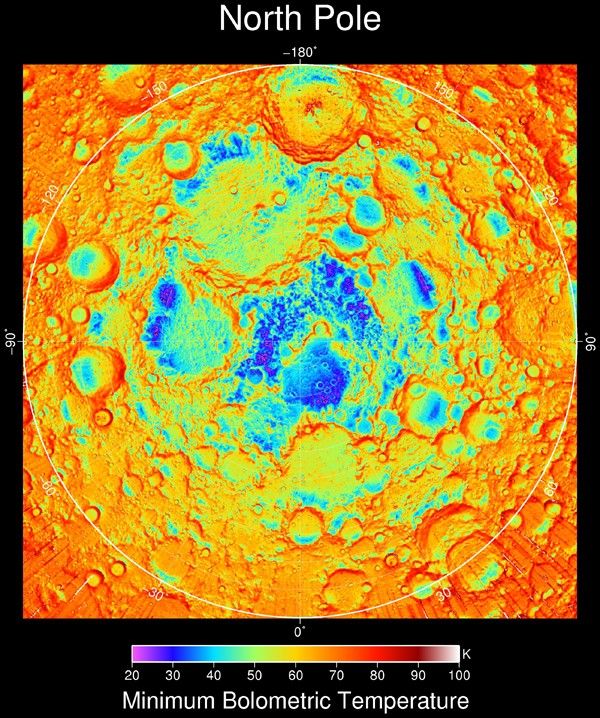
Why it matters: Accurate thermal mapping is foundational engineering intelligence for selecting landing sites, designing hardware survivability, and identifying potential resource deposits for sustained lunar exploration.
Context: LRO’s Diviner instrument has been a workhorse for lunar science since 2009, providing the most detailed global thermal maps of the Moon. This data directly informs Artemis program planning and commercial lander missions targeting the lunar poles.
"Areas colored blue and purple represent colder temperatures, while areas colored orange and red represent warmer temperatures." — SCIENCE.NASA.GOV
Commentary: The continued flow of calibrated data from LRO underscores the value of long-duration orbital assets. These maps are not just scientific curiosities; they are operational datasets that de-risk future missions by quantifying the extreme thermal gradients that hardware must endure, particularly in permanently shadowed regions adjacent to potential landing zones.
Date: Thu, 04 Jun 2026 20:37:27 +0000
URL: https://science.nasa.gov/resource/nighttime-temperatures-at-the-moons-north-pole/
AI Sentiment Score: Negative (66%)
AI Credibility Score: 10.0/10 — High
Scores and text generated by AI analysis of the source article indicated.
Post ID: 4c8676c8