FashionTech
SML’s InfuseRFID wins 2026 SEAL award (Fibre2Fashion)
Summary: SML Group’s InfuseRFID embedded tag won the 2026 SEAL Sustainable Product Award, validating a unified digital identity architecture designed for wet processing environments. The technology enables source tagging at raw material stages, surviving water, detergents, high-temperature drying, and mechanical pressure. This shifts the tagging workflow earlier in production, reducing rework, shrinkage, and manual counting bottlenecks. The award also signals that SML’s broader Inspire portfolio—including high-volume logistics labels—shares a consistent architecture, allowing manufacturers to deploy embedded or standard formats without system fragmentation.

Why it matters: For manufacturers and brands, this changes the tagging workflow: source tagging before wet processing eliminates post-finishing manual counts and rework, directly reducing operational drag and inventory discrepancies.
Context: Conventional apparel tagging occurs after washing, dyeing, or finishing; InfuseRFID embeds tags at raw material or early assembly stages, maintaining data continuity through harsh production conditions.
"In conventional workflows, garments are typically tagged only after washing, dyeing, or finishing. InfuseRFID redefines this sequence by enabling source tagging at raw material or early assembly stages. These embedded tags are engineered to maintain functionality through water exposure, industrial detergents, high-temperature drying, and mechanical pressure – preserving data integrity without interruption." — FIBRE2FASHION
Commentary: The real operational shift here is moving the tagging point upstream, which compresses the production timeline and reduces the labor cost of post-finishing inventory checks. For factories running mixed product lines—premium denim needing embedded tags and fast fashion using standard price tickets—the unified Inspire architecture means one reader infrastructure, not two. The plastic-free RFID inlays under EcoInspire also matter for compliance with emerging packaging waste regulations, though the article doesn’t quantify cost per tag or read-rate degradation under real factory conditions.
Date: Mon, 01 Jun 2026 17:43:02 GMT
URL: https://www.fibre2fashion.com/news/textiles-technology-news/sml-s-infuserfid-wins-2026-seal-award-308682-newsdetails.htm
AI Sentiment Score: Negative (80%)
AI Credibility Score: 10.0/10 — High
Scores and text generated by AI analysis of the source article indicated.
Coats Digital’s FastReactPlan transforms operations at Tunicotex (Fibre2Fashion)
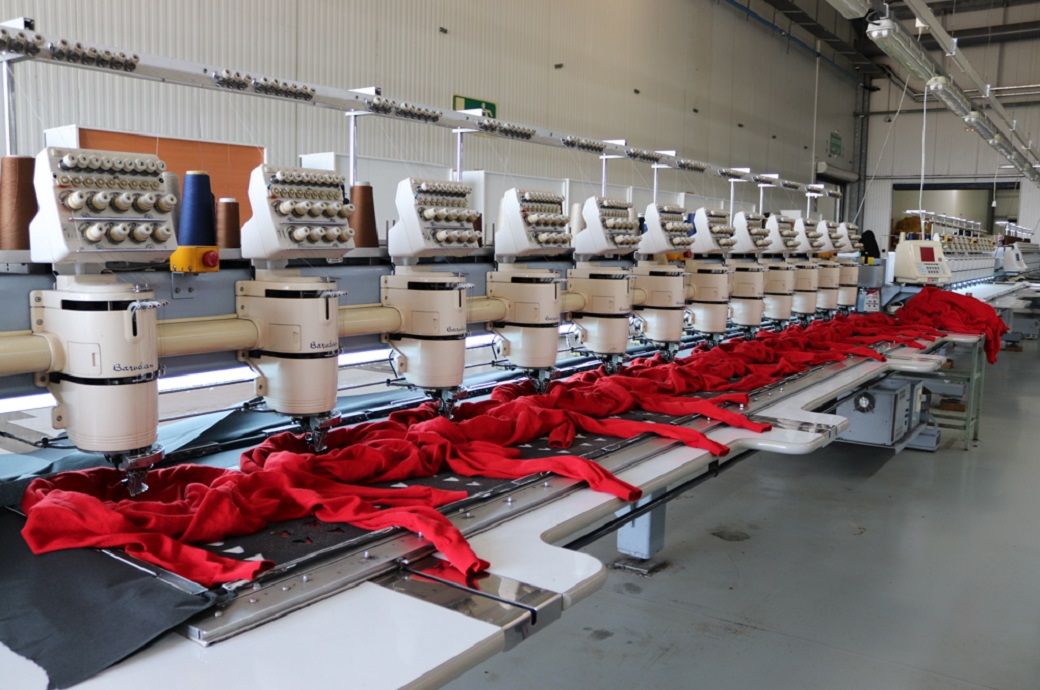
Summary: Tunicotex Group, a Tunisian knitwear manufacturer supplying luxury brands like Hugo Boss and Moncler, improved on-time delivery from 75% to 85% and unlocked 40% additional capacity after implementing Coats Digital’s FastReactPlan. The system replaced manual Excel-based planning with a unified visual platform, reducing weekly planning time from 40 to 30 hours and cutting penalty costs. The deployment covered knitting, sewing, washing, embroidery, and packing operations, enabling a 40% capacity expansion between 2024 and 2025. The case demonstrates how integrated planning software can directly increase throughput and reduce operational friction in vertically integrated textile production.
Why it matters: For fashion manufacturers and brands, this shows that replacing fragmented spreadsheets with a single planning platform can yield measurable capacity gains and delivery improvements without new machinery or headcount.
Context: Tunicotex produces 16,000 garments daily for global luxury brands and had been losing 5–10% profit to inefficiencies from manual planning, including overtime, rework, and air-freight costs.
"The visibility provided by FastReactPlan has enabled us to grow our capacity by around 40% in just two years. This level of scalability would not have been possible without the stability and control that the solution gives us." — FIBRE2FASHION
Commentary: The 40% capacity gain is the headline number, but the operational shift from firefighting to structured Plan–Do–Check–Act cycles is the real process change. For planners and production managers, the reduction in weekly planning time from 40 to 30 hours signals a meaningful reduction in administrative overhead, freeing time for exception handling. The fact that Tunicotex runs 95% certified sustainable materials and aims for full renewable energy by 2026 suggests that planning software can also support sustainability targets by reducing waste and rush orders. Brands relying on Tunicotex should expect more reliable lead times and potentially lower per-unit costs as penalty and overtime expenses decline.
Date: Mon, 01 Jun 2026 16:38:02 GMT
URL: https://www.fibre2fashion.com/news/textiles-technology-news/coats-digital-s-fastreactplan-transforms-operations-at-tunicotex-307568-newsdetails.htm
AI Sentiment Score: Negative (69%)
AI Credibility Score: 10.0/10 — High
Scores and text generated by AI analysis of the source article indicated.
Nearshoring rises as brands seek supply chain visibility (Fibre2Fashion)
Summary: Brands are nearshoring not because proximity inherently improves manufacturing, but because distance amplifies the cost of data blind spots. McKinsey data shows 71% of procurement officers plan to increase nearshoring, yet tariff policy hasn’t meaningfully boosted Western Hemisphere sourcing. The real competitive edge is shifting from geography to real-time, item-level data verification at the factory floor. SML’s Factory Care Solutions report up to 95% improvement in shipment accuracy and 40% reduction in production delays, suggesting that factories investing in digital infrastructure can neutralize the distance disadvantage. The article argues that nearshoring alone doesn’t solve visibility; RFID-enabled verification does.

Why it matters: For procurement teams and factory operators, the decision to nearshore or stay in APAC now hinges on data infrastructure, not just labor cost or transit time.
Context: Trade restrictions have increased fivefold since 2015, and Asia-to-US container rates more than doubled on some routes in 2024, making shipment discrepancies a catastrophic cost multiplier.
"The narrative is simple: Asia is too far, too risky, too opaque. Move closer. Move to Türkiye. Move to Mexico. Move to North Africa. The Data Behind the Drift The signals are." — FIBRE2FASHION
Commentary: This reframes the nearshoring debate from a logistics play to a data infrastructure play. For APAC factories, the existential threat isn’t geography but the absence of real-time operational data that buyers can trust. Brands could shift sourcing to whichever factory—regardless of location—can provide verified, item-level shipment data at dispatch. The implication for vendors: RFID and in-plant printing solutions become table stakes, not differentiators, for retaining large retail contracts.
Date: Mon, 01 Jun 2026 17:43:02 GMT
URL: https://www.fibre2fashion.com/news/textiles-technology-news/nearshoring-rises-as-brands-seek-supply-chain-visibility-309187-newsdetails.htm
AI Sentiment Score: Positive (40%)
AI Credibility Score: 10.0/10 — High
Scores and text generated by AI analysis of the source article indicated.
CLO secures victory in software copyright infringement case (Fibre2Fashion)
Summary: The Zhejiang Provincial High People’s Court has ruled that Chinese apparel company Linctex engaged in willful copyright infringement by using cracked versions of CLO’s 3D fashion design software on a large scale over an extended period. The court rejected Linctex’s fair use defense, citing the direct commercial purpose of the unauthorized use. This decision provides a legally effective precedent for software copyright enforcement in China’s fashion industry, with Linctex ordered to cease infringement and pay compensation. CLO CEO Simon Kim framed the ruling as a signal to the industry about respecting IP rules and a reinforcement of the company’s commitment to the Chinese market.

Why it matters: For fashion brands and digital design teams, this ruling clarifies that using cracked 3D simulation software in commercial production carries real legal risk in China, potentially altering procurement and compliance workflows for digital tooling.
Context: CLO Virtual Fashion is a dominant provider of 3D garment simulation software used by brands and manufacturers for digital sampling and virtual prototyping. Piracy of such tools has been a persistent operational cost and competitive distortion in markets where enforcement was historically weak.
"According to the final judgment by the Zhejiang Provincial High People’s Court, after thorough examination, the court clearly established that Linctex engaged in willful infringement by “prolonged, large-scale, and frequent” use of." — FIBRE2FASHION
Commentary: The ruling shifts the operating environment for digital fashion supply chains: brands sourcing from Chinese manufacturers now have a stronger basis to demand licensed software in vendor audits, potentially raising compliance costs but reducing downstream IP exposure. For CLO, the decision strengthens its pricing leverage and anti-piracy investment thesis, though enforcement at scale remains the practical bottleneck. Competitors like Browzwear and Lectra may see similar litigation as a template to protect their own installed bases. The real test will be whether this judgment translates into changed procurement behavior or remains a symbolic win without operational follow-through.
Date: Mon, 01 Jun 2026 16:38:02 GMT
URL: https://www.fibre2fashion.com/news/textiles-technology-news/clo-secures-victory-in-software-copyright-infringement-case-307745-newsdetails.htm
AI Sentiment Score: Negative (60%)
AI Credibility Score: 10.0/10 — High
Scores and text generated by AI analysis of the source article indicated.
Amazon offers AI agent tech to other retailers (Retaildive)
Summary: <figure><div><img src="https://imgproxy.divecdn.com/7KLctvm_8fqvzLpfSq4WfYw-8-D42QEU0y1bP7PgI2A/g:nowe:69:5/c:1087:614/rs:fill:1600:900:1/Z3M6Ly9kaXZlc2l0ZS1zdG9yYWdlL2RpdmVpbWFnZS9TY3JlZW5zaG90XzIwMjYtMDYtMDFfMTAzODUyLnBuZw==.webp" /></div></figure><p>The online retail behemoth wants to narrow the time it takes for retailers to launch AI shopping assistants, starting with Kate Spade.</p> Amazon accelerating AI agent deployment for third-party retailers suggests a tightening service window for adopting advanced e-commerce tooling.

Why it matters: Amazon accelerating AI agent deployment for third-party retailers suggests a tightening service window for adopting advanced e-commerce tooling.
Context: Focus shifts to the integration complexity and required operational readiness for AI assistants within existing retail tech stacks.
"<figure><div><img src="https://imgproxy.divecdn.com/7KLctvm_8fqvzLpfSq4WfYw-8-D42QEU0y1bP7PgI2A/g:nowe:69:5/c:1087:614/rs:fill:1600:900:1/Z3M6Ly9kaXZlc2l0ZS1zdG9yYWdlL2RpdmVpbWFnZS9TY3JlZW5zaG90XzIwMjYtMDYtMDFfMTAzODUyLnBuZw==.webp" /></div></figure><p>The online retail behemoth wants to narrow the time it takes for retailers to launch AI shopping assistants, starting with Kate Spade.</p>." — RETAILDIVE
Commentary: The signal is still worth tracking, but the current extraction path did not yield enough body text for a fuller analytical read. The immediate implication is operational rather than speculative: watch how this changes budgets, workflows, or risk assumptions over the next cycle.
Date: Tue, 02 Jun 2026 11:47:00 -0400
URL: https://www.retaildive.com/news/amazon-to-offer-ai-agents-to-other-retailers/821597/
AI Sentiment Score: Neutral (50%)
AI Credibility Score: 10.0/10 — High
Scores and text generated by AI analysis of the source article indicated.
Victoria’s Secret expects sales to top $7B this year (Retaildive)
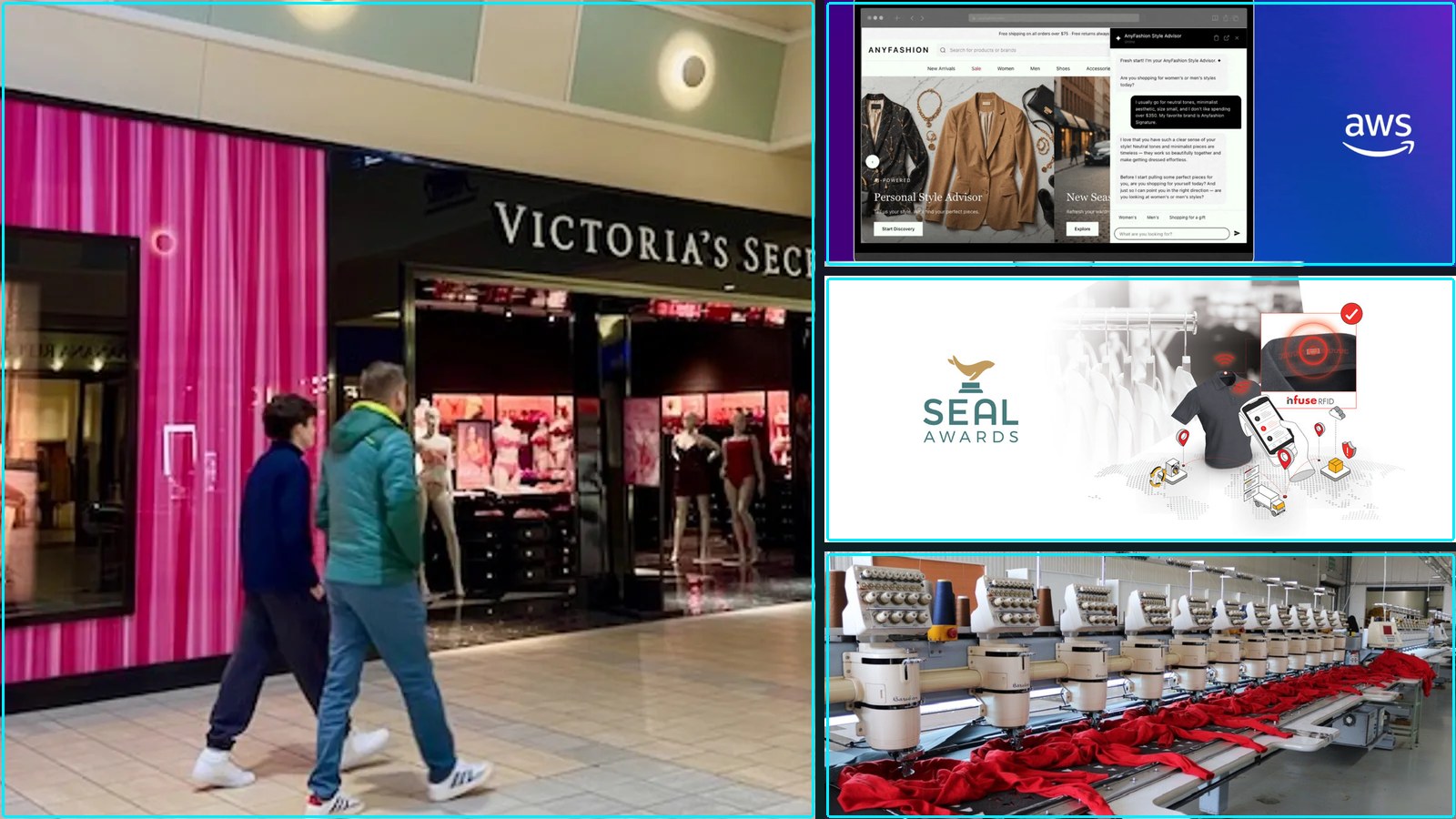
Summary: <figure><div><img src="https://imgproxy.divecdn.com/QpMkacCdLF1mRmxId7u4C6WqB1qG8NuveNfHkllap1Q/g:nowe:0:114/c:608:344/rs:fill:1600:900:1/Z3M6Ly9kaXZlc2l0ZS1zdG9yYWdlL2RpdmVpbWFnZS9tYWluZV9tYWxsXzIyamFuMjZfLV8xLmpwZWc=.webp" /></div></figure><p>The lingerie giant’s “promo detox” meant more full-price selling in Q1, and both the namesake and Pink brands took market share.</p> Focus on full-price sell-through metrics; signals shift in consumer willingness to discount.

Why it matters: Focus on full-price sell-through metrics; signals shift in consumer willingness to discount.
Context: The ‘promo detox’ suggests a potential operational pivot toward full-price inventory management in Q1.
"<figure><div><img src="https://imgproxy.divecdn.com/QpMkacCdLF1mRmxId7u4C6WqB1qG8NuveNfHkllap1Q/g:nowe:0:114/c:608:344/rs:fill:1600:900:1/Z3M6Ly9kaXZlc2l0ZS1zdG9yYWdlL2RpdmVpbWFnZS9tYWluZV9tYWxsXzIyamFuMjZfLV8xLmpwZWc=.webp" /></div></figure><p>The lingerie giant’s “promo detox” meant more full-price selling in Q1, and both the namesake and Pink brands took market share.</p>." — RETAILDIVE
Commentary: The signal is still worth tracking, but the current extraction path did not yield enough body text for a fuller analytical read. The immediate implication is operational rather than speculative: watch how this changes budgets, workflows, or risk assumptions over the next cycle.
Date: Tue, 02 Jun 2026 12:24:00 -0400
URL: https://www.retaildive.com/news/victorias-secret-sales-top-seven-billion-2026/821697/
AI Sentiment Score: Neutral (50%)
AI Credibility Score: 10.0/10 — High
Scores and text generated by AI analysis of the source article indicated.
Post ID: d8e9914d