

Regional Economic Indicators (Southeast Focus)
FRA Greenlights Expanded Rail Track Tech Tests as CSX Prepares July 2026 Rollout (Freightwaves)
Summary: The FRA has approved a five-year waiver allowing railroads to expand Automated Track Inspection (ATI) technology, which uses lasers, cameras, and sensors on regular freight trains to detect track defects. CSX plans to deploy ATI across over 3,000 route miles starting July 1, 2026, covering busy corridors like parts of the I-95 route. The waiver permits reduced visual inspection frequencies when ATI is used, with data showing ATI can reduce track geometry defects by up to 90 percent. Critics, including rail unions, worry about potential reductions in human inspectors, while the FRA emphasizes ATI assists rather than replaces them. This regulatory shift mirrors similar waivers in trucking for autonomous vehicle safety equipment, signaling a broader trend toward data-driven oversight in transportation.

Why it matters: For the Southeast, CSX’s ATI rollout on I-95 corridor routes could improve rail safety and efficiency, potentially shifting logistics patterns and reducing derailment risks in a region critical for freight movement from ports to inland distribution centers.
Context: The waiver (Docket No. FRA-2025-0059) allows railroads to test ATI on everyday trains, not just dedicated inspection cars, enabling more frequent checks across thousands of miles without extra cost or disruption, while requiring data sharing with the FRA.
"(The views expressed here are solely those of the author and do not necessarily represent the views of FreightWaves or its affiliates.) The Federal Railroad Administration (FRA) recently approved a five-year waiver." — FREIGHTWAVES
Commentary: CSX’s July 2026 deployment on I-95 corridor routes is a concrete test of whether ATI can scale without compromising safety, with implications for rail-dependent industries in the Southeast. The five-year waiver period provides a real-world dataset that could reshape federal inspection rules, but union concerns about job displacement and missed defects remain unresolved. If successful, this could accelerate automation adoption across other Class I railroads, potentially lowering maintenance costs and improving throughput. The parallel with FMCSA’s autonomous truck waivers suggests a coordinated regulatory push to modernize safety standards across freight modes, with the Southeast as a key proving ground.
Date: June 16, 2026 08:50 AM ET
URL: https://www.freightwaves.com/news/fra-greenlights-expanded-rail-track-tech-tests-as-csx-prepares-july-2026-rollout
AI Sentiment Score: Negative (50%)
AI Credibility Score: 10.0/10 — High
Scores and text generated by AI analysis of the source article indicated.
2026 State of Logistics Report: Volatility is the new normal (Freightwaves)
Summary: The 2026 State of Logistics Report declares supply chain volatility a permanent feature, with U.S. business logistics costs falling to $2.4 trillion (7.8% of GDP) from $2.6 trillion (8.7%) in 2025. Five structural forces—asymmetrical growth, tightening finance, geoeconomic realignment, labor constraints, and energy volatility—now define the operating environment. AI has crossed into commercial application, delivering measurable returns in interpreting network signals and predicting disruptions, though adoption remains uneven. The report warns that traditional performance drivers like demand recovery are fading, and success now hinges on resilience, pricing discipline, and digital investment.

Why it matters: For Southeast-focused readers tracking regional economic indicators, the report underscores that supply chain resilience is no longer optional—it is the primary competitive differentiator, directly affecting logistics real estate, port activity, and manufacturing investment decisions across the region.
Context: The annual State of Logistics Report, authored by Kearney and presented by Penske Logistics for CSCMP, is a benchmark for U.S. logistics costs and structural trends. This year’s edition emphasizes that volatility is now structural, not cyclical.
"The supply chain of right now is incredibly complex and requires a series of constant adjustments. Last year’s supply chain looks different than today’s supply chain. I surmise that next year’s logistics network will be hardly recognizable." — FREIGHTWAVES
Commentary: The report’s most actionable insight for the Southeast is the divergence in freight sector performance: air freight corridors are rerouting around disruptions, and the removal of de minimis for China parcels has shifted volume to domestic fulfillment, directly benefiting Southeast distribution hubs. The emphasis on shorter, measurable payback periods for capital investments suggests that logistics real estate and automation projects in the region must demonstrate ROI within 12-18 months to attract funding. The widening AI adoption gap means early adopters in Southeast logistics clusters will gain compounding advantages over peers still using point solutions.
Date: June 16, 2026 09:00 AM ET
URL: https://www.freightwaves.com/news/2026-state-of-logistics-report-volatility-new-normal
AI Sentiment Score: Neutral (33%)
AI Credibility Score: 10.0/10 — High
Scores and text generated by AI analysis of the source article indicated.
Cass sees freight volume recovery in second half of year (Freightwaves)
Summary: The Cass Freight Index shows the smallest year-over-year decline in shipments in 18 months, with expenditures rising sharply due to higher fuel and rates. The report signals a likely volume recovery in the second half of 2025, driven by tightening capacity and regulatory enforcement rather than demand. Truckload rates posted their largest increase in nearly four years, and contract rates are expected to rise double digits as routing guides fail.

Why it matters: For Southeast-focused logistics and manufacturing stakeholders, this inflection point means tighter capacity and higher rates are coming, which could pressure supply chains and shift cost structures for regional shippers and carriers.
Context: The freight market has been in a 40-month downturn, with capacity exiting due to stricter enforcement of driver rules and broker liability. The recovery is supply-constrained, not demand-led, which changes the dynamics for rate negotiations and capacity planning.
"A positive inflection in freight shipments now appears likely after 40 months of year-over-year declines, according to a monthly report from Cass Information Systems. A turn in demand would further bolster the." — FREIGHTWAVES
Commentary: The Cass data confirms that the long-awaited freight recovery is materializing, but it is structurally different from past cycles—regulatory purges of noncompliant drivers and equipment are the primary drivers, not consumer demand. For Southeast ports and distribution hubs, this means rate hikes will outpace volume growth, squeezing margins for intermediaries while benefiting compliant carriers. The projected double-digit rate increases suggest a hard market ahead, with routing guide failures becoming more common as capacity tightens further.
Date: June 15, 2026 12:28 PM ET
URL: https://www.freightwaves.com/news/cass-report-freight-volume-recovery-set-for-second-half
AI Sentiment Score: Negative (61%)
AI Credibility Score: 10.0/10 — High
Scores and text generated by AI analysis of the source article indicated.
July 4 holiday period exposes supply chain vulnerabilities (Freightwaves)
Summary: The July 4 holiday period is identified as a high-risk window for cargo theft due to reduced staffing, longer dwell times, and unattended freight. Industry experts argue that these disruptions expose pre-existing supply chain vulnerabilities rather than creating new ones. CargoNet data confirms the period from July 1-7 is one of the most active theft windows annually. The article emphasizes that detection delays often allow stolen goods to enter secondary markets before losses are recognized.
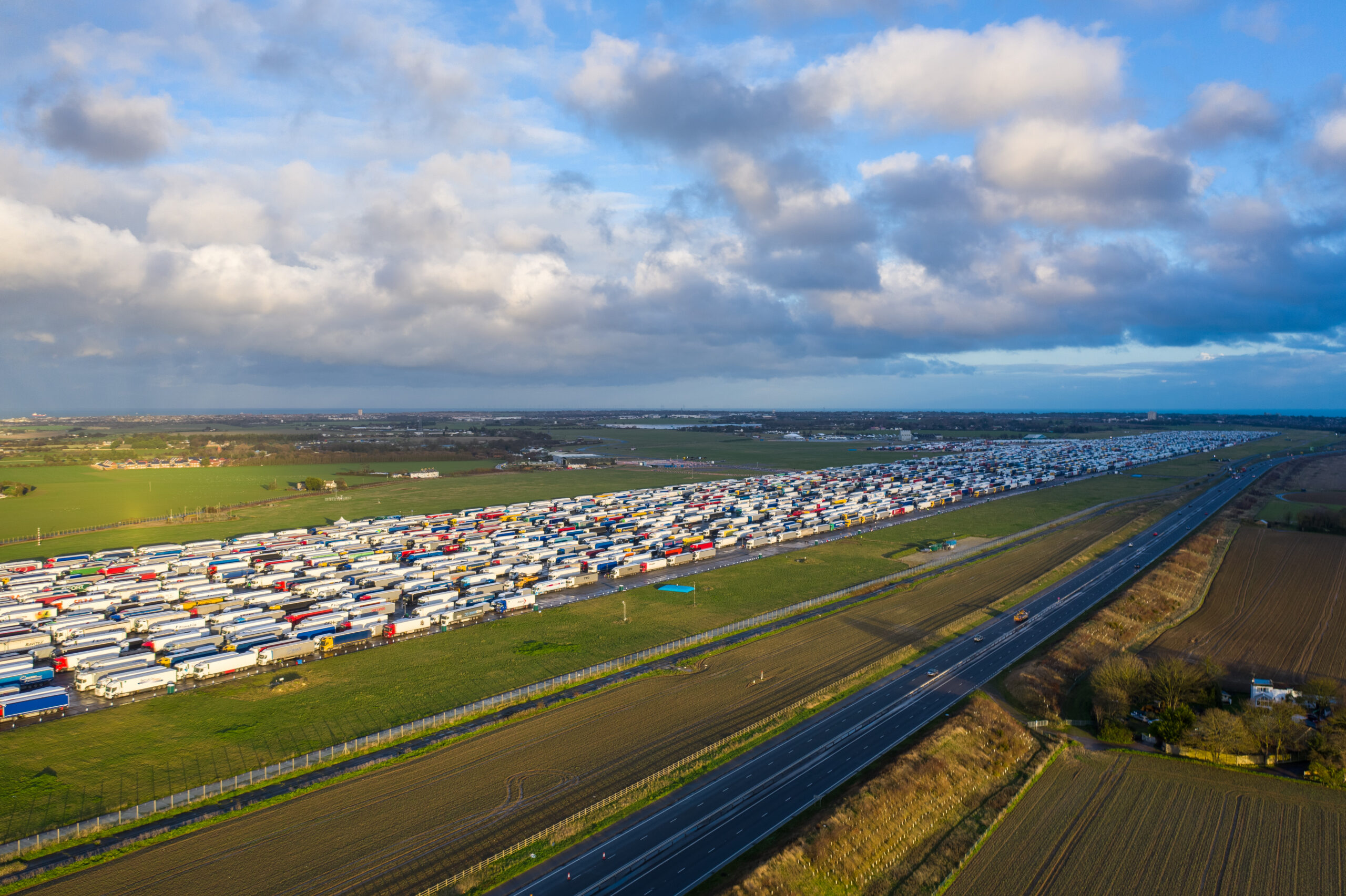
Why it matters: For logistics operators, insurers, and retailers in the Southeast, this period concentrates risk at distribution centers and truck stops, where theft can disrupt regional supply chains and increase costs.
Context: Cargo theft has been rising in sophistication, with organized groups exploiting operational gaps during holiday closures, prompting legislative attention like the Combating Organized Retail Crime Act.
"As warehouses prepare for extended holiday closures and trailers begin accumulating in yards ahead of the Fourth of July weekend, the transportation industry is entering what some security professionals consider one of." — FREIGHTWAVES
Commentary: The piece correctly shifts focus from reactive recovery to proactive vulnerability identification, but the real operational insight is the need for real-time anomaly detection during handoffs and staging. Companies that invest in visibility and response protocols now will reduce losses not just in July but year-round.
Date: June 15, 2026 06:24 AM ET
URL: https://www.freightwaves.com/news/july-4-holiday-period-exposes-supply-chain-vulnerabilities
AI Sentiment Score: Positive (40%)
AI Credibility Score: 10.0/10 — High
Scores and text generated by AI analysis of the source article indicated.
Post ID: 13d47dc4