

Fashion
New Exemplar Luxury Group Plans Life After Saks Bankruptcy (Wwd)
Summary: Exemplar Luxury Group, the rebranded entity emerging from Saks Global’s Chapter 11, has completed its restructuring with a 75% debt reduction and new ownership. CEO Geoffroy van Raemdonck aims to reset vendor relationships and unify Saks Fifth Avenue, Neiman Marcus, and Bergdorf Goodman under a centralized corporate structure. The group plans to purchase over $3 billion in goods annually, while Saks Off Fifth will operate solely as a liquidation channel. The new board includes representatives from Pentwater and Bracebridge Capital, alongside industry veterans Dave Kimbell and Philippe Schaus.

Why it matters: For brands, vendors, and retail partners, this signals a critical shift in payment reliability and operational stability for a major luxury wholesale channel.
Context: The bankruptcy stemmed from debt incurred during the $2.7 billion acquisition of Neiman Marcus, leading to vendor payment issues and inventory shortfalls.
"Saks Global has emerged from Chapter 11 and has rebranded under a new name — the Exemplar Luxury Group. The company said late Friday afternoon that, as expected, it completed its restructuring." — WWD
Commentary: The restructuring uses Chapter 11 to forcibly rationalize the store footprint and corporate functions, creating a leaner cost base but concentrating buyer power. Vendor terms remain opaque and negotiated individually, preserving leverage for the group. The centralization of merchandising and technology investment across three banners will alter brand access and promotional strategies, while the liquidation-focused Saks Off Fifth exit from full-price buying removes a key outlet channel.
Date: June 26, 2026 06:19 PM ET
URL: https://wwd.com/business-news/retail/saks-global-renamed-exemplar-luxury-group-exits-bankruptcy-1239037467/
AI Sentiment Score: Negative (75%)
AI Credibility Score: 10.0/10 — High
Scores and text generated by AI analysis of the source article indicated.
On the Line: More Garment Factory Closures Rattle Bangladesh (Wwd)
Summary: Two garment factories in Gazipur, Bangladesh, supplying brands including C&A and Kontoor Brands, are closing permanently, adding 1,800 workers to unemployment rolls. This is part of a documented trend of 457 factory closures across seven industrial zones since August 2024, primarily due to insufficient orders and financial strain. Concurrently, garment workers in India are being outfitted with head-mounted cameras to capture their movements, generating data used to train AI for automation and to produce productivity reports ranking workers. In Bangladesh, industry and government bodies are launching a three-year program to train over 22,000 workers on modern machinery, aiming to address digital illiteracy and skill gaps that threaten displacement during automation.

Why it matters: These closures signal a deepening contraction in sourcing capacity, while the data harvesting and reskilling efforts represent divergent, high-stakes paths for the future of apparel manufacturing labor.
Context: The Bangladeshi apparel sector is experiencing a wave of consolidation driven by order shortages, working capital crises, and global economic pressures, even as automation technologies advance rapidly.
"On the Line is a weekly roundup of sourcing and labor quick hits in the apparel and footwear industry, from worker protests to boardroom maneuvering, tracking the developments shaping conditions on the." — WWD
Commentary: The factory closures reflect a systemic credit and liquidity failure, not just a demand shock, tightening capacity for brands reliant on Bangladeshi sourcing. The parallel emergence of egocentric data harvesting in India creates a perverse incentive: workers are generating the training data for systems designed to replace them, often without compensation, accelerating a labor arbitrage that could reshape the entire South Asian production map. The Bangladeshi reskilling initiative is a necessary but reactive countermeasure; its scale is insufficient against the pace of closures and automation, pushing brands to reassess supplier stability and labor strategy concurrently.
Date: June 26, 2026 05:40 PM ET
URL: https://wwd.com/sourcing-journal/sustainability/on-the-line-garment-factory-closure-bangladesh-ai-india-1239037438/
AI Sentiment Score: Negative (50%)
AI Credibility Score: 10.0/10 — High
Scores and text generated by AI analysis of the source article indicated.
Luxury Briefing: Canali is betting on leisurewear to lure younger customers (Glossy.Co)
Summary: Canali, the family-owned Italian tailoring house, is shifting its product strategy under new creative director Alessio Lillocci to emphasize knitwear, footwear, and relaxed categories. This move targets younger consumers while maintaining its core tailoring authority, a response to a market where Bain reports consumers are becoming more selective and scrutinizing value. The brand is leveraging its existing manufacturing infrastructure and ‘product man’ leadership to execute this expansion without introducing new categories.

Why it matters: For menswear brands and suppliers, this signals a strategic pivot for a tailoring specialist into adjacent casual categories, testing whether heritage craftsmanship can be monetized in leisurewear without diluting brand equity.
Context: This reflects a broader industry pattern where formalwear-focused brands are expanding into casual categories to capture growth, while the luxury market contracts and consumer focus shifts from logos to perceived substance and value.
"In this week’s Luxury Briefing, Canali’s incoming creative director, Alessio Lillocci, discusses his plan for the brand, which draws on lessons from his time at Brunello Cucinelli and Prada. Also, insights on." — GLOSSY.CO
Commentary: Lillocci’s operational approach—recombining existing ‘ingredients’ rather than creating from scratch—minimizes R&D risk and leverages sunk costs in tailoring expertise. The success of this expansion hinges on whether Canali’s production discipline and pricing can translate its sartorial authority into casual categories that are already crowded with specialists. For competing brands, it tests whether a ‘true values of quality’ message can cut through a market where 50% of shoppers now use AI for product comparison.
Date: June 26, 2026 12:00 AM ET
URL: https://www.glossy.co/fashion/luxury/luxury-briefing-canali-is-betting-on-leisurewear-to-lure-younger-customers/
AI Sentiment Score: Positive (50%)
AI Credibility Score: 10.0/10 — High
Scores and text generated by AI analysis of the source article indicated.
Victoria’s Secret is betting on creators to fuel its biggest fashion show yet (Glossy.Co)
Summary: Victoria’s Secret is systematically converting its flagship Fashion Show from a closed, celebrity-driven spectacle into a participatory, creator-fueled marketing franchise. It has built a 16,000-member creator program via Duel to identify and reward brand advocates, and launched ‘Angels Among Us,’ a public casting search that generated over 1.7 billion impressions. The strategy monetizes access as a currency, turning the show’s development into a months-long content series. CEO Hillary Super frames it as deepening customer engagement and building an ‘ongoing franchise.’

Why it matters: It signals a shift in high-cost brand spectacle from a top-down media buy to a distributed, performance-marketing-driven content pipeline, altering talent sourcing, event economics, and audience acquisition.
Context: Brands are moving from one-off influencer campaigns to owned, always-on advocacy networks to hedge against the unpredictability of viral performance and capture authentic, lower-cost content.
"For years, getting into the Victoria’s Secret Fashion Show meant being a model, celebrity or particularly well-connected industry insider. Now, it can also mean being a highly active member of the brand’s." — GLOSSY.CO
Commentary: The operational consequence is a shift from curated celebrity rosters to mass-scale creator sourcing, turning casting and event access into a scalable lead-gen funnel. This lowers content acquisition costs and hedges against the fickleness of viral trends, but it also commodifies the runway dream, requiring the brand to manage a new tier of participant expectations and potential backlash over authenticity.
Date: June 26, 2026 12:00 AM ET
URL: https://www.glossy.co/pop/victorias-secret-is-betting-on-creators-to-fuel-its-biggest-fashion-show-yet/
AI Sentiment Score: Negative (75%)
AI Credibility Score: 10.0/10 — High
Scores and text generated by AI analysis of the source article indicated.
Mickey Drexler: ‘If I make a mistake, I make a mistake’ (Retaildive)
Summary: Mickey Drexler, the former CEO of Gap and J. Crew, now serves as Chairman of the privately held Alex Mill. In a recent keynote, he contrasted his current role—free from investor pressure and corporate politics—with his past tenures at large public companies. He emphasized a focus on radical editing of assortments and customer-centric micromanagement, while critiquing industry-wide discounting and a perceived lack of creative leadership.
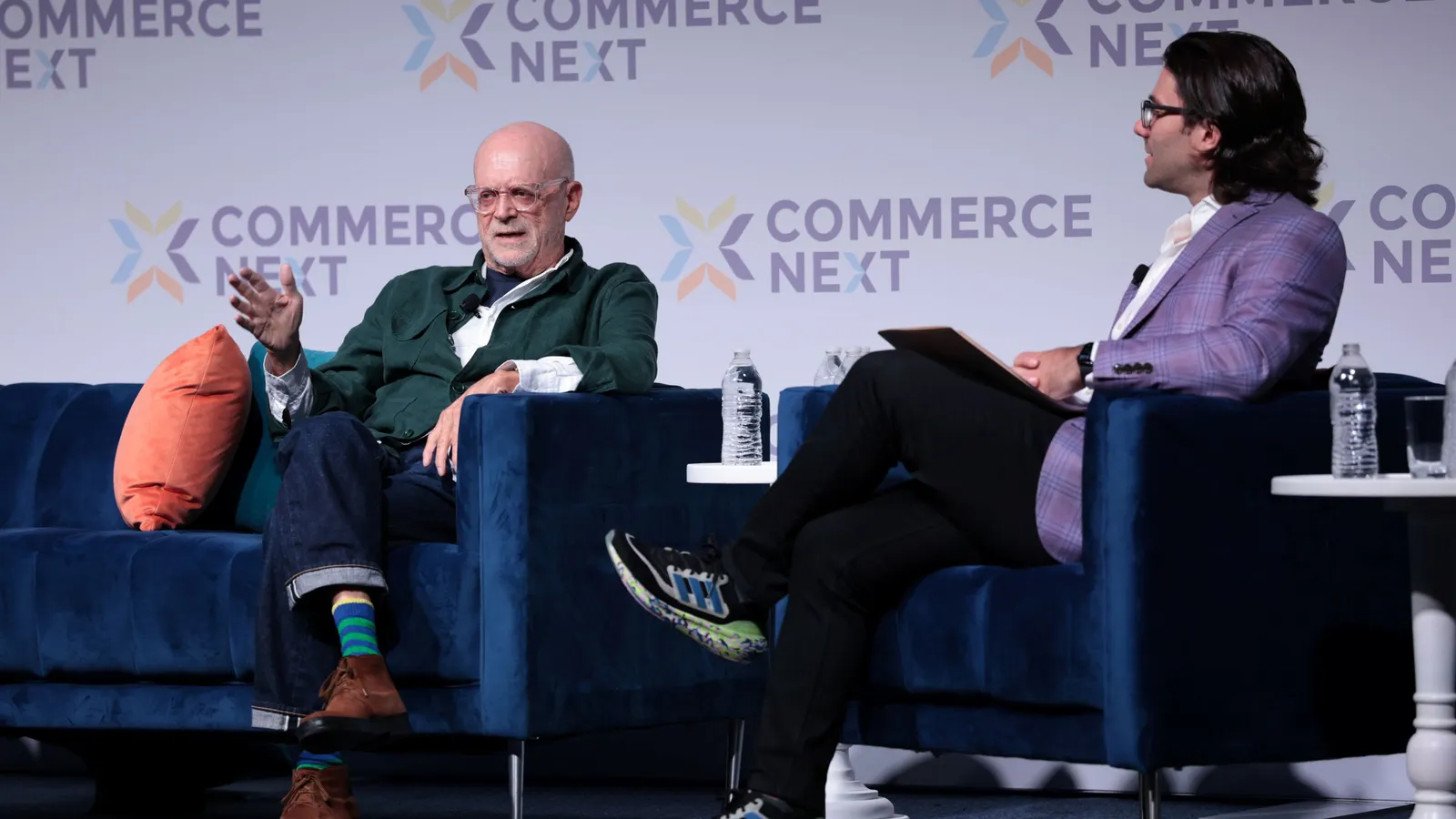
Why it matters: For operators and founders, Drexler’s shift to a private, family-run structure highlights an alternative model for creative control and brand stewardship, directly challenging the pressures of public markets and private equity.
Context: Drexler’s career arc—from building mass-market powerhouses Gap and Old Navy to the rise and fall of J. Crew—exemplifies the volatile relationship between merchant leadership and capital markets in apparel retail.
"Alex Mill Chairman Mickey Drexler is happy. The former CEO of Gap and J. Crew has amassed enough retail credentials under his full-grain Italian leather belt to know what he wants, and." — RETAILDIVE
Commentary: Drexler’s operational pivot to ‘assortment police’ at a small, private firm is a tacit critique of the growth-at-all-costs model he once embodied. His rejection of AI for creativity and emphasis on editing over expansion signals a retreat to core merchant disciplines, suggesting a viable, if niche, path for brands prioritizing margin over market share. This model offers a clear, if limited, alternative for talent seeking autonomy from financial engineering.
Date: June 25, 2026 11:45 AM ET
URL: https://www.retaildive.com/news/mickey-drexler-alex-mill-gap-mistakes/823740/
AI Sentiment Score: Negative (50%)
AI Credibility Score: 10.0/10 — High
Scores and text generated by AI analysis of the source article indicated.
The Countdown to the USMCA Review is On. Here’s What’s At Stake. (Wwd)
Summary: The USMCA’s six-year review begins July 1, with the Trump administration labeling the pact ‘irrelevant’ and considering splitting it into bilateral deals. The U.S. textile industry shipped $11.6 billion, or 53% of its global exports, to Mexico and Canada last year, relying on the agreement’s duty-free rules for integrated production loops. Industry leaders warn that uncertainty over renewal or rule changes will chill multi-year capital investments in the regional supply chain. While a non-renewal wouldn’t immediately collapse the agreement, it triggers a yearly review process, prolonging operational instability.

Why it matters: For brands, manufacturers, and importers, the review’s outcome dictates the cost structure and feasibility of Western Hemisphere sourcing, directly impacting capital planning and compliance workflows.
Context: The review coincides with heightened CBP enforcement using AI analytics and a Trump administration push for reciprocal tariffs, creating a layered risk environment for cross-border apparel and textile trade.
"USMCA—and NAFTA before it—is the reason a Western Hemisphere textile supply chain exists at all,” he said. “For a components manufacturer…the agreement is the predictability that lets us invest." — WWD
Commentary: The core threat is not a sudden tariff wall but the erosion of the planning certainty that enables capital-intensive nearshoring. A shift to bilateral deals or tightened rules-of-origin would force a re-engineering of sourcing data systems to suggest compliance under increased audit scrutiny, privileging large, integrated operators over smaller firms.
Date: June 26, 2026 06:58 PM ET
URL: https://wwd.com/sourcing-journal/trade/usmca-review-ncto-infios-cotswolds-industries-textiles-apparel-trade-1239037480/
AI Sentiment Score: Negative (85%)
AI Credibility Score: 10.0/10 — High
Scores and text generated by AI analysis of the source article indicated.
J.C. Penney, Aéropostale link loyalty programs (Retaildive)
Summary: J.C. Penney and Aéropostale, both under the Catalyst Brands portfolio formed in January 2025, are linking their loyalty programs into a single ‘Rewards Access’ system. This creates Aéropostale’s first-ever loyalty program and allows points earned at either brand to be redeemed across both. The move follows earlier product collaborations and aims to cross-pollinate customer bases.
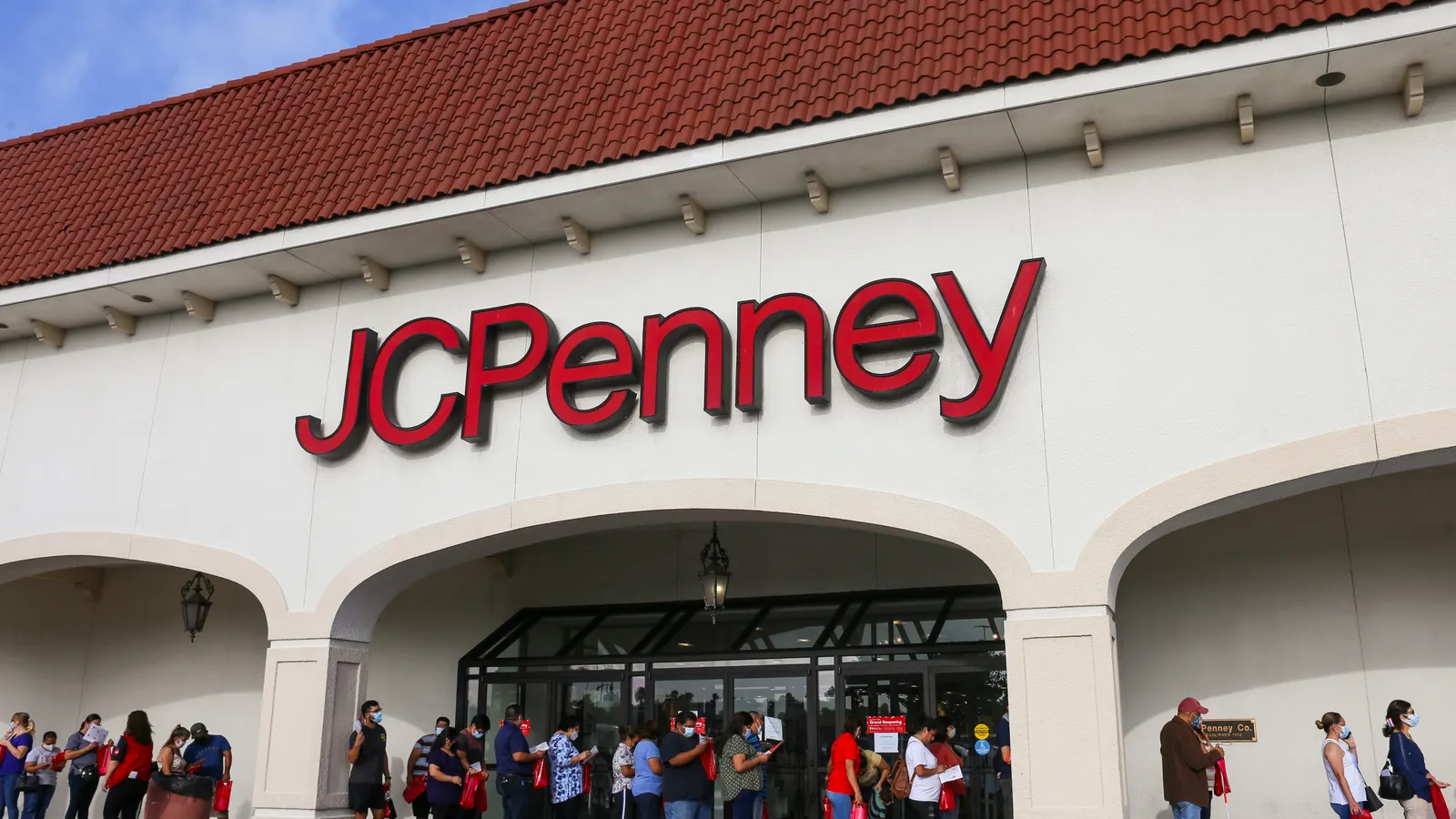
Why it matters: For practitioners, this signals a shift toward portfolio-level customer data consolidation and shared value propositions, altering how loyalty economics and marketing budgets are managed across distinct brands.
Context: This follows a pattern of joint loyalty programs among retail partners (e.g., Dick’s/Nike, Ulta/Target) and builds on Catalyst’s strategy of integrating its acquired brands’ operations post-2025 formation.
"Dive Brief: – J.C. Penney and Aéropostale are connecting their respective loyalty rewards programs to form the J.C. Penney x Aéropostale Rewards Access program, according to a Monday press release. – This." — RETAILDIVE
Commentary: The operational consequence is a forced alignment of two distinct brand teams—J.C. Penney’s legacy department store systems and Aéropostale’s mall-based youth retail—around a shared CRM and redemption pipeline. For vendors and agencies, this means dealing with consolidated performance metrics and potentially unified briefs. Financially, it’s a low-cost lever for Catalyst to attempt to stabilize J.C. Penney’s declining sales by grafting on Aéropostale’s presumably younger, more active customer cohort.
Date: June 26, 2026 12:01 PM ET
URL: https://www.retaildive.com/news/jc-penney-aeropostale-link-loyalty-programs/823886/
AI Sentiment Score: Negative (50%)
AI Credibility Score: 10.0/10 — High
Scores and text generated by AI analysis of the source article indicated.
Saks Global Renames Itself Exemplar Luxury Group After Exit From Bankruptcy (Wwd)
Summary: Saks Global has exited Chapter 11 bankruptcy and rebranded as Exemplar Luxury Group. The restructuring, led by investment firms Pentwater Capital and Bracebridge Capital, resulted in a 75% debt reduction and a new seven-person board. The group, which operates Neiman Marcus, Bergdorf Goodman, and Saks Fifth Avenue, is now positioned to focus on long-term growth under a unified corporate identity, having shed the Saks Global name following store closures.

Why it matters: For luxury retail practitioners, this signals a major reset in vendor payment terms, inventory financing, and brand partnership negotiations, as a key wholesale channel stabilizes its capital structure.
Context: The bankruptcy stemmed from the debt load of the $2.7 billion Neiman Marcus acquisition, crippling operations and vendor relationships.
"Saks Global has emerged from Chapter 11 and has rebranded under a new name — the Exemplar Luxury Group. The company said late Friday afternoon that, as expected, it completed its restructuring." — WWD
Commentary: The rebrand to Exemplar Luxury Group is a strategic divorce from the Saks Fifth Avenue store closure legacy, recentering the portfolio on Neiman Marcus and Bergdorf Goodman as the core assets. The appointment of Dave Kimbell and Philippe Schaus to the board signals a pivot toward operational discipline from mass retail and deep luxury brand stewardship, respectively. For vendors and brands, the ‘right-sized capital structure’ means restored, but likely more scrutinized, credit lines and a consolidated wholesale buyer. The practical effect is a more financially predictable, if potentially more demanding, partner for the luxury supply chain.
Date: June 26, 2026 05:57 PM ET
URL: https://wwd.com/business-news/retail/saks-global-new-corporate-name-exemplar-bankruptcy-1239037456/
AI Sentiment Score: Negative (75%)
AI Credibility Score: 10.0/10 — High
Scores and text generated by AI analysis of the source article indicated.
Post ID: afa0fa37