New York City, NY
Why Claire Valdez Wants Universal Rent Control (Curbed)
Summary: Claire Valdez, a Democratic primary winner for New York’s 7th Congressional District, is advancing a federal housing platform centered on universal rent control, modeled on WWII-era price administration, and aggressive federal intervention against negligent landlords. Her plan leverages federal financing via Fannie Mae and Freddie Mac to enforce habitability standards and supports large-scale social housing development through mechanisms like the Homes Act. The platform directly challenges the influence of real estate capital in a majority-tenant city and seeks to nationalize tenant protections currently blocked by state preemption laws.

Why it matters: Valdez’s platform represents a substantive attempt to federalize New York’s most contentious housing battles, testing whether tenant power can be scaled through Washington’s fiscal and regulatory leverage.
Context: This follows Mayor Zohran Mamdani’s municipal efforts and reflects a growing democratic socialist strategy to bypass state-level opposition by framing housing as a federal responsibility, echoing historical precedents like Nixon’s price controls.
"Update: On June 23, 2026, Claire Valdez won the Democratic primary for Nydia Velasquez’s House seat by a wide margin. Claire Valdez rents her Ridgewood two-bedroom apartment and is running to take." — CURBED
Commentary: Valdez is not merely extending local policy but reframing rent regulation as a revived federal mandate, which could reshape capital flows in multifamily markets by conditioning GSE financing. Her focus on building ‘infrastructure ready in place’ for public acquisition signals a shift from defensive tenant protections to offensive state-capacity building, aiming to create a permanent public competitor in housing development.
Date: June 24, 2026 08:40 AM ET
URL: http://www.curbed.com/article/claire-valdez-housing-plan-congress-exclusive-interview.html
AI Sentiment Score: Negative (75%)
AI Credibility Score: 10.0/10 — High
Scores and text generated by AI analysis of the source article indicated.
A Roaming Art Fair Finds a Home in Robert Wilson’s Southampton Retreat (Curbed)
Summary: The itinerant art and design fair NOMAD has launched its U.S. debut at the Watermill Center in Southampton, the former creative retreat of the late theater director Robert Wilson. The fair, which typically occupies architecturally significant sites globally, is using Wilson’s collection-filled environment as a curated backdrop, positioning the event as an homage to his interdisciplinary philosophy. Exhibitors are placing contemporary works in dialogue with Wilson’s theatrical relics and the landscape, rejecting a conventional trade-fair format.
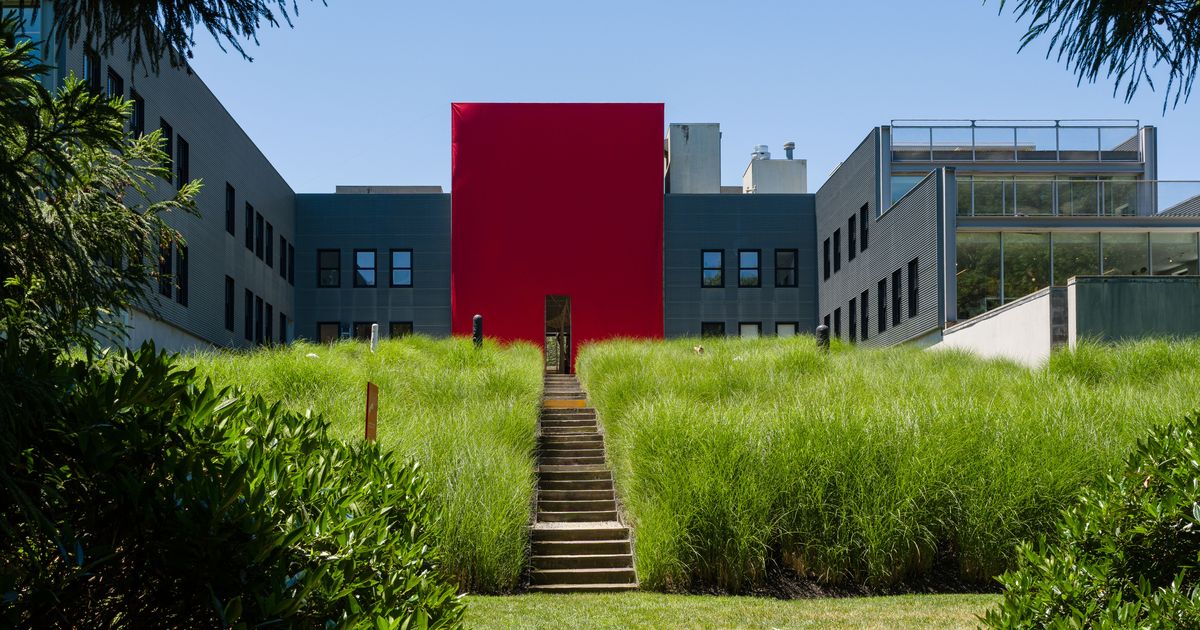
Why it matters: This signals a shift in how high-end art and design fairs leverage cultural capital, moving from neutral convention centers to curated, legacy-steeped environments, which could reshape the Hamptons’ summer economy and influence how institutions program post-founder transitions.
Context: NOMAD follows a pattern of nomadic fairs like Alcova seeking authenticity in unique venues, while the Hamptons has become a contested ground for summer cultural programming that blends real estate, art, and social capital.
"I was 10 when I first visited the Watermill Center in Southampton. Though still under construction, the former Western Union laboratory was a hive of dancers, dramaturges, architects, painters, and other artists." — CURBED
Commentary: The fair’s choice of venue is a strategic acquisition of Wilson’s avant-garde credibility, attempting to graft NOMAD’s commercial endeavor onto his artistic legacy. This tests whether such environments can sustain their ethos under event-driven programming, and may set a precedent for other artist-founded estates seeking revenue and relevance. For the Hamptons, it further blurs the line between seasonal salon and transactional market, concentrating high-cultural leverage in a single, non-institutional site.
Date: June 27, 2026 08:00 AM ET
URL: http://www.curbed.com/article/nomad-hamptons-robert-wilson-watermill-center-art-fair.html
AI Sentiment Score: Positive (50%)
AI Credibility Score: 10.0/10 — High
Scores and text generated by AI analysis of the source article indicated.
NYC programs meant to keep kids out of foster care could lose millions of dollars (Gothamist)
Summary: Mayor Zohran Mamdani’s proposed budget cuts $2.7 million from city-funded family preservation programs in Brooklyn and Queens, targeting four specific providers. The cuts, framed as a streamlining measure by the Administration for Children’s Services (ACS), would eliminate 360 slots for services designed to prevent foster care placement. The reductions trigger a larger financial loss by jeopardizing state matching funds and forcing layoffs. Providers and City Council members warn the cuts will sever critical trust-based relationships with vulnerable families, disproportionately affecting minority and low-income communities.

Why it matters: This is a direct test of the city’s fiscal and social priorities, revealing how ‘streamlining’ operationalizes as a withdrawal of hyperlocal support that keeps families intact, with cascading consequences for child welfare caseloads and neighborhood stability.
Context: The cuts follow a mayoral directive for agencies to eliminate ‘waste,’ but target programs ACS itself touts as key to reducing foster care entries. This reflects a perennial tension in social service budgeting: prevention programs are often the first trimmed despite evidence they save higher downstream costs.
"Hundreds of families in Brooklyn and Queens could lose access to services aimed at preventing children from going into foster care if funding cuts suggested in the mayor’s budget are approved. The." — GOTHAMIST
Commentary: The operational calculus here—cutting neighborhood-specific slots based on utilization—overlooks the relational capital built by caseworkers, which is the program’s actual mechanism. Severing that trust likely increases foster care entries, shifting costs to a more expensive and traumatic system. This is austerity as a blunt instrument, treating social work as a fungible service rather than embedded infrastructure.
Date: June 27, 2026 06:30 AM ET
URL: https://gothamist.com/news/nyc-programs-meant-to-keep-kids-out-of-foster-care-could-lose-millions-of-dollars
AI Sentiment Score: Negative (57%)
AI Credibility Score: 10.0/10 — High
Scores and text generated by AI analysis of the source article indicated.
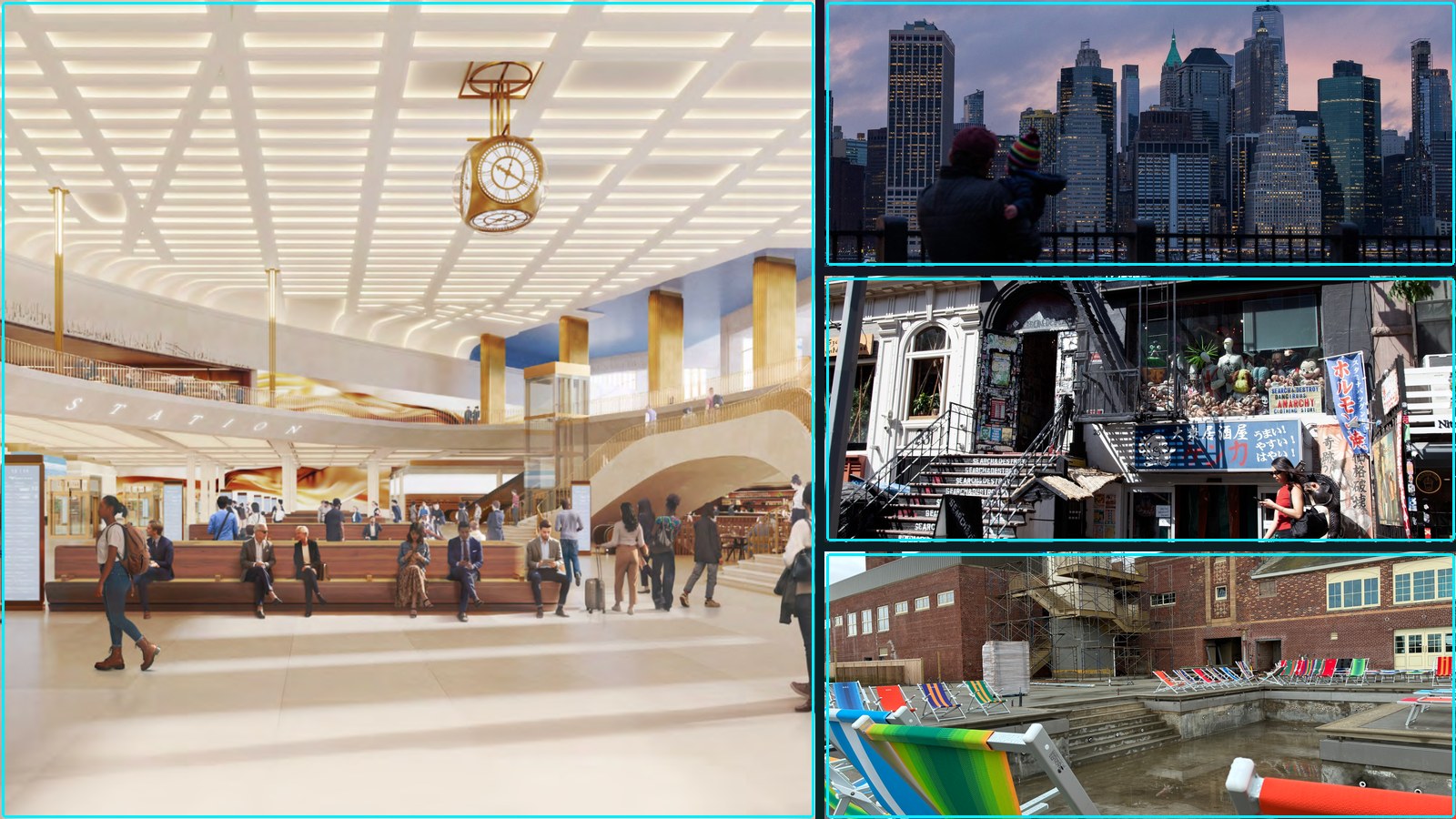
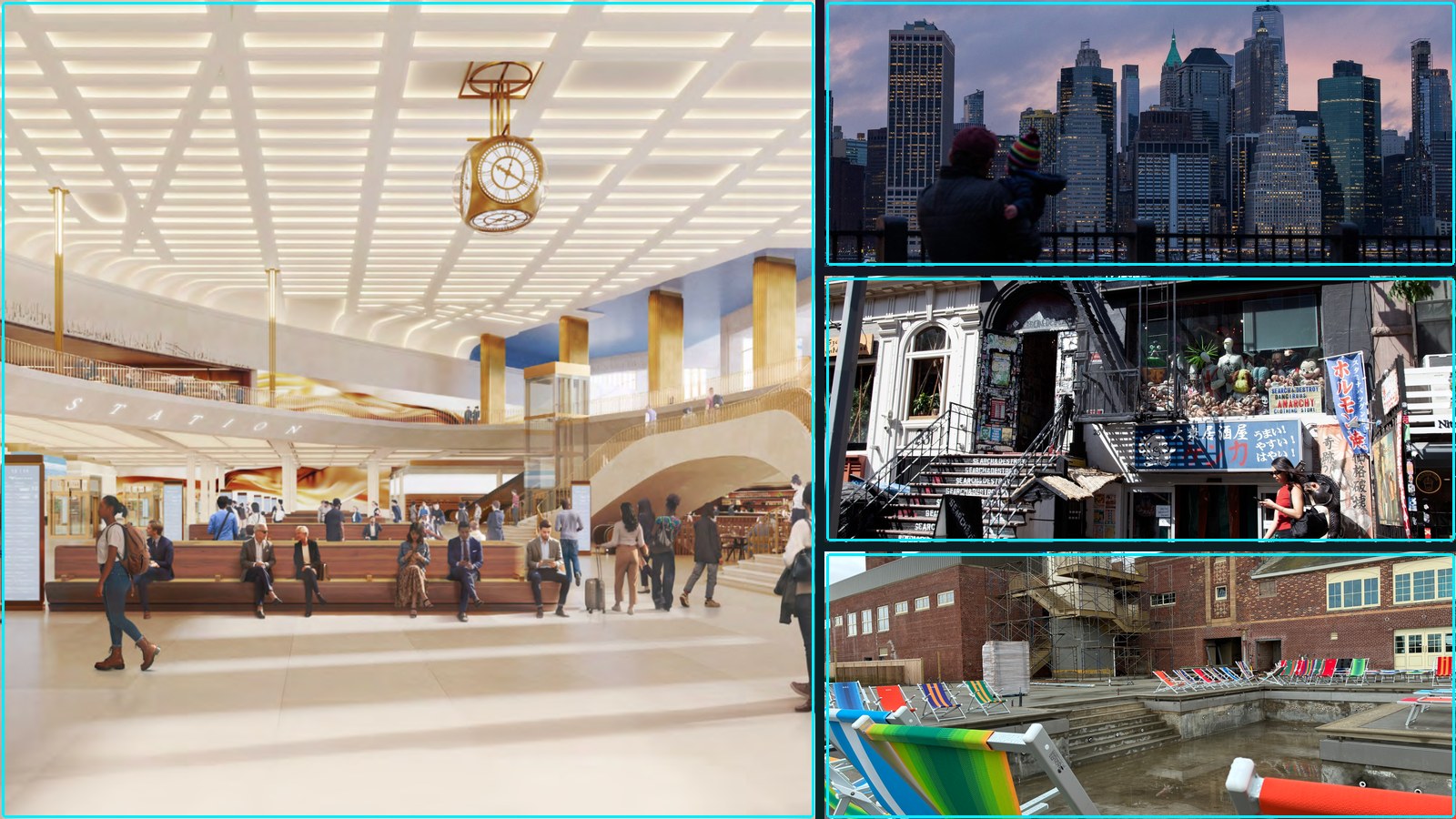
Amtrak’s Penn Station plan includes loads of public benches, a rarity in NYC (Gothamist)
Summary: Amtrak’s design for the reconstructed Penn Station includes extensive public wooden benches, a deliberate departure from the trend of ‘hostile architecture’ in New York City’s major transit hubs. The plan, led by architect Luke Bridle of HOK, frames seating as essential infrastructure to manage pedestrian flow and reduce chaos for 600,000 daily commuters. This contrasts sharply with recent projects like Moynihan Train Hall and Grand Central Madison, where seating is severely restricted or time-limited.

Why it matters: The reintroduction of generous public seating in a capital node like Penn Station signals a potential policy shift in how New York manages its public realm, balancing commuter comfort against anti-homeless design, and could influence future infrastructure projects globally.
Context: Public seating has been systematically removed from NYC transit hubs as a form of hostile architecture, prioritizing deterrence of loitering over passenger comfort, a trend evident since the openings of Moynihan Train Hall (2021) and Grand Central Madison (2023).
"We’re viewing it not so much as an amenity but as a piece of important infrastructure as well,” Bridle said. “Seating really helps shape how people feel in Penn Station, whether they’re stressful, whether it’s chaotic, whether they’re calm or whether it’s manageable." — GOTHAMIST
Commentary: Amtrak’s design is a tacit critique of the MTA’s recent station philosophy, proposing that dignity and flow are compatible. The inclusion of armrests to ‘discourage sleeping’ reveals the enduring tension, but the sheer volume of benches represents a meaningful concession to the public. If built, it could reset expectations for civic infrastructure, making comfort a measurable performance metric. However, the plan’s fate hinges on federal funding and fraught MTA-Amtrak relations, underscoring how governance disputes routinely stall New York’s capacity to execute visionary urbanism.
Date: June 26, 2026 11:03 AM ET
URL: https://gothamist.com/news/amtraks-penn-station-plan-includes-loads-of-public-benches-a-rarity-in-nyc
AI Sentiment Score: Negative (80%)
AI Credibility Score: 10.0/10 — High
Scores and text generated by AI analysis of the source article indicated.
The Quest for an Actually Attractive Sidewalk Shed (Curbed)
Summary: New York City is testing two new sidewalk shed prototypes at Broadway and Chambers, developed by Arup, KNE Studio, and Reddymade under a commission from the previous administration. The designs—a sky-blue ‘Flex Shed’ and a taxi-yellow ‘Rigid Shed’—aim to be less visually intrusive with translucent panels and sturdier construction. Their deployment is part of a broader regulatory push by the Buildings Department to phase out the ubiquitous, often semi-permanent plywood-and-steel structures that define the city’s streetscape. Success hinges on whether the city can shepherd these designs through rulemaking and incentivize adoption by contractors and property owners, moving beyond the niche fate of Bloomberg-era alternatives like the Urban Umbrella.
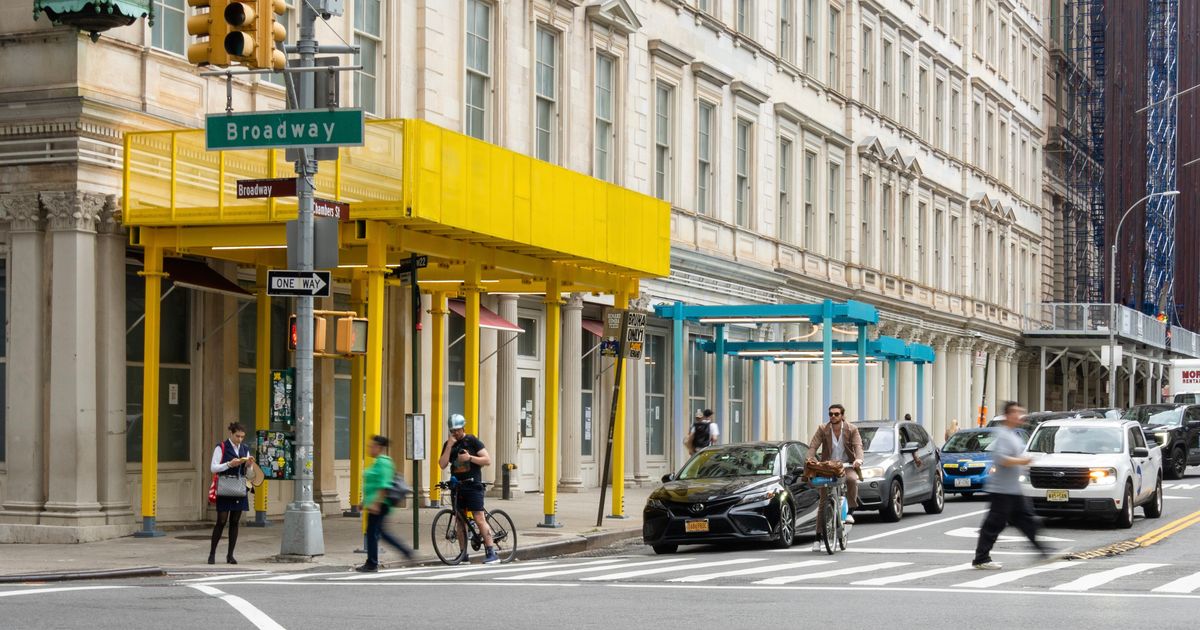
Why it matters: The design and regulation of sidewalk sheds directly shape the pedestrian experience, public safety, and visual character of New York’s streets, while testing the city’s ability to reform a stubborn, capital-intensive industry through bureaucracy and market nudges.
Context: Sidewalk sheds have long been a reviled but permanent feature of NYC’s built environment, with previous design competitions failing to achieve widespread adoption. The current effort is coupled with substantive regulatory changes, including shorter permit durations and increased overhead clearance requirements, aiming to disrupt the economic and logistical inertia behind ‘perma-sheds.’
"If there’s one thing that current and previous mayors can agree on, it’s that they hate sidewalk sheds, those ungainly assemblies of metal poles and splintery plywood that buildings wrap around their." — CURBED
Commentary: The real test is not the prototypes’ aesthetics—indifference is arguably a win—but whether the DoB’s planned open-spec approach and tightened permit rules can overcome contractor inventory lock-in and owner cost sensitivity. If successful, this represents a rare case of municipal design standards altering the physical texture of the city at scale; if not, it becomes another footnote in New York’s history of well-intentioned street furniture that never escaped the pilot phase.
Date: June 24, 2026 07:00 AM ET
URL: http://www.curbed.com/article/sidewalk-shed-construction-arup-reddymade-prototype.html
AI Sentiment Score: Negative (71%)
AI Credibility Score: 10.0/10 — High
Scores and text generated by AI analysis of the source article indicated.
Jacob Riis Bathhouse on track to reopen as private club by end of July (Gothamist)
Summary: The Jacob Riis Bathhouse, a derelict 1932 Robert Moses-era structure on the Rockaway Peninsula, is reopening as the Rockaway Ocean Club after an $88 million, decade-long renovation. The private club, launching in phases starting late July, will feature a members-only pool, a public outdoor lounge, and aims to open a 1,800-person concert venue this summer, with a 28-room hotel and rooftop restaurant to follow in 2027. The project, adjacent to the ‘People’s Beach,’ promises free concerts and boardwalk-facing shops while navigating coastal erosion and flood resilience. Its revival transforms a long-standing local ghost into a new node of leisure capital.

Why it matters: This conversion of a public-adjacent landmark into a private club tests the tension between urban renewal and equitable access in a coastal zone increasingly shaped by climate and capital.
Context: The Rockaway peninsula has seen accelerating private investment and gentrification post-Sandy, with the 2020 Rockaway Hotel setting a precedent for upscale hospitality, while the National Park Service manages the eroding beachfront.
"It’s like putting together a million-piece jigsaw puzzle with pieces that keep changing shape," said Ursula Damani, co-owner of the project, who’s been working to resurrect the bathhouse since 2017. "It’s been boarded up and empty for 54 years." — GOTHAMIST
Commentary: The project’s scale and protracted timeline underscore the financial and logistical weight of adapting historic, climate-vulnerable infrastructure for luxury use. Its success hinges on a delicate balance: offering enough public-facing amenities to avoid appearing as an enclave while relying on member fees to justify the investment, a model that could accelerate the privatization of other underutilized public-adjacent assets in coastal cities.
Date: June 24, 2026 06:30 AM ET
URL: https://gothamist.com/news/jacob-riis-bathhouse-on-track-to-reopen-as-private-club-by-end-of-july
AI Sentiment Score: Negative (50%)
AI Credibility Score: 10.0/10 — High
Scores and text generated by AI analysis of the source article indicated.
Seeking a gritty St. Marks at Search and Destroy (Gothamist)
Summary: Kyota Umeki, 23, has taken over Search and Destroy, the iconic punk and vintage clothing store on St. Marks Place, following the sudden death of his father and founder Yuji. He and his brother now run the store and the downstairs izakaya Kenka, positioning them as holdouts against the block’s gentrification into a corridor of boba shops and luxury brands. Their strategy is to double down on the street’s gritty legacy: keeping prices low, hosting late-night punk shows, and reclaiming the public stoop. This is a generational handoff of a cultural institution, testing whether a defiantly local, anti-corporate ethos can survive in a Manhattan where four-bedroom apartments in the same building rent for up to $9,200 a month.

Why it matters: This is a live test of whether New York’s cultural capital nodes can retain their generative edge—and the cheap space for misfits and artists—amid financialization, or if their legacy becomes purely performative.
Context: St. Marks Place has cycled through countercultural identities for decades, with each generation lamenting its commercialization. The Umeki family’s businesses have been a rare constant, but their survival now hinges on a next-gen owner explicitly fighting the block’s economic logic.
"When Kyota Umeki was just a boy in the early 2000s, his mother would walk with him on St. Marks Place, instructing him to keep his head down as they made their." — GOTHAMIST
Commentary: Umeki’s clear-eyed fatalism underscores the structural mismatch: cultural production requires affordable, messy space, but Manhattan’s real estate market is optimized for extraction. His plan—’make the streets dirty again’—is less a business model than a form of institutional protest, using the store’s remaining tenure to stage a public argument about value. The outcome will signal whether such nodes can still anchor a scene, or if they become museums whose closure merely accelerates the neighborhood’s drift toward a generic premium experience.
Date: June 24, 2026 06:01 AM ET
URL: https://gothamist.com/arts-entertainment/seeking-a-gritty-st-marks-at-search-and-destroy
AI Sentiment Score: Negative (87%)
AI Credibility Score: 10.0/10 — High
Scores and text generated by AI analysis of the source article indicated.
Post ID: 6fbf2bee