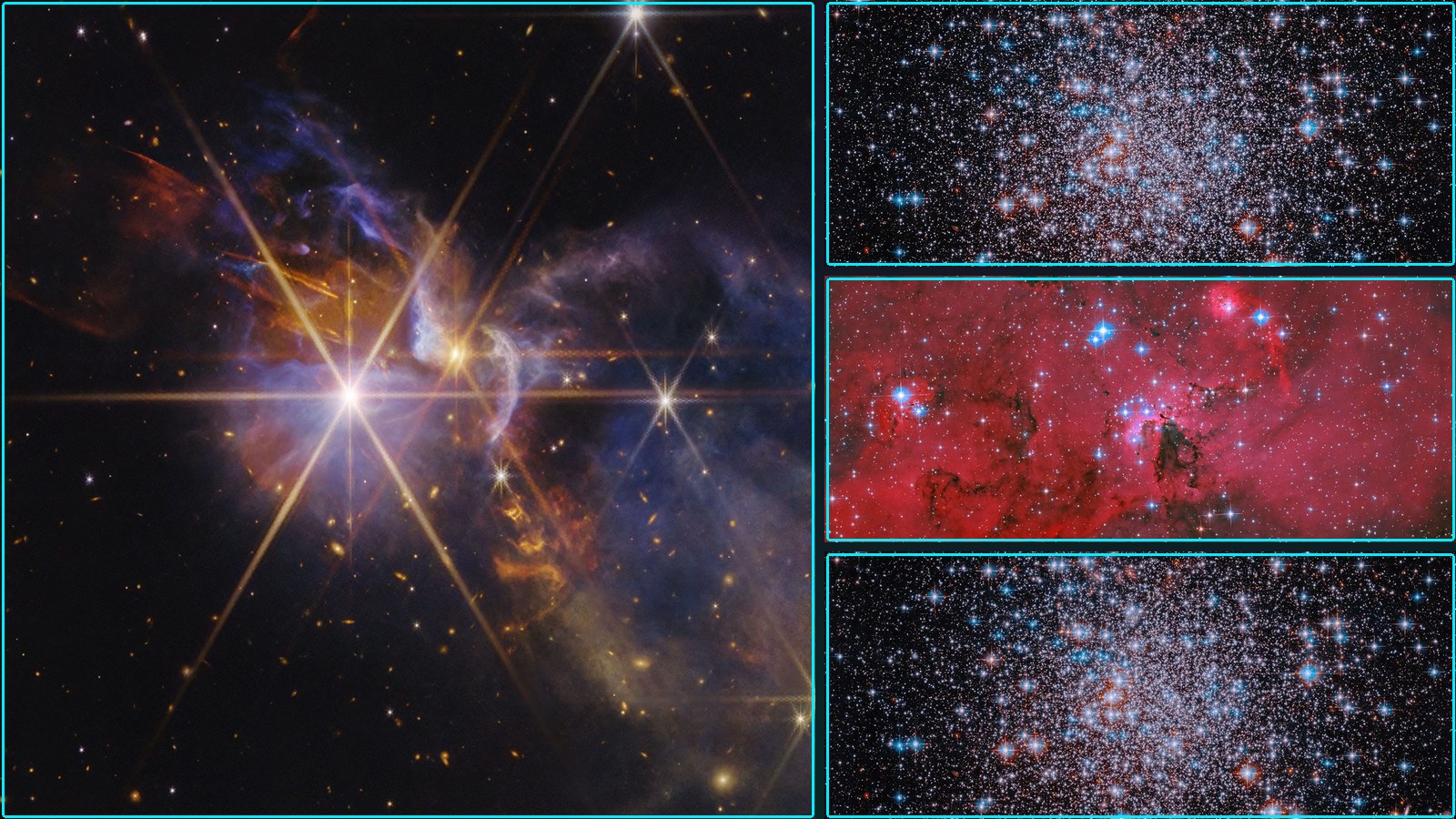
Hubble and Webb’s Stunning Cosmic Fireworks
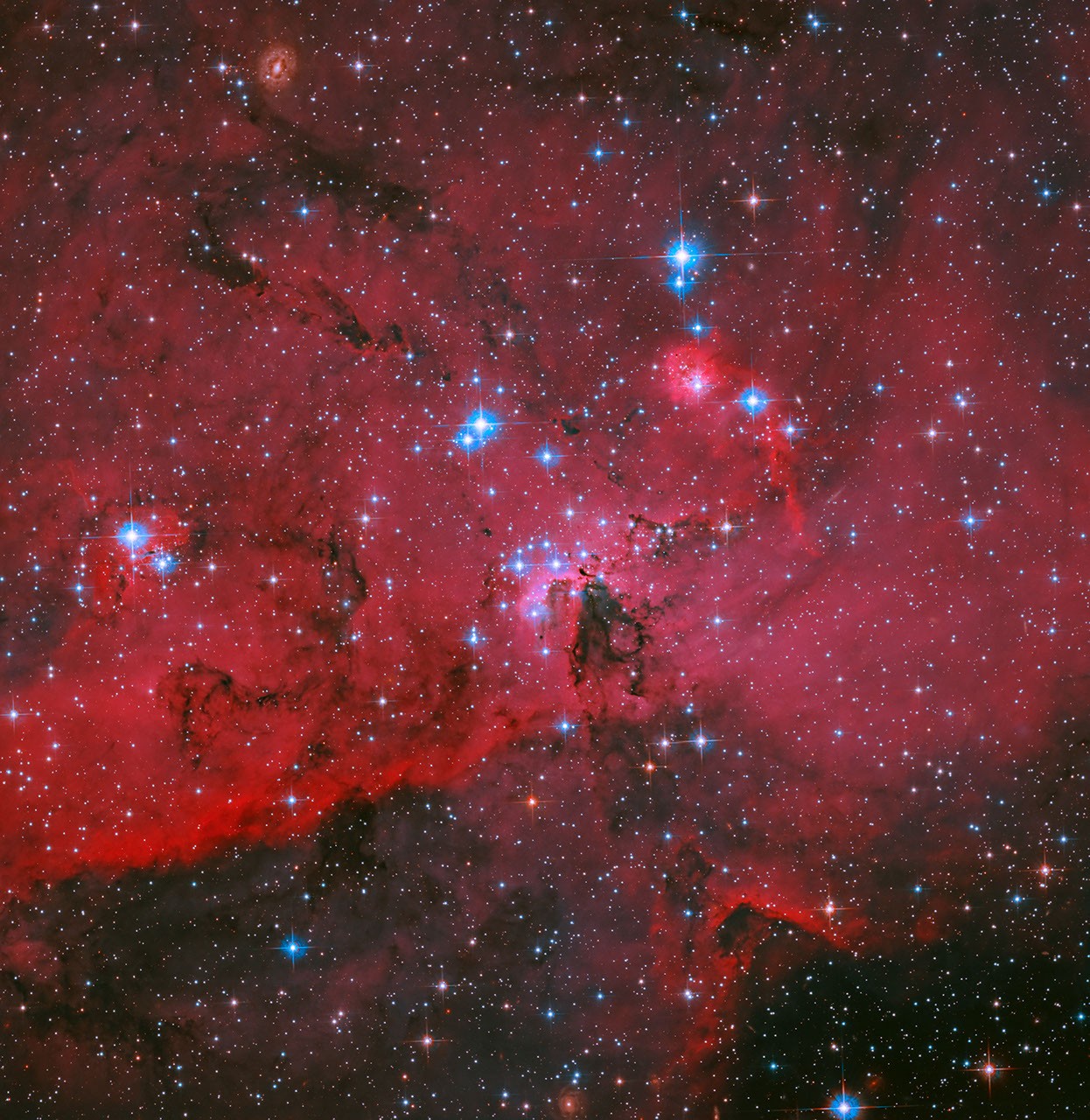
NASA’s Hubble Captures Crimson Cloud Sparkling with White, Blue Stars (Science.Nasa.Gov)
Summary: NASA’s Hubble Space Telescope has released a new image of the stellar nursery LH 95 in the Large Magellanic Cloud, revealing a region rich with 2,500 pre-main-sequence stars that have not yet begun hydrogen fusion. The observation confirms that stellar accretion rates decrease with age but can persist for several million years, longer than previously assumed. The region also shows distinct generations of stars coexisting, including a massive 60-70 solar mass star that is about a million years younger than the surrounding 4-million-year-old population. This data refines models of star formation and disk evolution, leveraging LH 95’s relatively unobscured view compared to similar Milky Way regions.
Why it matters: The finding that accretion can continue for millions of years challenges standard timelines for protostellar disk evolution and planet formation, with direct implications for models of how planetary systems assemble around young stars.
Context: LH 95 is a stellar association in the Large Magellanic Cloud, a dwarf galaxy orbiting the Milky Way, offering a cleaner line of sight to forming stars than many comparable regions in our own galaxy due to lower dust obscuration.
"Researchers found developing stars still gathering material from the disks of gas and dust around them. In fact, LH 95 is home to an extraordinary 2,500 stars that have accumulated almost all of their critical mass but have not yet “turned on” by beginning fusion reactions." — SCIENCE.NASA.GOV
Commentary: The extended accretion timeline observed here is a concrete constraint for disk evolution models, which often assume rapid clearing. The coexistence of multiple stellar generations in the same region also suggests that star formation is not a single burst but a prolonged, episodic process—a nuance that simulations will need to incorporate. Hubble’s continued utility in this domain, even as Webb and Roman come online, underscores the value of multi-wavelength synergy for disentangling early stellar and planetary system development.
Date: July 03, 2026 11:01 AM ET
URL: https://science.nasa.gov/missions/hubble/nasas-hubble-captures-crimson-cloud-sparkling-with-white-blue-stars/
AI Sentiment Score: Negative (66%)
AI Credibility Score: 10.0/10 — High
Scores and text generated by AI analysis of the source article indicated.
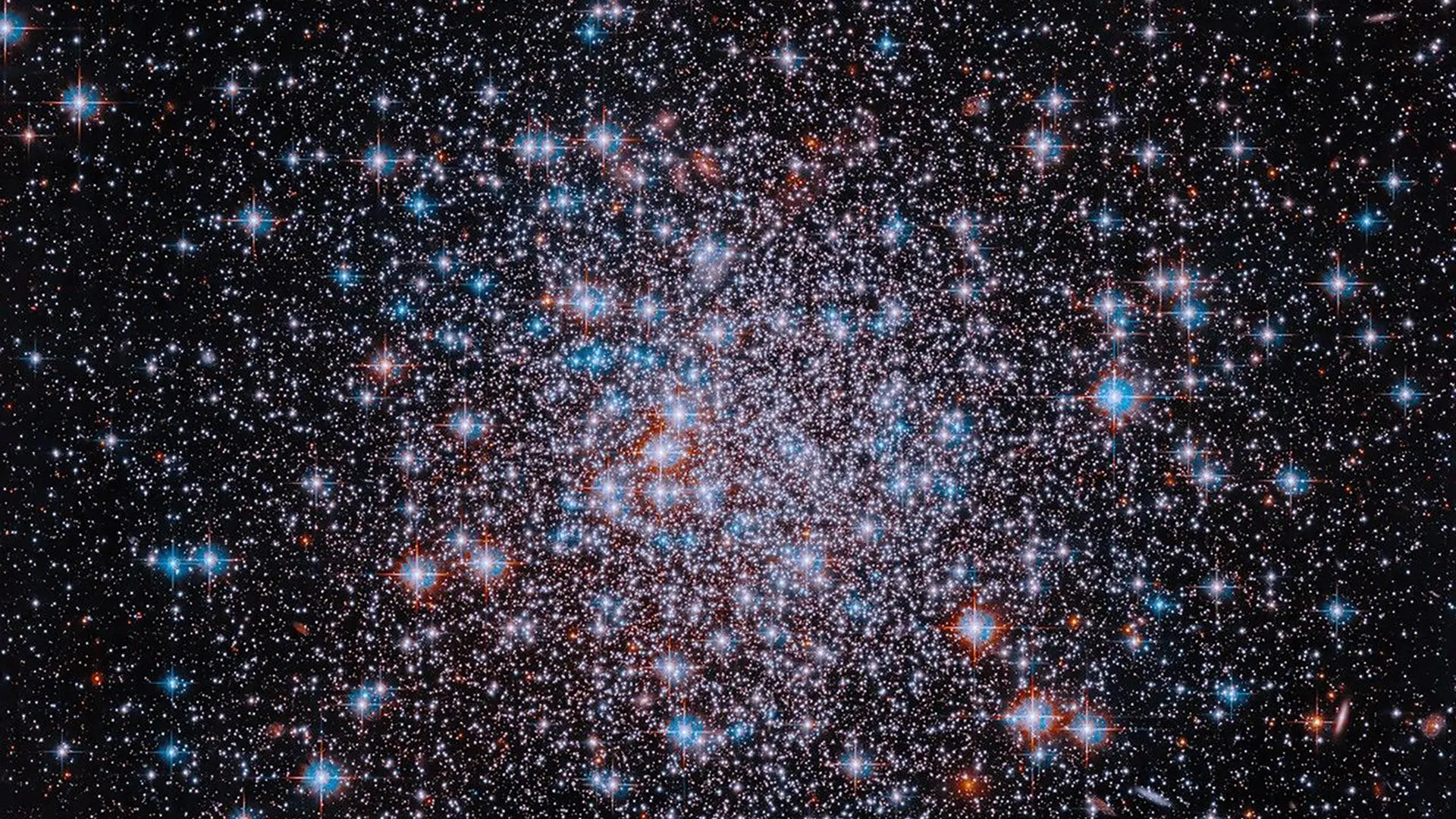
NASA’s Hubble Spies Stellar Sparkler for July 4th (Science.Nasa.Gov)
Summary: NASA released a Hubble Space Telescope image of globular cluster NGC 6426 to mark the U.S. 250th anniversary. The cluster, located in the Milky Way’s outer halo, is approximately 13 billion years old—nearly as old as the universe itself. Hubble’s observations reveal two chemically distinct stellar populations, indicating enrichment from supernovae within the cluster. The image uses color mapping to show temperature differences: blue for hotter stars, red for cooler ones.

Why it matters: NGC 6426’s low metallicity and ancient age make it a direct laboratory for studying early universe conditions and the chemical enrichment processes that seeded later star and planet formation.
Context: Globular clusters like NGC 6426 are among the oldest known objects in the galaxy, and their stellar populations preserve a record of nucleosynthesis from the first generations of massive stars.
"At approximately 13 billion years old, NGC 6426 is one of the Milky Way’s oldest globular clusters and almost as old as the universe itself (13.7 billion years)." — SCIENCE.NASA.GOV
Commentary: The detection of two chemically distinct populations in a single cluster is a nontrivial finding—it suggests that even in these ancient, gravitationally bound systems, star formation was not a single instantaneous event but occurred in at least two episodes separated by supernova enrichment. This complicates the simple picture of globular clusters as coeval stellar fossils and reinforces the value of Hubble’s long-term survey work, which the Roman Telescope will extend with wider fields and deeper infrared sensitivity.
Date: July 04, 2026 07:15 AM ET
URL: https://science.nasa.gov/missions/hubble/nasas-hubble-spies-stellar-sparkler-for-july-4th/
AI Sentiment Score: Negative (50%)
AI Credibility Score: 10.0/10 — High
Scores and text generated by AI analysis of the source article indicated.
NASA’s Hubble Spots Star-Spangled Cosmic Scene (Science.Nasa.Gov)
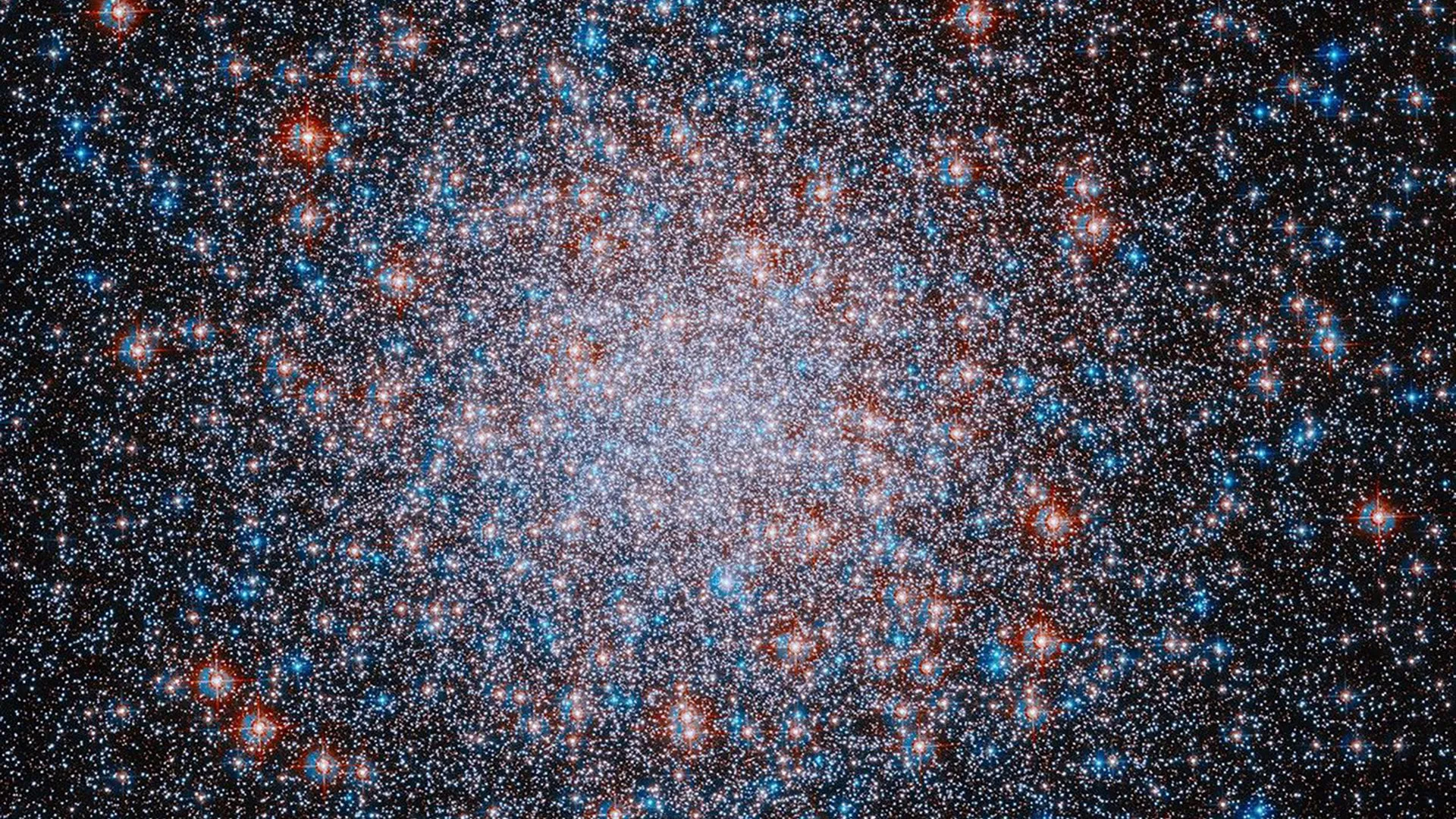
Summary: NASA’s Hubble Space Telescope has released a new image of globular cluster Messier 3 (M3) to mark the U.S. 250th anniversary. M3 is one of the Milky Way’s most massive globular clusters, containing over 500,000 stars and an unusually high number of RR Lyrae variables—more than 240, the most of any cluster in our galaxy. The cluster also hosts about 70 identified ‘blue straggler’ candidates, stars that appear younger than their neighbors due to mass accretion from companions. Evidence suggests M3 may be the result of a merger between two clusters from a dwarf galaxy later absorbed by the Milky Way. The image is part of a Hubble Treasury program surveying roughly half of the Milky Way’s globular clusters to build a formation chronology.

Why it matters: This observation provides a rare window into the merger history of globular clusters and the assembly of the Milky Way, with M3’s dual stellar populations offering direct evidence of galactic cannibalism.
Context: Globular clusters are ancient, gravitationally bound systems that serve as fossils of galaxy formation. M3’s unusual distance from the galactic center and its high variable-star count make it a key target for understanding how the Milky Way accreted smaller galaxies.
"The globular cluster, which contains two distinct populations of stars, may be the result of a merger of two globular clusters. These two clusters were members of the same dwarf galaxy, which was later swallowed up by the Milky Way." — SCIENCE.NASA.GOV
Commentary: The merger hypothesis for M3 is significant because it suggests that some of the Milky Way’s most massive globular clusters are not primordial but assembled from smaller units. This aligns with hierarchical galaxy formation models and underscores the value of Hubble’s long-term survey data in resolving stellar populations that would otherwise be blended. The RR Lyrae stars also provide a precise distance ladder, making M3 a calibration anchor for cosmic measurements.
Date: July 03, 2026 08:42 AM ET
URL: https://science.nasa.gov/missions/hubble/nasas-hubble-spots-star-spangled-cosmic-scene/
AI Sentiment Score: Negative (50%)
AI Credibility Score: 10.0/10 — High
Scores and text generated by AI analysis of the source article indicated.
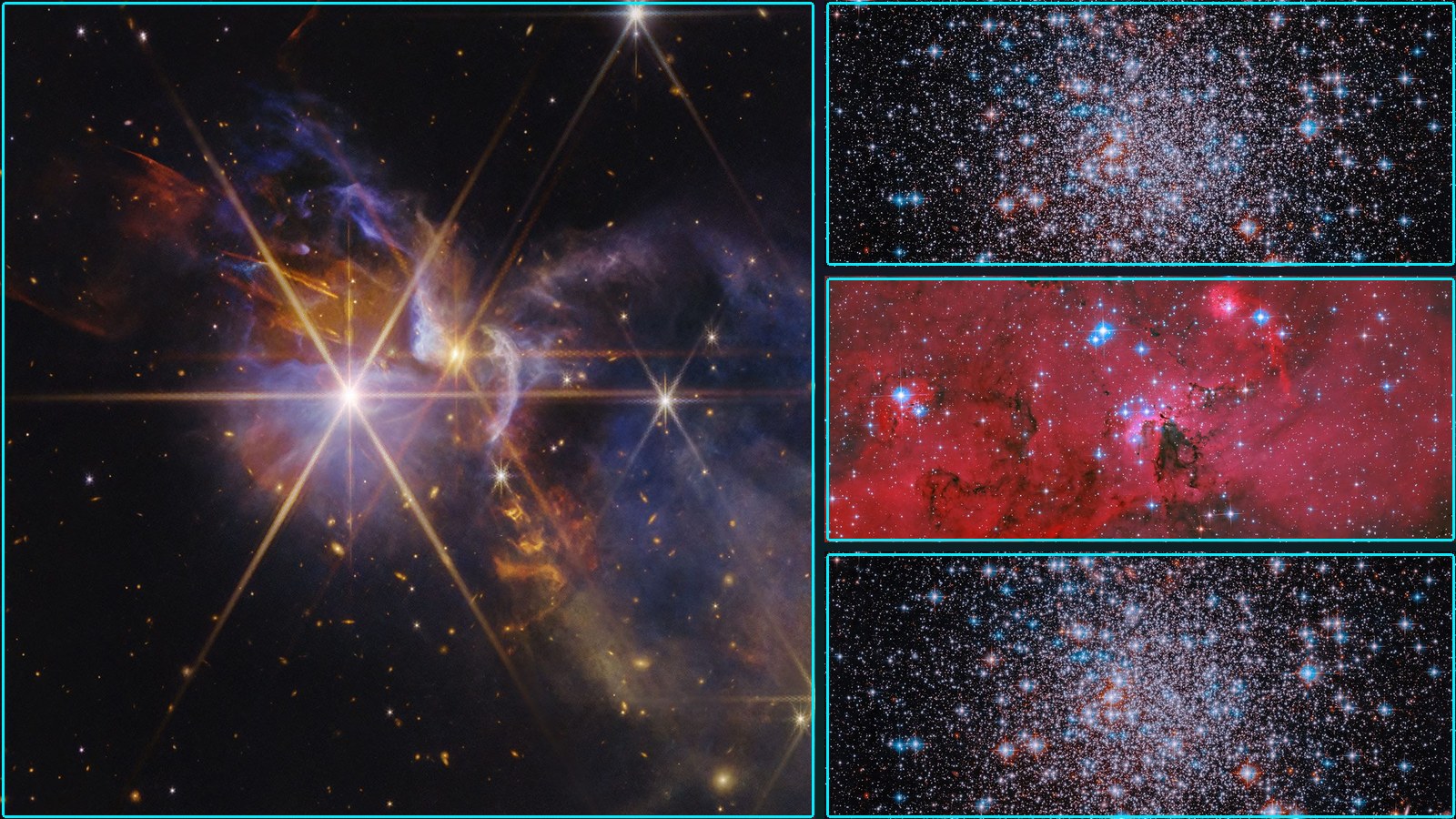
NASA’s Webb Reveals Stars Sparking to Life in Cosmic Celebration (Science.Nasa.Gov)
Summary: NASA’s James Webb Space Telescope has imaged the FS Tau star system in infrared, revealing protostars and outflows previously hidden by thick dust. The system hosts low-mass protostars about 1 to 3 million years old, including FS Tau A (half the Sun’s mass) and FS Tau B, which ejects matter in discrete episodes. Newly discovered gaps between outflows support the theory that protostars accrete matter in bursts, with quiet periods in between. The image also shows light-blue ridges where outflows compress dust and gas, and color variations that map dust obscuration across the region.

Why it matters: This observation provides a clean laboratory for studying low-mass star formation without the interference typical of higher-mass stars, refining models of how Sun-like stars evolve from protostars.
Context: Low-mass stars like the Sun form from dense gas and dust, but their early evolution is poorly understood because they are faint and often obscured. Webb’s infrared sensitivity allows direct observation of these processes in systems like FS Tau.
"The gaps between the outflows, newly discovered in this Webb observation, add to growing evidence that protostars accrete matter in discrete episodes. In the periods where protostars gather material and increase in mass, they also eject superheated matter in different directions. In between these episodes, they are relatively quiet." — SCIENCE.NASA.GOV
Commentary: The episodic accretion model has been debated for years; Webb’s ability to resolve outflow gaps at this scale offers the clearest observational support yet. For mission planners, this reinforces the value of infrared surveys for protostar demographics, though the system’s youth (1–3 Myr) means it will not produce planets for tens of millions of years. The color mapping technique also demonstrates a practical method for characterizing dust column density in star-forming regions, which could be applied to other Webb targets. No schedule or cost implications for Webb itself—this is a routine science release, but it validates the telescope’s design for this class of problem.
Date: July 02, 2026 10:00 AM ET
URL: https://science.nasa.gov/missions/webb/nasas-webb-reveals-stars-sparking-to-life-in-cosmic-celebration/
AI Sentiment Score: Negative (50%)
AI Credibility Score: 10.0/10 — High
Scores and text generated by AI analysis of the source article indicated.
NASA’s Chandra Reveals ‘Red, White, Blue’ Universe for US 250th (Science.Nasa.Gov)
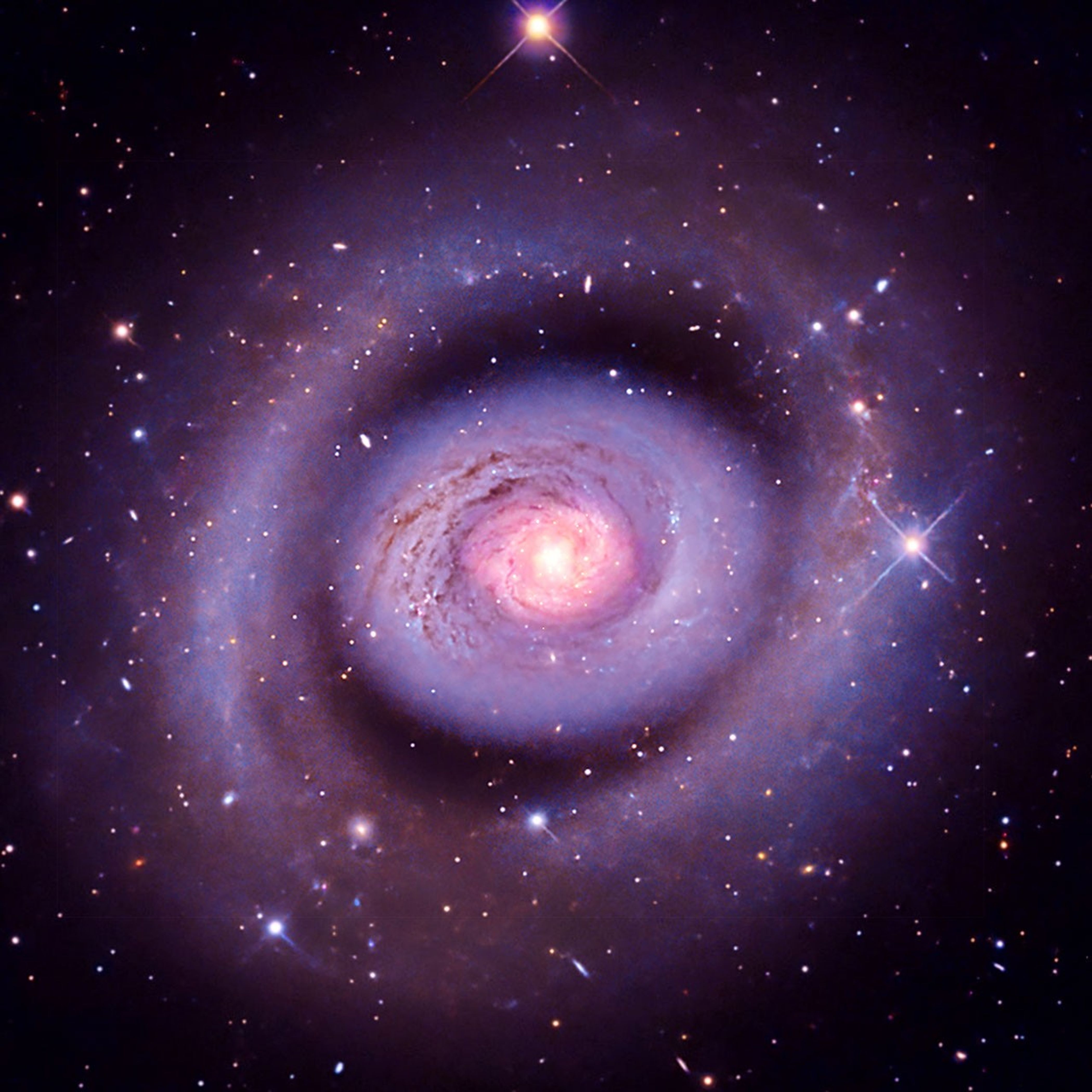
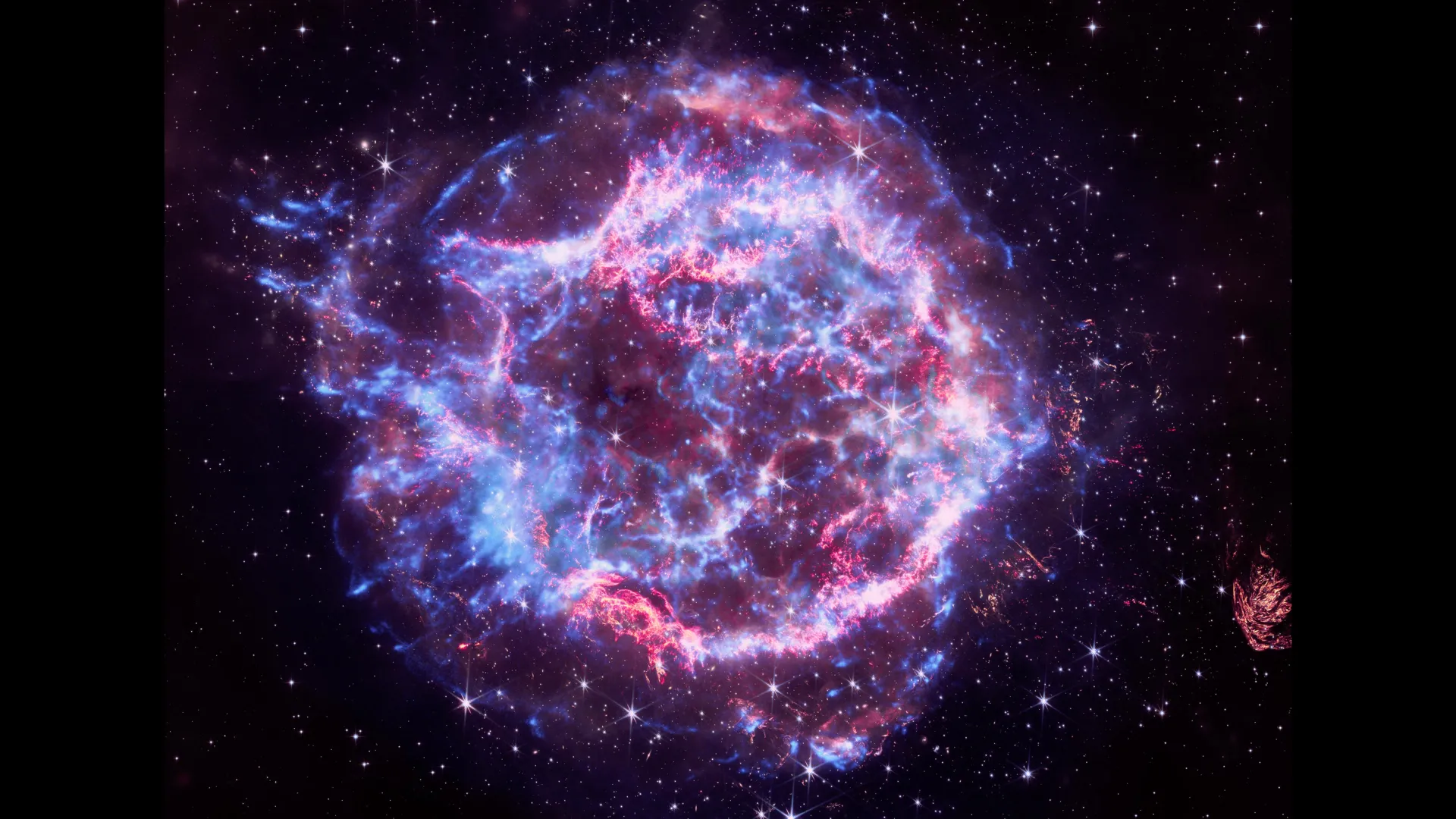
Summary: NASA’s Chandra X-ray Observatory has released four cosmic images rendered in red, white, and blue to mark the U.S. 250th anniversary, combining X-ray data with infrared and optical observations from the James Webb Space Telescope and Hubble. The set includes Cassiopeia A, the nebula NGC 3603, the galaxy Messier 94, and the galaxy cluster ZwCl 0024+1652, each layered to produce patriotic coloration. Three new sonifications accompany the images, translating X-ray and optical data into sound through a collaboration led by the Chandra X-ray Center and the SYSTEM Sounds project. The release is a public engagement exercise, not a scientific discovery, but demonstrates ongoing cross-mission data integration and sonification as an accessibility tool.
Why it matters: This release signals NASA’s continued investment in multi-wavelength data fusion and sonification as outreach tools, but offers no new science—it is a branding exercise timed to a national anniversary.
Context: Chandra has been operational since 1999 and regularly produces composite images with other observatories; sonification has been a growing NASA outreach effort since at least 2020, with previous releases for Cassiopeia A and other targets.
"In celebration of the 250th birthday of the United States, NASA has unveiled four cosmic images from its Chandra X-ray Observatory rendered in red, white, and blue that represent the wonders of the universe the agency explores. The images are accompanied by a trio of new sonifications – a technique that translates astronomical data into sounds." — SCIENCE.NASA.GOV
Commentary: The choice of targets—a supernova remnant, a star-forming nebula, a starburst ring galaxy, and a dark matter-rich cluster—is pedagogically sound, each illustrating a different astrophysical process. However, the press release leans heavily on aesthetic description and patriotic framing, with no mention of new findings or mission status. For readers tracking Chandra’s operational health, the absence of any technical update is notable; the observatory has faced budget pressures in recent years. The sonification program remains a niche but valuable accessibility initiative, though its scientific utility beyond outreach is unproven.
Date: June 30, 2026 03:54 PM ET
URL: https://science.nasa.gov/missions/chandra/nasas-chandra-reveals-red-white-blue-universe-for-us-250th/
AI Sentiment Score: Positive (50%)
AI Credibility Score: 10.0/10 — High
Scores and text generated by AI analysis of the source article indicated.
NASA’s Hubble spots a stellar sparkler for the Fourth of July (Sciencedaily)
Summary: NASA’s Hubble Space Telescope released a new image of globular cluster NGC 6426 to mark the U.S. 250th anniversary. The cluster, roughly 13 billion years old, is one of the oldest in the Milky Way and contains two chemically distinct stellar populations. Its low metallicity and evidence of sequential star formation after supernovae provide direct clues to how early generations of massive stars enriched the universe with heavy elements necessary for planet formation.
Why it matters: NGC 6426 offers a rare observational window into the chemical enrichment processes that transformed the primordial universe into one capable of forming planets and life, directly constraining models of early stellar evolution and galaxy assembly.
Context: Globular clusters are fossil records of the early universe; NGC 6426’s dual-population structure is a key test for theories of sequential star formation triggered by supernova feedback.
"Scientists have also found evidence that the cluster contains two chemically distinct populations of stars. This discovery suggests that the slightly younger stars formed after an earlier generation of massive stars ended their lives in powerful supernova explosions." — SCIENCEDAILY
Commentary: The dual-population finding is the operational signal here: it moves the cluster from a static age marker to a dynamic laboratory for enrichment timescales. Hubble’s ongoing survey of halo globulars, complemented by Webb’s infrared spectroscopy and Roman’s wide-field surveys, should soon resolve whether such multi-generational clusters are common or rare, with direct implications for the timeline of heavy-element seeding across the early Milky Way.
Date: July 05, 2026 12:10 AM ET
URL: https://www.sciencedaily.com/releases/2026/07/260704232642.htm
AI Sentiment Score: Negative (66%)
AI Credibility Score: 10.0/10 — High
Scores and text generated by AI analysis of the source article indicated.
NASA’s Hubble captures a star-spangled sea of 500,000 stars (Sciencedaily)
Summary: NASA released a Hubble portrait of globular cluster Messier 3, containing over 500,000 stars, to mark the U.S. 250th anniversary. The cluster holds more RR Lyrae variables than any other known Milky Way globular and about 70 blue straggler candidates. Two distinct stellar populations suggest M3 may have formed from a merger of two clusters originally in a dwarf galaxy later absorbed by the Milky Way. The image is part of a Treasury program surveying roughly half the galaxy’s globular clusters to reconstruct its formation history.
Why it matters: M3’s dual populations and variable star census provide direct evidence for hierarchical assembly of the Milky Way via dwarf galaxy accretion, a process models predict but observations rarely confirm at cluster scale.
Context: Globular clusters are fossil records of early galaxy formation; M3’s unusual distance from the galactic center and high variable star count have long made it an outlier. The Treasury survey aims to systematically compare ~75 clusters to constrain the Milky Way’s merger timeline.
"NASA’s Hubble captures a star-spangled sea of 500,000 stars – Date: – July 4, 2026 – Source: – NASA – Summary: – Celebrating the United States’ 250th anniversary, NASA released a stunning." — SCIENCEDAILY
Commentary: If M3 is indeed a merged relic, it validates a key prediction of hierarchical galaxy formation models and gives observers a concrete laboratory for studying how cluster mergers proceed. The Treasury survey’s systematic approach should yield a statistical sample of such relics, turning a single candidate into a population-level constraint on Milky Way assembly. The blue straggler count—70 candidates in one cluster—also offers a dense testbed for mass-transfer evolution models.
Date: July 04, 2026 11:39 PM ET
URL: https://www.sciencedaily.com/releases/2026/07/260704232634.htm
AI Sentiment Score: Negative (80%)
AI Credibility Score: 10.0/10 — High
Scores and text generated by AI analysis of the source article indicated.
NASA celebrates America’s 250th birthday with incredible views of space (Sciencedaily)
Summary: NASA has released four new composite images from the Chandra X-ray Observatory to mark the 250th anniversary of the United States, each rendered in red, white, and blue. The collection includes Cassiopeia A (a supernova remnant), NGC 3603 (a stellar nursery), Messier 94 (a spiral galaxy with a starburst ring), and ZwCl 0024+1652 (a galaxy cluster used to study dark matter). The agency also debuted three new sonifications that translate astronomical data into sound. The release is a public engagement effort timed to a national milestone, not a scientific discovery announcement.
Why it matters: The images demonstrate Chandra’s continued operational value in multi-wavelength astronomy, but the framing as a ‘patriotic’ release signals NASA’s increasing reliance on cultural events to maintain public visibility amid budget pressures.
Context: Chandra, launched in 1999, has been operating well beyond its original 5-year design life. Its budget has faced periodic cuts, and the observatory’s future beyond the mid-2020s remains uncertain. This release is part of a broader pattern of NASA using anniversaries and holidays to generate media coverage for aging missions.
"The collection combines data from Chandra with observations from other telescopes to showcase some of the most remarkable objects in space, from the remains of an exploded star to a distant galaxy cluster filled with evidence of dark matter." — SCIENCEDAILY
Commentary: The sonifications are a genuine accessibility innovation, but the press release’s emphasis on ‘patriotic shades’ risks trivializing the underlying science. For readers tracking mission health, the notable signal is that Chandra is still producing publishable composite imagery—a sign that operations remain stable, but also that the agency is leaning on repackaged archival data rather than new discoveries for this milestone.
Date: July 04, 2026 05:30 AM ET
URL: https://www.sciencedaily.com/releases/2026/07/260702230859.htm
AI Sentiment Score: Positive (50%)
AI Credibility Score: 10.0/10 — High
Scores and text generated by AI analysis of the source article indicated.
Hubble Celebrates Nation’s 250th Birthday (Science.Nasa.Gov)
Summary: NASA’s Hubble Space Telescope is marking the U.S. semiquincentennial with a series of red, white, and blue cosmic images and an expanded version of its ‘What Did Hubble See on Your Birthday?’ web app, now offering five different views for each day of the year. The agency is also highlighting how Hubble-derived detector technology was repurposed to monitor the condition of the Declaration of Independence, Constitution, and Bill of Rights, revealing early-stage ink degradation invisible to the naked eye.
Why it matters: This demonstrates a rare, concrete cross-application of space instrument technology to cultural heritage preservation, while the expanded birthday app increases public engagement with Hubble’s scientific output.
Context: Hubble has been in orbit since 1990, and its instruments have been used for terrestrial applications before, but the Charters of Freedom monitoring system is a direct, operational spin-off that solved a real preservation problem for irreplaceable national documents.
"The Charters of Freedom Monitoring System was designed to scan these documents using detector technology developed for Hubble. The system revealed degradation invisible to the human eye, allowing conservators to act early to halt the deterioration." — SCIENCE.NASA.GOV
Commentary: The Hubble-to-Charters technology transfer is the most substantive element here—it shows how space-grade imaging sensors can address non-space challenges with precision. The birthday app expansion is a nice engagement tool, but the preservation story has real institutional weight and should not be buried under the holiday framing.
Date: July 03, 2026 11:53 AM ET
URL: https://science.nasa.gov/mission/hubble/hubble-news/hubble-social-media/hubble-celebrates-nations-250th-birthday/
AI Sentiment Score: Negative (66%)
AI Credibility Score: 10.0/10 — High
Scores and text generated by AI analysis of the source article indicated.
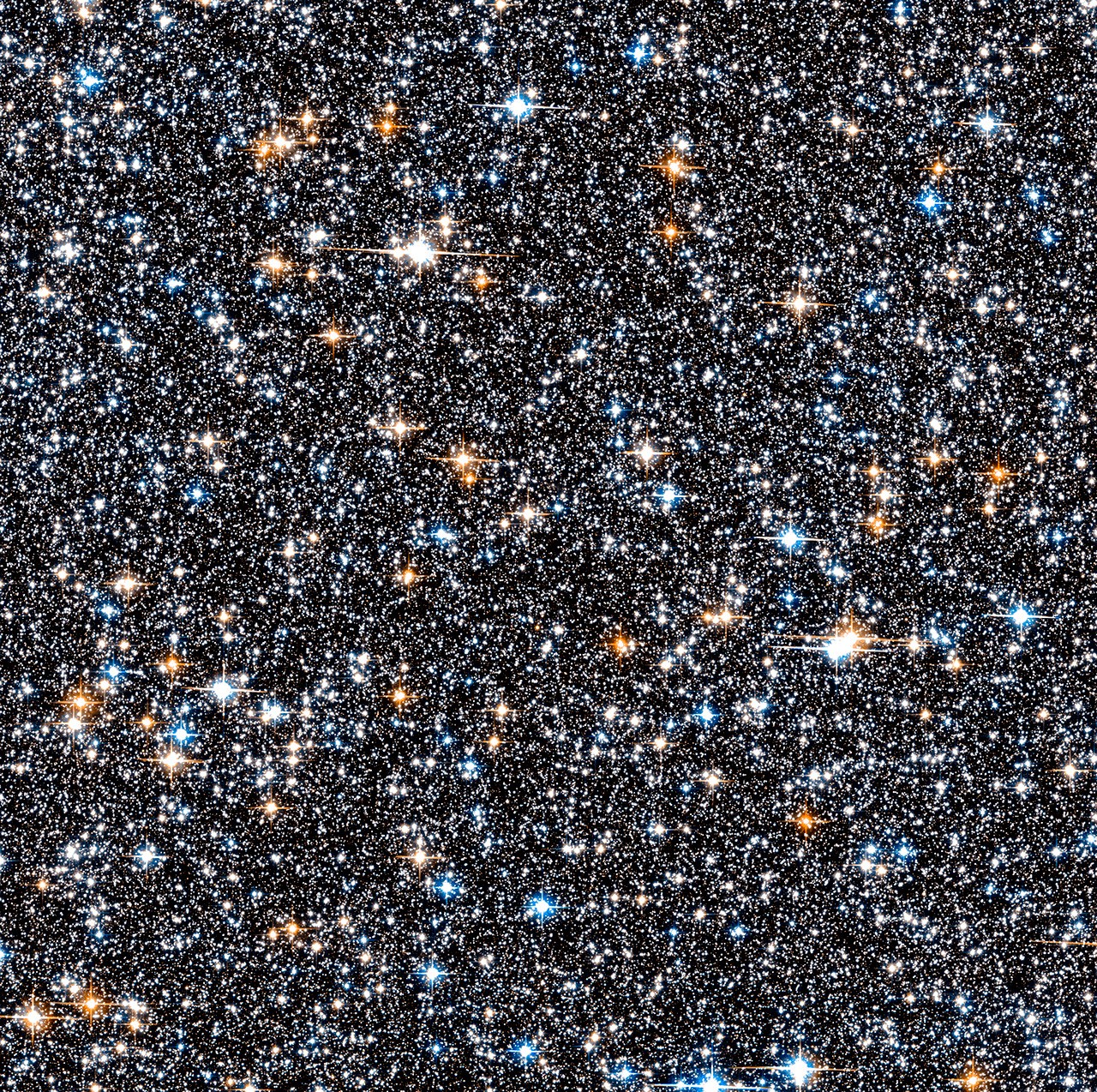
Starry Chandelier Cluster (Nasa.Gov)
Summary: NASA released a Hubble image of the globular cluster NGC 6723, also known as the Chandelier Cluster, located 27,000 light-years away in Sagittarius. The cluster contains some of the oldest stars in the Milky Way, with ages often exceeding 10 billion years. These ancient stellar groupings are thought to have formed before the galaxy’s thin disk, but their exact formation remains uncertain.
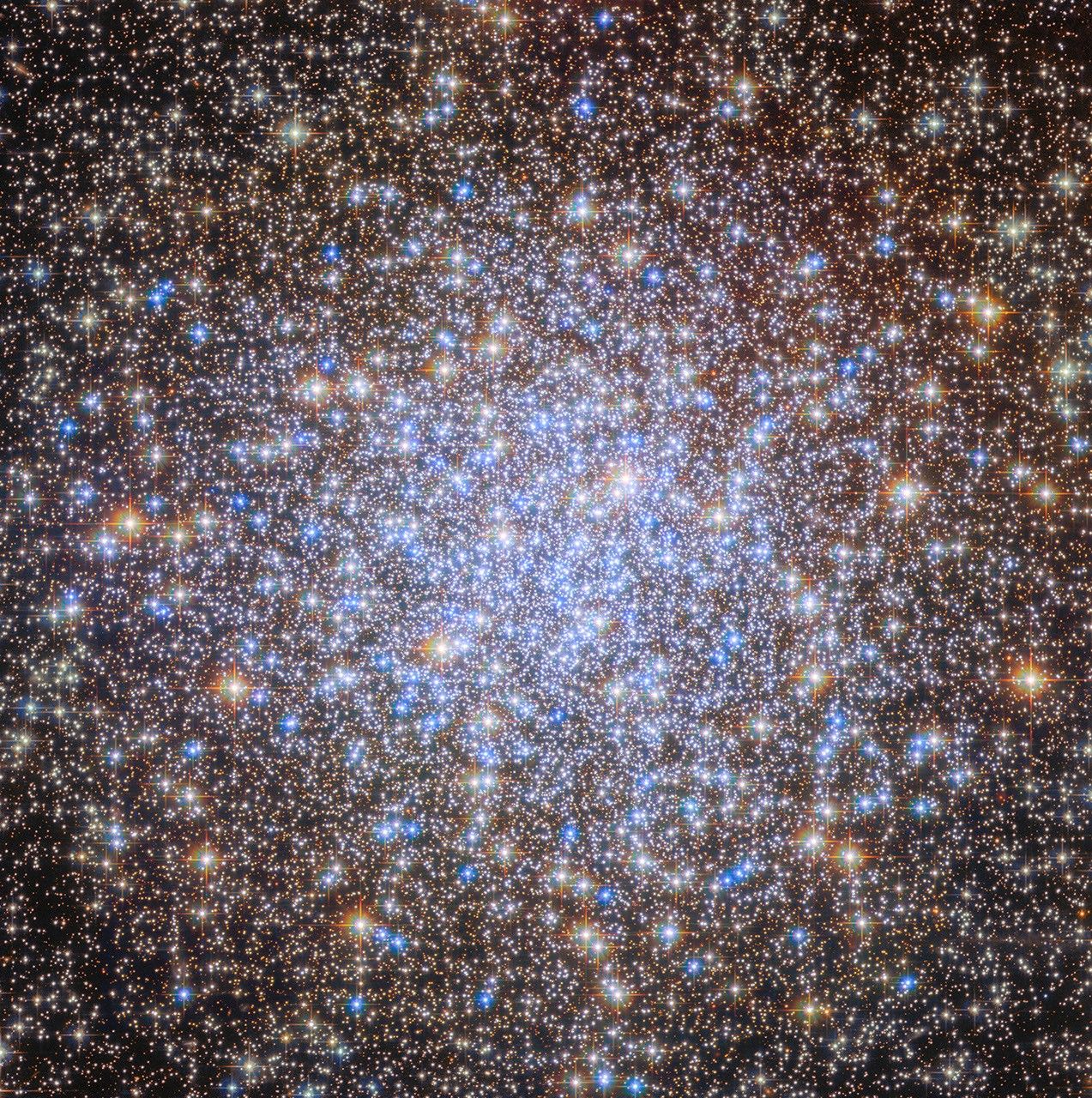
Why it matters: Globular clusters like NGC 6723 are fossil records of the early galaxy, offering constraints on star formation and chemical evolution that inform models of galactic assembly.
Context: Globular clusters are dense, spherical collections of hundreds of thousands to millions of stars, bound by gravity and typically found in the galactic halo. Their ages and compositions provide key tests for theories of hierarchical galaxy formation.
"Globular clusters like NGC 6723 contain some of the oldest stars in our galaxy. These clusters have ages that often exceed 10 billion years old, and some are nearly as old as the universe itself." — NASA.GOV
Commentary: The release is a routine Hubble image, but the stated age uncertainty underscores a persistent gap: we still lack a definitive formation mechanism for globular clusters. Until next-generation surveys or simulations resolve this, these objects remain beautiful but incomplete probes of early galaxy evolution.
Date: June 30, 2026 11:02 AM ET
URL: https://www.nasa.gov/image-article/starry-chandelier-cluster/
AI Sentiment Score: Negative (75%)
AI Credibility Score: 10.0/10 — High
Scores and text generated by AI analysis of the source article indicated.
Post ID: 98e4cf7c