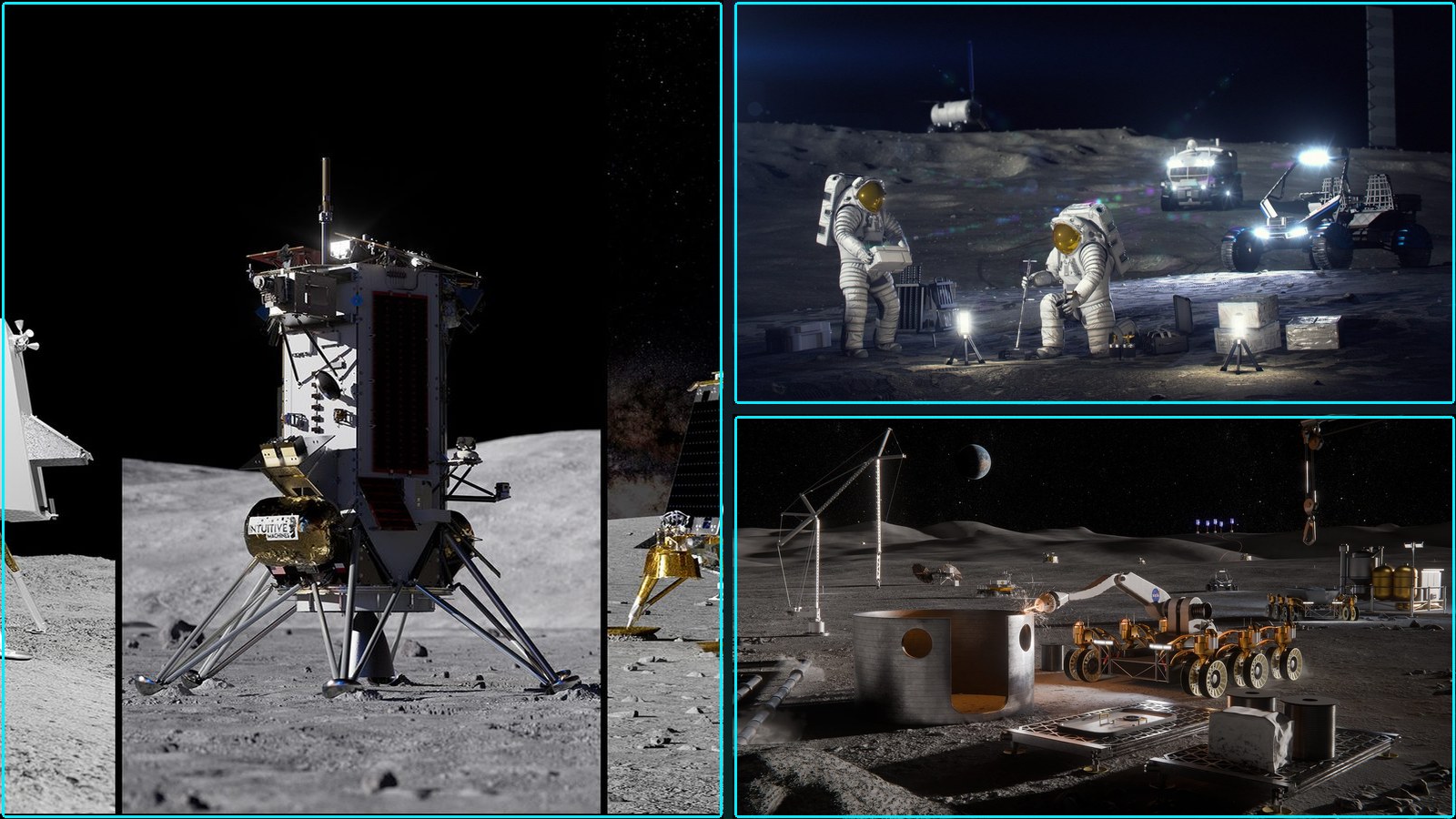
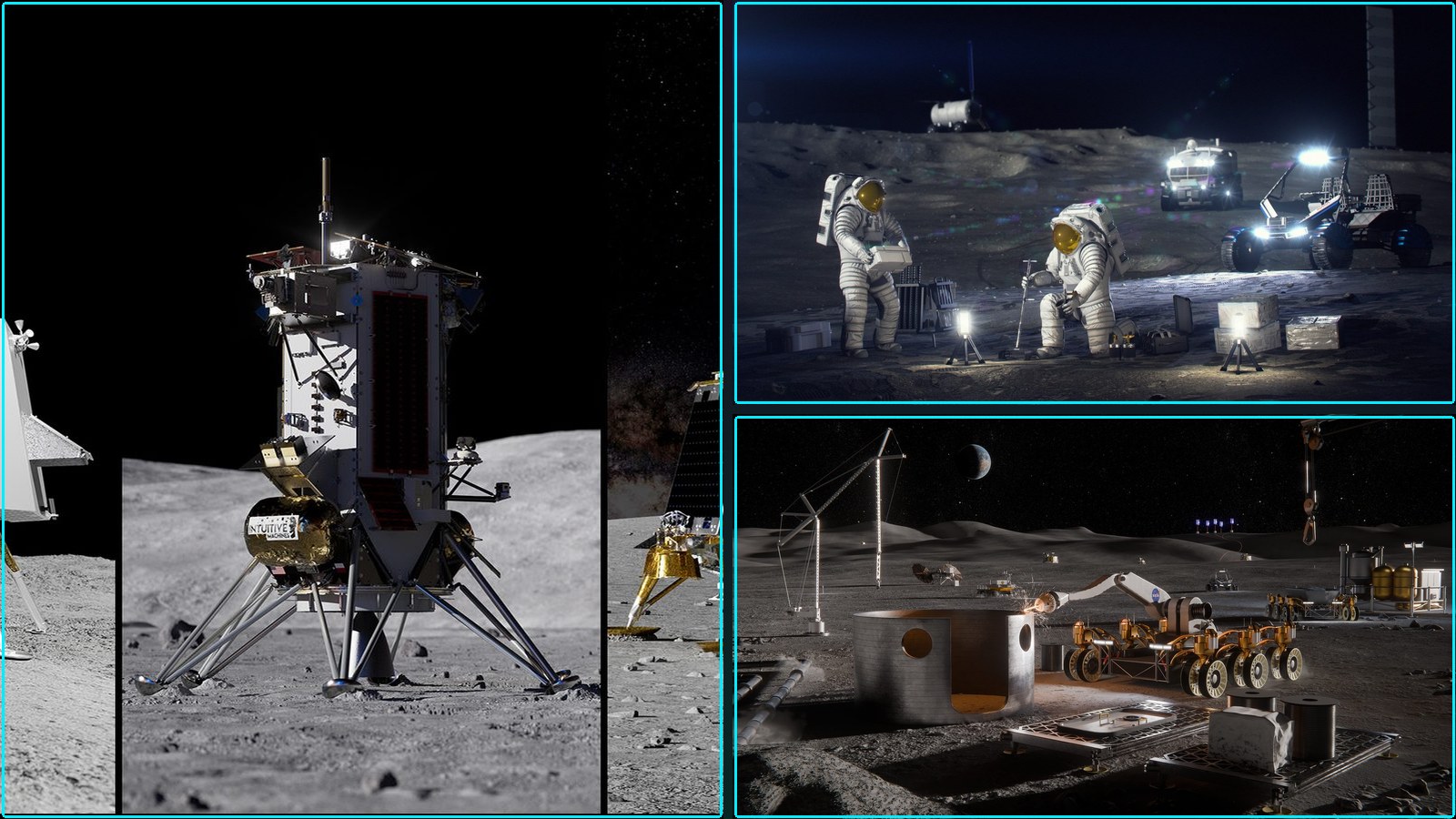
NASA’s Moon Base and Lunar Technology Plans
NASA Awards More Moon Base Science, Previews New Opportunities (Nasa.Gov)
Summary: NASA has awarded nearly $600 million to Astrobotic, Firefly Aerospace, and Intuitive Machines for four new CLPS lunar surface deliveries in late 2028, each carrying three standardized science payloads. The agency also previewed the PROMISE rover—a hybrid of Perseverance and Curiosity engineering—and plans to solicit proposals for a power/avionics demo, a science manifest, a South Pole lander, and a lunar communications relay constellation. These awards accelerate the Moon Base program’s cadence, moving from single missions to a sustained operational tempo with iterative learning. The standardized payloads (SCALPSS, LRA, LETS) will fly on multiple landers to build consistent environmental and navigation data across the lunar surface.
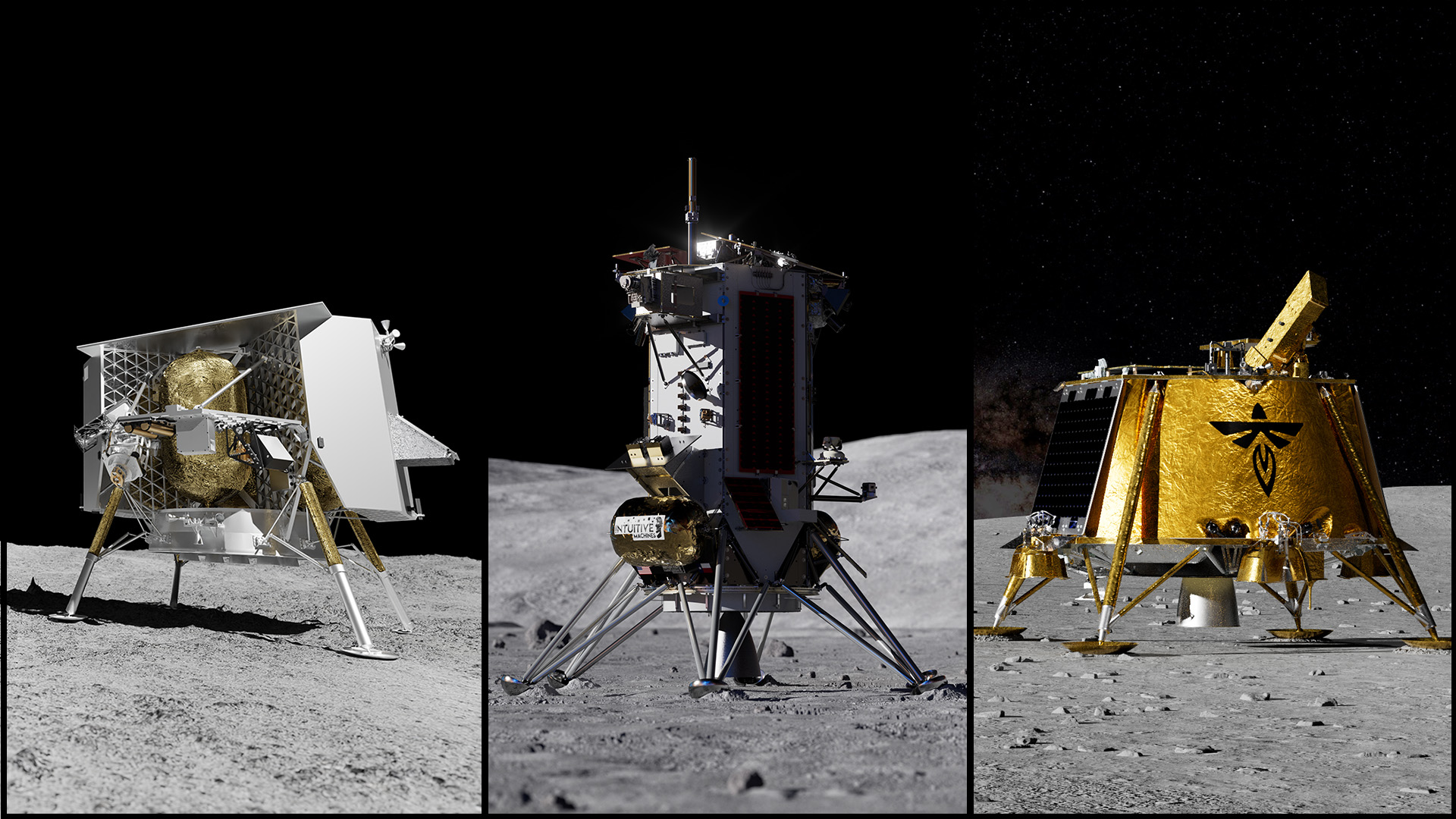
Why it matters: This marks a shift from episodic lunar landings to a systematic infrastructure buildout, with NASA using commercial landers as a repeatable delivery pipeline rather than one-off science missions.
Context: CLPS has previously suffered schedule slips and lander failures (e.g., Peregrine’s 2024 abort), but these awards use updated versions of already-flown designs, suggesting NASA is prioritizing reliability and cadence over novelty.
"“By flying the same science instruments on multiple landers, we will better understand potential hazards during landing and build out a global network of environmental data and location markers on the Moon,” said Joel Kearns, deputy associate administrator for exploration, Science Mission Directorate, NASA Headquarters." — NASA.GOV
Commentary: The PROMISE rover is the most interesting signal here: a hybrid of Perseverance and Curiosity engineering adapted for lunar polar prospecting, which implies NASA is serious about in-situ resource utilization before crewed outpost construction. The standardized payload strategy—SCALPSS for plume effects, LRA for navigation beacons, LETS for radiation—treats the Moon as a testbed for Mars-class operations, not just a destination. The open solicitation for a lunar relay constellation is overdue; current direct-to-Earth comms are a bottleneck for any sustained surface presence. Watch for whether these 2028 deadlines hold, given CLPS’s track record, and whether the PROMISE rover gets a funded development line in the next budget cycle.
Date: June 30, 2026 02:48 PM ET
URL: https://www.nasa.gov/news-release/nasa-awards-more-moon-base-science-previews-new-opportunities/
AI Sentiment Score: Positive (50%)
AI Credibility Score: 10.0/10 — High
Scores and text generated by AI analysis of the source article indicated.
NextSTEP-3 B: Moon Base Demonstrations (Nasa.Gov)
Summary: NASA has announced a new solicitation under the NextSTEP-3 Omnibus Broad Agency Announcement, called Appendix B: Moon Base Demonstrations, seeking industry-led concept demonstrations, risk reduction, and studies to address architecture gaps for a Moon Base at the lunar South Pole. The first directed topic call will focus on surface power, with follow-on calls covering infrastructure, communications, transportation, mobility, habitation, autonomy, lunar science, and concepts of operations. This marks a shift from technology development toward integrated mission operations, aiming to accelerate phased implementation of a permanent lunar outpost. The solicitation is expected to be posted in early July 2026, following a June 30 announcement by NASA Administrator Jared Isaacman and program manager Carlos García-Galán.

Why it matters: This solicitation signals NASA’s intent to move from component-level technology development to integrated system demonstrations, directly shaping which commercial architectures will underpin the first sustained human presence on the Moon.
Context: The NextSTEP-3 omnibus has previously funded habitat prototypes, lander studies, and surface mobility concepts; this appendix specifically targets the gap between those early studies and operational deployment at the lunar south pole.
"To accelerate phased implementation of the Moon Base, NASA is working with its partners to bridge the gap between technology development and mission operations." — NASA.GOV
Commentary: By prioritizing surface power first, NASA is signaling that energy generation and distribution remain the critical path for any permanent outpost. The directed topic approach also lets the agency shape competition toward specific architecture gaps rather than broad concepts, which should produce more immediately actionable proposals from industry.
Date: June 30, 2026 02:48 PM ET
URL: https://www.nasa.gov/general/nextstep-3-b-moon-base-demonstrations/
AI Sentiment Score: Negative (50%)
AI Credibility Score: 10.0/10 — High
Scores and text generated by AI analysis of the source article indicated.
NextSTEP-3 A: Lunar Enabling Technology (Nasa.Gov)
Summary: NASA issued a draft Broad Agency Announcement under NextSTEP-3, Appendix A, on June 29, 2026, to advance technologies for lunar surface and cislunar infrastructure. The solicitation targets risk reduction and maturation of vertical solar arrays, ISRU oxygen production, Stirling radioisotope generators, in-space manufacturing, and advanced nanomaterials. The goal is to bring candidate systems to Technology Readiness Level 5–6 through ground-based testing, supporting NASA’s Moon Base objectives. This marks a shift from concept studies to funded hardware development for near-term lunar missions.
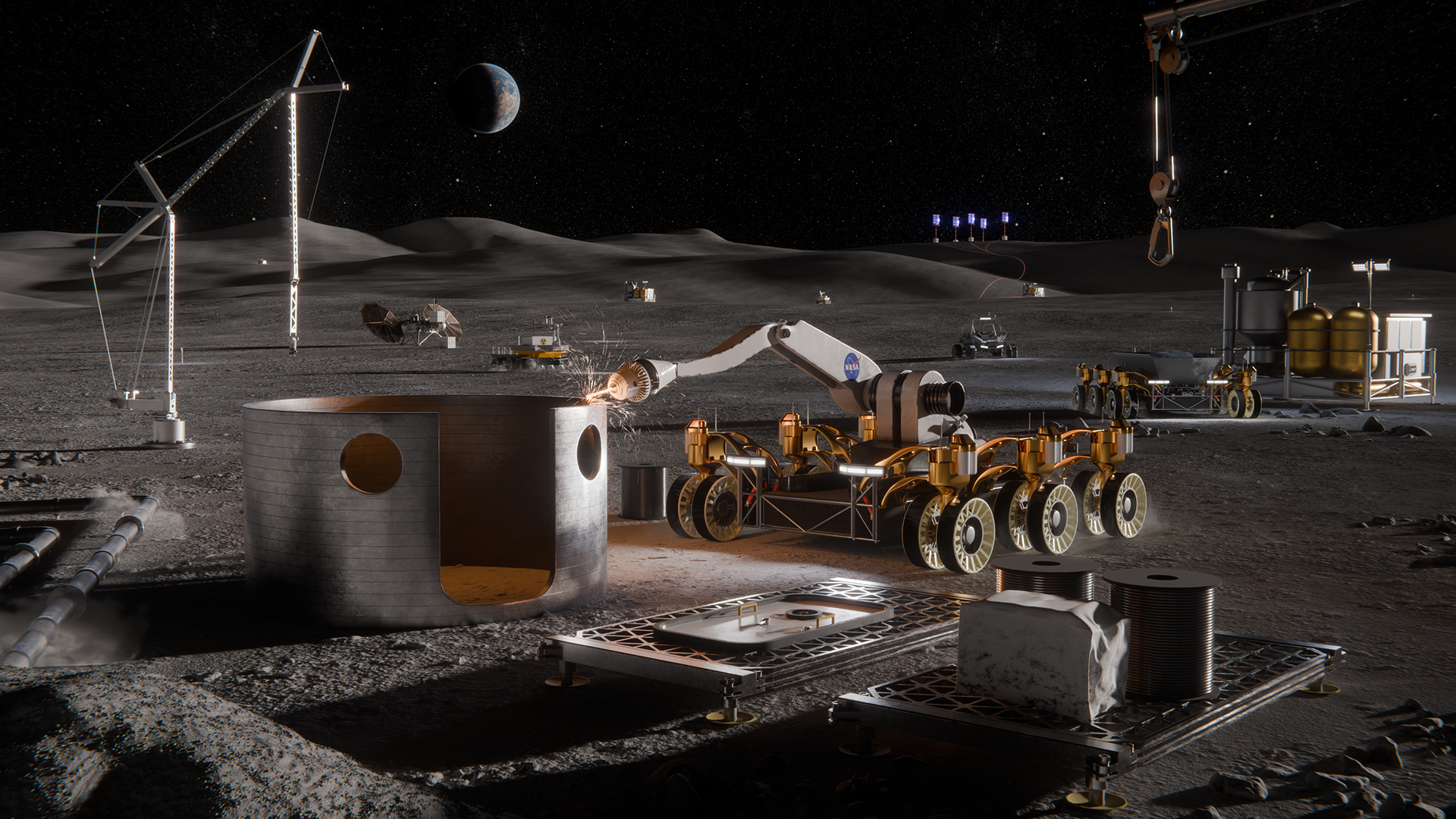
Why it matters: This BAA signals NASA’s intent to move from paper studies to funded, testable hardware for critical lunar infrastructure, directly affecting which technologies will be available for the Moon Base and cislunar architecture in the late 2020s.
Context: NASA’s NextSTEP program has previously funded studies and early prototyping; this appendix focuses on closing specific technology gaps with ground testing to TRL 5–6, a necessary step before flight qualification.
"It focuses on identifying technology areas that require further risk reduction and ground‑based testing to mature competing solutions to Technology Readiness Level (TRL) 5–6." — NASA.GOV
Commentary: The emphasis on TRL 5–6 and ground testing is a pragmatic signal: NASA is prioritizing proven, low-risk hardware over speculative concepts for the Moon Base. The inclusion of ISRU oxygen production and Stirling generators suggests a focus on sustained surface operations, not just short sorties. Vendors should prepare for competitive down-selects based on test results, not paper studies.
Date: June 29, 2026 10:56 AM ET
URL: https://www.nasa.gov/directorates/stmd/nextstep-3-a-lunar-enabling-technology/
AI Sentiment Score: Negative (75%)
AI Credibility Score: 10.0/10 — High
Scores and text generated by AI analysis of the source article indicated.
NASA Seeks Industry Input to Accelerate Lunar Surface Technologies (Nasa.Gov)
Summary: NASA is seeking industry feedback on a draft solicitation for the Lunar Enabling Infrastructure Accelerator, aimed at advancing key technologies for sustained lunar presence. The initiative covers five areas: surface power, radioisotope power, in-situ resource utilization, in-space advanced manufacturing, and innovative nanomaterials. Comments are due by July 17, 2026, via the NextSTEP-3 Appendix A solicitation.
Why it matters: This signals NASA’s intent to move from study to procurement for critical lunar infrastructure, with industry shaping requirements before formal awards. The focus on power, ISRU, and manufacturing directly supports the Moon Base plan and reduces reliance on Earth resupply.
Context: The solicitation builds on NASA’s identified technology gaps from the Moon to Mars architecture, using the NextSTEP public-private partnership model that has previously driven commercial crew and lunar lander development.
"Long-term lunar exploration requires technology, infrastructure, and operations that function together cohesively on the surface of the Moon. To accelerate the development of key lunar surface systems and reduce risk, NASA and." — NASA.GOV
Commentary: The inclusion of radioisotope power alongside surface power suggests NASA is hedging against solar-only solutions for night operations and polar shadowed craters. The nanomaterials topic is notably broad—likely a signal that the agency wants industry to define the problem space rather than prescribing solutions. Expect the final solicitation to tighten scope based on feedback, particularly around power scalability and ISRU production rates.
Date: June 29, 2026 10:56 AM ET
URL: https://www.nasa.gov/directorates/stmd/nasa-seeks-industry-input-to-accelerate-lunar-surface-technologies/
AI Sentiment Score: Negative (66%)
AI Credibility Score: 10.0/10 — High
Scores and text generated by AI analysis of the source article indicated.
La NASA adjudica nuevas misiones científicas para Base Lunar y adelanta nuevas oportunidades (Nasa.Gov)
Summary: NASA has awarded nearly $600 million to Astrobotic, Firefly Aerospace, and Intuitive Machines for four lunar delivery missions in late 2028 under the Moonbase program. Each lander will carry three standardized science payloads: a stereo camera to study plume-surface interactions, a laser retroreflector array, and a radiation spectrometer. The agency is also studying a lunar version of the Perseverance rover (PROMISE) and plans to solicit proposals for power/avionics demos, additional science payloads, and a communications relay constellation. The goal is to accelerate mission cadence and build infrastructure for sustained human presence on the Moon.
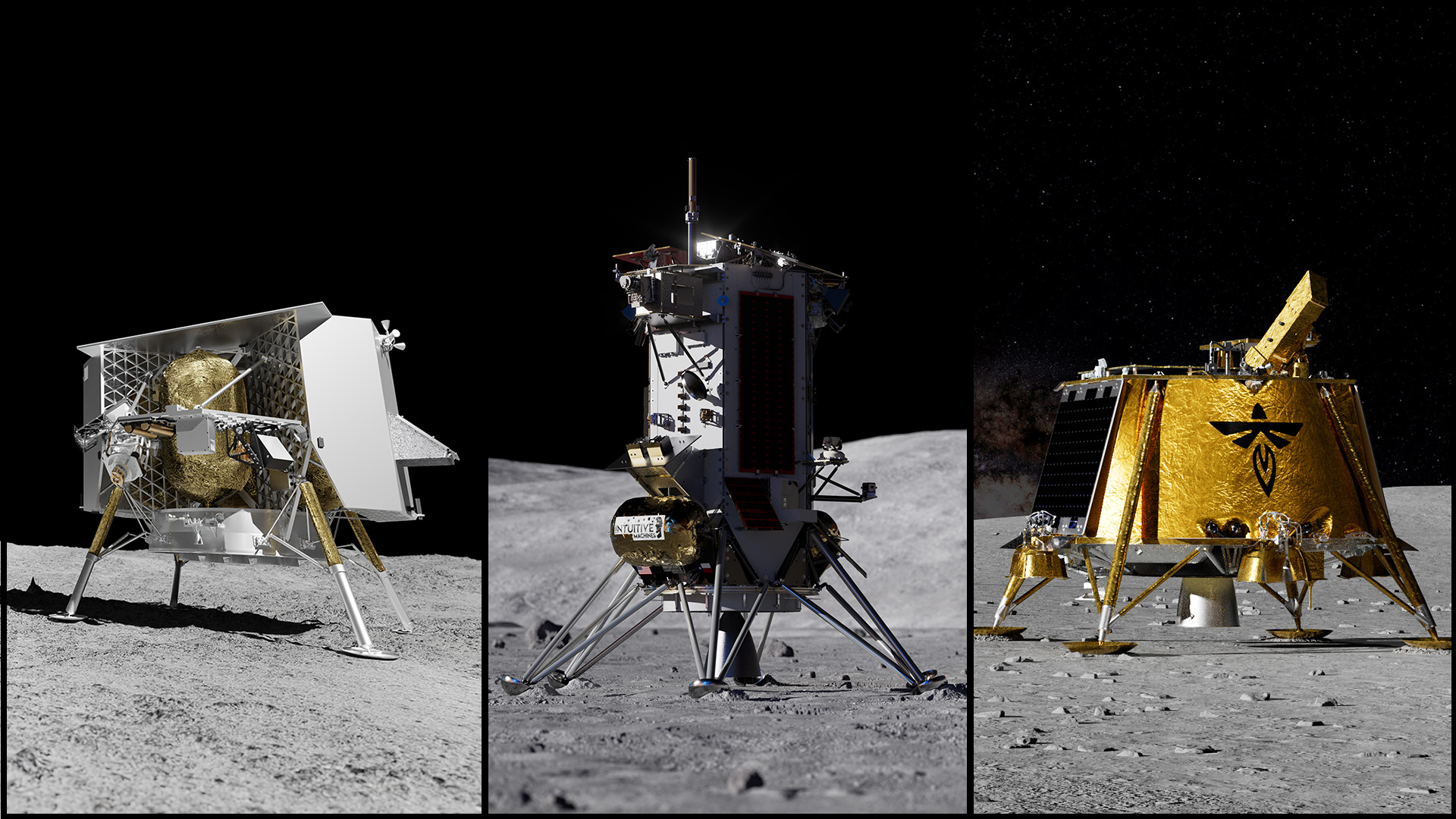
Why it matters: These awards signal a shift from one-off landings to a systematic, repeatable logistics chain for the lunar surface, directly supporting the operational tempo needed for a permanent outpost.
Context: The CLPS initiative has already flown multiple missions, with mixed success; these new contracts leverage proven lander designs and common payloads to increase reliability and data consistency across landing sites.
"“Al enviar los mismos instrumentos científicos en varios módulos de aterrizaje, comprenderemos mejor los posibles peligros durante el aterrizaje y crearemos una red global de datos ambientales y marcadores de ubicación en la Luna”, dijo Joel Kearns, administrador asociado adjunto para la exploración de la Dirección de Misiones Científicas en la sede central de la NASA." — NASA.GOV
Commentary: The deliberate reuse of three flight-proven payloads across all four landers is a smart risk-reduction play—it trades instrument diversity for cross-site comparability and faster qualification. The PROMISE rover study is the most intriguing signal: adapting a Mars rover chassis for lunar resource prospecting suggests NASA is serious about in-situ utilization, not just flag-planting. The planned open call for tech demos and a lunar relay constellation indicates the agency is trying to build a competitive ecosystem, not just a procurement pipeline.
Date: June 30, 2026 03:04 PM ET
URL: https://www.nasa.gov/news-release/la-nasa-adjudica-nuevas-misiones-cientificas-para-base-lunar-y-adelanta-nuevas-oportunidades/
AI Sentiment Score: Negative (57%)
AI Credibility Score: 10.0/10 — High
Scores and text generated by AI analysis of the source article indicated.
Post ID: 926901fc