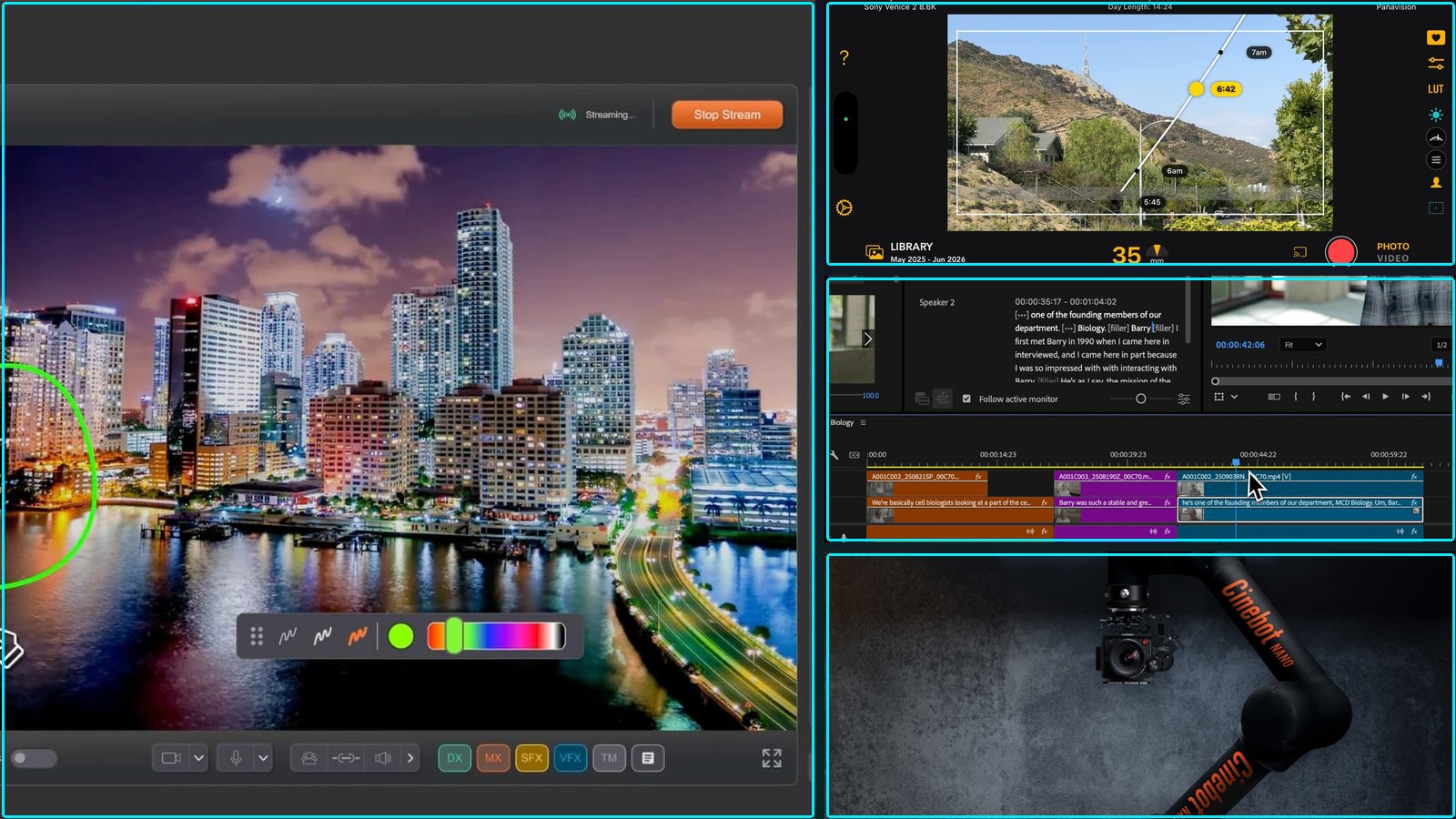
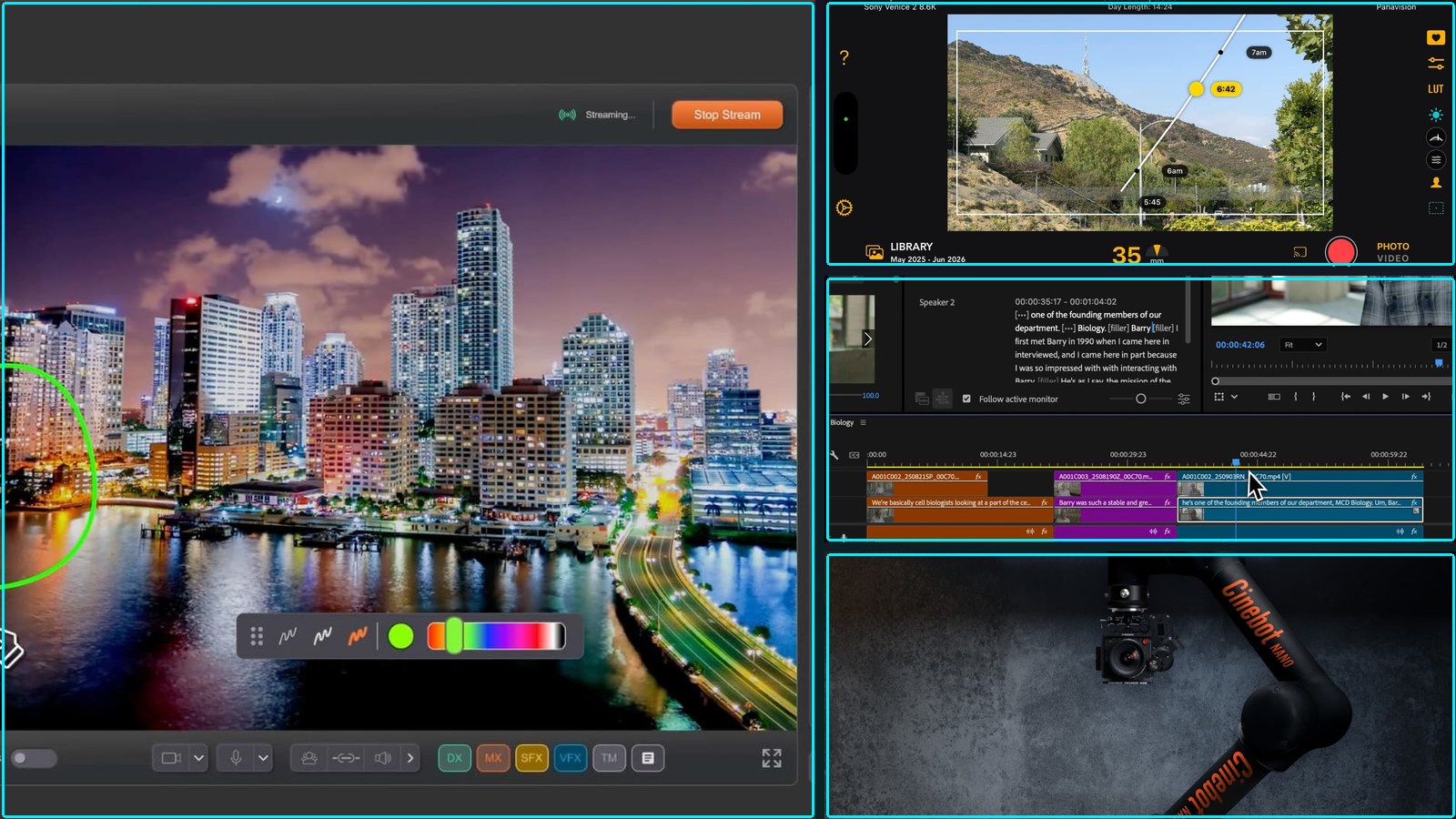
Production software and hardware updates
Threadline Studio: ProRes, multi-cam and local processing (Redsharknews)
Summary: Threadline has launched a Studio tier for its AI editing workspace, adding a native macOS app with ProRes, MXF, and BRAW support, multi-cam sync, and local proxy processing. The new tier costs $95/month on an annual plan and includes 150 AI credits per month, with each generation costing 3-5 credits. The desktop app generates proxies locally and uploads them automatically, with XML exports mapping back to original source files for a conform-ready timeline in NLEs.
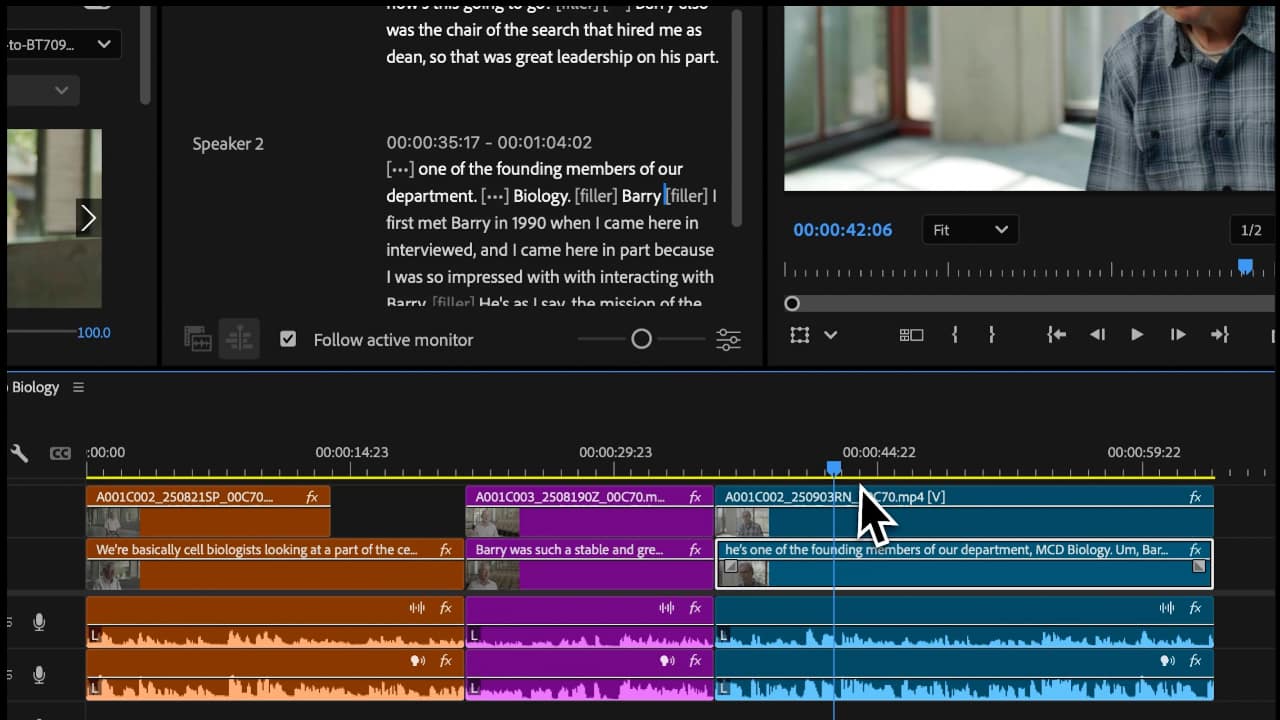
Why it matters: For post-production teams, this introduces a viable AI-assisted offline editing workflow that preserves original media integrity through proxy-based processing and XML round-tripping, potentially reducing first-assembly time while maintaining conform accuracy.
Context: Threadline’s differentiator is an intonation analysis engine that evaluates speech rhythm, cadence, and emphasis to make editorial cuts on delivery rather than at word boundaries or silence gaps.
"The desktop app extends pro-level functionality to accept ProRes, MXF, BRAW, and other professional formats with no per-file size limit. It generates proxies locally and uploads them automatically; Threadline works against the proxies, and XML exports map back to the original source files, producing a conform-ready timeline in the NLE against full-quality footage." — REDSHARKNEWS
Commentary: The Studio tier addresses a key adoption barrier for AI editing tools in professional environments: codec support and conform reliability. By handling proxies locally and exporting XMLs that map to original media, Threadline positions itself as a practical assistant rather than a replacement for existing NLE workflows. The multi-cam sync feature with per-track exports is a specific win for unscripted and event production pipelines.
Date: June 29, 2026 01:00 AM ET
URL: https://www.redsharknews.com/threadline-studio-prores-multi-cam-and-local-processing
AI Sentiment Score: Negative (50%)
AI Credibility Score: 10.0/10 — High
Scores and text generated by AI analysis of the source article indicated.
Remoto Playback 1.9: Capture Agent and Windows support (Redsharknews)
Summary: Remoto’s Playback 1.9 adds Capture Agent, a macOS system tray app that lets hosts stream from a remote workstation while controlling the session from a separate local machine, eliminating the need for physical access to secure edit bays. The update also introduces native Windows support, a new SRT/WebRTC streaming infrastructure, and multichannel audio up to 16 channels via Opus. A ‘Reuse’ button clones session settings and guest lists, and enterprise security and HDR workflow features are promised before summer’s end. Pricing remains per-session or bundled, with fixed-price unlimited room plans expected in July 2026.
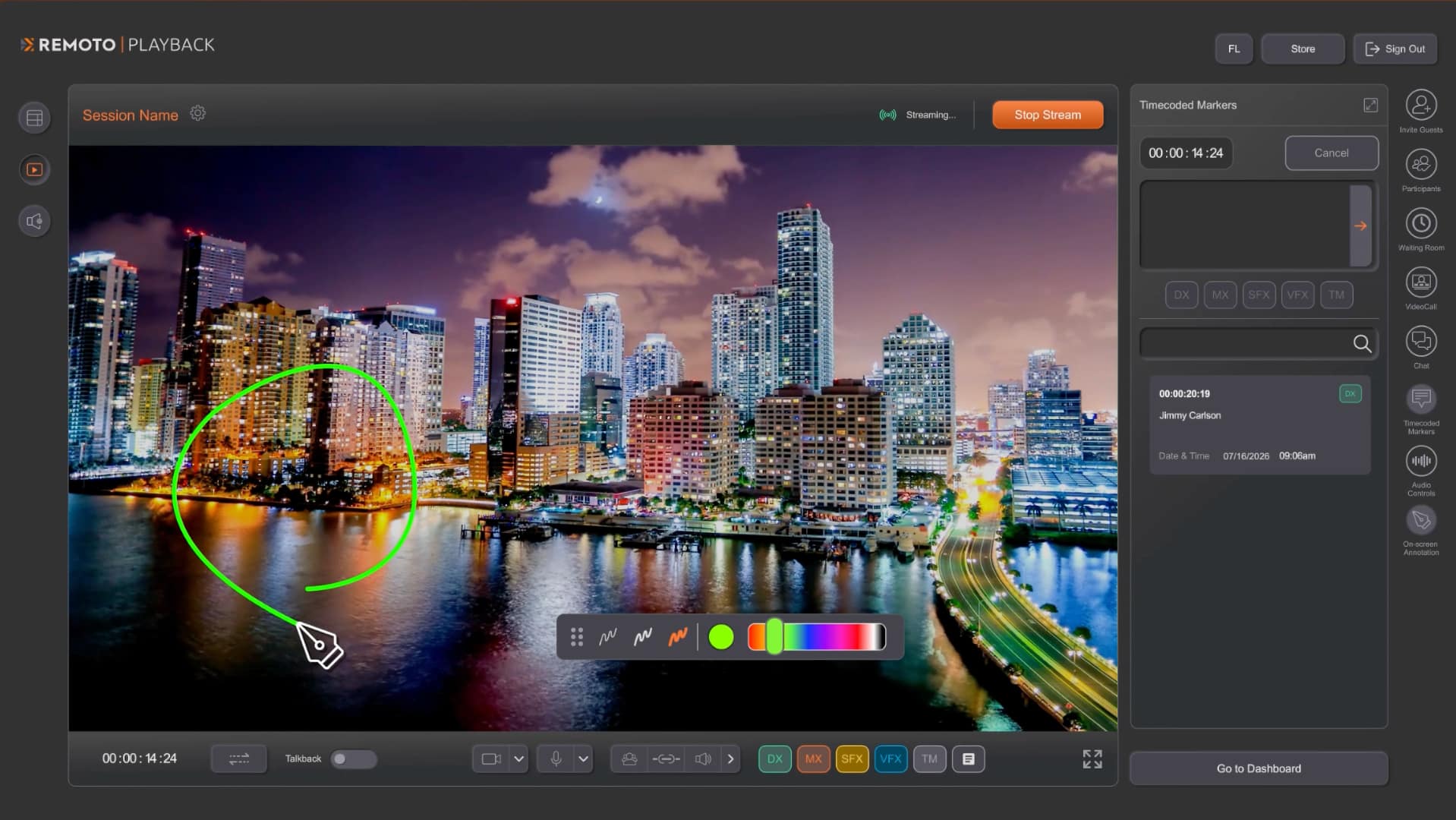
Why it matters: For post and VFX teams operating under TPN Gold Shield security protocols, Capture Agent solves the persistent friction of needing machine-room access to initiate remote review sessions, potentially reducing setup time and security risk.
Context: Remote review platforms have been racing to match the latency and security requirements of high-end post production; SRT and WebRTC are becoming standard transport layers, but native app support for Windows and multichannel audio remains a differentiator.
"Capture Agent is a macOS system tray application that lets hosts stream from a remote machine while controlling the review session from a separate local computer. It can be pre-installed on studio workstations by authorized machine room technicians or rental houses before editorial systems are deployed." — REDSHARKNEWS
Commentary: The Capture Agent workflow effectively decouples the operator from the workstation, which should appeal to rental houses and facility managers who want to pre-configure bays without granting remote desktop access. The Windows support closes a gap that kept mixed-OS teams on browser-only or third-party workarounds, and the 16-channel Opus support with discrete routing is a clear signal to mix stages and sound editors. The July unlimited-room pricing suggests Remoto is positioning for studio-wide adoption rather than per-project billing.
Date: June 30, 2026 05:57 AM ET
URL: https://www.redsharknews.com/remoto-playback-1-9-capture-agent-windows-remote-review
AI Sentiment Score: Positive (44%)
AI Credibility Score: 10.0/10 — High
Scores and text generated by AI analysis of the source article indicated.
Helios Live-View lands in Artemis Viewfinder (Redsharknews)
Summary: Chemical Wedding has integrated its Helios Live-View sun-position tool into Artemis Director’s Viewfinder, enabling real-time lighting previsualization during location scouting within a single app. This marks the first time the two platforms’ core technologies have been combined, and the first time live sun-position pre-vis is available inside Artemis. The updated Artemis Director’s Viewfinder with Helios Live-View launches in July 2026; Helios remains standalone with a promised substantial update later this year.
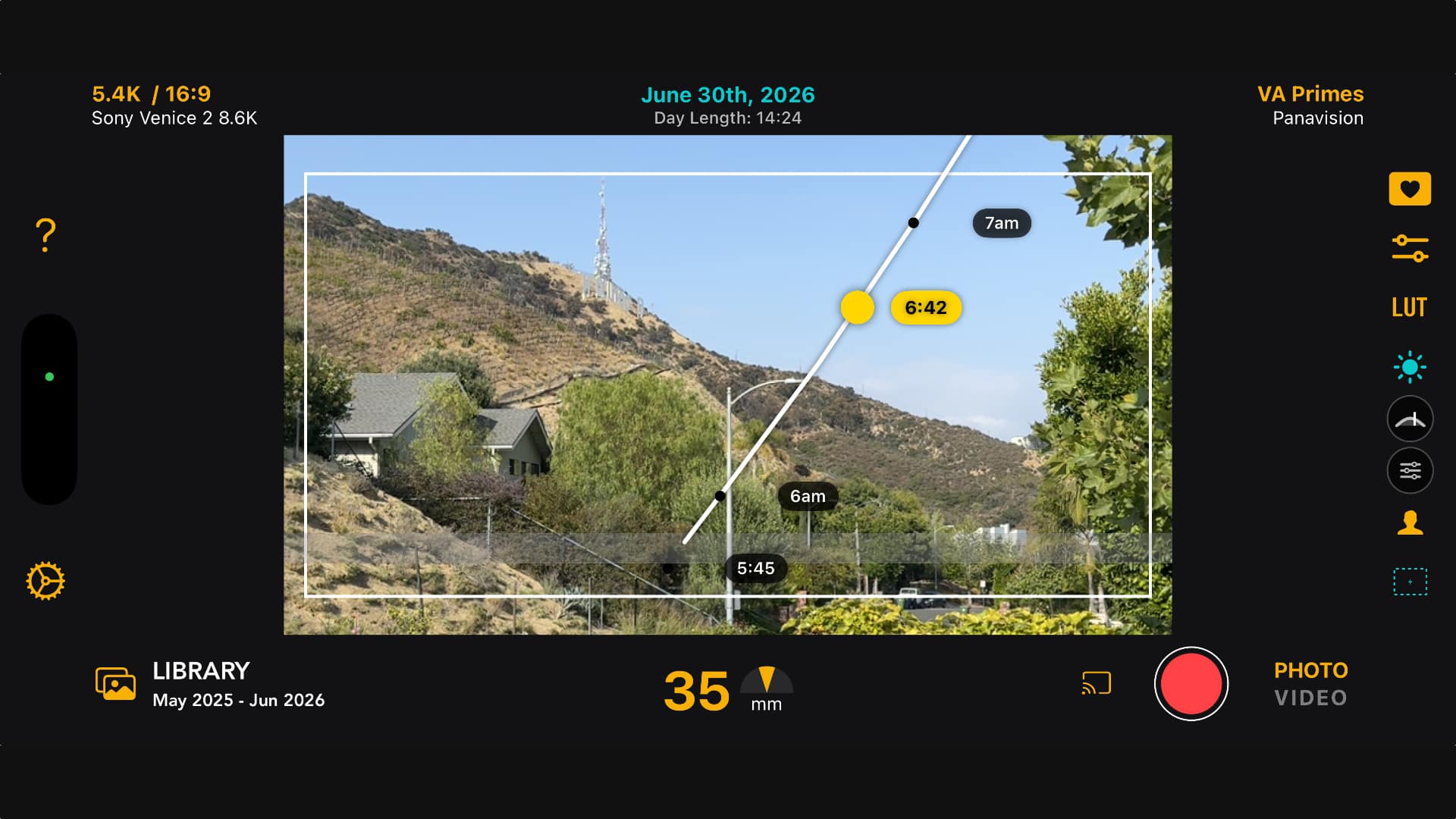
Why it matters: For DPs, location scouts, and gaffers, this eliminates the need to toggle between separate apps for framing and sun tracking, collapsing two preproduction workflows into one and potentially reducing costly on-set lighting surprises.
Context: Helios Live-View has been a standalone sun-position tool since 2014, while Artemis Director’s Viewfinder is the industry-standard shot framing app. Their integration reflects a broader trend toward consolidating previsualization tools to streamline location scouting and lighting planning.
"Helios Live-View, introduced in 2014, lets filmmakers preview sun position in real-time. With the integration, Artemis users can now access that live-feed functionality directly within the viewfinder, combining shot previsualization and location lighting planning during scouting into a single workflow." — REDSHARKNEWS
Commentary: This integration is a practical win for production efficiency: it reduces the number of devices and apps a scout needs to carry and shortens the feedback loop between framing a shot and understanding its natural-light behavior. The standalone Helios update suggests Chemical Wedding is hedging its bets, keeping the tool available for users who don’t need Artemis or prefer a dedicated interface. For rental houses and camera prep teams, this could mean fewer requests for separate sun-tracking tablets on scout kits.
Date: July 02, 2026 07:00 AM ET
URL: https://www.redsharknews.com/helios-live-view-artemis-directors-viewfinder
AI Sentiment Score: Positive (50%)
AI Credibility Score: 10.0/10 — High
Scores and text generated by AI analysis of the source article indicated.
MultiDyne acquires MRMC (Mark Roberts Motion Control) (Redsharknews)
Summary: MultiDyne Video & Fiber Optic Systems has acquired the assets of MRMC (Mark Roberts Motion Control), the UK-based robotic camera and motion control specialist, from liquidation. The deal follows a turbulent 57-day ownership by Blandford Capital after Nikon’s sale, which reportedly cost Nikon about $20 million. MultiDyne has formed a new subsidiary, MultiDyne Robotics and Motion Control, operating under the MRMC brand, and will retain the UK operations and engineering team. The acquisition pairs MultiDyne’s fiber-optic transport and signal processing with MRMC’s robotic camera and motion control hardware, serving overlapping professional production customers with complementary technologies.
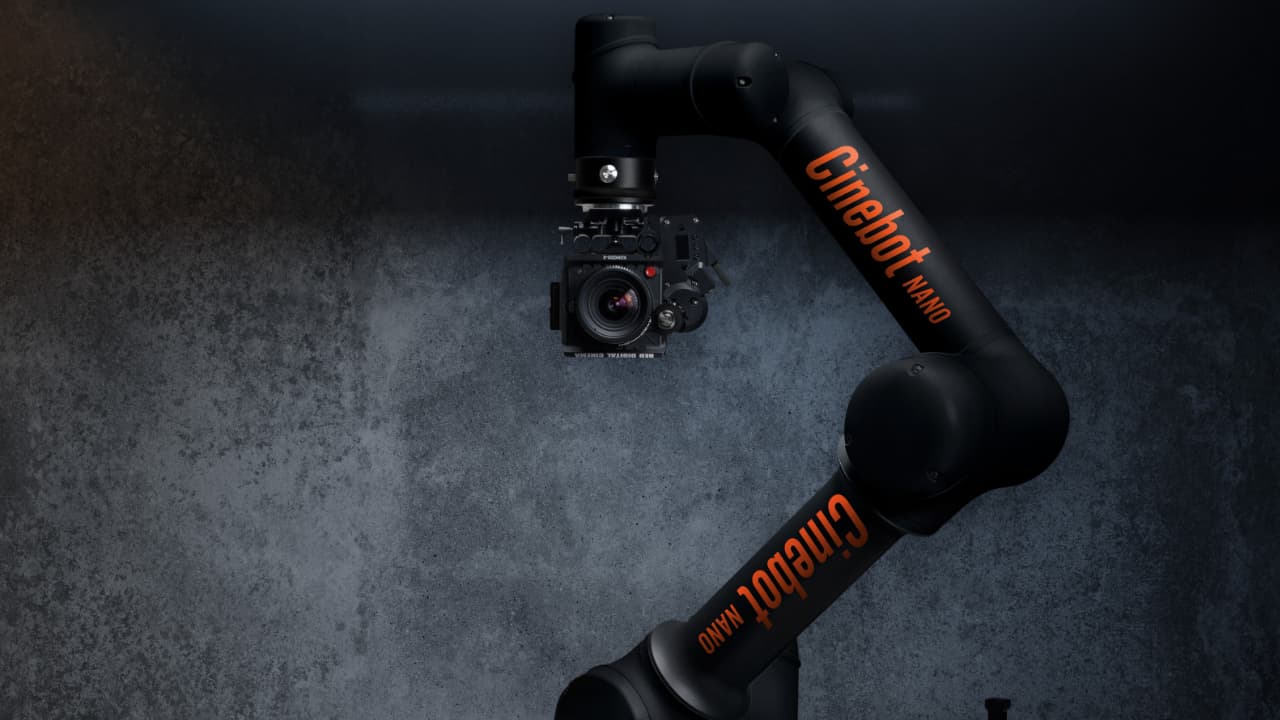
Why it matters: For production teams and rental houses, this acquisition ensures continuity of MRMC’s robotic and motion control systems, which are critical for automated and repeatable camera moves in broadcast, film, and live events, while potentially unlocking tighter integration between camera movement and signal infrastructure.
Context: MRMC was a 60-year-old UK engineering firm until Nikon’s divestiture in March 2026, followed by a rapid liquidation under Blandford Capital, creating supply chain uncertainty for studios and broadcasters relying on their precision robotics.
"MultiDyne admits that the product portfolios have little overlap, but points out that they serve many of the same customers with complementary technologies. MultiDyne’s fiber-optic transport, camera interface and signal processing products are used in professional production environments to move video, audio and data across complex infrastructure; MRMC’s robotic camera systems, tracking solutions, motion control rigs and automated production technologies handle the physical movement and positioning of the cameras themselves." — REDSHARKNEWS
Commentary: The real operational win here is pipeline integration: combining MRMC’s physical camera positioning with MultiDyne’s signal transport could reduce latency and simplify rigging for complex multi-camera setups. For rental houses and studios, the key question is whether MultiDyne will invest in MRMC’s R&D pipeline or treat it as a bolt-on for existing broadcast infrastructure. The messy corporate history—Nikon’s loss, Blandford’s flip—suggests MRMC was undervalued, so MultiDyne may have acquired a strong engineering team at a discount. Expect renewed focus on automated production workflows at IBC, where MRMC’s booth will be closely watched for signs of product roadmap changes.
Date: June 29, 2026 01:57 AM ET
URL: https://www.redsharknews.com/multidyne-acquires-mrmc-mark-roberts-motion-control
AI Sentiment Score: Negative (50%)
AI Credibility Score: 10.0/10 — High
Scores and text generated by AI analysis of the source article indicated.
Post ID: ea0b3858