Retro computing and emulation projects
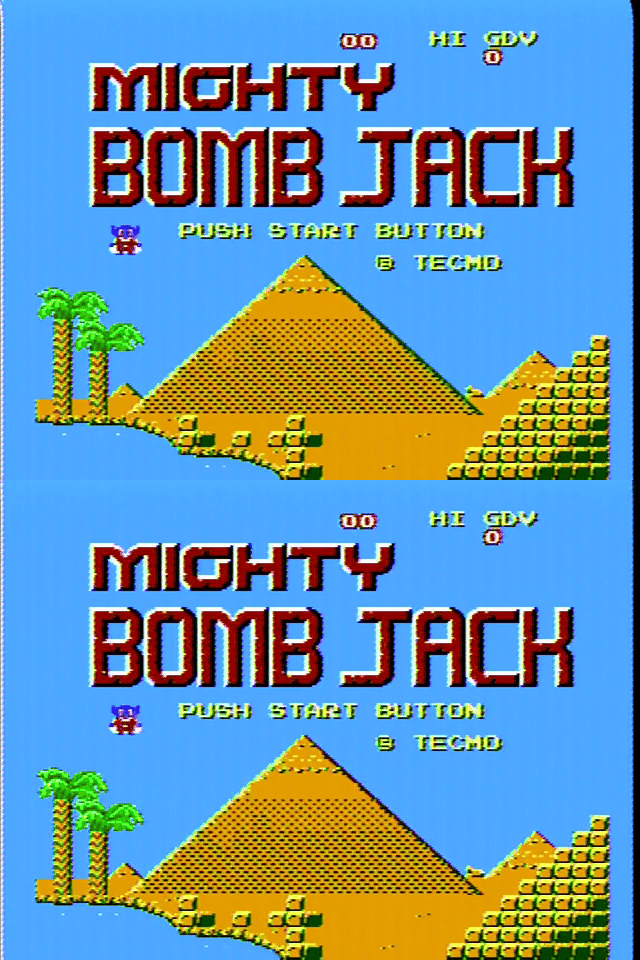
Composite Video on the NES: Why’s it so wobbly? (Nicole.Express)
Summary: Composite Video on the NES: Why’s it so wobbly? The Nintendo Entertainment System. Is it the platonic ideal of an 8-bit video game system?
Why it matters: This matters for Emerging Tech Signals (Pre-Mainstream) because it gives a concrete current signal to track: Composite Video on the NES: Why’s it so wobbly?
Context: Composite Video on the NES: Why’s it so wobbly? The Nintendo Entertainment System. Is it the platonic ideal of an 8-bit video game system?
Commentary: The immediate implication is operational rather than speculative: watch how this changes budgets, workflows, or risk assumptions over the next cycle.
Date: July 05, 2026 05:45 PM ET
URL: https://nicole.express/2026/phase-altering-by-line.html
Discussion: https://news.ycombinator.com/item?id=48798247
AI Sentiment Score: Neutral (50%)
AI Credibility Score: 7.0/10 — Medium
Scores and text generated by AI analysis of the source article indicated.
Building Principia for Windows XP (Voxelmanip.Se)
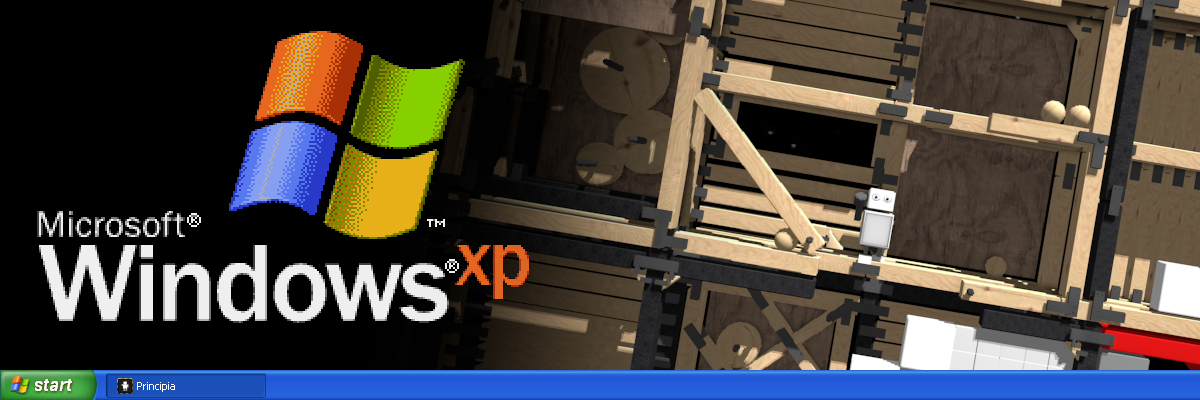
Summary: The maintainer of Principia, an open-source physics sandbox game, documents the process of building a modern version that runs on Windows XP. This required constructing a custom GCC 16 cross-compilation toolchain from source, patching libstdc++ to remove a Vista-only API dependency, and downgrading curl to version 8.17.0. The resulting build runs on real XP hardware, though with font corruption due to legacy OpenGL drivers. The project is released as a community build, not an officially supported release.
Why it matters: This demonstrates that with sufficient engineering effort, modern open-source software can still target a 25-year-old operating system, preserving access for legacy hardware and archival use cases.
Context: Principia originally supported Windows XP in 2014, but modern toolchains (LLVM, UCRT, libc++) have since dropped XP compatibility. The author’s approach mirrors similar efforts in the retrocomputing and digital preservation communities.
"I have brought Principia back to Windows XP, in its open source form, and I got to play around with Windows XP on real hardware. A great journey overall." — VOXELMANIP.SE
Commentary: The key signal here is the toolchain work: building a GCC 16 cross-compiler targeting MSVCRT and patching libstdc++ to dynamically load GetDynamicTimeZoneInformation. This is a replicable method for any C++ project that wants XP support. The curl downgrade to 8.17.0 is a practical constraint—network libraries are often the first to drop legacy OS support. The Dear Imgui dialog replacement sidesteps GTK3 entirely, which is a pragmatic architectural choice for reducing dependency complexity. This is not a general solution, but a documented, reproducible path for motivated maintainers.
Date: June 29, 2026 09:23 AM ET
URL: https://voxelmanip.se/2026/06/28/building-principia-for-windows-xp/
Discussion: https://news.ycombinator.com/item?id=48718995
AI Sentiment Score: Positive (40%)
AI Credibility Score: 7.0/10 — Medium
Scores and text generated by AI analysis of the source article indicated.
Run Windows 2000 on a DEC Alpha with a new es40 fork (Raymii)
Summary: A new fork of the es40 DEC Alpha emulator introduces a JIT compiler, S3 graphics from MAME, and ARC firmware support, enabling Windows 2000 for Alpha to run at usable speeds. The emulator also accelerates OpenVMS and Tru64 Unix, with graphical login now working without X11 tunneling. Setup requires specific firmware and BIOS files, plus a Windows 2000 RC2 build from archive.org. The project signals renewed interest in preserving and running legacy Alpha software on modern hardware.
Why it matters: This fork lowers the barrier to running Alpha-native Windows 2000 and OpenVMS, preserving historically significant software and enabling testing of legacy enterprise applications without physical hardware.
Context: The es40 emulator has seen multiple forks over the years; this one adds a JIT compiler for significant speedups and S3 graphics support, addressing two long-standing pain points in Alpha emulation.
"There have been many forks of es40 in the past and recently a new one has popped up with some great new features. Like speedups via a JIT compiler, S3 graphics port from MAME and ARC support, resulting in the ability to run Windows 2000 for the DEC Alpha." — RAYMII
Commentary: The JIT compiler is the key enabler here, making Alpha emulation practical for interactive use rather than just headless server testing. The inclusion of ARC firmware support and S3 graphics from MAME suggests a deliberate effort to cover the full boot and graphics stack, which has historically been the weak point in Alpha emulation. For the retrocomputing and enterprise archival communities, this fork provides a credible path to running Windows 2000 on Alpha without relying on decaying hardware. Expect this to accelerate hobbyist work on porting other Alpha OSes and to attract attention from VSI as they continue their x86 migration.
Date: July 05, 2026 09:47 AM ET
URL: https://raymii.org/s/blog/Run_Windows_2000_for_Dec_Alpha_on_a_new_es40_fork.html
Discussion: https://news.ycombinator.com/item?id=48794302
AI Sentiment Score: Positive (66%)
AI Credibility Score: 7.0/10 — Medium
Scores and text generated by AI analysis of the source article indicated.
Linux for the Sega MegaDrive (Github)
Summary: Linux for the Sega MegaDrive No – A Sega Megadrive – Mega EverDrive Core or Pro (pro is untested) (See: https://krikzz.com/our-products/cartridges/) – USB cable between the EverDrive and your PC – Time to burn Probably not, the emulator would need to emulate the EverDrive’s special SSF2 mapper that gives us 4MB of RAM, the EverDrive’s protocol that allows the MegaDrive to load files from the SD card and the timer register the EverDrive provides. A QEMU fork that emulates enough of the MegaDrive and the EverDrive to play with this without the real hardware is included. Note that this doesn’t really emulate the feel of the real thing, QEMU emulates the CPU way too fast.
Why it matters: This matters for Emerging Tech Signals (Pre-Mainstream) because it gives a concrete current signal to track: Linux for the Sega MegaDrive No – A Sega Megadrive – Mega EverDrive Core or Pro (pro is untested) (See: https://krikzz.com/our-products/cartridges/) – USB cable between the EverDrive and your PC – Time to burn Probably not, the emulator would need to emulate the EverDrive’s special SSF2 mapper that gives us 4MB of RAM, the EverDrive’s protocol that allows the MegaDrive to load files from the SD card and the timer register the EverDrive provides.
Context: Linux for the Sega MegaDrive No – A Sega Megadrive – Mega EverDrive Core or Pro (pro is untested) (See: https://krikzz.com/our-products/cartridges/) – USB cable between the EverDrive and your PC – Time to burn Probably not, the emulator would need to emulate the EverDrive’s special SSF2 mapper that gives us 4MB of RAM, the EverDrive’s protocol that allows the MegaDrive to load files from the SD card and the timer register the EverDrive provides. A QEMU fork that emulates enough of the MegaDrive and the EverDrive to play with this without the real hardware is included. Note that this doesn’t really emulate the feel of the real thing, QEMU emulates the CPU way too fast.
"Linux for the Sega MegaDrive No – A Sega Megadrive – Mega EverDrive Core or Pro (pro is untested) (See: https://krikzz.com/our-products/cartridges/) – USB cable between the EverDrive and your PC – Time." — GITHUB
Commentary: The immediate implication is operational rather than speculative: watch how this changes budgets, workflows, or risk assumptions over the next cycle.
Date: June 29, 2026 11:01 AM ET
URL: https://github.com/LinuxMD/linuxmd
Discussion: https://news.ycombinator.com/item?id=48720186
AI Sentiment Score: Negative (50%)
AI Credibility Score: 10.0/10 — High
Scores and text generated by AI analysis of the source article indicated.
Hatari – Online Atari ST/STE/TT/Falcon Emulator (Hatari.Frama.Io)
Summary: Hatari – the Atari ST/STE/TT/Falcon emulator Downloading… Resize canvas Lock/hide mouse pointer
Why it matters: Comprehensive emulation of legacy 16-bit architectures suggests deeper academic/archival interest in niche computing stacks.
Context: Focus on multi-platform emulation (ST/STE/TT/Falcon) indicates sustained community effort beyond mere nostalgia.
[Metadata-only note] The available source data did not expose a direct source quote this cycle.
Commentary: The signal is still worth tracking, but the current extraction path did not yield enough body text for a fuller analytical read. The immediate implication is operational rather than speculative: watch how this changes budgets, workflows, or risk assumptions over the next cycle.
Date: June 30, 2026 06:34 PM ET
URL: https://hatari.frama.io/hatari/online/hatari.html
Discussion: https://news.ycombinator.com/item?id=48740135
AI Sentiment Score: Neutral (50%)
AI Credibility Score: 7.0/10 — Medium
Scores and text generated by AI analysis of the source article indicated.
Post ID: 511c06ce