
Interactive Art
SIGGRAPH 2026 Experience Hall Invites Attendees to Step Inside the Future of Interaction and Storytelling (Recorderonline)
Summary: SIGGRAPH 2026’s Experience Hall, running 19–23 July at the Los Angeles Convention Center, consolidates five interactive programs—Spatial Storytelling, Immersive Pavilion, Art Gallery, Emerging Technologies, and the newly integrated Hands-On Courses—into a single hands-on venue. The program signals a shift from spectacle-driven demos toward creator-centric, platform-agnostic installations that prioritize audience agency and embodied interaction. Notable operational changes include the absorption of the former Labs track into Courses, a cross-program collaboration between Spatial Storytelling and the Immersive Pavilion, and a continued emphasis on low-fidelity, no-code prototyping as a legitimate production method.

Why it matters: For interactive art practitioners, the Experience Hall’s curation criteria and program structure reveal where institutional funding and conference visibility are flowing—specifically toward spatial storytelling, AI-driven participatory works, and low-fidelity prototyping—which directly affects which projects get built, shown, and supported.
Context: SIGGRAPH’s Experience Hall has historically served as a bellwether for interactive art and emerging tech adoption. This year’s platform-agnostic approach and the formal integration of Hands-On Courses into the Courses program reflect a broader industry push toward accessible, multi-sensory, and AI-augmented experiences beyond traditional VR/AR headsets.
"The Experience Hall returns with five interactive programs, each offering hands-on discovery with the tools and techniques shaping tomorrow LOS ANGELES, July 10, 2026 /PRNewswire/ — The SIGGRAPH Experience Hall has always." — RECORDERONLINE
Commentary: The shift from spectacle-driven to reasoning-driven curation is a practical signal for artists and studios: proposals that articulate why a spatial or embodied approach is necessary—rather than merely flashy—will likely fare better in future selection processes. The integration of Hands-On Courses into the Experience Hall also suggests a growing expectation for interactive art to be reproducible and educational, not just experiential. For post teams and technical artists, the emphasis on low-fidelity, no-code prototyping (as in the ‘Cheap and Cheerful’ session) points to a cost-effective pipeline that could reduce pre-production overhead in spatial storytelling projects. Finally, the cross-program collaboration between the Immersive Pavilion and Spatial Storytelling indicates that hybrid formats—like the improvised D&D show with motion capture and LED walls—are becoming a standard venue for testing new production workflows.
Date: July 10, 2026 02:53 PM ET
URL: https://recorderonline.com/online_features/press_releases/siggraph-2026-experience-hall-invites-attendees-to-step-inside-the-future-of-interaction-and-storytelling/article_fd280eaa-e122-582f-85d7-5027ed55adc6.html
AI Sentiment Score: Negative (62%)
AI Credibility Score: 10.0/10 — High
Scores and text generated by AI analysis of the source article indicated.
A New Experiential Gallery Just Might Change Your Mind About AI Art (Wired)
Summary: Refik Anadol’s Dataland, the self-described first ‘museum of AI arts,’ opened in downtown Los Angeles on June 20 and drew over 10,000 visitors in its first two weeks. The debut exhibit, Machine Dreams: Rainforest, uses wearable biosensors to let visitors influence generative visuals, sound, and scent in real time, powered by a custom AI model trained on 5 petabytes of ethically sourced rainforest data. The gallery also runs on Google Cloud with ‘experimental low-energy’ resources from DeepMind, and includes a Latent Gallery where visitors can inspect the training data behind the hallucinations.

Why it matters: For interactive art practitioners, Dataland is a test case for scaling biometric-responsive installations beyond the white cube, with real operational details on consent, data handling, and sustainable compute that could shape how institutions stage participatory AI work.
Context: Anadol’s prior installations have been spectacle-driven, but Dataland is his first permanent venue, positioning AI art as a museum-grade medium rather than a novelty. The explicit contrast with ‘generative slop’ and the emphasis on ethical data sourcing respond directly to the backlash against unlicensed training data in the broader AI art debate.
"“For three years, we started from scratch and trained our own AI models, and we worked with our own data sets,” Anadol says. He and his team traveled to the Amazon and other rainforests to capture raw material that would fuel the model’s hallucinated versions of those environments. “We have 5 petabytes worth of raw data that we collected by ourselves,” Anadol says." — WIRED
Commentary: The operational takeaway is the shift from one-off installations to a persistent venue with a defined visitor flow: waiver, app, wearable calibration, and a 40-minute cycle that adapts to group movement. The ‘forgets your data’ claim is a marketing promise, not a technical suggest—practitioners should watch for the actual data retention policy and the security of that exit token. The Latent Gallery’s transparency layer is a smart move to preempt criticism, but it only works if the training data is genuinely auditable, not just browsable. For teams building similar experiences, the real cost is not the AI model but the hardware, scent delivery, and the staff to manage a finicky entrance process at scale.
Date: July 10, 2026 06:30 AM ET
URL: https://wired.com/story/a-new-experiential-gallery-just-might-change-your-mind-about-ai-art
AI Sentiment Score: Negative (75%)
AI Credibility Score: 10.0/10 — High
Scores and text generated by AI analysis of the source article indicated.
Four finalists announced for a permanent work at the new MAC (Newswire.Ca)
Summary: The Musée d’art contemporain de Montréal has named four finalists—Ludovic Boney, Rafael Lozano-Hemmer, Sandra Volny, and a collective of Steve Bates, Alexandre Burton, and Marc-Alexandre Reinhardt—for a permanent sound-art commission at its new building in the Quartier des spectacles. The winner will be selected in fall 2026 and installed for the museum’s 2028 opening. The commission, funded at $359,540, marks a shift from monumental public art toward digital and sound-based works integrated into indoor public spaces.
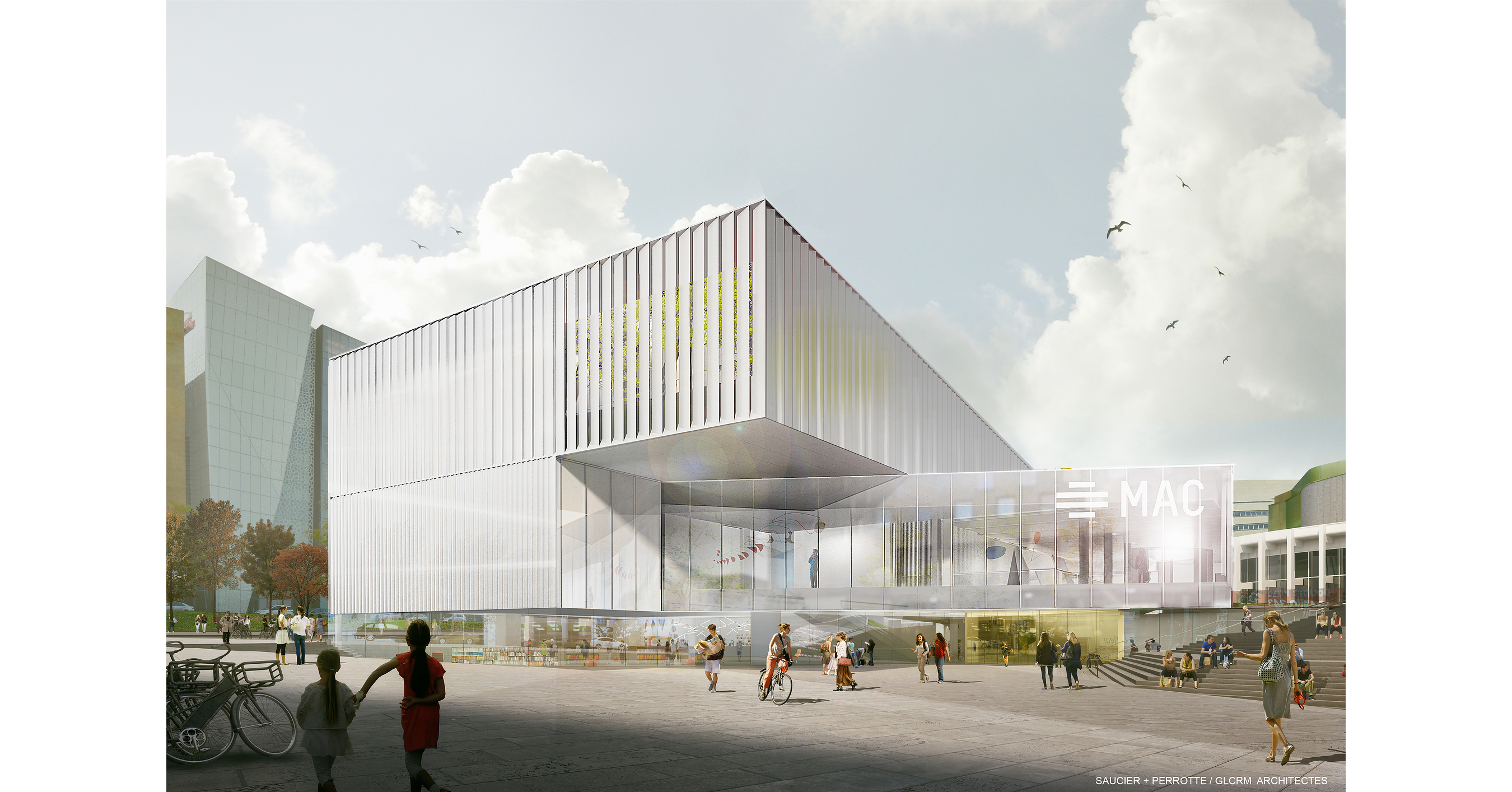
Why it matters: For interactive and public-art practitioners, this signals a procurement shift: Quebec’s 1% policy is now explicitly funding sound and digital works, opening a new pipeline for artists who work with audio, sensors, and participatory systems rather than traditional sculpture.
Context: The competition follows Quebec’s Politique d’intégration des arts à l’architecture, which has placed nearly 4,500 works in public buildings since 1961. The MAC’s move to digital and sound art reflects a broader institutional turn toward ephemeral, interactive media in permanent collections.
"The commission highlights the richness of sound art and opens up new perspectives for public art, moving beyond the material and monumental approaches traditionally associated with this type of installation." — NEWSWIRE.CA
Commentary: The $12,000 development fee per finalist is modest but standard for this stage; the real signal is the $359,540 production budget, which suggests the winning work will require significant technical integration. For studios and fabricators, expect a long lead time—proposals due October, winner in fall, installation in 2028—so plan for iterative prototyping and site-specific testing. The inclusion of Lozano-Hemmer, known for interactive surveillance and telematics, hints that the final work may demand robust networking and maintenance infrastructure, a cost often underestimated in public commissions.
Date: July 09, 2026 03:24 PM ET
URL: https://newswire.ca/news-releases/four-finalists-announced-for-a-permanent-work-at-the-new-mac-841042440.html
AI Sentiment Score: Negative (50%)
AI Credibility Score: 10.0/10 — High
Scores and text generated by AI analysis of the source article indicated.
Post ID: 01bea0b7