

Photography & Cinematography
Why Christopher Nolan shot "The Odyssey" entirely on IMAX film (Cbsnews)
Summary: Christopher Nolan’s ‘The Odyssey,’ opening July 17, is the first feature shot entirely on IMAX film, a feat achieved through custom camera housings and mirror systems developed with IMAX to overcome noise and eyeline limitations. The production relied on FotoKem in Burbank, the last lab producing 70mm prints, where negative assembly and color timing remain fully analog, hand-executed processes. Nolan frames the film’s completion as a validation of celluloid’s unique image quality and theatrical communal experience, even as digital and AI workflows dominate the industry.
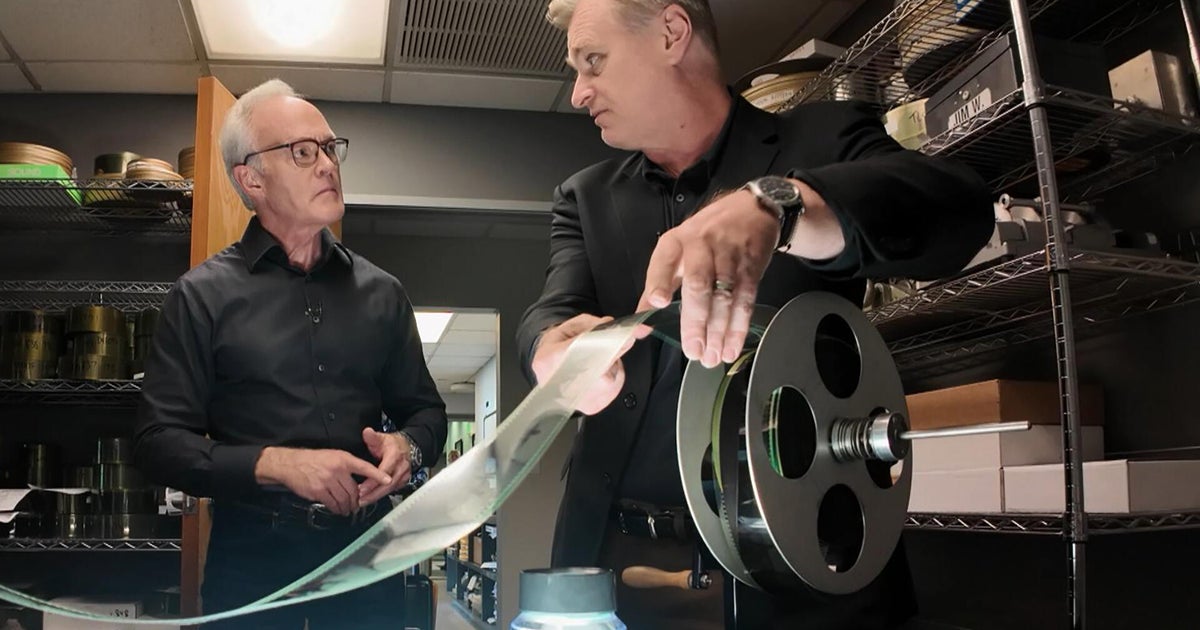
Why it matters: For cinematographers and post houses, this signals a viable path for full-IMAX productions, with new hardware (blimp housings, mirror systems) and a continued, if niche, demand for photochemical finishing skills at labs like FotoKem. It also reinforces IMAX film as a premium format that can command theatrical exclusivity, potentially influencing commissioning decisions for large-scale epics.
Context: IMAX film has been used for select sequences since ‘The Dark Knight,’ but full-length shoots were previously impractical due to short magazine runtimes and camera noise. Nolan’s ‘Oppenheimer’ already drove a resurgence in 70mm projection, and this project extends that push to the entire capture pipeline.
"Why Christopher Nolan shot "The Odyssey" entirely on IMAX film Director Christopher Nolan has made some of the most spectacular films of the 21st century: "The Dark Knight," "Inception," "Interstellar," "Dunkirk" and." — CBSNEWS
Commentary: The 300-pound blimp and mirror rigs are bespoke solutions that will likely become part of IMAX’s rental inventory, lowering the barrier for future full-IMAX shoots—though the cost and crew skill required remain prohibitive for all but top-tier productions. For colorists and post houses, the film’s hand-timed release prints underscore a growing bifurcation: digital intermediates for most, but a premium analog path for auteur-driven, theatrical-first projects. The reliance on FotoKem as the sole 70mm print lab is a single-point-of-failure risk that studios may need to address as demand for film projection persists. Nolan’s insistence on communal theatrical experience, backed by a full-IMAX production, could pressure streamers and studios to reconsider exclusive theatrical windows for tentpoles.
Date: July 12, 2026 07:00 PM ET
URL: https://cbsnews.com/news/why-christopher-nolan-shot-the-odyssey-entirely-on-imax-film-60-minutes
AI Sentiment Score: Negative (75%)
AI Credibility Score: 10.0/10 — High
Scores and text generated by AI analysis of the source article indicated.
Cameras Become More Connected to Production Workflows (Tvtechnology)
Summary: Riedel’s acquisition of ARRI signals a structural shift in which cameras are becoming nodes in end-to-end production networks rather than standalone image-capture devices. At NAB 2026, Blackmagic, Sony, Panasonic, and Grass Valley all demonstrated increased camera connectivity—100G ports, expanded signal paths, centralized control, and AI-assisted shading—blurring the line between cinema and live production. The trend points toward cameras as integrated infrastructure components, with implications for how productions are staffed, controlled, and monetized.
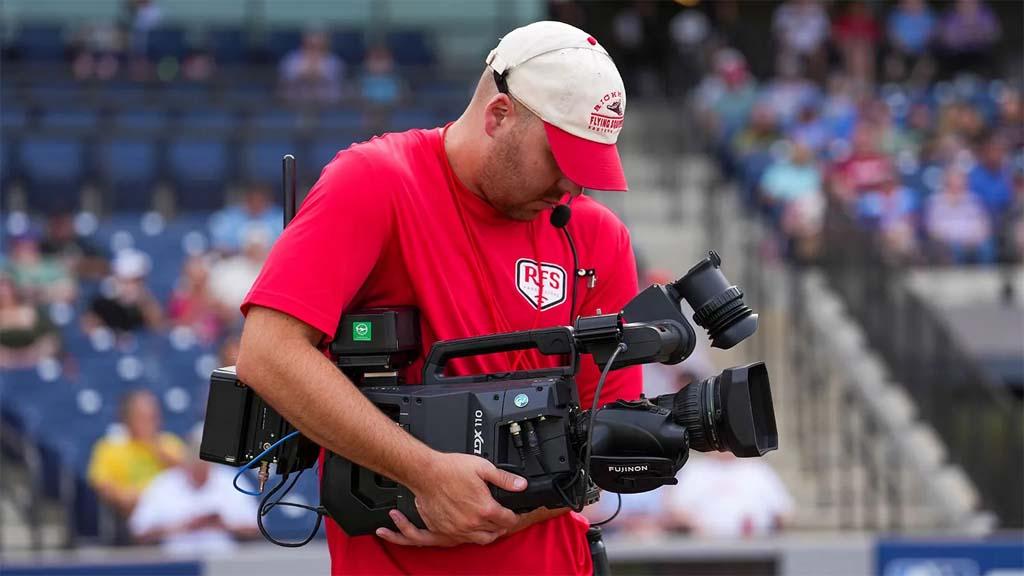
Why it matters: For cinematographers and camera departments, this means the craft is increasingly tied to network architecture and software control, changing who operates the camera and how looks are managed across multi-camera, multi-venue productions.
Context: The camera market has historically been segmented between cinema and broadcast, but live sports and high-end events are now driving demand for cinematic aesthetics in real-time workflows, forcing manufacturers to merge previously separate product lines and control systems.
"In the future it [will be] not so much about selling just products but end-to-end solutions,” he said. “I see that for cinema as well as for the live broadcast field. End-to-end [is] where the potential really lies now business-wise." — TVTECHNOLOGY
Commentary: The Riedel-ARRI deal is a bet that the camera’s value is migrating from the sensor to the network it plugs into. For DPs and operators, this means the job increasingly involves managing signal paths and software settings, not just framing and exposure. The rise of centralized control—Sony’s CNA-2 backbone, Panasonic’s Image Adjust Pro—could consolidate camera control roles, especially in multi-venue events. The ‘cinematic aesthetic’ is becoming a software feature, which may commoditize the look that once distinguished high-end cinematography.
Date: July 07, 2026 08:00 AM ET
URL: https://tvtechnology.com/production/cameras-become-more-connected-to-production-workflows
AI Sentiment Score: Positive (50%)
AI Credibility Score: 10.0/10 — High
Scores and text generated by AI analysis of the source article indicated.
Inside ‘The Odyssey’ Camera Rig: How Nolan and Hoyte van Hoytema Shot 15/70 Anamorphic IMAX (Highonfilms)
Summary: Christopher Nolan and Hoyte van Hoytema’s The Odyssey debuts the IMAX Keighley, a reworked 15/70 film camera with digital telemetry, and the first anamorphic lenses to cover the full 15/65 frame, developed with Panavision. The production also solved the classic blimp-size problem with a double-mirror periscope for intimate dialogue scenes, and used a hybrid monitoring chain with Blackmagic monitors and a video tap for real-time on-set review. This marks a significant engineering leap for large-format analog capture, potentially reshaping what’s possible in high-end film production.

Why it matters: For cinematographers and camera crews, the Keighley and the new anamorphic glass redefine the practical ceiling of 15/70 film, offering a path to combine the format’s resolution with anamorphic character—and the hybrid monitoring workflow signals a shift in how film sets operate, blending analog capture with digital immediacy.
Context: IMAX 15/70 cameras have historically been spherical-only, with limited telemetry and loud operation that restricted dialogue scenes. The Keighley is the first major redesign in decades, and the anamorphic lens development was previously considered impractical.
"The result is something audiences haven’t really seen before. You still get the incredible detail associated with 15/70 film, often compared to a digital resolution somewhere between 14K and 16K per color channel. But now it’s paired with the subtle horizontal squeeze, distinctive lens flares, and softer edge characteristics that cinematographers love about anamorphic photography." — HIGHONFILMS
Commentary: The Keighley’s telemetry and the anamorphic breakthrough are the real news: they lower the risk of shooting 15/70, making it viable for more than just Nolan-scale productions. The mirror hack is a clever workaround, but the hybrid monitoring chain is the quiet revolution—it brings film capture into the digital workflow era, which could shift how camera departments are staffed and how dailies are reviewed. Expect rental houses to see demand for these rigs, and for Panavision to leverage this as a flagship for its large-format line.
Date: July 12, 2026 09:21 AM ET
URL: https://highonfilms.com/the-odyssey-cinematography-imax-keighley-specs-hoytema
AI Sentiment Score: Negative (50%)
AI Credibility Score: 10.0/10 — High
Scores and text generated by AI analysis of the source article indicated.
Post ID: 80f3ede2