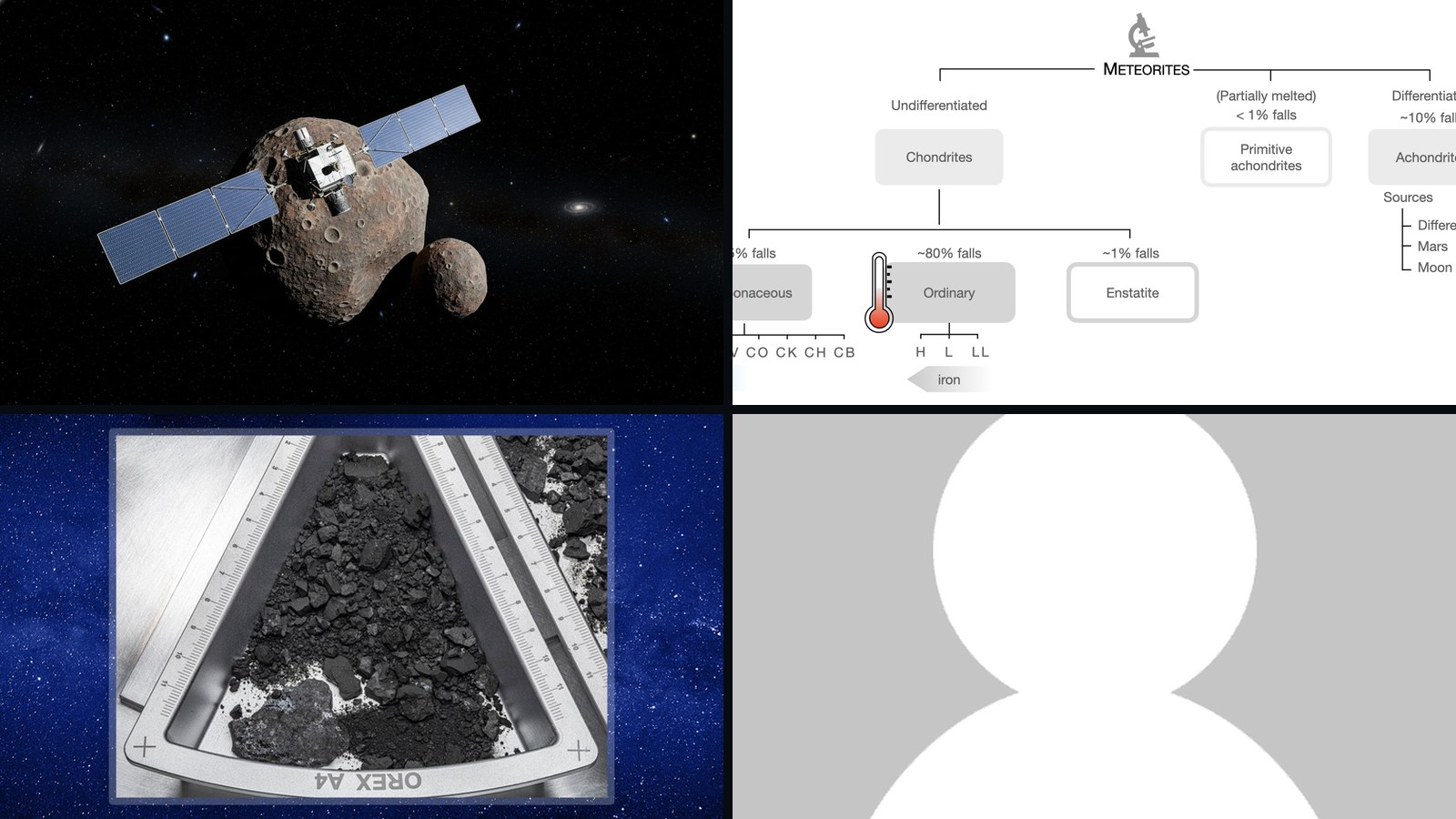
Asteroid Research & Defense
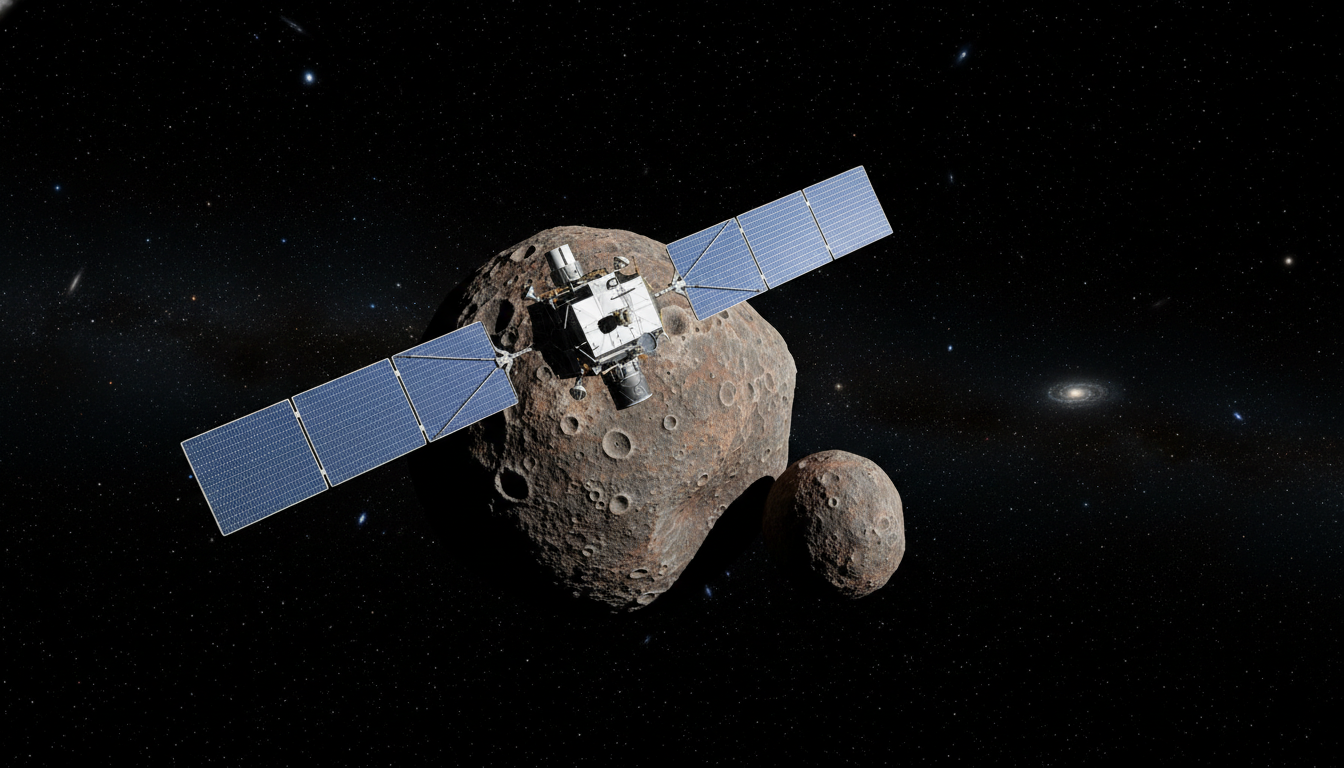
In 2022, NASA shot a spacecraft at an asteroid at 6.6 km per second and changed its orbit by 33 minutes — now Europe’s Hera probe is traveling there to inspect the damage and make planetary defense an exact science. (En.Clickpetroleoegas.Br)
Summary: The European Space Agency’s Hera probe is scheduled to arrive at the Didymos-Dimorphos system in November 2026 to conduct a post-impact survey of the asteroid targeted by NASA’s 2022 DART mission. While DART successfully altered Dimorphos’s orbit by 33 minutes, the specific physics of the collision remain unknown. Hera will map the resulting crater and analyze ejected material to determine the asteroid’s internal structure and composition. This data is required to transition kinetic impactors from a proven concept to a predictable engineering tool.
Why it matters: Without the ‘beta factor’—the ratio of actual deflection to the predicted change—planetary defense remains an empirical guess rather than a calculated science.
Context: This represents the operational culmination of a 14-year joint planning effort between NASA and ESA, establishing a bilateral lead in planetary defense over CNSA and Roscosmos.
"The collected data will feed into ESA and NASA impact models, allowing for precise calculation of the so-called “beta factor” — the actual deflection efficiency by impact." — EN.CLICKPETROLEOEGAS.BR
Commentary: The shift from DART’s ‘proof of concept’ to Hera’s ‘characterization’ phase moves planetary defense from a binary success/failure metric to a quantitative model. By analyzing how the asteroid’s internal structure absorbed the 6.6 km/s impact, agencies can calibrate future missions for varying asteroid densities and compositions. The mission’s success hinges on high-precision proximity operations around a small, low-albedo target, making the software updates and approach maneuvers the primary technical risks.
Date: April 23, 2026 12:00 AM ET
URL: https://en.clickpetroleoegas.com.br/in-2022-nasa-shot-a-spacecraft-at-an-asteroid-at-66-km-per-second-and-changed-its-orbit-by-33-minutes-now-europes-hera-probe-is-traveling-th-davila/
AI Sentiment Score: Positive (50%)
AI Credibility Score: 10.0/10 — High
Scores and text generated by AI analysis of the source article indicated.
asteroid – karmaka.de (Karmaka.De)
Summary: A series of recent publications analyzing returned samples from asteroids Bennu, Ryugu, and Itokawa are refining the understanding of early solar system chemistry and asteroid evolution. Key findings include the identification of complex organic-mineral assemblages on Bennu and evidence of hydrothermal alteration on Ryugu triggered by disruptive impacts. Researchers are also utilizing nanoscale infrared spectroscopy and shock metamorphic analysis to distinguish between primitive materials and those altered by collisional events.

Why it matters: These findings shift the model of asteroids from static relics to dynamic bodies shaped by violent collisional histories and internal chemical processing.
Context: The transition from remote sensing to direct laboratory analysis of OSIRIS-REx and Hayabusa2 samples allows for the calibration of spectral data used to categorize Near-Earth Objects (NEOs).
"## Physical Analysis of Bennu Samples Reveals Regolith Production by Collisional Disruption on Near-Earth Asteroids OPEN ACCESSN R.-L. Ballouz, A. J. Ryan, R. J. Macke, O. S. Barnouin, M. Lê, J. Moreno,." — KARMAKA.DE
Commentary: The correlation between collisional disruption and regolith production suggests that the ‘rubble pile’ architecture of NEOs is a direct consequence of specific impact energies. By linking shock metamorphic effects in Itokawa phosphates to megaregolith-derived meteorites, scientists are closing the gap between laboratory meteorite analysis and in-situ asteroid observation. This operationalizes a more precise method for dating asteroid surfaces and tracing the distribution of prebiotic organics.
Date: April 23, 2026 12:00 AM ET
URL: https://karmaka.de/?cat=77
AI Sentiment Score: Negative (66%)
AI Credibility Score: 10.0/10 — High
Scores and text generated by AI analysis of the source article indicated.
The science from asteroid sample return missions – arXiv (Arxiv)
Summary: Analysis of samples returned by JAXA’s Hayabusa and Hayabusa2 and NASA’s OSIRIS-REx missions highlights the critical gap between remote sensing and laboratory analysis. While spacecraft instruments provide initial data, Earth-based laboratories are essential for definitive compositional matching and the study of volatiles in C-type asteroids. These missions have successfully delivered pristine materials from Ryugu and Bennu, bypassing atmospheric contamination.

Why it matters: It establishes that remote spectral data is frequently compromised by space weathering, making physical sample return the only reliable method for verifying asteroid composition and organic content.
Context: The shift from S-type to C-type asteroid targeting reflects a strategic move toward capturing volatile-rich materials that provide a chemical record of the early Solar System.
"these sample return missions have also revealed additional complications in interpreting the remote data due to surface alterations through processes such as space weathering." — ARXIV
Commentary: The operational takeaway is the necessity of ‘sample archiving’ as a hedge against current analytical limitations. By preserving material for decades—mirroring the Apollo lunar sample strategy—agencies ensure that future instrument breakthroughs can be applied to existing physical evidence. This validates the high cost of return missions over purely orbital observations.
Date: April 24, 2026 12:00 AM ET
URL: https://arxiv.org/html/2604.22182v1
AI Sentiment Score: Positive (40%)
AI Credibility Score: 10.0/10 — High
Scores and text generated by AI analysis of the source article indicated.
Unveiling Bennu asteroid samples | Lawrence Livermore National … (Llnl.Gov)
Summary: Lawrence Livermore National Laboratory (LLNL) has begun analyzing a 120-milligram aliquot of the OSIRIS-REx sample returned from the carbon-rich asteroid Bennu. While other institutions focus on organic molecules, LLNL is utilizing isotopic variation and radioactive decay to determine the asteroid’s precise formation chronology and origin. The analysis aims to map Bennu’s transition from the main asteroid belt to its current near-Earth trajectory.

Why it matters: The transition from meteorite study to pristine sample return eliminates terrestrial contamination, allowing for high-precision dating of the early solar system’s inorganic chemistry.
Context: This follows a pattern of targeted sample returns, including JAXA’s Hayabusa2 mission to Ryugu, designed to bypass the atmospheric alteration inherent in naturally fallen meteorites.
"The material, at just 120 milligrams, will provide information about the early solar system, planetary formation, and potentially, even ingredients for life on ancient Earth. LLNL scientists recently received and will analyze." — LLNL.GOV
Commentary: The focus on inorganic components and isotopic precision transforms the sample from a curiosity into a calibrated clock for planetary formation. By isolating the ‘pristine’ nature of the material, LLNL can distinguish between primordial solar system signatures and later thermal events. This operational shift validates the high cost of sample return missions over the passive collection of meteorites.
Date: April 26, 2026 12:00 AM ET
URL: https://www.llnl.gov/article/51451/unveiling-bennu-asteroid-samples
AI Sentiment Score: Negative (50%)
AI Credibility Score: 10.0/10 — High
Scores and text generated by AI analysis of the source article indicated.
NASA asteroid impact test successfully alters orbital path in … (News.Weblioph)
Summary: NASA’s Double Asteroid Redirection Test (DART) successfully altered the orbital path of the moonlet Dimorphos. Observations indicate that the collision expelled significant debris, which amplified the momentum transfer and effectively doubled the impact’s efficacy. While the immediate shift in distance was less than a kilometer, the change in orbital timing confirms the feasibility of kinetic impactors for planetary defense.

Why it matters: The discovery that ejecta can multiply the force of an impact reduces the mass of spacecraft required to divert hazardous objects, lowering the engineering threshold for future defense missions.
Context: This represents the first operational validation of a kinetic impactor strategy to modify a celestial body’s trajectory.
"A small deflection can prevent a major accident. … Scientists reported on March 6, 2026 that an asteroid targeted by NASA in a planetary defense experiment was slightly redirected along its solar." — NEWS.WEBLIOPH
Commentary: The ‘ejecta effect’ transforms the collision from a simple momentum exchange into a rocket-like propulsion event. This operational windfall suggests that planetary defense models may have previously underestimated the effectiveness of kinetic impactors. The upcoming ESA Hera mission will now move from orbital observation to structural analysis to quantify exactly how crater morphology influences this momentum gain.
Date: April 23, 2026 12:00 AM ET
URL: https://news.weblioph.com/2026/04/23/nasa-asteroid-impact-test-successfully-alters-orbital-path-in-planetary-defense-breakthrough-expert/
AI Sentiment Score: Negative (60%)
AI Credibility Score: 7.0/10 — Medium
Scores and text generated by AI analysis of the source article indicated.
The science from asteroid sample return missions (Arxiv)
Summary: Analysis of materials returned by JAXA’s Hayabusa and Hayabusa2 and NASA’s OSIRIS-REx is providing a high-fidelity look at early solar system chemistry. These samples, collected from near-Earth asteroids, are being processed in global laboratories to identify the specific organic compounds and water-delivery mechanisms that influenced early Earth. The research focuses on the transition from planetary formation to the emergence of habitable conditions.

Why it matters: Direct sample analysis removes the signal noise of terrestrial contamination, allowing for precise dating and chemical fingerprinting of the solar system’s building blocks.
Context: This represents a shift from remote sensing and in-situ robotic analysis to laboratory-grade geochemistry on pristine extraterrestrial matter.
"Free from terrestrial contamination, these pristine materials provide new opportunities to investigate planetary formation processes, the delivery of organics and water to the early Earth, and the nature of potentially hazardous asteroids." — ARXIV
Commentary: The transition from ‘in-situ’ to ‘returned’ data marks a critical engineering milestone in planetary science. By moving analysis from limited spacecraft instruments to terrestrial mass spectrometers, the resolution of our understanding of asteroid composition increases by orders of magnitude. This data will likely redefine the baseline for planetary defense models and the chemical prerequisites for abiogenesis.
Date: April 24, 2026 12:00 AM ET
URL: https://arxiv.org/abs/2604.22182
AI Sentiment Score: Negative (71%)
AI Credibility Score: 10.0/10 — High
Scores and text generated by AI analysis of the source article indicated.
Formation of carbonaceous cosmic dust revealed by samples … (Museumfuernaturkunde.Berlin)
Summary: Analysis of samples returned by the Hayabusa2 mission from asteroid Ryugu has identified the mechanism for the creation of carbonaceous cosmic dust. Researchers found that small impacts on the regolith surface of carbonaceous asteroids eject water-bearing, organic-rich particles into space. This process establishes a direct causal link between asteroid surface activity and the micrometeorites found on Earth.

Why it matters: It transforms the understanding of early Earth’s ‘fertilization’ from a theoretical possibility to a documented mechanical process tied to specific asteroid compositions.
Context: The study bridges the gap between the composition of carbonaceous asteroids in the outer Solar System and the carbonaceous micrometeorites sampled terrestrially.
"We discovered that carbonaceous, potentially water-bearing cosmic dust is formed when small impacts strike the regolith surface of such asteroids." — MUSEUMFUERNATURKUNDE.BERLIN
Commentary: By tying dust production to impact-driven ejection, the findings move the conversation from general delivery theories to specific operational dynamics of regolith. This validates the role of carbonaceous asteroids as primary vectors for water and organics. The result underscores the high utility of sample-return missions over remote sensing for resolving geochemical origins.
Date: April 22, 2026 12:00 AM ET
URL: https://www.museumfuernaturkunde.berlin/en/research/projects/formation-of-carbonaceous-cosmic-dust/
AI Sentiment Score: Negative (50%)
AI Credibility Score: 7.0/10 — Medium
Scores and text generated by AI analysis of the source article indicated.
Post ID: b914f8ba