Mars Exploration
China’s Tianwen-3 to bring rocks and soil from Mars by 2031, puts … (Indiatoday.In)
Summary: The China National Space Administration (CNSA) has reaffirmed its timeline for the Tianwen-3 mission, aiming to launch around 2028. The mission intends to retrieve at least 500 grams of Martian soil and rocks, with a target return date of 2031. This operation requires a complex sequence of landing, sample collection, an ascent vehicle launch from the Martian surface, and a return transit to Earth.
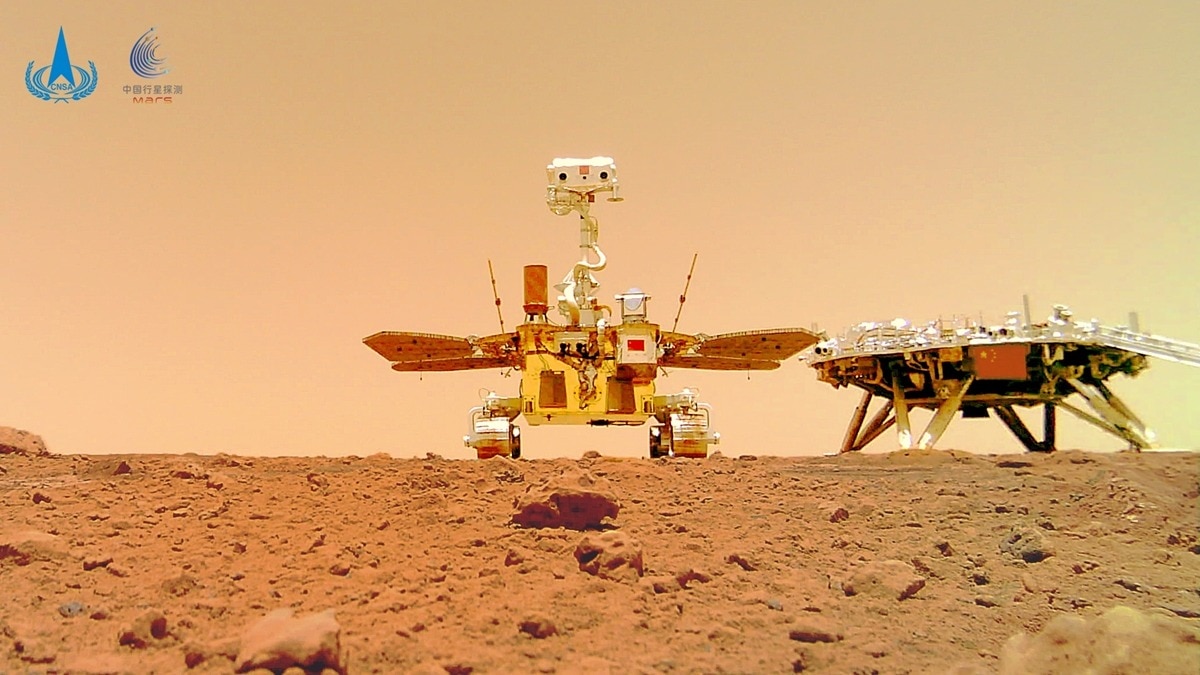
Why it matters: A successful return by 2031 would beat the current NASA/ESA Mars Sample Return (MSR) architecture, shifting the geopolitical lead in deep-space logistics and planetary science.
Context: China is leveraging the operational success of the Tianwen-1 and Zhurong rover missions to accelerate its sample return capabilities while Western agencies struggle with MSR budget overruns and architectural redesigns.
"The China National Space Administration (CNSA) announced on Friday that it remains on track to launch its Tianwen-3 Mars Sample Return mission around 2028, with the goal of delivering at least 500 grams of Martian material to Earth by 2031." — INDIATODAY.IN
Commentary: The 2031 target is aggressive, as it assumes a seamless execution of the Mars Ascent Vehicle (MAV)—the most critical and unproven hardware in the chain. While NASA has samples already cached by Perseverance, the lack of a funded retrieval plan creates a strategic window for CNSA. If China achieves this first, it secures a monopoly on the initial high-resolution analysis of Martian materials, fundamentally altering the prestige and pace of planetary exploration.
Date: April 24, 2026 12:00 AM ET
URL: https://www.indiatoday.in/amp/science/story/chinas-tianwen-3-to-bring-rocks-and-soil-from-mars-by-2031-puts-nasa-on-alert-2900806-2026-04-24
AI Sentiment Score: Negative (50%)
AI Credibility Score: 10.0/10 — High
Scores and text generated by AI analysis of the source article indicated.
Curiosity rover detects building blocks of life in first-ever … – KESQ (Kesq)
Summary: NASA’s Curiosity rover has identified complex organic molecules in a 3.5-billion-year-old sandstone sample using a first-of-its-kind wet chemistry experiment. By dissolving the rock in a chemical solution within the Sample Analysis at Mars (SAM) instrument, researchers confirmed that larger organic matter can survive Mars’ high-radiation environment over geologic timescales. The findings suggest the planet was significantly more habitable than previously modeled, though the origin of these molecules remains undetermined.

Why it matters: The result validates that sedimentary rocks on Mars can act as long-term archives for organic chemistry, shifting the mission focus from ‘if’ organics exist to ‘how’ they were deposited.
Context: This follows a pattern of incremental organic detections by Curiosity and Perseverance, moving from simple carbon chains to larger, more complex molecules.
"These carbon-containing compounds are the same building blocks that enabled life to emerge on Earth. The results, published Tuesday in the journal Nature Communications, came from a first-of-its-kind experiment on Mars: The." — KESQ
Commentary: While the discovery is a significant engineering win for the SAM instrument’s wet chemistry capabilities, the ambiguity between biotic and abiotic origins persists. The operational bottleneck remains the lack of high-resolution terrestrial laboratory analysis. Consequently, this data increases the strategic urgency and scientific justification for the Mars Sample Return (MSR) architecture.
Date: April 24, 2026 12:00 AM ET
URL: https://kesq.com/cnn-other/2026/04/24/curiosity-rover-detects-building-blocks-of-life-in-first-ever-experiment-on-mars/
AI Sentiment Score: Positive (42%)
AI Credibility Score: 7.0/10 — Medium
Scores and text generated by AI analysis of the source article indicated.
NASA’s Curiosity rover finds building blocks of life on Mars … – Space (Space)
Summary: NASA’s Curiosity rover successfully deployed tetramethylammonium hydroxide (TMAH) via its Sample Analysis at Mars (SAM) instrument to detect nitrogen and sulfur-bearing organic molecules in clay-rich sandstone. The experiment identified cyclic organic compounds derived from complex macromolecular carbon preserved in the Martian subsurface. These findings, published in Nature Communications, align with separate observations made by the Perseverance rover using different instrumentation.
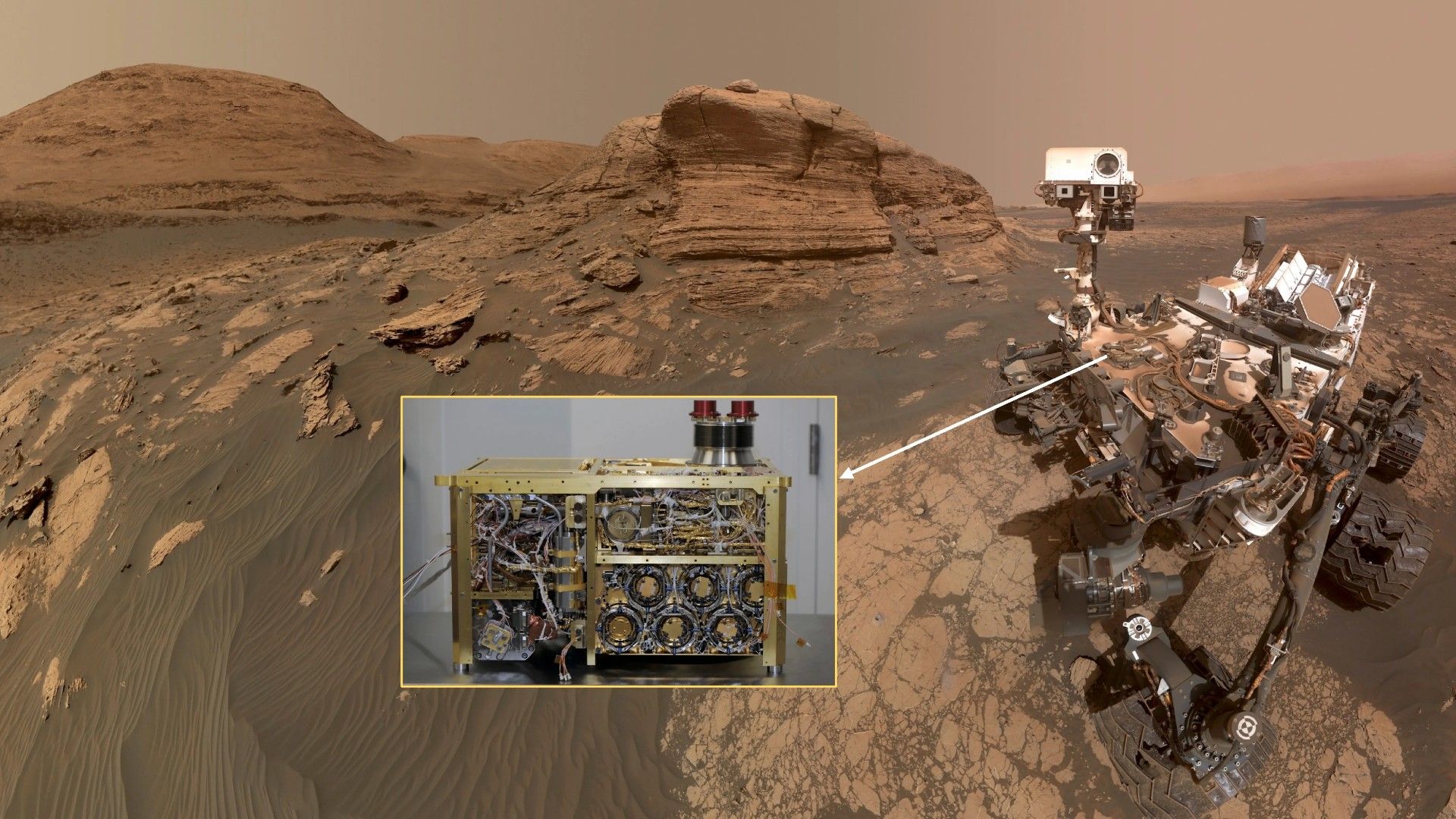
Why it matters: The preservation of complex macromolecular carbon despite Mars’ harsh radiation environment significantly lowers the risk of ‘sample erasure’ for future life-detection missions.
Context: This represents the first operational use of the TMAH reagent on another planet to break down and identify complex organic structures.
"This suggests that organic carbon is better preserved over long time periods on Mars than we expected, given the harsh radiation environment." — SPACE
Commentary: The convergence of data between Curiosity’s SAM and Perseverance’s instrument suites validates the presence of diverse organic matter across different Martian geographies. By proving that complex molecules survive in the near-surface, NASA has a stronger engineering justification for the current Mars Sample Return architecture. The shift from ‘detecting carbon’ to ‘confirming macromolecular preservation’ moves the needle from basic chemistry to potential paleobiology.
Date: April 21, 2026 12:00 AM ET
URL: https://www.space.com/astronomy/mars/nasas-curiosity-rover-finds-building-blocks-of-life-on-mars-scientists-arent-sure-how-they-got-there
AI Sentiment Score: Negative (75%)
AI Credibility Score: 10.0/10 — High
Scores and text generated by AI analysis of the source article indicated.
NASA rover uncovers rock with 7 new organic molecules on Mars (Livescience)
Summary: Analysis of a rock sample collected by the Curiosity rover in 2020 has revealed 21 carbon-containing molecules, including seven previously undetected on Mars. The findings include nitrogen heterocycles and benzothiophene, identified using the Sample Analysis at Mars (SAM) instrument’s limited wet chemistry capabilities. Researchers verified the results by simulating the process with the Murchison meteorite to confirm that the detected molecules likely derive from the breakdown of even more complex organic compounds.
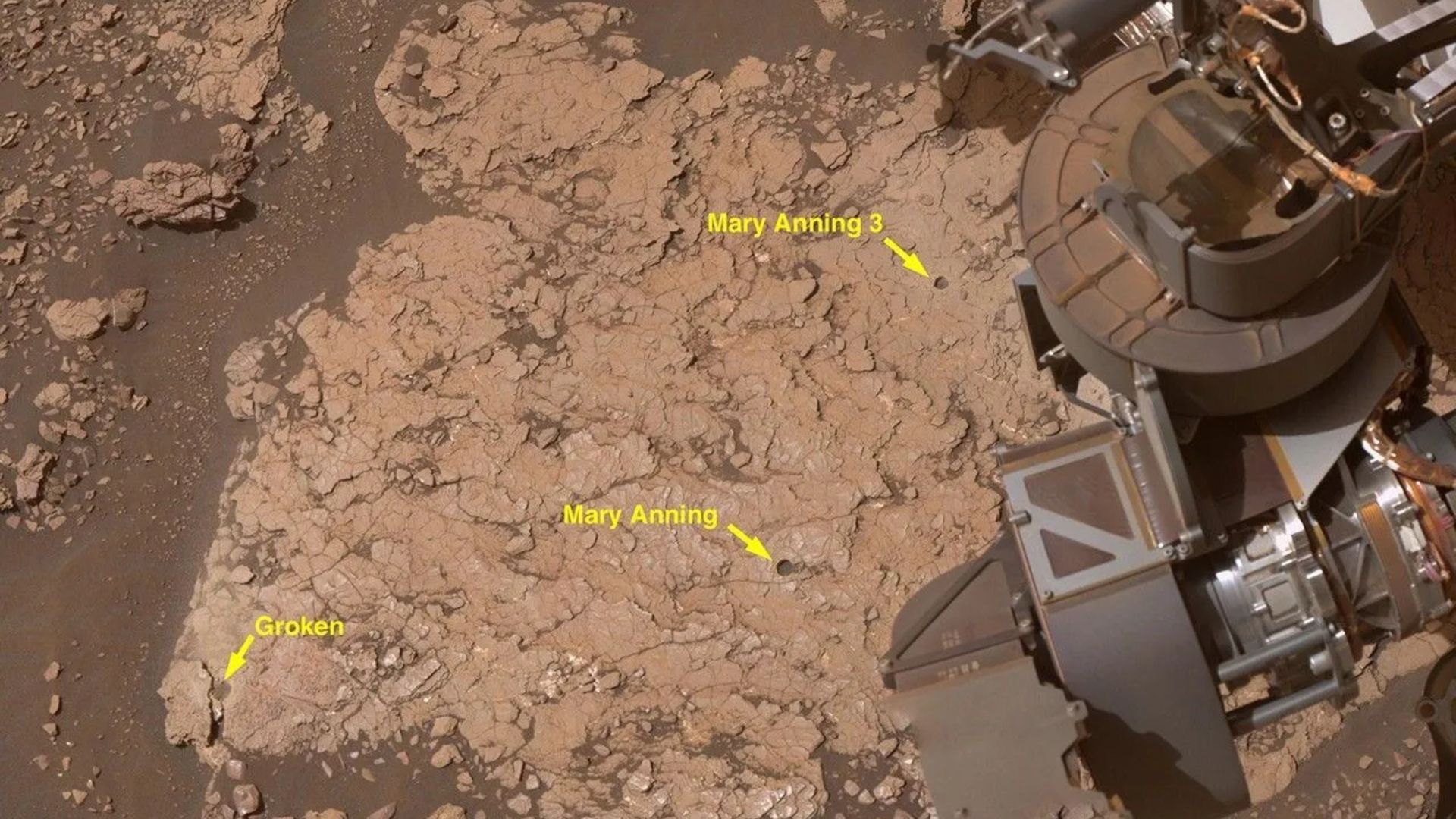
Why it matters: The identification of precursors to RNA and DNA suggests a chemical environment on ancient Mars that was not just hospitable, but actively complex enough to support prebiotic chemistry.
Context: This follows the 2025 discovery of long-chain hydrocarbons, signaling a shift from detecting simple organics to identifying diverse, complex molecular structures preserved over billions of years.
"A rock discovered by NASA’s Curiosity Mars rover contains "the most diverse collection" of the building blocks of life ever seen on the Red Planet, including seven never found there before, new." — LIVESCIENCE
Commentary: The use of the final tetramethylammonium hydroxide (TMAH) solvent cup marks the end of Curiosity’s high-value ‘wet chemistry’ capacity, shifting the mission’s operational constraints. While the results are promising, the reliance on degradation products rather than intact complex polymers underscores the challenge of Martian surface radiation. The correlation with the Murchison meteorite reinforces the theory that these organics may be exogenous or preserved in a way that mirrors carbonaceous chondrites.
Date: April 27, 2026 12:00 AM ET
URL: https://www.livescience.com/space/space-exploration/nasa-rover-uncovers-rock-with-7-new-organic-molecules-on-mars-the-most-diverse-collection-ever-seen
AI Sentiment Score: Positive (42%)
AI Credibility Score: 10.0/10 — High
Scores and text generated by AI analysis of the source article indicated.
China plans Mars sample return mission by 2031 (Newsbytesapp)
Summary: The China National Space Administration (CNSA) has reaffirmed its timeline for the Tianwen-3 mission, targeting a 2028 launch to return at least 500g of Martian material by 2031. To bolster the mission’s scientific output, CNSA has selected five international projects from 28 proposals to utilize a 20kg payload allocation. This puts China on a trajectory to potentially beat the NASA-ESA Mars Sample Return (MSR) program to Earth.
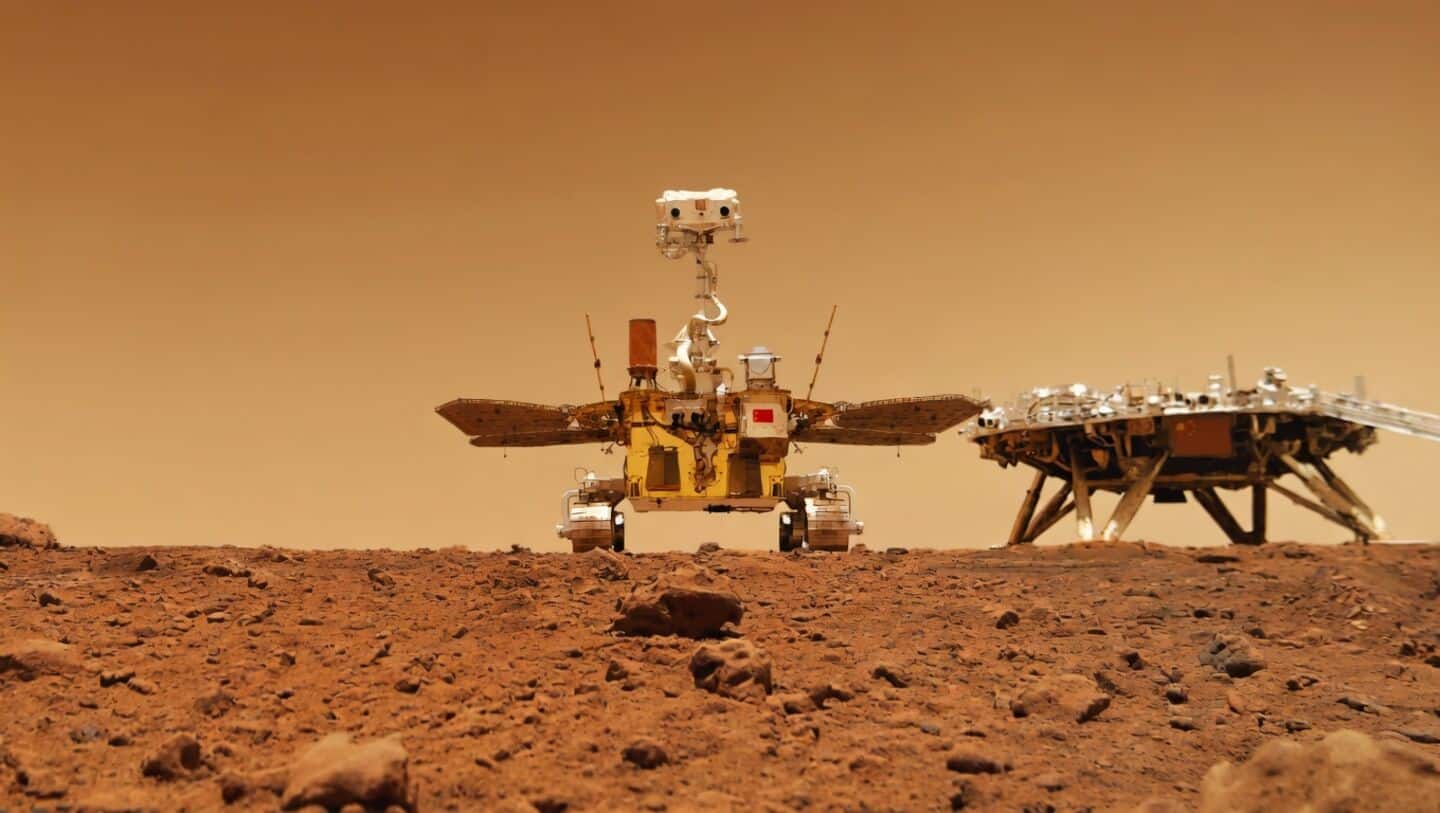
Why it matters: A successful Tianwen-3 mission would establish China as the first nation to execute an interplanetary sample return, shifting the geopolitical balance of deep-space operational capability.
Context: The NASA-ESA MSR program is currently stalled by budget overruns and architectural redesigns, leaving a strategic window open for a competitor with a more streamlined execution path.
"# China plans Mars sample return mission by 2031 … China has reiterated its ambitious plan to bring back samples from Mars. The China National Space Administration (CNSA) said it is on." — NEWSBYTESAPP
Commentary: CNSA is leveraging NASA’s architectural indecision to seize the ‘first-mover’ advantage in sample return. The inclusion of international payloads suggests a calculated move to build a coalition of scientific dependency. The critical engineering hurdle remains the Mars Ascent Vehicle (MAV); if China solves this before NASA stabilizes its MSR budget, the prestige shift will be absolute.
Date: April 24, 2026 12:00 AM ET
URL: https://www.newsbytesapp.com/news/science/china-plans-mars-sample-return-mission-by-2031/story
AI Sentiment Score: Negative (50%)
AI Credibility Score: 10.0/10 — High
Scores and text generated by AI analysis of the source article indicated.
NASA’s Nuclear Mars Mission & Isar Aerospace European Launch – Space News (Mar 25, 2026) (Youtube)
Summary: NASA has announced the ‘Space Reactor-1 Freedom,’ a nuclear-electric propulsion spacecraft scheduled for a December 2028 Mars launch. The mission will deploy three ground-penetrating radar helicopters, dubbed ‘Skyfall,’ to map subsurface water ice and scout landing sites. Simultaneously, NASA is restructuring the Artemis program, shifting Artemis III to in-orbit testing and docking, while awarding Blue Origin a $190 million contract to deliver the VIPER rover to the lunar south pole by late 2027.

Why it matters: The pivot to nuclear electric propulsion and the decoupling of Artemis III’s landing phase signal a shift toward hardware-first validation and higher-energy transit capabilities.
Context: This follows a period of scaled-back nuclear propulsion research and the previous cancellation of the VIPER mission, reflecting a broader transition toward commercial-partnership-led recovery.
"Today’s topics: NASA’s Nuclear Mars Mission – NASA announces Space Reactor-1 Freedom, the first nuclear-powered interplanetary spacecraft, launching to Mars in December 2028 with three Ingenuity-class helicopters to scout landing sites and." — YOUTUBE
Commentary: The restructuring of Artemis III suggests that NASA is prioritizing docking and orbital logistics over the immediate risk of a crewed landing. By outsourcing the VIPER delivery to Blue Origin and accelerating robotic cargo, the agency is effectively shifting the lunar infrastructure burden to the commercial sector. The aggressive 2028 timeline for Space Reactor-1 indicates a high-stakes bet on nuclear propulsion to solve the transit-time problem for deep space exploration.
Date: April 26, 2026 12:00 AM ET
URL: https://www.youtube.com/watch?v=bEW9HnJexvQ
AI Sentiment Score: Negative (55%)
AI Credibility Score: 10.0/10 — High
Scores and text generated by AI analysis of the source article indicated.
Mars rover detects never-before-seen organic compounds in new … (News.Ufl.Edu)
Summary: NASA’s Curiosity rover has identified over 20 organic compounds in the Glen Torridon region of Gale Crater, including nitrogen- and sulfur-bearing molecules. The discovery was made possible by a first-of-its-kind chemical experiment using TMAH to break down complex organics for analysis by the Sample Analysis at Mars (SAM) instrument. While some molecules resemble DNA precursors, the findings cannot yet distinguish between biological origins, geological processes, or meteorite delivery.

Why it matters: The results validate that Martian clay minerals can preserve complex organic matter for billions of years, confirming the viability of current and future sampling strategies.
Context: This operational success informs the instrument payloads for the upcoming Rosalind Franklin rover and the Dragonfly mission to Titan, both of which intend to utilize TMAH-based testing.
"Among the 20-plus chemicals identified by the experiment, Curiosity spotted a nitrogen-bearing molecule with a structure similar to DNA precursors — a chemical never before spotted on Mars." — NEWS.UFL.EDU
Commentary: The detection of DNA-like precursors is a significant chemical signal, but the presence of benzothiophene suggests a strong abiotic or exogenous contribution. The operational constraint—limited to two cups of TMAH—underscores the high stakes of site selection in rover missions. Until the Perseverance samples return to Earth for high-resolution laboratory analysis, these findings remain indicators of habitability rather than proof of life.
Date: April 21, 2026 12:00 AM ET
URL: https://news.ufl.edu/2026/04/mars-rover-/
AI Sentiment Score: Positive (62%)
AI Credibility Score: 7.0/10 — Medium
Scores and text generated by AI analysis of the source article indicated.
Ash creeps across Mars (Esa.Int)
Summary: ESA’s Mars Express has documented a significant expansion of dark volcanic ash deposits across the Utopia Planitia basin. Comparative analysis with 1976 Viking orbiter data reveals that these mafic mineral deposits have become noticeably more widespread over the last five decades. The shift is attributed to either aeolian transport of ash or the removal of overlying ochre dust. The region also exhibits scalloped depressions and grabens, indicating a periglacial environment with subsurface ice instability.

Why it matters: The observation of surface changes occurring on a decadal rather than millennial timescale provides critical data on current Martian atmospheric dynamics and surface volatility.
Context: Utopia Planitia is an ancient impact basin characterized by buried ice and tectonic fractures, serving as a primary site for studying Mars’s hydrological and volcanic history.
"Ash creeps across Mars Noticeable change on Mars often takes millions of years – but the European Space Agency’s Mars Express has captured a blanket of dark ash creeping across the planet." — ESA.INT
Commentary: The contrast between Viking and Mars Express imagery transforms our understanding of Martian geomorphology from a static archive to a dynamic system. This rapid redistribution of mafic minerals suggests that wind-driven surface remodeling is more aggressive than previously modeled. For future landing site selection, these ‘scalloped depressions’ signal subsurface ice sublimation, marking areas of high geotechnical instability.
Date: Wed, 15 Apr 2026 11:00:00 +0200
URL: https://www.esa.int/Science_Exploration/Space_Science/Mars_Express/Ash_creeps_across_Mars
AI Sentiment Score: Neutral (33%)
AI Credibility Score: 8.2/10 — High
Scores and text generated by AI analysis of the source article indicated.
Confirmation of ancient lake on Mars builds excitement for … (Sciencedaily)
Summary: NASA’s Perseverance rover has used its RIMFAX ground-penetrating radar to confirm the presence of ancient lake sediments at the base of the Jezero Crater. The data reveals a complex geologic history characterized by two distinct periods of sediment deposition separated by intervals of erosion. These findings validate previous orbital observations and confirm that the crater floor hosted a stable aquatic environment approximately 3 billion years ago.

Why it matters: The transition from orbital inference to in-situ radar confirmation validates the site selection for the Mars Sample Return mission, increasing the probability that collected cores contain biosignatures.
Context: This represents a shift from morphological mapping (visualizing shapes from space) to stratigraphic confirmation (mapping subsurface layers), reducing the uncertainty regarding the crater’s hydrological history.
"# Confirmation of ancient lake on Mars builds excitement for Perseverance rover’s samples ## Findings reveal eons of environmental changes and offer hope that the rover’s soil and rock samples hold traces." — SCIENCEDAILY
Commentary: The identification of alternating deposition and erosion cycles suggests a dynamic climate rather than a static lake, which complicates the timeline for potential habitability. By confirming the horizontal regularity of these sediments, NASA has effectively mapped the ‘target zone’ for high-value sample extraction. The operational success of RIMFAX here suggests the utility of subsurface radar for future landing site characterization.
Date: April 24, 2026 12:00 AM ET
URL: https://www.sciencedaily.com/releases/2024/01/240126171636.htm
AI Sentiment Score: Positive (40%)
AI Credibility Score: 10.0/10 — High
Scores and text generated by AI analysis of the source article indicated.
🌱 Patch AM: How Greenbelt scientists helped unlock Mars’ most complex organics yet (Patch)
Summary: NASA Goddard engineers in Greenbelt are finalizing the Dragonfly Mass Spectrometer, a critical instrument for the upcoming rotorcraft mission to Saturn’s moon Titan. The hardware is currently undergoing integration and harsh environment testing alongside the lander’s structural and parachute systems. The mission remains on track for a 2028 launch.

Why it matters: The mass spectrometer is the primary payload for characterizing Titan’s prebiotic chemistry, moving the mission from a flight demonstration to a rigorous chemical survey.
Context: This represents the transition from the design and prototyping phase to the assembly and integration (A&I) phase of the Dragonfly mission.
"Engineers there are finishing the Dragonfly Mass Spectrometer, which will analyze Titan’s chemistry after launch in 2028, while teams elsewhere complete the lander’s structure and parachute systems under intense testing." — PATCH
Commentary: The shift toward final assembly and environmental testing indicates that the mission’s primary scientific instrumentation has reached hardware maturity. Success here depends on the spectrometer’s ability to survive the transit and the extreme atmospheric conditions of Titan. The 2028 launch window remains the critical milestone for the project’s operational viability.
Date: April 27, 2026 12:00 AM ET
URL: https://patch.com/maryland/greenbelt/patch-am-how-greenbelt-scientists-helped-unlock-mars-most-complex-or-nodx
AI Sentiment Score: Negative (50%)
AI Credibility Score: 10.0/10 — High
Scores and text generated by AI analysis of the source article indicated.
Rocket Lab Wants Mars. Give It To Them. – RKLBMan’s Substack (Rklbman.Substack)
Summary: The FY2026 appropriations bill has effectively terminated NASA’s existing Mars Sample Return (MSR) program due to cost overruns that pushed estimates toward $11B. While the ESA has cancelled its Earth Return Orbiter, Congress has allocated $110 million to a ‘Mars Future Missions’ program to maintain critical EDL and spectroscopy technologies. Meanwhile, Rocket Lab is positioning itself to provide the necessary communications backbone for future attempts, with a final RFP expected by May 1 and hardware delivery by 2028.

Why it matters: The collapse of the primary MSR architecture creates a strategic vacuum and a race against China’s projected 2031 sample return, shifting the opportunity from legacy prime contractors to agile providers like Rocket Lab.
Context: NASA’s MSR has been plagued by schedule slips and budget inflation, transitioning from a centerpiece mission to a political liability.
"Congress made it plain in the FY2026 appropriations bill: “The agreement does not support the existing Mars Sample Return program.”." — RKLBMAN.SUBSTACK
Commentary: The pivot from a monolithic MSR program to a ‘pilot light’ funding model signals a shift toward incremental, infrastructure-first development. By prioritizing a communications backbone over a full return vehicle, NASA is effectively de-risking the environment for a second-generation attempt. If Rocket Lab secures the upcoming contract, it transforms from a launch provider into a critical Martian infrastructure operator, creating a high-barrier moat against competitors.
Date: April 24, 2026 12:00 AM ET
URL: https://rklbman.substack.com/p/rocket-lab-wants-mars-give-it-to
AI Sentiment Score: Negative (60%)
AI Credibility Score: 7.0/10 — Medium
Scores and text generated by AI analysis of the source article indicated.
Mars mission to include HK, Macao, intl science payloads (Chinadaily.Cn)
Summary: The China National Space Administration (CNSA) has detailed the payload configuration for the Tianwen 3 Mars sample-return mission, scheduled for a 2028 launch. The mission will utilize two Long March 5 rockets to deploy a five-component architecture consisting of a lander, ascender, service capsule, orbiter, and reentry module. Five specific instruments from Hong Kong, Macao, and Italy have been integrated, focusing on atmospheric composition, water isotopes, and geodetic referencing.

Why it matters: The inclusion of international and regional payloads, specifically the Italian retroreflector array, signals a strategic effort to standardize geodetic reference frames necessary for the high-risk orbital rendezvous phase of sample return.
Context: Tianwen 3 represents China’s transition from simple orbital and rover operations to the complex ‘fetch-and-return’ sequence, competing directly with NASA’s Mars Sample Return (MSR) timeline.
"China’s Tianwen 3 unmanned mission to Mars is set to carry an array of science payloads, including five built by scientists from Hong Kong, Macao and foreign institutes, according to the China." — CHINADAILY.CN
Commentary: The reliance on a retroreflector array from Italy’s National Laboratory of Frascati highlights the engineering criticality of the rendezvous phase, where millimeter-precision is required for capture. By diversifying payloads across academic institutions in HK and Macao, CNSA is expanding its domestic technical ecosystem while maintaining a lean 20kg open-capacity window for external proposals. The 2031 return target is ambitious, placing significant pressure on the Long March 5’s reliability and the operational synchronization of the five-part vehicle chain.
Date: April 24, 2026 12:00 AM ET
URL: https://www.chinadaily.com.cn/a/202604/24/WS69eb864ea310d6866eb4573c.html
AI Sentiment Score: Negative (50%)
AI Credibility Score: 7.0/10 — Medium
Scores and text generated by AI analysis of the source article indicated.
Sol 4861: Right Navigation Camera, Cylindrical Projection (Science.Nasa.Gov)
Summary: On Sol 4861 (April 10, 2026), the Mars Science Laboratory’s Curiosity rover captured a 360-degree cylindrical projection panorama of Gale Crater. The mosaic was constructed from 31 individual images taken by the mast-mounted Right Navigation Camera (Navcam) between 1 PM and 2 PM local mean solar time. The data was collected at drive 2490, site number 121, with each image providing a 45-degree field of view.

Why it matters: High-resolution panoramic mosaics are critical for site characterization and geological mapping, allowing mission controllers to identify targets for subsequent sampling and drilling.
Context: Curiosity’s continued operational longevity into 2026 demonstrates the resilience of the MSL hardware platform despite the harsh Martian environment.
"Curiosity took 31 images in Gale Crater using its mast-mounted Right Navigation Camera (Navcam) to create this mosaic. The seam-corrected mosaic provides a 360-degree cylindrical projection panorama of the Martian surface centered at 225 degrees azimuth." — SCIENCE.NASA.GOV
Commentary: The precision of the seam-corrected projection at site 121 provides a stable baseline for comparing morphological changes over the rover’s extended mission. While routine, the continued output of these mosaics confirms the stability of the Navcam’s optical alignment after nearly 5,000 Sols. This operational consistency is vital for the spatial context required to interpret chemical data from the rover’s onboard instruments.
Date: Mon, 27 Apr 2026 21:32:18 +0000
URL: https://science.nasa.gov/resource/sol-4861-right-navigation-camera-cylindrical-projection/
AI Sentiment Score: Neutral (33%)
AI Credibility Score: 8.2/10 — High
Scores and text generated by AI analysis of the source article indicated.
Sol 4868: Right Navigation Camera, Cylindrical Projection (Science.Nasa.Gov)
Summary: NASA’s Curiosity rover captured a 360-degree cylindrical projection panorama of Gale Crater on Sol 4865. Utilizing its mast-mounted Right Navigation Camera (Navcam), the rover synthesized 31 individual images, each with a 45-degree field of view, to create a seam-corrected mosaic. The data was collected between 1 PM and 2 PM local mean solar time at site 121, drive 2826.
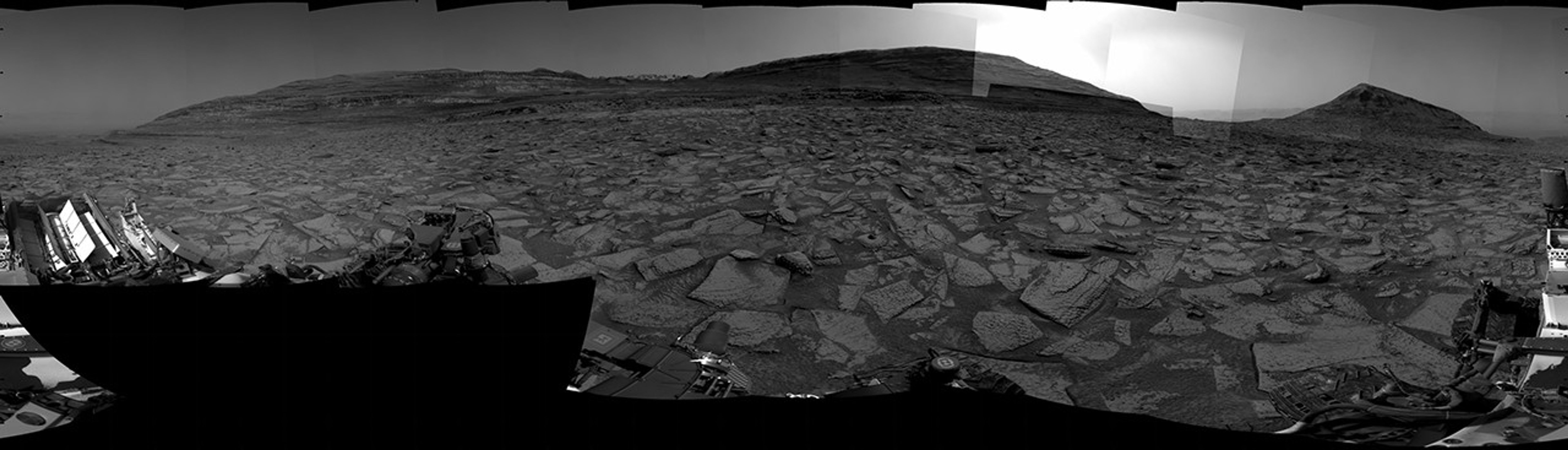
Why it matters: High-resolution panoramic mosaics provide the essential spatial context required for geological mapping and site selection for subsequent sampling operations.
Context: The Mars Science Laboratory mission continues to utilize Navcam data to correlate local topography with broader crater morphology.
"The seam-corrected mosaic provides a 360-degree cylindrical projection panorama of the Martian surface centered at 194 degrees azimuth (measured clockwise from north)." — SCIENCE.NASA.GOV
Commentary: The reliance on cylindrical projection for site 121 underscores the ongoing need for precise azimuthal orientation to map Gale Crater’s stratigraphic layers. While routine, the continued operational health of the Navcam after nearly 5,000 Sols is a testament to the hardware’s durability in the Martian environment. These mosaics remain the primary tool for ground-truthing orbital data.
Date: Mon, 27 Apr 2026 22:00:12 +0000
URL: https://science.nasa.gov/resource/sol-4868-right-navigation-camera-cylindrical-projection/
AI Sentiment Score: Positive (50%)
AI Credibility Score: 8.2/10 — High
Scores and text generated by AI analysis of the source article indicated.
Sol 4865: Right Navigation Camera, Cylindrical Projection (Science.Nasa.Gov)
Summary: NASA’s Curiosity rover captured a 360-degree cylindrical projection panorama of Gale Crater on Sol 4865. Utilizing its mast-mounted Right Navigation Camera, the rover synthesized 31 individual images, each with a 45-degree field of view, to create a seam-corrected mosaic. The data was collected on April 14, 2026, during drive 2826 at site 121.

Why it matters: High-resolution panoramic mosaics provide the essential geospatial context required to map geological transitions and plan subsequent traverse targets in Gale Crater.
Context: Cylindrical projections are standard operational tools for the Mars Science Laboratory to minimize distortion across wide horizons during site characterization.
"Curiosity took 31 images in Gale Crater using its mast-mounted Right Navigation Camera (Navcam) to create this mosaic. The seam-corrected mosaic provides a 360-degree cylindrical projection panorama of the Martian surface." — SCIENCE.NASA.GOV
Commentary: The continued operational utility of the Navcam on Sol 4865 underscores the rover’s enduring hardware resilience. By maintaining precise azimuth and solar time synchronization, JPL ensures that these mosaics remain reliable baselines for stratigraphic analysis.
Date: Mon, 27 Apr 2026 21:41:26 +0000
URL: https://science.nasa.gov/resource/sol-4865-right-navigation-camera-cylindrical-projection/
AI Sentiment Score: Neutral (33%)
AI Credibility Score: 8.2/10 — High
Scores and text generated by AI analysis of the source article indicated.
All 5 fundamental units of life’s genetic code were just discovered in … (Modernsciences)
Summary: Analysis of samples returned by JAXA’s Hayabusa2 mission has confirmed the presence of all five fundamental nucleobases within asteroid Ryugu. This follows a 2023 detection of uracil and aligns with 2025 findings from NASA’s Bennu samples. The discovery suggests that the molecular precursors for genetic material were widespread in the early Solar System.

Why it matters: The detection of these compounds in pristine, non-terrestrial samples validates that prebiotic chemistry is an inherent feature of carbon-rich asteroids, not a result of Earth-based contamination.
Context: This builds on a pattern of organic detection in carbonaceous chondrites, moving from contaminated fallen meteorites like Murchison to controlled, sample-return missions.
"The discovery of all five nucleobases on Ryugu suggests the molecular ingredients of life may have been already forming in space billions of years ago." — MODERNSCIENCES
Commentary: The convergence of data from both Ryugu and Bennu shifts the hypothesis from ‘possible’ to ‘probable’ regarding the cosmic delivery of genetic precursors. The focus now moves from mere detection to the specific ratios of purines and pyrimidines, which serve as chemical fingerprints for different asteroid environments. This narrows the search for habitable conditions to specific classes of carbon-rich bodies.
Date: April 24, 2026 12:00 AM ET
URL: https://modernsciences.org/asteroid-ryugu-nucleobases-genetic-code-discovered-april-2026/
AI Sentiment Score: Neutral (33%)
AI Credibility Score: 7.0/10 — Medium
Scores and text generated by AI analysis of the source article indicated.
Image composite via INDIATODAY.IN, KESQ, SPACE, LIVESCIENCE, NEWSBYTESAPP, NEWS.UFL.EDU, ESA.INT, SCIENCEDAILY + 5 more