AI, Automation, And Platform Shifts
How Bartz v. Anthropic Ruling Reshapes AI Training Landscapes (Natlawreview)
Summary: This article analyzes U.S. District Judge of the Northern District of California William Alsup’s decision in Bartz v. Anthropic, the first major ruling to address whether training AI models on copyrighted materials constitutes fair use.

Why it matters: This matters for Policy, Legal & Regulatory because it gives a concrete current signal to track: This article analyzes U.S.
Context: This article analyzes U.S. District Judge of the Northern District of California William Alsup’s decision in Bartz v. Anthropic, the first major ruling to address whether training AI models on copyrighted materials constitutes fair use.
"This article analyzes U.S. District Judge of the Northern District of California William Alsup’s decision in Bartz v. Anthropic, the first major ruling to address whether training AI models on copyrighted materials." — NATLAWREVIEW
Commentary: The real consequence will depend on whether this changes enforcement, liability, or the operating room for major platforms and institutions.
Date: April 24, 2026 12:00 AM ET
URL: https://natlawreview.com/article/copyright-crossroads-continued-how-bartz-v-anthropic-ruling-reshapes-ai-training
AI Sentiment Score: Neutral (50%)
AI Credibility Score: 10.0/10 — High
Scores and text generated by AI analysis of the source article indicated.
US courts and state legislatures tighten scrutiny of generative AI … (Completeaitraining)
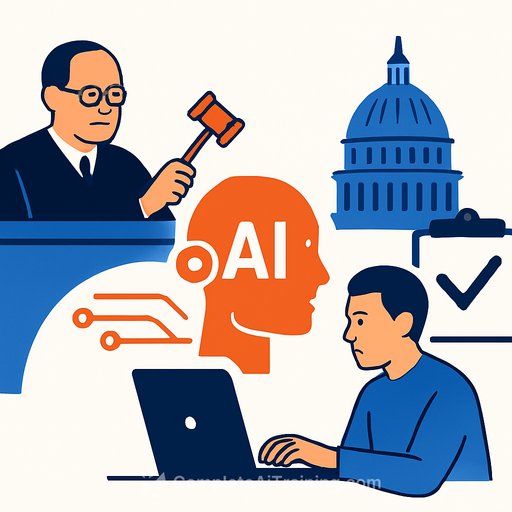
Summary: ## AI Companies Face Mounting Legal Pressure Over Safety, Data Use U.S. courts are seeing a surge in product liability cases against generative AI companies, with disputes centering on training data sourcing and alleged harms from AI deployment. The cases span wrongful death claims, nonconsensual intimate imagery, and deepfakes-while AI companies themselves are mounting constitutional challenges to new state regulations.
Why it matters: This matters for Policy, Legal & Regulatory because it gives a concrete current signal to track: ## AI Companies Face Mounting Legal Pressure Over Safety, Data Use U.S.
Context: ## AI Companies Face Mounting Legal Pressure Over Safety, Data Use U.S. courts are seeing a surge in product liability cases against generative AI companies, with disputes centering on training data sourcing and alleged harms from AI deployment. The cases span wrongful death claims, nonconsensual intimate imagery, and deepfakes-while AI companies themselves are mounting constitutional challenges to new state regulations.
"## AI Companies Face Mounting Legal Pressure Over Safety, Data Use U.S. courts are seeing a surge in product liability cases against generative AI companies, with disputes centering on training data sourcing." — COMPLETEAITRAINING
Commentary: The real consequence will depend on whether this changes enforcement, liability, or the operating room for major platforms and institutions.
Date: April 23, 2026 12:00 AM ET
URL: https://completeaitraining.com/news/us-courts-and-state-legislatures-tighten-scrutiny-of/
AI Sentiment Score: Negative (50%)
AI Credibility Score: 10.0/10 — High
Scores and text generated by AI analysis of the source article indicated.
April ’26 – Ticketmaster Ruled a Monopoly… While AI Gets a Pass, and more… (Youtube)
Summary: In this episode of Entertainment Law Update, we break down one of the biggest antitrust rulings in the live entertainment industry—and what it could mean for ticket prices, competition, and the future of Live Nation and Ticketmaster. … We also dig into the White House’s new AI policy framework, which talks about respecting creators… while carefully avoiding the biggest question in the room: …

Why it matters: This matters for Policy, Legal & Regulatory because it gives a concrete current signal to track: In this episode of Entertainment Law Update, we break down one of the biggest antitrust rulings in the live entertainment industry—and what it could mean for ticket prices, competition, and the future of Live Nation and Ticketmaster.
Context: In this episode of Entertainment Law Update, we break down one of the biggest antitrust rulings in the live entertainment industry—and what it could mean for ticket prices, competition, and the future of Live Nation and Ticketmaster. … We also dig into the White House’s new AI policy framework, which talks about respecting creators… while carefully avoiding the biggest question in the room: …
"In this episode of Entertainment Law Update, we break down one of the biggest antitrust rulings in the live entertainment industry—and what it could mean for ticket prices, competition, and the future." — YOUTUBE
Commentary: The real consequence will depend on whether this changes enforcement, liability, or the operating room for major platforms and institutions.
Date: April 22, 2026 12:00 AM ET
URL: https://www.youtube.com/watch?v=kwu-J_1XrC0
AI Sentiment Score: Negative (75%)
AI Credibility Score: 10.0/10 — High
Scores and text generated by AI analysis of the source article indicated.
Ticketmaster Monopoly Ruling, AI Copyright Policy, and … (Entertainmentlawupdate)
Summary: In this episode, we cover a major antitrust verdict against Live Nation/Ticketmaster, a new White House AI policy framework that leaves creators with more uncertainty than answers, and key developments in trademark, copyright, and First Amendment law. … Live Nation / Ticketmaster Monopoly Verdict A New York jury found that Live Nation and Ticketmaster illegally monopolized the concert industry and overcharged consumers, with the judge still to determine damages and possible remedies—including a potential breakup.

Why it matters: This matters for Policy, Legal & Regulatory because it gives a concrete current signal to track: In this episode, we cover a major antitrust verdict against Live Nation/Ticketmaster, a new White House AI policy framework that leaves creators with more uncertainty than answers, and key developments in trademark, copyright, and First Amendment law.
Context: In this episode, we cover a major antitrust verdict against Live Nation/Ticketmaster, a new White House AI policy framework that leaves creators with more uncertainty than answers, and key developments in trademark, copyright, and First Amendment law. … Live Nation / Ticketmaster Monopoly Verdict A New York jury found that Live Nation and Ticketmaster illegally monopolized the concert industry and overcharged consumers, with the judge still to determine damages and possible remedies—including a potential breakup.
"In this episode, we cover a major antitrust verdict against Live Nation/Ticketmaster, a new White House AI policy framework that leaves creators with more uncertainty than answers, and key developments in trademark,." — ENTERTAINMENTLAWUPDATE
Commentary: The real consequence will depend on whether this changes enforcement, liability, or the operating room for major platforms and institutions.
Date: April 22, 2026 12:00 AM ET
URL: https://entertainmentlawupdate.com/2026/04/entertainment-law-update-episode-190/
AI Sentiment Score: Negative (75%)
AI Credibility Score: 7.0/10 — Medium
Scores and text generated by AI analysis of the source article indicated.
The White House AI Framework for Fair Use and Why the Courts … (Thefirewall-Blog)
Summary: On March 20, 2026, the Trump Administration released its National AI Legislative Framework, a seven-section policy document covering children’s safety, energy infrastructure, intellectual property, censorship, innovation, workforce development, and federal preemption of state laws. Guided by a vision of “permissionless innovation” and “minimally burdensome” regulation, the framework’s most consequential provision is in Section III, where the White House states its belief that AI training on copyrighted material does not violate copyright law, but explicitly declines to ask Congress to codify that position, instead deferring the question to the courts and directing Congress not to take any action that would impact the judiciary’s resolution of the issue. Generative AI is built on millions of copyrighted works used without permission, and the courts are increasingly signaling that this foundation is legally vulnerable, from the Supreme Court’s narrowing of transformative use in *Andy Warhol Foundation v.
Why it matters: This matters for Policy, Legal & Regulatory because it gives a concrete current signal to track: On March 20, 2026, the Trump Administration released its National AI Legislative Framework, a seven-section policy document covering children’s safety, energy infrastructure, intellectual property, censorship, innovation, workforce development, and federal preemption of state laws.
Context: On March 20, 2026, the Trump Administration released its National AI Legislative Framework, a seven-section policy document covering children’s safety, energy infrastructure, intellectual property, censorship, innovation, workforce development, and federal preemption of state laws. Guided by a vision of “permissionless innovation” and “minimally burdensome” regulation, the framework’s most consequential provision is in Section III, where the White House states its belief that AI training on copyrighted material does not violate copyright law, but explicitly declines to ask Congress to codify that position, instead deferring the question to the courts and directing Congress not to take any action that would impact the judiciary’s resolution of the issue. Generative AI is built on millions of copyrighted works used without permission, and the courts are increasingly signaling that this foundation is legally vulnerable, from the Supreme Court’s narrowing of transformative use in *Andy Warhol Foundation v.
"On March 20, 2026, the Trump Administration released its National AI Legislative Framework, a seven-section policy document covering children’s safety, energy infrastructure, intellectual property, censorship, innovation, workforce development, and federal preemption of." — THEFIREWALL-BLOG
Commentary: The real consequence will depend on whether this changes enforcement, liability, or the operating room for major platforms and institutions.
Date: April 21, 2026 12:00 AM ET
URL: https://www.thefirewall-blog.com/2026/04/the-white-house-ai-framework-for-fair-use-and-why-the-courts-may-get-there-first/
AI Sentiment Score: Positive (57%)
AI Credibility Score: 7.0/10 — Medium
Scores and text generated by AI analysis of the source article indicated.
Clicks, Codes, and Consequences: Regulating AI-Generated … (Thenulj)
Summary: While there is existing legislation to regulate deceptive advertising and false endorsements, those frameworks were designed for identifiable commercial speakers. They do not account for AI-generated advertising, which appears in other platforms like TikTok, or address the gap in the Lanham Act, which is the primary statute governing trademark law. As it stands, there is some gray area in advertising regarding the use of AI, and legislation must be created not only to define AI but also to regulate it properly.

Why it matters: This matters for Policy, Legal & Regulatory because it gives a concrete current signal to track: While there is existing legislation to regulate deceptive advertising and false endorsements, those frameworks were designed for identifiable commercial speakers.
Context: While there is existing legislation to regulate deceptive advertising and false endorsements, those frameworks were designed for identifiable commercial speakers. They do not account for AI-generated advertising, which appears in other platforms like TikTok, or address the gap in the Lanham Act, which is the primary statute governing trademark law. As it stands, there is some gray area in advertising regarding the use of AI, and legislation must be created not only to define AI but also to regulate it properly.
"While there is existing legislation to regulate deceptive advertising and false endorsements, those frameworks were designed for identifiable commercial speakers. They do not account for AI-generated advertising, which appears in other platforms." — THENULJ
Commentary: The real consequence will depend on whether this changes enforcement, liability, or the operating room for major platforms and institutions.
Date: April 20, 2026 12:00 AM ET
URL: https://www.thenulj.com/nuljforum/99rcp36rxo5eq4to8wx5jnmefjp1zu-dw2r5-5ly4w-t2xdx-drdh3-bha8e-gphkh
AI Sentiment Score: Negative (50%)
AI Credibility Score: 7.0/10 — Medium
Scores and text generated by AI analysis of the source article indicated.
Artificial Intelligence | Blank Rome LLP (Blankrome)
Summary: Today’s global economy is more data-driven than ever before, with artificial intelligence (“AI”) reshaping virtually every industry. The regulatory landscape has evolved significantly: The EU AI Act is now in phased implementation with general-purpose AI obligations effective now and most remaining provisions by August 2026; Colorado enacted the first comprehensive U.S. state AI law in 2024, effective February 2026; New York signed the RAISE Act; and California advanced AI rules for lawyers and arbitrators.
Why it matters: This matters for Policy, Legal & Regulatory because it gives a concrete current signal to track: Today’s global economy is more data-driven than ever before, with artificial intelligence (“AI”) reshaping virtually every industry.
Context: Today’s global economy is more data-driven than ever before, with artificial intelligence (“AI”) reshaping virtually every industry. The regulatory landscape has evolved significantly: The EU AI Act is now in phased implementation with general-purpose AI obligations effective now and most remaining provisions by August 2026; Colorado enacted the first comprehensive U.S. state AI law in 2024, effective February 2026; New York signed the RAISE Act; and California advanced AI rules for lawyers and arbitrators.
"Today’s global economy is more data-driven than ever before, with artificial intelligence (“AI”) reshaping virtually every industry. The regulatory landscape has evolved significantly: The EU AI Act is now in phased implementation." — BLANKROME
Commentary: The real consequence will depend on whether this changes enforcement, liability, or the operating room for major platforms and institutions.
Date: April 20, 2026 12:00 AM ET
URL: https://www.blankrome.com/services-and-industries/artificial-intelligence
AI Sentiment Score: Positive (66%)
AI Credibility Score: 7.0/10 — Medium
Scores and text generated by AI analysis of the source article indicated.
The AI Copyright Vacuum (Harnessip)
Summary: What In-House Counsel Must Do Now Before the Window Closes Client Advisory | April 2026 The intellectual property landscape has not faced a structural disruption of this magnitude since the advent of the internet. Generative AI has created a gap in copyright law that neither Congress nor the courts have fully addressed — and that gap represents both a significant risk and an extraordinary strategic opportunity for organizations that act decisively. This advisory outlines the current state of the law, identifies the specific exposure your organization likely faces, and recommends a concrete compliance and positioning strategy.
Why it matters: This matters for Policy, Legal & Regulatory because it gives a concrete current signal to track: What In-House Counsel Must Do Now Before the Window Closes Client Advisory | April 2026 The intellectual property landscape has not faced a structural disruption of this magnitude since the advent of the internet.
Context: What In-House Counsel Must Do Now Before the Window Closes Client Advisory | April 2026 The intellectual property landscape has not faced a structural disruption of this magnitude since the advent of the internet. Generative AI has created a gap in copyright law that neither Congress nor the courts have fully addressed — and that gap represents both a significant risk and an extraordinary strategic opportunity for organizations that act decisively. This advisory outlines the current state of the law, identifies the specific exposure your organization likely faces, and recommends a concrete compliance and positioning strategy.
"What In-House Counsel Must Do Now Before the Window Closes Client Advisory | April 2026 The intellectual property landscape has not faced a structural disruption of this magnitude since the advent." — HARNESSIP
Commentary: The real consequence will depend on whether this changes enforcement, liability, or the operating room for major platforms and institutions.
Date: April 27, 2026 12:00 AM ET
URL: https://www.harnessip.com/blog/2026/04/27/the-ai-copyright-vacuum/
AI Sentiment Score: Neutral (33%)
AI Credibility Score: 7.0/10 — Medium
Scores and text generated by AI analysis of the source article indicated.
DOJ Backs Musk’s xAI in First Amendment Fight Over Colorado AI Law (Reclaimthenet)
Summary: The US Department of Justice has moved to intervene in Elon Musk’s xAI lawsuit against Colorado, escalating a federal challenge to the state’s first-in-the-nation artificial intelligence “antidiscrimination” law just over two months before it is set to take effect. The intervention, filed in federal court in Denver, marks the first time the DOJ has joined a constitutional challenge to a state AI regulation. It pairs the federal government with xAI, the company behind the Grok chatbot, in arguing that Senate Bill 24-205 violates the US Constitution and threatens American leadership in artificial intelligence.
Why it matters: This matters for Policy, Legal & Regulatory because it gives a concrete current signal to track: The US Department of Justice has moved to intervene in Elon Musk’s xAI lawsuit against Colorado, escalating a federal challenge to the state’s first-in-the-nation artificial intelligence “antidiscrimination” law just over two months before it is set to take effect.
Context: The US Department of Justice has moved to intervene in Elon Musk’s xAI lawsuit against Colorado, escalating a federal challenge to the state’s first-in-the-nation artificial intelligence “antidiscrimination” law just over two months before it is set to take effect. The intervention, filed in federal court in Denver, marks the first time the DOJ has joined a constitutional challenge to a state AI regulation. It pairs the federal government with xAI, the company behind the Grok chatbot, in arguing that Senate Bill 24-205 violates the US Constitution and threatens American leadership in artificial intelligence.
"The US Department of Justice has moved to intervene in Elon Musk’s xAI lawsuit against Colorado, escalating a federal challenge to the state’s first-in-the-nation artificial intelligence “antidiscrimination” law just over two months." — RECLAIMTHENET
Commentary: The real consequence will depend on whether this changes enforcement, liability, or the operating room for major platforms and institutions.
Date: April 27, 2026 12:00 AM ET
URL: https://reclaimthenet.org/doj-backs-musks-xai-in-first-amendment-fight-over-colorado-ai-law
AI Sentiment Score: Negative (75%)
AI Credibility Score: 7.0/10 — Medium
Scores and text generated by AI analysis of the source article indicated.
State AI Laws – Where Are They Now? – Cooley (Cooley)
Summary: As we discussed on March 25, the White House recently released its National Policy Framework for Artificial Intelligence, urging Congress to enact sweeping AI legislation to preempt certain state AI laws, with a focus on state laws that risk stifling innovation and avoiding “undue burdens.” States like California are also leveraging executive action. For example, on March 30, 2026, California Gov. Gavin Newsom issued Executive Order N-5-26, directing state agencies to draft recommendations for AI safety requirements – including related to illegal content, bias, and civil rights and free speech – for companies doing business with state agencies.

Why it matters: This matters for Policy, Legal & Regulatory because it gives a concrete current signal to track: As we discussed on March 25, the White House recently released its National Policy Framework for Artificial Intelligence, urging Congress to enact sweeping AI legislation to preempt certain state AI laws, with a focus on state laws that risk stifling innovation and avoiding “undue burdens.” States like California are also leveraging executive action.
Context: As we discussed on March 25, the White House recently released its National Policy Framework for Artificial Intelligence, urging Congress to enact sweeping AI legislation to preempt certain state AI laws, with a focus on state laws that risk stifling innovation and avoiding “undue burdens.” States like California are also leveraging executive action. For example, on March 30, 2026, California Gov. Gavin Newsom issued Executive Order N-5-26, directing state agencies to draft recommendations for AI safety requirements – including related to illegal content, bias, and civil rights and free speech – for companies doing business with state agencies.
"As we discussed on March 25, the White House recently released its National Policy Framework for Artificial Intelligence, urging Congress to enact sweeping AI legislation to preempt certain state AI laws, with." — COOLEY
Commentary: The real consequence will depend on whether this changes enforcement, liability, or the operating room for major platforms and institutions.
Date: April 24, 2026 12:00 AM ET
URL: https://www.cooley.com/news/insight/2026/2026-04-24-state-ai-laws-where-are-they-now
AI Sentiment Score: Positive (40%)
AI Credibility Score: 7.0/10 — Medium
Scores and text generated by AI analysis of the source article indicated.
Report on a roundtable on music, generative AI, and copyright at the … (Legalblogs.Wolterskluwer)
Summary: The debate around generative artificial intelligence (genAI) and copyright law has been raging on globally for some time. In some respects, the dust is slowly beginning to settle: for example, the government’s response to the UKIPO consultation and the accompanying report and impact assessment (as demanded by ss.135-136 of the Data Use and Access Act 2025), as well as the House of Lords Digital and Communications Committee report were all issued this month. Though some solutions are starting to take shape, the topic continues to raise more questions than answers.

Why it matters: This matters for Policy, Legal & Regulatory because it gives a concrete current signal to track: The debate around generative artificial intelligence (genAI) and copyright law has been raging on globally for some time.
Context: The debate around generative artificial intelligence (genAI) and copyright law has been raging on globally for some time. In some respects, the dust is slowly beginning to settle: for example, the government’s response to the UKIPO consultation and the accompanying report and impact assessment (as demanded by ss.135-136 of the Data Use and Access Act 2025), as well as the House of Lords Digital and Communications Committee report were all issued this month. Though some solutions are starting to take shape, the topic continues to raise more questions than answers.
"The debate around generative artificial intelligence (genAI) and copyright law has been raging on globally for some time. In some respects, the dust is slowly beginning to settle: for example, the government’s." — LEGALBLOGS.WOLTERSKLUWER
Commentary: The real consequence will depend on whether this changes enforcement, liability, or the operating room for major platforms and institutions.
Date: April 22, 2026 12:00 AM ET
URL: https://legalblogs.wolterskluwer.com/copyright-blog/report-on-a-roundtable-on-music-generative-ai-and-copyright-at-the-ucl-institute-of-brand-and-innovation-law/
AI Sentiment Score: Negative (50%)
AI Credibility Score: 7.0/10 — Medium
Scores and text generated by AI analysis of the source article indicated.
Copyright and Artificial Intelligence: Impact Assessment – GOV.UK (Gov.Uk)
Summary: This publication is available at https://www.gov.uk/government/publications/report-and-impact-assessment-on-copyright-and-artificial-intelligence/copyright-and-artificial-intelligence-impact-assessment … This Impact Assessment evaluates the potential economic effects of the policy options set out in the government’s consultation on Copyright and Artificial Intelligence^[footnote 1]^. It has been prepared pursuant to section 135 of the Data (Use and Access) Act 2025.

Why it matters: This matters for Policy, Legal & Regulatory because it gives a concrete current signal to track: This publication is available at https://www.gov.uk/government/publications/report-and-impact-assessment-on-copyright-and-artificial-intelligence/copyright-and-artificial-intelligence-impact-assessment …
Context: This publication is available at https://www.gov.uk/government/publications/report-and-impact-assessment-on-copyright-and-artificial-intelligence/copyright-and-artificial-intelligence-impact-assessment … This Impact Assessment evaluates the potential economic effects of the policy options set out in the government’s consultation on Copyright and Artificial Intelligence^[footnote 1]^. It has been prepared pursuant to section 135 of the Data (Use and Access) Act 2025.
"This publication is available at https://www.gov.uk/government/publications/report-and-impact-assessment-on-copyright-and-artificial-intelligence/copyright-and-artificial-intelligence-impact-assessment … This Impact Assessment evaluates the potential economic effects of the policy options set out in the government’s consultation on Copyright and Artificial Intelligence^[footnote 1]^. It." — GOV.UK
Commentary: The real consequence will depend on whether this changes enforcement, liability, or the operating room for major platforms and institutions.
Date: April 27, 2026 12:00 AM ET
URL: https://www.gov.uk/government/publications/report-and-impact-assessment-on-copyright-and-artificial-intelligence/copyright-and-artificial-intelligence-impact-assessment
AI Sentiment Score: Negative (83%)
AI Credibility Score: 10.0/10 — High
Scores and text generated by AI analysis of the source article indicated.
Federal judge allows AI copyright claims against Databricks to … (Completeaitraining)
Summary: ## Judge Allows Authors’ Copyright Claims Against Databricks to Move Forward A federal judge in California has rejected Databricks and Mosaic ML’s attempt to dismiss a copyright lawsuit from authors who allege their works were used without permission to train large language models. The ruling, issued April 22, found that the proposed class of writers had presented sufficient legal grounds to proceed with their complaint. The decision clears the way for the case to advance past the motion-to-dismiss phase.
Why it matters: This matters for Policy, Legal & Regulatory because it gives a concrete current signal to track: ## Judge Allows Authors’ Copyright Claims Against Databricks to Move Forward A federal judge in California has rejected Databricks and Mosaic ML’s attempt to dismiss a copyright lawsuit from authors who allege their works were used without permission to train large language models.
Context: ## Judge Allows Authors’ Copyright Claims Against Databricks to Move Forward A federal judge in California has rejected Databricks and Mosaic ML’s attempt to dismiss a copyright lawsuit from authors who allege their works were used without permission to train large language models. The ruling, issued April 22, found that the proposed class of writers had presented sufficient legal grounds to proceed with their complaint. The decision clears the way for the case to advance past the motion-to-dismiss phase.
"## Judge Allows Authors’ Copyright Claims Against Databricks to Move Forward A federal judge in California has rejected Databricks and Mosaic ML’s attempt to dismiss a copyright lawsuit from authors who allege." — COMPLETEAITRAINING
Commentary: The real consequence will depend on whether this changes enforcement, liability, or the operating room for major platforms and institutions.
Date: April 24, 2026 12:00 AM ET
URL: https://completeaitraining.com/news/federal-judge-allows-ai-copyright-claims-against-databricks/
AI Sentiment Score: Negative (50%)
AI Credibility Score: 10.0/10 — High
Scores and text generated by AI analysis of the source article indicated.
Anthropic seeks pivotal court win in music publisher lawsuit over AI … (Enterpriseai.Economictimes.Indiatimes)
Summary: # Anthropic seeks pivotal court win in music publisher lawsuit over AI training They allege copyright infringement. Anthropic says its use was transformative. This case is key for many creator lawsuits against tech companies.
Why it matters: This matters for Policy, Legal & Regulatory because it gives a concrete current signal to track: # Anthropic seeks pivotal court win in music publisher lawsuit over AI training They allege copyright infringement.
Context: # Anthropic seeks pivotal court win in music publisher lawsuit over AI training They allege copyright infringement. Anthropic says its use was transformative. This case is key for many creator lawsuits against tech companies.
"# Anthropic seeks pivotal court win in music publisher lawsuit over AI training They allege copyright infringement. Anthropic says its use was transformative. This case is key for many creator lawsuits against." — ENTERPRISEAI.ECONOMICTIMES.INDIATIMES
Commentary: The real consequence will depend on whether this changes enforcement, liability, or the operating room for major platforms and institutions.
Date: April 22, 2026 12:00 AM ET
URL: https://enterpriseai.economictimes.indiatimes.com/news/industry/anthropic-claims-fair-use-in-copyright-battle-with-music-publishers-over-ai-training/130440846
AI Sentiment Score: Positive (66%)
AI Credibility Score: 10.0/10 — High
Scores and text generated by AI analysis of the source article indicated.
Responding to external scrutiny from civil society in the age of AI (Deloitte)
Summary: – A wave of new EU and UK rules require digital platforms to give greater weight to formal requests to take action from civil society organisations such as consumer rights groups, academics and specialist fact-checkers. – This is primarily driven by increasing European political and regulatory scrutiny on how platforms remove illegal content, manage systemic risks and combat disinformation. – This targeted emphasis on external, human-led scrutiny may create tension with the ongoing trend of digital platforms integrating AI into their internal risk management processes, itself often driven by cost and scalability considerations.
Why it matters: This matters for Policy, Legal & Regulatory because it gives a concrete current signal to track: – A wave of new EU and UK rules require digital platforms to give greater weight to formal requests to take action from civil society organisations such as consumer rights groups, academics and specialist fact-checkers.
Context: – A wave of new EU and UK rules require digital platforms to give greater weight to formal requests to take action from civil society organisations such as consumer rights groups, academics and specialist fact-checkers. – This is primarily driven by increasing European political and regulatory scrutiny on how platforms remove illegal content, manage systemic risks and combat disinformation. – This targeted emphasis on external, human-led scrutiny may create tension with the ongoing trend of digital platforms integrating AI into their internal risk management processes, itself often driven by cost and scalability considerations.
"- A wave of new EU and UK rules require digital platforms to give greater weight to formal requests to take action from civil society organisations such as consumer rights groups, academics." — DELOITTE
Commentary: The real consequence will depend on whether this changes enforcement, liability, or the operating room for major platforms and institutions.
Date: April 23, 2026 12:00 AM ET
URL: https://www.deloitte.com/uk/en/blogs/ecrs/responding-to-external-scrutiny-from-civil-society-in-the-age-of-ai.html
AI Sentiment Score: Negative (85%)
AI Credibility Score: 10.0/10 — High
Scores and text generated by AI analysis of the source article indicated.
What Counts as Permission in AI Systems? – Identity.org (Identity)
Summary: Earlier this year, AI-generated ads started circulating online featuring real creators promoting products they had never agreed to endorse. Their likenesses had been pulled from content they posted publicly, fed into AI systems, and turned into ads without anyone contacting them first. Some found out through their own followers.
Why it matters: This matters for Policy, Legal & Regulatory because it gives a concrete current signal to track: Earlier this year, AI-generated ads started circulating online featuring real creators promoting products they had never agreed to endorse.
Context: Earlier this year, AI-generated ads started circulating online featuring real creators promoting products they had never agreed to endorse. Their likenesses had been pulled from content they posted publicly, fed into AI systems, and turned into ads without anyone contacting them first. Some found out through their own followers.
"Earlier this year, AI-generated ads started circulating online featuring real creators promoting products they had never agreed to endorse. Their likenesses had been pulled from content they posted publicly, fed into AI." — IDENTITY
Commentary: The real consequence will depend on whether this changes enforcement, liability, or the operating room for major platforms and institutions.
Date: April 21, 2026 12:00 AM ET
URL: https://www.identity.org/what-counts-as-permission-in-ai-systems/
AI Sentiment Score: Positive (50%)
AI Credibility Score: 7.0/10 — Medium
Scores and text generated by AI analysis of the source article indicated.
Japan Protects Celebrity Voices Against AI Use | Let’s Data Science (Letsdatascience)
Summary: An expert panel under Japan’s Justice Ministry agreed on April 24 that the voices of individuals should be protected under publicity and portrait rights, according to Jiji Press and related coverage. The panel held its first meeting to consider civil compensation claims tied to the unauthorized use of celebrities’ images and voices by generative AI, and it plans to compile guidelines on the scope and standards for illegal acts under current law by this summer, Jiji Press reports. Participants reviewed judicial precedents and debated whether publicity and portrait rights can be transferred to talent agencies or inherited by bereaved families, Jiji Press says.
Why it matters: This matters for Policy, Legal & Regulatory because it gives a concrete current signal to track: An expert panel under Japan’s Justice Ministry agreed on April 24 that the voices of individuals should be protected under publicity and portrait rights, according to Jiji Press and related coverage.
Context: An expert panel under Japan’s Justice Ministry agreed on April 24 that the voices of individuals should be protected under publicity and portrait rights, according to Jiji Press and related coverage. The panel held its first meeting to consider civil compensation claims tied to the unauthorized use of celebrities’ images and voices by generative AI, and it plans to compile guidelines on the scope and standards for illegal acts under current law by this summer, Jiji Press reports. Participants reviewed judicial precedents and debated whether publicity and portrait rights can be transferred to talent agencies or inherited by bereaved families, Jiji Press says.
"An expert panel under Japan’s Justice Ministry agreed on April 24 that the voices of individuals should be protected under publicity and portrait rights, according to Jiji Press and related coverage. The." — LETSDATASCIENCE
Commentary: The real consequence will depend on whether this changes enforcement, liability, or the operating room for major platforms and institutions.
Date: April 25, 2026 12:00 AM ET
URL: https://letsdatascience.com/news/japan-protects-celebrity-voices-against-ai-use-fdf2ab24
AI Sentiment Score: Neutral (50%)
AI Credibility Score: 10.0/10 — High
Scores and text generated by AI analysis of the source article indicated.
AI Copyright Lawsuits: Can You Sue for Your Data Being Used in … (Nigeriaprivateschools)
Summary: # AI Copyright Lawsuits: Can You Sue for Your Data Being Used in LLMs?UseLarge Language Models (LLMs) like GPT-4, Claude, and Llama are trained on massive datasets — often scraped from the public internet without explicit permission from copyright holders. Writers, artists, photographers, software developers, and publishers are now fighting back. This guide explains your legal rights when your copyrighted work is used to train an AI model, the theories of liability being tested in court, and the steps to take if you believe your data has been misappropriated.

Why it matters: This matters for Policy, Legal & Regulatory because it gives a concrete current signal to track: # AI Copyright Lawsuits: Can You Sue for Your Data Being Used in LLMs?UseLarge Language Models (LLMs) like GPT-4, Claude, and Llama are trained on massive datasets — often scraped from the public internet without explicit permission from copyright holders.
Context: # AI Copyright Lawsuits: Can You Sue for Your Data Being Used in LLMs?UseLarge Language Models (LLMs) like GPT-4, Claude, and Llama are trained on massive datasets — often scraped from the public internet without explicit permission from copyright holders. Writers, artists, photographers, software developers, and publishers are now fighting back. This guide explains your legal rights when your copyrighted work is used to train an AI model, the theories of liability being tested in court, and the steps to take if you believe your data has been misappropriated.
"# AI Copyright Lawsuits: Can You Sue for Your Data Being Used in LLMs?UseLarge Language Models (LLMs) like GPT-4, Claude, and Llama are trained on massive datasets — often scraped from the." — NIGERIAPRIVATESCHOOLS
Commentary: The real consequence will depend on whether this changes enforcement, liability, or the operating room for major platforms and institutions.
Date: April 20, 2026 12:00 AM ET
URL: https://www.nigeriaprivateschools.com/index.php/en/post-detail/2513/AI-Copyright-Lawsuits:-Can-You-Sue-for-Your-Data-Being-Used-in-LLMs%3F
AI Sentiment Score: Negative (50%)
AI Credibility Score: 7.0/10 — Medium
Scores and text generated by AI analysis of the source article indicated.
Navigating Guild and Union AI Positions – Loeb & Loeb LLP (Loeb)
Summary: At Loeb’s AI Summit in Los Angeles on April 21, I had the opportunity to moderate a cross-industry roundtable focused on how entertainment industry guilds and unions, alongside companies, are navigating the evolving use of artificial intelligence. The guilds and unions are very concerned about companies using AI to displace/replace their members, using digital replicas of members’ images, likenesses, voices and performances without consent and compensation and using material created under guild agreements to train generative AI (GenAI). During the 2023 collective bargaining negotiations, the guilds and unions were able to address some of these concerns, despite the fact that the Alliance of Motion Picture and Television Producers (AMPTP) initially took the position that negotiation regarding AI was premature, given that the companies did not necessarily know how they intended to use AI.

Why it matters: This matters for Policy, Legal & Regulatory because it gives a concrete current signal to track: At Loeb’s AI Summit in Los Angeles on April 21, I had the opportunity to moderate a cross-industry roundtable focused on how entertainment industry guilds and unions, alongside companies, are navigating the evolving use of artificial intelligence.
Context: At Loeb’s AI Summit in Los Angeles on April 21, I had the opportunity to moderate a cross-industry roundtable focused on how entertainment industry guilds and unions, alongside companies, are navigating the evolving use of artificial intelligence. The guilds and unions are very concerned about companies using AI to displace/replace their members, using digital replicas of members’ images, likenesses, voices and performances without consent and compensation and using material created under guild agreements to train generative AI (GenAI). During the 2023 collective bargaining negotiations, the guilds and unions were able to address some of these concerns, despite the fact that the Alliance of Motion Picture and Television Producers (AMPTP) initially took the position that negotiation regarding AI was premature, given that the companies did not necessarily know how they intended to use AI.
"At Loeb’s AI Summit in Los Angeles on April 21, I had the opportunity to moderate a cross-industry roundtable focused on how entertainment industry guilds and unions, alongside companies, are navigating the." — LOEB
Commentary: The real consequence will depend on whether this changes enforcement, liability, or the operating room for major platforms and institutions.
Date: April 28, 2026 12:00 AM ET
URL: https://www.loeb.com/en/insights/passle/2026/04/navigating-guild-and-union-ai-positions
AI Sentiment Score: Neutral (50%)
AI Credibility Score: 7.0/10 — Medium
Scores and text generated by AI analysis of the source article indicated.
EU Privacy Uncertainty Persists for AI Training Legitimate Interest (Changeflow)
Summary: This IAPP opinion piece analyzes ongoing uncertainty in the EU regarding whether legitimate interest can serve as a legal basis for training artificial intelligence models under the GDPR. The European Commission’s proposed Digital Omnibus would codify the EDPB’s December 2024 opinion permitting legitimate interest for AI training under certain accountability conditions. However, the Council of the European Union is reportedly considering removing this proposed provision from the final text, contrary to the EDPB and European Data Protection Supervisor’s February 2026 joint opinion that while agreeing with the premise, opposed the inclusion as unnecessary.

Why it matters: This matters for Policy, Legal & Regulatory because it gives a concrete current signal to track: This IAPP opinion piece analyzes ongoing uncertainty in the EU regarding whether legitimate interest can serve as a legal basis for training artificial intelligence models under the GDPR.
Context: This IAPP opinion piece analyzes ongoing uncertainty in the EU regarding whether legitimate interest can serve as a legal basis for training artificial intelligence models under the GDPR. The European Commission’s proposed Digital Omnibus would codify the EDPB’s December 2024 opinion permitting legitimate interest for AI training under certain accountability conditions. However, the Council of the European Union is reportedly considering removing this proposed provision from the final text, contrary to the EDPB and European Data Protection Supervisor’s February 2026 joint opinion that while agreeing with the premise, opposed the inclusion as unnecessary.
"This IAPP opinion piece analyzes ongoing uncertainty in the EU regarding whether legitimate interest can serve as a legal basis for training artificial intelligence models under the GDPR. The European Commission’s proposed." — CHANGEFLOW
Commentary: The real consequence will depend on whether this changes enforcement, liability, or the operating room for major platforms and institutions.
Date: April 24, 2026 12:00 AM ET
URL: https://changeflow.com/govping/data-privacy-cybersecurity/eu-privacy-uncertainty-persists-for-ai-training-2026-04-24
AI Sentiment Score: Negative (66%)
AI Credibility Score: 7.0/10 — Medium
Scores and text generated by AI analysis of the source article indicated.
Supreme Court Rules: Human Authors Can Copyright AI-Assisted Writing (Youtube)
Summary: The U.S. Supreme Court has declined to hear Thaler v. Perlmutter, effectively confirming that only human beings can hold copyright — but that human authors who use AI as a tool absolutely can and do retain full copyright over their work.
Why it matters: This matters for Policy, Legal & Regulatory because it gives a concrete current signal to track: The U.S.
Context: The U.S. Supreme Court has declined to hear Thaler v. Perlmutter, effectively confirming that only human beings can hold copyright — but that human authors who use AI as a tool absolutely can and do retain full copyright over their work.
"The U.S. Supreme Court has declined to hear Thaler v. Perlmutter, effectively confirming that only human beings can hold copyright — but that human authors who use AI as a tool absolutely." — YOUTUBE
Commentary: The real consequence will depend on whether this changes enforcement, liability, or the operating room for major platforms and institutions.
Date: April 20, 2026 12:00 AM ET
URL: https://www.youtube.com/watch?v=iMKaYJXKh4Q
AI Sentiment Score: Neutral (50%)
AI Credibility Score: 10.0/10 — High
Scores and text generated by AI analysis of the source article indicated.
AI-Generated Content and Copyright – The Barrister Group (Thebarristergroup.Co.Uk)
Summary: Under English law, copyright protection is granted to original works, as outlined in the Copyright, Designs, and Patents Act 1988 (CDPA). Originality, as defined by case law, requires that a work be the author’s own intellectual creation and not merely copied from another source. However, AI-generated content is created by analysing vast datasets and generating outputs based on patterns identified within that data.

Why it matters: This matters for Policy, Legal & Regulatory because it gives a concrete current signal to track: Under English law, copyright protection is granted to original works, as outlined in the Copyright, Designs, and Patents Act 1988 (CDPA).
Context: Under English law, copyright protection is granted to original works, as outlined in the Copyright, Designs, and Patents Act 1988 (CDPA). Originality, as defined by case law, requires that a work be the author’s own intellectual creation and not merely copied from another source. However, AI-generated content is created by analysing vast datasets and generating outputs based on patterns identified within that data.
"Under English law, copyright protection is granted to original works, as outlined in the Copyright, Designs, and Patents Act 1988 (CDPA). Originality, as defined by case law, requires that a work be." — THEBARRISTERGROUP.CO.UK
Commentary: The real consequence will depend on whether this changes enforcement, liability, or the operating room for major platforms and institutions.
Date: April 22, 2026 12:00 AM ET
URL: https://thebarristergroup.co.uk/blog/ai-generated-content-and-copyright-evolving-legal-boundaries-in-english-law
AI Sentiment Score: Neutral (50%)
AI Credibility Score: 7.0/10 — Medium
Scores and text generated by AI analysis of the source article indicated.
Recent Decisions Spark Questions on Generative AI, Privilege, and … (Jdsupra)
Summary: Three recent federal court decisions address whether materials created using public generative AI platforms are protected by the attorney-client privilege or work product doctrine. The rulings also raise important questions about privacy expectations when using AI tools. United States v.

Why it matters: This matters for Policy, Legal & Regulatory because it gives a concrete current signal to track: Three recent federal court decisions address whether materials created using public generative AI platforms are protected by the attorney-client privilege or work product doctrine.
Context: Three recent federal court decisions address whether materials created using public generative AI platforms are protected by the attorney-client privilege or work product doctrine. The rulings also raise important questions about privacy expectations when using AI tools. United States v.
"Three recent federal court decisions address whether materials created using public generative AI platforms are protected by the attorney-client privilege or work product doctrine. The rulings also raise important questions about privacy." — JDSUPRA
Commentary: The real consequence will depend on whether this changes enforcement, liability, or the operating room for major platforms and institutions.
Date: April 24, 2026 12:00 AM ET
URL: https://www.jdsupra.com/legalnews/recent-decisions-spark-questions-on-4736124/
AI Sentiment Score: Neutral (50%)
AI Credibility Score: 10.0/10 — High
Scores and text generated by AI analysis of the source article indicated.
AI regulation set to become US midterm battleground (Biometricupdate)
Summary: # AI regulation set to become US midterm battleground The fight over AI regulation in Congress is becoming less a conventional technology policy debate than a struggle over who will control the legal architecture of a rapidly expanding surveillance and identity economy. The broader political stakes are clear. AI regulation is becoming a proxy fight over democracy, federalism, religious nationalism, surveillance capitalism, and executive power.

Why it matters: This matters for Policy, Legal & Regulatory because it gives a concrete current signal to track: # AI regulation set to become US midterm battleground The fight over AI regulation in Congress is becoming less a conventional technology policy debate than a struggle over who will control the legal architecture of a rapidly expanding surveillance and identity economy.
Context: # AI regulation set to become US midterm battleground The fight over AI regulation in Congress is becoming less a conventional technology policy debate than a struggle over who will control the legal architecture of a rapidly expanding surveillance and identity economy. The broader political stakes are clear. AI regulation is becoming a proxy fight over democracy, federalism, religious nationalism, surveillance capitalism, and executive power.
"# AI regulation set to become US midterm battleground The fight over AI regulation in Congress is becoming less a conventional technology policy debate than a struggle over who will control the." — BIOMETRICUPDATE
Commentary: The real consequence will depend on whether this changes enforcement, liability, or the operating room for major platforms and institutions.
Date: April 27, 2026 12:00 AM ET
URL: https://www.biometricupdate.com/202604/ai-regulation-set-to-become-us-midterm-battleground
AI Sentiment Score: Negative (75%)
AI Credibility Score: 7.0/10 — Medium
Scores and text generated by AI analysis of the source article indicated.
AI Content Policy Violations: What Triggers Bans 2026 – UnBanAI (Unbanai)
Summary: ## What Are AI Content Policy Violations? # AI content policy violations occur when generated content or usage patterns breach the acceptable use policies set by AI platforms like OpenAI, Anthropic Claude, Google, Meta, and others. These violations trigger immediate account suspensions, API access revocation, manual reviews, and potentially permanent bans.

Why it matters: This matters for Policy, Legal & Regulatory because it gives a concrete current signal to track: ## What Are AI Content Policy Violations?
Context: ## What Are AI Content Policy Violations? # AI content policy violations occur when generated content or usage patterns breach the acceptable use policies set by AI platforms like OpenAI, Anthropic Claude, Google, Meta, and others. These violations trigger immediate account suspensions, API access revocation, manual reviews, and potentially permanent bans.
"## What Are AI Content Policy Violations? # AI content policy violations occur when generated content or usage patterns breach the acceptable use policies set by AI platforms like OpenAI, Anthropic Claude,." — UNBANAI
Commentary: The real consequence will depend on whether this changes enforcement, liability, or the operating room for major platforms and institutions.
Date: April 21, 2026 12:00 AM ET
URL: https://www.unbanai.org/blog/ai-content-policy-violations-what-triggers-bans
AI Sentiment Score: Negative (50%)
AI Credibility Score: 7.0/10 — Medium
Scores and text generated by AI analysis of the source article indicated.
Post ID: 71f5e97b