
Retail leadership and brand strategies
Target shuffles merchandising leadership with slate of new SVPs (Retaildive)
Summary: Target has restructured its merchandising leadership, promoting three internal veterans to SVP roles. Gena Fox moves to SVP of Design, Tara Russell takes over SVP of Merchandising for Apparel and Accessories, and Sarah McMullin adds product operations and manufacturing to her owned brands remit. All now report to Chief Merchandising Officer Cara Sylvester, consolidating the merchandising structure under a single CMO. The moves are part of CEO Michael Fiddelke’s turnaround strategy, which includes a push for in-person collaboration at its Minnesota headquarters.

Why it matters: For apparel and home goods suppliers, contract manufacturers, and logistics partners, these leadership changes signal a tightening of Target’s internal operations and a renewed focus on owned brand cohesion, which will directly impact vendor negotiations, product development timelines, and supply chain coordination.
Context: This follows a broader consolidation of Target’s merchandising command under Cara Sylvester, replacing a multi-CMO structure, and coincides with a mandate for remote merchandising employees to relocate to headquarters, indicating a strategic pivot toward centralized, in-person control over product strategy and brand execution.
"Target’s leadership continues to evolve under CEO Micael Fiddelke’s turnaround strategy, which includes a focus on regaining merchandising authority in the market." — RETAILDIVE
Commentary: The promotion of operations-focused executives like McMullin, combined with the relocation mandate, suggests Target is prioritizing supply chain integration and speed-to-market for owned brands over pure curation. This could pressure vendors to align with tighter operational cadences and could shift manufacturing volumes toward Target’s dedicated partners. The consolidation under Sylvester reduces internal friction but centralizes risk, making the retailer’s merchandising pipeline more efficient but also more monolithic in its strategic output.
Date: Thu, 07 May 2026 12:07:00 -0400
URL: https://www.retaildive.com/news/target-turnaround-merchandising-leadership-svps-design-apparel-accessories/819580/
AI Sentiment Score: Negative (50%)
AI Credibility Score: 10.0/10 — High
Scores and text generated by AI analysis of the source article indicated.
Mattel shareholder pushes company to explore sale (Retaildive)
Summary: Southeastern Asset Management, a major shareholder with over 4% of Mattel’s stock, has publicly pressured the company to explore a sale. It argues private equity, a strategic buyer like Hasbro, or a media company could better realize the value of Mattel’s IP and cash flow than the public markets. Mattel, while stating it will consider the views, emphasizes its ongoing strategy to pivot from toy manufacturing to an IP-driven franchise management model.

Why it matters: For practitioners in manufacturing and logistics, a potential sale or strategic shift could directly impact supply chain partners, production footprints, and vendor relationships, depending on the acquirer’s operational priorities.
Context: This pressure follows Mattel’s recent return to profitability and its stated strategic evolution into an IP company, a pivot that has yet to be fully valued by the public market according to the activist investor.
"Dive Brief: – Southeastern Asset Management is pushing Mattel to explore strategic alternatives, including a sale to private equity, another toy company or a media business, according to a Thursday open letter." — RETAILDIVE
Commentary: The push underscores a valuation gap between Mattel’s operational performance as a toy maker and its potential as a media-centric IP holder. A private equity takeover would likely trigger a review of capital expenditure and manufacturing overhead, while a media company acquisition could accelerate content production at the expense of traditional production scale. The Hasbro scenario, though deemed unlikely by analysts, would consolidate toy manufacturing logistics, creating a single massive counterparty for suppliers and contract manufacturers.
Date: Fri, 08 May 2026 12:34:00 -0400
URL: https://www.retaildive.com/news/mattel-activist-shareholder-pushes-sale-hasbro-private-equity/819681/
AI Sentiment Score: Negative (80%)
AI Credibility Score: 10.0/10 — High
Scores and text generated by AI analysis of the source article indicated.
The Weekly Closeout: ThredUp’s revenue jump and the interview that shook retail (Retaildive)
Summary: ThredUp’s Q1 revenue grew 15%, with active buyers up 25% to 1.7 million, though net loss widened to $6.5 million. CEO James Reinhart noted a ‘discerning consumer’ impacting average selling prices and conversion since March. Separately, GameStop CEO Ryan Cohen’s unsolicited $56 billion bid for eBay, detailed in a chaotic CNBC interview, faces skepticism over its financing and strategic logic.
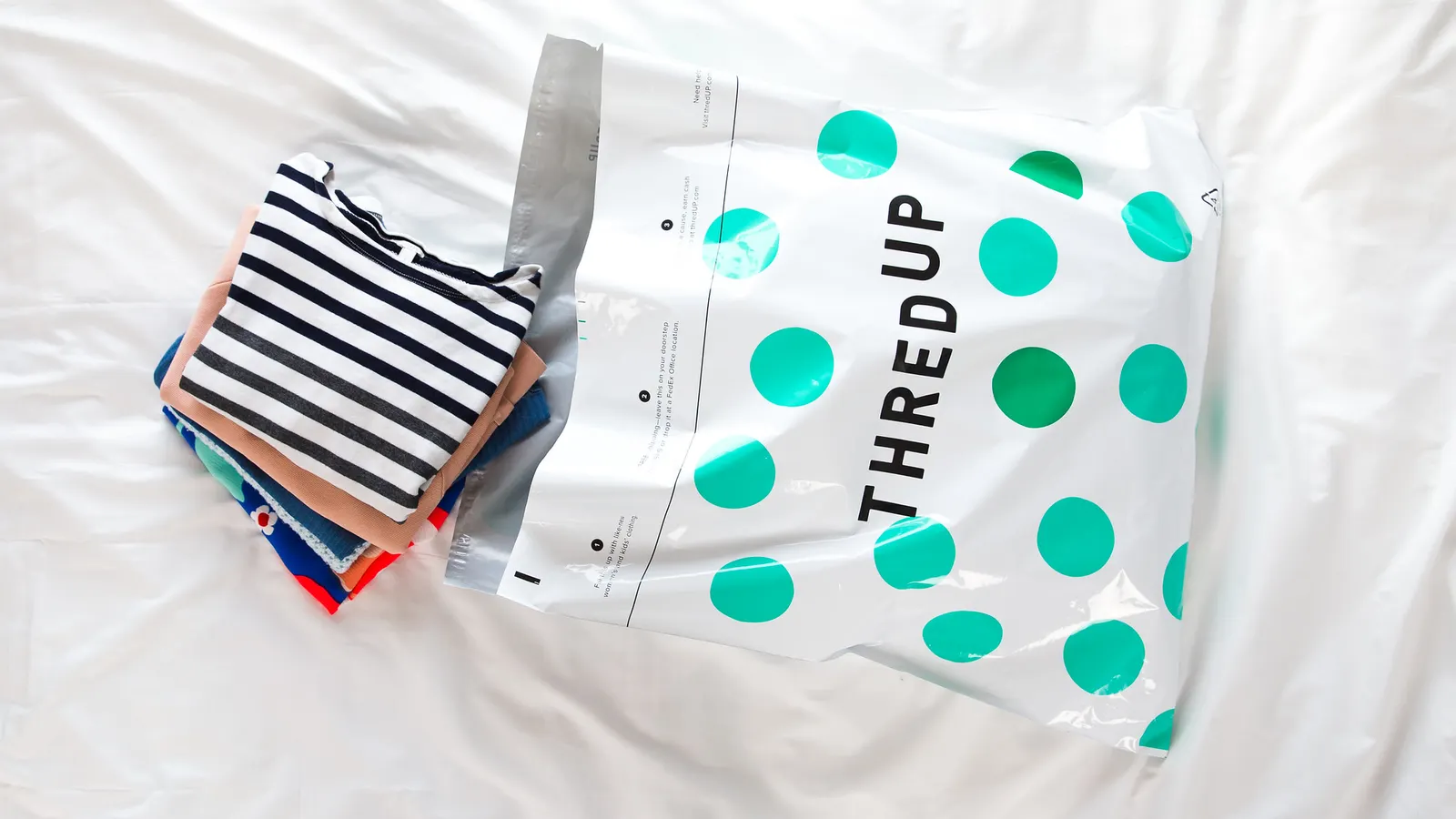
Why it matters: ThredUp’s performance signals the resale sector’s resilience and its sensitivity to consumer spending shifts, while Cohen’s bid highlights the operational and financial complexities of major platform consolidation in recommerce.
Context: ThredUp’s growth occurs amid a broader, but maturing, secondhand market expansion. Cohen’s move follows a pattern of disruptive, publicity-driven maneuvers in retail, but faces heightened scrutiny on deal mechanics.
"GameStop proposed a $56 billion acquisition of eBay. The retailer’s current bid would consist of about $9.4 billion of its own cash and liquid investments, in addition to potentially $20 billion of financing through TD Securities." — RETAILDIVE
Commentary: ThredUp’s metrics show scale growth, but the widening loss and noted consumer pressure indicate the capital-intensive operational model remains precarious. Cohen’s eBay play, while theatrically executed, exposes a critical gap: a $20 billion financing contingency and a dilutive share issuance proposal create immediate execution risk, making it a case study in how market spectacle can outpace transactional substance.
Date: Fri, 08 May 2026 12:22:00 -0400
URL: https://www.retaildive.com/news/ryan-cohen-gamestop-ebay-interview-thredup-q1-earnings/819613/
AI Sentiment Score: Negative (62%)
AI Credibility Score: 10.0/10 — High
Scores and text generated by AI analysis of the source article indicated.
Barefaced, The Sociable Society and Digitas are among the 2026 Future Leader Awards (Glossy.Co)
Summary: The 2026 Future Leader Awards highlight a shift toward measurable, data-driven growth models in fashion and adjacent industries, with winners recognized for turning tactical roles into strategic engines. Jordan Harper of Barefaced exemplifies e-commerce growth through clinical expertise and high retention, achieving a 90% customer return rate. Kiana Davis and Lexi Keller of The Sociable Society demonstrate creator economy scalability through trust-driven content and disciplined sales operations, while Ameera Masud of Digitas shows how cultural fluency translates into sustained brand engagement.

Why it matters: These awards signal operational benchmarks for scaling direct-to-consumer brands, managing creator partnerships, and executing social strategy, directly affecting vendor selection, talent pipelines, and performance metrics.
Context: The awards reflect a broader industry move away from pure marketing spend toward loyalty-driven, expertise-based growth, with new categories like Rising AI Leader and Rising Creator formalizing emerging roles.
"Jordan Harper earned Rising E-commerce Leader for turning Barefaced from a garage startup into an eight-figure skincare brand in five years. Built on her “Less but Better” philosophy, the company has sold more than 2 million units while achieving a 90% customer return rate and more than 190,000 active subscribers." — GLOSSY.CO
Commentary: Harper’s model pressures incumbent beauty brands to re-evaluate customer acquisition costs and product development cycles, favoring clinical validation over influencer hype. The Sociable Society’s dual recognition indicates a maturation of the creator partnership market, where sales operations and audience trust are now parallel growth levers. Digitas’s work suggests agencies are building internal tooling to systematize cultural trend analysis, potentially reducing reliance on external trend reports.
Date: Tue, 05 May 2026 16:30:21 +0000
URL: https://www.glossy.co/announcement/awards/barefaced-the-sociable-society-and-digitas-are-among-the-2026-future-leader-awards/
AI Sentiment Score: Positive (60%)
AI Credibility Score: 10.0/10 — High
Scores and text generated by AI analysis of the source article indicated.
Bluemercury is taking a hands-on approach to staying ahead in a competitive beauty retail environment (Glossy.Co)
Summary: Bluemercury, the Macy’s-owned specialty beauty retailer, is doubling down on a high-touch, curated retail model to differentiate itself in a crowded market. It prioritizes brands with limited distribution to secure dedicated in-store support and education from founders, betting that knowledgeable associates and exclusive product access could drive loyalty. This contrasts with the mass-distribution, discount-driven, and AI-powered personalization strategies of competitors like Amazon and TikTok Shop. The retailer is also rolling out a new store format designed for events to further cement its experiential edge.

Why it matters: For brands and retailers, this signals a strategic bifurcation in beauty retail: the high-touch, service-intensive path versus the algorithmic, mass-scale path, each demanding different operational commitments from brand partners.
Context: The beauty retail landscape is fragmenting, with traditional brick-and-mortar retailers like Ulta and Macy’s investing in experiential redesigns while digital platforms leverage AI and creator economies. Bluemercury’s model represents a deliberate counter-trend to pure-play e-commerce scale.
"Exclusivity isn’t a must for brands hoping to enter the specialty beauty retailer Bluemercury. But it doesn’t hurt either. “I would say we look more for brands that have very limited distribution." — GLOSSY.CO
Commentary: Bluemercury is explicitly trading scale for operational intimacy, creating a vendor selection filter that prioritizes brands with the human capital to support in-store activation. This imposes a direct labor and opportunity cost on brand partners, who must weigh exclusivity’s benefits against broader market reach. For competing retailers, it validates a service-led model but also highlights its inherent scalability limits. The practical consequence is a clearer segmentation of the brand pipeline: some will optimize for Bluemercury’s high-service retail, while others will architect for Walmart’s mass-prestige or Amazon’s algorithmic discovery.
Date: Wed, 06 May 2026 04:05:00 +0000
URL: https://www.glossy.co/beauty/bluemercury-is-taking-a-hands-on-approach-to-staying-ahead-in-a-competitive-beauty-retail-environment/
AI Sentiment Score: Positive (42%)
AI Credibility Score: 10.0/10 — High
Scores and text generated by AI analysis of the source article indicated.
Mattel CEO: ‘Consumers are buying toys’ (Retaildive)
Summary: Mattel reported Q1 net sales of $862 million, a 4% year-over-year increase, and swung to a net income of $61 million. The company closed its acquisition of Mattel163 Mobile Game Studio and is launching its first self-published mobile games, while also executing a $200 million share repurchase. CEO Ynon Kreiz stated the toy industry is healthy and consumer demand for toys remains strong.

Why it matters: For FashionTech, Mattel’s pivot into digital games and brand-driven content signals a shift in how traditional physical goods manufacturers are leveraging IP to create new revenue streams and customer acquisition channels, affecting licensing and digital production pipelines.
Context: Mattel has undergone recent executive restructuring, adding roles like chief global brand officer and bringing in talent from Netflix, indicating a strategic focus on brand expansion beyond physical toys into digital and experiential media.
"Dive Brief: – Mattel says it is seeing momentum in its business, as the company reported Q1 net sales increased 4% year over year to $862 million, according to a Wednesday press." — RETAILDIVE
Commentary: Mattel’s acquisition and self-publishing moves represent a direct operational shift from pure licensing to in-house digital game development, which changes time to market and alters vendor relationships. This vertical integration of digital content creation, paired with persistent physical sales strength, suggests a hybrid model where IP is the core asset, and manufacturing becomes one output among many. The executive hires from streaming platforms point to a deliberate strategy to manage brands as multimedia franchises, not just product lines.
Date: Tue, 05 May 2026 11:44:00 -0400
URL: https://www.retaildive.com/news/mattel-ceo-consumers-buying-toys-q1-earnings/819264/
AI Sentiment Score: Negative (50%)
AI Credibility Score: 10.0/10 — High
Scores and text generated by AI analysis of the source article indicated.
Bob’s Q1 growth defies wider sector trends (Retaildive)
Summary: Bob’s Discount Furniture posted an 8.5% Q1 revenue increase to $578M, driven by new store openings and 1.2% comp growth, defying a sluggish home sector. Net income fell 81% to $2.5M due to new store expenses, marketing spend, and a one-time termination fee. The company used IPO proceeds to pay off a $350M term loan, incurring higher interest expenses. Management highlighted strong performance among higher-income households ($100k-$150k) trading up, but faces tough upcoming comps and cost pressures.
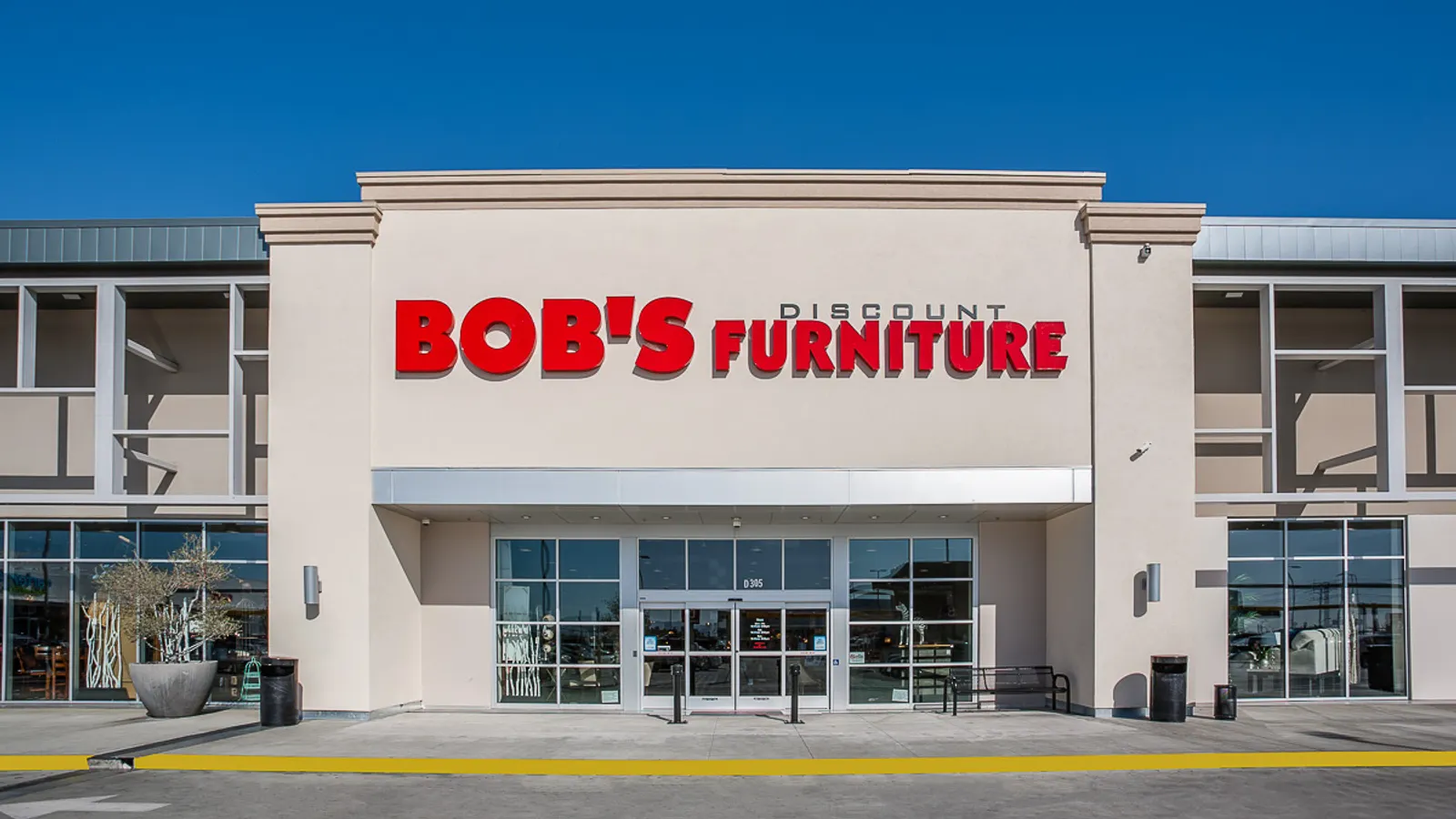
Why it matters: For local retail operators and vendors, Bob’s expansion and market share gains demonstrate a viable, aggressive growth playbook in a soft market, while its financial re-engineering and cost structure reveal the trade-offs required to fund that growth.
Context: The U.S. home sector is grappling with a slow housing market and reduced discretionary spending, making positive comps and revenue growth against the trend notable.
"Dive Brief: – Bob’s Discount Furniture posted a first quarter net revenue increase of 8.5% to $578 million. The retailer attributed results to its five new store openings and strong comps, which." — RETAILDIVE
Commentary: Bob’s operational playbook—opening stores and capturing higher-income trade-up—is working, but the financial engineering (IPO, loan paydown) has created near-term profit headwinds. For local competitors and supply chain partners, the commitment to 20 new stores in 2026 signals continued pressure on regional market share and logistics capacity, even as input and transport costs rise. The reaffirmed guidance suggests management sees these cost pressures as manageable within the current expansion model.
Date: Fri, 08 May 2026 12:02:00 -0400
URL: https://www.retaildive.com/news/bobs-first-quarter-earnings-defies-home-sector-trends/819679/
AI Sentiment Score: Positive (57%)
AI Credibility Score: 10.0/10 — High
Scores and text generated by AI analysis of the source article indicated.
As Gen Z embraces Coach, Tapestry raises expectations (Retaildive)
Summary: Tapestry’s Q3 results show Coach driving the portfolio, with sales up 31% to $1.7B and gross margin expanding to 76.9%. The brand added 800k new Gen Z customers, influencing broader demographics and fueling a raised full-year revenue outlook to ~$7.95B. Kate Spade sales fell 10%, but the company’s performance and trajectory are now dominated by Coach.

Why it matters: For fashion operators, this signals a shift in portfolio strategy from multi-brand acquisition to single-brand dominance, with concrete implications for resource allocation, vendor negotiations, and market positioning.
Context: Tapestry’s performance validates a pivot away from its previous ‘house of brands’ ambition, notably after its failed attempt to acquire Capri Holdings, and toward a focused, margin-expanding playbook built on Coach’s generational appeal and category expansion.
"Dive Brief: – The Coach brand took market share, expanded margins and grew sales in Q3, thanks to enthusiasm among Gen Z consumers, executives from owner Tapestry told analysts Thursday. – Excluding." — RETAILDIVE
Commentary: The operational consequence is a reallocation of capital and creative focus toward sneakers and footwear—categories where Coach has low market share but high margin potential—while Kate Spade becomes a fix-it project rather than a growth engine. For suppliers and competitors, this concentration means Coach’s sourcing scale and marketing spend will intensify, raising the stakes in the accessible luxury segment.
Date: Thu, 07 May 2026 11:49:00 -0400
URL: https://www.retaildive.com/news/gen-z-embraces-coach-tapestry-raises-expectations-kate-spade-slump/819564/
AI Sentiment Score: Positive (66%)
AI Credibility Score: 10.0/10 — High
Scores and text generated by AI analysis of the source article indicated.
REI reports flat sales, narrower losses as store workers call for a boycott (Retaildive)
Summary: <figure><div><img src="https://imgproxy.divecdn.com/oG76SH0icIr4ycShT3IDjYj6uJR65i2oZKuY0ggFTxQ/g:nowe:0:48/c:640:361/rs:fill:1600:900:1/Z3M6Ly9kaXZlc2l0ZS1zdG9yYWdlL2RpdmVpbWFnZS9iZW5kX3JldGFpbF8tXzcuanBlZw==.webp" /></div></figure><p>The REI Union said a boycott of the retailer’s anniversary sale is the only way to be heard, as contract talks ended last week without an agreement.</p> Labor action impacting core sales periods suggests immediate risk to planned revenue streams and operational continuity.

Why it matters: Labor action impacting core sales periods suggests immediate risk to planned revenue streams and operational continuity.
Context: Union-led boycott targeting anniversary sales indicates labor disputes are now a direct, actionable constraint on retail revenue forecasting.
"<figure><div><img src="https://imgproxy.divecdn.com/oG76SH0icIr4ycShT3IDjYj6uJR65i2oZKuY0ggFTxQ/g:nowe:0:48/c:640:361/rs:fill:1600:900:1/Z3M6Ly9kaXZlc2l0ZS1zdG9yYWdlL2RpdmVpbWFnZS9iZW5kX3JldGFpbF8tXzcuanBlZw==.webp" /></div></figure><p>The REI Union said a boycott of the retailer’s anniversary sale is the only way to be heard, as contract talks ended last week without an agreement.</p>." — RETAILDIVE
Commentary: The signal is still worth tracking, but the current extraction path did not yield enough body text for a fuller analytical read. The immediate implication is operational rather than speculative: watch how this changes budgets, workflows, or risk assumptions over the next cycle.
Date: Tue, 05 May 2026 12:26:00 -0400
URL: https://www.retaildive.com/news/rei-coop-flat-sales-narrower-losses-store-union-workers-anniversary-sale-boycott/819310/
AI Sentiment Score: Negative (75%)
AI Credibility Score: 10.0/10 — High
Scores and text generated by AI analysis of the source article indicated.
US agentic commerce revenue forecast to reach $1 trillion by 2030 (Retaildive)
Summary: <figure><div><img src="https://imgproxy.divecdn.com/T9y-CzEZGmwmsdNy16VJ02enkbvwzvIImIkQEXAxL8A/g:ce/rs:fill:1600:900:1/Z3M6Ly9kaXZlc2l0ZS1zdG9yYWdlL2RpdmVpbWFnZS9HZXR0eUltYWdlcy0yMTgzODIzMDcyLmpwZw==.webp" /></div></figure><p>But even as the technology grows in popularity, the physical shopping experience will remain important, per a new report.</p> The $1T agentic commerce forecast suggests digital dominance, but the persistent emphasis on physical experience implies necessary integration points for in-store tech.

Why it matters: The $1T agentic commerce forecast suggests digital dominance, but the persistent emphasis on physical experience implies necessary integration points for in-store tech.
Context: Focus on operationalizing the physical/digital handoff: RFID deployment, smart fitting rooms, and localized fulfillment tooling are key near-term vectors.
"<figure><div><img src="https://imgproxy.divecdn.com/T9y-CzEZGmwmsdNy16VJ02enkbvwzvIImIkQEXAxL8A/g:ce/rs:fill:1600:900:1/Z3M6Ly9kaXZlc2l0ZS1zdG9yYWdlL2RpdmVpbWFnZS9HZXR0eUltYWdlcy0yMTgzODIzMDcyLmpwZw==.webp" /></div></figure><p>But even as the technology grows in popularity, the physical shopping experience will remain important, per a new report.</p>." — RETAILDIVE
Commentary: The signal is still worth tracking, but the current extraction path did not yield enough body text for a fuller analytical read. The immediate implication is operational rather than speculative: watch how this changes budgets, workflows, or risk assumptions over the next cycle.
Date: Tue, 05 May 2026 12:26:00 -0400
URL: https://www.retaildive.com/news/agentic-commerce-us-one-trillion-2030/818936/
AI Sentiment Score: Negative (50%)
AI Credibility Score: 10.0/10 — High
Scores and text generated by AI analysis of the source article indicated.
Post ID: d6d514b2