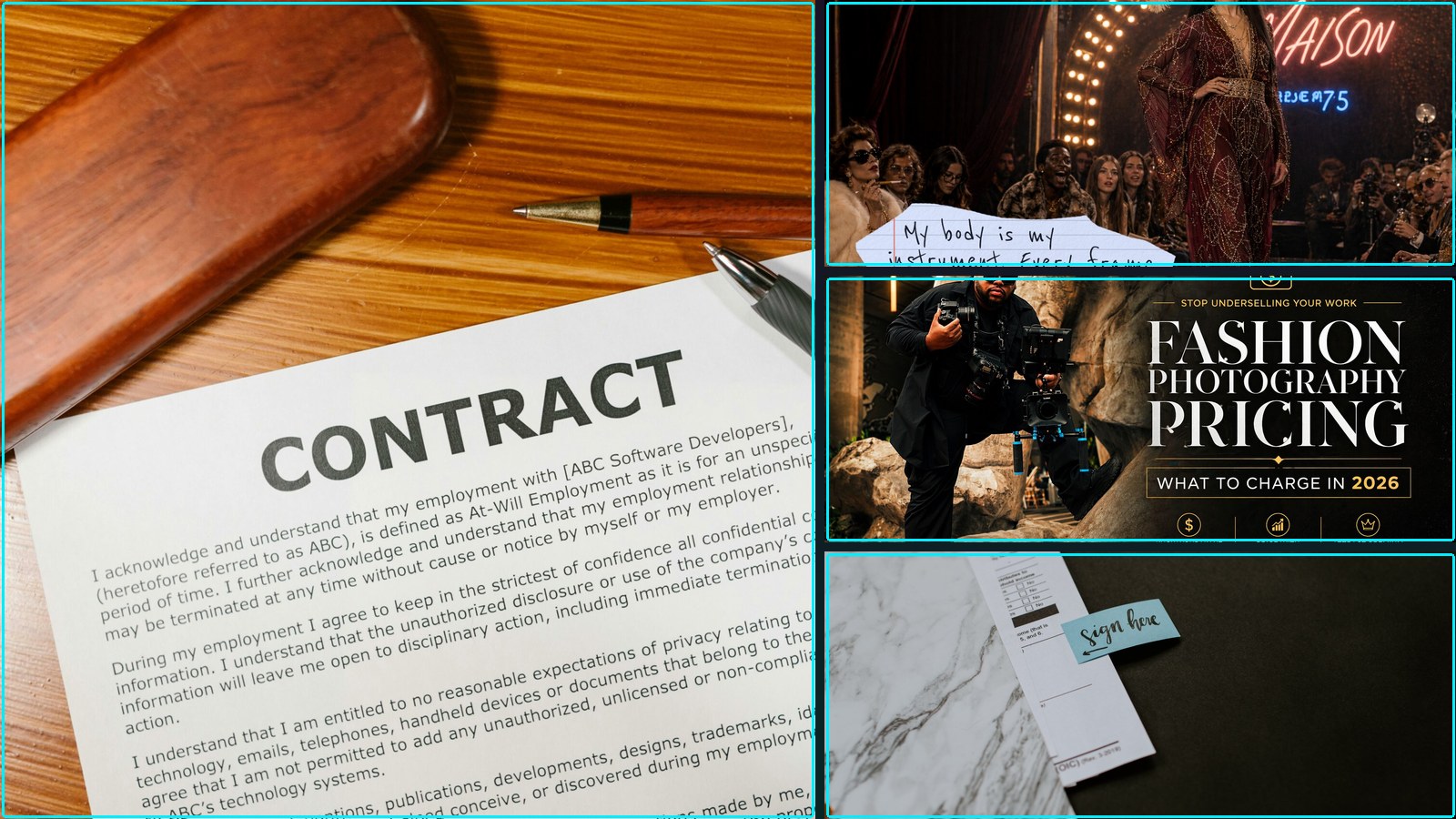
Business, Legal, and Rights Management for Photographers
Fashion Photography Pricing: What to Charge in 2026 (Framedbydavinci)
Summary: A 2026 pricing guide from Framedbydavinci outlines a structured, rights-based fee model for editorial fashion photography. It codifies a shift from simple day rates to a multi-component pricing architecture separating creative fees from usage licensing, post-production, and pre-production. The guide provides specific percentage markups for different usage categories and emphasizes billing for all labor, including pre- and post-production.

Why it matters: This formalizes a professional pricing standard that, if adopted, directly impacts photographer income, client commissioning budgets, and the valuation of creative work across the industry supply chain.
Context: The industry has long grappled with fee compression and the undervaluation of licensing, with photographers often pressured to bundle all services for a flat day rate.
"Day rates for fashion photography range from $500 to $3,000+, depending on your experience, market, and usage. … – Beginner day rates typically start at $300–$600; experienced photographers charge $1,500–$3,000+ – Usage." — FRAMEDBYDAVINCI
Commentary: This framework, if widely referenced, will harden cost structures for brands and publications, forcing budget reallocations from marketing or production pools directly into licensing line items. It empowers experienced photographers to defend higher quotes but may widen the earnings gap between established names and newcomers who lack the leverage to enforce separate licensing. For studios and agents, it provides a concrete negotiation tool, shifting the client conversation from hourly labor to asset value.
Date: April 22, 2026 12:00 AM ET
URL: https://www.framedbydavinci.com/fashion-photography-pricing-guide/
AI Sentiment Score: Negative (50%)
AI Credibility Score: 10.0/10 — High
Scores and text generated by AI analysis of the source article indicated.
A Photographer’s Guide to Permission Forms – Framer (Wirestock.Framer.Website)
Summary: A Wirestock guide clarifies the legal and operational distinctions between commercial and editorial use of photography, specifically the necessity of model releases. It outlines that commercial use—for advertising, promotion, or direct monetization—requires signed releases for recognizable subjects and property, while editorial use in news or educational contexts typically does not. The piece emphasizes that the determining factor is the intended use case, not the content itself, and advises photographers to secure releases if any future commercial licensing is a possibility.
Why it matters: For photographers, agencies, and publishers, misclassifying use can expose them to significant liability and invalidate licensing agreements, directly impacting revenue and operational security.
Context: The line between editorial and commercial licensing is a foundational, yet frequently misunderstood, contract law issue in photography, directly governing workflow, archival value, and secondary market potential.
"For instance, work that is going to appear in newspapers, educational books, and consumer or trade publications does not need a model release because it is deemed for editorial use—sometimes even referred to as ‘fair use’." — WIRESTOCK.FRAMER.WEBSITE
Commentary: The guide’s blunt ‘editorial equals no release’ framing, while legally sound for pure journalism, understates the risk for fashion editorial, where images often migrate to brand campaigns or archival re-licensing. This creates a pipeline vulnerability: photographers shooting ‘editorial’ without releases are locking those assets out of future commercial portfolios, a direct economic loss. Platforms like Wirestock automating release management signal a shift toward treating rights clearance as a prerequisite for asset creation, not a post-production chore.
Date: April 27, 2026 12:00 AM ET
URL: https://wirestock.framer.website/blog/a-photographer-s-guide-to-permission-forms
AI Sentiment Score: Negative (71%)
AI Credibility Score: 10.0/10 — High
Scores and text generated by AI analysis of the source article indicated.
Magazine licensing: a beginner’s guide – InPublishing (Inpublishing.Co.Uk)
Summary: A guide for magazine publishers outlines the commercial and operational prerequisites for international licensing deals, framing it as a strategic revenue stream. It emphasizes upfront rights clearance, particularly for commissioned photography, as a critical gatekeeper to viability. The process requires evaluating market fit, finding experienced licensees, and navigating complex legal agreements where payment terms and IP ownership are paramount.
Why it matters: For editorial fashion photography, licensing represents a significant secondary revenue channel, but its feasibility is directly tied to the upfront structuring of photographer contracts and image rights.
Context: As print media seeks diversified income, international licensing has grown, but it exposes legacy rights management flaws, especially in fashion where commissioned work is the core asset.
"So now… the big question. Is your publication suitable for licensing? For starters, ask yourself the following: * is the subject matter likely to be compelling to sufficient readers in another country?" — INPUBLISHING.CO.UK
Commentary: This explicitly shifts bargaining power in photographer negotiations; publishers seeking future licensing must push for broader rights grants upfront, potentially altering fee structures and contract templates. The 80% clearance threshold mentioned creates a concrete operational target for art directors and production managers, turning a legal concern into a pipeline KPI. Failure to secure these rights doesn’t just kill a single deal; it systematically devalues the archive as a licensable asset.
Date: May 07, 2026 12:00 AM ET
URL: https://www.inpublishing.co.uk/articles/magazine-licensing-a-beginners-guide-2199
AI Sentiment Score: Negative (50%)
AI Credibility Score: 7.0/10 — Medium
Scores and text generated by AI analysis of the source article indicated.
Image Usage Rights on Social Media (2026 Guide) – InfluencerDB (Influencerdb.Net)
Summary: InfluencerDB’s 2026 guide formalizes a granular, menu-driven framework for licensing editorial fashion photography across social channels, separating organic from paid media rights and pricing them accordingly. It shifts the industry from vague ‘usage’ agreements to structured, auditable contracts defined by channel, duration, territory, and media type, with explicit clauses for edits and derivatives. The guide operationalizes rights management as a core pre-publication workflow, moving it from legal back-office function to frontline production concern.

Why it matters: For photographers, studios, and brands, this systematization commoditizes image rights, creating new pricing tiers and audit liabilities while demanding integrated metadata tracking from shoot to final ad spend.
Context: This reflects the maturation of influencer and creator content into a legitimate, high-stakes media buying channel, where repurposed organic posts for paid promotion have triggered rights disputes and indemnification claims.
"Also, separate “permission to post” from “permission to promote” because boosting a post or running it as an ad changes the use case and the price." — INFLUENCERDB.NET
Commentary: The guide’s channel-based pricing directly impacts photographer and creator fees, creating a bifurcated market where ‘paid media’ rights command a premium and require explicit negotiation. This forces brands and agencies to implement asset-tracking systems that link usage metadata to media plans, turning casual reposting into a formal licensing event with financial and legal consequences.
Date: April 26, 2026 12:00 AM ET
URL: https://influencerdb.net/influencer-compliance/image-usage-rights/
AI Sentiment Score: Positive (50%)
AI Credibility Score: 10.0/10 — High
Scores and text generated by AI analysis of the source article indicated.
How to Brief a Commercial Photographer and Why Most … (Chrisfrarastudios)
Summary: A commercial photography studio outlines a framework for effective creative briefs, positioning the brief as a diagnostic tool for client-photographer alignment and a production blueprint. The piece argues for specificity over length, detailing six core components: brand essence, target customer, shot list, mood board, explicit exclusions, and timeline/usage. It frames the brief as a mutual filter that clarifies project scope and fit before commitment.

Why it matters: For commissioning editors, art buyers, and brand creatives, this reframes briefing from an administrative task to a strategic process that directly impacts project economics, creative output, and vendor selection efficiency.
Context: This emerges amid industry pressure to streamline production and reduce costly misalignment, as clients seek greater predictability in visual output and photographers defend against scope creep and unprofitable engagements.
"Your brief isn’t just a document you hand over so we know what to shoot. It’s also one of the best tools you have for figuring out whether a photographer is actually." — CHRISFRARASTUDIOS
Commentary: The studio’s public framing of the brief as a mutual vetting tool signals a shift in commercial power dynamics; it professionalizes the pre-production phase, forcing clients to crystallize strategy and allowing photographers to qualify leads more effectively. This could pressure less structured studios to adopt similar rigor or risk being sidelined for larger, more systematic projects.
Date: April 29, 2026 12:00 AM ET
URL: https://www.chrisfrarastudios.com/blog/how-to-brief-a-commercial-photographer
AI Sentiment Score: Negative (75%)
AI Credibility Score: 10.0/10 — High
Scores and text generated by AI analysis of the source article indicated.
Sherri Hill Files Federal Lawsuit Alleging Unauthorized Use of Copyrighted Images by Online Retailers (Morningstar)
Summary: Sherri Hill, Inc. has initiated federal copyright litigation against the operators of KissProm.com and SheIsMe.com, alleging unauthorized use and alteration of its copyrighted marketing imagery to sell formal dresses. The suit, filed in the Southern District of New York, targets the core promotional assets of the brand—its registered photographs and design elements—as deployed on competing e-commerce platforms. This action moves beyond simple takedown notices to seek injunctive relief and damages, signaling a more aggressive enforcement posture from a formalwear designer.
Why it matters: For editorial fashion photographers, stylists, and their commissioning clients, this case underscores the escalating commercial value of campaign imagery as direct market collateral and the legal risks for studios and post-production teams when their work is repurposed without clearance.
Context: This lawsuit fits a growing pattern of fashion brands leveraging copyright, rather than just trademark, to police online retail channels, treating lookbook and campaign photography as protected assets integral to brand equity and sales conversion.
"NEW YORK, April 27, 2026 /PRNewswire/ — Sherri Hill, Inc., a designer and marketer of formalwear, has filed a lawsuit in the United States District Court for the Southern District of New." — MORNINGSTAR
Commentary: The legal strategy here explicitly ties image copyright to direct sales interference, which could recalibrate licensing negotiations for editorial fashion work, pushing for broader usage restrictions and higher fees. For production studios, it reinforces the need for meticulous asset tracking and clear chain-of-title documentation to support clients in future enforcement actions. The inclusion of claims for alteration of images and removal of copyright management information suggests a focus on digital integrity, potentially implicating post-production vendors in downstream infringement disputes.
Date: April 27, 2026 12:00 AM ET
URL: https://www.morningstar.com/news/pr-newswire/20260427ny44289/sherri-hill-files-federal-lawsuit-alleging-unauthorized-use-of-copyrighted-images-by-online-retailers
AI Sentiment Score: Positive (66%)
AI Credibility Score: 10.0/10 — High
Scores and text generated by AI analysis of the source article indicated.
Photographers make your photos are protected. (Youtube)
Summary: Photographers should make sure they have a clear contract. Because sometimes businesses like to take advantage of the situation and use your photos for something else than what was contracted.
Why it matters: Contractual scope creep remains a primary operational risk. Vetting usage rights beyond initial campaign scope is critical for IP retention.
Context: Focus on defining granular usage parameters—digital, print, territory, and duration—within commissioning agreements.
"Photographers should make sure they have a clear contract. Because sometimes businesses like to take advantage of the situation and use your photos for something else than what was contracted." — YOUTUBE
Commentary: The signal is still worth tracking, but the current extraction path did not yield enough body text for a fuller analytical read. The immediate implication is operational rather than speculative: watch how this changes budgets, workflows, or risk assumptions over the next cycle.
Date: April 30, 2026 12:00 AM ET
URL: https://www.youtube.com/watch?v=83XNOB0CiMA
AI Sentiment Score: Negative (50%)
AI Credibility Score: 10.0/10 — High
Scores and text generated by AI analysis of the source article indicated.
IPR, MET Gala & Raja Ravi Varma: Fashion, Art & Copyright Explained (Youtube)
Summary: A legal analysis of fashion event photography clarifies the complex rights landscape governing celebrity images. Outfits loaned for events like the Met Gala come with strict usage limitations, while photographs taken at these events trigger separate image and licensing rights. Brand endorsement agreements explicitly dictate how resulting imagery can be used across platforms and for what duration. This creates a layered web of copyright, trademark, and contractual controls over the final visual assets.
Why it matters: For photographers, stylists, publications, and brands, this defines the commercial viability and legal risk of editorial fashion imagery captured at high-profile events.
Context: The professionalization of celebrity fashion as a marketing channel has turned red-carpet and gala moments into tightly controlled intellectual property campaigns, moving beyond simple publicity.
"Um as I said you know a lot of outfits uh at the medgala are you know loaned by {ts:1208} designers. So in such case uh celebrities receive very limited rights to." — YOUTUBE
Commentary: This contractual granularity turns a single photograph into a multi-party rights clearance puzzle, increasing pre-production legal overhead and post-production licensing friction. It advantages large brands and agencies with in-house legal teams over independent photographers and smaller publications. The operational consequence is a more cautious, pre-cleared editorial environment where spontaneous or critical photography is economically disincentivized.
Date: May 06, 2026 12:00 AM ET
URL: https://www.youtube.com/watch?v=w15kbN5mags
AI Sentiment Score: Neutral (33%)
AI Credibility Score: 10.0/10 — High
Scores and text generated by AI analysis of the source article indicated.
Sherri Hill alleges copyright infringement in new lawsuit … (Fashionunited.Uk)
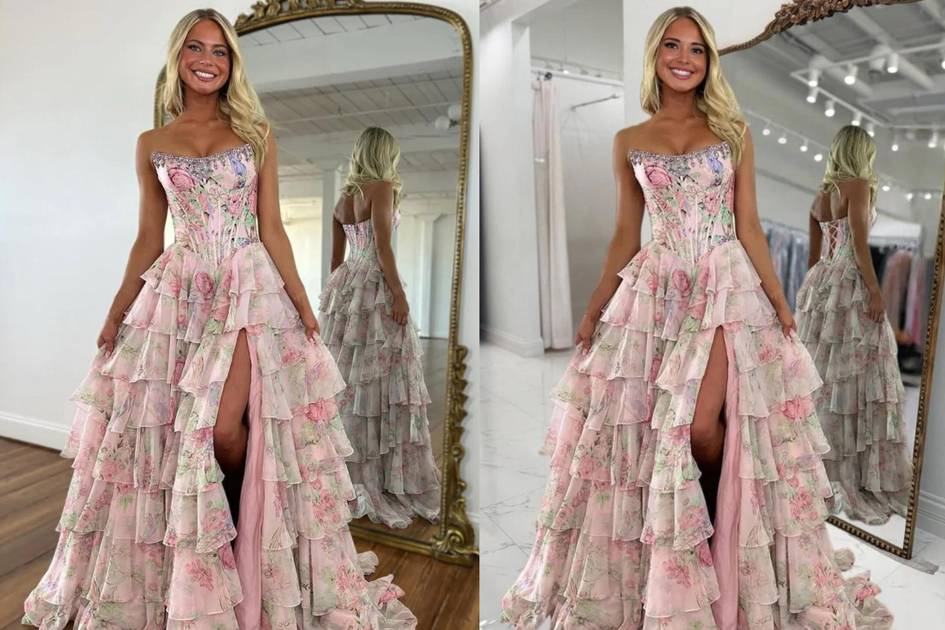
Summary: Prom dress retailer Sherri Hill has filed a copyright infringement lawsuit in the Southern District of New York against the operators of KissProm.com and SheIsMe.com. The complaint alleges unauthorized use and alteration of Sherri Hill’s copyrighted marketing imagery to advertise and sell formal dresses. The suit, handled by Gioconda Law Group, seeks damages and injunctive relief under federal and New York law.
Why it matters: This case signals a more aggressive, portfolio-based enforcement strategy by brands against downstream e-commerce, directly impacting the legal risk for platforms using third-party marketing assets and the valuation of a brand’s copyright catalog.
Context: This follows a pattern of fashion brands leveraging copyright, rather than just trademark, to police online marketplaces, treating their campaign imagery as a protected revenue-generating asset distinct from design patents.
"According to the complaint, brought by Gioconda Law Group PLLC, the images in question are protected under Sherri Hill’s registered copyright portfolio, and have been used in the brand’s marketing and branding initiatives." — FASHIONUNITED.UK
Commentary: The legal move reframes editorial campaign assets from mere marketing cost centers to enforceable IP, compelling in-house counsel to audit image registrations. For e-commerce operators, it raises due diligence costs, requiring verification of image provenance beyond simple supplier claims. This shifts leverage in wholesale relationships, as unauthorized image use becomes a direct litigation vector separate from counterfeit goods claims.
Date: April 28, 2026 12:00 AM ET
URL: https://fashionunited.uk/news/business/sherri-hill-alleges-copyright-infringement-in-new-lawsuit-against-e-commerce-platforms/2026042887692
AI Sentiment Score: Negative (66%)
AI Credibility Score: 10.0/10 — High
Scores and text generated by AI analysis of the source article indicated.
Copyright protection of fashion designs after Mio/konektra (Academic.Oup)
Summary: Published: 30 April 2026 Copyright clarity on design IP post-Mio/konektra signals potential shifts in commissioning risk assessment and asset ownership.
Why it matters: Copyright clarity on design IP post-Mio/konektra signals potential shifts in commissioning risk assessment and asset ownership.
Context: Focus on the operational implications for rights clearance, archival use, and derivative work monetization in editorial pipelines.
[Metadata-only note] The available source data did not expose a direct source quote this cycle.
Commentary: The signal is still worth tracking, but the current extraction path did not yield enough body text for a fuller analytical read. The immediate implication is operational rather than speculative: watch how this changes budgets, workflows, or risk assumptions over the next cycle.
Date: April 30, 2026 12:00 AM ET
URL: https://academic.oup.com/jiplp/advance-article/doi/10.1093/jiplp/jpag049/8665720
AI Sentiment Score: Negative (66%)
AI Credibility Score: 10.0/10 — High
Scores and text generated by AI analysis of the source article indicated.
Happ for Models – Likeness Rights, Usage Licensing & Image … (Happ.Network)
Summary: Happ for Models launches a platform for independent models to granularly control and license their likeness rights, specifying duration, platforms, and compensation for extended use. It introduces standardized contractual terms, including kill fees and renewal structures, directly into the commissioning workflow.
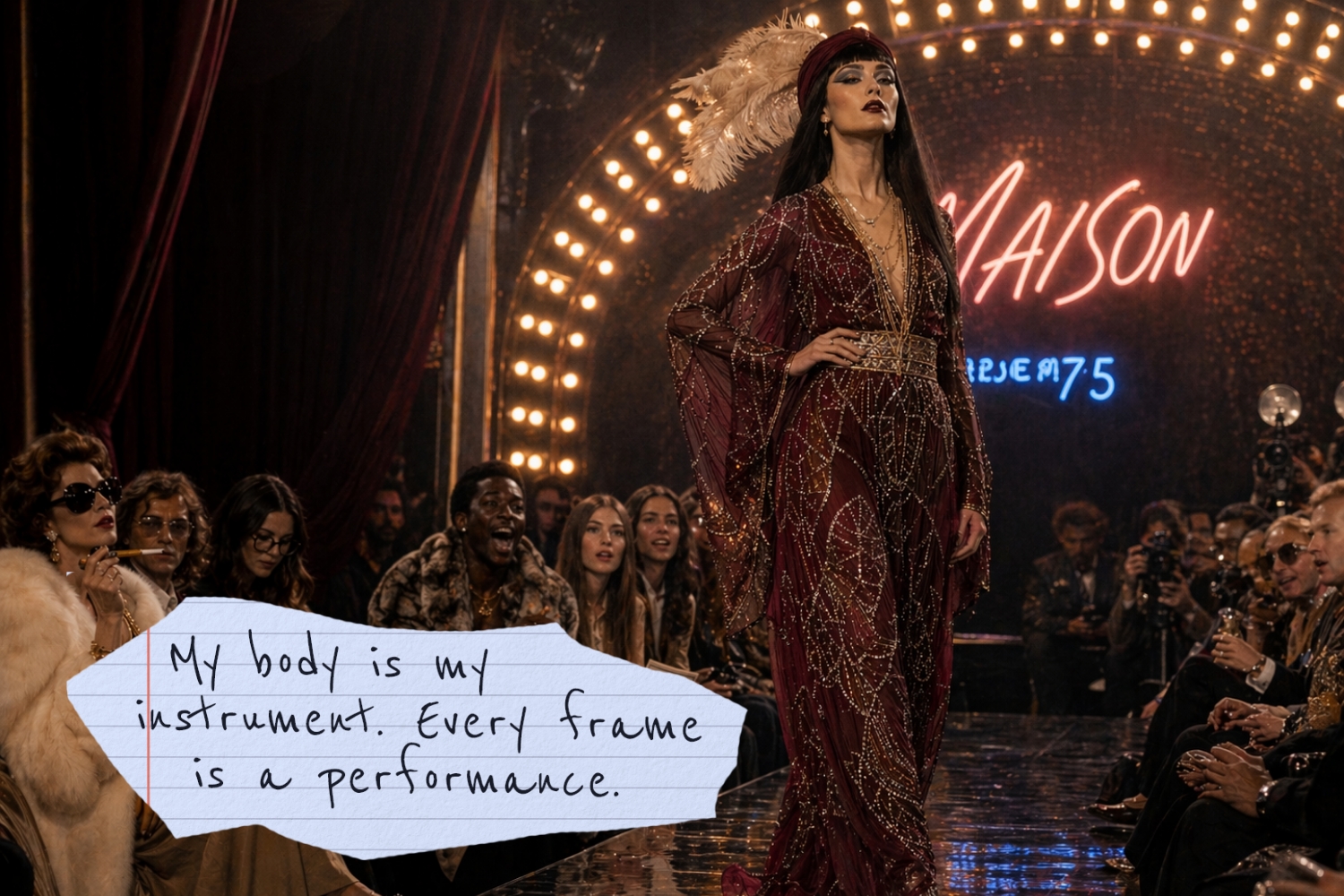
Why it matters: This directly impacts the economics and legal scaffolding of editorial fashion photography by shifting control of image rights from agencies and publishers to the talent, altering negotiation leverage and post-publication revenue streams.
Context: The push for creator-owned platforms and granular digital rights management is accelerating across creative industries, challenging traditional agency and publisher control over secondary usage and archival monetization.
"Define exactly where your likeness appears, for how long, and on which platforms – with built-in compensation for any extended or secondary use." — HAPP.NETWORK
Commentary: This formalizes a shift from blanket releases to parametric licensing, forcing publications and brands to budget for potential renewals upfront and complicating evergreen content strategies. It empowers models but may increase administrative overhead for studios and slow down rapid-turn editorial shoots where post-campaign negotiations were previously minimal.
Date: May 07, 2026 12:00 AM ET
URL: https://happ.network/solutions/happ-for-models/
AI Sentiment Score: Neutral (33%)
AI Credibility Score: 7.0/10 — Medium
Scores and text generated by AI analysis of the source article indicated.
Shutterstock (NYSE: SSTK) updates on CMA Phase 2 review of Getty Images merger (Stocktitan.Net)
Summary: The UK Competition and Markets Authority (CMA) has issued its final report for its Phase 2 review of the proposed merger between Shutterstock and Getty Images. This regulatory milestone, reported via an SEC Form 8-K filing, moves the transaction closer to a potential conclusion. The filing is dense with forward-looking statements and standard risk disclosures, but the core news is the CMA’s completion of this in-depth antitrust review stage.

Why it matters: The CMA’s Phase 2 decision is a critical gate for the creation of a dominant commercial image licensing entity, which would reshape pricing, contributor terms, and competitive dynamics for editorial and commercial photography markets.
Context: The merger, announced in 2025, would consolidate two of the largest stock and editorial photography archives globally. Phase 2 reviews by the CMA involve a detailed investigation into potential substantial lessening of competition, often resulting in mandated remedies or, in some cases, blocking the deal.
"UNITED STATES SECURITIES AND EXCHANGE COMMISSION WASHINGTON, D.C. 20549 FORM 8-K CURRENT REPORT Pursuant to Section 13 or 15(d) of the Securities Exchange Act of 1934 Date of Report (Date of earliest." — STOCKTITAN.NET
Commentary: The CMA’s final report, not its contents, is the operative event here. For editorial fashion photographers, a combined entity would centralize commissioning and syndication power, likely exerting downward pressure on day rates and limiting outlet diversity. Agencies and post-production vendors must prepare for consolidated client budgets and potentially streamlined, cost-focused creative pipelines. The forward-looking statements in the filing underscore that regulatory approval remains the primary, unresolved risk to the transaction’s completion.
Date: 4 days ago
URL: https://www.stocktitan.net/sec-filings/SSTK/8-k-shutterstock-inc-reports-material-event-4090033c1e91.html
AI Sentiment Score: Negative (50%)
AI Credibility Score: 10.0/10 — High
Scores and text generated by AI analysis of the source article indicated.
Post ID: f7d59d7a