

Industry Deal Reports & Strategy Analysis
"The Biggest Media & Film Deals of April 2026" (Youtube)
Summary: April 2026 saw two significant distribution deals that redefine how legacy content is monetized. Tubi secured non-exclusive Canadian rights to over 600 premium library titles from major studios, including franchises like Jurassic World and John Wick. Separately, the BBC carved out in-flight streaming rights in a multi-year deal with YouTube, which will also host 24-hour live news channels targeting Gen Z.

Why it matters: These deals signal a shift towards hyper-segmented, non-exclusive licensing of exhausted IP, moving value from ownership to targeted distribution access.
Context: As direct-to-consumer streaming plateaus, studios and broadcasters are monetizing back catalogs through fragmented, territory- and platform-specific deals to extract residual value.
"From Tubi’s 600-title Canadian expansion to BBC’s in-flight streaming pivot — April 2026 saw major studios rewrite the rules of content distribution. Here’s a breakdown of the most iconic film and TV." — YOUTUBE
Commentary: The Tubi deal exemplifies the defensive reuse phase of the IP lifecycle: monetizing exhausted assets through low-risk, territory-limited licenses. The BBC’s carve-out for in-flight rights and YouTube’s Gen Z news channels represent a more strategic reinvention, adapting content for specific captive audiences and demographics. Together, they highlight a market moving from exclusive ecosystem control to a mosaic of access points.
Date: May 07, 2026 12:00 AM ET
URL: https://www.youtube.com/watch?v=mdQ8TCLgli8
AI Sentiment Score: Negative (66%)
AI Credibility Score: 10.0/10 — High
Scores and text generated by AI analysis of the source article indicated.
Entertainment Procurement Strategy: How Studios & Streamers … (Vitrina.Ai)
Summary: Vitrina.Ai outlines a systematic procurement strategy for studios and streamers, emphasizing early budget planning, strategic vendor relationships, and rights management to control costs and secure content. The framework treats content, vendors, talent, and technology as distinct procurement categories requiring standardized processes and market intelligence.
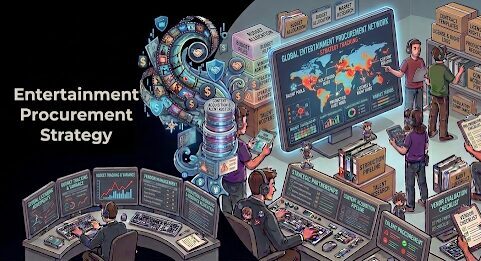
Why it matters: As content budgets tighten and competition for IP intensifies, a disciplined procurement function becomes a critical lever for cost control and supply chain resilience, directly impacting a platform’s ability to scale and differentiate.
Context: This reflects the industry’s shift from a purely creative-driven acquisition model to a more operational, financially disciplined one, mirroring trends in other scaled digital media sectors.
"Entertainment procurement strategy is how studios, streamers, and production companies systematically source vendors, content, and talent — controlling costs, reducing supply chain risk, and maintaining creative quality at scale. … The most." — VITRINA.AI
Commentary: The checklist formalizes a corporate procurement mindset for a historically relationship-driven business, signaling a maturation phase where IP lifecycle management is as much about logistics and expiry windows as creative fit. The ‘no single vendor >30%’ rule is a direct hedge against the production bottlenecks and price inflation seen in post-VFX and animation during the peak streaming investment cycle.
Date: May 06, 2026 12:00 AM ET
URL: https://vitrina.ai/blog/entertainment-procurement-strategy/
AI Sentiment Score: Neutral (33%)
AI Credibility Score: 10.0/10 — High
Scores and text generated by AI analysis of the source article indicated.
The Biggest TV & Film Deals of April 2026 (Youtube)
Summary: Tubi has licensed a non-exclusive, 600-title catalog from major Hollywood studios, including Disney, Sony, NBCU, and Warner Bros., for distribution in Canada. The catalog leverages ‘massively exhausted’ library IPs like Jurassic World and John Wick. This signals a strategic shift in secondary rights markets, where platforms are acquiring premium but non-exclusive back-catalog content to fuel regional expansion.
Why it matters: It demonstrates the accelerating commoditization of mature franchise libraries and the strategic value of non-exclusive, regional rights deals in the streaming ecosystem’s late stage.
Context: As primary streaming windows saturate, platforms are competing for growth in secondary markets and territories, turning to cost-effective library deals rather than exclusive originals.
"From Tubi’s 600-title Canadian expansion to BBC’s in-flight streaming pivot — April 2026 saw major studios rewrite the rules of content distribution. Here’s a breakdown of the most iconic film and TV." — YOUTUBE
Commentary: This is a textbook case of defensive reuse in the IP lifecycle’s exhaustion phase. The deal’s non-exclusive nature and regional focus indicate studios are monetizing amortized assets without cannibalizing primary distribution. For Tubi, it’s a low-cost audience acquisition tool; for the studios, it’s pure margin extraction from libraries whose domestic value has plateaued.
Date: May 05, 2026 12:00 AM ET
URL: https://www.youtube.com/watch?v=H5_XkElMELk
AI Sentiment Score: Positive (40%)
AI Credibility Score: 10.0/10 — High
Scores and text generated by AI analysis of the source article indicated.
Film Rights Negotiations And Hybrid Deal Models 2026 … (Vitrina.Ai)
Summary: The 2026 film rights landscape is defined by a retreat from the SVOD-first acquisition model, forcing distributors to find new financing structures as streamer budgets contract. Theatrical performance has regained its role as a key metric for negotiating downstream licensing fees. Consequently, complex hybrid windowing deals with detailed revenue reporting and recoupment waterfalls have become standard.

Why it matters: This shift rebalances power between studios, distributors, and streamers, directly impacting project financing, profit participation, and the valuation of theatrical release strategies.
Context: This follows the post-2022 streaming correction, where platforms prioritized profitability over subscriber growth at any cost, dismantling the previous ‘all-rights’ deal paradigm.
"First, the SVOD-first acquisition model that dominated 2019-2022 has largely reversed—streamers have reduced acquisition budgets significantly, putting pressure on all-rights distributors who relied on streamer pay-one deals for their MG financing capacity." — VITRINA.AI
Commentary: The reversion signals the exhaustion of the pure subscriber-growth phase. Theatrical data’s renewed leverage validates a defensive reuse of the traditional franchise lifecycle, forcing a more precise, multi-window monetization logic. This requires distributors to operate with studio-level financial and operational discipline, likely consolidating power among a smaller group of vertically integrated players.
Date: May 16, 2026 12:00 AM ET
URL: https://vitrina.ai/blog/film-rights-negotiations-2026-hybrid-models-transparency/
AI Sentiment Score: Positive (60%)
AI Credibility Score: 10.0/10 — High
Scores and text generated by AI analysis of the source article indicated.
Global TV, Film & Media Industry News Roundup, Monday 20 April 2026 (Furtherandbetter.Substack)
Summary: The April 2026 media roundup signals a strategic pivot toward de-risked, scalable IP exploitation across major platforms. This manifests in a book-to-TV adaptation boom for streamers, the extension of legacy action franchises like Rambo, and the live-action revival of animated properties such as FernGully. Concurrently, structural pressures are reshaping institutions, with the BBC’s funding model under existential review and AI policy shifts pushing the industry toward formal licensing frameworks to protect creative assets.
Why it matters: These signals collectively indicate a market-wide retreat to proven intellectual property as a primary risk-mitigation strategy, while simultaneously forcing foundational changes to public media economics and creator rights in the AI era.
Context: This follows a multi-year trend where streaming’s initial content arms race is giving way to a focus on ROI, leveraging pre-existing audience recognition and built-in fan bases to secure subscriber attention in a crowded market.
"Book-to-TV Boom Drives 2026 Streaming Slate – Major platforms including Amazon Prime Video and Apple TV+ double down on proven literary IP to reduce risk and attract global audiences." — FURTHERANDBETTER.SUBSTACK
Commentary: The industry is entering a phase of defensive IP reuse, favoring sequels, prequels, and adaptations over greenfield world-building. This suggests franchise exhaustion rather than reinvention for many properties, though vertical microdramas and AI licensing debates point to parallel, nascent cycles of format and regulatory innovation that could define the next era.
Date: 1 month ago
URL: https://furtherandbetter.substack.com/p/global-tv-film-and-media-industry-34e
AI Sentiment Score: Neutral (33%)
AI Credibility Score: 10.0/10 — High
Scores and text generated by AI analysis of the source article indicated.
Film & TV Briefing: Friday 15 May 2026 (Simkins)
Summary: The week’s industry announcements show a focus on defensive consolidation and legacy IP exploitation, with Byron Allen acquiring BuzzFeed, Disney pushing an Oasis tour documentary to theaters, and a new Beatles feature film entering production. Labor tensions persist with BECTU striking at STV, while major guilds finalize new deals. Paramount defends the Warner Bros. Discovery merger as antitrust scrutiny continues.

Why it matters: The moves signal a market prioritizing safe, known assets over innovation, while structural pressures on labor and consolidation redefine the operating environment.
Context: This follows a prolonged period of streaming recalibration and post-strike contract renegotiations, where established franchises and cost-effective acquisitions are favored.
"Film & TV Briefing: Friday 15 May 2026 Welcome to this week’s round-up of news, commentary and industry announcements that you may have missed from the past week. If you are looking." — SIMKINS
Commentary: Allen’s BuzzFeed acquisition is a classic distressed asset play, converting digital decay into content feedstock. Disney’s Oasis doc and the Beatles film represent the ‘defensive reuse’ stage of the IP lifecycle: mining deep-fan nostalgia for reliable, low-risk returns. The legal defense of the WBD merger underscores that scale, not creativity, is the current boardroom metric for survival.
Date: May 15, 2026 12:00 AM ET
URL: https://www.simkins.com/news/film-tv-briefing-friday-15-may-2026
AI Sentiment Score: Negative (57%)
AI Credibility Score: 10.0/10 — High
Scores and text generated by AI analysis of the source article indicated.
Sony buys ‘Real Housewives,’ ‘The Valley’ production company (Latimes)
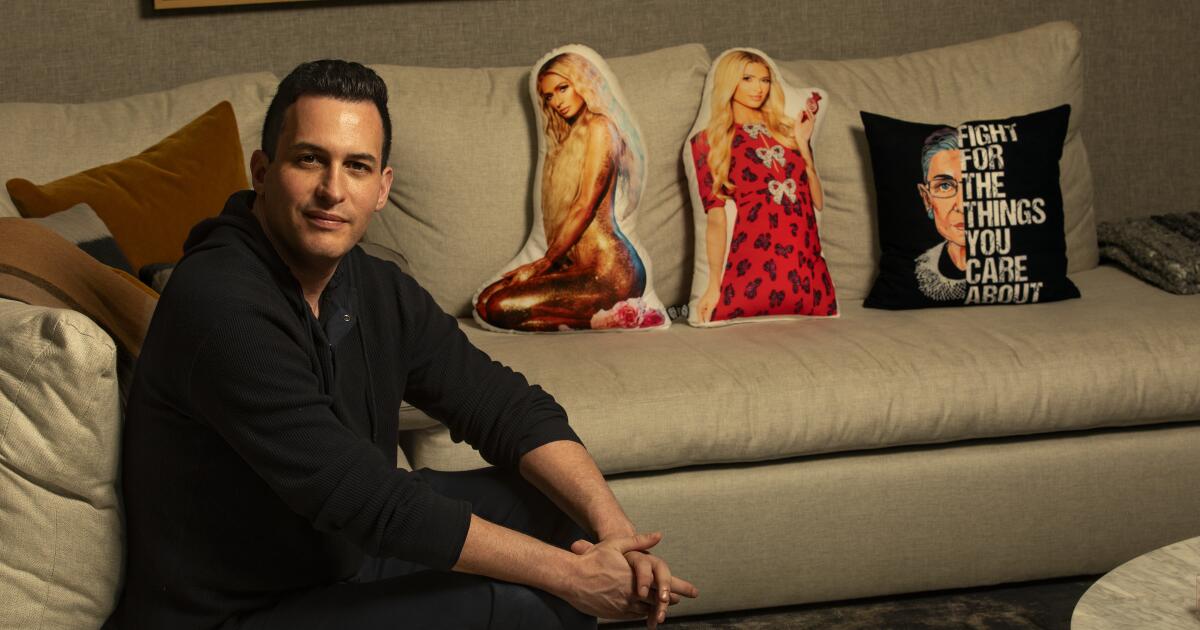
Summary: Sony Pictures Television has acquired a controlling stake in 32 Flavors, the production company behind Bravo’s ‘Real Housewives of Beverly Hills’ and ‘Vanderpump Rules.’ The deal strengthens Sony’s nonfiction portfolio, which already includes ‘American Idol’ and ‘Shark Tank’ formats, but does not transfer ownership of the underlying Bravo IP. The acquisition aligns with CEO Ravi Ahuja’s stated strategy to emphasize franchises and ‘next-gen content,’ even as the company restructures and lays off hundreds.
Why it matters: This signals a strategic pivot for Sony into acquiring proven, low-cost, high-engagement reality TV production houses to build a library of returnable formats, a move that prioritizes predictable cash flow over high-risk scripted development.
Context: Major studios are aggressively consolidating unscripted production assets to secure IP with built-in audiences and multiplatform expansion potential, treating reality formats as durable financial instruments in a volatile market.
"Sony buys ‘Real Housewives,’ ‘The Valley’ production company – Click here to listen to this article – Share via Sony Pictures Television has acquired controlling interest in the reality TV production company." — LATIMES
Commentary: The move is a classic defensive reuse play: Sony is buying the engine, not the car, securing production expertise and format development capacity while leaving the mature, network-owned ‘Housewives’ IP with NBCU. This suggests Sony’s franchise strategy is less about reviving legacy brands and more about institutionalizing the operational playbook for creating new ones, turning 32 Flavors into a factory for the next ‘Vanderpump Rules.’ The layoffs elsewhere in the company underscore this as a reallocation of capital toward assets with clearer monetization logic and lower production risk.
Date: May 18, 2026 12:00 AM ET
URL: https://www.latimes.com/entertainment-arts/business/story/2026-05-18/sony-buys-real-housewives-the-valley-production-company
AI Sentiment Score: Negative (70%)
AI Credibility Score: 10.0/10 — High
Scores and text generated by AI analysis of the source article indicated.
Real Sci-Fi – The Industry (Theindustry.Co)
Summary: Netflix continues its aggressive expansion of flagship IP, greenlighting a new Shawn Levy-directed sci-fi original and expanding the ‘Money Heist’ universe. Concurrently, AMC Global Media is negotiating to license ‘The Walking Dead’ IP to other companies under a co-exclusive model, signaling a shift from defensive hoarding to managed external monetization. These moves occur alongside Netflix’s ‘Adolescence’ winning major BAFTA awards and Focus Features acquiring Sundance title ‘The Incomer’ for international distribution.

Why it matters: It demonstrates the divergent but parallel strategies mature streaming platforms and legacy linear networks are employing to extract value from aging IP portfolios, moving beyond pure in-house production.
Context: The industry is in a phase where the initial streaming land grab for exclusive IP is giving way to more nuanced, revenue-maximizing lifecycle management, including licensing, universe expansion, and award-seeking prestige projects.
"AMC Global Media is close to making a deal that will allow other companies to use their household IP, while keeping a share by being co-exclusive." — THEINDUSTRY.CO
Commentary: AMC’s move on ‘The Walking Dead’ is a textbook signal of franchise exhaustion for its core linear model, transitioning to defensive reuse through licensing—a stark contrast to Netflix’s active, in-house universe-building for ‘Money Heist’. Levy’s shift from a studio tentpole (‘Starfighter’) to a Netflix sci-fi original underscores the platform’s continued investment in A-list talent for genre fare, blending franchise logic with auteur packaging. The BAFTA wins for ‘Adolescence’ highlight Netflix’s dual-track strategy: mining existing IP for volume while funding award-caliber limited series to bolster cultural legitimacy.
Date: May 11, 2026 12:00 AM ET
URL: https://theindustry.co/p/real-sci-fi
AI Sentiment Score: Negative (50%)
AI Credibility Score: 10.0/10 — High
Scores and text generated by AI analysis of the source article indicated.
Production Weekly – Issue 1502 – Thursday, May 14, 2026 / 218 Listings – 53 Pages (Productionweekly)
Summary: Production Weekly’s issue 1502, dated May 14, 2026, lists 218 active or upcoming film and television projects. The listing reveals a production slate dominated by franchise extensions, legacy IP revivals, and serialized continuations, indicating a mature phase of the current content cycle. Key signals include the advanced seasons of long-running network procedurals, the revival of dormant film properties, and new adaptations of recent literary hits.

Why it matters: The composition of a production slate is a leading indicator of studio and network risk tolerance, capital allocation, and strategic bets on audience loyalty versus novelty.
Context: The industry is navigating post-peak streaming investment, with a renewed focus on proven assets and lower-risk sequels amid tighter financial constraints.
"Production Weekly – Issue 1502 – Thursday, May 14, 2026 / 218 Listings – 53 Pages 4 X 4: THE EVENT • 13 GOING ON 30 • 2034 • ABILENE • AGES." — PRODUCTIONWEEKLY
Commentary: The slate demonstrates defensive reuse and lifecycle extension, not reinvention. The high season numbers for broadcast procedurals (e.g., Law & Order 25) represent annuity-style production, while the film revivals (RoboCop, Rockford Files) and belated sequels (Grown Ups 3, Heat 2) signal mining catalog depth for safe theatrical or streaming events. The rush to adapt recent bestsellers (Fourth Wing, Tomorrow…) shows a pipeline still reliant on pre-sold IP, but from a newer asset class. The signal is exhaustion of the core 2010s franchise bank, prompting a scavenger hunt for any property with residual recognition.
Date: May 14, 2026 12:00 AM ET
URL: https://www.productionweekly.com/production-weekly-issue-1502-thursday-may-14-2026-218-listings-53-pages/
AI Sentiment Score: Negative (71%)
AI Credibility Score: 10.0/10 — High
Scores and text generated by AI analysis of the source article indicated.
Film Highlights News Roundup (May 10, 2026) (Filmhighlights.Substack)
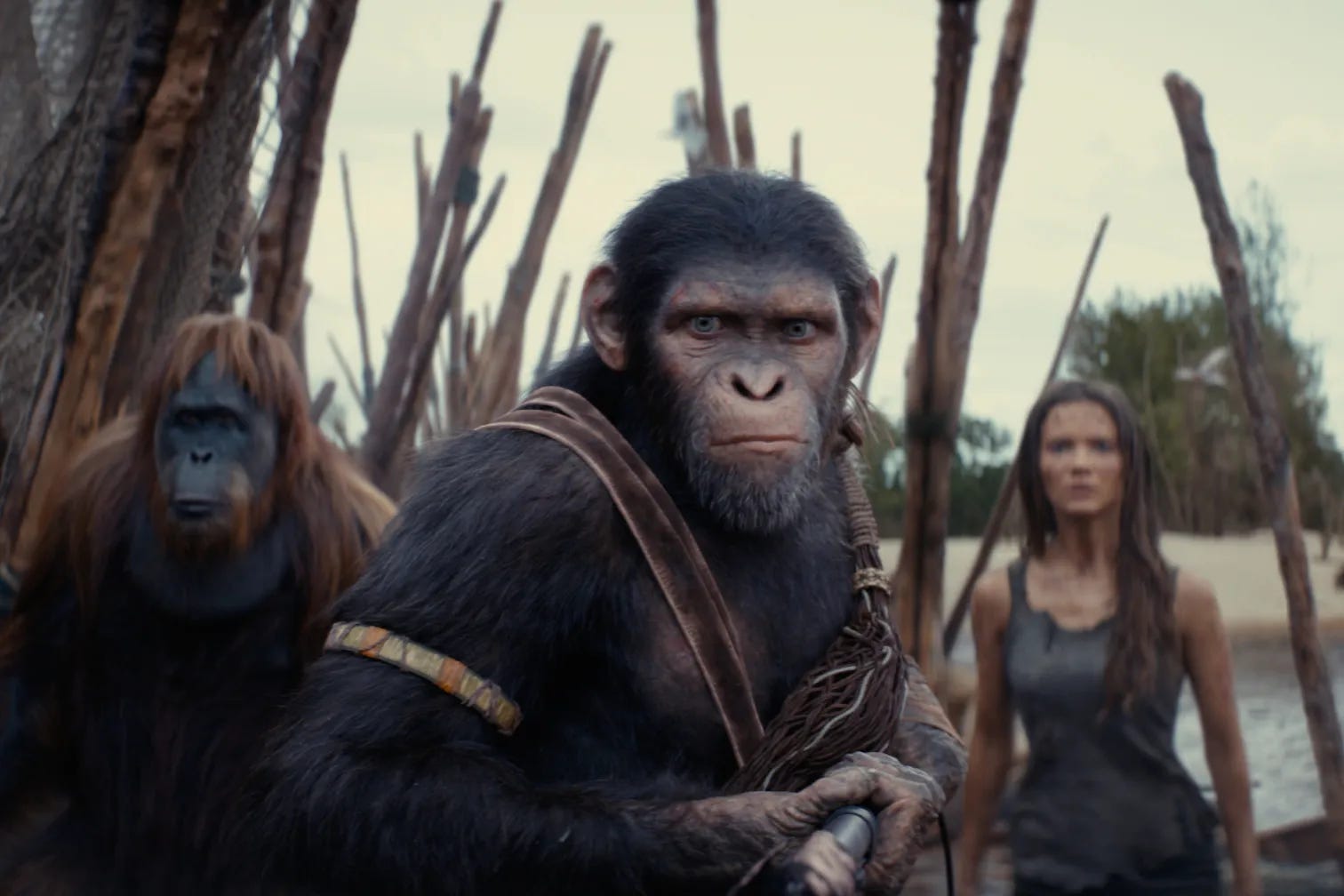
Summary: The Planet of the Apes franchise has attached director Matt Shakman (The Fantastic Four: The First Steps) and screenwriter Josh Friedman for a new installment at 20th Century Studios. A Quiet Place Part III has officially commenced filming in New York City, with a confirmed theatrical release date of July 30, 2027. In a separate IP crossover move, Matthew Lillard, known for the Scream and Scooby-Doo franchises, has joined the cast of James Gunn’s Superman sequel, Man of Tomorrow.
Why it matters: These moves signal how major studios are managing franchise assets: rebooting legacy IP with proven talent, extending successful horror series, and using casting to create inter-franchise connective tissue.
Context: The Apes franchise is in a defensive reuse phase, leveraging Marvel-proven talent to reinvigorate a dormant property. A Quiet Place is in a stable monetization phase, confirming its theatrical model. The Lillard casting is a standard franchise lifecycle tactic of leveraging established genre stars for audience recognition.
"Shakman, who directed Marvel Studios’ The Fantastic Four: The First Steps, has signed up to helm a new Planet of the Ape s movie for 20th Century Studios with returning franchise screenwriter Josh Friedman." — FILMHIGHLIGHTS.SUBSTACK
Commentary: Shakman’s hire suggests 20th Century is applying the Marvel director-playbook—hiring from within the ecosystem—to a non-superhero IP, a low-risk attempt at renewal. The firm date for A Quiet Place III indicates Paramount’s confidence in the franchise’s core theatrical economics, resisting a pivot to streaming for now. Lillard’s casting is a minor but efficient audience signal, grafting horror/comedy franchise equity onto a DC tentpole.
Date: May 10, 2026 12:00 AM ET
URL: https://filmhighlights.substack.com/p/film-highlights-news-roundup-may-10-2026
AI Sentiment Score: Positive (40%)
AI Credibility Score: 10.0/10 — High
Scores and text generated by AI analysis of the source article indicated.
Cannes 2026: THE STATE OF SELLING SCARES – Rue Morgue (Rue-Morgue)
Summary: At Cannes 2026, the horror market is defined by a dual-track financing and distribution landscape. While streamers like Shudder provide a dedicated audience, producers increasingly hedge bets with niche IP revivals (e.g., Deathstalker, Boop) and lean on concept packaging over star power. Financing routes have diversified, blending private equity, cultural funds, and Kickstarter, but distribution and audience cut-through remain the ultimate challenges, reliant on festival strategy and aggressive self-branding.
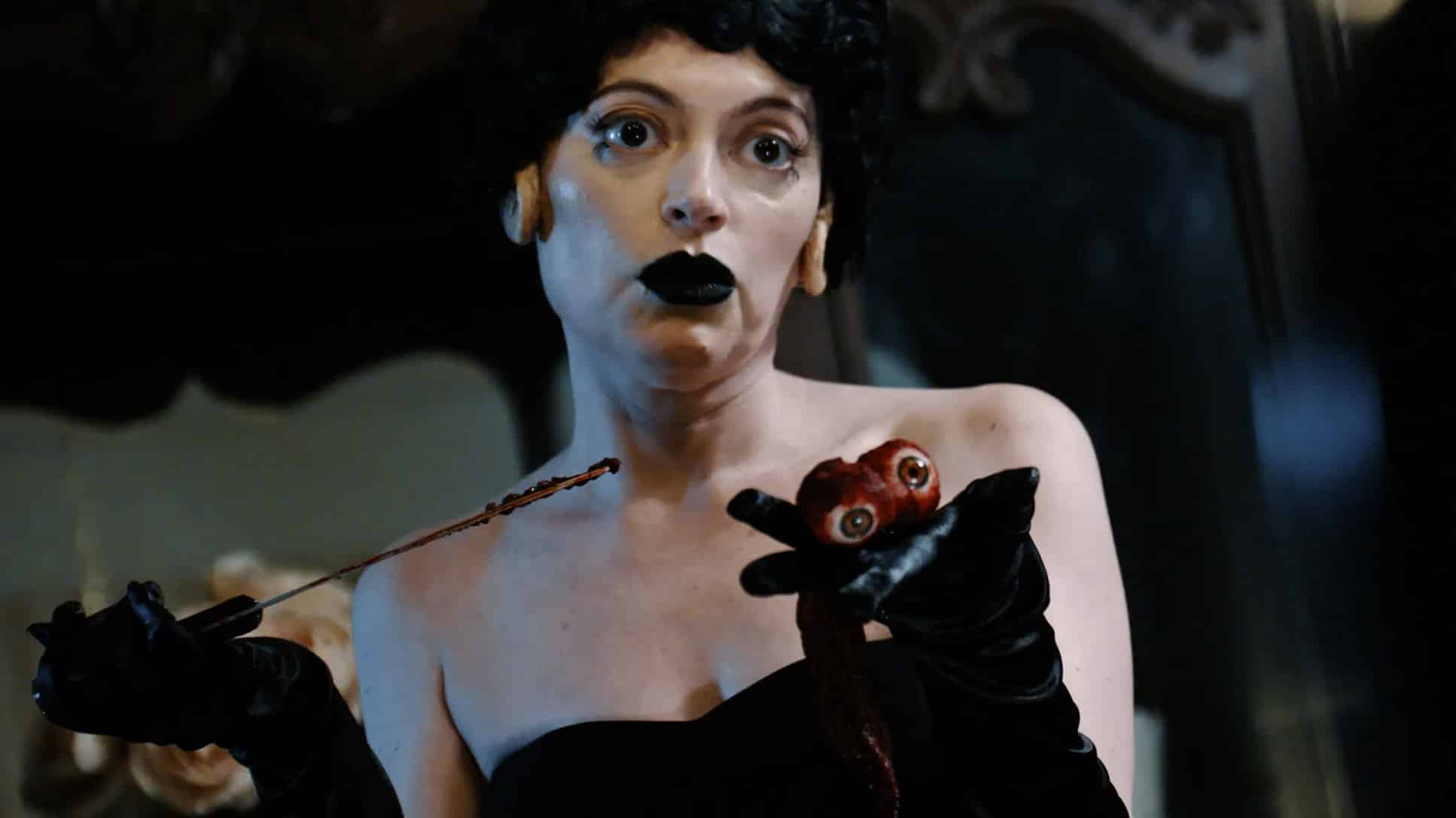
Why it matters: The horror genre’s lifecycle reveals a mature, bifurcated market where financial logic is shifting from theatrical blockbusters to IP-driven niche plays and streamer-led indie ecosystems, signaling where capital and creative energy are flowing.
Context: Horror’s cyclical resilience is well-documented, but the current phase is marked by post-strike and pandemic financial caution, the rise of specialty streaming as a primary outlet, and the strategic reuse of dormant IP to de-risk production.
"Recognizable IP gives the audience a touchstone,” adds Furst, whose team recently completed filming on Boop, a horror film inspired by a certain classic (but trademarked) cartoon character. “It is much easier to sell a project that people already have a connection to." — RUE-MORGUE
Commentary: The pivot to known IP, even from obscure 80s catalogs, indicates a defensive monetization phase for horror—producers are mining nostalgia banks to secure financing in a risk-averse climate. This isn’t reinvention; it’s efficient reuse, leveraging existing fan equity to offset marketing costs. The parallel reliance on ultra-low-budget digital production and self-promotion suggests the genre’s health is now measured by its ability to operate at both the IP-safe middle and the scrappy fringe, with streaming platforms acting as the connective tissue.
Date: May 13, 2026 12:00 AM ET
URL: https://rue-morgue.com/cannes-2026-the-state-of-selling-scares/
AI Sentiment Score: Negative (57%)
AI Credibility Score: 9.8/10 — High
Scores and text generated by AI analysis of the source article indicated.
Post ID: 8d96b83e