Southeast Energy, Battery & Advanced Manufacturing Projects
NextEra Energy to acquire Dominion Energy (Scbiz)
Summary: NextEra Energy will acquire Dominion Energy in an all-stock transaction, creating the world’s largest regulated electric utility. The combined entity will serve approximately 10 million customer accounts across Florida, Virginia, North Carolina, and South Carolina, with dual headquarters in Juno Beach, Florida, and Richmond, Virginia. Dominion’s operational brands could remain, and the deal includes a proposed $2.25 billion in bill credits for Dominion customers.
Why it matters: This consolidation reshapes the Southeast’s energy landscape, concentrating regulatory influence, capital allocation, and infrastructure planning under a single, dominant entity, with immediate consumer impacts and long-term implications for regional economic development and energy policy.
Context: The Southeast is experiencing rapid population growth and rising electricity demand, driving utility consolidation to achieve scale efficiencies. This follows a broader industry trend where larger, integrated operators seek to manage the capital intensity of the energy transition.
"Ross Norton // May 19, 2026// An energy company headquartered in Florida is buying Dominion Energy. NextEra Energy Inc. and Dominion Energy Inc. announced May 19 that they have entered into a." — SCBIZ
Commentary: The operational retention of the Dominion brand name is a tactical concession to regional identity, but effective control and strategic capital shift to Florida. The $2.25 billion in bill credits is a necessary political lubricant for regulatory approval, offsetting near-term consumer concerns about reduced competition. Long-term, this creates a monolithic counterparty for state regulators and industrial customers in the Southeast, potentially streamlining infrastructure deployment but also concentrating pricing power and political leverage.
Date: Tue, 19 May 2026 13:58:54 +0000
URL: https://scbiz.com/nextera-energy-acquires-dominion-energy/
AI Sentiment Score: Positive (75%)
AI Credibility Score: 10.0/10 — High
Scores and text generated by AI analysis of the source article indicated.
Governor Stein Spotlights North Carolina’s Leadership in the Clean Energy Economy in Davidson (Governor.Nc.Gov)
Summary: Governor Josh Stein convened a roundtable with corporate executives at Trane Technologies’ facility to frame North Carolina’s clean energy policy as a core economic development tool. Executives from Trane, Scout Motors, SAS, and Sierra Nevada Brewing explicitly linked their investment and operational decisions to the state’s clean energy availability and policy predictability. The administration highlighted $59.6 billion in announced investment since 2015 from companies with net-zero targets, representing half of all major project investment in the state.

Why it matters: Corporate capital allocation in the Southeast is increasingly contingent on clean energy infrastructure, making state-level energy policy a direct determinant of industrial competitiveness and job creation.
Context: The Southeast is experiencing a surge in manufacturing and tech investment, creating a regional competition where energy reliability, cost, and carbon profile are becoming key differentiators for site selection.
"Today Governor Josh Stein joined business leaders for a tour of Trane Technologies’ energy-efficient HVAC system training facility and a discussion on North Carolina’s leadership in the clean energy economy and the." — GOVERNOR.NC.GOV
Commentary: The framing shifts clean energy from a regulatory or environmental issue to a capital attraction strategy. The 50% figure is a powerful signal to other states that corporate decarbonization pledges are now material to investment flows. This creates pressure on utilities like Duke Energy to accelerate grid modernization not just for resilience, but to protect the state’s economic development pipeline.
Date: April 16, 2026 12:00 AM ET
URL: https://governor.nc.gov/news/press-releases/2026/04/16/governor-stein-spotlights-north-carolinas-leadership-clean-energy-economy-davidson
AI Sentiment Score: Negative (60%)
AI Credibility Score: 10.0/10 — High
Scores and text generated by AI analysis of the source article indicated.
Rowan County Emerges as a Hub for AI Supply Chain … (Expansionsolutionsmagazine)
Summary: Rowan County, North Carolina, is consolidating its position as a strategic hub for the AI supply chain, anchored by Jabil’s $500 million, 1,181-job advanced manufacturing facility for data center infrastructure and Google’s major logistics lease. This is complemented by cloud computing projects from Flexential and Edged Energy, leveraging the county’s location on the I-85 corridor between Charlotte and the Piedmont Triad.

Why it matters: It signals a concrete shift in the geography of AI’s physical infrastructure, moving beyond pure data center clusters to integrated manufacturing and logistics hubs, with implications for regional investment, workforce development, and industrial real estate.
Context: The Southeast has become a primary battleground for data center and advanced manufacturing investment, with states competing on incentives, power, and connectivity. Rowan County’s success reflects a strategy of repurposing legacy industrial assets and positioning within established logistics networks.
"Rowan County, North Carolina, is emerging as one of the Southeast’s strongest locations for artificial intelligence supply chain operations, combining advanced manufacturing capacity, logistics access, workforce availability, and proximity to one of the nation’s fastest-growing technology corridors." — EXPANSIONSOLUTIONSMAGAZINE
Commentary: The Jabil and Google announcements represent a maturation of the AI industrial stack: the hardware fabrication and the physical logistics supporting hyperscalers are now co-locating in secondary markets with lower costs and available space. This creates a durable economic base less susceptible to cyclical tech hiring swings than pure software development. The repurposing of the Gildan facility is a template for other regions with underutilized industrial parks.
Date: May 21, 2026 12:00 AM ET
URL: https://www.expansionsolutionsmagazine.com/rowan-county-emerges-as-a-hub-for-ai-supply-chain-growth/
AI Sentiment Score: Neutral (33%)
AI Credibility Score: 10.0/10 — High
Scores and text generated by AI analysis of the source article indicated.
A Roadmap for Securing the Critical Battery Materials Supply Chain … (C2Es)
Summary: A new roadmap from C2Es outlines a policy framework to secure the Southeast’s position in the battery and critical materials supply chain. The region has already captured 40% of announced U.S. battery investment since 2021, but its industrial base is concentrated in downstream assembly. The study models that, with supportive policy, the Southeast could attract over $100 billion in investment and add 374,000 jobs over the next decade.

Why it matters: This quantifies the high-stakes industrial policy contest for the EV supply chain’s high-value upstream segments, directly affecting capital allocation, state-level competition, and regional economic rebalancing.
Context: The Southeast’s automotive legacy and right-to-work laws have successfully attracted downstream EV manufacturing, creating a dependency on imported materials and intermediate components that policy now seeks to address.
"This roadmap presents recommendations for federal, state, and industry actors. For each recommendation, the roadmap identifies the problem, presents policy changes, and explains how the recommended actions will improve the battery and." — C2ES
Commentary: The roadmap’s modeled figures are a political and investment prospectus, signaling to federal agencies and private capital that the region intends to move beyond assembly into refining, recycling, and component manufacturing. Success would reconfigure global mineral trade flows and test whether industrial policy can overcome the region’s historical aversion to upstream, capital-intensive heavy industry.
Date: May 20, 2026 12:00 AM ET
URL: https://www.c2es.org/securing-the-critical-battery-materials-supply-chain-in-the-southeast-united-states/
AI Sentiment Score: Positive (60%)
AI Credibility Score: 10.0/10 — High
Scores and text generated by AI analysis of the source article indicated.
Securing the Critical Battery Materials Supply Chain in the Southeast (C2Es)
Summary: The Center for Climate and Energy Solutions (C2ES) is convening stakeholders to accelerate the critical battery materials supply chain in the Southeast, a region now central to U.S. battery manufacturing. Since 2021, over $84 billion in investments have been announced across five states for batteries, minerals, and vehicle production. The effort aims to secure this growth through policy, partnerships, and capital to support energy, mobility, and defense sectors.

Why it matters: The concentration of capital and production in the Southeast signals a strategic realignment of U.S. industrial policy and supply chain security, with direct implications for regional economies, national competitiveness, and geopolitical resilience.
Context: This follows the Inflation Reduction Act’s incentives and reflects a broader pivot to onshore strategic manufacturing, moving beyond final assembly to secure upstream materials processing and component production.
"Since 2021, companies have announced more than $84 billion in investments across Georgia, North Carolina, South Carolina, Tennessee, and Alabama in batteries, minerals, stationary storage, and vehicle production." — C2ES
Commentary: The $84 billion figure is a lagging indicator; the real test is whether the region can develop the midstream refining and component ecosystems to avoid becoming just a final assembly corridor. Success hinges on solving the harder problems of permitting, skilled labor, and mineral processing, not just attracting headline factory investments. If it fails, the Southeast risks a brittle, import-dependent manufacturing boom vulnerable to the next supply shock.
Date: May 20, 2026 12:00 AM ET
URL: https://www.c2es.org/critical-battery-materials-supply-chain-southeast/
AI Sentiment Score: Negative (50%)
AI Credibility Score: 10.0/10 — High
Scores and text generated by AI analysis of the source article indicated.
Southeast Regional Summit: Securing the Critical Battery Materials Supply Chain | Plenary & Panel (Youtube)
Summary: A 2026 summit convened by C2ES’s Regional Clean Economies Initiative frames the development of a domestic battery supply chain in the Southeast US as a $140 billion economic opportunity, equivalent to one-third of South Carolina’s current economy. The initiative, engaging over 250 stakeholders across five states, projects nearly 400,000 new jobs from building out the full value chain over the next decade. This positions the ‘battery belt’ as a central pillar in national efforts to secure critical materials against geopolitical and supply chain risks.
Why it matters: The scale of capital and labor mobilization required could reshape regional industrial bases, real estate, and workforce development, with winners and losers determined by policy coordination and infrastructure readiness.
Context: Federal industrial policy (IRA, CHIPS Act) has catalyzed private investment in domestic clean tech manufacturing, with the Southeast emerging as a primary beneficiary due to its existing automotive footprint, right-to-work laws, and available energy infrastructure.
"Rising energy demand, supply chain disruptions, and national security concerns have rapidly accelerated the need for a domestic battery supply chain in the United States. In the emerging “battery belt” of the." — YOUTUBE
Commentary: The projection’s magnitude suggests a deliberate re-industrialization, not merely incremental growth. Success hinges on overcoming nascent bottlenecks in mineral refining and skilled labor, where the region currently lags. Failure to coordinate interstate policy or secure consistent federal support could fragment the ‘belt,’ leaving individual states competing for slices of a diminished pie. The real test is whether this capital influx builds durable, innovative capacity or merely replicates low-margin assembly work.
Date: May 01, 2026 12:00 AM ET
URL: https://www.youtube.com/watch?v=4UHEplDMTMQ
AI Sentiment Score: Negative (57%)
AI Credibility Score: 10.0/10 — High
Scores and text generated by AI analysis of the source article indicated.
Project Horizon (Energy.Gov)
Summary: The DOE’s Loan Programs Office finalized a $6.57 billion loan to Rivian New Horizon, LLC in January 2025 to construct ‘Project Horizon,’ a 9-million-square-foot EV manufacturing plant in Stanton Springs North, Georgia. The facility aims to produce up to 400,000 mass-market electric SUVs annually and is projected to support 7,500 permanent operations jobs by 2030. The loan represents a major capital infusion into the Southeast’s industrial base under the Advanced Technology Vehicles Manufacturing (ATVM) program.

Why it matters: This signals a strategic, state-backed pivot of high-value manufacturing and supply chains into the Southeast, with implications for regional labor markets, infrastructure demands, and competitive dynamics within the auto industry.
Context: The ATVM loan program, revived under the Biden administration, is being used to de-risk large-scale domestic EV production, following similar loans to Ford and GM. Georgia has aggressively courted EV and battery investments, becoming a focal point for the industry’s geographic reconfiguration.
"The loan will support construction of a nine million square foot facility to manufacture up to 400,000 mass-market electric sport utility vehicles (SUVs) and crossover vehicles, boosting the regional economy and helping build America’s clean transportation future." — ENERGY.GOV
Commentary: The scale of the loan and facility cements Georgia’s status as a primary beneficiary of industrial policy aimed at reshoring EV production. The ‘mass-market’ target for Rivian suggests a strategic shift from niche to volume, which could pressure legacy automakers and test the region’s capacity for skilled labor and component supply. The capital structure, with nearly $600 million in capitalized interest, indicates the project’s front-loaded financial intensity and reliance on federal support to reach scale.
Date: May 22, 2026 12:00 AM ET
URL: https://www.energy.gov/edf/project-horizon
AI Sentiment Score: Negative (66%)
AI Credibility Score: 10.0/10 — High
Scores and text generated by AI analysis of the source article indicated.
North Carolina Sues VinFast to Acquire Shovel-Ready … – NCDOJ (Ncdoj.Gov)
Summary: The North Carolina Attorney General has filed suit against VinFast for breaching its agreements to develop an EV and battery manufacturing facility in Chatham County. The state is seeking to acquire the property through its contractual rights, aiming to protect taxpayer investments and preserve the site for future development. This action follows a period of aggressive business recruitment by North Carolina, which has recently been ranked as America’s top state for business.
Why it matters: This signals a shift in how states may enforce clawback provisions and manage risk with high-profile, capital-intensive foreign investments, setting a precedent for protecting public funds when megaprojects falter.
Context: The lawsuit represents a post-incentive enforcement action, a growing trend as states face the fallout from over-ambitious EV and semiconductor projects that fail to materialize after receiving substantial public subsidies.
"Through the lawsuit, North Carolina is exercising its contractual right to acquire the property, thereby, protecting taxpayer investments while preserving the site for future economic development opportunities." — NCDOJ.GOV
Commentary: The move is a defensive play to salvage a shovel-ready asset, but it also publicly recalibrates the state’s risk profile. It demonstrates that North Carolina’s business-friendly reputation is contingent on performance, not just promises, and may influence how other foreign manufacturers negotiate with Southeastern states. The reclaimed site will likely be repackaged for a more established OEM or battery supplier, concentrating advanced manufacturing capital in the region but under different terms.
Date: May 21, 2026 12:00 AM ET
URL: https://ncdoj.gov/north-carolina-sues-vinfast-to-acquire-shovel-ready-manufacturing-site/
AI Sentiment Score: Negative (50%)
AI Credibility Score: 9.1/10 — High
Scores and text generated by AI analysis of the source article indicated.
Foreign Direct Investment Fuels Growth in North Carolina’s Southeast (Ncse)
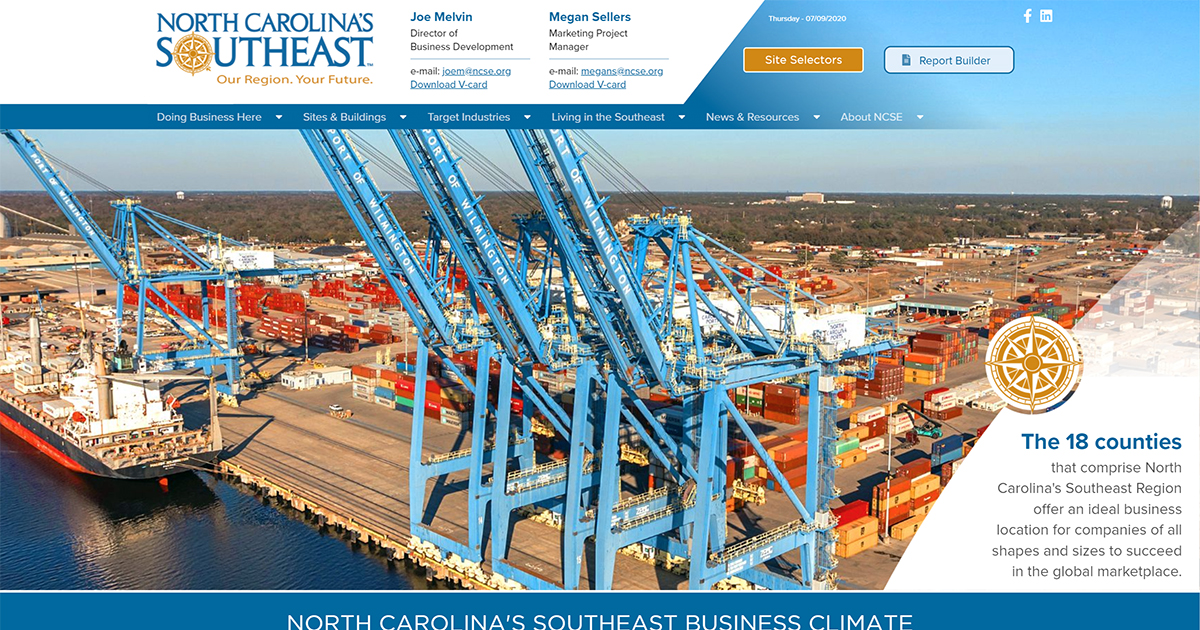
Summary: North Carolina’s Southeast (NCSE), a 20-county region, is leveraging Foreign Direct Investment (FDI) as a primary economic engine. The influx is characterized by capital investment in billions, job creation in advanced manufacturing and logistics, and the transfer of technology and global supply chain integration. The region’s value proposition to international firms hinges on its strategic mid-Atlantic location, multimodal port and highway infrastructure, and a workforce pipeline strengthened by transitioning military personnel.
Why it matters: FDI patterns signal where global capital is consolidating advanced manufacturing and logistics capacity on the U.S. East Coast, affecting regional competitiveness, wage structures, and supply chain geography.
Context: This follows a broader post-pandemic trend of nearshoring and supply chain diversification, with the U.S. Southeast consistently attracting capital for manufacturing and logistics hubs due to lower costs and pro-business policies.
"Foreign Direct Investment (FDI) has emerged as a powerful driver of economic momentum in the region, bringing not only capital but also innovation, advanced manufacturing capabilities, and high-quality jobs." — NCSE
Commentary: The NCSE narrative is a targeted playbook: it’s not just selling cheap land but a packaged ecosystem of logistics, military-trained labor, and existing industry clusters. The real test is whether this FDI builds durable, innovative capacity or remains cost-arbitrage assembly. If it’s the former, the region could solidify as a Tier-2 challenger to established coastal hubs, pulling talent and supplier investment from neighboring states.
Date: May 14, 2026 12:00 AM ET
URL: https://www.ncse.org/blog-foreign-direct-investment-fuels-growth-in-north-carolina-southeast.php
AI Sentiment Score: Negative (85%)
AI Credibility Score: 10.0/10 — High
Scores and text generated by AI analysis of the source article indicated.
IEDA approves $5.7M in tax credits for 4 manufacturing projects … (Businessrecord)
Summary: The Iowa Economic Development Authority (IEDA) board has approved $5.7 million in tax credits for four distinct manufacturing projects, representing a combined capital investment of over $100.8 million. The projects range from concrete technology automation and heat treat facility expansion to the conversion of an aquaculture site into a beverage plant and a security door manufacturer’s upgrade. These awards are expected to create 87 new jobs, though one expansion involves no new hiring. In a separate but related action, the board also allocated $1.97 million to 39 manufacturers through the Manufacturing 4.0 Technology Investment Program.
Why it matters: This demonstrates Iowa’s continued, targeted use of public incentives to retain and modernize industrial base, signaling where capital and policy are directing mid-tier manufacturing evolution.
Context: Iowa’s economic development strategy consistently leverages tax credits and TIF incentives to secure capital investment, particularly in manufacturing, amid broader national competition for industrial projects and automation adoption.
"The Iowa Economic Development Authority board has approved tax credits for four companies with projects that represent over $100.8 million in investment and the creation of 87 jobs." — BUSINESSRECORD
Commentary: The portfolio reveals a bifurcated approach: high-job-creation bets on food & beverage (Edible Garden) and construction-adjacent manufacturing (Walsh Door) alongside automation-driven expansions with minimal employment growth (Afinitas, Advanced Heat Treat). The parallel Manufacturing 4.0 grants underscore a systemic push to subsidize digital adoption for SMEs, suggesting Iowa is prioritizing productivity gains over pure job count as a long-term competitiveness metric.
Date: April 17, 2026 12:00 AM ET
URL: https://www.businessrecord.com/ieda-approves-5-7m-in-tax-credits-for-4-manufacturing-projects-statewide/
AI Sentiment Score: Positive (50%)
AI Credibility Score: 10.0/10 — High
Scores and text generated by AI analysis of the source article indicated.
Map of the Month Archives – Southeast Energy Efficiency Alliance (Seealliance)
Summary: A SEEA analysis of contractor deserts in the Southeast reveals a critical workforce shortage, with 190 counties in ‘crisis’ where high housing upgrade demand meets low contractor capacity. The problem is concentrated in Appalachia and the Black Belt, with Kentucky and West Virginia accounting for a third of crisis counties. The data likely understates the issue, as workers are counted at employer locations, not work sites, and rural contractors often commute to urban markets. Federal program cuts and an aging construction workforce threaten to worsen the gap.
Why it matters: This workforce shortage directly impedes the deployment of energy efficiency and disaster recovery programs, locking in high energy burdens and deferred maintenance in the region’s most vulnerable communities, while creating a structural barrier to managing growing electricity demand.
Context: The analysis follows SEEA’s ongoing mapping of regional disparities in housing age, energy burden, and code strength, highlighting how historical patterns of segregation and underinvestment manifest in present-day infrastructure gaps.
"Category: Map of the Month May Map of the Month Where the contractors aren’t: mapping workforce deserts in the Southeast By: William Bryan Of all the barriers to scaling energy efficiency (and." — SEEALLIANCE
Commentary: The map crystallizes a market failure where need and capacity are inversely correlated, undermining federal and state retrofit investments. It signals that place-based workforce strategies, not just program funding, are now the critical path for energy policy in the Southeast. The contractor desert could become a political desert if recovery and upgrade programs consistently fail to deliver in these regions due to execution gaps.
Date: April 29, 2026 12:00 AM ET
URL: https://www.seealliance.org/blog/category/map-of-the-month/
AI Sentiment Score: Negative (71%)
AI Credibility Score: 10.0/10 — High
Scores and text generated by AI analysis of the source article indicated.
Inland Empire Hub Tests the Multi-Fleet Charging Model at Industrial Scale (Chargeduppro)
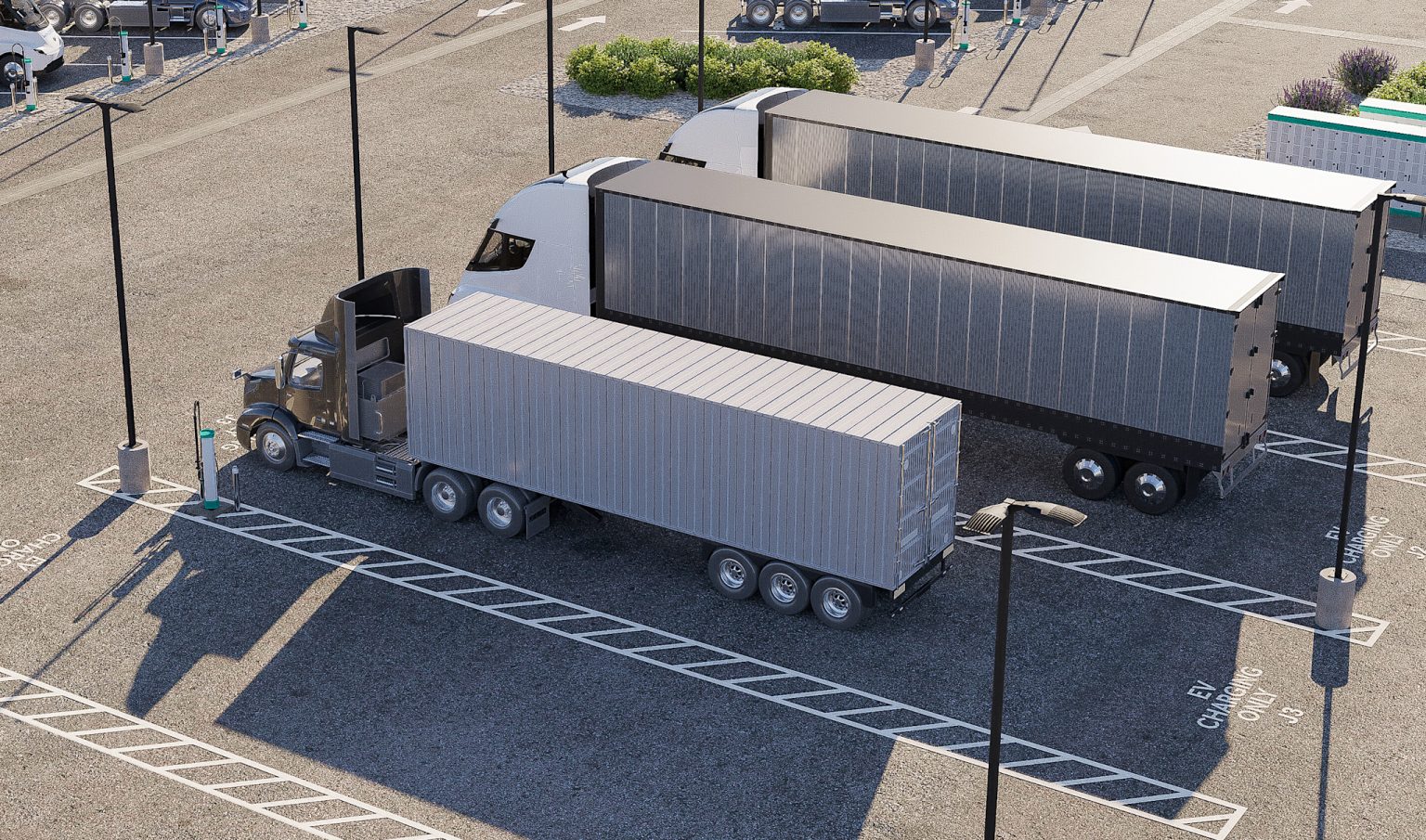
Summary: EV Realty’s 9 MW multi-fleet truck charging hub in San Bernardino is the first industrial-scale test of shared infrastructure for freight electrification, serving J.B. Hunt, Gate City Beverage, and Nevoya simultaneously. Its location near the San Bernardino Intermodal Facility and within a major freight corridor demonstrates that time-to-power and utility partnership quality are now critical variables in industrial site selection. The hub’s dual-standard hardware (CCS and MCS) supports current and next-generation trucks, while the model shifts the underwriting calculus for warehouse and distribution real estate.
Why it matters: This operationalizes the shared infrastructure thesis, making utility interconnection speed and charging access a direct determinant of industrial property value and tenant absorption on freight corridors.
Context: The multi-fleet charging model has been theorized for years to avoid redundant capital expenditure; California’s regulatory push and federal tax credit sunset accelerate deployment.
"For owners of warehouse, distribution, and logistics-adjacent industrial properties anywhere on a major freight corridor, this site is now the operating template for what comes next." — CHARGEDUPPRO
Commentary: The San Bernardino hub moves charging from a tenant-specific capital problem to a site-specific utility access problem, bifurcating industrial real estate markets. Assets with confirmed grid capacity and proximity to shared hubs will command a leasing premium, while identical properties in slow-interconnection territories face obsolescence. This redefines ‘location’ for logistics real estate to include electrons, not just asphalt.
Date: May 06, 2026 12:00 AM ET
URL: https://chargeduppro.com/post/ev-realty-san-bernardino-truck-charging-hub
AI Sentiment Score: Negative (75%)
AI Credibility Score: 10.0/10 — High
Scores and text generated by AI analysis of the source article indicated.
EP77: Commercial EVs Closer Than You Think (Youtube)
Summary: Proterra’s executive commentary indicates that for certain commercial vehicle types, electric powertrains have already reached operational and total cost of ownership (TCO) parity with diesel, particularly in high-fuel-cost environments. The primary remaining barrier is the upfront capital expenditure, which the company aims to overcome by scaling manufacturing velocity and efficiency at its South Carolina facility. The shift is expected to move from ‘possible to practical,’ with early adoption accelerating in specialty segments like heavy-duty construction equipment.
Why it matters: This signals a tangible inflection point for capital deployment in the Southeast’s industrial and logistics sectors, where fleet TCO drives procurement and regional manufacturing scale dictates competitive advantage.
Context: The Southeast is consolidating as a hub for EV and battery manufacturing, with states like South Carolina and Georgia offering significant incentives; commercial fleet adoption has been slower than passenger EVs due to perceived cost and infrastructure hurdles.
"{ts:24} Greer, Proterra is scaling production at 327,000 square foot facility designed to deliver … {ts:795} $4.50, you know, per gallon, you’ve reached TCO parity there. Well, today driving in, you’re I’m." — YOUTUBE
Commentary: The admission of parity, even if conditional, reframes the commercial EV debate from technological feasibility to financial engineering and production scaling. For the Southeast’s economy, this accelerates capital expenditure into local supply chains and charging infrastructure, while putting pressure on legacy diesel service networks. The focus on ‘specialty vehicles’ suggests a fragmented, use-case-led adoption curve, which will benefit regional OEMs with niche expertise over broad-scale manufacturers.
Date: April 27, 2026 12:00 AM ET
URL: https://www.youtube.com/watch?v=oMw8U1rXcoI
AI Sentiment Score: Positive (50%)
AI Credibility Score: 10.0/10 — High
Scores and text generated by AI analysis of the source article indicated.
Post ID: a8a83163