
RFID and Digital Tracking for Supply Chain Visibility
From scanning to sensing: a new era of supply chain visibility – Sensolus (Sensolus)
Summary: UPS has completed a nationwide rollout of RFID sensing across its U.S. small package network, eliminating 20 million daily manual scans and reducing misloads by nearly 70% with a $100M+ investment. This deployment signals a market shift where real-time visibility, supported by 55 billion RFID tags produced in 2025, is now considered necessary infrastructure rather than a promising technology. The article positions this as a move from ‘scanning to sensing,’ where RFID handles identification at fixed choke points, while complementary IoT platforms like Sensolus provide continuous location tracking for mobile assets beyond reader infrastructure.

Why it matters: For domestic manufacturers and logistics operators, this establishes a new operational baseline for asset visibility, forcing a reassessment of tracking investments and vendor strategies to maintain competitive service levels and cost control.
Context: RFID has long been a fragmented promise in logistics, but scaled deployment by a major integrator like UPS validates the technology’s ROI and sets a de facto standard for network-wide, automated sensing that others must match or bypass.
"WEBINAR Multimodal transport: smart tracking in uncontrolled environments REGISTER HERE Behind the Tech How RFID and IoT tracking combine to give supply chain teams a continuous, end-to-end view of every asset; from." — SENSOLUS
Commentary: The UPS deployment creates a two-tier visibility market: operators must now either invest in dense RFID reader networks or cede ground on in-facility efficiency. This pushes IoT tracking vendors like Sensolus into a complementary, not competitive, role focused on high-value mobile assets in uncontrolled environments, reshaping vendor selection and system integration priorities for supply chain teams.
Date: May 22, 2026 12:00 AM ET
URL: https://www.sensolus.com/knowledge-hub/company-news/from-scanning-to-sensing-a-new-era-of-supply-chain-visibility/
AI Sentiment Score: Neutral (33%)
AI Credibility Score: 10.0/10 — High
Scores and text generated by AI analysis of the source article indicated.
The Tag That Doesn’t Come Off: How RFID is Rewriting The Customer Relationship (Youtube)
Summary: A major apparel brand details its operational shift to embedding RFID tags at the point of garment manufacture, creating a continuous digital thread from factory floor to store floor. This enables precise, real-time inventory tracking and establishes a foundational record of provenance for each individual item. The system is designed to feed into future customer-facing traceability features.

Why it matters: For domestic manufacturers and brands, this represents a significant operational pivot that redefines the unit of inventory management and adds a new, mandatory production step with implications for cost, labor, and data integration.
Context: While RFID is not new in retail logistics, embedding it at the source of production—especially in domestic factories—shifts the burden and cost of implementation upstream, turning a distribution-center technology into a manufacturing specification.
"We start out with we’re {ts:502} going to take a tag. We’re going to have it placed on the garment at time manufacturer. We’re going to track stuff {ts:509} throughout the supply." — YOUTUBE
Commentary: This moves the critical data-creation event to the factory floor, imposing new workflow requirements on domestic contractors who must now handle, apply, and scan tags as part of the finishing process. The ‘first record’ establishes a chain of custody that can be leveraged for supply chain resilience claims, but it also creates a new point of potential friction and cost negotiation between brands and their manufacturing partners.
Date: May 20, 2026 12:00 AM ET
URL: https://www.youtube.com/watch?v=wk45mZgoTwI
AI Sentiment Score: Negative (62%)
AI Credibility Score: 10.0/10 — High
Scores and text generated by AI analysis of the source article indicated.
VF Put RFID Under The Model Already Running — Rack & Reason (Rack-Reason)
Summary: VF Corporation is implementing a global, item-level RFID system from Nedap, beginning with The North Face in Q2 2026 and extending to Vans and Timberland across over 1,500 stores and their supporting distribution network. The program’s key operational shift is tagging finished goods at the factory level, involving vendor partners at the source. This moves RFID integration from a post-shipment logistics overlay to a foundational component of the manufacturing and supply pipeline.

Why it matters: For domestic manufacturers and brands, this signals a move toward source-tagged inventory as a baseline for supply chain resilience, demanding new vendor compliance protocols and altering cost structures at the point of production.
Context: Item-level RFID adoption in apparel has historically focused on retail and distribution center operations; shifting tagging upstream to vendors represents a more integrated but complex operational commitment.
"The deployment reaches distribution centres and, in Hope Waldron’s phrasing, “vendor partners at the source,” which means finished goods are being tagged before they leave the factory." — RACK-REASON
Commentary: This forces a recalibration of vendor contracts and production line workflows, embedding a data-capture step into manufacturing. The real constraint isn’t the technology but aligning diverse vendor partners on a standardized physical-digital handoff, which will test VF’s operational leverage and add a per-unit cost that must be justified by reduced shrinkage and improved inventory accuracy. For domestic producers, this could become a competitive differentiator in bids for contracts where supply chain transparency is a premium.
Date: April 24, 2026 12:00 AM ET
URL: https://rack-reason.com/en/vf-put-rfid-under-model-already-running/
AI Sentiment Score: Negative (80%)
AI Credibility Score: 10.0/10 — High
Scores and text generated by AI analysis of the source article indicated.
UPS growing RFID usage to boost shipper visibility, trim manual scans | Supply Chain Dive (Supplychaindive)
Summary: The carrier will equip U.S. hubs with RFID sensors and customers with label printers as it looks to connect nearly all of its packages with the technology, an executive said.

Why it matters: RFID integration signals a shift from manual scanning dependency, demanding process overhaul for label management and data capture.
Context: Expect operational changes regarding package tagging protocols and necessary infrastructure upgrades at both shipper and hub levels.
"The carrier will equip U.S. hubs with RFID sensors and customers with label printers as it looks to connect nearly all of its packages with the technology, an executive said." — SUPPLYCHAINDIVE
Commentary: The signal is still worth tracking, but the current extraction path did not yield enough body text for a fuller analytical read. The immediate implication is operational rather than speculative: watch how this changes budgets, workflows, or risk assumptions over the next cycle.
Date: April 14, 2026
URL: https://www.supplychaindive.com/news/ups-rfid-sensor-hub-expansion-2026/817288/
AI Sentiment Score: Neutral (50%)
AI Credibility Score: 10.0/10 — High
Scores and text generated by AI analysis of the source article indicated.
How RFID is Reshaping Health and Wellness Supply Chains: Q&A with Suresh Palliparambil | PharmExec (Pharmexec)
Summary: Impinj’s Suresh Palliparambil details how the Gen2X RAIN RFID protocol, released in late 2024, enables true item-level visibility for historically difficult-to-track OTC and pharmaceutical products. This advancement allows for reliable tagging and reading of small, liquid-filled, or foil-packaged items, moving beyond pallet- or case-level tracking. The technology promises to reshape inventory management, loss prevention, and recall response by providing real-time, granular data across the supply chain.

Why it matters: For domestic manufacturers and distributors of health and wellness products, this directly addresses critical operational constraints around inventory accuracy, regulatory compliance, and resilience against demand volatility, directly impacting cost and capacity planning.
Context: The push for supply chain digitization and resilience, particularly for sensitive goods, has intensified post-pandemic, with a focus on mitigating bullwhip effects and ensuring product authenticity.
"How RFID is Reshaping Health and Wellness Supply Chains: Q&A with Suresh Palliparambil Key Takeaways – True item-level visibility uniquely identifies each unit in real time, enabling authentication, expiration monitoring, loss prevention,." — PHARMEXEC
Commentary: The operational shift is from managing bulk SKUs to orchestrating individual units, which requires re-tooling warehouse workflows, data systems, and labor roles. For domestic production, the capital expenditure for this granular tracking must be justified against the tangible reduction in shrinkage, recall costs, and lost sales from stockouts. The real test will be in the integration cost and data hygiene at scale, not just the tag sensitivity.
Date: 3 weeks ago
URL: https://www.pharmexec.com/view/rfid-reshaping-health-wellness-supply-chains-suresh-palliparambil
AI Sentiment Score: Negative (85%)
AI Credibility Score: 10.0/10 — High
Scores and text generated by AI analysis of the source article indicated.
UPS deploys RFID across US network – Logistics Manager (Logisticsmanager)
Summary: UPS has completed a nationwide, $100 million-plus deployment of RFID sensing across its US small parcel network, embedding the technology in vehicles, sorting facilities, and over 5,500 UPS Store locations. The system enables automatic package detection throughout the shipping journey, eliminating the need for manual barcode scans. This positions UPS as the first major integrated logistics provider to implement RFID at this scale.

Why it matters: For domestic manufacturers and shippers, this changes the operational reality of visibility, accuracy, and labor requirements in the logistics pipeline, directly impacting inventory management, customer service, and cost structures.
Context: RFID has long been a promise in logistics for automated tracking, but widespread, network-level integration by a major carrier has been hindered by cost and infrastructure complexity.
"With RFID embedded into labels, on our vehicles and in our loading bays, customers benefit from clear visibility during the entire shipping process – from pick up to delivery, with no manual scanning required. The result is commerce that is smarter and predictable." — LOGISTICSMANAGER
Commentary: The capital expenditure signals a shift from labor-intensive scanning to fixed-asset automation, reducing human error and creating a data exhaust that could pressure competitors and enable new service-level agreements. For shippers, the immediate implication is a more reliable, if not necessarily cheaper, tracking layer, but the long-term play is UPS locking in clients through integrated data services and setting a new baseline for network transparency that others must match.
Date: April 20, 2026 12:00 AM ET
URL: https://www.logisticsmanager.com/ups-deploys-rfid-across-us-network/
AI Sentiment Score: Negative (75%)
AI Credibility Score: 10.0/10 — High
Scores and text generated by AI analysis of the source article indicated.
UPS Bets on RFID to Deliver ‘Most Significant’ Visibility Upgrade (Wwd)
Summary: UPS has completed a $100+ million deployment of RFID sensors across its U.S. delivery vehicles, last-mile facilities, and UPS Store locations, phasing out manual barcode scanning. The system provides near-real-time package tracking, automatically detects misloads, and has reportedly reduced such errors by nearly 70%. This rollout is a core component of the company’s ‘Efficiency Reimagined’ initiative, which has already cut $3.5 billion in costs through automation and facility closures, with plans for further job reductions and network retrofitting.

Why it matters: This represents a foundational shift in logistics operations, directly impacting labor requirements, facility design, and the cost structure of domestic shipping, while setting a new benchmark for supply chain visibility that competitors and clients must now match.
Context: The investment accelerates a multi-year trend of warehouse and last-mile automation across logistics, driven by pressure to reduce per-piece costs and labor dependency, particularly following significant workforce reductions.
"The logistics giant has invested more than $100 million in projects to roll out the technology across its network, the company revealed on Tuesday. With the investment, UPS has embedded RFID sensors." — WWD
Commentary: The operational consequence is the elimination of pre-loader scanning roles, directly linking the $3.5 billion in cost cuts to labor displacement. For shippers and brands, the promised ‘predictable’ commerce comes with increased dependency on UPS’s proprietary data layer, potentially locking in volume and influencing routing decisions. The 28% lower cost per piece in automated facilities creates intense pressure for rivals to make similar capital investments or face a structural cost disadvantage.
Date: April 16, 2026
URL: https://wwd.com/sourcing-journal/logistics/ups-rfid-100-million-sensors-supply-chain-visibility-delivery-vehicles-network-smart-package-facility-1238919403
AI Sentiment Score: Negative (81%)
AI Credibility Score: 10.0/10 — High
Scores and text generated by AI analysis of the source article indicated.
UPS Rolls Out RFID Tracking to Improve Delivery Accuracy, WSJ Reports – Insider Monkey (Insidermonkey)
Summary: The supplied text is a promotional article for a stock-picking service, not a report on UPS or logistics. It uses speculative AI investment hype, citing figures like Elon Musk’s prediction of a $250 trillion humanoid robot market by 2040, to market a subscription newsletter.

Why it matters: For logistics and manufacturing practitioners, this highlights the noise and distraction in the market intelligence space, where operational reporting is often buried under speculative financial promotions.
Context: Industry analysis is frequently intermingled with or displaced by direct financial product marketing, complicating the signal-to-noise ratio for professionals seeking concrete operational intelligence.
"When Jeff Bezos said that one breakthrough technology would shape Amazon’s destiny, even Wall Street’s biggest analysts were caught off guard. Fast forward a year and Amazon’s new CEO Andy Jassy described." — INSIDERMONKEY
Commentary: The conflation of a logistics headline with generic AI investment hype demonstrates a key operational hazard: critical industry news is often a vehicle for unrelated financial promotion, forcing practitioners to waste time filtering content. This erodes trust in secondary sources and pushes operational intelligence seekers toward primary data and trade-specific publications.
Date: April 15, 2026
URL: https://insidermonkey.com/blog/ups-rolls-out-rfid-tracking-to-improve-delivery-accuracy-wsj-reports-1738414
AI Sentiment Score: Negative (50%)
AI Credibility Score: 10.0/10 — High
Scores and text generated by AI analysis of the source article indicated.
UPS expands deployment of automated package sensors to improve tracking – FreightWaves (Freightwaves)
Summary: UPS has completed the second-phase deployment of RFID sensing technology across its U.S. small package network, including all delivery vehicles, stations, and UPS Store locations. The $100M+ investment aims to eliminate an estimated 20 million daily manual scans, reduce misloads by nearly 70%, and provide real-time package tracking from drop-off to delivery. The rollout is a core component of the carrier’s ‘Network of the Future’ transformation, with plans to extend RFID to sortation hubs and aircraft.
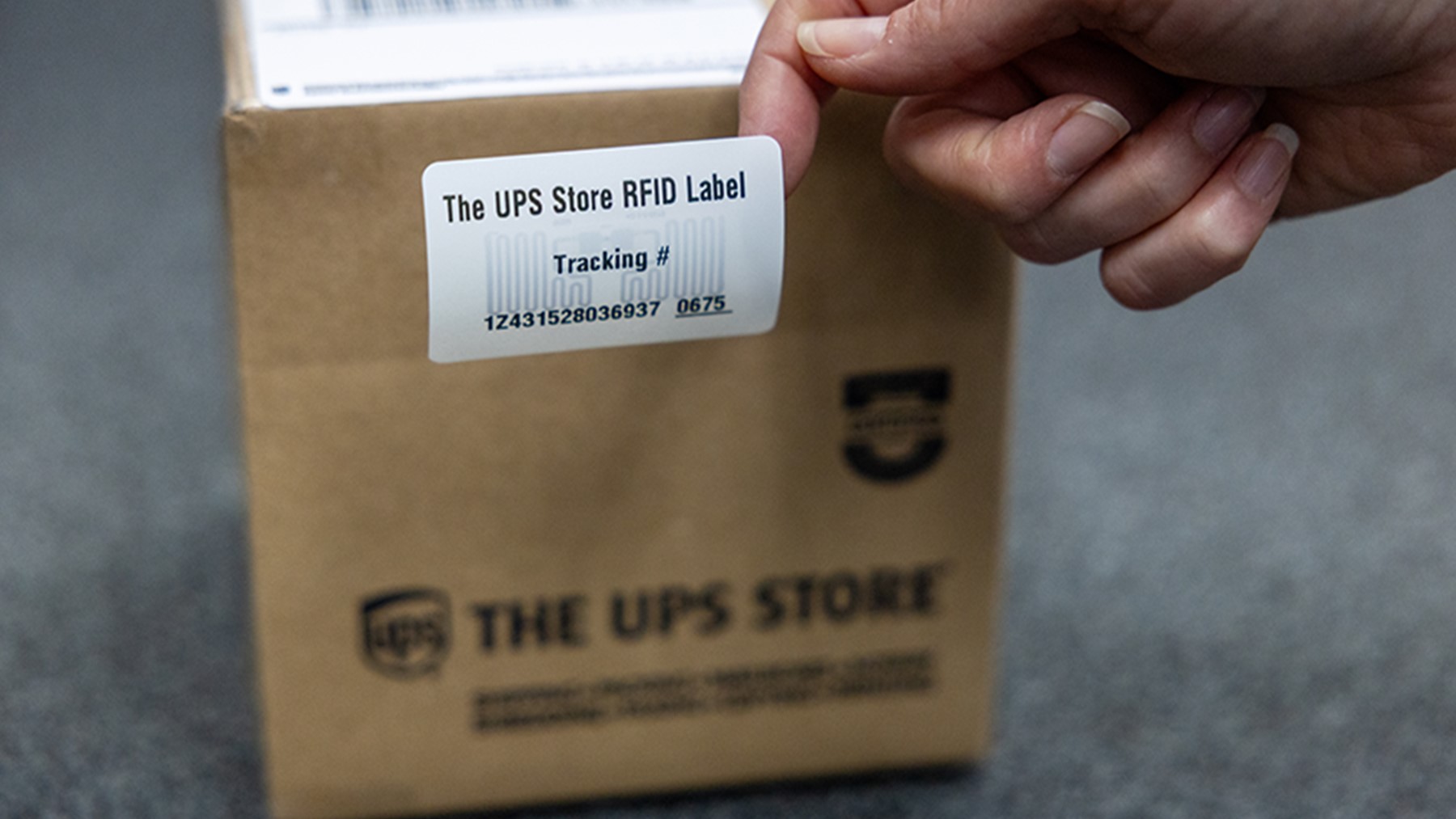
Why it matters: For logistics practitioners, this shift from scanning to sensing redefines the labor and error profile of parcel handling, directly impacting operational costs, workforce allocation, and service reliability for shippers.
Context: RFID has been used for high-value shipments for years; UPS’s scaled deployment marks a first for a major integrated network, setting a new visibility benchmark and intensifying the tracking-technology race with FedEx.
"United Parcel Service said Tuesday it has completed the second-phase deployment of radio frequency identification package sensing technology across its small package network, boosting productivity by eliminating the need for handheld scans." — FREIGHTWAVES
Commentary: The operational pivot is significant: eliminating handheld scans reallocates labor seconds at every touchpoint, directly attacking variable costs. For shippers, the promise is earlier, actionable data, but the real pressure is on vendors and competitors to match this level of integrated sensing or risk ceding ground on service transparency and efficiency claims.
Date: April 14, 2026
URL: https://freightwaves.com/news/ups-expands-deployment-of-automated-package-sensors-to-improve-tracking
AI Sentiment Score: Positive (40%)
AI Credibility Score: 10.0/10 — High
Scores and text generated by AI analysis of the source article indicated.
Impinj (PI) Sees Stock Growth Amid UPS RFID Rollout (Gurufocus)
Summary: On April 14, 2026, Impinj Inc (PI), a provider of RFID technology, is witnessing a notable increase in its stock value following UPS’s implementation of radio f UPS RFID rollout signals increased enterprise adoption of RFID tracking, potentially validating Impinj’s technology stack for broader logistics integration.
Why it matters: UPS RFID rollout signals increased enterprise adoption of RFID tracking, potentially validating Impinj’s technology stack for broader logistics integration.
Context: Focus on the operational scope of the UPS deployment; this indicates potential near-term demand signals for RFID hardware and integration services.
"On April 14, 2026, Impinj Inc (PI), a provider of RFID technology, is witnessing a notable increase in its stock value following UPS’s implementation of radio f." — GURUFOCUS
Commentary: The signal is still worth tracking, but the current extraction path did not yield enough body text for a fuller analytical read. The immediate implication is operational rather than speculative: watch how this changes budgets, workflows, or risk assumptions over the next cycle.
Date: April 14, 2026
URL: https://gurufocus.com/news/8792830/impinj-pi-sees-stock-growth-amid-ups-rfid-rollout
AI Sentiment Score: Neutral (50%)
AI Credibility Score: 10.0/10 — High
Scores and text generated by AI analysis of the source article indicated.
RFID END TO END SUCCESSFUL DEPLOYMENT (Youtube)
Summary: A video case study details a successful end-to-end RFID deployment in a retail environment, focusing on operational improvements. The system enables daily stock takes, precise inventory location, and detailed analytics on fitting room activity. This moves inventory management from guesswork and staff memory to a data-driven process.
Why it matters: For domestic manufacturers and retailers, this demonstrates a tangible path to improving resilience and customer service through granular, real-time inventory control, directly addressing labor and efficiency constraints.
Context: RFID technology has long been discussed, but successful, integrated deployments that yield actionable data beyond simple loss prevention remain a benchmark for operational maturity.
"{ts:637} union powered by tag ID solutions to elevate store operations and customer experience. … {ts:705} right time. Stores can do stock take on a daily basis and thus keep stocks as." — YOUTUBE
Commentary: The operational shift is from periodic, disruptive full counts to continuous, passive verification, fundamentally changing labor allocation. The fitting room analytics represent a new, high-value data layer for product development and merchandising, creating direct feedback loops between domestic production and point-of-sale performance. Successful deployment hinges on integrating union labor with new vendor tooling, a non-trivial change management hurdle.
Date: May 22, 2026 12:00 AM ET
URL: https://www.youtube.com/watch?v=DGzBqgRE1jY
AI Sentiment Score: Negative (50%)
AI Credibility Score: 10.0/10 — High
Scores and text generated by AI analysis of the source article indicated.
Tracking Tuesday: Triple-Mode IoT & the $100M RFID Rollout (Strategictracking)
Summary: Iridium’s launch of the 9604 triple-mode module unifies satellite, cellular, and GNSS in a smaller footprint, making global connectivity a baseline expectation. Simultaneously, UPS completes a $100M RFID network, automating package audits and eliminating manual scan errors. This technical progress is shadowed by CargoNet data showing a 41% surge in targeted impersonation fraud, where criminals exploit identity verification gaps rather than physical security.

Why it matters: For logistics operators, the capital expenditure and operational protocols for tracking and verification are being reset, forcing upgrades to both hardware and identity management systems to avoid new, sophisticated fraud vectors.
Context: The industry’s decade-long push for supply chain visibility is maturing from a data-gathering exercise into an integrated security and execution layer, where automation exposes human-process vulnerabilities.
"The 100% Visibility Era Welcome to this week’s Tracking Tuesday. The final week of April 2026 marks a structural pivot in the logistics industry. We are moving from “Best-Effort Tracking” to “Guaranteed." — STRATEGICTRACKING
Commentary: The convergence of Iridium’s hardware and UPS’s infrastructure creates a new operational floor: failure to automate tracking is now a competitive and security liability. However, the CargoNet report reveals that this creates a single point of failure in digital identity, shifting capital and labor budgets from physical guards to cybersecurity and credential verification services. The practical implication is that logistics managers must now treat carrier onboarding with the same rigor as network penetration testing.
Date: April 28, 2026 12:00 AM ET
URL: https://www.strategictracking.com/2026/04/28/tracking-tuesday-28th-april-2026/?amp=1
AI Sentiment Score: Negative (66%)
AI Credibility Score: 7.0/10 — Medium
Scores and text generated by AI analysis of the source article indicated.
Avery Dennison, ReCircled RFID pilot proves circular can scale (Just-Style)
Summary: A pilot program by Avery Dennison and ReCircled, in collaboration with two major apparel brands, demonstrated that embedding RFID tags into garments at the point of manufacture can automate end-of-life sorting. The system, using the atma.io platform, reduced manual scanning labor by up to 99.9% and increased sorting accuracy to 99%, compared to manual rates as low as 72%. It also captured essential product data for compliance and facilitated financial claims like Duty Drawback. The findings suggest these efficiency gains can offset the initial investment in RFID infrastructure.

Why it matters: For domestic manufacturers and brands, this quantifies a path to making circular economy operations cost-competitive, directly addressing the high labor costs that undermine U.S.-based recycling and resale initiatives.
Context: Scaling domestic circular fashion systems has been constrained by the manual labor required for sorting and processing, making it economically unviable against cheaper offshore options.
"Conducted in collaboration with two major apparel brands, the pilot embedded Avery Dennison’s RFID tags into garments, using the atma.io cloud platform to capture, store, manage and share garment life cycle data." — JUST-STYLE
Commentary: The pilot shifts the circular economy conversation from a sustainability cost center to an operational efficiency play. The critical constraint is now upstream: brands must commit to embedding RFID at manufacture, which requires re-engineering supply chain data flows and absorbing a marginal unit cost. For U.S. logistics operators, this creates a new service layer—automated reverse logistics—that could justify domestic processing hubs. The Duty Drawback automation alone re-frames unsold inventory from a write-off to a recoverable asset, altering financial planning for domestic stock.
Date: May 21, 2026 12:00 AM ET
URL: https://www.just-style.com/news/avery-dennison-recircled-rfid-pilot/
AI Sentiment Score: Negative (66%)
AI Credibility Score: 10.0/10 — High
Scores and text generated by AI analysis of the source article indicated.
Avery Dennison RFID Breakthrough Highlights Circular … (Sahmcapital)
Summary: Avery Dennison’s RFID automation system, deployed in the ReCircled pilot for circular fashion, has achieved near-total accuracy in sorting post-consumer garments. The pilot demonstrates that RFID tags can function reliably in the complex, high-volume environment of apparel recycling and reuse facilities. This moves the technology from a theoretical component of circular supply chains to a validated operational tool.
Why it matters: For domestic manufacturers and logistics operators, this breakthrough directly addresses a key bottleneck in scaling domestic circular production: the high labor cost and error rate of manual sorting, which has constrained the economic viability of ‘Made in USA’ recycling streams.
Context: Building domestic circular supply chains requires cost-effective automation to compete with offshore labor; manual sorting has been a major cost center and reliability hurdle for resale and recycling operations.
"Avery Dennison’s 99% sorting accuracy with ReCircled is important because it turns RFID from a concept into a working system in a complex use case, post consumer garment handling." — SAHMCAPITAL
Commentary: The operational consequence is a potential shift in facility design and labor allocation: fewer sorters, more technicians. This makes domestic ‘fibre-to-fibre’ recycling pipelines more financially plausible, but introduces new vendor lock-in and capital expenditure requirements for brands and recyclers investing in this infrastructure. The accuracy metric is less about the tech itself and more about its demonstrated performance under real-world, soiled, and variable conditions—the primary constraint for automation in this sector.
Date: May 24, 2026 12:00 AM ET
URL: https://www.sahmcapital.com/news/content/avery-dennison-rfid-breakthrough-highlights-circular-fashion-and-investor-considerations-2026-05-24
AI Sentiment Score: Negative (50%)
AI Credibility Score: 10.0/10 — High
Scores and text generated by AI analysis of the source article indicated.
Avery Dennison RFID Breakthrough Highlights Circular Fashion And Investor Considerations (Sahmcapital)
Summary: Avery Dennison’s ReCircled pilot has demonstrated near-total (99%) accuracy in using RFID tags to automate the sorting of post-consumer apparel for recycling and reuse. This operational proof point moves RFID from a theoretical sustainability tool into a validated component of circular fashion workflows. The development is significant for a company whose Intelligent Labels platform remains heavily tied to the apparel and retail sectors, which have faced softer demand.
Why it matters: For domestic manufacturing and recycling operators, this validates a potential path to automate high-volume, labor-intensive sorting, directly impacting facility costs and throughput for circular systems.
Context: RFID adoption in apparel has been largely limited to inventory and retail loss prevention; applying it to the messy, post-consumer waste stream represents a more complex technical and economic hurdle.
"Avery Dennison’s 99% sorting accuracy with ReCircled is important because it turns RFID from a concept into a working system in a complex use case, post consumer garment handling." — SAHMCAPITAL
Commentary: The pilot shifts the conversation from RFID’s capability to its operational economics. For brands facing EU traceability mandates, it offers a tangible compliance tool, but widespread adoption hinges on Avery Dennison’s ability to price tags competitively against barcode and computer-vision systems from rivals like Zebra. The real test is whether this pilot can scale beyond a controlled environment into the heterogeneous, high-volume streams of commercial textile recyclers.
Date: 1 week ago
URL: https://sahmcapital.com/news/content/avery-dennison-rfid-breakthrough-highlights-circular-fashion-and-investor-considerations-2026-05-24
AI Sentiment Score: Negative (62%)
AI Credibility Score: 10.0/10 — High
Scores and text generated by AI analysis of the source article indicated.
Post ID: 1da2dc92