Ancient DNA research and bioarchaeology
What ancient bones reveal about human history | Meer (Meer)
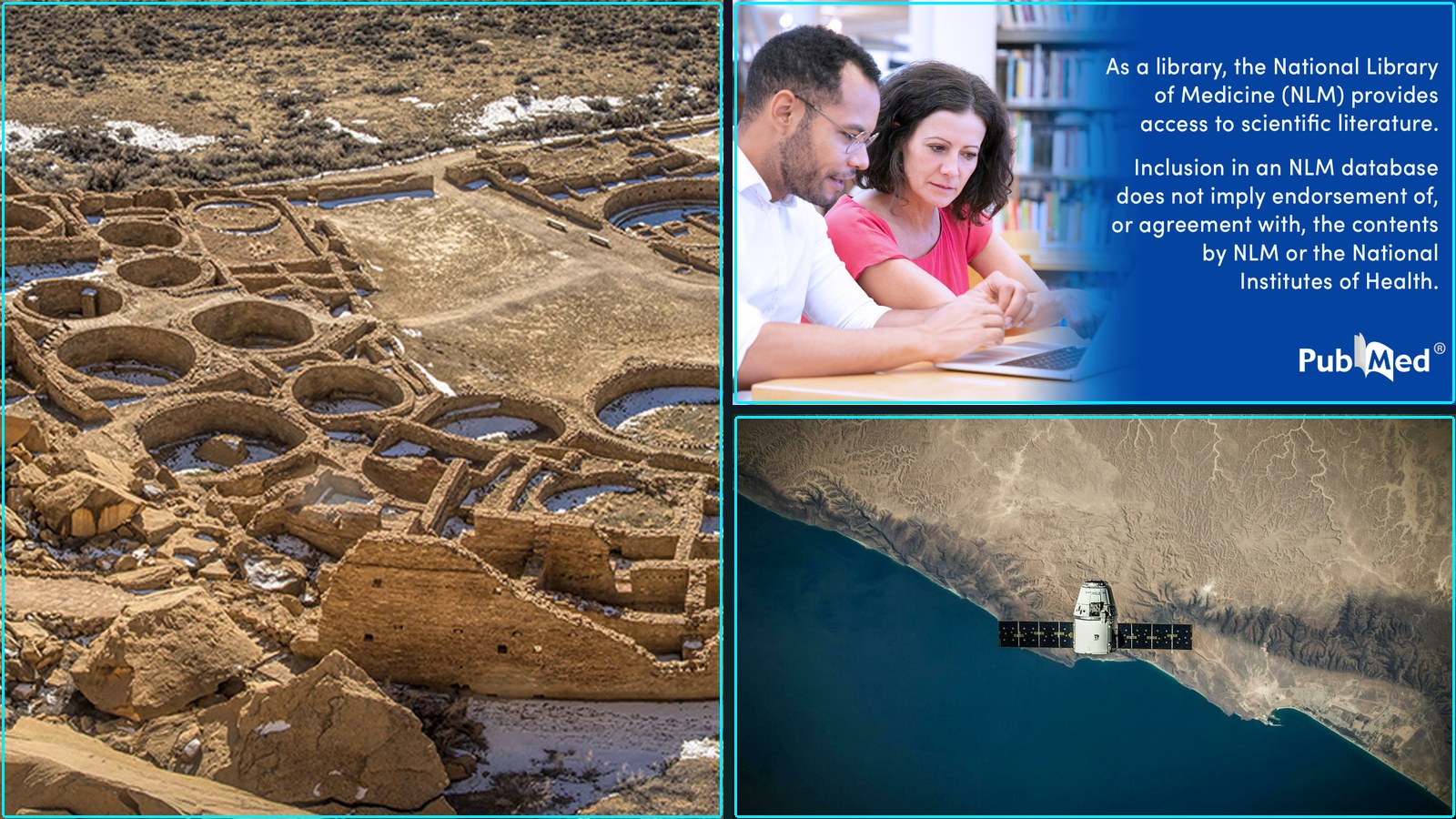
Summary: The convergence of satellite archaeology and ancient DNA analysis has moved from a promising interdisciplinary trend to a mature, data-driven scientific revolution. Researchers like Sarah Parcak are using orbital imagery and LiDAR to map thousands of previously unknown sites, while genomic studies of thousands of ancient skeletons are tracing population movements. This dual approach is systematically replacing speculative narratives about the past with empirical, large-scale datasets.

Why it matters: This shift from anecdotal to statistical evidence fundamentally alters the evidentiary standards for historical and archaeological claims, with direct implications for academic authority, cultural heritage management, and public understanding of human origins.
Context: For decades, archaeology relied on slow, localized excavation and physical anthropology on limited skeletal samples, creating a fragmented and often speculative historical record. The current paradigm leverages remote sensing and high-throughput genomics to generate continental-scale datasets.
"We’ve gone from mapping a few dozen ancient sites in one summer-long archaeological season to mapping hundreds, if not thousands, of sites in weeks." — MEER
Commentary: The operational tempo of discovery has accelerated by orders of magnitude, forcing a reevaluation of preservation priorities and challenging national heritage bodies to manage exponentially larger site inventories. This data deluge also risks creating a new form of academic gatekeeping, where access to satellite imagery and genomic databases determines who gets to write the next chapter of human history. The realignment from narrative-driven to data-driven historiography will inevitably provoke institutional friction between traditional field archaeologists and the new cohort of computational analysts.
Date: April 27, 2026 12:00 AM ET
URL: https://www.meer.com/en/102020-what-ancient-bones-reveal-about-human-history
AI Sentiment Score: Positive (40%)
AI Credibility Score: 10.0/10 — High
Scores and text generated by AI analysis of the source article indicated.
Navigating the ethics of ancient human DNA research – ASBMB (Asbmb)
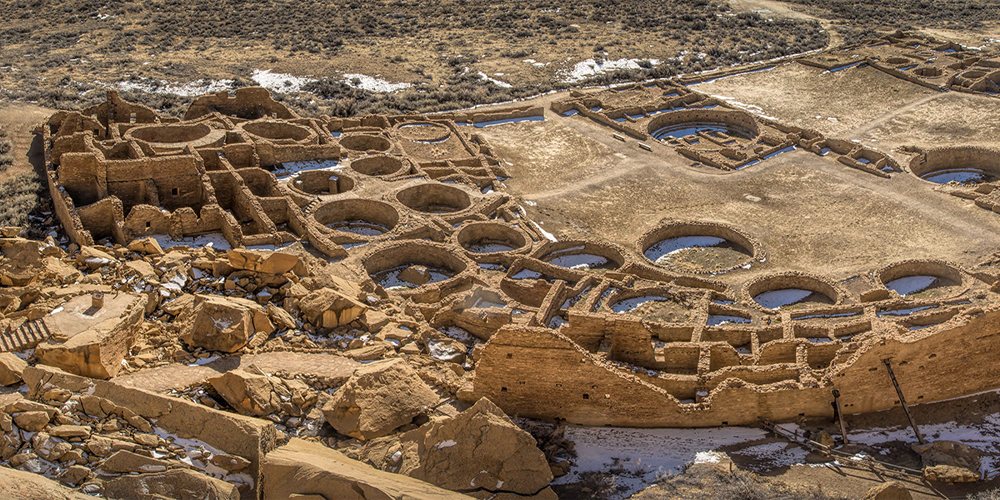
Summary: The 2022 Nobel Prize in Physiology or Medicine has intensified focus on paleogenomics, revealing details about human migrations, immune system evolution, and traits like lactose tolerance. This research, which extracts DNA from ancient human remains, now faces escalating ethical scrutiny, particularly regarding consent and consultation with descendant communities. A 2022 study on Puebloan and Diné ancestors, conducted without tribal consultation, exemplifies the field’s contentious ethical landscape.
Why it matters: The ethical framework for ancient DNA research is shifting from a purely scientific endeavor to one requiring formal engagement with descendant communities, directly impacting research protocols, funding, and institutional legitimacy.
Context: The field is moving beyond technical debates over contamination and preservation to confront foundational questions of sovereignty, consent, and historical justice, mirroring broader societal reckoning with colonial research practices.
"The 2022 Nobel Prize in physiology and medicine has brought fresh attention to paleogenomics, the sequencing of DNA of ancient specimens. … The study of ancient DNA has also shed light on." — ASBMB
Commentary: The ethical pivot reframes ancient DNA not as inert data but as a cultural legacy, forcing institutions like museums and universities to cede procedural control. This will likely formalize co-authorship agreements with tribes, reshape sample access policies, and create a new class of community review boards, fundamentally altering who benefits from and directs historical inquiry.
Date: April 21, 2026 12:00 AM ET
URL: https://www.asbmb.org/asbmb-today/science/021123/ethics-of-ancient-human-dna-research
AI Sentiment Score: Negative (85%)
AI Credibility Score: 8.4/10 — High
Scores and text generated by AI analysis of the source article indicated.
Insights into human adaptation from ancient DNA. (My.Dnagenics)
Summary: High-resolution ancient DNA datasets now enable direct tracking of allele frequency shifts over time, moving beyond static modern comparisons to observe the dynamics of natural selection as it happened. This allows researchers to pinpoint specific historical periods when genetic adaptations to environmental pressures, such as pathogens or dietary shifts, swept through populations.

Why it matters: It transforms population genetics from a forensic reconstruction of the past into a real-time observation of evolutionary pressure, with direct implications for understanding the genetic architecture of modern disease susceptibility.
Context: The field has progressed from proving feasibility of aDNA extraction to amassing biobank-scale temporal datasets, shifting the analytical focus from broad-strokes ancestry to precise selection mapping.
"# Insights into human adaptation from ancient DNA. MemarMoshrefi Dina, D Johnson, Olivia L OL et al. … URL https://pubmed.ncbi.nlm.nih.gov/42050058/ … Ancient DNA (aDNA) has revolutionized our ability to study human evolution." — MY.DNAGENICS
Commentary: The operational shift is from inferring selection to watching it unfold in the genomic record, which reframes debates on adaptation speed and specificity. This directly challenges models based solely on modern genetic diversity, forcing a recalibration of how institutions like the NIH or biopharma firms interpret genetic risk scores tied to ancestral environments. The consequence is a more historically grounded, and potentially more accurate, framework for predicting genotype-phenotype relationships in contemporary clinical genetics.
Date: April 28, 2026 12:00 AM ET
URL: https://my.dnagenics.com/ancestry/publications/details/42050058
AI Sentiment Score: Negative (60%)
AI Credibility Score: 10.0/10 — High
Scores and text generated by AI analysis of the source article indicated.
Probing the zooarchaeological record across time and space for ancient pathogen DNA (Pmc.Ncbi.Nlm.Nih.Gov)
Summary: A 2026 study in Nature Communications demonstrates the systematic recovery of ancient pathogen DNA from zooarchaeological remains, applying high-throughput sequencing to animal bones across Eurasia. The research identifies pathogen lineages in domesticated and wild species, tracing disease reservoirs and transmission pathways over millennia. This establishes a methodological framework for integrating animal remains into paleogenomic studies of disease history.

Why it matters: It operationalizes the ‘One Palaeopathology’ concept, shifting disease history from a human-centric narrative to an ecological one, with direct implications for understanding zoonotic origins and long-term host-pathogen co-evolution.
Context: Ancient DNA has revolutionized the study of human pathogens, but the animal side of the equation—critical for zoonoses—has remained under-sampled due to methodological challenges and focus. This work represents a technical and conceptual expansion of the paleogenomic toolkit into the broader faunal record.
"Nat Commun. 2026 Apr 30;17:3469. doi: 10.1038/s41467-026-71543-4 # Probing the zooarchaeological record across time and space for ancient pathogen DNA … Ancient DNA holds promise to be a powerful tool for exploring." — PMC.NCBI.NLM.NIH.GOV
Commentary: The move from promise to protocol here is significant; it transforms animal bones from cultural artifacts into epidemiological datasets. This allows historians and epidemiologists to test hypotheses about specific zoonotic events, like the Black Death or early tuberculosis, against concrete genomic evidence from potential reservoir species. For institutions managing archaeological collections, it creates new curation imperatives and collaborative demands between archaeologists, geneticists, and veterinarians. Ultimately, it reframes ‘exchange’ in the ancient world to include not just goods and ideas, but also the microbial passengers that shaped demographic and political outcomes.
Date: April 30, 2026 12:00 AM ET
URL: https://pmc.ncbi.nlm.nih.gov/articles/PMC13133277/
AI Sentiment Score: Negative (50%)
AI Credibility Score: 10.0/10 — High
Scores and text generated by AI analysis of the source article indicated.
Applications and research advances of the ancient plant … (Pubmed.Ncbi.Nlm.Nih.Gov)
Summary: A review article from 2026 synthesizes the maturation of ancient DNA (aDNA) techniques, highlighting their established impact on human and animal evolutionary studies and their systematic application to plant research. The piece frames this as a methodological transition from ad hoc breakthroughs to a standardized, scalable scientific discipline.

Why it matters: The formalization of aDNA protocols for plants opens a new evidentiary frontier for understanding agricultural origins, ecological change, and long-term human-environment interactions, moving beyond the anthropocentric focus of earlier aDNA work.
Context: aDNA research has been dominated by high-profile hominin and megafauna studies; plant genomics has lagged due to technical challenges with degraded chloroplast DNA and contamination. This marks a shift toward methodological parity.
"随着古DNA提取、建库及测序技术的不断革新,该技术也被引入植物研究领域,并逐渐形成规范化、体系化的研究方法与技术流程。." — PUBMED.NCBI.NLM.NIH.GOV
Commentary: The operational shift from ‘introduced’ to ‘systematized’ signals that plant aDNA is moving from proof-of-concept to a reproducible data pipeline. This could pressure archaeology and paleoecology to integrate genetic evidence of domestication pathways and paleoenvironments as a core dataset, potentially revising narratives of the Neolithic Revolution and climate resilience.
Date: April 20, 2026 12:00 AM ET
URL: https://pubmed.ncbi.nlm.nih.gov/41992885/
AI Sentiment Score: Negative (60%)
AI Credibility Score: 10.0/10 — High
Scores and text generated by AI analysis of the source article indicated.
Post ID: e87f3450