
Software and Tool Updates for VFX Artists
Scene Auditor Pro targets Blender bloat (Digitalproduction)
Summary: Scene Auditor Pro, a new Blender add-on priced at $15, targets the accumulation of technical debt in production scenes. It visualizes dependency graphs to identify orphaned datablocks, duplicate materials, and oversized textures that bloat files and slow workflows. The tool is positioned for export validation to game engines like Unreal and Unity, emphasizing a safety-first approach to automated cleanup with backups and reversibility.

Why it matters: It directly addresses a core cost and efficiency pain point in VFX and real-time pipelines: the hidden overhead of unmanaged scene data that inflates memory use, extends load times, and complicates handoffs.
Context: Blender’s adoption in professional pipelines has increased, but its native tools for managing complex, iterated scenes can be insufficient for large-scale production hygiene.
"Big productions rarely die from a single catastrophic mistake. They usually drown in tiny leftovers. Unused meshes that never got purged. Materials duplicated by imports. Textures that ballooned from sensible to cinematic for no reason." — DIGITALPRODUCTION
Commentary: The tool’s low cost and focus on dependency mapping could shift cleanup from a senior-artist timesink to a more routine, junior-led task, potentially altering vendor staffing models for scene optimization. Its explicit safety protocols are a necessary concession to studio risk aversion, but real impact depends on integration into automated pre-export checks, reducing last-minute bottlenecks.
Date: Tue, 19 May 2026 07:00:00 +0000
URL: https://digitalproduction.com/2026/05/19/scene-auditor-pro-targets-blender-bloat/
AI Sentiment Score: Negative (75%)
AI Credibility Score: 10.0/10 — High
Scores and text generated by AI analysis of the source article indicated.
Silhouette 2026 gets smarter roto and 3D heads (Digitalproduction)
Summary: Silhouette 2026 introduces a suite of updates targeting core VFX production bottlenecks: roto, 3D head tracking, and pipeline integration. The release enhances its ML-driven matting tools with multi-object workflows and improved temporal consistency, while a new Head Track ML feature automates 3D head mesh creation for face-aware effects. It also deepens Cryptomatte-centric data flow and adds remote automation via JSON-RPC and MCP servers. These changes aim to reduce manual steps in matte creation, cleanup, and tracking without fully automating artists out of the loop.

Why it matters: This directly impacts VFX vendor throughput, staffing requirements for roto/paint tasks, and the economic feasibility of complex beauty work and face replacements.
Context: VFX software is in a phase of integrating ML assistance to handle labor-intensive, repetitive tasks, but success hinges on maintaining artist control and fitting into existing studio pipelines.
"Be wary: running many ML masking nodes can load multiple custom models onto the GPU and fill VRAM quickly, so the multi-object approach inside a single Mask ML node matters for both speed and sanity." — DIGITALPRODUCTION
Commentary: The multi-object ML workflow and integrated Cryptomatte data flow are operational shifts; they reduce file sprawl and GPU overhead, which changes shot budgeting. The new automation servers (JSON-RPC, MCP) are the sleeper feature, enabling studio pipeline tools and AI assistants to directly manipulate comps, which could centralize technical direction and alter vendor-client review dynamics.
Date: Thu, 28 May 2026 18:14:00 +0000
URL: https://digitalproduction.com/2026/05/28/silhouette-2026-gets-smarter-roto-and-3d-heads/
AI Sentiment Score: Neutral (33%)
AI Credibility Score: 10.0/10 — High
Scores and text generated by AI analysis of the source article indicated.
Blackmagic Design releases Fusion Studio 21.0 in beta (Cgchannel)
Summary: Blackmagic Design has released Fusion Studio 21.0 in public beta, a major update to its compositing software. The release integrates the third-party Krokodove motion graphics toolkit, expands deep compositing and USD workflows, and adds performance improvements. It also marks Fusion’s move to native support for Windows on ARM. A version of the Fusion toolset is included in the concurrent DaVinci Resolve 21.0 beta.

Why it matters: This update directly impacts VFX and motion graphics pipeline efficiency, vendor tooling choices, and the cost structure of complex compositing work.
Context: Fusion Studio operates in a competitive mid-market compositing segment, historically pressured by high-end tools like Nuke and broader creative suites. Blackmagic’s strategy of bundling a capable version within DaVinci Resolve’s free tier continues to reshape adoption economics.
"Previously a free third-party add-on, it provides over 70 tools for motion design, from standard image filters to warping and morphing effects, and a range of titling and text animation tools." — CGCHANNEL
Commentary: The formal integration of Krokodove is a strategic consolidation that reduces pipeline friction for motion graphics artists and may pressure standalone tool vendors. Native deep color correction and improved USD support signal a push to handle more complex, multi-layer VFX work within Fusion, potentially shifting some high-end compositing work from more expensive solutions. The ARM-native build is a pragmatic hedge for mobile and on-set workflows, though its immediate impact is limited to a specific hardware ecosystem.
Date: Thu, 14 May 2026 08:32:59 +0000
URL: https://www.cgchannel.com/2026/05/blackmagic-design-releases-fusion-studio-21-0-in-beta/
AI Sentiment Score: Negative (55%)
AI Credibility Score: 10.0/10 — High
Scores and text generated by AI analysis of the source article indicated.
World Machine 4059 ‘Dragontail Peak’ is out (Cgchannel)
Summary: World Machine Software has released Build 4059, the first in its ‘Dragontail Peak’ series, introducing support for Vector Displacement Maps (VDMs) to generate true 3D terrain with overhangs and undercuts. The update overhauls the 3D viewport with HDR lighting and environment fog, and includes workflow improvements to the node graph, macros, and export. Future releases in the series will expand the historically Windows-only application to macOS and Linux.

Why it matters: The shift from heightfield to VDM-based terrain generation directly alters the quality ceiling and economic calculus for complex environment creation in games and VFX, enabling new classes of assets without resorting to manual sculpting.
Context: World Machine is a foundational procedural terrain tool used in AAA game and VFX pipelines for over two decades, where heightfield limitations have constrained the realism of steep slopes and high-resolution detail.
"World Machine 4059 ‘Dragontail Peak’ is out World Machine Software has released World Machine 4059: a major update to the terrain generation software, and the first of the new ‘Dragontail Peak’ series." — CGCHANNEL
Commentary: VDM support repositions World Machine from a pure heightfield generator into a tool capable of producing final, complex geometry for hero assets, potentially reducing downstream sculpting labor in DCC apps. The planned cross-platform expansion will further integrate it into macOS/Linux-centric studio pipelines, increasing vendor competition against tools like Houdini and Gaea.
Date: Mon, 18 May 2026 09:59:38 +0000
URL: https://www.cgchannel.com/2026/05/world-machine-software-ships-world-machine-4059-dragontail-peak/
AI Sentiment Score: Positive (66%)
AI Credibility Score: 10.0/10 — High
Scores and text generated by AI analysis of the source article indicated.
Boris FX releases Silhouette 2026 (Cgchannel)
Summary: Boris FX has released Silhouette 2026, a major update to its industry-standard rotoscoping and paint software. The release centers on new AI-powered tools for 3D head tracking, object tracking, and point tracking, alongside updates to existing AI matte generation and paint systems. It also introduces new pipeline integration features, including JSON-RPC and MCP servers for remote control and AI tool integration, and a native Python package manager.
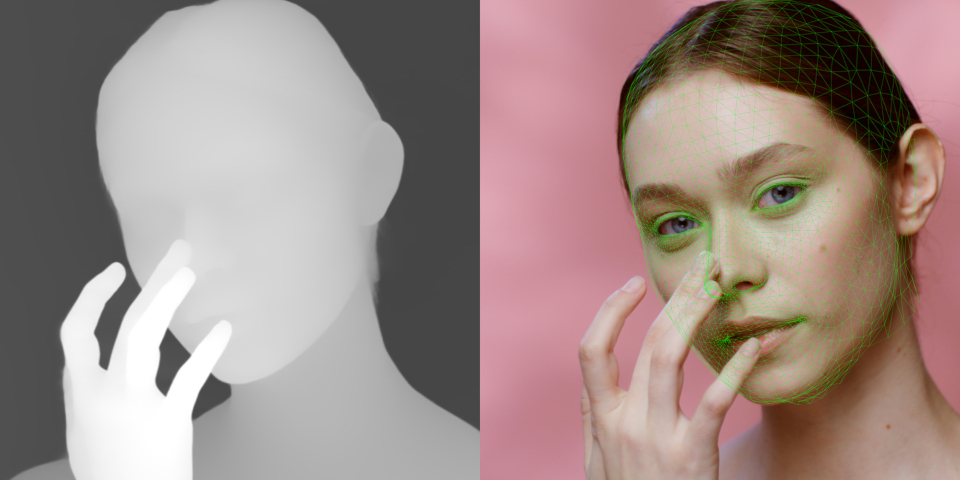
Why it matters: This release directly impacts VFX studio throughput and labor economics by automating complex, manual tasks like beauty work and object masking, potentially shifting staffing requirements and vendor bidding models for rotoscope-heavy sequences.
Context: Silhouette is a 20-year-old tool acquired by Boris FX in 2019; its development has increasingly focused on AI-assisted workflows to address persistent pipeline bottlenecks in roto and paint.
"Boris FX releases Silhouette 2026 Boris FX has released Silhouette 2026, the latest version of its roto and paint software. It’s a sizeable release, adding new AI-based 3D head tracking, object tracking." — CGCHANNEL
Commentary: The expansion of AI tracking into 3D head meshes and class-based object detection (faces, license plates) represents a move from assistive masking to generative scene understanding, which could compress schedules for beauty and digital makeup work. The new MCP server exposing Silhouette’s API to external AI tools like Claude signals a strategic pivot towards an AI-agent-integrated pipeline, potentially reducing the need for deep, bespoke scripting. Combined with the resolution-independent paint workflow, this update pressures mid-tier vendors to adopt or risk being underbid on shots where AI can demonstrably reduce artist hours.
Date: Fri, 29 May 2026 10:54:46 +0000
URL: https://www.cgchannel.com/2026/05/boris-fx-releases-silhouette-2026/
AI Sentiment Score: Negative (50%)
AI Credibility Score: 10.0/10 — High
Scores and text generated by AI analysis of the source article indicated.
New motion graphics tool Caddis puts a node graph in every layer (Cgchannel)
Summary: Motion designer Mike Gaynor has launched Caddis, a beta-stage GPU-accelerated compositing and motion graphics tool. It merges a layer-based timeline workflow with node-based procedural power within each layer, positioning itself as an alternative to After Effects rather than a direct replacement. The tool is part of a trend of ‘vibe-coded’ software built by practitioners using AI-aided development, with a planned commercial price of $129 upon release in June 2026.
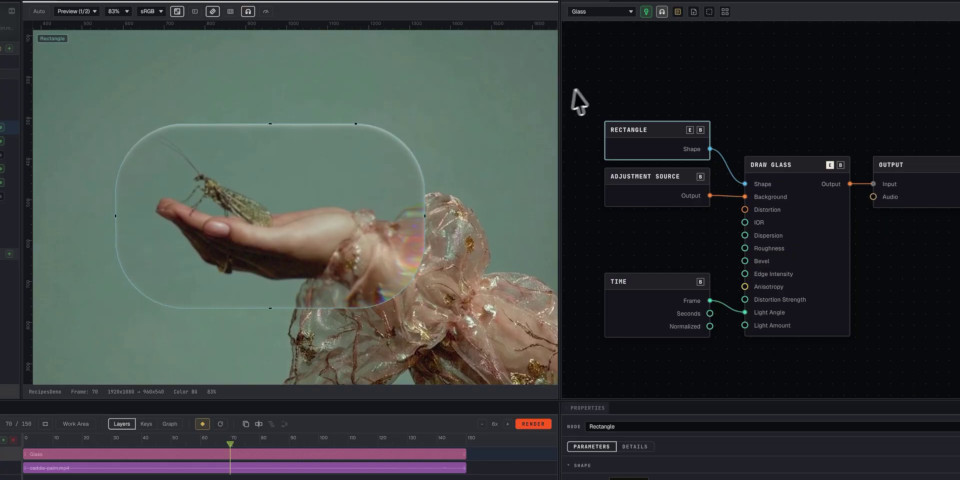
Why it matters: It introduces a hybrid workflow that could alter artist throughput and the complexity ceiling for mid-tier motion design shops, while its development model signals a shift in how specialized tools are created and who creates them.
Context: This follows recent free releases of alternatives like Autograph and Cavalry, reflecting sustained demand for After Effects competitors that reduce friction for artists accustomed to layer-based editing.
"New motion graphics tool Caddis puts a node graph in every layer Motion designer Mike Gaynor has unveiled Caddis, an interesting new compositing and motion graphics tool that combines node-based and layer-based." — CGCHANNEL
Commentary: Caddis’s layer-node hybrid directly targets the procedural flexibility bottleneck in standard motion graphics pipelines, potentially raising quality ceilings for complex shots without forcing a full shift to node-only compositors. Its practitioner-led, AI-assisted development model could pressure incumbent vendors by validating faster, niche-focused tool creation, though its lack of project import locks it into greenfield work. The cloud-credit model for AI nodes (depth, matting) further segments cost, moving compute from a fixed overhead to a variable operational expense.
Date: Tue, 19 May 2026 09:50:31 +0000
URL: https://www.cgchannel.com/2026/05/new-motion-graphics-tool-caddis-puts-a-node-graph-in-every-layer/
AI Sentiment Score: Negative (66%)
AI Credibility Score: 10.0/10 — High
Scores and text generated by AI analysis of the source article indicated.
Polygonflow releases Dash 1.11 (Cgchannel)
Summary: Polygonflow has iterated its Unreal Engine 5 world-building toolset Dash from version 1.7 to 1.11, focusing on procedural environment creation, asset management, and AI-assisted workflows. Key additions include a procedural vines tool, a PureRef-style reference board, GPT-4-based asset tagging, a revamped preset system, and the ability to draw complex procedural setups directly into the viewport. The updates consolidate Dash’s position as a bridge between high-level artistic intent and Unreal Engine’s technical complexity, targeting real-time visualization across games, VFX, and archviz.
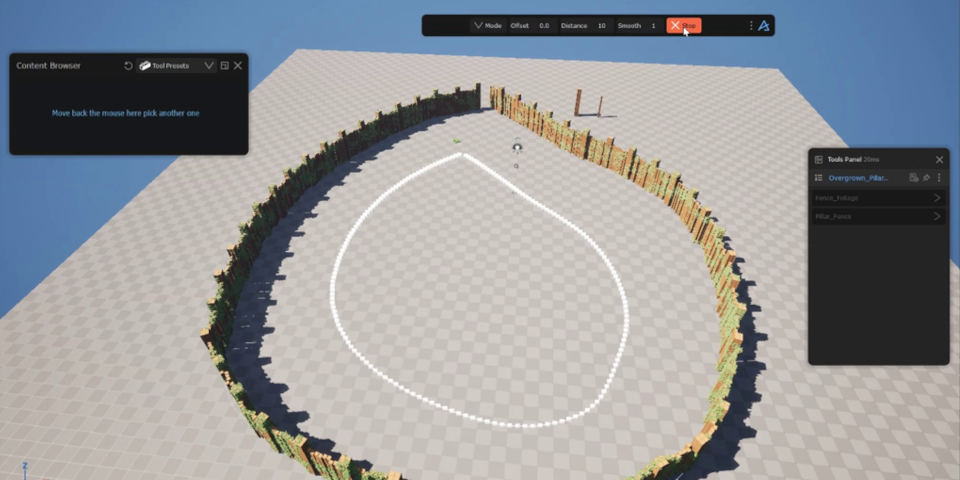
Why it matters: For VFX and real-time production studios, Dash’s evolution directly impacts environment art throughput, reduces dependency on specialized technical artists for common tasks, and shifts the economics of complex scene assembly.
Context: The toolset landscape for real-time environment creation is increasingly competitive, with vendors aiming to abstract UE5’s node-based complexity into artist-friendly, procedural interfaces. This push for abstraction is a direct response to persistent talent shortages and schedule pressure.
"The main change is the ability to draw Presets directly into the viewport by [Ctrl]-dragging, making it possible to add complex procedural content to projects more intuitively." — CGCHANNEL
Commentary: The shift from node graphs to viewport-drawn presets represents a material change in artist velocity, lowering the skill floor for assembling complex environments. This, combined with AI-assisted tagging and a GPT-4-powered assistant, signals a strategic move to capture market share from generalist artists and smaller studios by reducing reliance on deep UE5 expertise. The tiered pricing model explicitly targets freelancers and small teams, potentially disrupting the vendor ecosystem for specialized scattering and terrain tools.
Date: Wed, 27 May 2026 06:00:58 +0000
URL: https://www.cgchannel.com/2026/05/check-out-the-new-features-in-ue5-world-building-tool-dash/
AI Sentiment Score: Negative (50%)
AI Credibility Score: 10.0/10 — High
Scores and text generated by AI analysis of the source article indicated.
The Pixel Farm adds new point cloud toolset to PFTrack 26.05 (Cgchannel)
Summary: The Pixel Farm has released PFTrack 26.05.19, a significant update to its matchmoving software. The release introduces a new Hero Cloud node capable of generating dense point clouds from a single solved camera track, requiring only parallax from production footage and no additional hardware like LiDAR. These point clouds can be exported in USD or FBX for traditional pipelines or as COLMAP data for Gaussian Splatting workflows, with higher-tier licenses enabling mesh conversion via the Photo Mesh node.
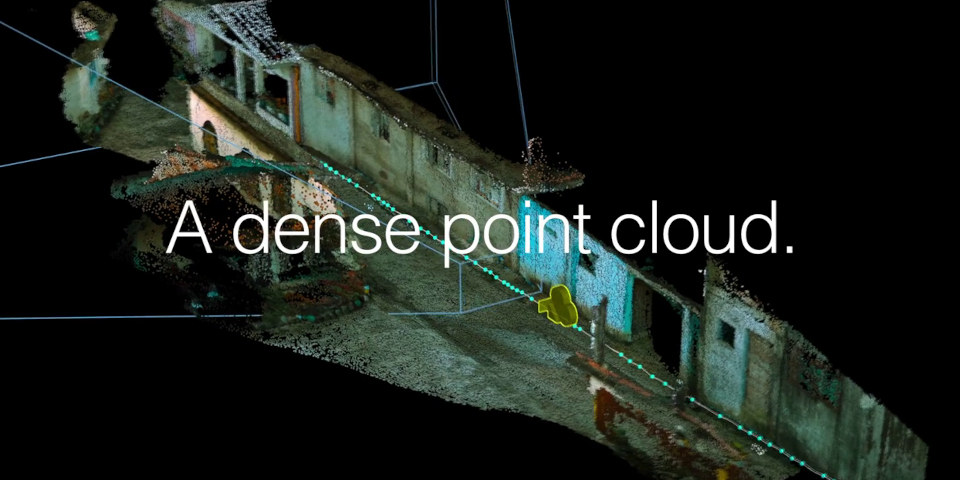
Why it matters: This directly impacts the cost and speed of on-set data acquisition and post-production scene reconstruction, potentially reducing reliance on specialized capture hardware and streamlining the handoff between tracking and environment build.
Context: The VFX industry is under pressure to accelerate pipeline throughput while managing costs, with a parallel push to integrate newer techniques like Gaussian Splats alongside established USD-based workflows.
"The Pixel Farm adds new point cloud toolset to PFTrack 26.05 The Pixel Farm has released PFTrack 26.05.19, the latest version of its 3D camera tracking app. It’s a sizeable update, adding." — CGCHANNEL
Commentary: The operational consequence is a shift in leverage: VFX vendors and in-house studios can now derive more 3D data from standard plate photography, potentially diminishing the bargaining power of specialized lidar scanning vendors on set. This lowers the barrier for mid-tier projects to achieve high-fidelity environment reconstruction, but places new computational and skill demands on matchmove artists to validate and process these dense outputs.
Date: Sat, 30 May 2026 15:26:53 +0000
URL: https://www.cgchannel.com/2026/05/the-pixel-farm-adds-new-point-cloud-toolset-to-pftrack-26-05/
AI Sentiment Score: Negative (66%)
AI Credibility Score: 10.0/10 — High
Scores and text generated by AI analysis of the source article indicated.
Blender Singularity lands in 4K HDR (Digitalproduction)
Summary: Blender Studio has released ‘Singularity,’ a 4K HDR short film, alongside its complete production assets under a Creative Commons Attribution license. The release functions as a real-world pipeline test kit, providing high-quality encodes, frames, and procedural animation systems built with Geometry Nodes. It emphasizes a painterly visual style achieved through a mix of hand-crafted and generative techniques.

Why it matters: This provides a free, high-fidelity benchmark for studios to stress-test their HDR workflows, asset management, and procedural animation toolchains against a real production.
Context: Open-source DCC projects like Blender have historically used open films to validate software and pipeline development, but this release elevates the practice by packaging a full 4K HDR deliverable as a practical testing resource.
"The release matters less for the plot and more for what it packages with the movie. The singularity includes downloads of ALL production assets, frames, and high quality encodes under a Creative Commons Attribution license. That makes it usable as real-world test data for storage, conform, and review, not just a nice watch on a big screen." — DIGITALPRODUCTION
Commentary: This shifts the open film from a promotional artifact to a functional pipeline diagnostic. For VFX and animation studios, it lowers the cost of validating HDR monitoring and color management, while the released Geometry Nodes setups offer a direct comparison point for in-house procedural animation efficiency. The CC-BY license, however, introduces a compliance layer that may complicate its use in proprietary client deliverables.
Date: Fri, 15 May 2026 10:00:00 +0000
URL: https://digitalproduction.com/2026/05/15/blender-singularity-lands-in-4k-hdr/
AI Sentiment Score: Negative (80%)
AI Credibility Score: 10.0/10 — High
Scores and text generated by AI analysis of the source article indicated.
Simple Tree Tools 3.0 goes procedural (Digitalproduction)
Summary: Simple Tree Tools 3.0, a Houdini-native plugin for procedural vegetation, has launched with a focus on non-destructive, parameter-driven workflows and hybrid scan integration. It introduces a tiered licensing model directly tied to user revenue and studio scale, with clear commercial use rights. The update emphasizes integration into existing environment pipelines over creating standalone hero assets.

Why it matters: It lowers the barrier to iterative, shot-specific environment work and codifies a commercial model that directly impacts freelance and studio budgeting for procedural tooling.
Context: The VFX industry is increasingly adopting procedural and non-destructive workflows to manage iteration and complexity, while the market for third-party Houdini tools is maturing with more defined commercial licensing.
"The toolset uses one-time purchase licensing with no subscriptions or recurring fees, and purchases cover all v3.x updates delivered automatically through Gumroad. Future major versions such as v4.0 may require a separate purchase, with a discounted upgrade price mentioned." — DIGITALPRODUCTION
Commentary: The explicit, revenue-based licensing tiers formalize the tool’s place in the pipeline: it’s a capital expense for studios but a variable cost tied to freelancer income, affecting adoption calculus. The scan-extension nodes specifically target the economics of reusing library assets, potentially reducing the need for bespoke sculpting on secondary shots. However, the dependency on matching Houdini license types (Apprentice vs. Commercial) introduces a compliance risk that pipeline TDs must now manage.
Date: Mon, 18 May 2026 05:00:00 +0000
URL: https://digitalproduction.com/2026/05/18/simple-tree-tools-3-0-goes-procedural/
AI Sentiment Score: Negative (83%)
AI Credibility Score: 10.0/10 — High
Scores and text generated by AI analysis of the source article indicated.
DreamWorks style mesh controls land in Maya (Digitalproduction)
Summary: DreamWorks Animation’s Premo-inspired meshController plugin for Autodesk Maya has been released as a free, production-grade C++ toolset. It introduces surface pinning and mesh-driven controls, allowing riggers to bind controls directly to deforming character meshes, with nodes like surfacePin and vertexWrap designed for speed and predictable failure. The release targets facial and character rigging workflows, offering an alternative to floating curve controls with integrated VP2 viewport tooling.

Why it matters: This directly alters the labor and tooling calculus for high-volume character animation pipelines, potentially reducing rigging overhead and increasing artist throughput for studios using Maya.
Context: The pursuit of more intuitive, mesh-adherent controls has been a long-standing industry challenge, with major studios like DreamWorks developing proprietary solutions; this release democratizes that approach within a widely used commercial DCC.
"The core idea borrows from the DreamWorks Animation Premo approach: controls that sit on the character surface instead of floating curve shapes. For artists, that means you interact directly with mesh-based controls that feel visually welded to the character, while still behaving like standard Maya controls for selection and manipulation." — DIGITALPRODUCTION
Commentary: The release pressures commercial rigging tool vendors to match its feature set or risk displacement, particularly for episodic and feature animation where speed and visual clarity are paramount. It also signals a maturation of open-source, studio-grade tools that could erode the premium pricing of third-party plugins. However, adoption will hinge on its performance under complex, layered deformations and its integration into existing asset pipelines—factors the documentation cautiously acknowledges by warning against wholesale replacement of curve controls.
Date: Wed, 27 May 2026 05:00:00 +0000
URL: https://digitalproduction.com/2026/05/27/dreamworks-style-mesh-controls-land-in-maya/
AI Sentiment Score: Negative (66%)
AI Credibility Score: 10.0/10 — High
Scores and text generated by AI analysis of the source article indicated.
Foundry Releases Nuke Stage Virtual Production Application | Animation World Network (Awn)
Summary: Foundry has released a significant update to Nuke Stage, its virtual production and in-camera VFX software, integrating native USD workflows, Gaussian Splat rendering, NotchLC support, and enhanced metadata tracking. The development is informed by early production use, including on an Amazon MGM feature. The tool is designed to unify pre-production, on-set, and post workflows on standard hardware, aiming to reduce iteration time and proprietary infrastructure dependencies.

Why it matters: This directly impacts the cost and complexity of virtual production pipelines, potentially altering vendor selection, on-set crew composition, and the economic viability of in-camera VFX shots for mid-tier projects.
Context: Virtual production tooling has been fragmented between game engines and high-end proprietary systems, creating pipeline friction and high specialization costs. Foundry’s move leverages its entrenched post-production position to bridge this gap.
"Nuke Stage is really exciting because it’s a product designed from the ground up for virtual production. It takes the best of what we see in plates, which is fidelity and high-quality playback, as well as a degree of flexibility that we see with game engines, and puts them together into one package." — AWN
Commentary: By embedding Gaussian Splats and NotchLC, Foundry is commoditizing high-fidelity real-time rendering, which could pressure specialty vendors and lower the quality ceiling for smaller studios. The native USD and Python hooks suggest a deliberate play to become the central orchestration layer, potentially reducing reliance on Unreal Engine for final pixel output and shifting labor towards compositors rather than real-time technical artists.
Date: 1 week ago
URL: https://www.awn.com/news/foundry-releases-nuke-stage-virtual-production-application
AI Sentiment Score: Negative (50%)
AI Credibility Score: 10.0/10 — High
Scores and text generated by AI analysis of the source article indicated.
Epic Games announces Unreal Engine 6 with first demonstration in new era of Rocket League – Mix Vale (Mixvale.Br)
Summary: Epic Games announced Unreal Engine 6 via a demonstration at the Rocket League Championship Series, with developer Psyonix detailing its migration plans. The engine update focuses on optimizing data processing for large-scale multiplayer titles and enhancing real-time physics and graphical fidelity, including dynamic reflections, fluid simulation, and high-refresh-rate support. The transition for Rocket League is framed as the brand’s largest structural investment since going free-to-play, with a gradual rollout planned to avoid disrupting the 2026 competitive season.

Why it matters: The engine’s feature set and migration priorities will dictate tooling, pipeline, and staffing decisions for partner studios and VFX vendors for the next five years, directly impacting project economics and competitive moats.
Context: UE5’s cycle is concluding; Epic is signaling a new technical baseline focused on live-service and competitive multiplayer stability, moving beyond the cinematic fidelity focus of UE5’s initial rollout.
"Epic Games focused on developing applied artificial intelligence tools for generating high-fidelity textures and advanced geometric rendering of metal surfaces." — MIXVALE.BR
Commentary: The explicit push into AI-assisted texture and surface generation signals a coming reduction in high-cost, manual asset creation labor, particularly for environment and prop teams. By prioritizing ease of migration and competitive stability, Epic is betting on retaining its engine market share by lowering the switching cost for live-service titles, which could lock in vendor relationships and tooling pipelines for half a decade. The focus on high-refresh-rate support and netcode modernization underscores a shift in engine development priorities toward esports and competitive integrity as a market differentiator.
Date: 6 days ago
URL: https://www.mixvale.com.br/2026/05/24/epic-games-announces-unreal-engine-6-with-first-demonstration-in-new-era-of-rocket-league-en/
AI Sentiment Score: Positive (42%)
AI Credibility Score: 10.0/10 — High
Scores and text generated by AI analysis of the source article indicated.
Unreal Engine 6 announced: Rocket League first | tbreak (Tbreak)
Summary: Epic Games announced Unreal Engine 6 at the RLCS Paris Major 2026, with Rocket League confirmed as the first title to migrate, followed by Fortnite. The stated primary goal is to resolve persistent performance issues plaguing Unreal Engine 5, specifically stuttering, shader compilation delays, and console optimization challenges. The announcement also reinforces Tim Sweeney’s vision of a connected ecosystem enabling shared accounts and assets across multiple Unreal-powered games.

Why it matters: For VFX and CGI professionals, a new engine iteration directly impacts pipeline stability, vendor tooling dependencies, and the economics of complex real-time rendering work for film, episodic, and commercial production.
Context: Unreal Engine 5’s adoption in high-end VFX and virtual production has been tempered by performance and optimization hurdles, creating friction for studios reliant on real-time workflows.
"Epic Games revealed Unreal Engine 6 during the RLCS Paris Major 2026, with Rocket League confirmed as the first game to receive the engine upgrade. The announcement, which received thunderous applause from." — TBREAK
Commentary: Epic’s prioritization of Rocket League over Fortnite for the initial port is a clear signal of a more cautious, validation-driven rollout, suggesting migration tools for existing UE4/5 projects may not be trivial. For the VFX sector, a more stable and performant UE6 could lower the barrier for complex in-camera VFX and real-time previz, potentially shifting more high-end work onto the engine and altering vendor leverage. However, the promise of a ‘connected ecosystem’ for shared assets, while a gaming-focused vision, could eventually influence how digital assets are licensed and managed across different media productions, introducing new rights and pipeline considerations.
Date: 6 days ago
URL: https://tbreak.com/unreal-engine-6-rocket-league-upgrade
AI Sentiment Score: Negative (57%)
AI Credibility Score: 10.0/10 — High
Scores and text generated by AI analysis of the source article indicated.
DaVinci Resolve 21: An AI-Driven Post-Production Evolution (Cubiecolor)
Summary: DaVinci Resolve 21 integrates AI-driven tools across its entire post-production pipeline, fundamentally altering labor economics and vendor capabilities. Key updates include a new Photo page for stills, AI-powered speech generation and voice cloning, semantic media search, and advanced AI tools for rotoscoping, facial manipulation, and optical enhancement. The Fusion page gains the Krokodove toolset and improved USD support, while Fairlight introduces audio-driven animation.
Why it matters: This release directly pressures post-house staffing models, accelerates throughput for complex shots, and expands the competitive toolset against Adobe and Avid, potentially reshaping vendor pricing and project timelines.
Context: Blackmagic Design has consistently used Resolve as a loss leader to disrupt the high-end post market, but version 21 marks a strategic escalation by embedding localized, non-cloud AI to automate core VFX and editorial tasks previously requiring specialized labor.
"The integration of these Neural Engine features necessitates a complete reevaluation of standard post-production timelines and budgets, as processes that previously demanded hours of manual labor can now be executed in real-time or near-real-time." — CUBIECOLOR
Commentary: The localized, non-generative AI tools for rotoscoping, logging, and ADR specifically target high-cost, manual bottlenecks, directly threatening the economic model of junior VFX artist and assistant editor roles. By collapsing stills and motion into one nodal environment, Resolve 21 also pressures Adobe’s dual-ecosystem lock-in for agencies and studios managing hybrid campaigns. The Krokodove integration and USD/Hydra updates signal a serious play for high-end broadcast and film compositing work, moving Resolve further from a color tool into a full-stack competitor to Flame and Nuke.
Date: April 14, 2026
URL: https://www.cubiecolor.com/post/davinci-resolve-21-an-ai-driven-post-production-evolution
AI Sentiment Score: Negative (50%)
AI Credibility Score: 9.8/10 — High
Scores and text generated by AI analysis of the source article indicated.
Epic Games’ Unreal Engine 6 may include a metaverse launcher for its games | Shacknews (Shacknews)
Summary: Epic Games appears to have revealed Unreal Engine 6 via a Rocket League overhaul announcement, with a teaser suggesting UE6 may integrate a ‘verse://’ protocol-based launcher for accessing Rocket League, Fortnite, and partnered experiences like Disney and LEGO. This positions the next engine iteration not just as a toolset upgrade but as a potential platform-level ecosystem play, with Rocket League serving as the initial rollout vehicle.

Why it matters: A native metaverse launcher baked into UE6 would shift the engine from a pure content creation suite to a distribution and engagement platform, directly impacting vendor lock-in, project pipeline decisions, and the competitive landscape for real-time 3D middleware.
Context: Epic’s strategy has long centered on ecosystem capture, using Fortnite and the Epic Games Store to compete with Steam, while Unreal Engine’s adoption in film and VFX expands its reach beyond gaming.
"Unreal Engine 6 might not just bring the latest improvements and tools to its graphical game design suite to game design, but also an overhaul in how we peruse and access games through the Epic Games ecosystem." — SHACKNEWS
Commentary: Embedding a launcher at the engine level would tighten Epic’s grip on the downstream user experience, potentially altering client-side economics for studios and VFX vendors who rely on Unreal for final pixel delivery. For VFX pipelines, this moves the goalposts from rendering quality to platform dependency, affecting vendor leverage and the long-term portability of real-time assets.
Date: 6 days ago
URL: https://shacknews.com/article/149285/unreal-engine-6-teaser
AI Sentiment Score: Negative (50%)
AI Credibility Score: 7.0/10 — Medium
Scores and text generated by AI analysis of the source article indicated.
The Immense Engine: Former Epic Director’s AI-First Unreal Alternative | GAMES.GG (Games.Gg)
Summary: A former Epic Games technical director has launched The Immense Engine, a new game engine built from the ground up with AI integrated into its core architecture. Positioned as a European alternative to Unreal and Unity, it aims to address modern production demands by structurally embedding AI assistance into tooling and asset pipelines. Its success hinges on forthcoming commercial terms and its ability to build a support ecosystem from scratch.

Why it matters: This signals a potential shift in the foundational tools of game and VFX production, challenging the dominance of established engines and testing whether a native AI architecture can meaningfully alter throughput and staffing models.
Context: The announcement arrives amidst industry-wide restructuring citing AI-driven efficiency and growing European studio ambition, creating a potential opening for a regionally-aligned, architecturally novel competitor.
"Former Epic Tech Director Unveils The Immense Engine A former Epic Games technical director has announced The Immense Engine, an AI-driven game engine built in Europe and positioned as a serious alternative." — GAMES.GG
Commentary: If technically viable, this approach could reset vendor leverage by offering studios a pipeline where complex shot economics are fundamentally different, reducing dependency on large-scale manual VFX labor. However, its nascence means immediate impact is on R&D budgets and vendor evaluation matrices, not on active productions. The European framing is a strategic market-entry play targeting studios sensitive to data governance and seeking alternatives to US-centric tooling.
Date: 5 days ago
URL: https://games.gg/news/immense-engine-epic-tech-director-ai
AI Sentiment Score: Negative (50%)
AI Credibility Score: 7.0/10 — Medium
Scores and text generated by AI analysis of the source article indicated.
Post ID: 7d01c20f