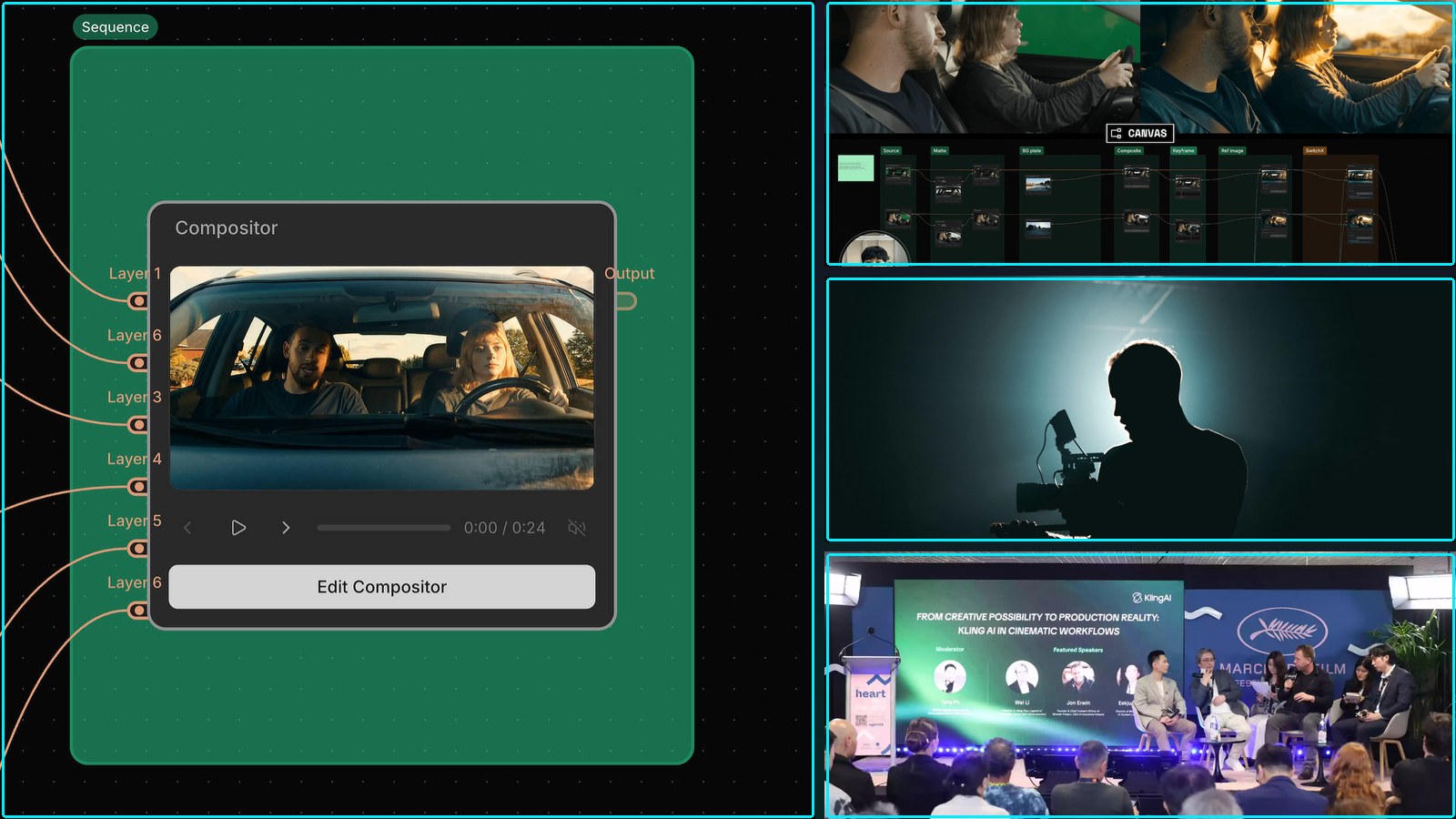
AI Integration and Its Impact on VFX
AI Is Rewriting the VFX Rulebook in 2026 (Rosesonstudios)
Summary: AI integration into VFX pipelines has moved from speculative to operational in 2026, with specific tools demonstrably altering core workflows. Adobe’s Roto Brush accelerates roto and clean-up, AI de-aging and face replacement reduces compositing team scope, and real-time engines like Unreal Engine 5 now deliver final-pixel rendering. Gaussian splatting emerges as a new asset type for rapid photorealistic capture, while AI-assisted content, exemplified by Netflix’s ‘Frankenstein’, meets premium quality thresholds.

Why it matters: The economics of complex shots and vendor leverage are shifting, requiring studios to reconfigure labor models and tooling investments to maintain competitiveness.
Context: This follows years of AI hype in post-production, but 2026 marks the year of tangible, production-proven integration affecting throughput and cost structures.
"It was artificial intelligence walking through the door of every VFX pipeline on the planet and quietly transforming how visual effects are created, budgeted, and delivered. … And the biggest disruptor driving." — ROSESONSTUDIOS
Commentary: The operational consequence is a bifurcation in vendor pricing: studios leveraging these tools can bid more aggressively on projects with heavy roto, de-aging, or environment work, squeezing traditional shops. This pressures mid-tier VFX houses to adopt or specialize, while elevating the strategic value of AI-literate technical directors and supervisors who can re-architect pipelines around these new throughput ceilings.
Date: May 21, 2026 12:00 AM ET
URL: https://www.rosesonstudios.com/post/ai-is-rewriting-the-vfx-rulebook-in-2026-what-every-filmmaker-needs-to-know
AI Sentiment Score: Negative (50%)
AI Credibility Score: 9.5/10 — High
Scores and text generated by AI analysis of the source article indicated.
How AI Is Revolutionizing Filmmaking in 2026 (Thehiddenreview)
Summary: A 2026 industry review describes AI as a foundational layer across filmmaking, from script development and pre-visualization to VFX, post-production, and localization. The tools are compressing manual workflows, automating technical tasks, and enabling faster iteration for both large studios and independent creators.

Why it matters: This signals a structural shift in production pipelines, altering labor demands, vendor economics, and the capital requirements for visual effects and complex sequences.
Context: The industry has been cautiously integrating AI-assisted tools for specific tasks like rotoscoping and sky replacement for several years, but adoption has been piecemeal.
"Background replacement, sky swaps, crowd duplication, cleanup and rotoscoping are now routinely assisted—or entirely handled—by machine‑learning models, leaving VFX artists to focus on creative decisions instead of repetitive technical tasks." — THEHIDDENREVIEW
Commentary: The operational consequence is a bifurcation of VFX labor: high-volume, low-difficulty shot work faces commoditization, pressuring vendor pricing on those services. This elevates the strategic value of creative supervision and final-quality artistry, but also risks thinning the traditional junior artist pipeline that built those skills through technical repetition. For studios, it rebalances the cost equation for complex sequences, potentially making ‘impossible’ shots more routine but transferring leverage to a smaller pool of senior artists and technical directors.
Date: May 18, 2026 12:00 AM ET
URL: https://thehiddenreview.com/2026/05/18/how-ai-is-revolutionizing-filmmaking-in-2026/
AI Sentiment Score: Negative (60%)
AI Credibility Score: 9.1/10 — High
Scores and text generated by AI analysis of the source article indicated.
Global Filmmakers Are Leveraging Kling AI to Push the Boundaries of Storytelling, Cannes Panel Presents (Markets.Businessinsider)
Summary: Kling AI’s presence at Cannes Marche Du Film, highlighted by a panel on cinematic workflows, signals a move from experimental use to formalized production partnerships. The showcase includes ‘Raphael’, billed as South Korea’s first full-length AI-generated feature aiming for theatrical release, and an exclusive global partnership with UK’s Evolutionary Films for the animated feature ‘MINIBOTS’. The deals position Kling not just as a tool vendor but as a ‘Technological Brand Partner’ providing production support and dedicated programs.
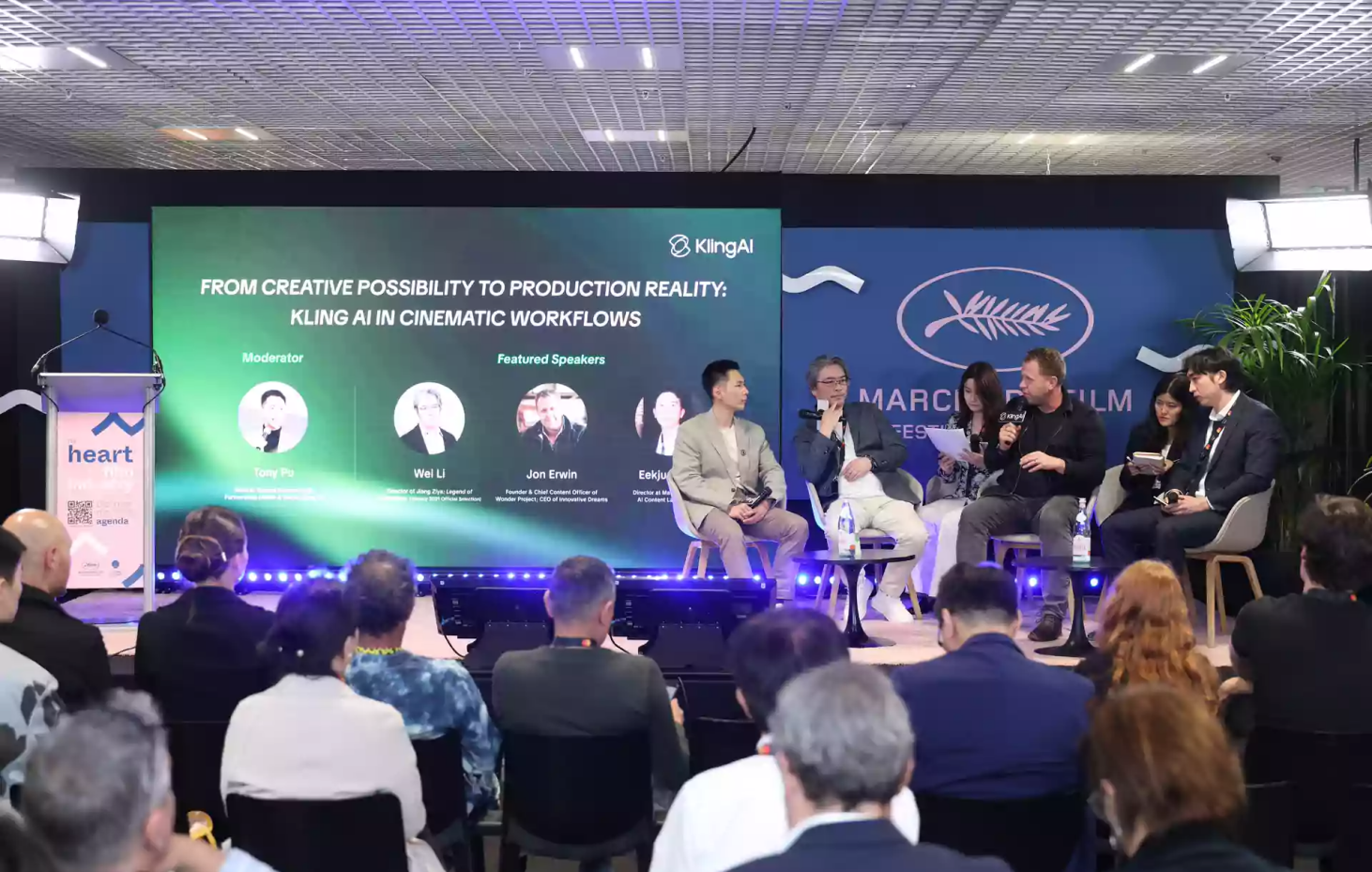
Why it matters: This formalizes AI video models as a core production vendor, shifting leverage from traditional VFX houses and altering the economics and staffing models for feature animation and VFX-heavy projects.
Context: AI video generators have progressed from novelty to producing usable assets; this represents the next phase: exclusive, end-to-end production partnerships that lock entire projects into a single platform’s ecosystem.
"Cannes, France, May 20, 2026 (GLOBE NEWSWIRE) — A shift is underway in the global film industry as creators across the globe embrace Kling AI to produce cinematic-level visuals and push the." — MARKETS.BUSINESSINSIDER
Commentary: The ‘exclusive worldwide partnership’ model is a vendor lock-in play that could segment the market: projects built on Kling’s pipeline may become incompatible with competitors’ tools, affecting freelance mobility and post-house bidding. For VFX supervisors and producers, it introduces a new layer of platform dependency, potentially trading cost and speed for long-term creative and technical flexibility. The ‘Technological Brand Partner’ framing suggests AI vendors are now seeking equity-like stakes and above-the-line credit, not just software licensing fees.
Date: May 20, 2026 12:00 AM ET
URL: https://markets.businessinsider.com/news/stocks/global-filmmakers-are-leveraging-kling-ai-to-push-the-boundaries-of-storytelling-cannes-panel-presents-1036178229
AI Sentiment Score: Negative (75%)
AI Credibility Score: 10.0/10 — High
Scores and text generated by AI analysis of the source article indicated.
Deep Fusion taps Max Alexander to oversee EXR-capable AI/VFX pipeline (Postmagazine)
Summary: Deep Fusion Films has appointed Max Alexander, a veteran VFX supervisor with credits at major houses, to lead its new DFX division. The division is positioned as a service provider integrating generative AI with traditional VFX pipelines, specifically addressing the quality gap by outputting in high-fidelity formats like ProRes 444XQ and EXR. This move signals a strategic push to productize a hybrid AI/VFX workflow for third-party clients.

Why it matters: This formalizes a commercial pathway for generative AI in professional VFX, potentially altering vendor economics and pipeline staffing for complex shots.
Context: The industry is grappling with how to integrate raw generative AI outputs, which are typically low-bitrate, into broadcast and film-grade workflows without sacrificing quality or artist control.
"DFX bridges this gap by combining generative AI with traditional CGI, compositing and artist-driven finishing. The result is high-fidelity, professional-grade assets delivered in formats like ProRes 444XQ and EXR." — POSTMAGAZINE
Commentary: Deep Fusion is commercializing a middleware layer that repackages AI outputs as vendor-ready assets, a move that could commoditize early-stage generative work and shift labor toward integration and finishing. For studios, this promises cost control on complex shots but may increase dependency on specialized vendors like DFX. The hire of Alexander, with his deep house pedigree, is a credibility play aimed at reassuring clients that the pipeline maintains traditional quality ceilings.
Date: Thu, 14 May 2026 07:00:00 GMT
URL: https://www.postmagazine.com/Press-Center/Daily-News/2026/Deep-Fusion-taps-Max-Alexander-to-oversee-EXR-ca.aspx
AI Sentiment Score: Neutral (33%)
AI Credibility Score: 10.0/10 — High
Scores and text generated by AI analysis of the source article indicated.
AI-VFX Pipeline in 2026: What Studios Really Use (Digikorevfx)
Summary: A 2026 industry report from Digikorevfx details the practical, non-sensational integration of AI into high-end VFX pipelines. The technology is primarily deployed to automate repetitive tasks like rotoscoping, cleanup, and tracking, and to assist in previsualization and asset organization. Its value is framed as augmenting artist throughput and managing production scale, not replacing creative decision-making. Final shot quality, consistency, and storytelling remain firmly in the hands of experienced artists and supervisors.

Why it matters: For VFX vendors and studio production heads, this clarifies the real near-term investment thesis: AI as a labor multiplier for rote tasks, not a quality substitute. It validates current pipeline integration strategies focused on efficiency gains.
Context: This report counters widespread public and investor speculation about generative AI fully automating visual effects, instead aligning with the established vendor focus on throughput and schedule management.
"AI is another major shift, but its role in production is far more practical than most headlines suggest. In 2026, studios primarily use AI to improve workflow efficiency. It helps reduce repetitive." — DIGIKOREVFX
Commentary: The report signals a hardening consensus: AI’s primary VFX impact through 2026 will be on cost structures for labor-intensive prep and cleanup, not on the creative or technical ceiling of final pixels. This shifts vendor leverage toward studios demanding faster turnarounds, while protecting the premium rates for senior artists who handle final quality control. The economic pressure moves from artist headcount to pipeline tooling and integration.
Date: May 19, 2026 12:00 AM ET
URL: https://digikorevfx.com/the-ai-vfx-pipeline-in-2026-what-hollywood-studios-are-actually-using-vs-whats-still-hype/
AI Sentiment Score: Negative (66%)
AI Credibility Score: 8.2/10 — High
Scores and text generated by AI analysis of the source article indicated.
Node-Based AI Compositors Are Reshaping VFX Workflows – Milik (Milik.Ai)
Summary: Node-based compositing, a procedural alternative to traditional layer-based timelines, is gaining traction for complex VFX and virtual production. Platforms like Beeble Canvas are merging this paradigm with integrated AI models for tasks like rotoscoping, video-to-video transformation, and generating PBR passes. This evolution is less about artist replacement and more about workflow automation, enabling batch processing and consistent updates across sequences. The offering extends into a platform strategy with APIs, allowing studios to embed these AI services into existing custom pipelines.
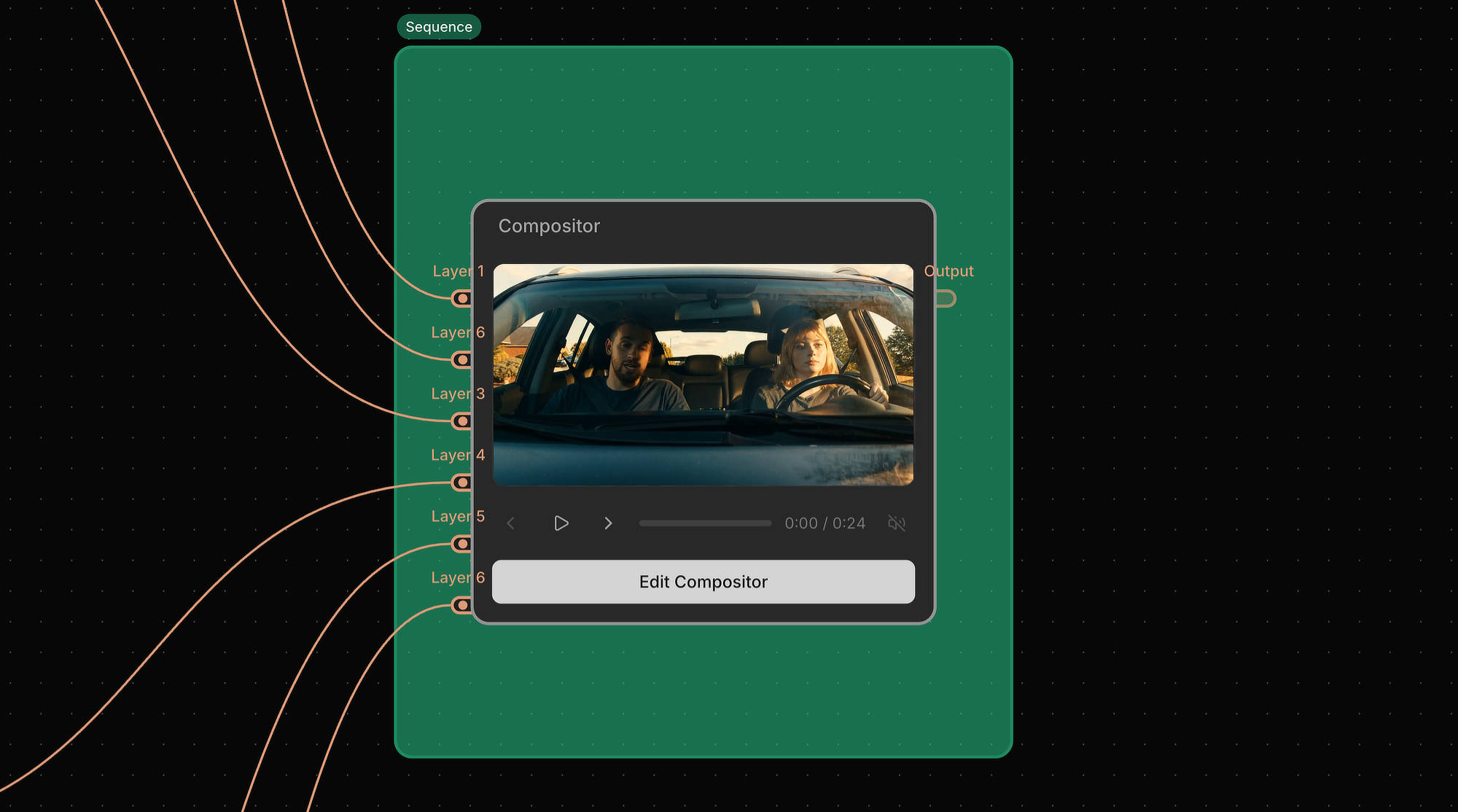
Why it matters: This shifts the economic and operational calculus for VFX vendors and post houses by automating repetitive tasks, increasing shot throughput, and enabling more consistent, scalable workflows for episodic and campaign work under tight schedules.
Context: The VFX industry has long been defined by labor-intensive, shot-by-shot manual work, with software tooling often creating siloed, non-scalable processes. The push toward virtual production and higher volumes of complex shots has intensified the search for procedural, non-destructive workflows.
"Video compositing software has long revolved around layer-based timelines, but complex VFX and virtual production work is pushing teams toward node-based compositing. Nodes let artists describe shots as procedural graphs instead of." — MILIK.AI
Commentary: The move from a standalone compositor to an AI-native platform with service APIs (like SwitchX) is a strategic pivot. It allows large vendors to amortize R&D by integrating specific AI capabilities—like relighting—into proprietary pipelines, potentially altering vendor leverage and internal staffing models for roto and lookdev. The focus on batch processing and sequence-wide updates directly targets the bottleneck of episodic television economics, where throughput and consistency now trump per-shot perfectionism.
Date: May 22, 2026 12:00 AM ET
URL: https://www.milik.ai/articles/0a47f01fe5
AI Sentiment Score: Positive (50%)
AI Credibility Score: 9.2/10 — High
Scores and text generated by AI analysis of the source article indicated.
Cannes 2026: The Filmmakers Who Are Learning to Embrace AI (Studio.Aifilms.Ai)
Summary: Cannes 2026 saw a shift in industry posture from treating AI use as a secret to discussing its practical and financial impacts openly. Key filmmakers like Mathieu Kassovitz quantified savings, citing a project cost reduction from $50-60 million to $25 million, while producers on Doug Liman’s ‘Bitcoin: Killing Satoshi’ claimed a budget drop from an estimated $300 million to $70 million through AI-generated environments. Steven Soderbergh’s documentary leveraged AI tools for 10% of its visuals, marking a high-profile, unapologetic adoption. The festival revealed a spectrum from pragmatic acceptance, exemplified by Casey Affleck’s description of a performance-focused set, to formal resistance like the German Dogma 25 manifesto.

Why it matters: Public, quantified cost claims from established filmmakers set new benchmarks for project financing and vendor negotiations, directly impacting production economics and pipeline design.
Context: This follows years of speculative debate and covert tool testing; Cannes 2026 represents the moment major figures began anchoring the discussion in concrete budget figures and on-set workflow changes.
"Cannes 2026: The Filmmakers Who Are Learning to Embrace AI Share this post: Cannes 2026: The Filmmakers Who Are Learning to Embrace AI At Cannes 2026, Mathieu Kassovitz put a number to." — STUDIO.AIFILMS.AI
Commentary: The public disclosure of specific cost reductions pressures all vendors—from VFX houses to location managers—to justify their fees against AI alternatives, potentially consolidating work toward a smaller set of AI-integrated facilities. Affleck’s ‘Broadway play’ analogy signals a reallocation of on-set labor from technical crews to performance-focused direction, altering union jurisdiction and crew composition. The concurrent emergence of formal resistance movements like German Dogma 25 indicates a hardening of market segmentation, likely creating distinct premium tiers for ‘AI-free’ productions versus cost-driven projects.
Date: May 20, 2026 12:00 AM ET
URL: https://studio.aifilms.ai/blog/cannes-2026-filmmakers-embrace-ai-production
AI Sentiment Score: Negative (60%)
AI Credibility Score: 9.6/10 — High
Scores and text generated by AI analysis of the source article indicated.
Utopai Studios Launches PAI Pro: Character-Persistent AI for … (Thecinemagroup.Co)
Summary: Utopai Studios is commercializing its internal AI filmmaking infrastructure, launching PAI Pro as a set of installable skills for coding agents. The system, which powers their own slate of short films, specifically addresses the persistent challenge of character consistency across AI-generated shots. The release includes three core modules for high-resolution image generation, video sequencing, and multi-shot orchestration, positioning it as infrastructure rather than a standalone tool.

Why it matters: This represents a shift from closed, app-based AI video tools to programmable infrastructure, potentially altering the vendor landscape and enabling bespoke studio pipelines.
Context: AI video tools have struggled with narrative continuity, a core requirement for professional VFX and previs workflows, often locking studios into specific platforms.
"#### THE CINEMATIC AI COMPANY BEHIND CHLOE VS. HISTORY JUST RELEASED A NEW SLATE OF SHORT FILMS THAT SOLVE THE BIGGEST PROBLEM IN AI FILMMAKING: CHARACTERS THAT STAY CONSISTENT ACROSS CUTS. Utopai." — THECINEMAGROUP.CO
Commentary: By decoupling from a specific UI and integrating into developer environments, PAI Pro lowers the integration cost for studios building proprietary pipelines, shifting leverage from all-in-one SaaS vendors to infrastructure providers. This could accelerate the bifurcation of the market between generic consumer tools and high-control professional systems, impacting staffing models toward more technical, pipeline-oriented roles. The emphasis on character persistence directly targets the economic pain point of complex shot sequences, potentially changing the cost calculus for VFX-heavy sequences in pre-production and rapid iteration.
Date: May 21, 2026 12:00 AM ET
URL: https://thecinemagroup.co/news/2026/5/21-utopai-studios-launches-pai-lite-chara-ter-persistent-ai-for-filmmakers-2026
AI Sentiment Score: Negative (50%)
AI Credibility Score: 10.0/10 — High
Scores and text generated by AI analysis of the source article indicated.
Digital Domain Launches AI-Integrated VFX Infrastructure DDAI (Animationmagazine.Net)
Summary: Digital Domain has launched DDAI, an AI-integrated VFX infrastructure platform, positioning it as a core operational upgrade for film and episodic production. The initiative is led by newly appointed Chief AI Officer Matt Smith, a veteran from Google and Meta, signaling a strategic push beyond R&D into production-scale implementation. This move formalizes the studio’s internal AI tooling into a client-facing service layer.
Why it matters: This institutionalizes AI as a vendor’s core infrastructure, shifting the competitive landscape from experimental tools to integrated production pipelines, which could pressure mid-tier vendors and recalibrate client expectations for speed and cost.
Context: Major VFX houses are racing to productize proprietary AI stacks to lock in workflow advantages and defend margins, moving past one-off tools toward holistic pipeline control.
"Global visual effects studio Digital Domain announced the launch of DDAI, an AI infrastructure designed to meet the demands of modern film and episodic production." — ANIMATIONMAGAZINE.NET
Commentary: DDAI represents a vendor-level escalation in the AI arms race, aiming to convert technical debt into a commercial moat. For clients, this promises faster iteration but may increase vendor lock-in; for artists, it signals a shift toward AI-augmented roles and a potential consolidation of high-end work within firms that can afford such infrastructure. The appointment of a tech-industry CAIO underscores the operational, not just creative, stakes.
Date: Fri, 29 May 2026 15:00:44 +0000
URL: https://www.animationmagazine.net/2026/05/digital-domain-launches-ai-integrated-vfx-infrastructure-ddai/
AI Sentiment Score: Negative (57%)
AI Credibility Score: 10.0/10 — High
Scores and text generated by AI analysis of the source article indicated.
A New Node-Based AI Compositor is Here for Your VFX and Virtual Production Pipelines | No Film School (Nofilmschool)
Summary: Beeble AI has launched Canvas, a node-based AI compositing platform integrating its proprietary video-to-video and PBR pass generation models with external AI tools. The system is designed to automate and iterate complex VFX, post-production, and virtual production workflows within a visual programming environment. It targets professional studios and agencies seeking to scale and refine shot work.
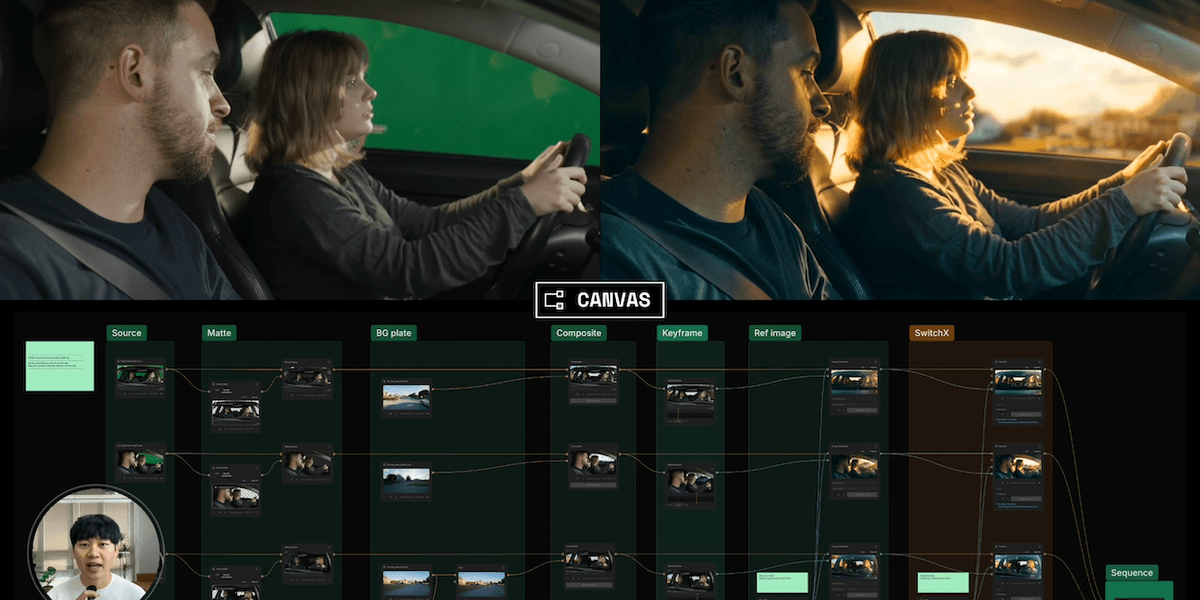
Why it matters: It signals a move toward integrated, AI-native compositing environments that could reshape labor allocation and vendor economics for complex shots.
Context: This follows a trend of VFX software vendors embedding generative AI models directly into node-based production pipelines, shifting from standalone AI tools to integrated systems.
"Professional VFX workflows demand precision, flexibility, and iteration. Canvas brings AI models, compositing tools, and workflow automation into a single visual environment where artists can experiment, iterate, and build production-ready results faster." — NOFILMSCHOOL
Commentary: If Canvas delivers on its promise, it could compress the iteration cycle for rotoscoping, relighting, and asset generation, directly impacting staffing models for junior compositing roles. The success hinges on whether its node-based automation provides sufficient control for high-end studio pipelines or remains a prototyping tool.
Date: 2 weeks ago
URL: https://nofilmschool.com/beeble-canvas-ai-compositor
AI Sentiment Score: Positive (50%)
AI Credibility Score: 10.0/10 — High
Scores and text generated by AI analysis of the source article indicated.
The Role of AI in Creative Studios in 2026 (35Milimetre)
Summary: AI integration in creative studios is moving beyond tool adoption to a fundamental restructuring of production pipelines, yielding significant reductions in VFX budgets and post-production timelines. The most impactful implementations treat AI as end-to-end infrastructure, merging editing, VFX, and continuity workflows. This shift is automating technical tasks like rotoscoping and denoising while creating new specialized roles focused on prompt strategy and workflow architecture.

Why it matters: For VFX vendors and studio production heads, this signals a near-term compression of project timelines and budgets, forcing a re-evaluation of bidding models, staffing, and competitive positioning.
Context: The industry has been experimenting with AI tools for specific tasks, but the operational advantage now accrues to studios that redesign entire workflows around integrated AI systems.
"AI-assisted pipelines reduce film post-production timelines from 18 to 24 months down to 6 to 8 months, while cutting VFX budgets by 30 to 40 percent." — 35MILIMETRE
Commentary: The reported timeline and budget compression could pressure VFX houses to adopt similar integrated pipelines or face commoditization. The emergence of roles like prompt strategist and workflow architect indicates a labor shift from manual execution to system design and creative direction, potentially flattening demand for mid-level technical artists while increasing leverage for those who can orchestrate the new toolchain.
Date: May 23, 2026 12:00 AM ET
URL: https://www.35milimetre.com/news/2026/5/23/the-role-of-ai-in-creative-studios-in-2026
AI Sentiment Score: Negative (50%)
AI Credibility Score: 9.2/10 — High
Scores and text generated by AI analysis of the source article indicated.
Next-Generation AI Visual Effects for Film Studios (Vfxpick)
Summary: VFXpick, a vendor, positions AI as a transformative force for visual effects pipelines, claiming to automate rotoscoping, tracking, and compositing to reduce tasks from weeks to hours. The article promotes AI-driven VFX outsourcing as essential for studios seeking cost efficiency and scalability, emphasizing a hybrid model where AI handles technical work and artists focus on creativity. It outlines a strategic shift requiring investment in AI training, GPU/cloud infrastructure, and data-driven workflows.
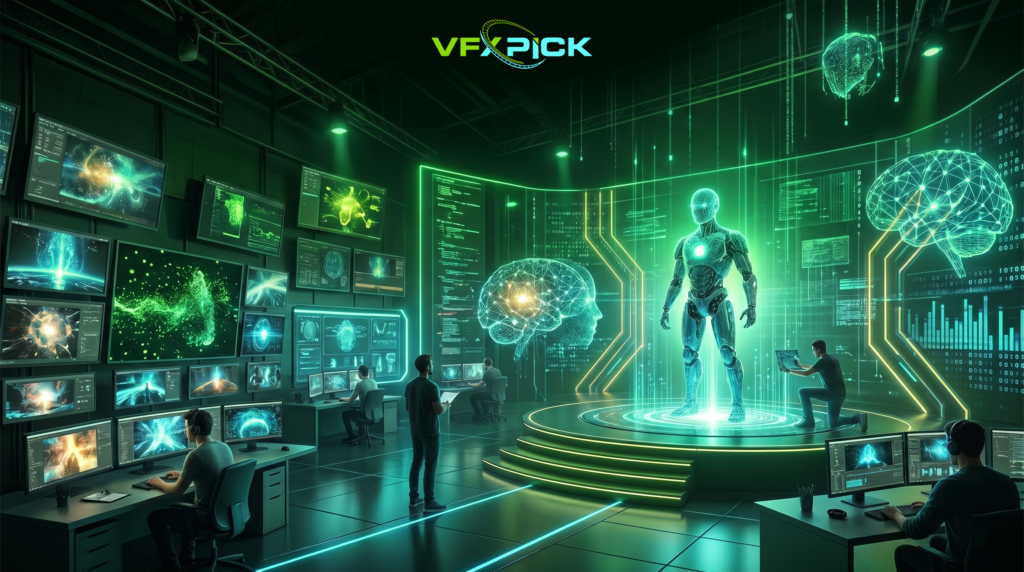
Why it matters: This signals a potential reordering of vendor leverage and staffing models, where studios that master AI integration or outsourcing gain a decisive throughput and cost advantage.
Context: The VFX industry faces chronic margin pressure and schedule overruns, making automation a persistent goal. Vendor claims of AI-driven efficiency gains are proliferating, but real-world integration into complex, artist-dependent pipelines remains uneven.
"Visual effects work that used to require several weeks now finishes within a few hours. The development of advanced artificial intelligence systems has created a dual impact on the VFX sector because these systems accelerate VFX work yet they also transform all aspects of movie production from start to finish." — VFXPICK
Commentary: If these throughput claims hold, they compress the economic model for complex shots, shifting vendor competition from labor arbitrage to algorithmic efficiency. This pressures legacy studios to retool or outsource, potentially bifurcating the market into AI-native vendors and generalists. The emphasis on hybrid creativity suggests near-term displacement is focused on junior technical roles, not senior artists.
Date: 3 weeks ago
URL: https://vfxpick.com/blog/why-studios-choose-vfxpick-for-next-generation-ai-driven-visual-effects
AI Sentiment Score: Positive (40%)
AI Credibility Score: 10.0/10 — High
Scores and text generated by AI analysis of the source article indicated.
Post ID: 278621d9