
Virtual Production Trends and Guides
Das szenische Portal RT: When the Stage Starts Listening to the Music (Digitalproduction)
Summary: Andreas Resch’s ‘Das szenische Portal RT’ is a prototype real-time hybrid stage system built in Unreal Engine. It integrates live audio triggers from performers, multiple live camera feeds, and modular virtual environments to create a reactive, surreal extension of the physical stage. The system is designed for live events with improvising musicians, where external audio signals can spontaneously alter the visual narrative. Currently an art project, it is positioned as a potential custom solution for event producers, pending further development into a robust production or rental tool.

Why it matters: It demonstrates a path beyond static LED walls and pre-rendered content toward genuinely interactive, performer-driven live visuals, which could reshape the labor and vendor dynamics for high-end live events.
Context: The push for more dynamic, real-time visual integration in live performance and events, moving beyond projection mapping and virtual production volumes into systems where the show reacts to improvisation.
"Table of Contents Show With Das szenische Portal RT, Andreas Resch has developed a real-time system for live events that combines a physical stage, virtual scene spaces, camera feeds and musical inputs." — DIGITALPRODUCTION
Commentary: The system’s reliance on modular Blueprints and external audio triggers suggests a new class of event production: one-off, artist-specific visual environments that are cost-feasible only because they are built on a game engine stack. This could pressure traditional media server and pre-vis studios to offer similar real-time reactivity or cede ground to smaller, technically agile operators. The explicit separation of internal and external triggers is a key operational insight, allowing for a controlled show backbone while accommodating live musical improvisation.
Date: Mon, 18 May 2026 06:00:00 +0000
URL: https://digitalproduction.com/2026/05/18/das-szenische-portal-rt-when-the-stage-starts-listening-to-the-music/
AI Sentiment Score: Negative (60%)
AI Credibility Score: 10.0/10 — High
Scores and text generated by AI analysis of the source article indicated.
Virtual Production for Beginners – New MZed Course on Green Screen Stages, Unreal Engine, and Real-Time Compositing | CineD (Cined)
Summary: MZed’s new ‘Virtual Production for Beginners’ course, taught by studio operator Biro Florin, explicitly rejects the industry’s LED-volume fixation to build a comprehensive curriculum around accessible green screen workflows. It targets commercial producers, indie filmmakers, and brand teams, providing a systems-engineering approach to building a real-time compositing pipeline with Unreal Engine, hardware keyers, and tracking systems. The course details the economic, creative, and operational advantages of green screen for multi-camera formats like podcasts and live streams, while candidly addressing trade-offs like green spill and the need for contingency recording.

Why it matters: It provides a concrete, vendor-tested roadmap for independent studios and freelancers to operationalize virtual production at a fraction of LED volume cost, shifting the addressable market from high-end episodic to everyday commercial output.
Context: Industry discourse has been dominated by LED-wall virtual production since ‘The Mandalorian,’ creating a perception that the technology is inaccessible to mid-budget and independent productions.
"Florin argues that the LED route has priced out the very filmmakers most likely to put virtual production to work in everyday output: commercial producers, podcast operators, brand teams, indie filmmakers, and YouTube studios that want to drop real talent into Unreal Engine, AI-generated, or video-plate environments without renting a volume." — CINED
Commentary: The course crystallizes a pragmatic, bottom-up market segmentation for virtual production, moving it from a capital-intensive spectacle to a tool for throughput. It validates green screen as the flexible delivery surface for the coming wave of AI-generated and location-plate backgrounds, directly impacting staffing models (demand for technical engineers over VFX supervisors) and vendor strategies (Blackmagic, Stype over volume manufacturers). The operational emphasis on multi-camera workflows and contingency recording layers shifts the economic calculus for studios producing live or high-volume content.
Date: May 22, 2026 12:00 AM ET
URL: https://www.cined.com/virtual-production-for-beginners-new-mzed-course-on-green-screen-stages-unreal-engine-and-real-time-compositing/
AI Sentiment Score: Negative (60%)
AI Credibility Score: 10.0/10 — High
Scores and text generated by AI analysis of the source article indicated.
Virtual Production & LED Volumes In 2026 Guide (Vitrina.Ai)
Summary: The virtual production market, driven by LED volume stages enabling in-camera VFX, has reached $3.7B in 2026 and is growing at 16% annually. Its application has expanded beyond top-tier film studios into episodic streaming, advertising, and corporate video, with hardware and rental costs falling to enable independent and regional access. The core shift is from a post-production compositing model to a parallelized pre-production workflow centered on a virtual art department, which compresses total timelines when managed correctly but creates severe schedule and budget risks for unprepared productions.
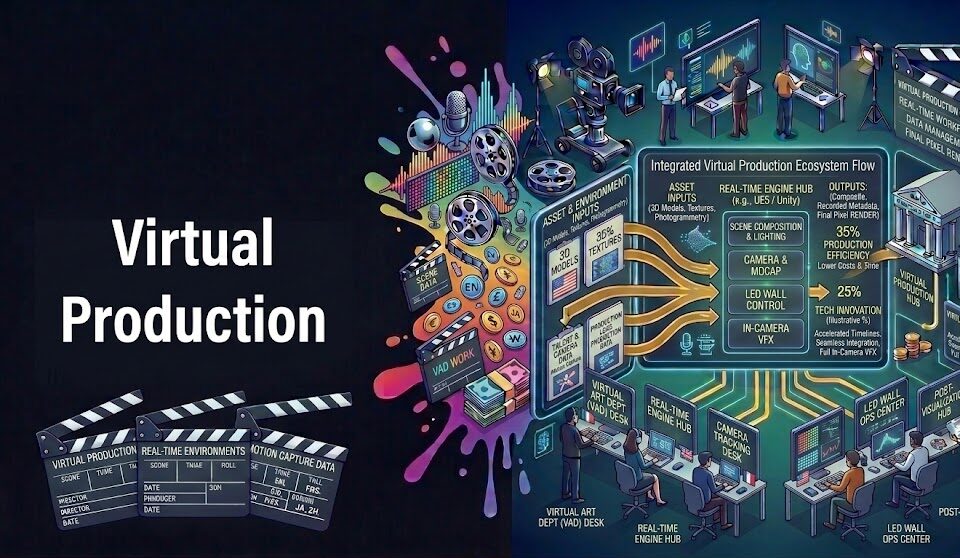
Why it matters: This redefines production planning, capital allocation for facilities, and competitive positioning for all high-budget shoots, making workflow mastery a direct source of cost and schedule leverage.
Context: Virtual production, specifically ICVFX via LED volumes, has evolved from a niche, prestige technology to a mainstream production tool with a diversified client base and falling barriers to entry.
"Virtual production powered by LED volume stages is no longer the exclusive territory of Disney and ILM. It’s a $3.7 billion market in 2026 growing at 16% annually, and it’s reshaping not." — VITRINA.AI
Commentary: The operational consequence is a fundamental re-timing of the pre-production pipeline, creating a new critical path dependency on digital asset creation. Studios and line producers must now structure their financing and greenlight decisions around this longer digital lead time to avoid catastrophic overruns. This shift advantages producers with integrated VAD teams and punishes those relying on traditional, sequential physical production models. Furthermore, the proliferation of mid-range facilities democratizes access but intensifies competition on throughput, pushing vendors to standardize and productize their virtual environment packages.
Date: May 21, 2026 12:00 AM ET
URL: https://vitrina.ai/blog/virtual-production-led-volume-stages-2026/
AI Sentiment Score: Negative (50%)
AI Credibility Score: 10.0/10 — High
Scores and text generated by AI analysis of the source article indicated.
Virtual Production is Production – Part 2 – Producing, Budgeting, Scheduling & Crewing (Youtube)
Summary: A joint VES-PGA panel from 2026 details how virtual production is moving from a novel technique to a core budgeting and scheduling discipline. The discussion emphasizes that financial and creative decisions must be integrated earlier, especially for LED wall or hybrid workflows, requiring producers to ‘budget accordingly’ from the concept phase. The analysis suggests a shift where pre-production becomes a period of ‘development of the ideas,’ fundamentally altering the traditional pipeline. The potential payoff is framed as cost savings in visual effects by capturing more in-camera, ‘uplifting the visual effects process.’

Why it matters: This signals a maturation point where virtual production’s operational model is being codified by guilds, forcing a re-evaluation of line-producing, crewing, and vendor contracts.
Context: Virtual production has struggled with unpredictable cost overruns and workflow mismatches; guild-led standardization aims to de-risk adoption for producers and clarify labor roles.
"##### May 21, 2026 (1:30:28) The Visual Effects Society (VES) and Producers Guild of America (PGA) join together for a second event to analyze scheduling and budgeting for virtual production. In this." — YOUTUBE
Commentary: The guilds’ formalization of budgeting marks a pivot from experimental spend to accountable pipeline. This could pressure VFX vendors to offer earlier, fixed-price previs and asset packages, while in-house studio virtual production departments gain leverage. The explicit link between ‘early input’ and final cost asserts that creative indecision in pre-production now carries a direct, quantifiable financial penalty, tightening the traditional development-to-shoot handoff.
Date: May 21, 2026 12:00 AM ET
URL: https://www.youtube.com/watch?v=BRF-hczWh1Y
AI Sentiment Score: Negative (75%)
AI Credibility Score: 10.0/10 — High
Scores and text generated by AI analysis of the source article indicated.
2026 Film Industry AI Virtual Production Changes Rules (Shop.Bottegadelsarto)
Summary: By Q2 2026, AI virtual production has shifted from experimental to standardized, with mid-budget features now routinely employing AI-driven camera tracking, lighting simulation, and digital doubles. This convergence of real-time rendering and machine learning has moved the industry toward end-to-end AI-assisted pipelines, reallocating 8-12% of production budgets to this infrastructure. The primary drivers are reduced reshoots, faster turnarounds, and improved on-set safety, fundamentally altering planning, shooting, and finishing workflows.

Why it matters: This standardization changes the cost structure and risk profile of production, forcing VFX houses, studios, and line producers to adapt their staffing, vendor selection, and bidding models.
Context: The trend marks a maturation from the early-adopter phase of 2023-2024, where AI tools were siloed, into an integrated stack emphasizing interoperability and cloud-based scalability.
"Industry reports from 2025 to 2026 show a measurable reallocation of budgets toward AI-driven systems, with a typical mid-budget feature allocating 8-12% of its production budget to AI-enabled production infrastructure, up from 3-5% in 2023-2024." — SHOP.BOTTEGADELSARTO
Commentary: The budget reallocation signals a permanent shift in capital expenditure, favoring software and cloud services over traditional physical set construction and location logistics. This could pressure traditional VFX vendors to offer integrated AI tooling or risk being commoditized as mere rendering farms. The 18-25% reduction in de facto reshoots directly impacts cash flow and completion bond underwriting, making projects with AI-previs more financeable. However, it also consolidates power with the few platforms controlling the standardized data formats and open APIs that enable this seamless pipeline integration.
Date: May 24, 2026 12:00 AM ET
URL: https://www.shop.bottegadelsarto.com/opinion/2026-film-industry-ai-virtual-production-changes-rules-769944
AI Sentiment Score: Negative (83%)
AI Credibility Score: 9.2/10 — High
Scores and text generated by AI analysis of the source article indicated.
Digital Fashion in Unreal Engine Five: the Textile Realism … (Foro3D)
Summary: The development of ‘Infinity Nikki’ showcases a production pipeline for high-fidelity digital fashion, integrating Marvelous Designer for pattern-based cloth simulation, Houdini for dynamic effects, and Unreal Engine 5’s Lumen for real-time lighting. This workflow prioritizes textile realism and physical accuracy in garment behavior.

Why it matters: This signals a shift toward higher-fidelity, pattern-first asset creation for real-time environments, which could alter staffing requirements, vendor specialization, and the economic model for producing complex, clothing-heavy characters and scenes.
Context: Real-time cloth simulation has historically been a bottleneck, often requiring simplified models or post-render passes; the push for ‘virtual haute couture’ in games and virtual production demands more integrated, physically accurate tools.
"Infinity Nikki redefines the open-world genre by merging exploration with a deep focus on digital fashion. The title, developed in Unreal Engine 5, not only presents a vibrant world but also sets." — FORO3D
Commentary: This pipeline formalizes a textile-design approach to digital assets, elevating Marvelous Designer from a niche tool to a core component. It suggests future projects will require artists with hybrid skills in traditional garment construction and VFX dynamics, potentially increasing pre-vis costs but reducing iteration time in-engine. For vendors, specialization in this integrated workflow could become a premium service, shifting leverage away from generalist modeling houses. Ultimately, it raises the quality ceiling for real-time character assets, making complex, clothing-driven sequences more economically viable for high-end games and virtual production.
Date: May 21, 2026 12:00 AM ET
URL: https://foro3d.com/en/2026/mayo/moda-digital-en-unreal-engine-5-el-realismo-textil-de-infinity-nikki.html
AI Sentiment Score: Positive (50%)
AI Credibility Score: 10.0/10 — High
Scores and text generated by AI analysis of the source article indicated.
Navigating the Changing Landscape of Virtual Production (Youtube)
Summary: A VES and Netflix-led industry roundtable signals a maturation in the definition and application of virtual production, moving beyond a hardware-centric view of LED volumes to a methodology that restructures the entire production pipeline. The core argument positions pre-visualization not as a preparatory step but as the actual start of production, with the ‘virtual stage’ requiring the same rigorous preparation as a physical one. This reframing accelerates the industry’s acceptance of VP as a foundational process, not a niche toolset.
Why it matters: This redefinition directly impacts budgeting, crew hiring, vendor specialization, and intellectual property ownership by shifting significant labor and decision-making upstream.
Context: The initial wave of VP adoption was driven by high-profile LED volume use, creating a vendor ecosystem around hardware and on-set operation. This discussion represents a correction toward process integration.
"##### May 21, 2026 (1:34:55) Join the VES Technology Committee and the Virtual Production Committee as we collaborate with Netflix to lead a series of conversations around Virtual Production. This first online." — YOUTUBE
Commentary: Formalizing pre-vis as ‘the start of production’ could pressure studios to fund and staff these phases with production-level resources, not just VFX vendor bids. This elevates the role of real-time artists and technical directors earlier in the creative process, potentially consolidating more asset creation and world-building under the studio’s direct control rather than farming it out in post. The economic consequence is a reallocation of budget from post-production ‘fix-it’ costs to front-loaded, but more predictable, virtual asset creation.
Date: May 21, 2026 12:00 AM ET
URL: https://www.youtube.com/watch?v=-p9bjvx7Oqo
AI Sentiment Score: Positive (40%)
AI Credibility Score: 10.0/10 — High
Scores and text generated by AI analysis of the source article indicated.
Virtual Production Market Size, Share & Forecast by 2035 (Consegicbusinessintelligence)
Summary: A market forecast projects the virtual production sector will reach USD 12.22 billion by 2035, growing at a 14.60% CAGR from 2025. This growth is driven by demand for streaming content, adoption of game engine technology, and pressure for faster production timelines. However, high capital costs for LED walls and rendering infrastructure remain a primary barrier to entry.

Why it matters: The projected scale and constraints of the virtual production market directly inform capital allocation, vendor strategy, and labor planning for studios, VFX houses, and independent producers.
Context: Virtual production, integrating LED volumes and real-time engines, has shifted from a novel technique to a core studio infrastructure investment, reshaping location dependency and post-production workflows.
"|Market Size in 2035 (USD Trillion)|USD 12.22 Billion| |CAGR (2025-2035)|14.60%|." — CONSEGICBUSINESSINTELLIGENCE
Commentary: A ~$12B market by 2035 signals not just growth but formalization; capital-intensive LED stage ownership will concentrate leverage among a few major studios and specialist vendors, while the high CAGR suggests a rapid re-tooling of mid-budget and episodic pipelines. The persistent ‘high initial capital’ restraint will bifurcate the market between owners of volume infrastructure and renters of capacity, altering vendor economics and potentially creating new bottlenecks for complex shot throughput.
Date: May 18, 2026 12:00 AM ET
URL: https://www.consegicbusinessintelligence.com/virtual-production-market
AI Sentiment Score: Negative (50%)
AI Credibility Score: 7.0/10 — Medium
Scores and text generated by AI analysis of the source article indicated.
Virtual production in 2026: Did the industry predictions come true? (Gardenstudios.Io)
Summary: A 2026 retrospective on virtual production finds the technology has become normalized for specific, high-utility applications like driving scenes in HETV and features, displacing traditional methods like low-loaders due to speed and cost. The predicted shift toward pre-production emphasis and cross-departmental collaboration has materialized, though a skills shortage remains a bottleneck to full normalization. The market is projected to grow from $3.3B in 2026 to $18.5B by 2035, indicating sustained investment and integration.
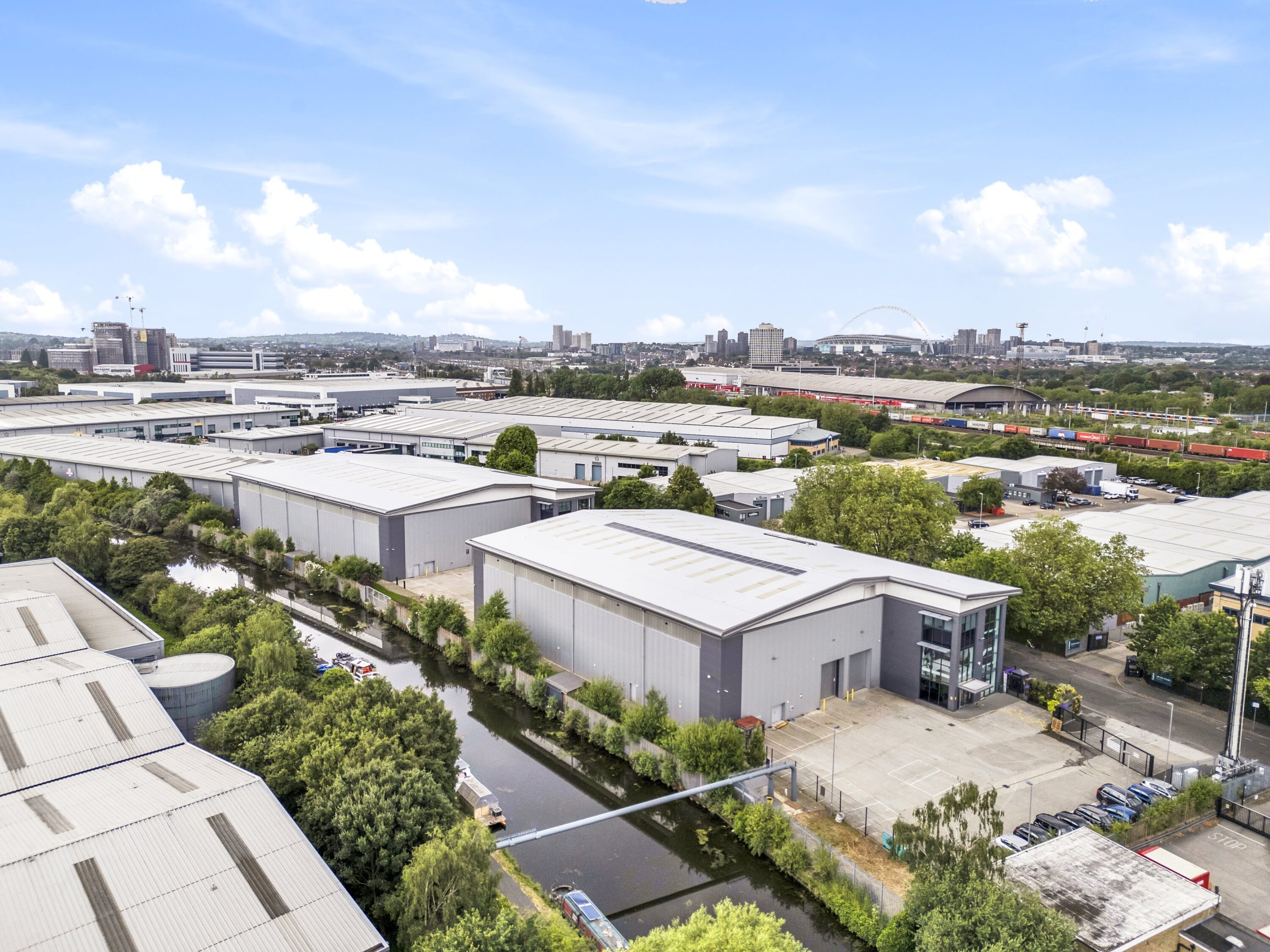
Why it matters: The operational shift from bespoke, tent-pole-only stages to accessible, smaller volumes changes the cost-benefit analysis for mid-tier productions and reconfigures vendor and crew demand.
Context: Early VP adoption was characterized by massive capital expenditure for custom LED stages, creating a high barrier to entry. The current landscape shows a maturation into standardized, scalable services.
"Virtual production (VP) is a filmmaking technology that combines digital environments with physical sets, allowing actors and filmmakers to see the end result in real-time, also known as in-camera visual effects. Early." — GARDENSTUDIOS.IO
Commentary: The specialization on driving scenes reveals VP’s path to normalization: targeting discrete, high-volume shot types where it demonstrably beats the incumbent workflow on throughput and safety. This creates a durable labor shift away from transportation and location crews toward volume technicians and real-time artists, while concentrating vendor leverage with stage operators like Garden Studios. The persistent skills shortage, however, suggests the labor market hasn’t fully caught up to the tooling, keeping day rates elevated for qualified practitioners and limiting broader pipeline adoption.
Date: May 21, 2026 12:00 AM ET
URL: https://gardenstudios.io/news/virtual-production-in-2026-did-the-industry-predictions-come-true/
AI Sentiment Score: Negative (54%)
AI Credibility Score: 7.0/10 — Medium
Scores and text generated by AI analysis of the source article indicated.
The virtual production stage (VP Stage) of the CJ ENM Studio Center in Paju, Gyeonggi-do. It may be .. (Mk.Co.Kr)
Summary: CJ ENM has produced a feature film, ‘Apartment,’ using a method it calls ‘AI Hybrid Production.’ The film was shot over four days on a virtual production stage, with actors performing against AI-generated backgrounds and visual effects, reportedly at a cost of approximately 500 million won ($380,000 USD). The company claims this represents a cost reduction of more than five times compared to traditional methods.

Why it matters: This demonstrates a concrete, scaled application of generative AI in a major studio pipeline, directly challenging the cost and time structures of location shooting and manual VFX.
Context: Virtual production with LED walls has been adopted to reduce location logistics, but the integration of AI for real-time background generation represents a further automation of the art department and post-production.
"When I went to the ‘CJ ENM Studio Center’ virtual production stage, I saw that only the actors did their live action and background were all AI … The film was produced." — MK.CO.KR
Commentary: The reported 5x cost reduction, if replicable, shifts the economic break-even point for genre projects, potentially increasing volume but pressuring traditional VFX vendors and location-based crews. It suggests a near-term future where AI-generated environments become a standard, lower-cost alternative to both physical sets and labor-intensive digital matte painting, redefining ‘on-set’ decisions and post-production scheduling.
Date: May 23, 2026 12:00 AM ET
URL: https://www.mk.co.kr/en/it/12056376
AI Sentiment Score: Negative (85%)
AI Credibility Score: 10.0/10 — High
Scores and text generated by AI analysis of the source article indicated.
How ICVFX Works: Real-Time VFX Tools for LED Volume Studios (Forgevirtualstudios)
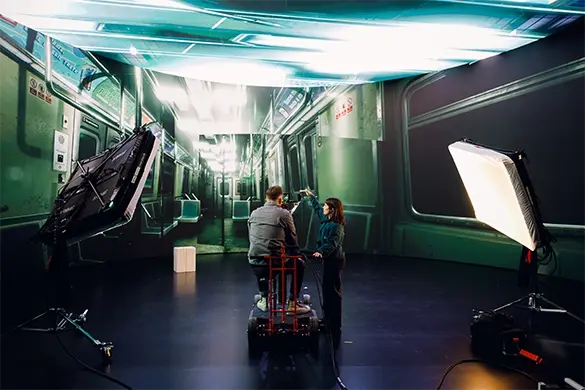
Summary: In-camera visual effects (ICVFX) using LED volumes and real-time game engines like Unreal Engine are shifting VFX work from post-production to pre-production and on-set execution. The technology enables high-resolution digital environments to be displayed on LED walls, which provide realistic in-camera lighting and reflections, allowing final pixel capture during principal photography.
Why it matters: This directly alters the VFX labor pipeline, vendor economics, and on-set crew responsibilities, moving significant budget and decision-making earlier in the production schedule.
Context: The industry-wide adoption of virtual production stages, accelerated by productions like ‘The Mandalorian,’ is maturing from a novel technique into a standardized pipeline component for high-end film and episodic television.
"Because the LED panels emit actual light, they introduce realistic reflections, accurate color interplay, and lighting that blends with real world elements." — FORGEVIRTUALSTUDIOS
Commentary: The shift to real-time, on-set VFX creation pressures VFX vendors to front-load asset creation and master real-time engine workflows, potentially consolidating work with larger, tech-integrated shops. It reduces downstream compositing and rotoscoping labor but increases demand for real-time technical artists and on-set VFX supervisors, altering staffing models and vendor leverage. The economics of complex shots are rebalanced from costly post-production iterations to more predictable, albeit capital-intensive, pre-production and stage costs.
Date: May 22, 2026 12:00 AM ET
URL: https://forgevirtualstudios.com/blog/real-time-vfx-in-led-volume-studios-tools-and-techniques
AI Sentiment Score: Positive (50%)
AI Credibility Score: 10.0/10 — High
Scores and text generated by AI analysis of the source article indicated.
Post ID: 34a1f57d