Alzheimer’s Disease and Frontal Temporal Dementia
Podcast – Agentic AI and the Future of Dementia Research (Dementiaresearcher.Nihr.Ac.Uk)
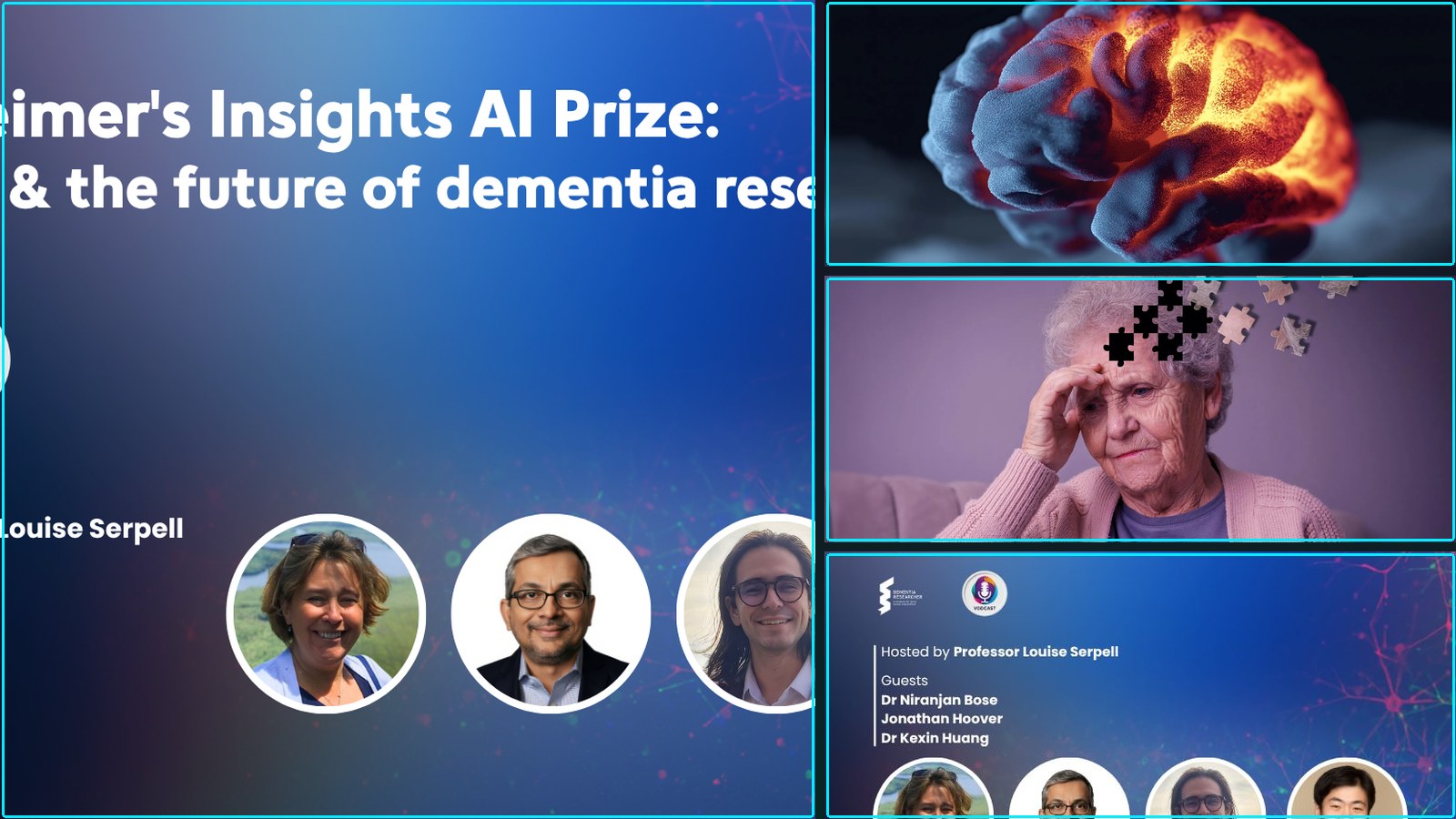
Summary: The Alzheimer’s Disease Data Initiative (ADDI) has awarded its $2 million Alzheimer’s Insights AI Prize to two platforms: Biomni AD, an AI research assistant from Stanford and Mount Sinai, and Parthenon, a virtual wet lab system from Prima Mente. These tools are designed to leverage ADDI’s federated data platform, AD Workbench, to accelerate hypothesis generation and experimental planning in dementia research. The conversation frames AI as a collaborative ‘co-scientist’ aimed at augmenting, not replacing, researcher judgment, while highlighting the growing necessity of AI literacy in the field.
Why it matters: The integration of agentic AI into core research workflows signals a structural shift in how Alzheimer’s and FTD research will be conducted, prioritizing data interoperability and computational efficiency, which could compress discovery timelines but also demands new researcher competencies.
Context: This follows a broader trend of applying large-scale AI to biomedical data, but is notable for its focus on a specific, data-rich disease area and its explicit aim to build tools for non-coding researchers. The ADDI’s role as a data aggregator lowers the barrier for such tools to have immediate utility.
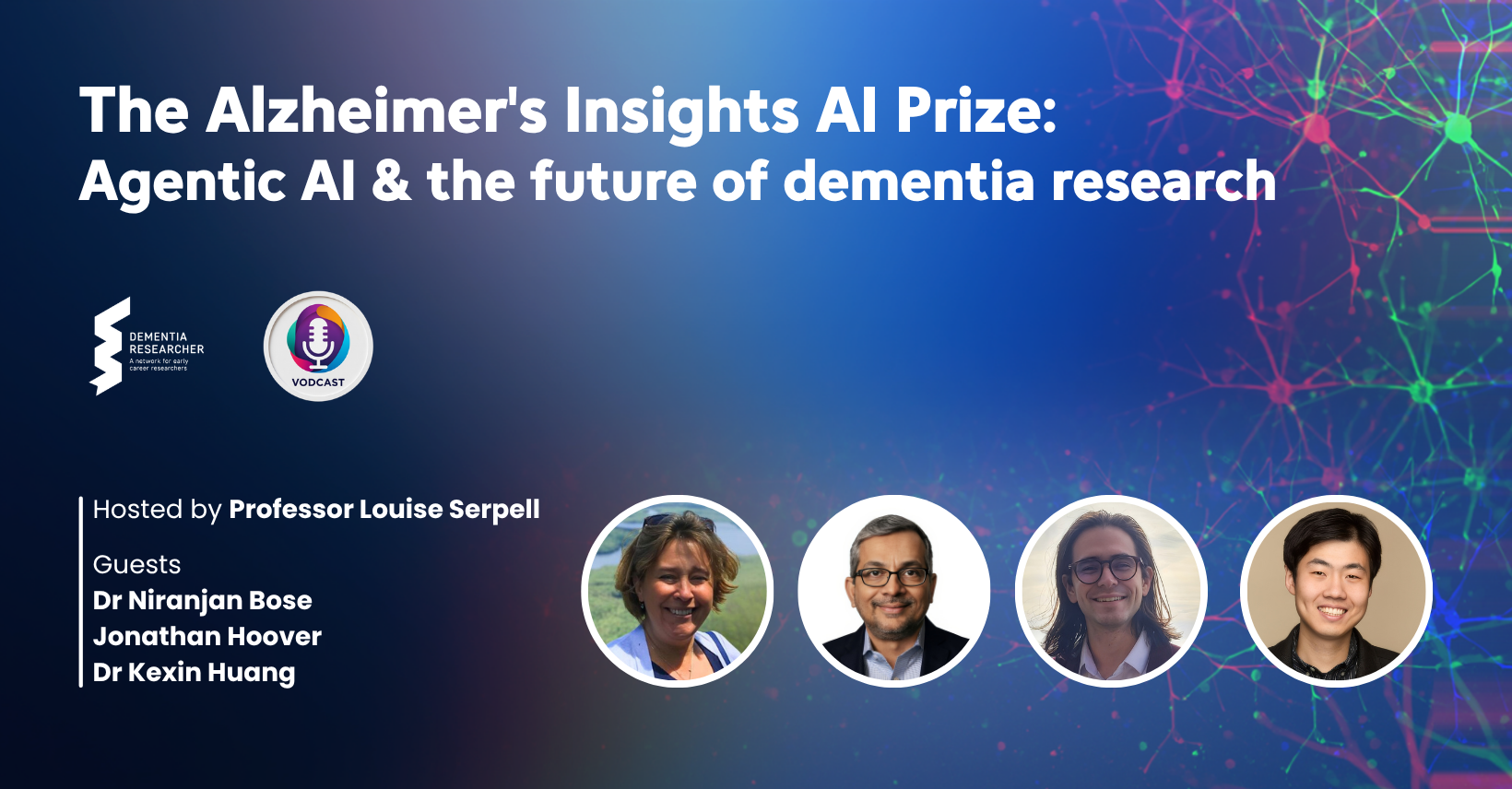
"In this episode, Professor Louise Serpell brings together Dr Niranjan Bose from the Alzheimer’s Disease Data Initiative, Jonathan Hoover from the AI company Prima Mente, and Dr Kexin Huang from Stanford University." — DEMENTIARESEARCHER.NIHR.AC.UK
Commentary: The prize winners represent a bifurcation in AI tooling: one for general research workflow (Biomni AD) and another for specialized in-silico experimentation (Parthenon). This suggests the field is moving beyond generic chatbots to purpose-built, domain-specific agents. The success of these platforms hinges on ADDI’s ability to continuously onboard and harmonize new datasets, making data governance and curation the new critical bottleneck, not compute or model architecture.
Date: June 06, 2026 03:00 AM ET
URL: https://www.dementiaresearcher.nihr.ac.uk/podcast-agentic-ai-and-the-future-of-dementia-research/
AI Sentiment Score: Negative (77%)
AI Credibility Score: 10.0/10 — High
Scores and text generated by AI analysis of the source article indicated.
Scientists found the hidden switch fueling alzheimer’s brain inflammation (Sciencedaily)
Summary: Scripps Research Institute scientists have identified a specific chemical modification, S-nitrosylation at cysteine 148 on the STING protein, that appears to act as a pathological switch sustaining neuroinflammation in Alzheimer’s disease. The team found elevated levels of this modified SNO-STING in human Alzheimer’s brain tissue and models, and demonstrated that blocking this modification in mice reduced inflammation and protected synaptic connections. The work suggests a self-amplifying cycle where protein aggregates and environmental factors trigger S-nitrosylation of STING, which in turn drives further inflammation.
Why it matters: It identifies a druggable, specific site on a known inflammatory pathway, offering a potential strategy to dampen pathological overactivation without broadly suppressing innate immunity.
Context: STING pathway activation is a recognized contributor to Alzheimer’s pathology, but the precise molecular trigger for its dysregulation has been unclear. This work builds on decades of research into S-nitrosylation as a redox signaling mechanism in neurodegenerative diseases.
[Summary note] Scripps Research Institute scientists have identified a specific chemical modification, S-nitrosylation at cysteine 148 on the STING protein, that appears to act as a pathological switch sustaining neuroinflammation in Alzheimer’s disease.
Commentary: The move from implicating STING to pinpointing a specific, modifiable cysteine residue represents a critical shift from association to mechanism, enabling rational drug design. If the small-molecule inhibitors under development succeed, they could decouple neurotoxic inflammation from protective immune function—a persistent hurdle in the field. The proposed ‘SNO-STORM’ cycle also provides a mechanistic link between environmental risk factors like air pollution and Alzheimer’s progression.
Date: Sun, 31 May 2026 11:30:38 EDT
URL: https://www.sciencedaily.com/releases/2026/05/260530053424.htm
AI Sentiment Score: Negative (80%)
AI Credibility Score: 10.0/10 — High
Scores and text generated by AI analysis of the source article indicated.
Protein traffic jams may explain aging, memory loss, and Alzheimer’s (Sciencedaily)
Summary: Stanford researchers studying the turquoise killifish have identified a specific, mechanistic driver of brain aging: ribosome collisions and stalling during translation elongation. This ‘traffic jam’ in protein synthesis reduces production of healthy proteins and increases aggregation of faulty ones, directly linking a core cellular process to the broader collapse of proteostasis observed in aging and neurodegeneration. The work provides a unified explanation for the observed decoupling of mRNA and protein levels in aged organisms and points to translation efficiency as a potential intervention target.

Why it matters: It shifts the Alzheimer’s and aging research paradigm from studying downstream protein aggregates to targeting the upstream production errors that create them, offering a new mechanistic axis for therapeutic development.
Context: The field has long sought a primary, causative mechanism linking general aging to the specific vulnerability of the brain to proteinopathies like Alzheimer’s; most hypotheses focus on clearance failures (e.g., proteasome/autophagy dysfunction) rather than synthesis errors.
"Protein traffic jams may explain aging, memory loss, and Alzheimer’s – Date: – May 29, 2026 – Source: – Stanford University – Summary: – Scientists at Stanford may have uncovered a hidden." — SCIENCEDAILY
Commentary: If validated in human neurons, this moves the therapeutic onus from clearing aggregates—a largely failed strategy—to preventing their creation by modulating ribosome processivity. It also reframes ‘protein-transcript decoupling’ from a mysterious correlation into a predictable consequence of a broken assembly line, suggesting diagnostics could monitor translation fidelity rather than just aggregate burden.
Date: Fri, 29 May 2026 10:17:40 EDT
URL: https://www.sciencedaily.com/releases/2026/05/260528082505.htm
AI Sentiment Score: Negative (80%)
AI Credibility Score: 10.0/10 — High
Scores and text generated by AI analysis of the source article indicated.
Post ID: aa1689dc