
Hacker Community
In NetChoice V. Murrill, The Copia Institute Asks The Fifth Circuit Not To Keep Ignoring The First Amendment (Techdirt)
Summary: The Copia Institute, Techdirt’s think tank, has filed an amicus brief in NetChoice v. Murrill, urging the Fifth Circuit Court of Appeals to uphold an injunction against Louisiana’s age-gating law. The brief argues the law harms minors by isolating them, endangers vulnerable youth, and forces all users to submit to invasive identity verification, chilling anonymous speech. This case is part of a pattern where the Fifth Circuit has repeatedly allowed similar state laws restricting online speech to take effect, often requiring Supreme Court intervention to reverse.

Why it matters: This is a critical digital-rights fight that tests whether courts will allow states to dismantle anonymous online expression under the guise of protecting children, setting a precedent for nationwide internet regulation.
Context: The Fifth Circuit has become a focal point for state-level attempts to regulate online platforms, frequently siding with laws that lower courts and the Supreme Court have found constitutionally suspect, creating legal uncertainty and operational risk for platforms and users.
"It’s also not just Louisiana’s law that we need to worry about. The problem is that if the courts can look past the constitutional problems with this one, then it can look past the constitutional problems with any of them, including ones that are even more onerous or restrictive." — TECHDIRT
Commentary: The Copia Institute’s brief frames this as a procedural and constitutional firewall test: if the Fifth Circuit’s deference to poorly drafted state laws continues, it invites a cascade of copycat legislation that will fragment online speech norms. This signals a shift from debating the merits of individual laws to a broader fight over judicial gatekeeping and the preservation of preliminary injunctions as a essential tool for protecting speech rights during litigation.
Date: Thu, 04 Jun 2026 20:35:55 +0000
URL: https://www.techdirt.com/2026/06/04/in-netchoice-v-murrill-the-copia-institute-asks-the-fifth-circuit-not-to-keep-ignoring-the-first-amendment/
AI Sentiment Score: Negative (88%)
AI Credibility Score: 10.0/10 — High
Scores and text generated by AI analysis of the source article indicated.
Buyers’ Guide: What Soldering Setup Do You Actually Need? (Ifixit)
Summary: iFixit’s guide to assembling a soldering kit frames the choice between a premium, feature-rich cordless station and a basic, corded setup as a pragmatic decision for repair and hardware hacking. The article explicitly endorses leaded solder for its superior performance despite health warnings, reflecting a common, debated practice in hobbyist communities. It positions the iFixit-branded FixHub—with its USB-C power, accelerometer-based safety features, and rapid heating—as the aspirational tool for ‘power users’ and novices alike.

Why it matters: This is a mainstream vendor’s direct play to standardize and commercialize the entry-level hacker toolkit, moving it from a scattered collection of parts to a curated, branded system.
Context: The ‘right to repair’ movement has spurred demand for accessible, quality tools, turning soldering from a niche skill into a gateway for hardware literacy. iFixit’s productization of its own guides represents a shift from pure advocacy to a vertically integrated tool-and-knowledge business.
"Lead solder is like incandescent light bulbs. You know it’s bad, but it’s just so much nicer than the modern alternatives. Lead solder melts at relatively low temperatures, so it’s quick and easy to use, and it just flows better." — IFIXIT
Commentary: The candid advocacy for leaded solder, despite its legal restrictions in commercial electronics, highlights a persistent tension between hacker efficacy and mainstream safety norms. By bundling a high-end cordless iron with a full accessory kit, iFixit is attempting to define the ‘default’ professional-hobbyist stack, potentially crowding out the eclectic, DIY component sourcing that characterized earlier maker culture. This guide functions less as neutral advice and more as a product-led ecosystem capture, signaling the maturation of the repair tools market.
Date: Mon, 25 May 2026 12:49:00 +0000
URL: https://www.ifixit.com/News/117404/buyers-guide-what-soldering-setup-do-you-actually-need
AI Sentiment Score: Negative (60%)
AI Credibility Score: 10.0/10 — High
Scores and text generated by AI analysis of the source article indicated.
Internet Age Gates Are a Growing Global Threat (Eff)
Summary: A global wave of mandatory age-verification laws is locking young people out of social platforms and forcing all users to submit biometric or identity data for basic internet access. Australia has implemented a full ban for under-16s, Indonesia and Malaysia are enacting similar bans, and Brazil and the EU are advancing sweeping age-assurance regimes tied to digital identity wallets and data protection frameworks. Platforms are complying, leading to immediate account deactivations, while legal challenges mount on constitutional and rights grounds.

Why it matters: These laws create a universal surveillance infrastructure under the guise of child protection, directly threatening anonymity, free assembly, and access to information for all users, while setting a precedent for state-mandated identity-gating of the open internet.
Context: This represents a strategic shift from content moderation to identity-based access control, leveraging child safety narratives to justify architectures long sought by cypherpunks’ adversaries. It’s the institutionalization of the ‘walled garden’ at the protocol level.
"These proposals restrict the fundamental rights of young people to speak to each other and to access information. They also force all internet users, not just those under a certain age, to upload private data—like a face scan or passport—in order to access a website or service." — EFF
Commentary: The hacker-world hook is the concrete construction of a global identity panopticon, repurposing ‘safety’ to mandate the very surveillance infrastructure the community has spent decades resisting. This is a digital-rights fight of the highest order, moving from theoretical policy debates to operational reality where tools like anonymous routing and federated protocols face direct legal incompatibility. The compliance of major platforms normalizes the architecture, while the fight shifts to the courts (Reddit in Australia) and the viability of non-proprietary OS and free software projects under regimes like Brazil’s.
Date: June 05, 2026 03:28 PM ET
URL: https://www.eff.org/deeplinks/2026/06/internet-age-gates-are-growing-global-threat
AI Sentiment Score: Negative (75%)
AI Credibility Score: 10.0/10 — High
Scores and text generated by AI analysis of the source article indicated.
We’re Fighting Mass Surveillance Tech—and Winning (Eff)
Summary: EFF’s spring membership drive highlights a successful legal defense of DeFlock.me, a grassroots project that maps automated license plate reader (ALPR) cameras. The project’s creator, Will Freeman, faced a cease-and-desist from Flock Safety, a major ALPR vendor, citing trademark claims. EFF intervened, framing the action as protected First Amendment criticism, leading Flock Safety to back down. Concurrently, local advocacy campaigns against ALPR contracts are scoring wins in several cities.
Why it matters: This demonstrates a viable counter-tactic against surveillance infrastructure: combining public mapping tools with legal defense to resist corporate intimidation and create political pressure points.
Context: Flock Safety’s ALPR network represents a core piece of privatized mass surveillance infrastructure, often deployed with minimal public debate. Legal threats against critics are a standard industry tactic to suppress scrutiny.
""I was totally unprepared to receive a cease & desist letter. I can see how most people would be bullied into submission by a threat like that. That’s when I remembered Dave Maass from the EFF introduced himself via email several weeks before, so I reached out for help," Freeman says." — EFF
Commentary: The case fits the ‘digital-rights fight’ and ‘surveillance-resistance tool’ archetypes. The win is tactical but significant: it establishes a precedent that mapping and criticizing surveillance hardware is protected speech, lowering the risk for similar projects. The parallel grassroots pressure on municipal contracts shows a multi-front strategy emerging. The dependency on pre-existing EFF contact, however, underscores the fragility of these defenses without institutional backing.
Date: Tue, 02 Jun 2026 16:41:54 +0000
URL: https://www.eff.org/deeplinks/2026/06/get-flock-out-here
AI Sentiment Score: Negative (69%)
AI Credibility Score: 10.0/10 — High
Scores and text generated by AI analysis of the source article indicated.
EFF at DEF CON 34 (Eff)
Summary: The Electronic Frontier Foundation (EFF) outlines its presence at DEF CON 34, featuring a membership booth, a benefit poker tournament, a tech trivia contest, and a slate of upcoming talks. The organization will also provide on-site legal support for attendees with sensitive research or presentation concerns. This annual presence solidifies EFF’s role as the primary legal and advocacy interface between the hacker community and institutional power structures.

Why it matters: EFF’s DEF CON programming is a core mechanism for translating hacker-world concerns into mainstream legal and policy fights, making its activities a direct pipeline for community influence.
Context: DEF CON serves as the annual congregation point for the global hacker community, where cultural norms, technical research, and political advocacy converge. EFF’s sustained, multi-faceted engagement there is a strategic effort to maintain credibility and gather intelligence from the field.
"As in past years, EFF staff attorneys will be present to help support the community. If you have legal concerns regarding an upcoming talk or sensitive infosec research that you are conducting at any time, please email info@eff.org." — EFF
Commentary: This is a classic digital-rights fight and village/workshop signal. The offer of preemptive legal counsel is not mere PR; it’s an operational necessity for a community whose cutting-edge research often skirts legal gray areas. The poker tournament and trivia contest function as soft-power recruitment, funding advocacy while building affinity. The puzzle-shirt merchandise exemplifies the seamless blend of hacker culture and activist mobilization that EFF has perfected. Their presence ensures that discoveries and anxieties voiced in Las Vegas corridors are formalized into amicus briefs and legislative testimony.
Date: Wed, 03 Jun 2026 16:28:36 +0000
URL: https://www.eff.org/event/eff-def-con-34
AI Sentiment Score: Negative (75%)
AI Credibility Score: 10.0/10 — High
Scores and text generated by AI analysis of the source article indicated.
Move Fast, Surveil Things (Eff)
Summary: Meta has embedded facial recognition code in its Ray-Ban Meta smart glasses, confirmed via static analysis by EFF’s Threat Lab. The feature, not yet user-accessible, can generate and match faceprints from live camera feeds. This follows a $650 million BIPA settlement for platform-wide facial recognition, which Meta discontinued. The company’s internal strategy documents indicate a plan to launch such features during periods of diverted civil-society attention.

Why it matters: This represents a direct escalation from platform-based biometric harvesting to a distributed, wearable surveillance network, fundamentally altering the privacy threat model and testing legal boundaries post-settlement.
Context: Meta’s history with facial recognition is marked by large-scale litigation and a retreat from the feature on its core platform, making this hardware-based revival a strategic pivot. The move aligns with a broader industry pattern of embedding contentious AI capabilities in ambient computing devices.
"Meta seems to have created the capacity to turn their customers into a distributed surveillance machine." — EFF
Commentary: This is a cypherpunk infrastructure signal with immediate digital-rights fight implications. The technical confirmation shifts the debate from speculation to operational readiness, forcing a pre-emptive regulatory and activist response. The architectural choice—embedding the capability before activation—allows Meta to argue it’s merely a dormant tool while preparing the infrastructure for rapid deployment. It tests whether post-settlement legal constraints apply to a new product category, potentially normalizing real-time, peer-to-peer biometric surveillance.
Date: Thu, 04 Jun 2026 20:08:25 +0000
URL: https://www.eff.org/deeplinks/2026/06/move-fast-surveil-things
AI Sentiment Score: Negative (66%)
AI Credibility Score: 10.0/10 — High
Scores and text generated by AI analysis of the source article indicated.
Pulte Appointment Underscores Need to Reform Section 702 Spying (Eff)
Summary: President Trump has appointed Bill Pulte, a figure with no intelligence background but a history of using government data for political attacks, as acting Director of National Intelligence. This occurs as Congress faces a June 12 deadline to reauthorize Section 702 of FISA, a warrantless surveillance authority that grants the DNI access to vast databases of Americans’ communications. The appointment underscores long-standing fears of a ‘weaponized’ intelligence apparatus.
Why it matters: The placement of a politically loyalist with a record of weaponizing private data at the helm of U.S. intelligence, coinciding with a critical surveillance reauthorization vote, directly threatens the operational integrity and perceived legitimacy of signals intelligence programs central to hacker and cypherpunk concerns.
Context: The fight over Section 702 reform has been a perennial digital-rights fight, with a bipartisan coalition seeking to impose a warrant requirement for U.S. person queries. Political appointments that bypass Senate confirmation exploit loopholes in oversight.
"Pulte isn’t a qualified intelligence administrator. He does, however, seem to be unquestioningly loyal to President Trump and willing to use his position to attack and smear the President’s political foes. As acting DNI, Pulte would have access to every scrap of classified information the Intelligence Community holds, and under Section 702, that includes massive amounts of information about Americans." — EFF
Commentary: This is a concrete, high-stakes example of an ‘ignored warning’ becoming operational reality: the cypherpunk critique of state surveillance power is now compounded by its potential placement under direct political control. The immediate implication is that reform advocates must now argue not just from principle but from the demonstrated conduct of the office’s occupant, potentially altering the legislative calculus. For the hacker community, it validates the need for robust encryption and infrastructure beyond state reach, shifting from theoretical defense to urgent countermeasure.
Date: June 04, 2026 05:18 PM ET
URL: https://www.eff.org/deeplinks/2026/06/pulte-appointment-underscores-need-reform-section-702-spying
AI Sentiment Score: Positive (42%)
AI Credibility Score: 10.0/10 — High
Scores and text generated by AI analysis of the source article indicated.
If You Want to Hack Me, Come in Through the Speaker (Hackaday)
Summary: A Creative Sound Blaster sound bar’s Bluetooth Low Energy (BLE) interface accepts unauthenticated commands, including a firmware reflash capability. This allows a nearby attacker to potentially reprogram the device to act as a malicious USB keyboard when connected to a host computer. The vulnerability stems from a disparity between USB and BLE security: USB requires an authentication key, while BLE does not.
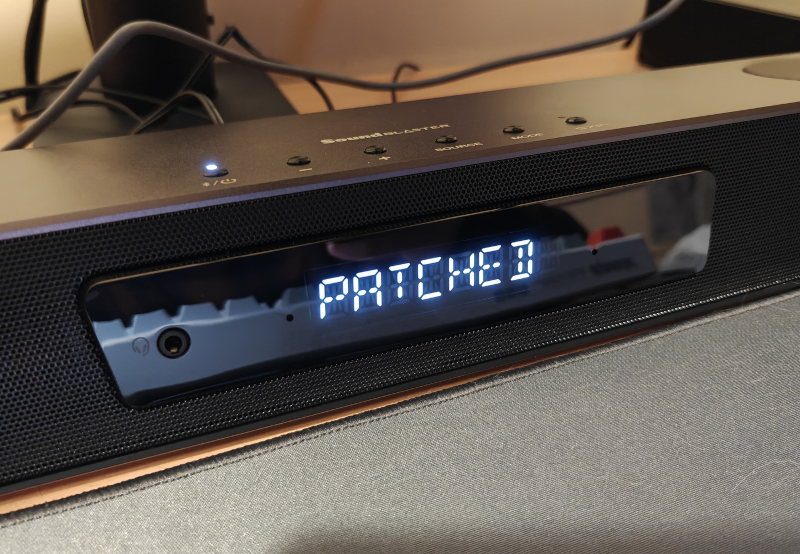
Why it matters: It demonstrates a systemic class of risk where consumer peripherals become physical-access attack vectors via wireless proximity, bypassing network and physical security assumptions.
Context: This fits the ‘ignored warning’ and ‘hardware-hacking signal’ archetypes, highlighting a recurring pattern of BLE being a neglected attack surface in IoT and peripheral firmware.
"On USB, you have to authenticate to send commands. However, you can easily decompile the provided apps and learn the authentication key. But on BLE, it doesn’t require authentication at all for some reason. You can simply send commands via BLE, and the speaker obeys. No pairing. No physical access. Just be close enough for a Bluetooth connection." — HACKADAY
Commentary: The concrete implication is the erosion of the ‘air gap’ concept for peripherals; a speaker becomes a wireless bridge for physical attacks. This could push security researchers to audit BLE implementations in all ‘dumb’ devices and may force manufacturers to reconsider default-on wireless interfaces in accessories.
Date: Thu, 04 Jun 2026 23:00:25 +0000
URL: https://hackaday.com/2026/06/04/if-you-want-to-hack-me-come-in-through-the-speaker/
AI Sentiment Score: Negative (80%)
AI Credibility Score: 10.0/10 — High
Scores and text generated by AI analysis of the source article indicated.
Post ID: d45456fd